The Persistent Glow and Its Hidden Dangers
It’s a strange sight. You park your car, lock the doors, and as you walk away, you notice a faint red glow in the reflection of a window or another car. Your brake lights are still on. That initial moment of confusion quickly turns into concern. This isn’t just a weird electrical quirk; it’s a problem with two significant consequences, one for your car and one for your safety.
The most immediate issue is the slow but steady car battery draining brake lights create. While a single brake light bulb doesn’t draw much power, two or three of them glowing continuously for hours will drain even a healthy battery. You might leave your car overnight only to return to a vehicle that won’t start, turning a minor annoyance into a major inconvenience that leaves you stranded.
Beyond the dead battery, however, lies a more critical danger. Your brake lights have one job: to signal to other drivers that you are slowing down. If they are always on, that signal is lost. A driver following you has no visual cue that you are applying the brakes, which dramatically increases the risk of a rear-end collision. In traffic, that split-second warning is everything. When your brake lights won’t turn off, you become an unpredictable element on the road.
The good news is that the answer to “why do my brake lights stay on?” is often a simple, mechanical issue that you can diagnose yourself. This guide will walk you through the diagnostic process, starting with the most common and easiest fixes before moving into more complex electrical possibilities. By following these steps, you can identify the source of the problem and understand what it takes to get it fixed.
Understanding Your Car’s Brake Light Circuit
To figure out why your brake lights are stuck on, it helps to first understand how they are supposed to work. Most people think of it like a light switch at home: you flip a switch to turn the lights on. The brake light system is actually the opposite. Think of it as a light that is always ready to turn on, and the brake pedal’s job, when you’re not touching it, is to actively hold the switch in the “off” position.
This is because the brake light switch is a “normally closed” device. It contains a small, spring-loaded plunger. By default, the spring wants to push the plunger out, which completes an electrical circuit and sends power to the brake lights. The system is designed this way as a failsafe. The brake pedal arm, in its resting position, presses against this plunger, holding it down and keeping the circuit open, which turns the lights off. When you press the brake pedal, the arm moves away, releasing the plunger. The spring pushes it out, the circuit closes, and your brake lights illuminate instantly.
A key piece of this puzzle is that the brake light circuit is wired to have power available at all times, directly from the battery. It doesn’t depend on the ignition being on. This is why you can have a brake light switch problem that keeps the lights on long after you’ve turned the car off and taken the keys with you. Understanding this counterintuitive “always on” design is the first step to diagnosing why the system isn’t turning off as it should. Understanding the fundamental systems of a vehicle is the first step toward ensuring its longevity. Just as the brake light circuit has its own logic, learning how to keep your car’s engine running for years can provide valuable insights into long-term vehicle health.
The Common Culprit: A Failed Brake Pedal Stopper
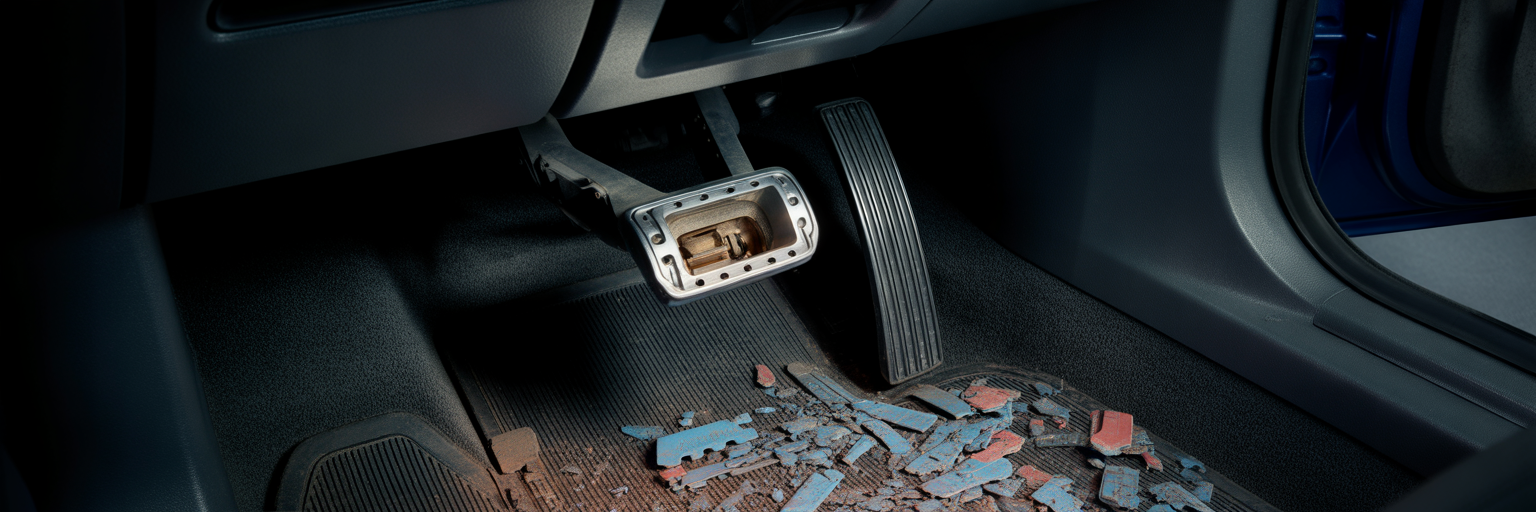
More often than not, the reason your brake lights won’t turn off is due to a tiny, inexpensive piece of plastic. Before you start worrying about complex wiring, your first and most important check should be for a failed brake pedal stopper. This small plastic or rubber disc is the most common cause of this exact problem, and finding it can save you a lot of diagnostic headaches.
The stopper pad sits on the brake pedal arm in a small bracket. Its only job is to provide a contact surface for the brake light switch plunger. Over many years, the plastic is exposed to heat from the firewall and the constant pressure of the switch. It becomes brittle, cracks, and eventually disintegrates. You might even find the crumbly remains of it on your driver-side floor mat. Once it’s gone, it leaves an empty hole. Now, when you release the brake pedal, the switch’s plunger goes right through the hole instead of being pressed down, and the lights stay on.
You can check for this yourself with a flashlight. Here’s how:
- Look down in the driver’s side footwell. First, check the floor mat for any small, colorful, brittle pieces of plastic. They often look like plastic confetti.
- Trace the brake pedal arm upward from the pedal pad toward the dashboard.
- Locate the brake light switch. It’s a small device with wires coming out of it, mounted on a bracket so that its plunger touches a metal tab on the pedal arm.
- Look closely at where the plunger meets the pedal arm. Do you see it pressing against a solid plastic stopper, or is it poking through an empty hole? If it’s going through a hole, you’ve found your problem.
As a temporary, emergency measure to get you home without draining your battery or being a road hazard, you can rig a temporary stopper. A small bolt with a nut and washers or even a stack of coins taped securely in place can work. However, this is not a permanent solution. You need a proper brake pedal stopper pad replacement. The original part is designed for this specific purpose and is essential for reliable, long-term safety.
Diagnosing a Faulty Switch or Sticking Pedal
If you’ve inspected the brake pedal stopper and found it to be intact, the next logical step is to investigate the brake light switch and the pedal assembly itself. These mechanical components can also be the source of the issue, and they are relatively straightforward to diagnose.
Checking for a Misadjusted Brake Light Switch
On many vehicles, the brake light switch is threaded into its mounting bracket and held in place with a lock nut. Over time, vibrations can cause this nut to loosen, allowing the switch to back out slightly. Even a few millimeters of change can be enough to prevent the pedal arm from fully depressing the plunger when released. To check this, gently try to wiggle the switch. If it feels loose or you can turn it by hand, it may have become misadjusted. Tightening it so that the plunger is fully depressed when the pedal is at rest could fix brake lights staying on.
Identifying a Sticking Brake Pedal
Sometimes the problem isn’t the switch but the pedal itself. The brake pedal assembly uses a return spring to pull it back to its resting position after you take your foot off it. If this spring is weak, broken, or if the pedal’s pivot point is binding due to dirt or rust, the pedal may not return all the way. It might feel normal to you, but it may not be rising high enough to push the switch’s plunger in. The diagnostic test is simple: with the lights stuck on, try to lift the brake pedal upward with the top of your foot or by hand. If the brake lights turn off, you’ve confirmed the pedal isn’t returning fully on its own.
Recognizing an Internally Failed Switch
If the stopper pad is good and the pedal returns to its highest position without issue, the switch itself may have failed internally. The electrical contacts inside the switch can become fused together due to a power surge or simply from wear and tear over tens of thousands of cycles. When this happens, the circuit is permanently closed, regardless of the plunger’s position. This is a diagnosis made by elimination. If all other mechanical checks pass, the switch is the most likely culprit and will need to be replaced. These types of mechanical wear-and-tear issues are often more prevalent in older vehicles. It’s interesting to learn why some high-mileage cars age better than others, often due to the quality of these small but critical components.
Tracing Elusive Electrical Shorts
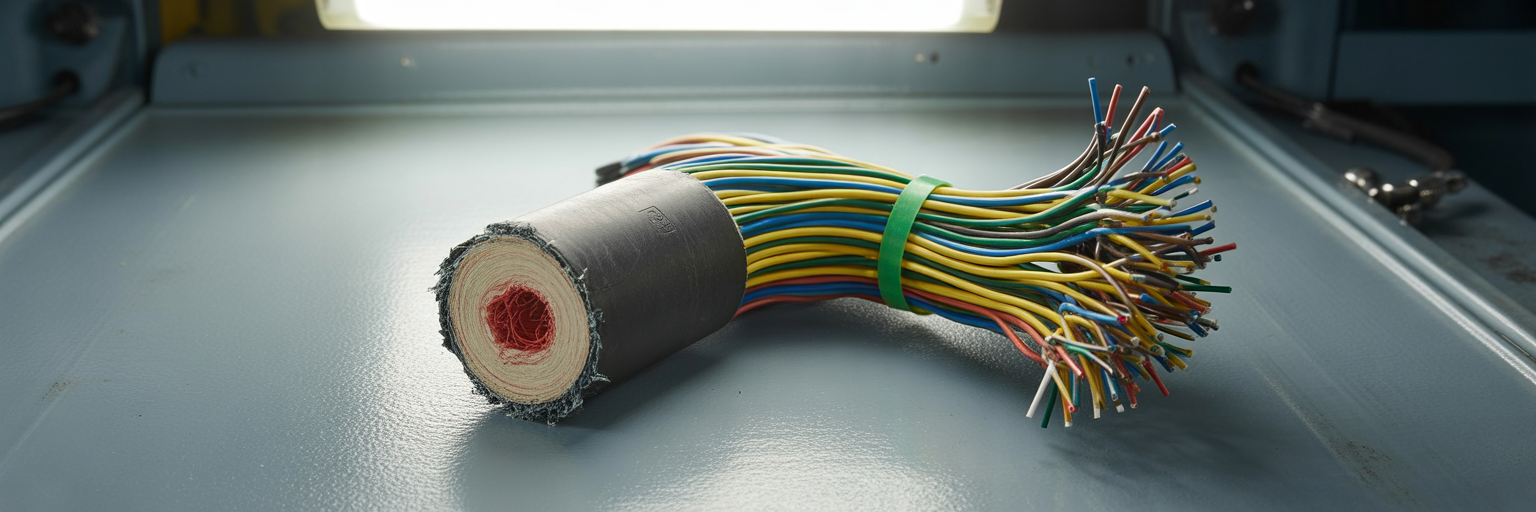
If you’ve ruled out the common mechanical culprits like the stopper pad and switch, it’s time to consider the possibility of an electrical short. This moves the diagnosis from the mechanical world into the wiring, which can be more challenging to pinpoint. A short circuit occurs when the power wire for the brake lights finds an unintended path to power or ground, bypassing the brake light switch entirely.
This can happen for several reasons, and the fault is often hidden from plain sight. Common causes include:
- Chafed Wires: A wire’s insulation can rub against a sharp metal edge under the dashboard or along the frame, eventually exposing the copper wire and causing a short.
- Damaged Insulation: Over time, the plastic insulation on wires can become brittle and crack, especially in areas exposed to heat or flexing.
- Improper Accessory Installation: A poorly installed aftermarket stereo, remote starter, or alarm system can involve tapping into the wrong wires, inadvertently sending constant power to the brake light circuit.
The difficulty with shorts is that the problem could be anywhere along the length of the wire, which is often bundled in a larger harness and routed under carpets and behind panels. However, there is one simple diagnostic step you can take. Find the fuse box (your owner’s manual will show you where) and locate the fuse for the brake lights. Pull that fuse out. If the lights go off, it confirms the fault is somewhere within that specific circuit. This won’t tell you where the short is, but it isolates the problem and is a clear sign that further electrical diagnosis is needed, likely by a professional.
How Trailer Wiring Can Cause Issues
For owners of trucks and SUVs, there’s another common electrical culprit that is frequently overlooked: the trailer wiring harness. Whether it was installed at the factory or added as an aftermarket accessory, this connector at the back of your vehicle can be a major source of electrical gremlins, including brake lights that won’t turn off.
The primary issue is corrosion. The trailer wiring connector is constantly exposed to the elements, including rain, snow, and road salt. Over time, moisture and grime can work their way inside the plug. This buildup can become conductive, creating an electrical bridge between the pins. If the terminal for the brake lights gets connected to the terminal for the running lights or the main power feed, it can back-feed power into the brake light circuit, keeping the lights on permanently.
Improperly installed aftermarket harnesses are another frequent cause. If the installer spliced into the wrong wires or if a control module fails, it can send a constant “on” signal to the brake lights. Troubleshooting this is fairly direct:
- Go to the back of your vehicle and visually inspect the trailer wiring connector. Look for any signs of physical damage or corrosion, which often appears as a green or white crusty buildup inside the plug.
- If you have an aftermarket wiring kit with a separate control box (usually a small black module spliced into the wiring behind the taillights), try unplugging it. If the brake lights turn off, you’ve isolated the problem to the trailer wiring system.
This is a particularly common issue on vehicles frequently used for hauling. For owners of such vehicles, understanding all aspects of their capabilities is important. For instance, those looking for a capable vehicle might be interested in a comparison of the best used trucks for towing a camper under $35,000, where trailer wiring integrity is a key consideration.
Modern Cars and Faulty Electronic Modules

In cars built over the last couple of decades, the simple circuit of switch-to-bulb has been replaced by a more complex, computer-controlled system. If you have a newer vehicle and your brake lights are stuck on, the problem may not be a simple mechanical switch but a faulty electronic module. This changes the diagnostic process significantly.
In most modern cars, the brake light switch doesn’t directly power the lights. Instead, it sends a small input signal to a computer known as the Body Control Module (BCM). The BCM acts as a central hub for the vehicle’s body electronics, managing everything from the power windows and interior lights to the security system. When the BCM receives the signal that the brake pedal has been pressed, it then commands the brake lights to turn on, often by activating a relay or a solid-state driver.
This system introduces new potential points of failure. The BCM itself can fail due to an internal hardware fault, a software glitch, or even damage from water intrusion. A relay controlled by the BCM could also become mechanically stuck in the “on” position. This issue, while frustrating, is a well-documented problem across many makes and models. As highlighted in an article by Jalopnik, what used to be a simple fix now often requires complex computer diagnostics. This is why professional help is usually necessary. A technician will use a specialized scan tool to communicate with the BCM, view live data to see if it’s correctly reading the brake switch input, and perform output tests to command the lights on and off directly. This is the only way to accurately determine if the BCM is the cause before replacing an expensive component.
Your Diagnostic Checklist and When to See a Pro
We’ve covered a lot of ground, from tiny plastic stoppers to complex computer modules. To bring it all together, here is a simple diagnostic checklist to follow, ordered from most likely to least likely cause. This will help you efficiently find the reason your brake lights are staying on.
- Check the Floor Mat: Look for broken, brittle plastic fragments. This is the top sign of a failed brake pedal stopper.
- Inspect the Pedal Assembly: Use a flashlight to look up at the brake light switch. Is the plunger going through an empty hole?
- Lift the Pedal: Manually pull the brake pedal up toward you. If the lights go out, the pedal is sticking or has a weak return spring.
- Inspect Trailer Wiring: If you have a trailer hitch, check the connector for any green or white corrosion.
If your battery is at risk, you can pull the brake light fuse or disconnect the negative battery terminal as a temporary measure. Just remember the critical safety rule: do not drive the vehicle with the brake light fuse removed. If these simple visual checks don’t reveal the cause, it’s time to see a professional. An issue with a wiring short or a Body Control Module requires specialized tools and expertise. By following these steps first, you can have a much more informed conversation with your mechanic, potentially saving time and diagnostic fees. A proper fix brake lights staying on is essential for both your battery’s health and your safety on the road.
| Potential Cause | Common Symptoms | DIY Difficulty | Professional Help Recommended? |
|---|---|---|---|
| Broken Stopper Pad | Small plastic bits on floor mat; switch plunger misaligned. | Low | No, if comfortable working in footwell. |
| Sticking Brake Pedal | Lights go off when pedal is manually pulled up. | Low (to diagnose) | Yes, for spring or pivot repair. |
| Faulty Brake Light Switch | Stopper pad is intact and pedal returns fully, but lights stay on. | Medium | No, if comfortable with basic part replacement. |
| Trailer Wiring Short | Corrosion in trailer connector; lights go off when harness is unplugged. | Low (to diagnose) | Yes, for harness repair or replacement. |
| Wiring Short Circuit | No obvious mechanical cause; problem may be intermittent. | High | Yes, almost always. |
| Faulty Body Control Module (BCM) | Occurs on modern cars; no mechanical cause found. | Very High | Yes, requires specialized scan tools. |