
Decoding Your Car’s Clunking Sounds
Every car develops its own set of groans and rattles over time, but a sharp, sudden clunk is a universal signal that something demands your attention. That distinct sound is often the first sign of a problem, a mechanical cry for help that you shouldn’t ignore. This guide will help you systematically understand why your car clunks over bumps and what it might be trying to tell you.
At its core, a clunk or knock is usually the sound of metal hitting metal, which means a component is loose, worn out, or broken. This noise is a symptom of a failure, most often within your vehicle’s suspension or steering system. The suspension’s job is complex: it keeps your tires firmly planted on the road, provides stability through turns, and absorbs impacts to give you a comfortable ride. A clunk is a clear indication that this system is no longer doing its job silently.
Think about the physics for a moment. A healthy suspension absorbs the energy from a pothole or speed bump with quiet efficiency. When parts wear out, that energy is no longer managed correctly. Instead, it travels through the chassis and manifests as a loud, jarring noise. This is why a simple bump can produce such an alarming sound.
The first step in any diagnosis is observation. Before you can find the source, you need to become an attentive listener. Pay close attention to the specifics of the sound. Where is it coming from? The front, rear, left, or right? Does it happen only on big bumps, or on any uneven surface? Does it occur when you turn, brake, or accelerate? A dull thud is very different from a sharp, metallic knock. Gathering this initial data is the most important step to diagnose car suspension noise and effectively use the information that follows. Consumers use detailed guides for all sorts of products, and as this definitive guide to 2026 iPhone case styles shows, being informed helps make better decisions. For those looking to expand their general automotive knowledge, we offer a wide range of informative articles.
The Most Common Culprit: Worn Sway Bar Components
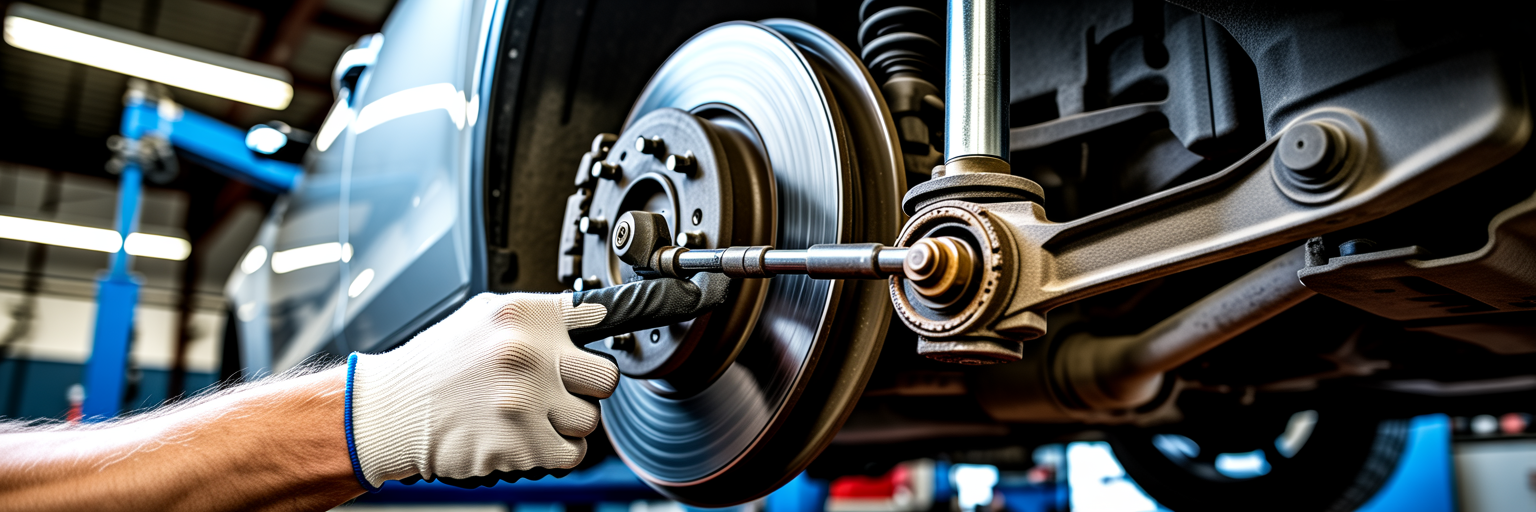
If you’re hearing a clunking noise, the sway bar system is the first place to investigate. It’s one of the most common sources of suspension noise, and thankfully, often one of the simpler and less expensive fixes.
Function of the Sway Bar
The sway bar, also known as an anti-roll bar, is a torsion spring that connects the left and right sides of your suspension. Its primary job is to counteract body roll when you go around a corner. By resisting the twisting motion, it helps keep your car level and stable, improving handling and safety.
Sway Bar Links and Bushings Explained
The sway bar is connected to the rest of the suspension by sway bar links. These links are small rods with flexible joints on each end. The bar itself is held to the car’s frame by rubber or polyurethane bushings. Both the links and bushings are considered wear items. They are designed to absorb vibrations and allow for movement, but they don’t last forever.
Symptoms of Failure
The classic worn sway bar link symptoms include a repetitive, light clunking or rattling sound when driving over small, uneven bumps at lower speeds. It often sounds like it’s coming from directly in front of you, near the front wheels. Many people describe it as sounding like something is loose and jiggling in the suspension. Worn sway bar bushings, on the other hand, typically produce a duller thud, which you might hear when going over a speed bump or turning into a driveway.
How to Perform a Visual and Physical Inspection
You can often diagnose this issue yourself with a simple inspection. Always ensure the car is parked on level ground and the engine is off and cool before reaching into the wheel well.
- Park the car on a flat, level surface. You do not need to jack it up for this initial check.
- Look behind your front wheels to locate the sway bar link. It’s a thin vertical rod connecting the sway bar to the lower control arm or strut. Visually inspect the rubber boots on the link’s joints for any tears or signs of grease leaking out.
- Firmly grab the middle of the link and try to shake it. A healthy link should have no play or movement. If you can move it by hand and it makes a clunking sound, you’ve likely found your problem.
- Follow the sway bar toward the center of the car to find the frame bushings. Inspect these rubber mounts for any visible cracks, deformation, or gaps between the bushing and the bar.
Analyzing Struts, Shocks, and Mounts
If the sway bar components seem solid, the next area to investigate involves the primary dampers of your suspension: the struts and shocks. These parts, along with their mounts, are responsible for controlling the bounce and rebound of your wheels.
Distinguishing Struts and Shocks
While people often use the terms interchangeably, they are different. Shocks are simple hydraulic dampers that control spring movement. Struts are a more complex assembly that serves as a structural part of the suspension and a pivot point for the steering system. A strut assembly includes the shock absorber within its design, along with a coil spring and a top mount.
The Critical Role of the Strut Mount
The strut mount is the component that attaches the top of the strut assembly to the car’s chassis. It contains a bearing that allows the entire strut to pivot as you turn the steering wheel. It also has a rubber-like material that helps absorb small vibrations. Because it carries the vehicle’s weight and endures constant movement, it is a common failure point.
Identifying a Bad Strut Mount Noise
A bad strut mount sound is often more pronounced than a sway bar link noise. You might hear a loud clunk or a distinct pop coming from the top of the wheel well area. This noise is especially noticeable when going over sharp bumps like potholes or when turning the steering wheel at low speeds, such as when parking. Sometimes, you might even hear a “boing” or creaking sound as the coil spring shifts or binds due to the failed mount.
Diagnosing Worn Shocks and Struts
While the primary symptom of worn shocks or struts is a bouncy, uncontrolled ride, a severe internal failure can cause a clunk. This happens when the internal piston bottoms out or tops out inside the shock body. You can perform a simple “bounce test” by pushing down firmly on one corner of the car and releasing it. If the car bounces more than once or twice, the shock or strut is likely worn. Another clear sign is visible fluid leakage. Look at the body of the shock or strut; if it’s wet and oily, its internal seals have failed. For those interested in the engineering details, resources like Popular Mechanics offer in-depth tips on suspension noise diagnosis.
Investigating Critical Joints: Control Arms and Ball Joints
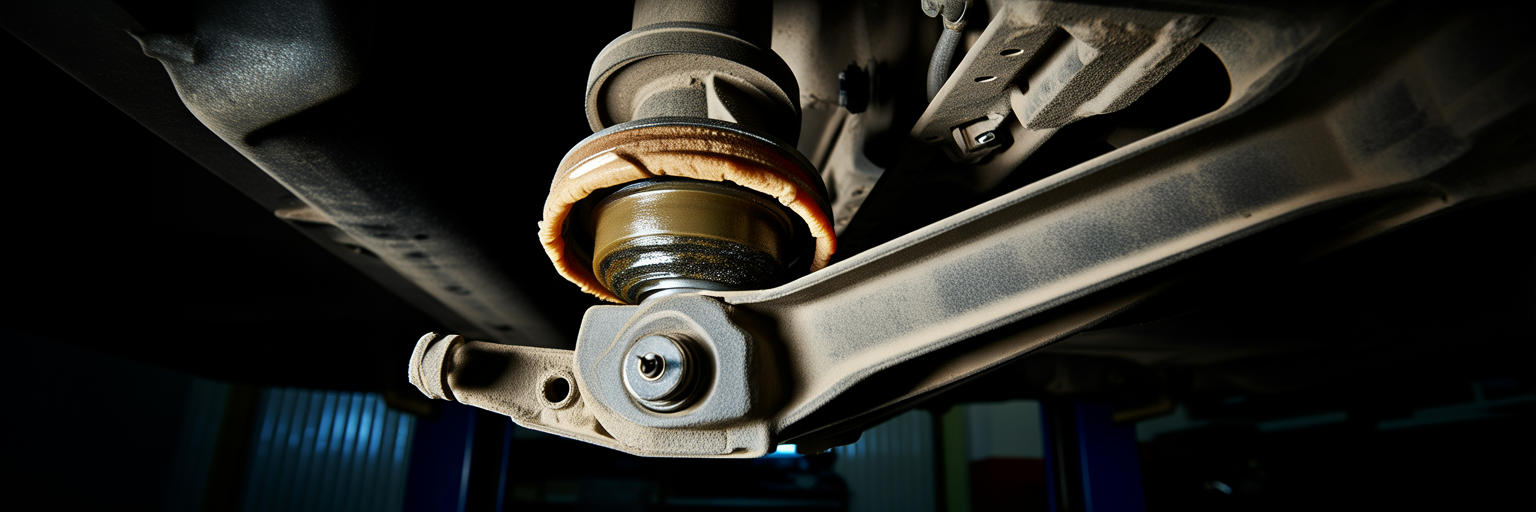
Moving deeper into the suspension system, we find the control arms and ball joints. These are safety-critical components, and noises originating from them should be taken very seriously. A failure here can have severe consequences.
The Foundation of Your Suspension: Control Arms
Control arms are the hinged links that connect your wheel hub and steering knuckle to the vehicle’s frame. They are the foundation that allows your wheels to move up and down while maintaining proper alignment. Each end of the control arm has a flexible rubber bushing that absorbs vibrations and allows for pivoting movement.
Symptoms of Worn Control Arm Bushings
When a control arm bushing wears out, it creates excessive movement. This often results in a heavy, dull clunk or a groaning sound, particularly when you accelerate or brake. The force of acceleration or braking causes the entire control arm to shift forward or backward, creating the noise. You might also feel a shimmy in the steering wheel or notice the car pulling to one side.
The Pivot Point: Understanding Ball Joints
Ball joints function much like a human hip joint. They are a ball and socket that provides a critical pivot point between the control arms and the steering knuckles. This allows the wheels to move up and down with the suspension while also turning left and right with the steering.
The Dangerous Sound of a Failing Ball Joint
A failing ball joint is one of the most dangerous issues your suspension can have. The sound is often a loud, intermittent clunk or a sharp popping noise that gets worse when you turn and hit a bump at the same time. It might also creak or groan when you turn the steering wheel while stationary. This is not a noise to ignore. A worn ball joint can eventually separate completely. If this happens while you are driving, the wheel can partially detach from the car, leading to a total loss of steering control. Pay close attention to these warning signs:
- Loud popping or creaking sounds that are most obvious during low-speed turns.
- Vague or wandering steering that requires constant correction.
- Uneven and premature tire wear, especially on the inside or outside edge of the tire.
Connecting Noise to Steering: Tie Rods and the Steering Rack
Sometimes, a car making knocking noise is directly related to the act of steering. If the clunk happens when you turn the wheel, even while parked, the issue may lie within the steering linkage itself, specifically the tie rods or the steering rack.
The Function of Tie Rods
Tie rods are the links that connect your steering rack to the steering knuckles at each front wheel. Their job is to translate the back-and-forth movement of the steering rack into the left-and-right turning motion of your wheels. Each tie rod has an “inner” end that connects to the steering rack and an “outer” end that connects to the knuckle.
Sounds and Symptoms of a Bad Tie Rod End
The outer tie rod end is a small ball joint that is a very common wear item. When it fails, it develops play, which can produce a sharp clunk or a distinct clicking sound when you turn the steering wheel. You might also feel this looseness through the steering wheel, which can feel vague or less responsive. Another telltale sign is “feathered” tire wear, where the tread blocks wear down unevenly across the tire’s surface.
Diagnosing a Loose Steering Rack
The steering rack itself can also be a source of noise. The bushings that mount the rack to the car’s subframe can wear out, allowing the entire rack assembly to shift. This can cause a heavier clunk that you might feel through the floor or the steering wheel, often when you hit a bump while turning. Worn internal gears inside the rack can also create a clunking noise, especially when you initiate a turn.
The ‘Dry Park’ Test for Steering Components
You can perform a simple diagnostic called the “dry park” test to help isolate these issues. For this, you’ll need a helper. With the car parked and the engine off, have your helper rock the steering wheel back and forth about three to four inches in each direction. While they do this, you should crouch down and watch the outer tie rod end. Place your hand over the joint (be careful not to pinch your fingers). You should not see or feel any play or knocking. If you do, the tie rod end is worn. This test is an excellent way to confirm looseness in the steering linkage.
Exploring Other Mechanical Sources: Brakes, Axles, and Mounts
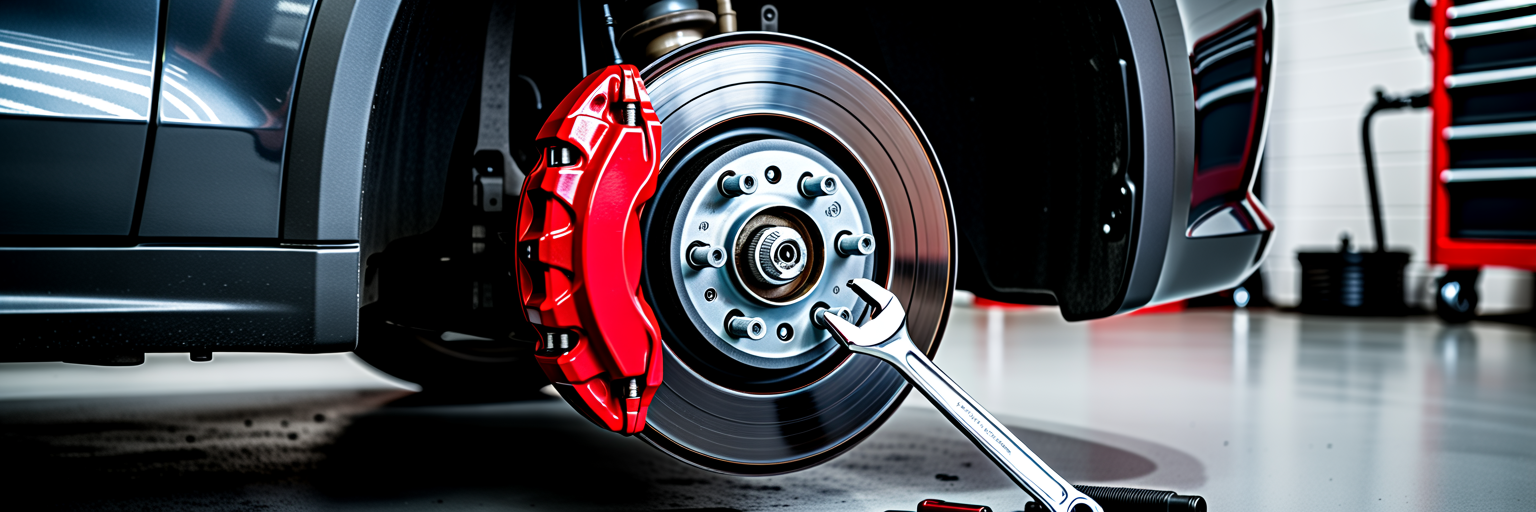
Not every clunk comes from the suspension. Several other mechanical components can produce noises that sound suspiciously like a suspension problem. Learning to differentiate these “impostors” can save you from chasing the wrong issue.
First, consider your brakes. A loose brake caliper or a worn caliper mounting bracket can rattle or clunk over sharp bumps. The key differentiator here is that the noise will often change or disappear completely when you lightly apply the brakes. The pressure from the brake pads holds the loose component steady, silencing the noise.
On front-wheel drive or all-wheel drive vehicles, worn Constant Velocity (CV) axles are another common culprit. A failing outer CV joint produces a very distinct clicking or popping sound during sharp turns. A worn inner CV joint, however, can produce a clunk on acceleration or when going over bumps as the drivetrain loads and unloads.
Finally, don’t overlook failed engine or transmission mounts. These rubber and hydraulic mounts secure your drivetrain to the car’s frame and absorb vibrations. When one fails, the engine and transmission can shift excessively. This can cause a heavy thud or clunk, usually from the engine bay or the center of the car, when you accelerate, decelerate, or shift between Drive and Reverse. This is directly related to the health of your powertrain, and it’s wise to understand how to keep your car’s engine running for years to prevent related issues.
This table can help you distinguish these sounds:
| Potential Source | Characteristic Sound | How to Differentiate |
|---|---|---|
| Loose Brake Caliper | Metallic rattle or clunk over sharp bumps | Noise changes or stops when brakes are lightly applied |
| Worn CV Axle | Clicking/popping in sharp turns (outer joint); clunk on acceleration (inner joint) | Noise is most prominent during turns under power |
| Failed Engine/Transmission Mount | Heavy thud or clunk from engine bay or center of car | Noise occurs on acceleration, deceleration, or shifting between Drive and Reverse |
Checking for Simple, Non-Suspension Impostors
Before you schedule a costly repair, it’s worth remembering a core principle of any good mechanic: check the simple stuff first. Sometimes, the most alarming clunks come from the most mundane sources, and a few minutes of inspection can save you a lot of worry and money.
Start with a thorough “trunk and cargo audit.” Empty everything out of your trunk. Pay special attention to the spare tire and the jack assembly. These are often held down by a single bolt or clamp. If this comes loose, the heavy spare tire or jack can thump around in the trunk, creating a loud clunk that perfectly mimics a rear suspension problem. Make sure they are tightly secured.
Next, perform a safe inspection of your exhaust system. Only do this when the car is completely cold. Get down and look underneath the car. You are looking for:
- Broken or missing rubber exhaust hangers that allow the pipe to sag and hit the underbody.
- Loose or rattling heat shields, which are thin metal plates that can make a tinny clatter.
- Any part of the exhaust pipe that is sitting too close to the car’s frame, a crossmember, or the rear axle.
Finally, do a general walk-around. Is your license plate loose and rattling? Did a piece of plastic underbody trim get torn and is now flapping in the wind? Did a tool get left behind in the engine bay after your last oil check? It sounds simple, but these things happen, and they can create noises that send you down a diagnostic rabbit hole. A thorough check for these simple impostors is always time well spent.
Red Flags: When a Clunk Means Your Car Is Unsafe
While some clunks are merely annoyances, others are urgent warnings of a potential catastrophic failure. It is essential to know the difference and to understand when a clunking noise is dangerous. If your car exhibits any of the following symptoms along with a clunk, you should stop driving it immediately and have it towed to a qualified mechanic.
- Loose or Unresponsive Steering: If the clunk is accompanied by excessive play in the steering wheel, a feeling that the car is “wandering” on the road, or a general lack of responsiveness, it points to severe wear in a critical component like a ball joint or tie rod. The connection between your steering wheel and the road is compromised.
- Loud Pops or Bangs During Turns: A single, loud bang or a sudden pop, especially when turning or going over a bump, can signal that a component has just broken. This could be a fractured coil spring, a separated ball joint, or a broken strut mount. Continuing to drive risks complete failure.
- Visible Wheel Misalignment: Look at your front wheels from the front of the car. Do they appear to be straight up and down? If one wheel is visibly tilted inward or outward at the top (a condition called camber), it is a definitive sign of a broken or disconnected suspension component. This is a common issue with high-mileage cars, and it’s useful to know why some high-mileage cars age better than others.
If you experience any of these red flags, your vehicle is not safe to drive. The risk of losing control is too high. Your safety and the safety of others on the road depend on taking these warnings seriously. If you believe your vehicle has a safety-related defect, you can report it to the proper authorities. For example, in the United States, the National Highway Traffic Safety Administration (NHTSA) allows you to report a safety problem to help protect other drivers.