
Decoding That Alarming Flickering Light on Your Dash
Few things can make a driver’s heart sink faster than the sudden appearance of a warning light on the dashboard. When that light is the little red oil can, the anxiety is immediate and justified. That symbol is one of the most serious warnings your car can give you, and when it starts to flicker, it’s signaling that your engine’s oil pressure has dropped to a potentially dangerous level.
This flickering behavior, especially when the engine is warm and idling, is a specific cry for help. It’s crucial to understand that this light is not telling you about the amount of oil in your engine. Instead, it’s connected to a pressure sensor that monitors the hydraulic force of the oil being pumped through the engine’s veins. Think of it as the engine’s blood pressure monitor. A steady light means pressure is critically low, but a flicker is an early warning that the pressure is hovering right at the minimum safe threshold.
It’s easy to get confused by the various lights on a modern dashboard, but this one demands your full attention. The red oil pressure warning is fundamentally different from the amber or yellow lights that might remind you to change your oil or indicate a low oil level. Those are suggestions. The red light is an order to stop. Ignoring it can be the difference between a simple repair and a catastrophic engine failure.
The good news is that the specific way this light behaves—flickering only when the engine is warm and at idle, then vanishing as you accelerate—provides vital clues. It allows us to move from panic to a systematic diagnosis. This pattern points to a specific set of problems, ranging from simple to severe, which we will explore step by step.
The Critical Difference Between Oil Level and Oil Pressure
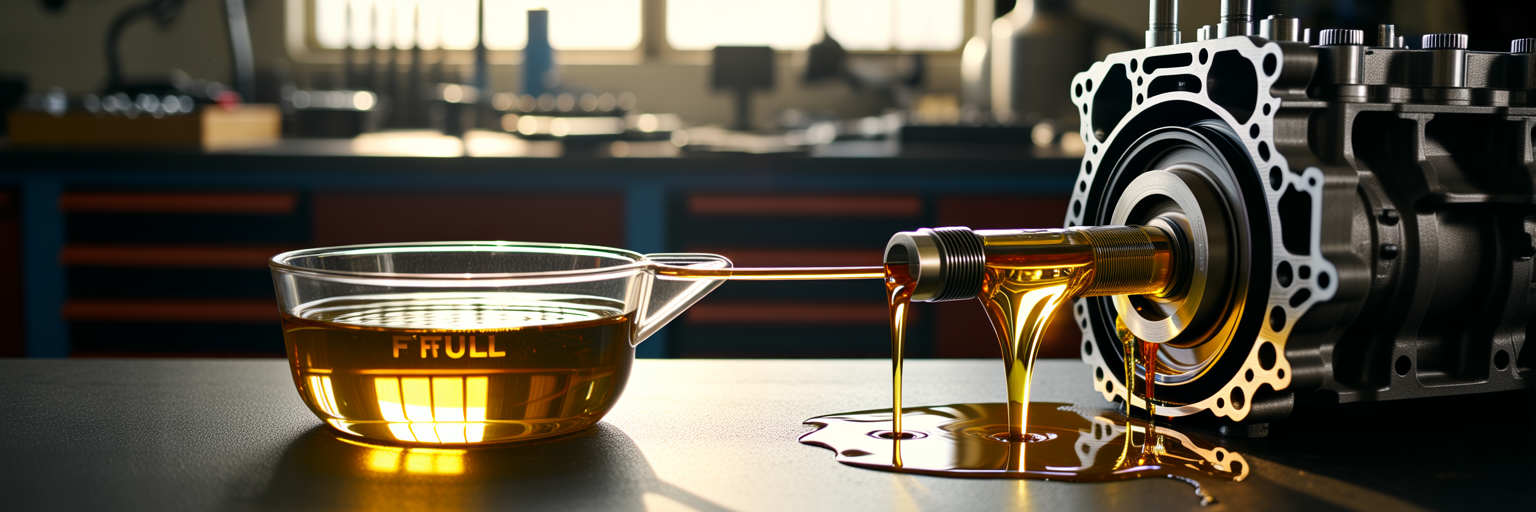
Before we can diagnose the problem, we need to clear up a common point of confusion. Many drivers think the oil pressure light is about the amount of oil in the engine. While related, oil level and oil pressure are two very different things. Getting this distinction right is the first step to understanding what that flickering light is trying to tell you.
Oil level is simply the quantity of oil sitting in the oil pan at the bottom of your engine. It’s a static measurement. When the engine is off, you check this level with the dipstick. Think of the oil pan as a reservoir; the dipstick tells you how full that reservoir is. Having the correct amount of oil is essential, but it’s only half the story.
Oil pressure, on the other hand, is a dynamic force. It’s the pressure created by the oil pump as it sucks oil from the pan and forces it through narrow passages to lubricate all the moving parts of your engine. A good analogy is a garden hose. The amount of water in your local reservoir is the “level,” but the force of the water coming out of the nozzle is the “pressure.” You need enough water in the reservoir, but you also need a working pump to create the pressure to spray it.
This is why the warning light monitors pressure, not level. An engine can have a full pan of oil but still fail if the pump isn’t creating enough pressure to deliver it where it’s needed. Without that pressurized film of oil, metal components grind against each other, generating immense heat and causing rapid, irreversible damage. Conversely, if the oil level gets extremely low, the pump will start sucking air instead of oil, which will inevitably cause a complete loss of oil pressure.
Understanding these fundamentals is key to responsible car ownership. For those looking to build a stronger foundation in automotive basics, our collection of informative guides can help break down these and other complex topics into simple, understandable terms.
Why Low RPM and High Temperatures Trigger the Warning
The specific symptom of an oil pressure light that flickers only at idle when the engine is warm is not a random coincidence. It’s a direct result of basic physics at play within your engine. Understanding this relationship helps pinpoint the root of the problem and explains why the light disappears as soon as you touch the gas pedal.
First, let’s consider the oil pump. It’s the heart of your engine’s lubrication system, and its speed is directly tied to the engine’s speed (RPM). When your engine is idling, it’s running at its lowest possible RPM. Consequently, the oil pump is spinning at its slowest, producing the lowest volume and pressure of its entire operating range. It’s working, but it’s not working hard.
Next, let’s talk about temperature. As your engine runs, it gets hot, and that heat is transferred to the oil. Motor oil is designed with a specific viscosity, which is a measure of its thickness or resistance to flow. When oil is cold, it’s thicker. As it heats up, it becomes thinner. While modern multi-grade oils are engineered to perform across a wide temperature range, they are always thinner when hot than when cold.
Now, let’s connect these two facts. You have a warm engine, which means the oil is at its thinnest. You also have the engine at idle, which means the oil pump is spinning at its slowest. This combination creates a “worst-case scenario” for maintaining oil pressure. If there is any underlying weakness in the lubrication system—such as worn parts or old oil—the pressure generated by the slow-moving pump pushing thin oil might dip just below the minimum threshold required by the pressure sensor. The result is a flicker.
The moment you press the accelerator, the engine’s RPM increases. The oil pump spins faster, immediately building more pressure. This increased force easily surpasses the sensor’s minimum threshold, and the light goes out. This is why the flickering light at idle acts as a perfect stress test for your engine’s health. A healthy engine will maintain adequate pressure even in these conditions. A flicker is a clear sign that something is wrong and needs investigation.
Immediate Actions to Take When the Oil Light Flickers

Seeing that red oil can flicker on your dash is a call to immediate action. How you respond in the next few minutes can mean the difference between a manageable repair and an engine that’s destined for the scrapyard. Here is a clear, step-by-step guide on what to do.
1. Do Not Ignore It. This cannot be stressed enough. Your first instinct might be to hope it goes away or to try to make it to your destination. This is a costly gamble. Continuing to drive, even for a short distance, can cause unlubricated parts to destroy themselves. The cost of a tow is insignificant compared to the price of a new engine.
2. Pull Over Safely and Shut Off the Engine. As soon as you see the light, find a safe place to pull over. This could be a shoulder, a parking lot, or a quiet side street. Once you are safely stopped, turn off the engine immediately. This stops the moving parts from grinding against each other without lubrication.
3. Wait and Check the Oil Level. Before you do anything else, wait about 10 to 15 minutes. This allows the oil circulating in the engine to drain back down into the oil pan for an accurate reading. Then, pull out the dipstick, wipe it clean with a rag or paper towel, re-insert it fully, and pull it out again. Check the level against the “Full” and “Add” marks.
4. Make an Informed Decision. If the dipstick shows the oil level is low, adding the correct type of oil might temporarily solve the pressure issue and get the light to turn off. However, you still need to figure out why the oil was low. If the oil level is correct, the problem is more serious. Do not be tempted to restart the engine “just to see.” At this point, the safest and most prudent action is to call for a tow to your home or a trusted mechanic. Having a clear plan in a stressful moment is key. As highlighted by experts in methodical problem-solving, following a blueprint prevents panic and leads to better outcomes.
Understanding these warnings is a critical lesson for all drivers. For parents teaching their children, this is just as important as the rules of the road, especially when considering the best used cars for teen drivers who actually like cars.
Investigating Simple Causes: Oil Level and Oil Quality
Once you’ve safely shut down the engine, the investigation into the causes of flickering oil light can begin. Fortunately, the most frequent culprits are also the simplest to check and fix. Before assuming the worst, it’s essential to rule out these common issues related to the oil itself.
Low Oil Level
Even if the dipstick reads just above the “add” mark, a low oil level can still trigger a flickering light. As you drive, the oil in the pan sloshes around. During a sharp turn, sudden stop, or on a steep hill, the remaining oil can move away from the oil pump’s pickup tube for a split second. The pump ingests a gulp of air instead of oil, causing a momentary pressure drop and a flicker of the light. This can be an early sign before it starts flickering at idle. Oil loss generally comes from two sources:
- Consumption: Older engines often burn a small amount of oil that gets past worn piston rings or valve seals.
- Leaks: Failing gaskets, like those on the valve cover or oil pan, can lead to slow drips that lower the oil level over time.
Incorrect Oil Viscosity
Using the wrong type of oil is a surprisingly common mistake. Your vehicle’s manufacturer specifies a certain oil viscosity (e.g., 5W-30 or 10W-40) for a reason. If an oil that is too thin is used, it may provide adequate pressure when the engine is cold. However, once the engine heats up, this overly thin oil may not be able to maintain sufficient pressure at low RPMs, leading to the flicker. Always check your owner’s manual and verify that the correct oil was used during your last oil change.
Oil Degradation and Dilution
Motor oil doesn’t last forever. Over time, heat and mechanical stress break down its complex molecules, causing it to lose viscosity. More critically, the oil can become contaminated. Fuel can leak past piston rings in a rich-running engine, or coolant can enter the oil from a failing head gasket. Both contaminants severely dilute the oil, destroying its lubricating properties and its ability to maintain pressure. A quick look at the dipstick can offer clues. Oil that is extremely dark, smells strongly of gasoline, or has a milky, frothy appearance is a clear sign of degradation or dilution.
Some vehicles, particularly certain used luxury SUVs, can be more prone to oil consumption as they age, making these regular checks even more important. You can learn more about models known for their durability in our guide to the best used luxury SUVs that won’t destroy you on repairs.
| Cause | Key Symptom | Simple Check |
|---|---|---|
| Low Oil Level | Light may flicker during turns, braking, or on hills before flickering at idle. | Check the dipstick after letting the engine sit for 10-15 minutes. |
| Incorrect Oil Viscosity | Problem appears shortly after an oil change where the wrong oil was used. | Verify the oil grade used against the owner’s manual specification. |
| Oil Degradation/Dilution | Oil on dipstick appears very dark, thin, or smells of gasoline or coolant. | Check oil change history. Inspect oil for unusual color or smell. |
Tracing the Problem to Electrical Faults
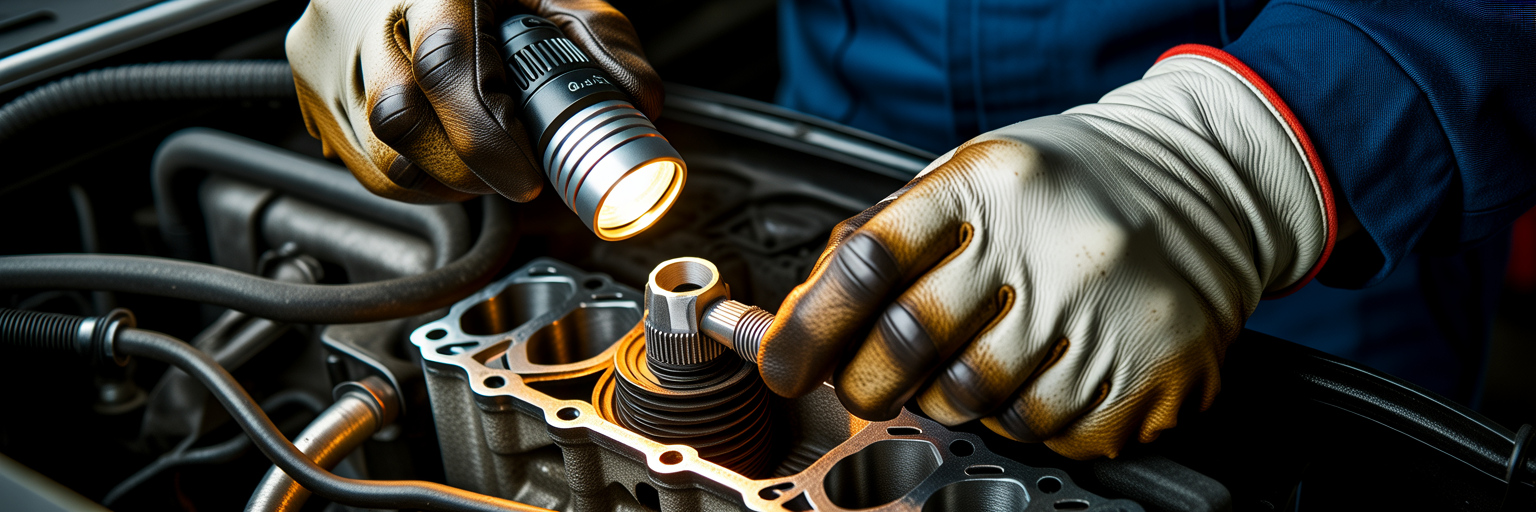
If you’ve confirmed your oil level is correct and the oil itself is in good condition, it’s time to consider another common possibility: the problem might not be with your oil pressure at all. The warning system itself can fail, creating a false alarm that is just as convincing as a real issue. These electrical gremlins are often the source of a flickering light.
Failing Oil Pressure Sensor
The oil pressure sensor (or sending unit) is a simple, and often inexpensive, component. In most cars, it functions as a basic switch. When oil pressure is sufficient, it holds the switch open. If the pressure drops below a set point (e.g., 5-7 PSI), the switch closes, completing an electrical circuit and turning on the warning light on your dash. Like any switch, it can wear out and begin to fail. There are several classic oil pressure sensor symptoms to look for:
- The light flickers erratically at various engine speeds, not just at idle.
- The light stays on constantly, even on a cold start when pressure should be high.
- You can see oil physically leaking from the body of the sensor or its electrical connector. This is a very common failure mode.
The sensor is typically a small, one-wire component threaded directly into the engine block, often located near the oil filter. A faulty sensor is one of the most common causes of a false oil pressure warning.
Damaged Wiring
The problem could also lie in the single wire that connects the oil pressure sensor to the instrument cluster. The engine bay is a harsh environment. Constant heat cycles can make wire insulation brittle and prone to cracking, while engine vibrations can cause the wire to rub against a metal bracket or another component. If the insulation wears through, the wire can intermittently short to ground, which completes the circuit and causes the light to flicker, perfectly mimicking a low-pressure situation. A visual inspection of the wire from the sensor back into the main harness can sometimes reveal frayed insulation, a corroded connector, or other obvious damage.
When the Cause Is a Serious Mechanical Issue
While we always hope for a simple fix, a flickering oil pressure light can sometimes be the first sign of a significant internal engine problem. These are the scenarios that require immediate and professional attention. Ignoring them will lead to complete engine failure. The low oil pressure at idle is a symptom of a deeper mechanical wear that can no longer be ignored.
Worn Engine Bearings
Deep inside your engine, the crankshaft and connecting rods spin on a set of components called bearings. These are not ball bearings, but rather smooth, soft metal shells that are separated from the spinning steel parts by a micro-thin, high-pressure cushion of oil. Over many miles, these bearings wear down. As they wear, the clearance between the bearing and the crankshaft increases. This larger gap allows oil to escape more easily, causing a system-wide drop in pressure. The effect is most pronounced at idle when the oil pump is moving slowly. One of the most telling worn engine bearings symptoms is a deep, rhythmic knocking or rumbling sound from the bottom of the engine that gets louder under load.
Failing Oil Pump
The oil pump is the heart of the lubrication system, but it is a mechanical part that can wear out. In high-mileage engines, the internal gears or rotors of the pump can wear down, reducing its ability to create pressure efficiently, especially at low RPMs. Another potential issue is the pressure relief valve, a small spring-loaded plunger within the pump that can get stuck open, bleeding off pressure when it shouldn’t. The longevity of these core components is a key reason why some high-mileage cars age better than others.
Clogged Oil Pickup Screen
At the bottom of the oil pump is a pickup tube with a mesh screen on the end. Its job is to filter out large debris before it enters the pump. If an engine has been subjected to infrequent oil changes, sludge can build up and clog this screen. Debris from other failing parts, like bits of plastic from timing chain guides, can also block it. A clogged screen effectively strangles the oil pump, starving it of oil and preventing it from building pressure. This is a direct consequence of neglected maintenance.
These issues are not simple DIY fixes; they often require significant engine disassembly. Addressing them promptly is crucial, as it underscores the importance of knowing how to keep your car’s engine running for years through proper care.
How a Mechanic Confirms True Low Oil Pressure
After all the visual checks and speculation, there is only one way to know for sure if your engine has a genuine low oil pressure problem. This is the definitive diagnostic step that separates fact from a false alarm, and it’s a standard procedure for any professional mechanic.
The tool for the job is a mechanical oil pressure gauge. This is a simple, reliable instrument that provides a direct, physical measurement of the oil pressure inside your engine. The procedure is straightforward: a mechanic will locate and remove your car’s existing electronic oil pressure sensor. They will then thread the fitting for the mechanical gauge into the same port on the engine block.
With the gauge connected, the mechanic will start the engine and begin the process to check engine oil pressure. They will carefully record the pressure readings at different engine speeds and temperatures, typically noting the pressure at idle and at a higher, specified RPM (like 2,500 RPM). This test is performed first when the engine is cold and then again after it has warmed up to full operating temperature.
The final step is to compare these real-time readings to the manufacturer’s specifications for your specific vehicle. This data provides a clear verdict. If the gauge shows healthy pressure that meets or exceeds the specifications, you can breathe a sigh of relief; the problem is almost certainly a faulty sensor or wiring. If the gauge confirms the pressure is indeed low, the mechanic knows there is a real mechanical issue that needs to be addressed.