
With average new car prices remaining high, drivers are scrutinizing long-term expenses more than ever. This financial reality has pushed compact hybrids to the forefront, and the 2026 Hyundai Elantra Hybrid vs Toyota Corolla Hybrid matchup represents the pinnacle of this segment. Both promise exceptional fuel economy and modern features, but they follow different philosophies when it comes to value and engineering. For drivers covering significant mileage, understanding the complete financial picture is essential.
This analysis goes beyond the sticker price to determine the true 5 year ownership cost hybrid. We will follow a specific scenario: a new vehicle purchase financed for five years, driven 20,000 miles annually for a total of 100,000 miles. The driving mix is 60% highway and 40% city, using regular gasoline, with no plans to sell before the five-year mark. The core of this comparison pits the Elantra’s attractive upfront price and industry-leading warranty against the Corolla’s legendary reputation for reliability and strong resale value. Let’s break down the numbers to see which car truly costs less over the long haul.
Hyundai Elantra Hybrid vs Toyota Corolla Hybrid Ownership Costs
The initial purchase is just the first chapter in a car’s financial story. Over five years, factors like fuel, maintenance, insurance, and depreciation combine to reveal the total cost of ownership. While one car might seem cheaper on the showroom floor, another could prove more economical by the time the loan is paid off. This is especially true for high-mileage drivers, where small differences in efficiency and reliability can lead to significant savings or expenses.
Our goal is to dissect every major cost center for the 2026 Hyundai Elantra Hybrid and the 2026 Toyota Corolla Hybrid. We will examine not only the predictable expenses like fuel and scheduled service but also the less obvious ones, such as potential repair exposure once the basic warranty expires and the all-important impact of depreciation. By projecting these costs over a 100,000-mile ownership period, we can build a comprehensive financial model for each vehicle. This data-driven approach moves beyond brand loyalty to provide a clear answer on which of these popular hybrids is the smarter long-term investment.
The Initial Investment: Purchase Price and Fees
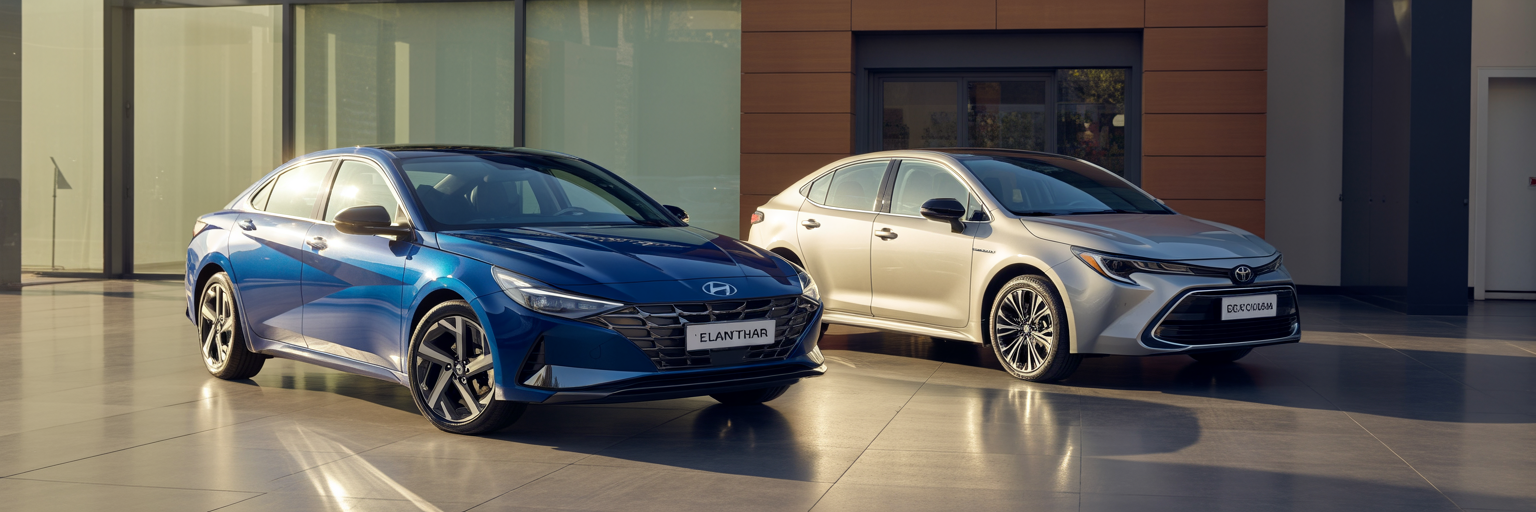
The first number any buyer sees is the Manufacturer’s Suggested Retail Price (MSRP), and it sets the stage for the entire ownership equation. To ensure a fair comparison, we are looking at well-equipped, equivalent trims: the 2026 Hyundai Elantra Hybrid Limited and the 2026 Toyota Corolla Hybrid XLE. Choosing these trims allows for an apples-to-apples evaluation, as both come equipped with desirable features like heated leatherette seats, large infotainment screens, and comprehensive safety suites. Comparing a base model of one to a loaded version of the other would provide a misleading picture of value.
Historically, Hyundai has pursued a strategy of aggressive pricing, often bundling more standard features at a lower MSRP than its competitors. For 2026, the Elantra Hybrid Limited continues this trend, with an estimated MSRP of around $29,500. It packs features like dual 10.25-inch screens and a full suite of driver aids. The Toyota Corolla Hybrid XLE, while similarly equipped, is projected to have a slightly higher MSRP, closer to $30,200. Toyota’s pricing reflects its strong brand equity and the perceived value of its hybrid system.
Beyond the MSRP, every new car purchase includes a destination charge. This non-negotiable fee covers the cost of transporting the vehicle from the factory to the dealership. For 2026, Hyundai’s destination charge is approximately $1,150, while Toyota’s is around $1,100. When added to the MSRP, the initial out-of-door cost for the Elantra Hybrid Limited is roughly $30,650, and the Corolla Hybrid XLE is about $31,300. This gives the Hyundai a clear, albeit modest, advantage of around $650 at the point of sale. For buyers focused purely on the initial transaction, the Elantra presents a more compelling upfront value. While this is an important starting point, some buyers may find that exploring options like those in our guide to smart used car purchases offers an even better value proposition.
Calculating Five Years of Fuel and Maintenance
After the initial purchase, running costs become the primary financial consideration. Over 100,000 miles, even small differences in fuel efficiency and maintenance needs can add up to thousands of dollars. This is where the engineering philosophies of Hyundai and Toyota truly begin to show their financial impact.
Fuel Expenditure Over 100,000 Miles
Fuel is the most frequent expense, and both hybrids excel here. The 2026 Hyundai Elantra Hybrid in its most efficient Blue trim achieves an impressive EPA-estimated 54 MPG combined, while the popular Limited trim is rated at 50 MPG. The 2026 Toyota Corolla Hybrid LE and XLE trims deliver an EPA-estimated 50 MPG combined. For our comparison of the Limited and XLE trims, both cars are on equal footing. Driving 100,000 miles at 50 MPG requires 2,000 gallons of gasoline. Using a projected national average of $4.00 per gallon for regular unleaded, the total five-year fuel cost for both vehicles comes to approximately $8,000. While the Elantra’s Blue trim offers a slight edge, the more commonly compared high-end trims are virtually identical in fuel expenditure.
Scheduled and Unscheduled Maintenance
Modern cars require less frequent service, but maintenance is still a necessary expense. Both Hyundai and Toyota have detailed service schedules that include regular inspections, fluid changes, and filter replacements. Over 100,000 miles, the estimated cost for these scheduled services is very similar, hovering around $1,100 to $1,200 for each car. However, the real difference lies in coverage for unscheduled repairs. The Elantra’s 5-year/60,000-mile basic warranty covers non-powertrain issues for a longer period than the Corolla’s 3-year/36,000-mile basic warranty. This means a potential issue with the infotainment system or a climate control sensor would be covered for the Elantra owner for nearly two additional years, reducing financial exposure. Following the manufacturer’s schedule is key to ensuring longevity, a topic we explore further in our guide on how to keep your car’s engine running for years.
Wear-and-Tear Item Replacement
Items like tires and brakes are designed to wear out and are not covered by warranties. Over 100,000 miles, our owner can expect to replace the tires at least once, at a cost of around $800. Both cars use regenerative braking, which significantly extends the life of the brake pads. A single front brake service, costing about $450, is a reasonable expectation within this timeframe. Oil changes, required roughly every 10,000 miles, will add another $750 over five years. The total Elantra Hybrid running costs for these items are nearly identical to the Corolla’s. Annual registration and insurance premiums will also be similar, though the Corolla’s slightly higher purchase price may lead to marginally higher insurance costs in some states.
| Cost Category | Hyundai Elantra Hybrid | Toyota Corolla Hybrid |
|---|---|---|
| Total Fuel Cost (Est.) | $8,000 (@ 50 MPG, $4.00/gal) | $8,000 (@ 50 MPG, $4.00/gal) |
| Oil Changes (Est. 10) | $750 | $750 |
| Tire Replacement (1 set) | $800 | $800 |
| Brake Service (1 front set) | $450 | $450 |
| Scheduled Maintenance (Inspections/Filters) | $1,200 | $1,100 |
| Subtotal (Est. Running Costs) | $11,200 | $11,100 |
Daily Driving: Comfort, Space, and Practicality

Beyond the spreadsheets, a car’s value is measured in its daily usability. Driving 20,000 miles a year means spending a significant amount of time behind the wheel, making comfort and practicality just as important as cost. Here, the Elantra and Corolla reveal distinct personalities shaped by their design priorities.
Passenger space is one of the most significant differentiators. The Hyundai Elantra boasts a longer wheelbase, which translates directly into a more spacious cabin. This is most apparent in the back seat, where the Elantra offers a generous 38 inches of legroom. The Corolla, by contrast, provides a tighter 34.8 inches. That three-inch difference is substantial; it’s the distinction between adults sitting comfortably on a long trip versus feeling cramped with their knees against the front seatbacks. For anyone who regularly carries more than one passenger, the Elantra’s rear accommodations are a clear advantage.
This space advantage extends to cargo as well. The Elantra’s trunk measures 14.2 cubic feet, slightly larger than the Corolla’s 13.1 cubic feet. More importantly, the Elantra’s trunk opening is wider and its overall shape is more uniform, making it easier to load bulky items like large suitcases or a folded stroller. For families, this practicality is a major consideration. The Elantra’s superior rear legroom also makes installing a rear-facing child seat easier, as it requires less compromise from the front-seat passenger, who won’t have to slide their seat as far forward. These are the kinds of details that make a car easy to live with, a quality we often highlight when discussing great family vehicles.
On the road, the differences in their chassis design become clear. The Elantra Hybrid features a more sophisticated multi-link independent rear suspension. This setup allows each rear wheel to react to bumps independently, resulting in a more composed and comfortable ride, especially over imperfect pavement. The Corolla Hybrid uses a less complex torsion-beam rear suspension, which is durable and cost-effective but can feel less settled on rough surfaces. In terms of refinement, the Elantra also tends to exhibit slightly lower levels of highway noise, making it a more serene environment for the high-mileage commuter.
Drivetrain Feel and Onboard Technology
How a car delivers its power and how the driver interacts with its systems are crucial to the ownership experience. The Elantra Hybrid and Corolla Hybrid take fundamentally different approaches to their drivetrains and cabin technology, catering to different driver preferences.
The Elantra Hybrid uses a six-speed dual-clutch automatic transmission (DCT). This design provides a driving feel similar to a traditional automatic, with distinct, crisp shifts between gears. Many drivers prefer this engaging, stepped feel. However, a DCT is a more mechanically complex system than the alternative. The Corolla Hybrid, on the other hand, employs Toyota’s well-proven planetary-type electronically controlled continuously variable transmission (eCVT). This system is renowned for its seamless, smooth operation and efficiency, as there are no traditional gears to shift. The trade-off is that under hard acceleration, the eCVT can sometimes hold the engine at a high, constant RPM, creating a droning sound that some drivers find disconnected.
Inside the cabin, the technological philosophies diverge. The Elantra Hybrid Limited presents a modern, tech-forward cockpit dominated by its available dual 10.25-inch screens for the instrument cluster and infotainment. This setup looks impressive and offers a high degree of customization. In contrast, the Corolla Hybrid XLE takes a more conservative approach. While it features a modern touchscreen, Toyota retains more physical buttons and knobs for core functions like climate control and audio volume. This design is often praised for its straightforward, ergonomic layout that is easy to use without taking your eyes off the road.
Both vehicles come equipped with robust driver-assistance suites, Hyundai SmartSense and Toyota Safety Sense. They include features like adaptive cruise control, lane-keeping assist, and automatic emergency braking. However, there are key differences to note:
- All-Wheel Drive: The Toyota Corolla Hybrid offers an available electronic on-demand all-wheel-drive system. This is a major advantage for buyers in snow-belt states, as the Elantra Hybrid is exclusively front-wheel drive.
- Blind-Spot Monitoring: While available on both, Hyundai tends to include blind-spot monitoring on more trims as standard, whereas it can be an optional extra on some Corolla grades.
- Spare Tire: The Corolla Hybrid typically includes a compact spare tire, providing peace of mind on a long trip. The Elantra Hybrid often comes with a tire mobility kit, which can be less effective for more significant tire damage.
Warranty, Reliability, and Long-Term Repair Exposure
The discussion of Elantra vs Corolla reliability is often framed by brand reputation, but a closer look at warranty coverage and powertrain design provides a more nuanced picture. For a five-year, 100,000-mile owner, the warranty differences are significant and have direct financial implications.
Here is a direct comparison of the warranty packages:
- Basic Warranty: Hyundai offers a 5-year/60,000-mile warranty, while Toyota provides a 3-year/36,000-mile warranty.
- Powertrain Warranty: Hyundai’s is 10 years/100,000 miles. Toyota’s is 5 years/60,000 miles.
- Hybrid System/Battery Warranty: Both manufacturers offer a 10-year/150,000-mile warranty on the hybrid battery and an 8-year/100,000-mile warranty on key hybrid components (in states that follow CARB regulations).
For our specific ownership scenario, the powertrain warranty is a critical differentiator. The Elantra Hybrid owner is fully covered for the engine, transmission, and hybrid components for the entire 100,000-mile duration. The Corolla Hybrid owner, however, is without powertrain coverage for the final 40,000 miles of ownership. This means a major repair to the engine or transmission during that period would be an out-of-pocket expense. Hyundai’s longer basic warranty also means that for nearly two extra years, issues with electronics, suspension, or climate control are covered, reducing the owner’s financial risk.
While Toyota has an unparalleled reputation for reliability, it is important to consider the mechanical systems. The Corolla’s eCVT is a simpler, proven design with fewer moving parts than the Elantra’s dual-clutch transmission. While modern DCTs have improved, they are inherently more complex. This is a key reason why some high-mileage cars age better than others. However, Hyundai’s comprehensive warranty effectively shields the owner from the financial risk associated with that complexity for the entire ownership period. According to cost-to-own projections from sources like Kelley Blue Book, factors like depreciation and insurance often play a larger role than repair costs in the five-year financial picture for new, reliable vehicles.
The Financial Endgame: Depreciation and Resale Value
Depreciation is often the single largest, yet most overlooked, cost of new car ownership. It is the silent expense that represents the difference between what you paid for the vehicle and what it is worth when you sell or trade it in. For a five-year ownership cycle, this loss in value can easily exceed the total cost of fuel and maintenance combined.
This is where the Toyota brand has historically held a commanding lead. The Corolla Hybrid resale value is expected to be among the best in its class, backed by decades of proven reliability and strong consumer demand in the used market. Toyotas are widely seen as a financially “safe” purchase because they consistently retain a high percentage of their original value. After five years and 100,000 miles, it is reasonable to project that the 2026 Corolla Hybrid XLE will retain approximately 45% of its original MSRP.
Hyundai, in contrast, has been working for years to close this gap. While its resale values have improved dramatically and are no longer the liability they once were, they still typically trail behind Toyota’s. The brand’s aggressive new-car pricing and incentives can sometimes put downward pressure on used values. For the 2026 Elantra Hybrid Limited, a projected resale value of around 40% of its original MSRP after five years and 100,000 miles is a realistic estimate. While this is a respectable figure, the five-percentage-point difference compared to the Corolla has significant financial consequences.
Let’s calculate the dollar amount of depreciation. For the Corolla Hybrid XLE, with an initial cost of roughly $31,300, retaining 45% means its resale value would be approximately $14,085. The total depreciation cost is $17,215. For the Elantra Hybrid Limited, with an initial cost of $30,650, retaining 40% results in a resale value of about $12,260. This puts its total depreciation cost at $18,390. In this crucial category, the Corolla Hybrid has a clear advantage of over $1,100.
Final Verdict: Tallying the Total Five-Year Cost

After analyzing every major expense from the initial purchase to the final resale value, we can now calculate the total cost of ownership for each vehicle. This final number reveals which car is the more economical choice over a five-year, 100,000-mile journey.
First, let’s summarize the winners in each key category:
- Purchase Price: Hyundai Elantra Hybrid
- Fuel Expense: Tie
- Warranty Coverage: Hyundai Elantra Hybrid
- Resale Value: Toyota Corolla Hybrid
- Passenger Space: Hyundai Elantra Hybrid
Now for the final calculation, which combines the initial price, running costs, and depreciation:
Hyundai Elantra Hybrid Limited:
($30,650 Initial Price + $11,200 Running Costs) – $12,260 Resale Value = $29,590 Total 5-Year Cost
Toyota Corolla Hybrid XLE:
($31,300 Initial Price + $11,100 Running Costs) – $14,085 Resale Value = $28,315 Total 5-Year Cost
The verdict is clear: despite its higher initial purchase price, the Toyota Corolla Hybrid is the winner, costing approximately $1,275 less to own over five years. The Corolla’s significantly lower depreciation was more than enough to offset the Elantra’s advantages in upfront cost and warranty coverage. It proves to be the best hybrid for high mileage drivers focused purely on the bottom line.
However, the choice is not just about the final number. The Elantra Hybrid remains a compelling option for buyers who prioritize upfront savings, a more spacious and comfortable interior for passengers, and the comprehensive peace of mind that comes with its industry-leading warranty. The Corolla Hybrid is the definitive choice for the buyer focused on the lowest possible long-term financial outlay, proven mechanical simplicity, and the valuable option of all-wheel drive. Both are excellent vehicles, and for those still exploring, our broader vehicle comparison page offers more head-to-head analyses.