
Mazda3 Hatchback vs Honda Civic Hatchback: The Ultimate Family Test
The transition to parenthood often forces a choice between driving enjoyment and sheer utility. Compact hatchbacks, however, propose a compelling solution that blends both, as many fun and practical used hatchbacks demonstrate. This dilemma is perfectly captured in the comparison of the Mazda3 Hatchback vs Honda Civic Hatchback. These two vehicles represent the head and heart of the modern family car decision, promising style and practicality in a manageable size.
On one side stands the 2026 Mazda3 Hatchback, a vehicle celebrated for its premium interior, sophisticated styling, and engaging driving dynamics. It appeals to the parent who remembers life before car seats and still craves a connection to the road. On the other is the 2026 Honda Civic Hatchback, a benchmark for reliability, efficiency, and intelligent interior packaging. It speaks to the pragmatic side of family life, promising less stress and more space.
To find a true winner, we move beyond simple spec sheets. Our test is grounded in a realistic daily scenario for a family of three. We have two adults, with a 6-foot-tall driver, navigating life with one large rear-facing convertible car seat. Their essential gear includes a full-size folded stroller and the haul from a typical grocery run, about six bags. This family also enjoys occasional weekend trips, adding luggage to the equation. This practical test will reveal which of these excellent hatchbacks better accommodates the realities of life with a young child.
The Rear-Facing Car Seat Challenge
The single most demanding test for any compact family car is accommodating a rear-facing car seat. It’s a non-negotiable piece of equipment that can dramatically impact front-seat comfort and overall usability. We examined how the Mazda3 and Honda Civic handle this crucial task.
Space Behind a 6-Foot Driver
Installing the car seat behind the driver reveals the first major difference. In the Mazda3, a 6-foot driver will find their seat pushed uncomfortably forward, with their knees potentially brushing against the dashboard. The Mazda’s 35.1 inches of rear legroom, while adequate on paper, shrinks quickly when accommodating a bulky car seat. The Honda Civic, with its generous 37.4 inches of rear legroom, performs significantly better. The driver can maintain a comfortable seating position with adequate legroom, a critical factor for daily driving comfort and safety.
Front Passenger Comfort
With the car seat installed behind the passenger, the story is similar. The front passenger in the Mazda3 will likely need to sit more upright and closer to the dash than they would prefer, making longer journeys feel cramped. The Civic’s larger cabin dimensions again provide a clear advantage. The front passenger can enjoy a comfortable seating position with reasonable legroom, even with the car seat installed directly behind them. This extra space is a small detail that makes a huge difference in overall family harmony on the road.
The Installation Process: LATCH Anchors and Access
Getting the car seat secured is another hurdle. The Honda Civic makes this process straightforward. Its lower LATCH anchors are easy to locate and access, sometimes hidden behind simple fabric flaps. The Mazda3’s anchors can be more deeply recessed within the firm seat cushions, requiring more effort to connect the seat. For parents new to this process, following the official NHTSA guide for installing rear-facing convertible car seats is essential for safety. The top tether anchors in both cars are easily accessible on the seatbacks, but the initial LATCH connection is noticeably less frustrating in the Civic, a win for any parent who has wrestled with a stubborn installation. This is a key aspect of fitting a rear-facing car seat in hatchback models.
Getting the Child In and Out
The final step is the daily routine of loading and unloading the child. The Mazda3’s beautifully sloped roofline, a key part of its design appeal, becomes a practical drawback here. The lower roof height and smaller rear door opening require more careful maneuvering to avoid bumping the child’s head. The Honda Civic, with its taller, more traditional roofline and wider-opening rear doors, offers superior clearance. This makes the process of lifting a child into and out of the car seat smoother and less physically awkward. When evaluating the Honda Civic car seat fit, the easy access is a clear victory.
Fitting a Stroller, Groceries, and More
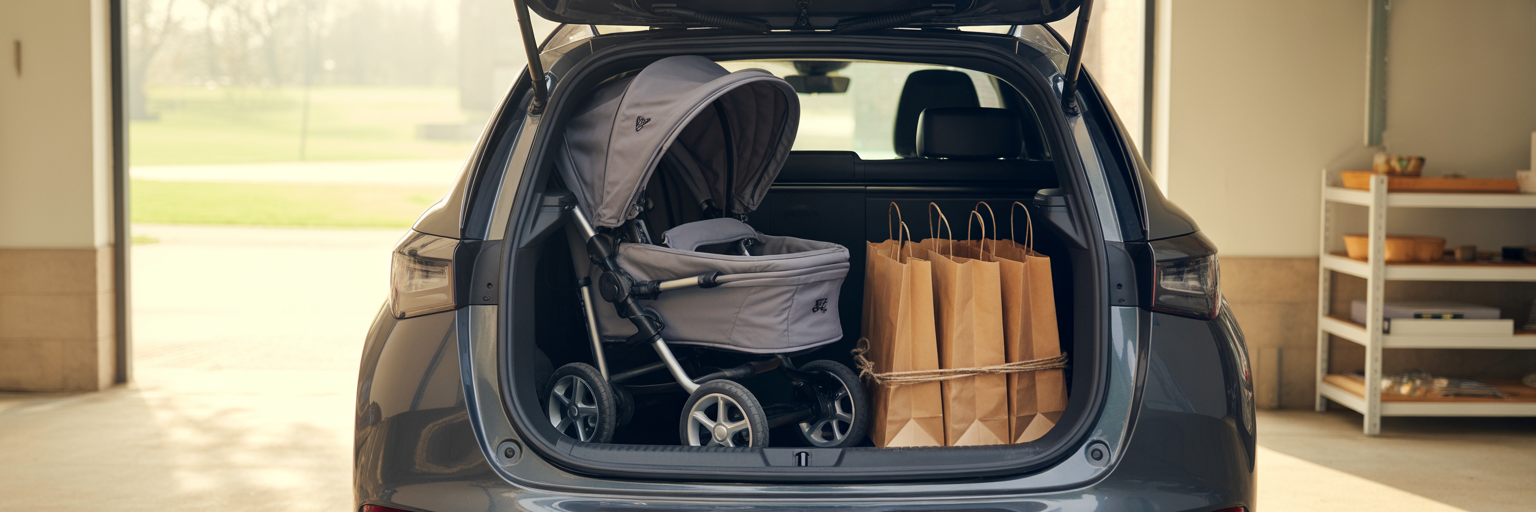
After conquering the car seat, the next challenge is the cargo area. A family’s gear can quickly overwhelm a small car, and this is where smart design matters more than raw numbers. While the Civic boasts 24.5 cubic feet of cargo space to the Mazda3’s 20.1, the real story is in how that space can be used.
Cargo Area Architecture: Beyond the Numbers
The Honda Civic’s cargo hold is a study in practicality. It features a wide and low hatch opening, minimizing the effort needed to lift heavy items over the bumper. The cargo area itself is a relatively square, uniform shape with minimal intrusion from the wheel wells, maximizing usable floor space. The Mazda3’s cargo area reflects its stylish exterior. The hatch opening is slightly narrower, and the load height is a bit higher. The space is more tapered toward the rear seats, and the wheel wells intrude more noticeably, creating a less uniform shape that can complicate packing.
The Stroller Loading Test
Our full-size stroller provides a clear demonstration of these differences. In the Honda Civic, the stroller can lie flat on the cargo floor, leaving ample room around it. This is a significant advantage. In the Mazda3, the stroller does not fit horizontally across the floor. It must be placed diagonally, immediately consuming a large portion of the available space and dictating how everything else must be packed. This single issue severely compromises the Mazda3 stroller space and its overall utility for a family that regularly uses a larger stroller.
The Grocery Run: Stacking vs. Arranging
With the stroller loaded, we add six bags of groceries. In the Civic, the bags can be arranged neatly in the space alongside and in front of the flat-lying stroller. There is enough room to prevent items from being crushed. In the Mazda3, the diagonally placed stroller leaves awkward, triangular gaps. The groceries must be carefully wedged into these spaces or, more likely, stacked on top of the stroller. This risks damaging fragile items like bread or eggs and makes unloading more complicated. Furthermore, the rigid cargo cover in both cars limits the height of what can be carried, but this becomes a bigger issue in the Mazda, where stacking is the only option.
Passenger Comfort and Weekend Trip Capacity
A family car must be versatile, handling both the daily commute and the occasional escape. This requires a thoughtful balance of passenger space and flexible cargo capacity, especially when a car seat is a permanent fixture.
The ‘Third Passenger’ Test
There are times when another adult, perhaps a grandparent, needs to ride along. With the large rear-facing car seat installed, we tested whether a third passenger could fit in the back seat. In the Honda Civic, it’s a tight squeeze but possible for short trips. The relatively flat rear seat cushion and decent shoulder room provide just enough space for a smaller adult to sit beside the car seat. The Mazda3’s rear seat is more challenging. Its sculpted, heavily bolstered outboard seats make the middle position narrower and less comfortable. Combined with less overall interior width, fitting an adult next to the car seat is not a realistic option in the Mazda3.
Packing for a Weekend Getaway
When packing for a weekend trip, the cargo limitations become even more apparent. In the Honda Civic, with the stroller loaded, there is still enough space for two small suitcases or duffel bags and a few smaller items. The car remains a fully functional four-seater. This flexibility is crucial when considering the best family road trip vehicles that are not boring. The Mazda3’s situation is far more compromised. With the stroller placed diagonally, there is very little functional room left for luggage. A family would almost certainly need to fold down the larger portion of the 60/40 split rear seat to fit their bags, effectively turning the car into a two-passenger vehicle for the duration of the trip. This severely limits its practicality as a primary family vehicle for travel.
Comparing the On-Road Driving Experience
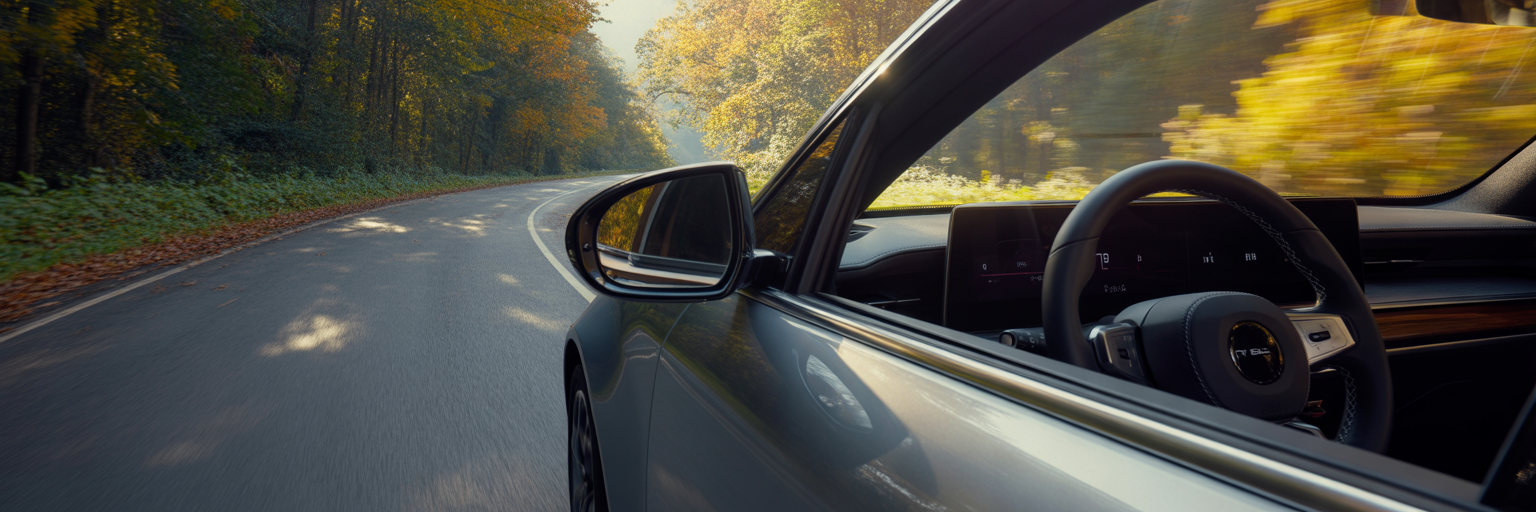
While practicality is paramount, the experience from behind the wheel still matters. This is where the philosophical differences between Mazda and Honda become most evident, offering a distinct choice for the driver in the family.
Ride Comfort vs. Sporty Handling
The Mazda3 is engineered for the driver who enjoys a spirited connection to the road. Its suspension is firmer, communicating more of the road surface and delivering sharp, responsive handling in corners. While engaging, this sporty tuning means bumps and imperfections are more noticeable, which could be a concern for a sleeping child in the back. The Honda Civic prioritizes a more serene experience. Its suspension is softer and more adept at absorbing road imperfections, resulting in a smoother, quieter ride. It feels composed and comfortable, making it an excellent cruiser for both city streets and long highway stretches, even if it lacks the athletic edge of the Mazda.
Engine Performance and Powertrain Choices
Under the hood, both cars offer compelling options. The Mazda3’s standard 191-horsepower engine is strong and capable. However, its available 250-horsepower turbocharged engine transforms the car into a genuinely quick and exciting machine. Crucially, Mazda also offers an all-wheel-drive system, a major advantage for buyers in climates with snow and rain. This feature puts it in competition with other capable vehicles, similar to the choice between a Subaru Crosstrek or Mazda CX-30 for your next AWD crossover. The Civic takes a different approach, focusing on efficiency. Its standard turbocharged engine is smooth and provides adequate power, but the standout is the optional hybrid powertrain. The hybrid delivers quiet, seamless acceleration and exceptional fuel economy, making it a smart choice for reducing running costs.
Driver Visibility and Confidence
Confidence behind the wheel is also about how well you can see out. The Honda Civic’s design features large windows and relatively thin pillars, creating an open, airy cabin with excellent all-around visibility. This makes parking, changing lanes, and navigating tight spaces less stressful. The Mazda3’s sleek, coupe-like styling comes with a compromise. Its thick rear C-pillars create significant blind spots, making the driver more reliant on the blind-spot monitoring system. While manageable, the restricted view is a noticeable trade-off for its dramatic design.
Interior Controls, Technology, and Safety
A modern family car is also a technology hub and a safety cocoon. The way a driver interacts with the car’s systems and the confidence provided by its safety features are critical components of the ownership experience in this compact car family review.
Mazda and Honda present two different philosophies for interior controls. The Mazda3 features a high-mounted widescreen display that is not a touchscreen. It is controlled exclusively by a rotary knob and shortcut buttons on the center console. Mazda’s rationale is that this system is less distracting to operate while driving. The Honda Civic uses a more conventional touchscreen interface, which is intuitive for anyone familiar with a smartphone. While potentially more distracting, it can be easier for a passenger to operate.
When it comes to safety, both cars are well-equipped, especially in the mid-range trims that families are likely to buy. Both typically earn high marks in crash tests, and to achieve this rating, vehicles must meet stringent criteria. You can review the latest IIHS Top Safety Pick criteria for 2026 compact cars to understand the requirements. Standard and available features on comparable trims include:
- Automatic Emergency Braking with Pedestrian Detection
- Lane Keeping Assist
- Adaptive Cruise Control
- Blind-Spot Monitoring
- Rear Cross-Traffic Alert
However, Honda includes a few thoughtful, family-focused touches. The Civic comes standard with a Rear Seat Reminder system, which alerts the driver to check the back seat before exiting the vehicle. It’s a simple but potentially life-saving feature that gives it a slight edge for parents. The alerts and driver-assist systems in both cars are generally well-tuned and helpful without being overly intrusive.
Analyzing Price and Long-Term Value
The final piece of the puzzle is the financial commitment. For a young family, every dollar counts, from the initial purchase price to the long-term cost of ownership. We compared popular mid-range trims that offer a strong balance of features, safety, and value.
The Mazda3 Hatchback in a Preferred trim and the Honda Civic Hatchback in an EX-L trim have comparable starting prices, often within a thousand dollars of each other. However, the value equation shifts when you consider running costs. The Civic holds a clear advantage in fuel economy. Its standard turbocharged engine is more efficient than the Mazda’s standard engine, and the available hybrid powertrain offers significant long-term savings at the pump.
Both Honda and Mazda have excellent reputations for reliability and strong resale value. This means that either car is a solid long-term investment, and both brands have a strong reputation for building vehicles that last, which is a key reason why some high-mileage cars age better than others. The choice comes down to balancing initial cost with ongoing expenses. The Mazda3’s available turbo engine and all-wheel drive will increase both the purchase price and fuel consumption. The Civic’s hybrid option, while potentially costing more upfront than the standard engine, promises the lowest running costs of the group.
| Feature | 2026 Mazda3 Hatchback (e.g., Preferred Trim) | 2026 Honda Civic Hatchback (e.g., EX-L Trim) |
|---|---|---|
| Est. MSRP | ~$28,000 | ~$29,000 |
| Engine | 2.5L 4-Cylinder (191 hp) | 1.5L Turbo 4-Cylinder (180 hp) |
| EPA-Est. MPG (Combined) | 30 MPG | 35 MPG |
| AWD Available? | Yes (Optional) | No |
| Hybrid Available? | No | Yes (Optional on other trims) |
| Cargo Volume | 20.1 cu ft | 24.5 cu ft |
| Key Safety Features | Blind Spot Monitoring, Rear Cross-Traffic Alert | Blind Spot Information System, Rear Seat Reminder |
Note: Prices and specs are estimated for 2026 models based on current trends. This table compares popular mid-range trims that offer a balance of features and value for families.
The Verdict: Which Hatchback Is Best for a Small Family?
After putting both hatchbacks through a rigorous real-world family test, the results are clear. While both are excellent vehicles, one is simply better suited to the demands of life with a young child. Here is our verdict.
- Winner for Car-Seat & Rear-Seat Comfort: Honda Civic. Its superior rear legroom, easier car seat installation, and more accommodating rear seat make it the clear winner for passenger-hauling duties. It creates a less stressful environment for both front and rear occupants.
- Winner for Cargo & Stroller Storage: Honda Civic. The larger, more practically shaped cargo area, lower load height, and ability to fit a stroller without compromising the entire trunk give it an insurmountable advantage in utility. It swallows gear in a way the Mazda3 simply cannot.
- Winner for Best Driving Experience: Mazda3. With its responsive handling, premium interior, and powerful optional turbo engine and all-wheel drive, the Mazda3 is undeniably the more engaging and enjoyable car to drive. It’s the choice for the parent who prioritizes the feel from behind the wheel.
Ultimately, while the Mazda3 is a beautiful, fun-to-drive car, its design creates too many compromises for daily family life. The Honda Civic Hatchback is the best hatchback for families with one young child. Its decisive advantages in interior space, cargo practicality, and family-friendly design details make it the more logical and less stressful choice. For navigating the daily challenges of parenthood, from car seats to strollers and groceries, the Civic is the partner that makes life easier.