
The Ford F-150 has long stood as a titan in the American truck market, celebrated for its power, versatility, and dependability. Yet, for many owners of the 2018 model, that reputation has been tested by a uniquely frustrating issue. This experience, a noticeable vibration or bumpy feeling that often materializes around 45 mph, has become one of the most discussed 2018 F-150 transmission problems. It feels less like a mechanical failure and more like a persistent hiccup in an otherwise smooth ride. If you have felt this, you are not alone. This is a well-documented concern, not an isolated incident.
The sensation is often described as driving over a miniature rumble strip when you least expect it, typically during light acceleration. The source of this annoyance is most commonly traced back to the advanced 10R80 10-speed automatic transmission. This component, designed for efficiency and performance, developed a peculiar quirk in certain vehicles. Understanding this issue is the first step toward resolving it. This article will explore the technical causes behind the shudder, explain the official fixes provided by Ford, and outline the actionable steps owners can take to restore their truck’s smooth performance.
Understanding the 2018 F-150 Transmission Shudder
The Ford F-150’s reputation as a dominant force in the American truck market is built on decades of reliability. However, this legacy was challenged for some owners of the 2018 model year, who began reporting a specific and irritating sensation while driving. From the driver’s seat, the F-150 transmission shudder manifests as a distinct vibration or a series of rapid bumps that interrupt an otherwise smooth acceleration. This often occurs as the vehicle approaches 45 mph, creating a moment of uncertainty and concern. It is not a violent jolt, but a persistent annoyance that detracts from the driving experience.
It is important to recognize that this is a widely documented issue, not a random mechanical breakdown. Your experience is valid and shared by a significant number of other owners. The common thread linking these reports is the 10R80 10-speed automatic transmission, a sophisticated piece of engineering that, in this case, developed a behavioral flaw. The problem is not a sign of imminent transmission failure but rather a complex software and calibration issue. By understanding the root cause, owners can approach the solution with confidence. In the following sections, we will examine the technical reasons for the shudder, review the official fixes from Ford, and provide a clear path for you to get the problem resolved.
A Closer Look at the 10R80 Transmission
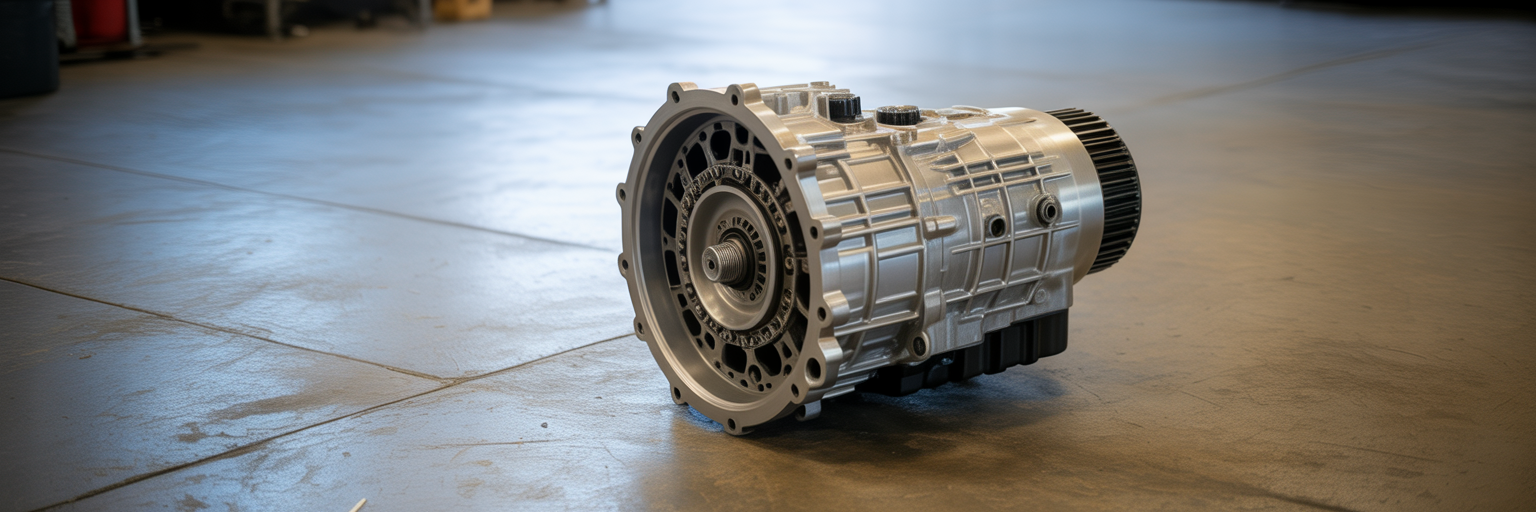
To understand the shudder, we first need to look at the hardware involved. The 10R80 10-speed automatic transmission was the result of a joint development effort between Ford and General Motors, designed to deliver improved fuel economy and seamless power delivery. With more gears to choose from, the engine can operate in its most efficient range more of the time. However, managing ten gears requires an incredibly complex control system, and this is where the root of the problem lies.
A central feature of this system is the adaptive shift strategy Ford implemented. Think of the transmission’s computer as having a learning curve. It is designed to monitor and learn your individual driving habits over time, adjusting when and how firmly it shifts to optimize performance and comfort for your specific style. When it works correctly, this technology is brilliant, creating a personalized driving experience. However, the initial learning phase or flawed early software versions can lead to undesirable behaviors, including the shudder that many owners experience. These 10R80 transmission issues are not typically a sign of mechanical breakdown but rather a quirk in the transmission’s “education” process.
Ford eventually identified that this problem was most prevalent in a specific batch of vehicles. Trucks built on or before May 15, 2018, are the primary focus of the Technical Service Bulletin (TSB) that addresses this concern. This production date provides a crucial piece of information for owners, helping them determine if their F-150 is part of the group most likely affected by the original, unrefined software calibration. The issue was not with the gears or clutches themselves, but with the instructions telling them how to behave.
Software Glitches and PCM Calibration Faults
The heart of your F-150’s operation is the Powertrain Control Module (PCM), a powerful computer that acts as the vehicle’s brain. It manages everything from fuel injection and ignition timing to, most importantly, the transmission’s shifting behavior. The overwhelming evidence points to the 2018 F-150 shudder being a software issue, not a hardware failure. The PCM relies on a “calibration” file, which is essentially a set of instructions that dictates how the transmission should engage its clutches and shift between gears under various conditions.
When this calibration file is outdated or contains flawed logic, the transmission can behave erratically. In the case of the 2018 F-150, the original software struggled to smoothly manage shifts under light throttle, particularly in the middle gears, resulting in the shudder. Ford addressed this by issuing a Technical Service Bulletin (TSB), which is a non-recall notice sent to dealerships providing specific instructions to fix a known, widespread issue. As highlighted in Ford’s TSB 18-2274, the official procedure was developed to resolve these “harsh/bumpy” shift and engagement concerns.
The primary solution is a PCM reprogramming F-150 procedure. This involves a technician connecting a diagnostic tool to the truck’s OBD-II port and “flashing” the PCM with updated software. This new calibration file contains revised shift logic that smooths out the problematic transitions and eliminates the shudder. Further evidence that software is the culprit can be found in a similar issue affecting some 2018 F-150s equipped with the 5.0L engine, built before November 27, 2017. These trucks also experienced shuddering, and the fix was, once again, a PCM update. This pattern confirms that the problem was rooted in the initial programming, not the mechanical integrity of the transmission itself.
An Expert’s View on Modern Transmission Quirks

To add perspective, we can turn to an industry voice like Marcus ‘Sully’ Sullivan, a veteran automotive engineer with over 30 years of experience in powertrain diagnostics. His take on these modern systems is insightful. “People expect modern transmissions to be perfectly invisible, but the complexity is staggering,” Sullivan explains. “The 10R80’s adaptive learning is brilliant, but its initial ‘education’ can be awkward. The shudder isn’t always a sign of failure; often, it’s the transmission trying to find its rhythm. The key is distinguishing a learning curve from a genuine fault, and that’s where proper diagnostics and software updates are critical.”
Sully’s point highlights the delicate balancing act that automotive engineers face. They must design transmissions that meet strict fuel efficiency standards while also delivering the smooth performance and responsive power that drivers expect. With ten gears and an adaptive learning algorithm, the number of variables is immense. The initial calibrations released from the factory are based on millions of miles of testing, but they cannot always account for every real-world driving style and condition. Sometimes, the initial programming simply misses the mark.
This perspective also helps demystify the “re-learning period” that occurs after a PCM update. Once the new software is installed, the transmission’s adaptive memory is reset. As you drive, it begins the process of learning your habits all over again. During this time, which can last for a few hundred miles, you might notice some unusual shift patterns. This is a normal and expected part of the solution. The transmission is simply adapting to the new instructions and recalibrating itself to your driving style.
How Dealers Address the Transmission Shudder
If you are experiencing the F-150 transmission shudder, the path to a solution is well-defined and typically handled at a Ford dealership. Here is a step-by-step guide to what you can expect during the process.
- Document the Problem: Before you even schedule an appointment, become a good observer. Note the specific conditions when the shudder occurs. What speed are you traveling? What gear is the transmission in, if you can tell? Is the engine warm or cold? Are you accelerating lightly, cruising, or going uphill? Providing this detailed information to the service advisor is invaluable for a quick and accurate diagnosis.
- The Diagnostic Process: When you arrive at the dealership, the technician will start by verifying your truck’s Vehicle Identification Number (VIN) and build date. This allows them to confirm if your F-150 falls under the known TSBs related to the transmission shudder. They will then connect to the vehicle to check the current PCM calibration file to see if it is an outdated version.
- PCM Reprogramming: If the technician confirms your truck has the old software, they will perform the PCM update. Using Ford’s Integrated Diagnostic System (IDS) or Ford J2534 Diagnostic Software (FJDS), they will connect to the OBD-II port under your dashboard. This is a non-invasive software flash that overwrites the old, problematic calibration with the new, corrected version. The process is straightforward and does not involve taking the transmission apart.
- The Re-Learning Phase: After the update, the service advisor should explain that the transmission will enter a re-learning period. It may take several hundred miles of mixed driving for the shifting to feel completely smooth and settled. This is normal as the adaptive strategy builds a new profile based on your driving habits.
- If the Shudder Persists: In the vast majority of cases, the PCM update is the definitive Ford F-150 shudder fix. However, if the problem remains after the correct calibration is installed, the TSB directs technicians to perform standard diagnostics to investigate other potential mechanical causes. While this is rare, it shows that the software fix is the first and most critical step in a logical diagnostic process. Beyond specific fixes, consistent care is essential for vehicle longevity, and it is always wise to understand how to keep your car’s engine running for years for overall reliability.
Exploring Other Sources of Drivetrain Vibration

While the 10R80 software calibration is the most common cause of the 2018 F-150 shudder, it is important to remember that not all vibrations are the same. A thorough diagnosis is essential to avoid unnecessary repairs. If the PCM update does not resolve the issue, or if your symptoms do not quite match the classic shudder description, other parts of the drivetrain could be the source. These issues can sometimes mimic a transmission problem, so it is helpful to know what to look for.
- Failing Torque Converter: The torque converter connects the engine to the transmission. If it begins to fail, it can cause a significant shudder, often described as feeling like you are driving over rumble strips. This is typically more pronounced under load and can occur at various speeds.
- Imbalanced Driveshaft or Worn U-Joints: The driveshaft transfers power to the wheels. If it is out of balance or if the universal joints (U-joints) that connect it are worn, it can cause a vibration that increases with vehicle speed. You might also hear a clunking noise when you accelerate from a stop.
- Out-of-Balance Tires or Wheels: This is a very common cause of vibration. It is strictly speed-dependent, often appearing in a specific range (like 55-65 mph) and sometimes disappearing at higher speeds. You may feel it in the steering wheel or through the seat.
- Engine Misfire: When a cylinder fails to fire properly, it can create a rhythmic hesitation or stumble that you can feel throughout the vehicle. An engine misfire is almost always accompanied by an illuminated check engine light.
While the F-150 has this particular quirk, every truck has its own set of potential issues and strengths, as you can see when comparing models in a Nissan Frontier vs Chevrolet Colorado matchup. The following table can help you differentiate between these common sources of vibration.
| Potential Cause | Common Symptoms | When It Occurs |
|---|---|---|
| 10R80 PCM Calibration Issue | A quick shudder or bumpy sensation during light acceleration. | Typically between 3rd and 5th gear, often around 40-50 mph. |
| Torque Converter Failure | A more pronounced shudder, especially under load or when gears are about to shift. May feel like driving over rumble strips. | Can occur at various speeds, often gets worse as the transmission heats up. |
| Imbalanced Driveshaft / Worn U-Joints | A consistent vibration that increases with vehicle speed. May be accompanied by a clunking noise on acceleration. | Starts at a certain speed (e.g., 45 mph) and gets progressively worse as speed increases. |
| Out-of-Balance Tires | A steering wheel shake or seat vibration that is strictly speed-dependent. | Appears at a specific speed range (e.g., 55-65 mph) and may disappear at higher speeds. |
| Engine Misfire | A rhythmic hesitation or stumble felt throughout the vehicle. Often accompanied by a check engine light. | Can occur at any speed, both while accelerating and at idle. |
Note: This table provides general guidance for differentiating common sources of vibration. A professional diagnosis is essential to accurately identify the root cause.
What F-150 Owners Can Do
Feeling a persistent shudder in your truck can be disheartening, but you have a clear path forward. Taking a proactive approach can make the process of getting it fixed much smoother. Here is an actionable checklist to empower you as an owner.
- Check Your VIN: Before contacting a dealer, use your Vehicle Identification Number (VIN) to check for any open recalls or customer satisfaction programs on the official Ford owner website or the National Highway Traffic Safety Administration (NHTSA) site. This arms you with information about what Ford has officially recognized for your vehicle.
- Communicate Clearly: When you speak with a service advisor, be precise. Instead of saying “my truck is acting weird,” use a simple script. For example: “I’m experiencing a shudder from the transmission between 40 and 50 mph, primarily after the truck has warmed up and under light acceleration. I believe it may be related to TSB 18-2274.” This shows you have done your research and helps them get to the root cause faster.
- Maintain Transmission Health: While not a direct fix for the software shudder, adhering to the manufacturer’s recommended service intervals is crucial for long-term reliability. Regular transmission fluid and filter changes keep the mechanical components in optimal condition. Promptly addressing issues like the transmission shudder is a key reason why some high-mileage cars age better than others.
- Be Patient During the Re-Learn: If you get the PCM flashed, remember the adaptive re-learning period. To help the transmission’s computer build an accurate shift profile more quickly, use a mix of driving styles. Include gentle acceleration, moderate acceleration, some city stop-and-go traffic, and steady highway cruising. This gives the system the data it needs to fine-tune its performance.
Long-Term Reliability and the 10R80’s Evolution

The transmission issues that were prominent in the 2018 model year can be unsettling, but it is important to view them in the proper context. These problems were largely addressed in subsequent model years through factory-installed software updates and ongoing refinements to the 10R80 transmission. The situation serves as an important lesson in the automotive industry’s shift toward highly software-dependent systems, where initial rollout challenges can sometimes be part of the development process for new, complex technologies.
A 2018 F-150 that has received the updated PCM calibration is not an inherently unreliable vehicle. Once the software is corrected, the transmission is generally robust and performs as it was originally intended, delivering both efficiency and smooth power. The mechanical components of the 10R80 are solid; the problem was with the instructions they were being given. With the fix applied, owners can be confident in their truck’s long-term durability.
In summary, the 2018 F-150 transmission shudder is a known, documented, and fixable issue caused primarily by a software calibration flaw. For owners experiencing this specific problem, the solution is clear and well-defined, starting with a dealership diagnosis and the correct PCM reprogramming. Once resolved, the F-150 can get back to doing what it does best: serving as a capable and dependable partner for work and daily life. It rightfully reclaims its spot as a top contender in the world of trucks.