
The automotive market’s focus on fuel-efficient sedans often creates a physical challenge for taller drivers. Finding a car that is easy on gas without requiring a daily gymnastic routine to get into can feel like a search for a unicorn. This detailed Toyota Crown vs Hyundai Sonata Hybrid comparison examines two very different solutions for a 6-foot-4 driver who needs easy entry and excellent mileage for frequent two-hour highway trips. This driver puts about 18,000 miles on their car annually and values an upright seating position.
The 2026 Toyota Crown is a unique proposition. It is a lifted sedan with standard all-wheel drive, blending car-like dynamics with a crossover-inspired ride height. Its design prioritizes a commanding view of the road and, crucially, easier access. In the other corner, the 2026 Hyundai Sonata Hybrid represents the pinnacle of traditional sedan efficiency. It is engineered to maximize interior volume and deliver exceptional fuel economy in a sleek, low-slung package. This analysis will dissect everything from the biomechanics of entry and exit to long-term ownership costs, creating a definitive guide for anyone considering these hybrid sedans for highway driving.
Toyota Crown vs Hyundai Sonata Hybrid: A Tall Driver’s Dilemma
For a tall person, the simple act of getting into a car can be a daily point of friction. The market’s push toward aerodynamic, fuel-efficient sedans often results in low rooflines and seats that feel like they are on the pavement. This creates a dilemma for drivers who want great gas mileage but find low-slung vehicles difficult to live with. The 2026 Toyota Crown and 2026 Hyundai Sonata Hybrid present two compelling, yet fundamentally different, answers to this problem. Our specific scenario involves a 6-foot-4 driver who spends significant time on the highway and considers easy entry and exit a top priority.
The Crown is Toyota’s unconventional answer. It is a full-size sedan that sits nearly four inches taller than a Camry, borrowing DNA from crossovers to create a vehicle that is easier to get into and out of. With standard all-wheel drive and a raised seating position, it aims to deliver a sense of security and comfort that many traditional sedans lack. It blurs the lines between categories, much like some modern SUVs that prioritize on-road comfort over rugged capability. This approach directly targets drivers who feel left behind by the low-slung trend.
Conversely, the Hyundai Sonata Hybrid is a masterclass in optimizing the traditional sedan formula. Its design is focused on aerodynamic efficiency to achieve its impressive fuel economy figures. Hyundai’s engineers have worked to maximize the cabin space within that sleek profile, creating an interior that feels surprisingly open. It promises exceptional value, a long warranty, and some of the best MPG ratings in its class. For the tall driver, the question is whether its clever interior packaging can overcome the inherent challenges of its lower stance. This comparison will determine which of these hybrid sedans for highway driving best serves a driver who needs both comfort and efficiency.
Analyzing the Critical Moment: Entry and Exit Ergonomics
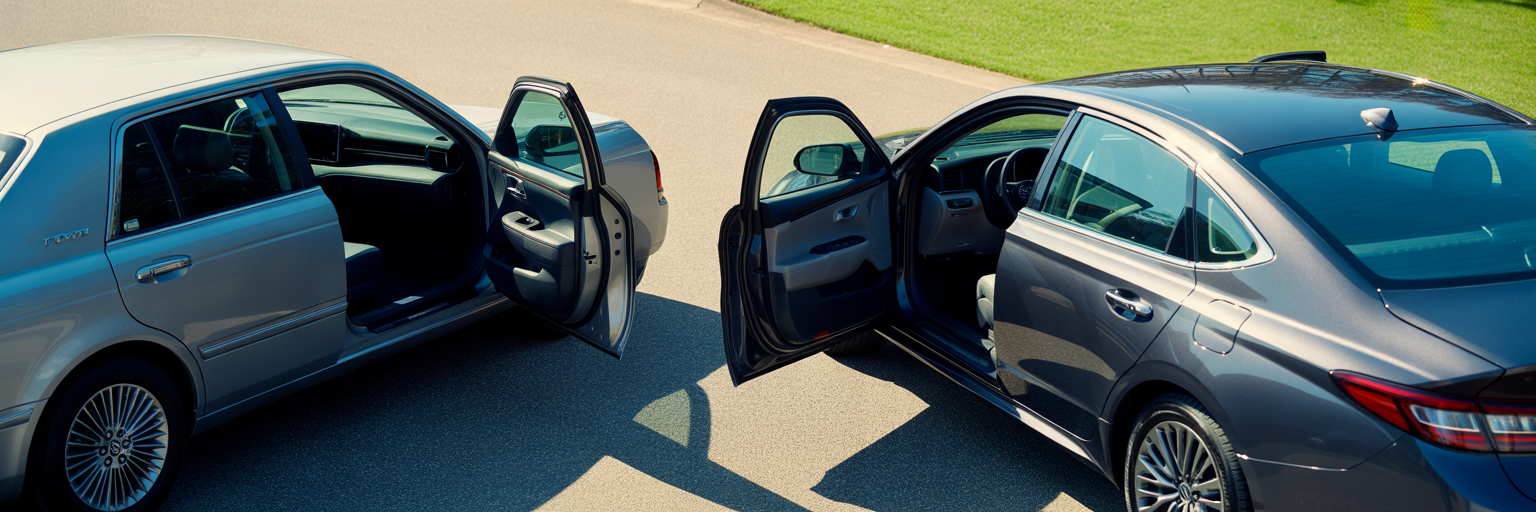
The first and last impression a car makes each day happens during entry and exit. For a tall driver, this moment can be the difference between a comfortable companion and a source of daily annoyance. While both the Crown and Sonata Hybrid are four-door sedans, their philosophies on accessibility are worlds apart. We will not assume the taller car is automatically better; instead, we will look at the specific measurements that define the experience.
The Biomechanics of the ‘Drop and Climb’
Getting into a low car involves a distinct physical motion: a controlled drop into the seat. This action puts pressure on the knees and lower back. Exiting requires the opposite: a push-up motion, using your legs and sometimes the door frame or steering wheel for leverage. For a 6-foot-4 individual, this “drop and climb” is exaggerated. Over time, performing this maneuver multiple times a day can lead to genuine physical strain. The ideal vehicle minimizes this vertical travel, allowing the driver to pivot into the seat rather than fall into it.
Step-In Height: A Numbers Game
Here, the data tells a clear story. The Toyota Crown features a step-in height of approximately 16.7 inches, measuring from the ground to the door sill. The Hyundai Sonata Hybrid’s step-in height is about 15.0 inches. That 1.7-inch difference may not sound like much, but it directly translates to a reduction in the “drop” distance. The Crown’s higher floor and seat hip-point mean the driver’s body travels less vertically, making the process of sitting down feel more like taking a seat in a chair than lowering onto the floor.
Beyond Height: Door and Roofline Design
A high seat is only helpful if you can get your head through the door opening without contorting. The Sonata Hybrid actually has a generously sized door opening, a testament to Hyundai’s smart packaging. However, the Crown’s entire architecture is built around accessibility. Its taller roofline and more upright A-pillar create a larger portal for the driver to pass through. This means less ducking is required, even for someone well over six feet. While the Sonata’s door is large, the Crown’s combination of a higher seat and a taller, more open doorway provides a clear advantage. It is one of the best sedans with easy entry because it addresses both the vertical and horizontal aspects of getting in, significantly reducing the daily physical toll.
Settling In: A Deep Dive into Cockpit and Driving Position
Once inside, the focus shifts to long-term comfort. A car that is easy to enter is of little use if the driving position is cramped or unsupportive over a two-hour highway journey. Here we examine how the Toyota Crown interior space and the Sonata’s cabin cater to a tall driver’s needs for headroom, legroom, and overall ergonomic harmony.
Headroom vs. Legroom: The Great Trade-Off
On paper, the Hyundai Sonata appears to have a massive advantage with 46.1 inches of front legroom compared to the Toyota Crown’s 42.1 inches. However, these numbers do not tell the whole story. The Sonata achieves its impressive figure with a more reclined seating posture. For a tall driver who prefers to sit upright, much of that extra legroom is unusable without pushing the seat far back and compromising rear passenger space. The Crown’s chair-like seating position is more natural for an upright posture. It allows the driver to sit with their knees bent at a more comfortable angle, making the 42.1 inches of legroom feel more effective and sustainable for long drives.
The Importance of Thigh Support
For long-legged drivers, proper thigh support is critical for preventing fatigue. A short seat cushion leaves the thigh unsupported, putting strain on the lower back and leg muscles. Both vehicles offer decent seat-bottom length, but the Crown’s more elevated and commanding position gives it a slight edge. The ability to adjust the seat height and tilt allows the driver to create a solid base of support under their entire upper leg, which is a key factor in comfort during a two-hour drive.
Adjustability and Pedal Placement
Both cars offer a good range of seat and steering wheel adjustability. The steering wheels in both the Crown and Sonata telescope sufficiently to accommodate long arms, allowing the driver to maintain a relaxed bend in their elbows. Pedal placement is also well-considered in both models, with neither forcing an awkward ankle angle to operate the accelerator or brake. This is a crucial detail, as poor pedal positioning can lead to foot and shin fatigue on the highway.
Visibility and Blind Spots
The Crown’s higher ride height provides a clear advantage in forward visibility. The driver sits higher, offering a more commanding view over the hood and surrounding traffic. This can boost confidence, especially in dense traffic. The Sonata’s lower, sleeker profile results in a more cockpit-like view. While forward visibility is good, the Crown’s elevated perspective is noticeably better. Both cars have some blind spots due to modern safety structures and sloping rooflines, but their standard blind-spot monitoring systems effectively mitigate this issue.
The Highway Experience: Ride, Noise, and Driver Aids

With our driver spending most of their 18,000 annual miles on the highway, the car’s behavior at cruising speed is paramount. This section evaluates how the Crown and Sonata Hybrid perform in terms of ride comfort, cabin quietness, and the effectiveness of their driver-assistance technologies.
Suspension and Ride Comfort
The Toyota Crown is tuned for comfort. Its suspension, aided by the taller sidewalls of its tires, does an excellent job of absorbing highway imperfections like expansion joints and rough patches. The ride is composed and feels substantial, isolating occupants from the road surface. The Hyundai Sonata Hybrid also delivers a comfortable ride, but it feels more connected to the road. It is smooth on good pavement but can feel slightly busier over broken surfaces compared to the Crown’s more detached and serene character.
Cabin Serenity at 70 MPH
Toyota leveraged its near-luxury positioning with the Crown, investing heavily in sound deadening. At 70 mph, the cabin is impressively quiet. Wind noise is minimal, and road noise is well-suppressed, creating a relaxing environment for long journeys. The Sonata Hybrid is also quiet for its class, but the Crown is a clear step above. The additional insulation and acoustic glass in the Toyota make a tangible difference, reducing the fatigue that can come from constant low-level noise on the highway.
Powertrain Responsiveness for Merging and Passing
Both hybrid systems are adept at providing instant torque for confident merging and passing. The Sonata Hybrid’s powertrain is smooth and delivers power in a linear fashion. The Crown’s hybrid system feels similarly responsive, with the electric motors providing immediate thrust when needed. Neither vehicle feels underpowered for typical highway maneuvers, offering the driver peace of mind when needing to accelerate into a gap in traffic.
Evaluating a ‘Smart’ Cruise Control
For long, repetitive highway drives, a good adaptive cruise control system is a significant asset. Both Toyota’s Safety Sense and Hyundai’s Highway Driving Assist are mature, effective systems. They maintain following distance smoothly and the lane-centering functions reduce the constant small steering corrections that contribute to driver fatigue. Both systems work well, making two-hour stints behind the wheel less taxing. For drivers dealing with discomfort from extended periods of sitting, some explore external wellness tools. For example, a practical guide to PEMF mats for pain management highlights recovery methods that can complement a comfortable vehicle by addressing muscle fatigue after the drive is over.
Fuel Efficiency and Powertrain Showdown
While comfort is key, the primary reason for choosing a hybrid is fuel efficiency. In this category, the fundamental design differences between the Crown and Sonata Hybrid create a clear divide. We will break down the numbers and what they mean for the driver’s wallet and time spent at the pump.
The MPG Gap and Your Wallet
The Hyundai Sonata Hybrid fuel economy is its headline feature. The SEL trim is EPA-rated at an impressive 51 MPG on the highway. The Toyota Crown, burdened by its greater weight and standard all-wheel drive, achieves a still-respectable 41 MPG highway. While a 10 MPG difference might not seem dramatic, it adds up. For our driver covering 18,000 miles annually, the cost difference is significant.
- Hyundai Sonata Hybrid: 18,000 miles / 51 MPG = 353 gallons. At $3.50/gallon, the annual fuel cost is approximately $1,235.
- Toyota Crown: 18,000 miles / 41 MPG = 439 gallons. At $3.50/gallon, the annual fuel cost is approximately $1,537.
That is a savings of over $300 per year with the Sonata, a financial advantage that is hard to ignore. These figures are consistent with data from reputable sources, as a recent analysis by U.S. News shows when comparing vehicle specifications.
Driving Range and Fewer Fuel Stops
Superior fuel economy also translates to a longer driving range. The Sonata Hybrid can travel well over 600 miles on a single tank of gas, while the Crown’s range is closer to 590 miles despite a larger fuel tank. For someone on frequent two-hour drives, the Sonata’s longer legs mean fewer fuel stops over the course of a year, adding a small but welcome measure of convenience. This efficiency is a key factor in why some high-mileage cars age better than others from a cost perspective.
The All-Wheel Drive Advantage
The Crown’s primary powertrain advantage is its standard electronic on-demand all-wheel drive. This system provides enhanced traction and stability in rain, snow, or other inclement weather. For a driver who cannot work from home when the weather turns bad, this is a significant safety and confidence-boosting feature. The Sonata Hybrid is available only with front-wheel drive, which is perfectly adequate for most conditions but lacks the all-weather security of the Crown’s AWD system.
Beyond the Driver: Rear Seat and Cargo Practicality
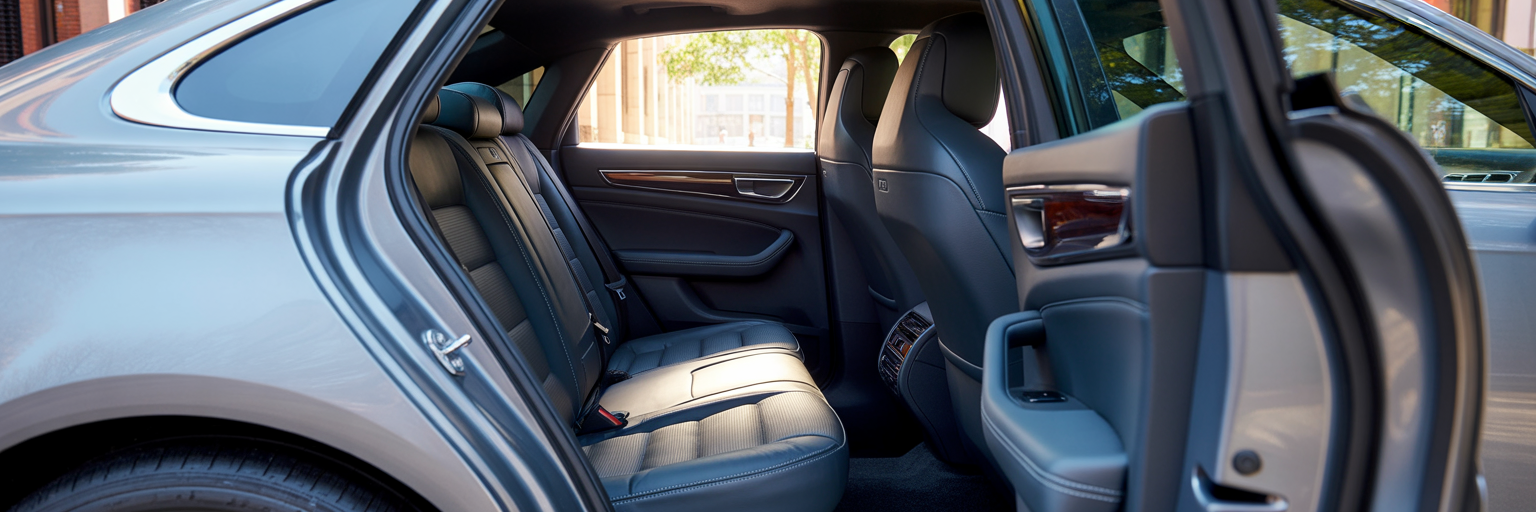
Even if the car is primarily for the driver, the needs of occasional rear passengers and cargo-hauling ability are important considerations. Here, we evaluate how the Crown and Sonata Hybrid accommodate people and things beyond the front seats.
Rear Passenger Entry and Exit
Just as the driver benefits from the Crown’s height, so do rear passengers. The taller door openings and higher seat cushion make getting into the back of the Crown noticeably easier than the Sonata. Passengers do not have to duck as much or drop as far, a benefit that older passengers or those with mobility issues would particularly appreciate.
The ‘Behind Me’ Test: Rear Legroom
This is where the Sonata’s larger interior volume shines. The EPA measures the Sonata’s passenger volume at 104.4 cubic feet, compared to the Crown’s 98 cubic feet. In the real world, this difference is most apparent in the back seat. With the driver’s seat adjusted for a 6-foot-4 person, the Sonata offers more usable knee room and foot space for the passenger sitting behind. While the Crown is adequate, the Sonata provides a more comfortable space for adults on longer trips, making it one of the better vehicles for family road trips in this regard.
Trunk Space and Usability
Both sedans offer generous trunk space that is not compromised by their hybrid batteries. The Sonata offers 16 cubic feet of cargo room, while the Crown provides a slightly smaller 15.2 cubic feet. More important than the raw numbers is the trunk opening itself. Both have wide, practical openings that make it easy to load bulky items like suitcases or golf bags. The cargo floors are flat and usable in both vehicles.
The Spare Tire Question
For a driver who frequently travels on the highway, a flat tire can be more than an inconvenience. The Hyundai Sonata Hybrid comes with a temporary spare tire, providing peace of mind that you can get back on the road and to a repair shop. The Toyota Crown, in contrast, comes only with a tire repair kit. While these kits can handle small punctures, they are useless for a sidewall tear or major tire damage, potentially leaving a driver stranded and waiting for roadside assistance.
The Bottom Line: Comparing Cost of Ownership
A car purchase is more than just the sticker price. It is a long-term financial commitment that includes fuel, insurance, maintenance, and depreciation. This section provides a clear breakdown of the total cost of ownership for the Toyota Crown and Hyundai Sonata Hybrid, revealing which car is the smarter long-term investment. The Crown’s premium positioning comes with a higher initial cost, while the Sonata is built around a strong value proposition.
| Cost Factor | Toyota Crown (XLE Hybrid) | Hyundai Sonata (Hybrid SEL) | Advantage |
|---|---|---|---|
| Starting MSRP (Approx.) | ~$41,000 | ~$32,000 | Sonata |
| Highway Fuel Economy | 41 MPG | 51 MPG | Sonata |
| Annual Fuel Cost (18k mi @ $3.50/gal) | ~$1,530 | ~$1,235 | Sonata |
| Basic Warranty | 3 years / 36,000 miles | 5 years / 60,000 miles | Sonata |
| Powertrain Warranty | 5 years / 60,000 miles | 10 years / 100,000 miles | Sonata |
| Drivetrain | Standard AWD | Standard FWD | Crown |
Note: MSRP and fuel costs are estimates for comparison purposes and can vary. This table summarizes the key financial and warranty differences, highlighting the Sonata’s strong value proposition against the Crown’s standard all-wheel drive.
Beyond the numbers in the table, expected depreciation is another factor. Toyota has a stellar reputation for holding value, which may help offset some of the Crown’s higher initial price. However, Hyundai’s reputation has improved dramatically, and the Sonata is also expected to be a solid performer. The most significant long-term advantage for the Sonata is its warranty. Hyundai’s 10-year/100,000-mile powertrain warranty is the best in the business, offering a decade of peace of mind that Toyota’s 5-year/60,000-mile coverage cannot match. Insurance and replacement tire costs are likely to be comparable between the two models. When all factors are considered, the Sonata Hybrid presents a more compelling financial case. At Car Phanatics, we offer many more vehicle comparisons to help buyers make these important financial decisions.
Final Verdict: The Best Hybrid Sedan for a Tall Driver
After a thorough analysis of ergonomics, performance, practicality, and cost, a clear picture emerges. The Toyota Crown and Hyundai Sonata Hybrid are both excellent vehicles, but they excel in different areas. For a tall driver prioritizing easy entry and long-distance comfort, the choice depends on whether daily physical ease outweighs long-term financial savings. The final decision comes down to which car best solves the driver’s most significant pain points.
To make the conclusion as clear as possible, here are the winners for each key category:
- Easy Entry: Toyota Crown, for its superior elevated seat height and taller door opening.
- Tall-Driver Comfort: Toyota Crown, due to its upright, commanding driving position and superior ride quality.
- Rear-Seat Space: Hyundai Sonata, for its larger overall passenger volume and better legroom behind a tall driver.
- Highway Fuel Economy: Hyundai Sonata, by a significant and cost-saving margin.
- Overall Value: Hyundai Sonata, thanks to its lower price, better MPG, and industry-leading warranty.
For the specified 6-foot-4 driver who finds low cars physically taxing, the Toyota Crown is the superior choice. The daily, tangible benefit of its effortless entry and exit, combined with its serene highway ride and commanding driving position, directly addresses the primary complaints of many tall drivers. It is one of the best cars for tall drivers precisely because it was engineered to solve this ergonomic problem, and that comfort justifies its higher cost.
However, if budget, long-term running costs, and maximum efficiency are the top priorities, the Hyundai Sonata Hybrid is the more logical and financially sound pick. It offers substantial fuel savings and an unbeatable warranty, all while providing a comfortable and spacious cabin. The final choice is a personal one: a decision between the Crown’s everyday physical comfort and the Sonata’s undeniable long-term financial efficiency.