
With average new four-wheel-drive prices climbing past $45,000 in recent years, enthusiasts are increasingly turning to the secondary market to build capable trail rigs without taking on massive auto loans. Understanding which older platforms combine mechanical simplicity with structural durability allows you to master off-road travel on a sensible budget while securing one of the best used SUVs for off-roading under $15,000.
Finding the Best Used SUVs for Off-Roading Under $15,000
The 2026 secondary market for four-wheel-drive rigs rewards patient shoppers who understand vehicle depreciation curves. A $15,000 price ceiling represents a sweet spot for utility vehicles built in the mid 2000s and early 2010s. At this stage in their lifecycle, the brutal initial depreciation has completely flattened out, yet you do not have to scrape the bottom of the barrel for rusted project rigs. Searching for the best used SUVs for off-roading under $15,000 puts you right in the zone of well-maintained, second-owner trucks that still have plenty of mechanical life left in their drivetrains, separating dependable daily-drivable rigs from fragile cheap off road vehicles.
Body-on-Frame Construction vs. Unibody Platforms
When shopping in this price bracket, your primary structural decision comes down to traditional body-on-frame construction versus unibody architecture. A separate steel ladder frame acts as a dedicated backbone that resists torsional flex when one wheel drops into a deep rut. That heavy steel foundation also provides solid mounting points for recovery winches, aftermarket steel bumpers, and frame-mounted rock sliders. While select reinforced unibody vehicles can handle moderate trails, a true ladder frame absorbs years of washboard vibrations and rock impacts without throwing door gaps out of alignment or fatiguing spot welds.
Mechanical Anatomy of a True 4×4
Badge engineering has blurred the line between genuine trail rigs and commuter crossovers, making it vital to inspect the actual hardware underneath the floorboards. While standard all-wheel-drive crossovers work well for graded dirt roads, as we detailed in our comparison of the Mazda CX-50 and Subaru Outback, technical terrain demands a two-speed transfer case. True low-range gearing, or 4-Low, multiplies engine torque at low speeds so you can crawl over ledges with complete throttle control and descend steep grades using engine braking rather than cooking your brake pads. Pair that transfer case with locking center or rear differentials to keep power flowing when a tire lifts into the air, alongside generous approach, breakover, and departure angles that keep vulnerable plastic bumpers off the rocks.
Balancing Mileage and Platform Pedigree
Every shopper with $15,000 in hand eventually faces the same crossroads in the classifieds: choosing between a legendary Toyota or Lexus platform showing 180,000 miles versus a less coveted domestic or Mitsubishi badge with 110,000 miles. Certain platforms command a heavy price premium because their cast-iron blocks, under-stressed transmissions, and heavy-duty differentials were engineered for commercial service overseas, a phenomenon we explored in our analysis on why some high-mileage cars age better than others. Ultimately, genuine trail work requires a two-speed transfer case, strong aftermarket support, and a clean undercarriage. Whether your prospective rig shows 115,000 or 185,000 miles on the odometer, documented fluid changes and zero structural rust matter far more than the badge on the grille.
7 Proven Used Off-Road SUVs With Lasting Durability
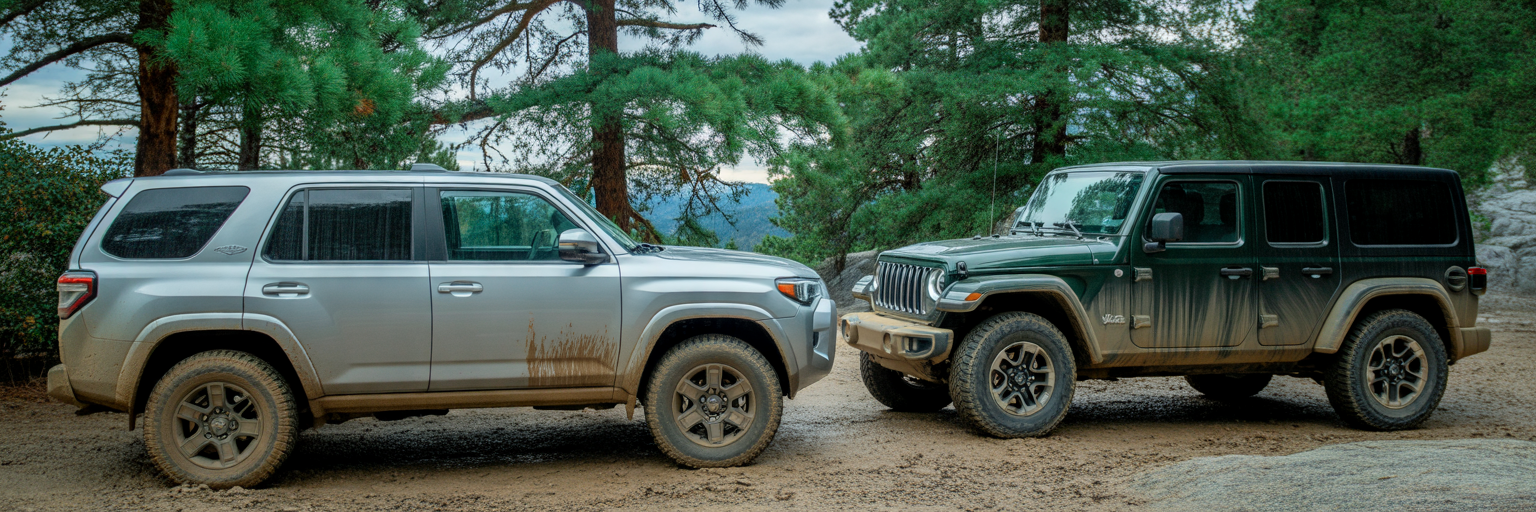
Sorting through local listings is much easier when you know exactly which chassis codes, engine families, and transfer cases hold up to real trail abuse. The following seven models represent the most reliable used 4×4 SUVs available under our budget cap, offering a proven mix of rock-crawling articulation and long-distance touring comfort.
2003 to 2010 Toyota 4Runner
Any comprehensive used Toyota 4Runner buying guide starts with the fourth-generation (2003 to 2009) and early fifth-generation (2010) models, which remain the undisputed benchmark for mechanical longevity beyond 200,000 miles. Buyers on the fourth-generation platform can choose between two legendary powerplants. The 4.0-liter 1GR-FE V6 uses a low-maintenance timing chain and selectable part-time four-wheel drive, whereas the optional 4.7-liter 2UZ-FE V8 utilizes a timing belt and comes exclusively with full-time four-wheel drive. Both configurations employ a Torsen limited-slip center differential that can be locked manually for a rigid 50/50 front-to-rear torque split on loose surfaces.
Despite its bulletproof powertrain, the 4Runner has one major Achilles heel that requires your undivided attention before money changes hands. The fully boxed steel ladder frame traps moisture and road salt, leading to severe internal rust perforation in northern winter states. Always check the frame rails next to the catalytic converters and rear trailing arm mounts before falling in love with shiny paint.
2007 to 2014 Jeep Wrangler JK
When the trail turns into a boulder field, nothing in this price range matches the pure geometry and suspension articulation of the Jeep Wrangler JK. Equipped from the factory with solid Dana front and rear live axles, removable doors, a removable top, and the largest aftermarket parts catalog on the planet, the JK was built specifically for technical rock crawling. Standard Sport and Sahara trims feature the dependable Command-Trac transfer case with a 2.72:1 low-range ratio, while Rubicon models upgrade to the heavy-duty Rock-Trac 4:1 transfer case, Dana 44 front and rear axles, electronic locking differentials, and an electronic sway bar disconnect.
Model year selection dictates your ownership experience with the JK platform. Early 2007 to 2011 models came equipped with a sluggish 3.8-liter minivan-derived V6 known for heavy oil consumption, spun bearings, and anemic highway gearing via its four-speed automatic transmission. As highlighted in MotorTrend, buyers should strongly prioritize 2012 to 2014 Wrangler models to secure the 285-horsepower 3.6-liter Pentastar V6 and the much stronger WA580 five-speed automatic transmission, just as they recommend verifying frame integrity on high-mileage 4Runners.
2005 to 2015 Nissan Xterra
Because so many shoppers blindly chase the Toyota badge, the second-generation Nissan Xterra remains one of the smartest undervalued body-on-frame bargains on the market. Built on Nissan’s rugged F-Alpha pickup truck platform, every second-generation Xterra packs a stout 4.0-liter VQ40DE V6 producing 261 horsepower and 281 pound-feet of torque, paired with a solid rear axle suspended by heavy-duty leaf springs. If your budget allows, hunt down the Off-Road or Pro-4X trim level, which adds an electronic locking rear differential, factory Bilstein shocks, heavier skid plates, and roof-mounted off-road lights.
When evaluating automatic 2005 to 2010 Xterras, you must verify that the dreaded SMOD, or Strawberry Milkshake of Death, has been addressed. A design flaw in the original Calsonic radiator allows the internal wall separating engine coolant from automatic transmission fluid to crack, pumping glycol into the transmission and destroying its planetary gears and valve body. Check under the hood for an updated aftermarket radiator part number or look at the lower radiator lines to see if a previous owner bypassed the internal cooler in favor of an external transmission cooler.
2003 to 2009 Lexus GX 470
Enthusiasts building budget overlanding rigs have long exploited a strange quirk in the used car market: the Lexus GX 470 frequently sells for less than an equivalent V8 Toyota 4Runner. Underneath its leather upholstery and wood trim, the GX 470 is actually a rebadged Toyota Land Cruiser Prado 120 sold across Australia, Africa, and the Middle East. It shares the exact same cast-iron 4.7-liter 2UZ-FE V8, full-time four-wheel-drive system with a locking Torsen center differential, and boxed frame architecture, making it a regular star in our guide to reliable used luxury SUVs that will not bankrupt owners on maintenance.
Select GX 470 models also came equipped with the Kinetic Dynamic Suspension System, known as KDSS, which uses hydraulic cylinders on the front and rear sway bars to keep the body flat in highway corners while automatically unlocking for huge wheel articulation off-road. Nearly every GX 470 left the factory with rear pneumatic air springs that inevitably dry rot and leak past 120,000 miles, though swapping them out for traditional steel coil springs takes just an afternoon in the driveway and permanently solves the issue.
2011 to 2015 Jeep Grand Cherokee WK2
If your weekend adventures involve driving 400 highway miles to reach a trailhead, the 2011 to 2015 Jeep Grand Cherokee WK2 blends refined road manners with surprising off-road muscle. Featuring a rigid unibody chassis and four-wheel independent suspension co-developed during the DaimlerChrysler era, the WK2 can be found with either the dependable 3.6-liter Pentastar V6 or the torquey 5.7-liter Hemi V8. However, you must inspect the center console carefully when shopping, because base Quadra-Trac I models lack a low-range transfer case entirely.
Only purchase a WK2 equipped with Quadra-Trac II or Quadra-Drive II, easily identified by the Selec-Terrain dial and dedicated 4WD Low button on the console. Quadra-Drive II adds an electronic limited-slip rear differential that locks up seamlessly when wheel slip is detected. While the optional Quadra-Lift air suspension provides remarkable ground clearance at the push of a button, aging air struts, valve blocks, and compressors fail frequently in cold weather and cost thousands to replace, making coil-sprung WK2 models the much smarter long-term buy.
2000 to 2006 Chevrolet Tahoe and GMC Yukon Z71
Sometimes there is no substitute for sheer interior volume and V8 grunt, which is where the GMT800 generation Chevrolet Tahoe and GMC Yukon shine. Powered by General Motors’ legendary cast-iron 5.3-liter Vortec LM7 V8, these full-size trucks effortlessly swallow sleeping platforms, heavy recovery gear, and family cargo while pulling trailers up mountain passes. Readers weighing how the Chevy platform stacks up against its primary domestic rival can check out our full-size SUV comparison between the Tahoe and Expedition. For dedicated dirt duty, target the Z71 off-road package, which includes factory skid plates, specific torsion keys, tubular side steps, and the mechanical G80 Eaton locking rear differential that automatically locks both rear wheels together when one spins faster than the other at low speeds.
The GMT800 platform enjoys the cheapest and most accessible replacement parts in North America, with alternators, water pumps, and fuel pumps stocked at every small-town parts counter. Its primary mechanical weak link is the four-speed 4L60E automatic transmission, which struggles with heat buildup when pushing oversized tires up steep trails or towing heavy loads. Installing an oversized auxiliary transmission cooler and watching the transmission temperature gauge will prevent premature clutch pack failure.
1998 to 2004 Mitsubishi Montero
Forged in the brutal crucible of the Dakar Rally, where Mitsubishi claimed twelve overall victories, the late second-generation (1998 to 2000) and third-generation (2001 to 2004) Montero offers heritage trail credentials at a fraction of Land Cruiser prices. The 1998 to 2000 models feature traditional body-on-frame construction, a solid rear axle, and aggressive factory blister fenders, while the 2001 to 2004 Gen 3 transitioned to a stiff monocoque body with built-in frame rails and four-wheel independent suspension that excels on high-speed desert two-tracks.
What makes the Montero special is Mitsubishi’s Super Select, or Active Trac, four-wheel-drive transfer case. This system allows drivers to run in efficient two-wheel drive on dry pavement, shift into full-time all-wheel drive for rain or patchy snow, lock the center differential in 4-High for dirt roads, and engage locked 4-Low for steep rock climbs. Its 3.5-liter and 3.8-liter single-overhead-cam V6 engines are remarkably stout, though prospective owners should expect occasional blue exhaust smoke at startup from worn valve stem seals and slightly slower shipping times for specialized factory parts compared to domestic trucks.
Technical Specifications and Known Weaknesses of Top Budget 4×4 SUVs
| Vehicle Model | Chassis Architecture | Best Engine Option | 4WD and Traction System | Primary Mechanical Watchpoint |
|---|---|---|---|---|
| 2003 to 2010 Toyota 4Runner | Boxed ladder frame | 4.0L V6 or 4.7L V8 | Part-time or full-time 4WD with locking Torsen center diff | Severe frame rust perforation in winter salt states |
| 2007 to 2014 Jeep Wrangler JK | Boxed ladder frame with solid axles | 3.6L Pentastar V6 (2012 to 2014) | Command-Trac or Rock-Trac 2-speed transfer case | 3.8L V6 oil consumption and front end death wobble |
| 2005 to 2015 Nissan Xterra | F-Alpha boxed ladder frame | 4.0L VQ40DE V6 | Part-time 4WD with available Pro-4X rear electronic locker | Radiator coolant mixing with transmission fluid (2005 to 2010) |
| 2003 to 2009 Lexus GX 470 | Prado 120 ladder frame | 4.7L 2UZ-FE V8 | Full-time 4WD with locking center diff and downhill assist | Failing rear pneumatic air springs and cracked exhaust manifolds |
| 2011 to 2015 Jeep Grand Cherokee WK2 | Unitized body with four-wheel independent suspension | 3.6L V6 or 5.7L Hemi V8 | Quadra-Trac II or Quadra-Drive II with Selec-Terrain | Quadra-Lift air suspension leaks and compressor failure |
| 2000 to 2006 Chevy Tahoe and GMC Yukon Z71 | GMT800 hydroformed ladder frame | 5.3L Vortec V8 | Autotrac push-button 2-speed transfer case with G80 rear diff | 4L60E 4-speed automatic transmission heat failure |
| 1998 to 2004 Mitsubishi Montero | Ladder frame (Gen 2.5) or integrated monocoque (Gen 3) | 3.5L or 3.8L SOHC V6 | Active Trac multi-mode 4WD with center diff lock | Valve stem oil seals and slower OEM parts shipping times |
This comparison compiles factory drivetrain configurations and documented mechanical failure points across the seven featured platforms to help buyers match a vehicle to their mechanical comfort level and trail requirements. If your weekends revolve around tight, technical rock ledges in places like Moab or the Rubicon, the solid-axle Wrangler JK or rear-locked Nissan Xterra Pro-4X will serve you best. Conversely, if you plan on covering thousands of miles of washboard forest roads while sleeping inside the cabin, the GMT800 Tahoe, Lexus GX 470, and Toyota 4Runner provide the interior volume and highway composure needed for multi-day expeditions.
Pre-Purchase Inspection Protocol for Older 4×4 Vehicles
Evaluating a fifteen-year-old four-wheel-drive vehicle requires a much deeper inspection than kicking the tires and checking the air conditioning. Because repair bills on neglected transfer cases or rotted frames can quickly eclipse the purchase price of the truck, bring a creeper mat, a bright LED flashlight, and a methodical checklist to the seller’s driveway.
Undercarriage and Frame Rot Assessment
Never evaluate an older 4×4 in the rain or at night, and be immediately suspicious of a frame coated in fresh, glossy black rubberized undercoating, which dishonest flippers frequently spray right over flaking rust. Crawl underneath with your flashlight and a small ball-peen hammer or heavy flathead screwdriver to distinguish harmless orange surface oxidation from structural delamination. Tap firmly along the bottom and inner walls of the boxed frame rails; healthy steel rings with a crisp metallic ping, whereas rotted metal produces a dull thud and rains down flaky rust scale from inside the frame.
Focus your inspection on known moisture traps where mud and road salt collect. Check the rear trailing arm mounts on coil-sprung SUVs, the rear leaf spring shackles on Xterras, the body mount perches underneath the front floorboards, and the inner frame sections right next to the catalytic converters, where exhaust heat accelerates corrosion.
Live 4WD System and Transfer Case Engagement Test
Many commuter-owned SUVs go a decade without ever having their transfer case shifted into low range, causing electronic actuator motors to seize and vacuum lines to crack from disuse. Always ask the seller to take the vehicle to a gravel parking lot or unpaved dirt shoulder so you can perform this functional test:
- With the vehicle rolling slowly on loose dirt or gravel at 5 to 10 miles per hour, shift the transfer case selector from 2-High into 4-High and watch the dashboard indicator light to confirm smooth electronic or mechanical engagement without constant blinking.
- Bring the vehicle to a complete stop, hold your foot on the brake, shift the main transmission into Neutral, and move the transfer case lever or dial into 4-Low.
- Wait for a solid engagement clunk and steady dashboard light, then shift the transmission back into Drive and apply moderate throttle in a straight line to listen for any metallic grinding, whining, or loud popping noises that indicate a stretched transfer case chain skipping over its sprockets.
- If the vehicle is equipped with a center differential lock or an electronic rear locking differential, engage the locker switch while rolling slowly on gravel to verify that the actuator motor engages smoothly and illuminates its indicator light without flashing endlessly.
- Disengage all lockers, stop and shift through Neutral back into 2-High, and drive onto dry pavement while executing slow, wide figure-eight turns to confirm the front axle disconnects completely without any driveline binding, tire chirping, or steering wheel jerking.
Spotting Questionable Aftermarket Modifications
While a lifted rig sitting on aggressive mud-terrain tires looks tempting in online photos, an unmodified grocery-getter owned by a suburban commuter is almost always a safer financial bet. Cheap suspension lifts create cascading geometry problems across the front end. Look inside the front wheel wells for black polyurethane or aluminum coil spacers bolted on top of the factory struts. These budget spacer lifts force the upper control arms downward, maxing out the upper ball joint angles and placing constant bind on the inner and outer CV axle boots.
Pop the hood and inspect the battery terminals as well. A rat’s nest of un-fused red wires twisted onto the positive terminal for cheap LED light bars and aftermarket stereos points to rushed amateur workmanship. Check the inner fender liners and cab mounts for hacked plastic or shiny metal rub marks where oversized 35-inch tires have been chewing into the body, as spinning heavy tires on factory axle gearing puts enormous strain on the transmission and steering rack.
Service History Audits and Professional Inspections
Once the physical and mechanical tests check out, review the paper maintenance records and vehicle history report. Walk away immediately from salvage, rebuilt, or flood-branded titles, as water intrusion inside wiring harnesses and differential housings causes endless electrical gremlins and bearing failures. If you are inspecting an interference engine with a rubber timing belt, such as the Toyota or Lexus 4.7-liter V8 or the Mitsubishi 3.5-liter and 3.8-liter V6s, verify via sticker or shop receipt that the timing belt, tensioner, and water pump were replaced within the last 90,000 miles or seven years.
Before handing over cash, pay an independent mechanic $150 to $200 to put the vehicle on a two-post lift for a formal Pre-Purchase Inspection. Even on a healthy vehicle, a mechanic will usually spot minor age-related flaws like seeping valve cover gaskets, weeping pinion seals, or cracked serpentine belts, giving you concrete documentation to negotiate $500 to $1,000 off the asking price.
Proactive Maintenance to Keep High-Mileage Off-Roaders Reliable
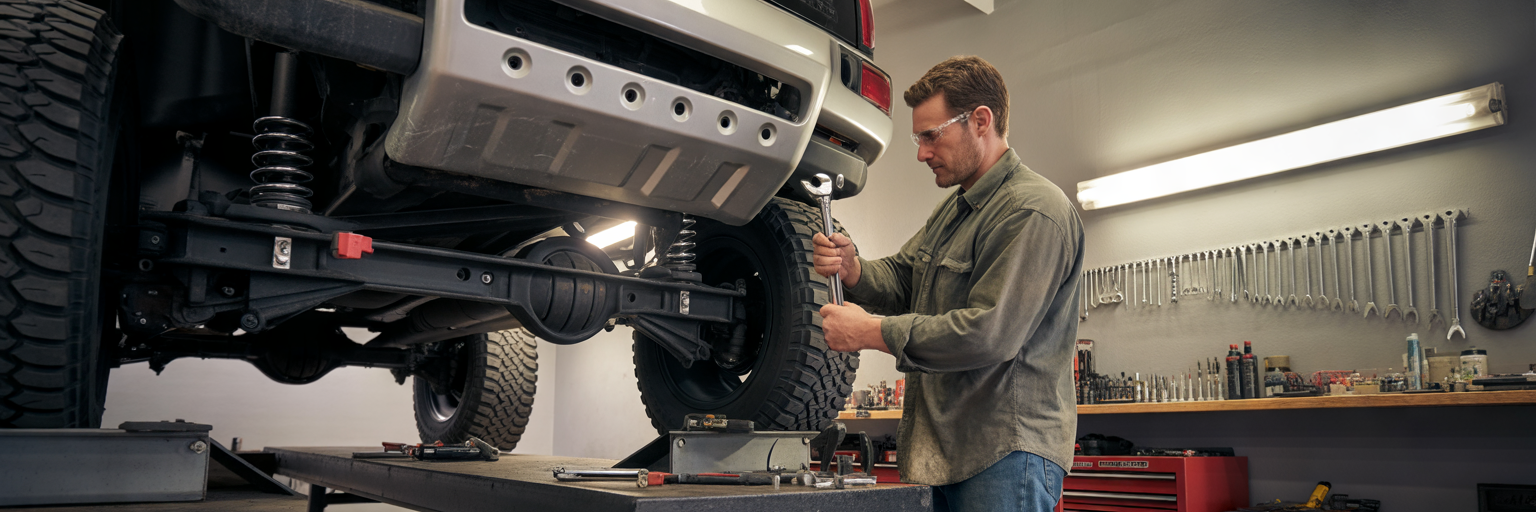
Buying a capable 4×4 is only half the battle; keeping it from stranding you thirty miles from cell service requires disciplined high mileage 4×4 maintenance. Once your new rig is parked in the driveway, resist the urge to bolt on accessories until you have fortified its mechanical foundation.
The Immediate Post-Purchase Fluid Baseline
Experienced off-roaders practice mechanical baselining, which means resetting the vehicle’s fluid and filter clock to zero regardless of what the previous owner promised during the sale. As 4 Wheel Parts notes in their 100,000-mile 4×4 ownership guidelines, proactive drivetrain servicing is essential to keep aging differentials and transfer cases alive under heavy trail loads. Spend a weekend draining and refilling every fluid reservoir on the truck:
- Front and rear differential gear oil: Drain both axle housings, inspect the magnetic drain plugs for metal chunks, and refill with fresh 75W-90 or 80W-90 gear oil, making sure to add a friction modifier additive if your rear axle uses a clutch-type limited-slip differential.
- Transfer case fluid: Replace the fluid using the exact weight of gear oil or specialized synthetic transfer case fluid specified in the owner’s manual to protect internal chains and planetary gears.
- Automatic transmission fluid: Perform a gentle pan drop, filter replacement, and gravity drain-and-fill rather than a high-pressure commercial flush machine, which can dislodge debris and clog delicate valve body passages on high-mileage transmissions.
- Engine oil and filter: Switch to a quality high-mileage full synthetic oil and an OEM filter to condition aging rubber crankshaft seals.
- Power steering fluid: Suction out dark, burnt fluid from the reservoir and cycle fresh fluid through the system to protect the steering rack seals when turning large tires against rocks.
- Brake fluid: Bleed all four corners until clear DOT 3 or DOT 4 fluid runs through the calipers, removing moisture that lowers the fluid’s boiling point on long mountain descents.
- Engine coolant: Flush the radiator and engine block using the manufacturer’s specific coolant chemistry to prevent internal electrolysis and water pump cavitation.
Reinforcing High-Stress Suspension and Steering Linkages
Dropping a heavy SUV tire into a washout places massive leverage on suspension joints that have already endured fifteen years of potholes. Jack up the front end, support the frame on jack stands, and pry upward under the front tire with a long bar to check for vertical play in the lower ball joints. On third- and fourth-generation Toyota 4Runners and Lexus GX models, the lower ball joints operate under tension and can separate catastrophically if neglected; replace them exclusively with genuine OEM parts rather than cheap auto parts store alternatives. While underneath, grab the tire at the nine and three o’clock positions to check for looseness in the inner and outer tie rod ends, inspect sway bar end links, and look for torn rubber control arm bushings.
Cooling System Preservation for Low-Range Crawling
Thermal management becomes critical when your engine is churning at 2,500 RPM in 4-Low while moving at just four miles per hour up a rocky canyon, where natural ram airflow across the radiator is virtually nonexistent. Preventing trail overheating is a central pillar of our guide on keeping an older engine running smoothly for years. Inspect the top plastic tank of your radiator; if the black plastic has turned a dull olive green or milk-chocolate brown, the plastic has become brittle from heat cycles and is getting ready to split under pressure. Replace aging radiators proactively alongside a fresh OEM thermostat, check that your mechanical fan clutch offers firm resistance when spun by hand when hot, and swap out brittle plastic heater core hose tees on Toyota and Lexus V8s with brass fittings.
Post-Trail Undercarriage Cleaning and Greasing
What you do after returning home from a muddy trip determines how long your chassis will survive. Thick mud packed inside frame rails and skid plates acts like a wet chemical sponge, holding moisture against steel brake lines, rotting out shock mounts, and tearing delicate ABS wheel speed sensor wires. Put an oscillating lawn sprinkler underneath the truck for an hour after a muddy trip, then stick a garden hose nozzle directly inside the frame rail access holes until the water running out of the bottom drain holes turns completely clear. Once the undercarriage dries, grab a manual grease gun loaded with molybdenum disulfide grease and pump fresh grease into every zerk fitting on the front and rear driveshaft universal joints and slip yokes to purge contaminated water and grit.
Smart Budget Allocation for Tires and Recovery Gear
The fastest way to ruin the excitement of buying a capable 4×4 is spending every last dollar of your $15,000 budget on the purchase price, leaving nothing in the bank when the truck immediately needs tires or a water pump.
The 10 to 15 Percent Reserve Rule
Smart enthusiasts structure their purchase around the 10 to 15 Percent Reserve Rule. If your hard ceiling is $15,000, set your target vehicle purchase price between $12,500 and $13,500. Holding back $1,500 to $2,500 in reserve ensures you can comfortably cover title registration fees, your complete post-purchase fluid baseline, an unexpected wear item like brake pads or lower ball joints, and a fresh set of trail-ready rubber without putting maintenance on a high-interest credit card.
Why Quality All-Terrain Tires Beat Cheap Lift Kits
We stand firm in our conviction that a fresh set of reputable all-terrain tires is the single highest-return modification you can make to a stock four-wheel-drive vehicle. A stock 4Runner or Xterra on quality tires will drive circles around a truck equipped with a cheap spacer lift running worn highway street tires. Look for all-terrain tires featuring tough three-ply sidewalls to resist sharp shale punctures and a Three-Peak Mountain Snowflake (3PMSF) rating for winter traction. When you reach the trailhead and air a quality set of tires down from 35 PSI to 18 PSI, the tire tread elongates to create a massive tank-like footprint that conforms over rocks and softens harsh washboard vibrations before the suspension even has to work.
Essential Trail Recovery and Safety Equipment
Resist the temptation to blow your leftover cash on heavy steel overland bumpers, roof racks, or LED light bars that add weight and hurt fuel economy without helping you get unstuck. Before venturing off pavement, outfit your cargo area with these affordable, high-priority recovery essentials:
- Kinetic energy recovery rope: Unlike a static tow strap with dangerous metal hooks that can turn into lethal projectiles if they snap, a nylon kinetic rope stretches up to 30 percent under load, using smooth elastic energy to gently pluck a stuck SUV out of deep mud or sand.
- UHMWPE soft shackles: Stronger than steel D-ring shackles and light enough to float in water, synthetic soft shackles wrap safely around factory recovery points without scratching paint or storing dangerous kinetic mass.
- 12-volt portable air compressor: Connecting directly to your battery terminals with alligator clips, a portable compressor lets you air your tires back up to safe highway pressures before driving home from the trailhead.
- Brass tire deflator gauge: Pulls the valve core temporarily to drop tire pressures rapidly and accurately across all four wheels in minutes.
- Long-handled fiberglass shovel: Often the simplest way out of a high-centered rut is spending ten minutes digging dirt away from your differential housings and stacking flat rocks under the tires.
- Mounted ABC fire extinguisher: Kept within arm’s reach of the driver’s seat or inside the rear tailgate to stop electrical shorts or dry grass fires ignited by hot catalytic converters.
Should your budget eventually grow toward pickup platforms down the road, you can explore how midsize trucks stack up in our off-road comparison of the Jeep Gladiator and Toyota Tacoma. Until then, a thoroughly inspected, freshly baselined SUV bought well under $15,000 will take you to the exact same mountain vistas with money left over in your pocket for fuel and campfires.