
Standard passenger tires lose 9 percent of their rated load capacity the moment they are mounted on a pickup truck or SUV, according to Tire and Rim Association engineering standards. Understanding how to select specialized tires for towing heavy loads is the single most critical factor in preventing highway blowouts and controlling trailer sway.
Understanding Tires for Towing Heavy Loads and Sidewall Ratings
Every successful haul starts long before you drop a trailer coupler onto a hitch ball. It begins by reading the molded rubber math on your tire sidewalls and verifying that those numbers align with the physics of your loaded rig.
How Tongue Weight Alters Rear Axle Dynamics
Dropping a heavy trailer onto a receiver hitch fundamentally alters the weight distribution of your tow vehicle. Conventional bumper pull trailers transfer 10 to 15 percent of their total gross weight directly onto the hitch ball as tongue weight, while fifth wheel and gooseneck setups transfer up to 25 percent of their mass into the truck bed. On a conventional hitch, that vertical downforce sits several feet behind the rear axle centerline. This distance creates a mechanical lever that uses the rear axle as a fulcrum.
As the hitch gets pushed toward the pavement, the lever action lifts weight off the front steering tires and multiplies the vertical load compressing the rear tires. Even with a properly adjusted weight distribution hitch returning weight to the front end, the rear axle absorbs the vast majority of the static and dynamic payload. You can easily spot this at any weekend campground when a half ton pickup arrives with its rear wheel wells sagging and the lower sidewalls of its rear tires bulging outward like flattened basketballs. Choosing between half ton and three quarter ton platforms often comes down to how their rear suspension and factory wheel packages handle this leverage, a distinction we examine closely in our guide to reliable used trucks for towing and off-roading.
P-Metric vs LT-Metric Construction and the 9 Percent Rule
When shopping for tires for towing heavy loads, the letters preceding the width numbers on the sidewall dictate the engineering standard of the carcass. Many half ton pickups and full size SUVs roll off the assembly line wearing P-metric (Passenger) or Euro-metric tires, which lack a leading letter altogether. These tires are engineered primarily for smooth ride quality, low acoustic resonance, and high fuel economy during unladen commuting.
However, federal safety regulations and Tire and Rim Association standards mandate a strict mathematical penalty whenever P-metric or Euro-metric tires are fitted to a pickup truck or SUV. Because trucks have a higher center of gravity and undergo much harsher rear axle duty cycles than passenger sedans, you must divide a P-metric tire’s stamped load capacity by 1.1. That calculation equates to an immediate 9.1 percent reduction in legal weight capacity. A P-metric tire stamped with a maximum load of 2,756 pounds on its sidewall is legally and mechanically derated to 2,505 pounds the moment it is bolted onto a truck hub. Full size family haulers frequently run right up against these P-metric thermal and structural ceilings when hitched to travel trailers, which is why rear axle capacity plays such a major role in our Chevrolet Tahoe and Ford Expedition comparison. Stepping up to LT-metric (Light Truck) tires eliminates this 1.1 derating factor entirely, giving you 100 percent of the stamped sidewall capacity along with a much stiffer casing built for sustained vertical loads.
Decoding Load Index Numbers and Alphabetical Load Ranges
Two distinct rating systems appear side by side on light truck sidewalls: the numerical Load Index and the alphabetical Load Range. The Load Index is a two or three digit number, such as 115 or 121, which corresponds to an exact poundage figure on standardized industry charts. Following the service description, LT-metric tires display an alphabetical Load Range, running from Load Range C up through Load Range F.
Historically, these letters indicated the physical number of cotton cord plies layered inside the tire carcass. Modern tire engineering uses high strength synthetic polyester and steel cords, so the letter now represents ply rating equivalency. A Load Range C tire provides the structural strength equivalent to 6 bias plies, whereas a Load Range E tire equals 10 plies. Higher ply equivalency allows the tire casing to safely contain much higher cold air inflation pressures, and it is that internal air pressure that physically supports the weight of your truck and trailer.
Many owners of half ton pickups like the Ford F-150 or Chevrolet Silverado 1500 face a practical dilemma when replacing factory C-range rubber with load range E towing tires. Upgrading to an E-range tire on a half ton rig noticeably sharpens towing stability and eliminates the unsettling rear end wallow felt when changing lanes with an 8,000 pound camper. Yet that lateral security comes with a daily trade off. Load Range E tires typically weigh 10 to 15 pounds more per corner than P-metric or C-range equivalents. Adding 50 pounds of unsprung rotational mass slows acceleration, transmits sharp pavement expansion joints directly into the cabin when driving empty, and reduces highway fuel economy by 1 to 2 miles per gallon.
Light Truck Tire Load Range Specifications and Hauling Applications
| Load Range | Ply Rating Equivalent | Maximum Cold PSI | Typical Per-Tire Capacity | Ideal Towing Application |
|---|---|---|---|---|
| Load Range C | 6-Ply | 50 PSI | 2,400 to 2,600 lbs | Midsize trucks and half-ton SUVs pulling light utility or boat trailers under 5,000 lbs |
| Load Range D | 8-Ply | 65 PSI | 2,800 to 3,000 lbs | Heavy half-ton pickups hauling mid-weight travel trailers between 5,000 and 8,000 lbs |
| Load Range E | 10-Ply | 80 PSI | 3,195 to 3,750 lbs | Half-ton max-tow packages, three-quarter-ton, and one-ton trucks pulling heavy campers or equipment |
| Load Range F | 12-Ply | 95 PSI | 3,900 to 4,400+ lbs | One-ton single or dual-rear-wheel commercial rigs towing heavy gooseneck and fifth-wheel loads |
Data reflects standardized Tire and Rim Association (TRA) inflation ceilings and typical load capacities for common 17-inch to 20-inch LT-metric tire sizes used on American pickup trucks.
Before buying a new set of tires, open your driver’s door and inspect the federal certification placard on the B-pillar jamb. Locate your Rear Gross Axle Weight Rating (GAWR), divide that figure by two for single rear wheel trucks, and ensure your chosen tire’s derated or LT-metric load capacity exceeds that number with at least a 15 percent safety margin.
Internal Tire Construction and Heat Dissipation Physics
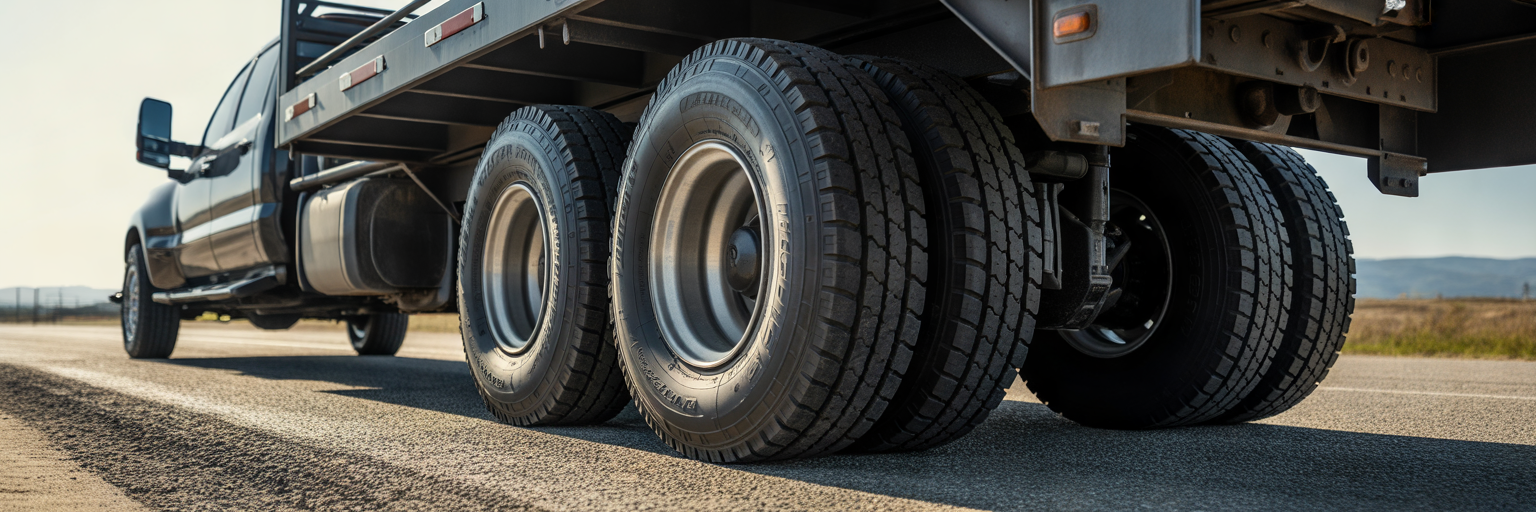
While sidewall markings tell you how much weight a tire is legally certified to hold, the internal structural anatomy determines whether that tire will survive a ten hour interstate pull across the American Southwest in July.
Contact Patch Deflection and Hysteresis Under Load
Heat is the primary assassin of heavy duty truck tires. Every time a tire rolls under the weight of a loaded truck, the sidewall and tread carcass flatten out against the asphalt to form the contact patch, then snap back to their round shape as that section of rubber leaves the pavement. In materials engineering, the energy lost during this cycle of mechanical deformation and recovery is called hysteresis. Because rubber is a viscoelastic polymer, it does not return 100 percent of the mechanical energy used to bend it; the leftover energy is converted directly into internal thermal heat within the tire carcass.
When heavy tongue weight or insufficient air pressure causes excessive sidewall deflection, the amplitude of that flexing increases dramatically. At 65 miles per hour on a summer interstate in Texas or Arizona, a typical 32 inch truck tire rotates roughly 800 times every single mile. That means each section of sidewall bends and rebounds 800 times every 55 seconds. When ambient asphalt temperatures exceed 130 degrees Fahrenheit, excessive flexing generates intense internal friction that cannot escape into the surrounding air fast enough. Once internal carcass temperatures push past the critical 250 degree Fahrenheit threshold, the chemical bonds created during factory vulcanization begin to break down, causing the steel belts to separate from the rubber casing in a violent highway blowout.
Steel Belt Packages and Sidewall Carcass Anatomy
To prevent destructive flexing and manage lateral forces, dedicated towing tires rely on a heavily reinforced internal skeleton. Beneath the visible rubber tread sits a pair of wide, high tensile steel cord belts laid at opposing diagonal angles. In quality light truck tires, these steel belts are wrapped with spiral wound nylon cap plies that act like constriction bands, preventing the steel belts from lifting or distorting under high speed centrifugal force and heavy braking heat.
Anchoring those belts is the main body ply casing, constructed from two or three layers of thick polyester fabric cords running radially from bead to bead. Down where the tire clamps onto the metal wheel rim, engineers install heavy steel wire bead bundles topped with a tall, wedge shaped triangular piece of hard rubber known as the bead filler or apex. When an 18 wheeler passes your camper at 70 miles per hour, or a sudden 35 mile per hour crosswind hits the side of your enclosed car hauler, thousands of pounds of lateral side force push sideways against the rear wheels. A tall, high durometer bead apex works with dual polyester body plies to lock the lower sidewall vertically against the wheel flange, stopping the truck axle from shifting sideways relative to the tire footprint.
Silica Compound Engineering and Tread Block Geometry
Modern rubber chemistry for 2026 has had to adapt to trucks producing over 1,000 pound feet of turbo diesel torque and instant electric drivetrain launch forces. Tire chemists balance dual compound tread formulations that pair silica rich outer layers with high durometer base compounds. Silica links chemically with polymers to reduce internal molecular friction, which drops rolling resistance and keeps the tread pliable enough for short wet braking distances. Beneath that surface layer, stiffer carbon black compounds resist tearing and chunking when pulling a 12,000 pound trailer up a steep, coarse concrete mountain grade.
Tread block geometry plays an equally vital role in heat management. Many truck owners overlook how much heat originates directly inside the tread blocks themselves through a phenomenon called tread squirm. When tall, independent tread blocks lack structural support, they bend and fold over against the road surface under heavy braking or pulling torque. Dedicated towing tires counteract squirm by incorporating continuous, solid center ribs that provide an unbroken ring of rubber around the circumference of the tire. On the outer edges, engineers mold raised rubber bridges called tie bars between adjacent shoulder blocks. Combined with three dimensional interlocking sipes that lock together under compression, tie bars prevent individual blocks from twisting, keeping steering response crisp and internal tread temperatures cool.
When evaluating tires at the counter, remember that internal steel belt width, bead apex stiffness, and connected tread block geometry matter infinitely more for safe towing than aggressive external sidewall lugs built purely for parking lot aesthetics.
Comparing Highway Terrain and All-Terrain Tires for Hauling
Understanding internal heat physics makes it much easier to look at a tire rack and predict how different tread patterns will behave once you drop a heavy trailer onto the hitch.
Why Highway Terrain Tires Dominate Interstate Hauling
Walk through any commercial RV transport lot or hotshot freight terminal, and you will notice almost every single truck running Highway Terrain (HT) tires. When 90 percent of your towing miles happen on paved roads, the HT category remains the undisputed mechanical champion. Highway Terrain tires feature a high net to gross contact ratio, meaning there is significantly more solid rubber touching the asphalt relative to the empty air grooves between the blocks.
Putting more rubber on the road spreads the vertical weight of your tongue load across a wider surface area, reducing the pounds per square inch of mechanical stress exerted on any single tread element. Furthermore, HT designs utilize wide, continuous circumferential ribs and broad, solid shoulder blocks. Because those shoulder blocks do not have deep off road notches cut into them, they resist lateral deformation when you enter a sweeping highway curve with a heavy trailer pushing behind you. The shallower starting tread depth of an HT tire, typically around 11/32 to 13/32 of an inch, also minimizes tread block leverage. This translates directly into shorter dry and wet stopping distances, quieter cabin acoustics over long twelve hour driving shifts, and the lowest possible internal operating temperatures.
Navigating the All-Terrain Compromise for Boondocking and Boat Ramps
Despite the clear pavement advantages of highway rubber, millions of truck owners need traction once the pavement ends. If you regularly back a heavy fiberglass boat down a steep, algae coated concrete launch ramp at low tide, or pull a travel trailer down washboard Bureau of Land Management dirt tracks to reach remote boondocking sites, a slick highway rib can leave you spinning your wheels. Many trucks split their calendar between interstate vacation miles and unpaved forest service trails, a dual purpose duty cycle we explore in our breakdown of the best used trucks for towing a camper under 35000.
All-Terrain (AT) tires bridge this gap by introducing wider void channels, staggered shoulder lugs, and deeper starting tread depths that often reach 15/32 to 18/32 of an inch on LT-metric sizes. Those deeper voids allow the tire to bite into loose gravel and eject mud, while additional biting edges help claw up wet boat ramps. However, truck owners must respect the physical compromise of towing on brand new AT tires. Taller tread blocks separated by wider void spaces act like tiny rubber levers that bend under heavy vertical and lateral loads. During the first 3,000 to 5,000 miles on a fresh set of deep lug AT tires, drivers often feel a slightly spongy, wandering sensation in the rear end of the truck when towing in windy conditions. As the tread wears down slightly and the blocks shorten, that squirm subsides, though AT tires will always generate slightly more rolling resistance and road hum than an equivalent HT tire.
Rugged-Terrain Hybrids and the Limits of Mud-Terrain Tires
The 2026 tire market has seen rapid growth in the Rugged-Terrain (RT) hybrid category alongside high load tires engineered specifically for heavy hybrid powertrains like the Ford PowerBoost, Ramcharger range extended rigs, and full electric pickups. These modern trucks carry curb weights that regularly exceed 7,000 to 8,500 pounds before a trailer is even attached, paired with instant low end torque that can shred soft tread compounds. Modern RT tires blend the wide shoulder lugs and stone ejectors of an off road tire with the connected center rib stability and high load indices of a commercial highway tire, offering a viable middle ground for heavy rigs that work on rocky ranch roads.
On the opposite end of the spectrum, we stand firm in our conviction that Mud-Terrain (MT) tires have no business being used for sustained heavy highway towing. While many Mud-Terrain tires carry Load Range E stamps on their sidewalls, their tread design works entirely against towing physics. Huge void ratios reduce the actual rubber contact patch on asphalt by up to 40 percent, drastically lengthening wet braking distances when a sudden traffic jam appears ahead of your rig. Furthermore, tall, isolated mud lugs flex violently under highway speeds and heavy tongue loads, building rapid thermal heat, cupping unevenly within a few thousand miles, and creating dangerous trailer sway control issues.
To choose the right category, be brutally honest about your actual mileage logs: if you spend more than 80 percent of your towing miles on paved highways and developed campgrounds, buy an HT tire; only step into a tightly spaced AT or RT tire if unpaved traction is a regular weekend requirement.
Top-Rated Towing Tires Compared for 2026

Moving from tread pattern theory to real world hardware requires looking at which specific models actually hold up when subjected to maximum axle payloads and blistering summer asphalt.
Michelin Defender LTX M/S2 and LTX Platinum for Highway Longevity
When experienced fleet managers, RV haulers, and automotive test engineers discuss the best truck tires for towing on paved highways, the Michelin Defender LTX M/S2 consistently sits at the top of the conversation. Replacing the legendary original LTX M/S, the M/S2 utilizes Michelin’s Evertread 2.0 rubber compound. This formulation is specifically cross linked to resist the abrasive scrubbing wear that occurs on rear drive axles when pulling heavy tandem axle trailers out of tight intersections or up steep mountain grades.
What sets the Defender LTX M/S2 apart under load is its MaxTouch 2.0 construction, which maintains a remarkably flat, square footprint even when compressed by maximum tongue weight. Full depth 3D active sipes lock the tread blocks together during emergency braking, allowing the tire to stop significantly shorter on wet pavement than stiffer commercial competitors while still carrying a Three-Peak Mountain Snowflake (3PMSF) severe snow rating on select LT sizes. For owners of heavy duty three quarter ton and one ton luxury pickups running 20 inch wheels who want an aggressive aesthetic without sacrificing highway stability, Michelin also offers the Defender LTX Platinum, featuring an ultra durable commercial grade tread designed strictly for high torque pickups. In independent instrumented testing, Car and Driver’s evaluation of the best truck tires highlights how the Michelin Defender LTX M/S2 sets the industry benchmark for blending long tread life with composed wet and dry road manners.
Firestone Transforce HT2 and AT2 for Commercial-Grade Fleet Durability
If you purchase a brand new Ram 2500, Ram 3500, or Ford Super Duty configured for heavy fifth wheel towing, there is a high probability it will roll off the factory line fitted with Firestone Transforce tires. The Firestone Transforce HT2 and its all terrain sibling, the Transforce AT2, are built from the ground up as commercial fleet workhorses rather than plush consumer lifestyle tires. Their internal carcass prioritizes rigid steel belt packages and thick, high durometer sidewall compounds engineered to hold 80 PSI all day long without deflection.
The Transforce HT2 excels when pinned beneath the massive vertical pin weight of a 15,000 pound fifth wheel camper or a loaded livestock gooseneck trailer. Its chip and tear resistant rubber compound survives sharp gravel construction sites and ranch roads without chunking. However, buyers need to understand the honest trade off of commercial grade rubber. Because the compound is formulated for extreme heat resistance and longevity under heavy vertical loads, it feels noticeably stiff when driving an unladen pickup. Furthermore, when the truck bed is empty on cold, rain slick pavement or packed winter snow, the hard compound of the Transforce HT2 offers less mechanical grip than silica heavy consumer tires like the Michelin Defender.
BFGoodrich All-Terrain T/A KO3 and Falken Wildpeak A/T4W for Mixed-Surface Hauling
For truck owners who demand genuine off road capability alongside serious towing composure, the 2026 market features two heavily updated heavyweights: the BFGoodrich All-Terrain T/A KO3 and the Falken Wildpeak A/T4W. Previous generations of all terrain tires often struggled with rear end squirm and rapid rear axle wear under heavy turbo diesel torque, a shortcoming both manufacturers targeted directly in these current designs.
The Falken Wildpeak A/T4W is built like a tank, ranking among the heaviest and most structurally rigid tires in the category. Select heavy duty LT sizes feature Falken’s Duraspec 3-ply sidewall technology, which incorporates three full plies of polyester casing fabric and a high turn up ply wrap that virtually eliminates lateral sidewall roll when towing heavy campers through mountain switchbacks. Falken also widened the solid center blocks and reinforced the shoulder tie bars on the A/T4W, giving it highway tracking stability that rivals many dedicated highway tires.
Meanwhile, the BFGoodrich All-Terrain T/A KO3 updates the classic interlocking tread pattern with a redesigned footprint shape and a new all terrain compound designed to distribute vertical payload pressure much more evenly across the contact patch. This reduces the heel and toe irregular wear that plagued older off road tires used for highway towing, while maintaining exceptional 3PMSF traction for enthusiasts who tow snowmobile trailers or winterized campers through high mountain passes.
Comparison of Top-Rated Light Truck Tires for Towing in 2026
| Tire Model | Category | Available Load Ranges | Speed Rating | Treadwear Warranty | Primary Towing Strength |
|---|---|---|---|---|---|
| Michelin Defender LTX M/S2 | Highway All-Season | XL, C, E | T, R, H | 50,000 to 70,000 miles | Superior wet braking under load and lowest highway heat buildup |
| Firestone Transforce HT2 | Commercial Highway | E | R, S | No mileage warranty (Commercial) | Rigid carcass stability for heavy fifth-wheel and gooseneck payloads |
| Falken Wildpeak A/T4W | All-Terrain | C, E, F | S, T | 60,000 to 65,000 miles | Stiff tie-bar tread blocks and 3-ply sidewall options for heavy mixed-surface hauling |
| BFGoodrich All-Terrain T/A KO3 | All-Terrain | C, D, E, F | R, S, T | 50,000 miles | Even contact patch pressure distribution and severe snow traction while towing |
Specifications reflect manufacturer data for LT-metric sizes commonly fitted to 17-inch, 18-inch, and 20-inch OEM truck wheels in North America.
To match these models to your personal rig, let your regional climate and hitch type dictate the choice: select the Michelin Defender LTX M/S2 for year round interstate travel trailer hauling, the Firestone Transforce HT2 for dedicated heavy fifth wheel work in warm climates, the Falken Wildpeak A/T4W for heavy rigs tackling rocky unpaved campsites, and the BFGoodrich KO3 if your towing calendar includes frequent winter snow passes.
Critical Mistakes to Avoid When Selecting Towing Tires
Even the highest rated tire on the market will fail if it is mismatched to the wrong vehicle application or installed onto hardware that cannot support its operating pressures.
Confusing LT-Metric Tow Rig Tires with ST-Metric Trailer Tires
One of the most dangerous misconceptions in the towing community involves the difference between LT vs ST tires. While both carry alphabetical Load Range stamps like Load Range D or E, they are engineered for completely opposite mechanical roles. LT-metric tires are built for powered, steered, and dynamically braked motor vehicles. Their sidewalls and tread compounds are formulated to handle engine drive torque, front axle steering slip angles, and the forward weight transfer of heavy braking.
ST-metric (Special Trailer) tires are engineered strictly for non steered, unpowered trailer axles. Because multi axle trailers scrub their tires sideways across the pavement during tight parking lot turns, ST tires feature narrower tread widths, rounded shoulder profiles, and stiff, thick polyester sidewall cords designed strictly to carry dead vertical weight and resist lateral curbing damage. Furthermore, ST rubber compounds contain larger concentrations of chemical antiozonants to prevent dry rot while sitting parked in a storage lot for ten months a year, sacrificing traction and heat dissipation in the process. Mounting an ST tire on a pickup truck or SUV is a severe safety hazard that results in unpredictable wet braking and catastrophic sidewall failure under steering loads. Conversely, while some experienced haulers run high quality LT-metric tires on heavy fifth wheel trailers for superior structural durability, an ST tire must never be bolted onto a tow vehicle.
Believing Higher Tire Load Ratings Increase Vehicle Tow Capacity
Spend ten minutes reading online truck forums and you will inevitably see someone claim that bolting a set of 10 ply Load Range E tires onto a half ton pickup increases the truck’s payload and towing capacity to three quarter ton levels. This is a dangerous and legally costly myth. Upgrading to heavy duty truck tires provides a wider thermal safety margin and reduces sidewall flex, but it never increases your vehicle’s legal Gross Vehicle Weight Rating (GVWR), Gross Axle Weight Rating (GAWR), or Gross Combined Weight Rating (GCWR) by a single ounce.
A vehicle’s true weight rating is strictly governed by the weakest mechanical link in its chassis architecture. Even if your new Load Range E tires can support 6,390 pounds across the rear axle, a half ton truck’s semi floating rear axle shafts, wheel bearings, frame rail section modulus, and transmission cooling stack may only be engineered for 3,800 pounds. Braking thermal capacity is an equally critical bottleneck; heavier tires actually increase rotational inertia, placing even greater heat stress on factory calipers and rotors during long downhill grades. Ensuring your stopping hardware is up to the task is mandatory before any heavy haul, which is why every tow rig owner should review our guide on how to know when rotors need replacing with brake pads.
Overlooking Wheel Rim Load Ratings and High-Pressure Valve Stems
A tire is only half of a pneumatic pressure vessel; the metal wheel rim and the valve stem form the other half. A frequent mechanical failure occurs when truck owners upgrade to 80 PSI Load Range E tires but mount them onto inexpensive, cast aluminum aftermarket off road wheels. Many styling focused aftermarket wheels are manufactured for light trail use and carry a stamped maximum load rating of only 2,100 to 2,500 pounds on the back of their spokes. Subjecting a 2,200 pound rated wheel to a 3,400 pound rear axle load and 80 PSI of internal air pressure can crack the inner wheel barrel or shear the hub mounting pad when hitting a highway pothole with a trailer attached.
Even more commonly overlooked is the humble fifty cent valve stem. When a tire shop mounts a standard P-metric or Load Range C tire, they typically pop in a standard EPDM rubber snap in valve stem, such as an industry standard TR413 or TR414. Those standard rubber snap in stems are only engineered and rated to hold a maximum cold inflation pressure of 65 PSI. If you upgrade to Load Range E tires and inflate them to 75 or 80 PSI for a heavy tow while leaving 65 PSI rubber stems installed, the high internal pressure and centrifugal force at highway speeds can push the rubber stem right out through the wheel hole, causing an instantaneous total loss of air. Any tire inflated above 65 PSI must be fitted with high pressure steel core snap in stems (rated up to 80 PSI, such as the TR600HP) or bolt in brass clamp in metal valve stems (rated up to 130 to 200 PSI).
Mixing Load Ranges or Tread Depths Across the Same Axle
When a single rear tire picks up a construction nail in the sidewall and requires replacement, buying just one new tire or grabbing a mismatched Load Range tire in an emergency can trigger expensive drivetrain damage. Never mix a Load Range C tire on the left rear with a Load Range E tire on the right rear, and never mix different tread patterns or internal constructions across the same axle. Because different load ranges have vastly different sidewall spring rates and deflection characteristics, the truck will lean and steer unpredictably toward the softer sidewall whenever the trailer pushes against the hitch during hard braking.
Equally destructive is mixing a brand new tire (with 16/32 of an inch of tread) across from a worn tire (with 6/32 of an inch of tread) on a drive axle. That slight difference in overall diameter forces one wheel to rotate several more times per mile than the wheel on the opposite side of the axle. Inside a mechanical limited slip or electronic locking rear differential, that constant rotational speed difference tricks the axle into thinking one wheel is slipping on ice, cooking the internal clutch packs and overheating the gear oil during a long interstate climb. Uneven tire diameters and overloaded axle weights also send constant vibrations through ball joints, wheel bearings, and steering racks, accelerating the exact sort of wear patterns we cover in our manual on how to diagnose common issues in the Chevrolet Silverado.
Before handing your keys to the service writer at the tire shop, run through this five step verification checklist:
- Confirm the replacement tires carry an LT-metric or properly derated P-metric load capacity that exceeds half of your rear axle GAWR.
- Verify that the speed rating letter (such as R, S, or T) matches or exceeds your truck’s factory specification and legal interstate speeds.
- Check the back of your wheel spokes to ensure the metal rim’s stamped poundage rating matches or exceeds the new tire’s load capacity.
- Specify in writing on the work order that the technician must install high pressure TR600HP or metal clamp in valve stems for any Load Range D, E, or F tire.
- Inspect all four mounted tires before leaving the bay to confirm identical load ranges, size designations, and rotational directional arrows across every axle.
Maintenance Protocols to Preserve Tire Health Under Heavy Loads
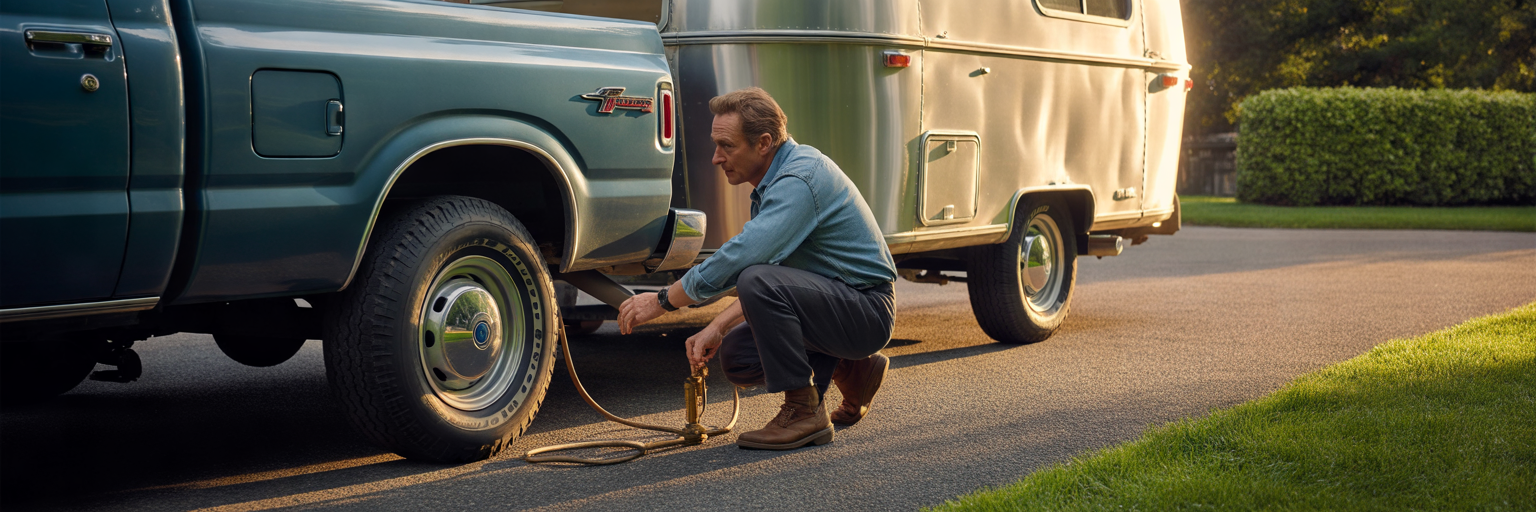
Buying the right hardware solves only half of the equation; keeping that rubber intact over 50,000 miles of heavy hauling requires disciplined air pressure management and pre trip inspection habits.
Mastering Cold Tire Pressure for Towing and Inflation Tables
Setting the correct tire pressure for towing is the single most effective defense against thermal belt separation. Air pressure must always be measured and adjusted when the tires are completely cold, defined as early in the morning before the truck has been driven more than one mile and before direct sunlight has warmed the sides of the vehicle. Sunlight hitting one side of a parked truck in a driveway can raise the internal pressure of the sunny side tires by 3 to 5 PSI before you even start the engine. Once you hit the interstate at 65 miles per hour under load, normal hysteresis will naturally cause your pressures to climb by 4 to 8 PSI above your cold starting point. Never bleed air out of a hot tire at a highway rest stop to bring it back down to its cold target number, as doing so leaves the tire severely underinflated once it cools down.
Understanding which target number to use requires distinguishing between your door jamb placard and the tire sidewall. The pressure listed on your driver’s door jamb placard applies strictly to the exact tire size and load range that came on the truck from the factory. Meanwhile, the number molded into the tire sidewall (such as Max Load 3,195 lbs at 80 PSI Cold) is the ceiling required to carry the tire’s absolute maximum weight rating, not necessarily the pressure you should run every day.
A critical engineering nuance catches many DIY truck owners off guard when upgrading from P-metric to LT-metric tires of the exact same physical size. Because an LT-metric tire has much thicker steel belts and heavier sidewall plies, its internal air chamber volume is slightly smaller and its carcass generates more internal heat when flexed. According to official Tire and Rim Association load and inflation tables, an LT-metric tire requires significantly higher air pressure, typically 10 to 15 PSI more than a standard P-metric tire, just to safely support the exact same axle weight. If your half ton door jamb calls for 35 PSI on factory P-metric tires and you upgrade to Load Range E LT-metric tires, running those new LT tires at 35 PSI while towing will starve them of load capacity and cause rapid overheating. Always consult the manufacturer’s load inflation table and weigh your hitched rig at a commercial CAT scale so you can inflate your rear tires to match your actual loaded rear axle weight during towing trips, then air back down to a comfortable unladen pressure for Monday morning commuting.
Real-Time TPMS Monitoring and Six-Year DOT Date Code Inspections
Relying on a visual walkaround at fuel stops is no longer sufficient when managing six, eight, or ten spinning tires down the interstate. Modern tow rigs should utilize factory integrated trailer monitoring or an aftermarket flow through Tire Pressure Monitoring System (TPMS) across every wheel on both the truck and the trailer. Quality aftermarket TPMS sensors thread directly onto metal valve stems and transmit real time internal air pressure and internal thermal temperature readings to a cab mounted monitor every few seconds.
Monitoring temperature alongside pressure is a genuine lifesaver. If a trailer brake caliper sticks slightly or a wheel bearing begins to lose grease, the TPMS temperature alarm will spike 15 to 20 degrees higher than the other wheels long before the tire loses air pressure. Similarly, catching a slow 3 PSI drop caused by a roofing nail gives you plenty of time to pull smoothly onto a wide exit ramp rather than fighting a sudden blowout at 65 miles per hour that rips out your trailer’s aluminum fender skirt and ruptures nearby propane or plumbing lines.
Alongside digital monitoring, physical calendar age dictates when a towing tire must be retired. Rubber compounds undergo continuous chemical oxidation from atmospheric ozone and ultraviolet light, causing the carcass to dry out, stiffen, and develop microscopic internal cracks regardless of how much tread depth remains. Locate the Department of Transportation (DOT) serial code stamped on the lower sidewall; the final four digits inside the oval window indicate the week and year of manufacture. A code reading 2421 means the tire was molded during the 24th week of 2021. Because towing subjects tires to maximum thermal stress, replace any tow vehicle or trailer tire once it reaches six years of age from its DOT birth date, even if the tread still looks brand new. While the tires are in active service, stick to a strict 5,000 mile cross pattern rotation schedule to prevent the high torque rear axle from wearing down the rear pair twice as fast as the steered front tires.
Seasonal Storage Practices and the Ten-Minute Pre-Trip Routine
How you treat your tires when the trailer is unhitched directly impacts how they perform six months later. When parking a dedicated tow vehicle or camper for seasonal storage, never leave the tires sitting stationary on bare dirt, grass, or black asphalt for months at a time. Soil holds moisture and organic acids that accelerate chemical degradation, while black asphalt bakes the bottom contact patch. Park the tires on kiln dried wooden planks, concrete pads, or thick rubber stall mats. Cover the wheels with aluminized UV reflective tire covers to block sunlight from baking the sidewalls, inflate the tires to their maximum cold sidewall rating to prevent flat spotting, and use frame jack stands to take a portion of the dead suspension weight off the rubber casings.
Before pulling out of the driveway for any long distance haul, spend ten minutes executing this pre trip tire routine:
- Measure and adjust cold inflation pressures on all four truck tires, every trailer tire, and both spare tires using a calibrated digital gauge before the morning sun hits the wheels.
- Run a gloved hand across the inner and outer tread shoulders of every tire to feel for feathering, cupping, or localized flat spots that indicate suspension alignment or shock absorber failure.
- Inspect both the outboard and inboard sidewalls using a flashlight to verify there are no impact bulges, weather checking cracks, or exposed cords hidden facing the frame rails.
- Wiggle each metal valve stem slightly while listening for hissing to confirm the rubber grommet or brass nut has not loosened, and verify that metal valve caps with internal rubber O-ring seals are threaded on finger tight.
- Use a calibrated torque wrench to verify that every wheel lug nut on the truck and trailer is tightened to the exact factory foot pound specification, particularly if any wheel has been removed within the last 500 miles.
- Power on your cab TPMS display before shifting into drive to confirm every truck and trailer sensor is actively reporting live baseline pressures and ambient temperatures.