
Acura Integra vs Volkswagen Golf GTI: The Family Test
The moment a car enthusiast welcomes a child into their life, a familiar dilemma begins. The search for the “one-car solution” becomes a quest to find a vehicle that satisfies a passion for driving without surrendering to the practical demands of family life. This challenge intensifies with a second child, where space and convenience become non-negotiable. This is the ultimate test of the Acura Integra vs Volkswagen Golf GTI, two of the most compelling fun family cars on the market. On one side stands the 2026 Acura Integra, a premium liftback that blends sophisticated style with a reputation for practicality. On the other is the 2026 Volkswagen Golf GTI, the quintessential hot hatch that has long been a benchmark among fun and practical used hatchbacks.
To find a true winner, we must move beyond simple performance metrics. This comparison is grounded in a specific, real-world scenario: a family with two adults, one rear-facing child seat for an infant, and one forward-facing seat for a toddler. Their daily life involves school drop-offs, grocery runs with a folded stroller in the back, and the occasional weekend road trip, covering about 12,000 miles annually. The core question is not which car is faster from 0 to 60 mph, but which one proves less frustrating during the morning rush or a long drive with tired children. We will determine which of these practical enthusiast cars is genuinely the more rewarding and harmonious partner for a family that refuses to give up the joy of driving.
Comparing Trims, Powertrains, and Price Points
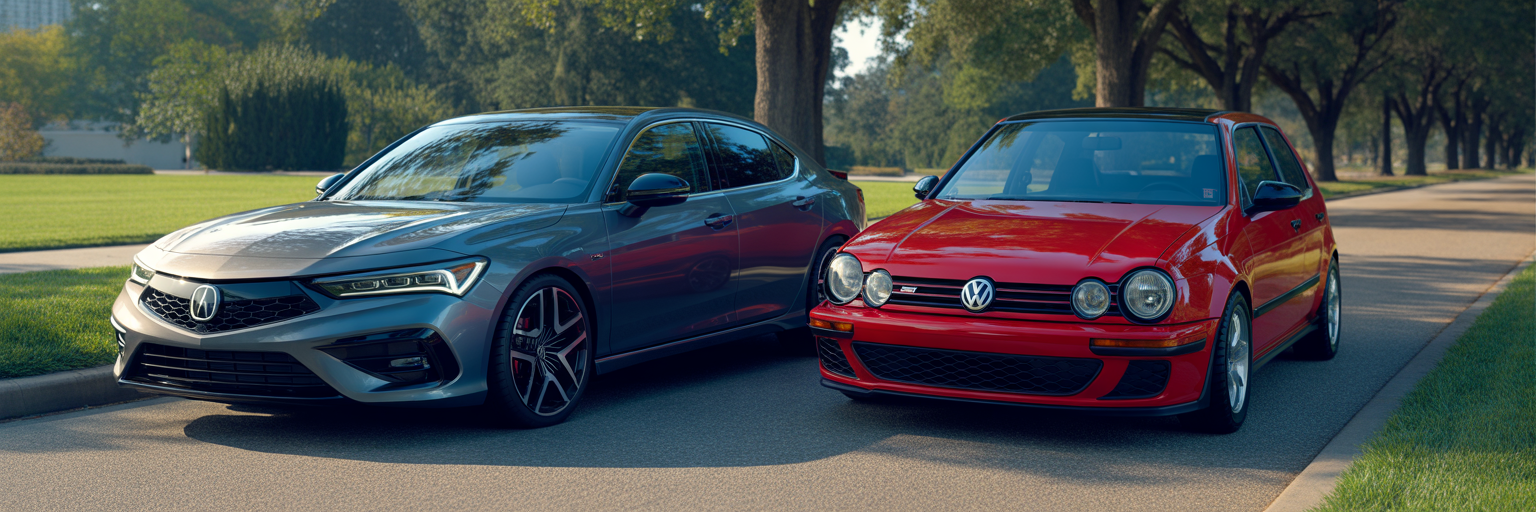
Before diving into child seats and strollers, it is essential to establish a level playing field based on price and equipment. A fair comparison requires looking at trims that offer similar features and fall within a comparable budget, ensuring the value proposition for each is clear.
Establishing a Fair Price Comparison
For this matchup, we are pitting the Acura Integra in its A-Spec with Technology Package trim against the Volkswagen Golf GTI in its mid-range SE or top-tier Autobahn configurations. These trims align closely in price, giving buyers access to desirable features like upgraded audio systems, larger infotainment screens, and enhanced driver aids. This ensures we are not comparing a base model to a fully loaded one, but rather two well-equipped vehicles that represent the sweet spot in their respective lineups.
Powertrain Philosophies: Smoothness vs. Punch
The two cars present distinct approaches to performance. The standard Acura Integra is powered by a 1.5-liter turbocharged four-cylinder engine producing 200 horsepower. Paired primarily with a Continuously Variable Transmission (CVT), its power delivery is smooth and linear, prioritizing efficiency and refinement in daily driving. It offers adequate power for merging and passing but does so with a calm demeanor. In contrast, the Volkswagen Golf GTI features a robust 2.0-liter turbocharged engine generating a healthier 241 horsepower. Its 7-speed dual-clutch automatic transmission (DSG) delivers sharp, rapid shifts that give the car an energetic and responsive feel. The GTI continues a long tradition for the brand, which has produced some of the best used German cars that are actually worth owning, and its powertrain is a key part of that legacy.
The Manual Transmission Question
For driving purists, the availability of a manual gearbox is a significant factor. Here, the Integra A-Spec with Technology Package holds a unique advantage. It is one of the few vehicles in its class to offer an excellent 6-speed manual transmission as a no-cost option, directly appealing to enthusiasts who crave that connection. As of the 2026 model year, Volkswagen has made the decision to sell the Golf GTI exclusively with the 7-speed DSG automatic in the United States, removing the manual option from its lineup.
Contextualizing the Integra Type S
It is important to briefly address the Acura Integra Type S. With its 320-horsepower engine, adaptive dampers, and aggressive styling, the Type S is a formidable performance machine. However, its significantly higher price point and track-focused nature place it in a different category altogether, competing more directly with cars like the Golf R. For the purpose of this family-focused comparison, the Type S serves as a halo model, while our analysis remains centered on the more accessible and practical A-Spec trim.
The Child Seat Challenge: Rear Cabin Space and Access
For any parent of young children, the daily routine of securing them into car seats can be a source of major frustration. How a car accommodates this task often becomes the single most important factor in its daily usability. Here, we examine how the Integra and GTI handle the realities of life with two car seats.
Legroom by the Numbers: What an Extra 2.4 Inches Means
On paper, the Acura Integra holds a clear advantage with 37.4 inches of rear legroom compared to the Volkswagen Golf GTI’s 35.0 inches. While 2.4 inches may not sound like much, it makes a world of difference in a compact car. For a child in a forward-facing seat, this extra space means their legs are less likely to be kicking the back of the front seat. For older children in booster seats, it provides more comfortable accommodations on longer journeys.
The Rear-Facing Seat Test: A Decisive Factor
The most telling test for any family car is the installation of a rear-facing infant seat. Due to their size and reclined angle, these seats consume a significant amount of space. In the GTI, placing a rear-facing seat behind the front passenger requires that passenger to slide their seat far forward, often leaving their knees uncomfortably close to the dashboard. The Integra’s longer wheelbase and superior rear legroom largely solve this problem. A rear-facing seat fits with enough clearance to allow the front passenger to sit in a natural, comfortable position. This single factor can make the Integra a far more pleasant vehicle for a family with an infant.
LATCH Anchor Accessibility
Another point of parental frustration is accessing the LATCH anchors used to secure child seats. Volkswagen has historically done an excellent job here, and the GTI is no exception. Its anchors are clearly marked and easily accessible between the seat cushions. Acura has also improved in this area, and the Integra’s anchors are relatively easy to locate and use, making installation in both cars straightforward. Neither vehicle presents the frustrating experience of digging deep into stiff cushions to find a hidden anchor point.
Rear Door Design and Loading Ergonomics
The physical act of loading a child into a car seat is often overlooked. The GTI’s more upright, traditional sedan-like rear doors open to a wide angle, creating a generous aperture that makes it easier to maneuver a child into their seat, especially in a tight parking spot. The Integra’s sleeker, coupe-like roofline means its rear door opening is slightly shorter in height. While still perfectly usable, it requires a bit more care to avoid bumping a child’s head during entry and exit.
Space Behind a Six-Foot Driver
When a six-foot driver is comfortably positioned in the GTI, the space behind them becomes tight for anyone other than a small child. A booster seat will fit, but legroom will be limited. The Integra’s extra length again pays dividends here, leaving more viable legroom behind a tall driver. This makes it a more flexible option as children grow. For the daily reality of managing a GTI with child seats, the Integra simply offers more breathing room.
Cargo Logistics: Strollers, Groceries, and Weekend Gear
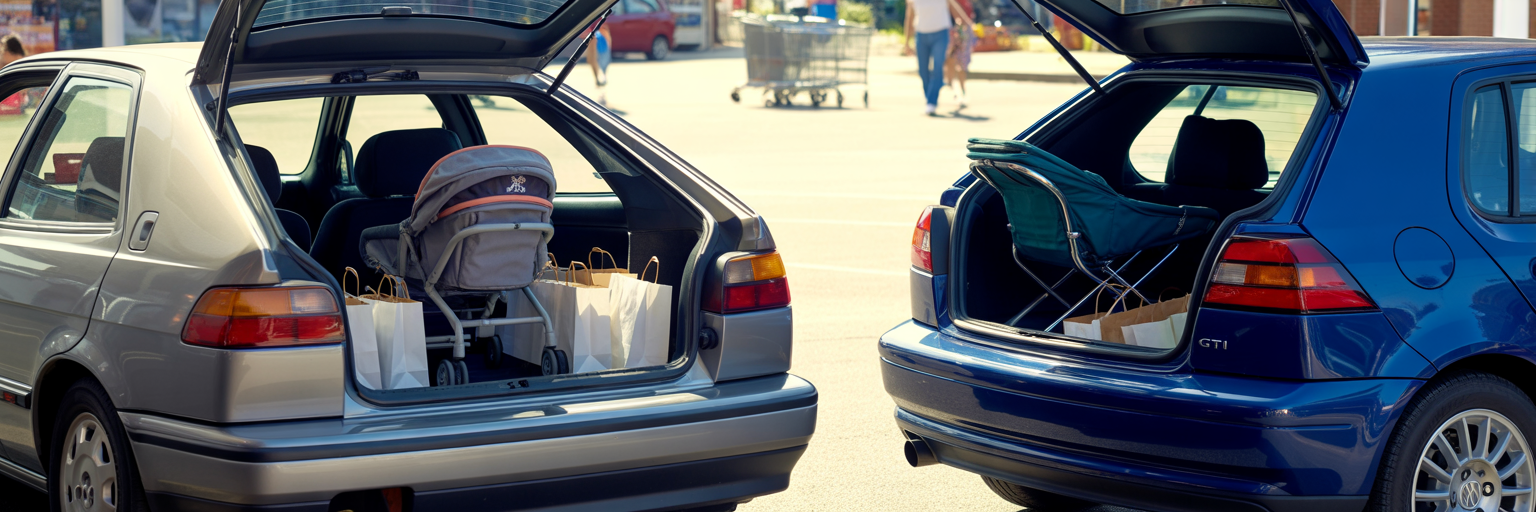
An enthusiast car chosen for family duty must also be a master of logistics, capable of swallowing strollers, grocery bags, and the assorted gear required for a weekend away. The cargo area’s utility is defined not just by its volume, but by its shape and accessibility.
Cargo Volume: Beyond the Spec Sheet
The specifications show the Integra cargo space at a generous 24.3 cubic feet, easily surpassing the GTI’s 19.9 cubic feet. However, these numbers only tell part of the story. The shape of that space is what truly determines its practicality for a family. The Integra’s advantage in raw volume is undeniable, but how that volume is configured is where the comparison gets interesting.
Liftback vs. Hatch: A Tale of Two Shapes
The two cars offer fundamentally different cargo designs. The Acura Integra features a long, wide, but relatively shallow liftback area. This shape is excellent for laying long items flat. The Volkswagen Golf GTI, true to its hatchback roots, has a cargo area that is shorter and narrower but significantly deeper and more cubical. This boxy shape is often more efficient for stacking items like luggage or grocery bags.
The Stroller Test
Our test with a standard folded stroller reveals the practical differences between these two shapes. In the Integra, the stroller lays flat on the floor with room to spare, but its length consumes much of the floor area. In the GTI, the stroller often needs to be placed at a slight angle or stood on its side against the seatbacks. While it fits, the GTI’s shorter floor means the stroller occupies the space more awkwardly. The Integra’s ability to swallow the stroller flat on the floor is a clear win, leaving the remaining space more organized and usable.
Accommodating Groceries and Gear
With the stroller already loaded, the challenge of adding a week’s worth of groceries begins. In the Integra, the wide floor allows grocery bags to be placed alongside the stroller. In the GTI, the deeper well means bags can be stacked more securely, but the overall footprint is smaller. For a family road trip, the GTI’s deep, boxy hatch can be easier to pack with duffel bags and coolers, almost like a game of Tetris. The Integra’s longer space is better for awkward items like portable cribs or beach umbrellas. This versatility is key when choosing from the best family road trip vehicles that are not boring, and both cars present a compelling case depending on what you need to carry.
Daily Comfort and Cabin Convenience
Performance and space are only part of the equation. The best daily driver for families must also be a comfortable and serene place to spend time, with thoughtful features that reduce the stress of daily commutes and long journeys.
Ride Quality on American Roads
Suspension tuning is a defining characteristic of each car. The Golf GTI, even without its optional adaptive dampers, has a firm, controlled ride. It feels connected to the road, which is rewarding on a smooth, winding backroad, but it can translate to a busier, sometimes harsher experience over the broken pavement and expansion joints common on American highways. The Acura Integra is tuned for a more compliant ride. It does an admirable job of soaking up bumps and road imperfections, providing a calmer and more comfortable experience for all passengers, which is a significant benefit on long family trips.
Cabin Noise and Serenity
A quiet cabin can be a sanctuary, especially with sleeping children in the back. The Integra, consistent with Acura’s premium positioning, offers superior sound insulation. At highway speeds, there is noticeably less road and wind noise compared to the GTI. The Volkswagen is by no means loud, but its sportier intentions are apparent, with more engine and road noise making its way into the cabin. For families prioritizing a peaceful environment, the Integra has the edge.
Driver Visibility and Blind Spots
The GTI’s upright, glassy cabin provides excellent all-around visibility. Its relatively thin pillars and large rear window make it easy to place on the road and confident to maneuver in tight spaces. The Integra’s sleek, sloping roofline creates a more dramatic look but comes at the cost of rear visibility. The thick C-pillars and shallow rear window create larger blind spots, making the driver more reliant on the standard blind-spot monitoring system.
Rear-Seat Amenities for the Little Ones
This is a critical area where small details make a big difference. The Golf GTI SE and Autobahn trims come standard with rear-seat air vents, a feature that is essential for keeping children comfortable in hot or cold weather. The Integra, surprisingly, omits rear air vents on all trims except the top-tier Type S. Both cars offer rear USB ports for charging devices, but the GTI’s inclusion of dedicated climate vents is a major practical victory for family comfort.
Front Cabin Ergonomics and Technology
In the front, both cars offer modern, user-friendly environments. Volkswagen received feedback on its previous touch-sensitive controls and has returned to physical buttons on the steering wheel for the 2026 GTI, a welcome improvement for usability. The Integra’s cabin features a more traditional layout with clear, intuitive controls and a highly functional infotainment system. It also includes thoughtful features like the walk-away auto-lock function, which automatically locks the doors as you leave the vehicle, a small convenience that parents with full hands will appreciate.
The ‘Fun’ Factor: Performance and Driving Dynamics

While practicality is paramount, these cars were chosen because they promise an engaging driving experience. This section evaluates how well they deliver on that promise when the family is not on board and a winding road appears.
Real-World Acceleration and Power Delivery
The on-paper power advantage of the GTI translates directly to the road. Its 2.0-liter engine and quick-shifting DSG deliver an immediate, torque-rich punch that feels exciting and responsive in any situation. According to Car and Driver, the quick-shifting DSG helps the GTI achieve a brisk 0-60 mph time, contributing to its lively feel in daily driving. The Integra’s 1.5-liter engine and CVT provide smooth, adequate acceleration, but it lacks the urgent, playful shove of the GTI. It feels quick, but the GTI feels genuinely fast and more eager to play.
Steering, Handling, and Agility
Here, the GTI’s heritage shines. Its steering is sharp, direct, and provides excellent feedback, making the car feel agile and planted. It darts into corners with enthusiasm and feels incredibly composed. The Integra’s steering is lighter and less communicative, though still precise and confident. It prioritizes a balance of comfort and sportiness, feeling more like a capable grand tourer than a sharp-edged sports sedan. The GTI is simply the more engaging and rewarding car to hustle down a challenging road.
Braking Performance and Feel
Both vehicles offer strong, confident braking performance suitable for their performance levels. The GTI’s brake pedal tends to have a firmer, more immediate feel, which aligns with its sporty character. The Integra’s brakes are just as effective but offer a more progressive pedal feel that is easier to modulate smoothly in everyday traffic, contributing to its overall refined demeanor.
The Advantage of a Limited-Slip Differential
A key piece of hardware that separates the two is the GTI’s standard electronically controlled torque-vectoring limited-slip differential (VAQ). In simple terms, this system intelligently manages power between the front wheels when accelerating out of a corner. It dramatically reduces wheelspin and understeer, allowing the driver to apply power earlier and more confidently. This single feature is a huge contributor to the GTI’s fun-to-drive character and gives it a significant dynamic advantage over the standard Integra, which uses a simpler brake-based agility assist system.
Analyzing the Long-Term Cost of Ownership
A smart purchase considers not just the sticker price but the total cost over several years of ownership. For a family budget, factors like fuel, maintenance, and resale value are critically important. Acura’s strong reputation for reliability is a key reason why some high-mileage cars age better than others, often resulting in better long-term resale value.
| Cost Factor | Acura Integra A-Spec w/ Tech (CVT) | Volkswagen Golf GTI SE (DSG) |
|---|---|---|
| EPA Combined MPG | 33 MPG | 28 MPG |
| Recommended Fuel | Premium Unleaded | Premium Unleaded |
| Est. Annual Fuel Cost (@12k miles, $4.50/gal) | ~$1,636 | ~$1,928 |
| Powertrain Warranty | 6 Years / 70,000 Miles | 4 Years / 50,000 Miles |
| Basic Warranty | 4 Years / 50,000 Miles | 4 Years / 50,000 Miles |
| Expected Depreciation (5-Year) | Lower | Higher |
| Tire Replacement Cost | Moderate | Moderate to High |
Note: Fuel costs are estimates based on 12,000 miles per year and an assumed premium fuel price of $4.50/gallon. Actual costs will vary. Depreciation is based on historical brand performance and market trends.
The data reveals a clear financial advantage for the Acura Integra. Its superior fuel economy translates to nearly $300 in savings annually. More significantly, Acura’s longer 6-year/70,000-mile powertrain warranty provides two extra years of peace of mind over the GTI’s coverage. Historically, Acura models have also demonstrated stronger resale value than their Volkswagen counterparts, meaning the Integra is likely to be worth more after five years of ownership. While both cars require premium fuel and have similar tire and brake replacement costs, the Integra’s advantages in fuel efficiency, warranty, and depreciation make it the more sensible long-term financial choice.
Final Verdict: The Best Fun Car for a Family of Four

After a thorough evaluation of space, practicality, comfort, performance, and cost, it is clear that both the Acura Integra and Volkswagen Golf GTI make compelling cases. The GTI remains the sharper, more engaging performance tool, delivering a driving experience that is hard to beat for the price. The Integra counters with a more spacious, comfortable, and refined package that excels in the daily grind of family life. To declare a winner, we must return to our original question: which car is the better “one-car solution” for an enthusiast with two kids?
Here is how they stack up in the key categories:
- Family Space: Winner: Acura Integra. Its superior rear legroom is a decisive advantage for installing child seats without compromising front passenger comfort.
- Cargo Use: Winner: Acura Integra. The larger and more flexible liftback area, especially for fitting a stroller, makes it more practical for family hauling.
- Comfort: Winner: Acura Integra. A quieter cabin and more compliant ride make it the more serene choice for daily commutes and long trips, despite the GTI’s advantage of rear air vents.
- Performance: Winner: Volkswagen Golf GTI. Its potent engine, quick-shifting DSG, and standard limited-slip differential provide a more thrilling and dynamic driving experience.
- Operating Costs: Winner: Acura Integra. Better fuel economy, a longer powertrain warranty, and stronger expected resale value give it a clear long-term financial edge.
For the title of Best Overall Fun Family Car in this comparison, the winner is the Acura Integra. While the Golf GTI offers more pure, unadulterated driving fun, its compromises in rear-seat space and daily comfort are more pronounced in the context of a family with two young children. The Integra strikes a more harmonious balance. It provides the space and practicality needed to eliminate daily frustrations while still offering a driving experience that is polished, enjoyable, and satisfying. It is the vehicle that asks for fewer compromises, making it the superior choice among these two excellent practical enthusiast cars for an enthusiast navigating the rewarding realities of family life.