Setting the Stage for a Heavy-Duty Showdown
In the world of American heavy-duty pickups, two names consistently dominate the conversation: the Chevrolet Silverado 2500HD and the Ram 2500. These vehicles are more than just tools; they are monuments of engineering, built to move immense weight with confidence. This comparison is not merely about which truck has the highest numbers on a spec sheet. It is a clash of deeply rooted philosophies that define how power is made and delivered.
At the heart of this rivalry are two legendary diesel powerplants. On one side, you have the General Motors 6.6L Duramax V8, an engine celebrated for its sophisticated, quiet operation and responsive power delivery. On the other, the iconic 6.7L Cummins inline-6, a symbol of industrial strength, known for its mechanical simplicity and earth-moving torque right off the line. For 2026, both trucks are engineered for extreme work, yet they cater to different priorities. One driver might value daily comfort and advanced technology, while another seeks uncompromising pulling power and a reputation for million-mile durability.
This analysis will move beyond the brochures to explore how these trucks perform in the real world. We will examine the core mechanics of their engines, their stability and control while towing heavy loads, and the comfort and technology found inside their cabins. By looking at everything from powertrain design to the total cost of ownership, this heavy duty truck comparison 2026 will give you the insights needed to make a definitive choice. Whether you’re outfitting a fleet for a demanding job site or selecting a rig for cross-country RV adventures, you will find the answers here. For a wider view of the segment, you can explore our overview of modern trucks and their capabilities.
Powertrain Philosophies: The V8 Duramax vs. The Inline-6 Cummins
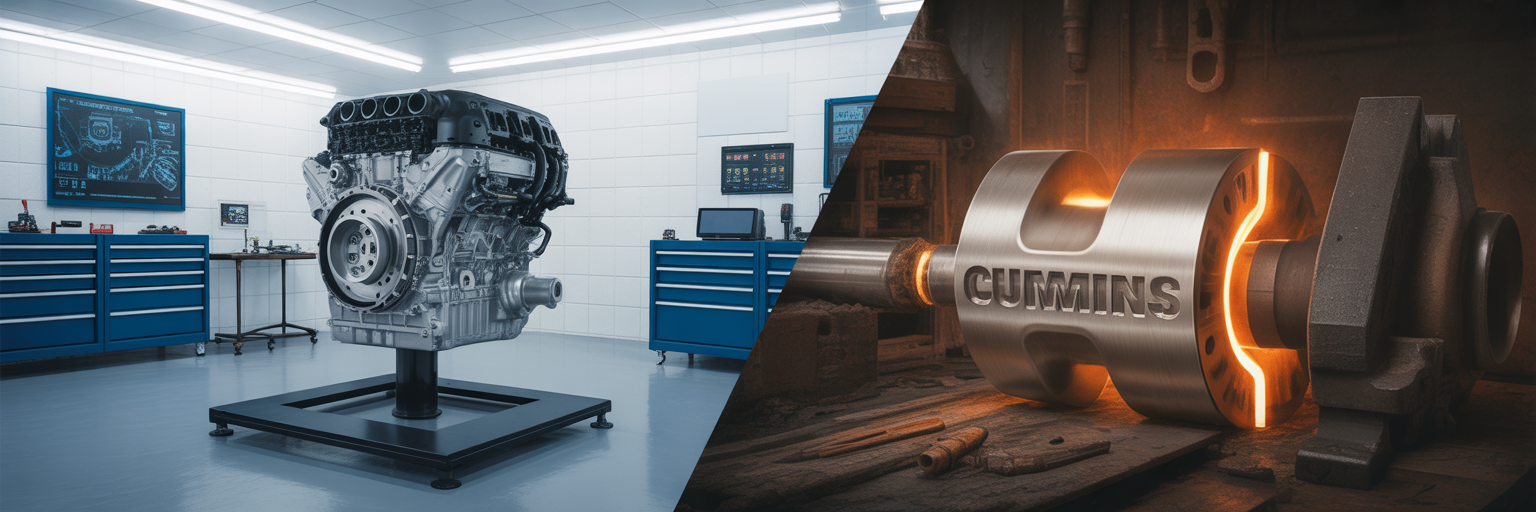
The distinct character of each truck begins with its engine. The choice between a Duramax V8 and a Cummins inline-6 is a decision between two different approaches to generating massive power. Understanding these differences is key to knowing which truck will better suit your demands.
Engine Architecture: V8 Agility vs. Inline-6 Simplicity
The 6.6L Duramax is a V8, meaning its eight cylinders are arranged in two banks of four, forming a “V” shape. This compact design allows it to rev higher and more quickly than its competitor. Think of it as a heavyweight athlete with quick feet. In contrast, the 6.7L Cummins is an inline-6, with all six cylinders lined up in a single row. This design is inherently balanced, producing fewer vibrations and requiring fewer moving parts in the valvetrain. It’s the foundation of the Cummins’ reputation for industrial-grade longevity and its ability to produce immense torque at very low RPMs.
Power and Torque Delivery: The Tale of the Tape
On paper, the numbers tell a compelling story. The Duramax produces around 470 horsepower and 975 lb-ft of torque, while the high-output Cummins counters with up to 430 horsepower and a staggering 1,075 lb-ft of torque. But how does this translate to the road? The Duramax delivers its power in a smooth, linear fashion. It feels responsive and eager, building power progressively as the revs climb. The Cummins, however, feels like a force of nature from the moment you touch the throttle. Its peak torque arrives much earlier, providing an immediate, massive shove that feels unstoppable. This is the core of the Silverado 2500HD Duramax vs Ram 2500 Cummins debate: refined, high-revving power versus raw, low-end grunt.
Transmission Pairing: Allison vs. Aisin-Sourced Automatics
An engine is only as good as the transmission it’s paired with. The Silverado uses a sophisticated 10-speed Allison automatic transmission. Its intelligent shift logic is exceptional at keeping the Duramax right in the heart of its powerband, whether climbing a grade or accelerating onto a highway. The Ram employs a robust 8-speed automatic specifically engineered to handle the Cummins’ colossal torque output. It shifts deliberately and smoothly, prioritizing durability and control over rapid gear changes. Unloaded, the Silverado feels quicker and more athletic. With a heavy trailer attached, the Ram’s deliberate, torque-focused powertrain comes into its own, pulling with an unwavering sense of authority.
| Specification | Chevrolet Silverado 2500HD | Ram 2500 |
|---|---|---|
| Engine Type | 6.6L Duramax Turbo-Diesel V8 | 6.7L Cummins Turbo-Diesel I-6 |
| Horsepower | ~470 hp | Up to 430 hp (High Output) |
| Torque | ~975 lb-ft | Up to 1,075 lb-ft (High Output) |
| Transmission | Allison 10-speed automatic | 8-speed automatic |
| Key Design Trait | High-revving, refined power delivery | Low-end torque, mechanical simplicity |
| Valvetrain | Overhead Valve (OHV), 32-valve | Overhead Valve (OHV), 24-valve |
Note: Figures are based on the latest available model year data and projections for 2026. High-output Cummins option is typically available on 3500 models but is included for a complete torque comparison.
The Ultimate Test: Towing and Payload Supremacy
While the powertrain philosophies differ, both trucks are built for one primary purpose: work. Evaluating their towing and payload capabilities goes beyond just reading numbers; it’s about understanding how they manage immense loads with stability and control.
On-Paper Capacities: Who Hauls More?
When properly equipped, both trucks boast incredible capabilities. The Ram 2500 often has a slight edge in maximum fifth-wheel and gooseneck towing, with capacities that can approach 20,000 pounds. The Silverado 2500HD is right behind, with its maximum towing capacity rated around 19,090 pounds. Payload ratings for similarly configured crew cab 4×4 models are highly competitive, often depending more on specific options than on the brand itself. According to a detailed engine comparison by SlashGear, the Ram’s Cummins engine can produce up to 1,075 lb-ft of torque, giving it a statistical advantage in maximum towing scenarios.
Real-World Towing Stability and Control
Imagine pulling a 15,000-pound fifth-wheel trailer up a steep mountain grade. This is where these trucks truly show their mettle. The Ram’s Cummins engine settles into a low-RPM hum, effortlessly pulling the weight without feeling strained. The Silverado’s Duramax, paired with the 10-speed Allison, is more active, using its wider gear spread to keep the engine in its optimal power range. Both trucks feature powerful integrated exhaust brakes, which are essential for maintaining control on long descents and saving the service brakes. The braking systems themselves are massive and confidence-inspiring, with integrated trailer brake controllers that work seamlessly to provide smooth, proportional stopping power.
Advanced Trailering Technology
Modern technology has made towing safer and less stressful. Chevrolet offers an advanced multi-view camera system that provides up to 14 different views, including its signature “transparent trailer” view that digitally stitches together images to make the trailer seem invisible. This is incredibly useful for maneuvering in tight spots. Ram counters with its own comprehensive camera system and an innovative Trailer Reverse Steering Control, which allows the driver to steer the trailer with a simple knob while the truck manages the steering wheel. For those who tow frequently, deciding which is the best diesel truck for towing may come down to which of these tech suites feels more intuitive. For more insights, you can see our list of which 2025 trucks offer the best towing and fuel economy.
On the Road: Ride Quality and Daily Drivability

A heavy-duty truck often serves as a daily driver, and how it behaves when not towing is just as important as its work capabilities. The Silverado and Ram take noticeably different approaches to ride comfort and maneuverability.
Unloaded Ride Comfort: The IFS Advantage
When driving an empty truck, the difference is immediately apparent. The Silverado 2500HD uses an independent front suspension (IFS), a design more common in lighter-duty trucks and SUVs. This allows each front wheel to react to bumps independently, resulting in a significantly smoother and more composed ride over rough pavement. It feels less jarring and more refined, making it a more comfortable companion for daily commuting.
The Air Suspension Equalizer
The Ram 2500, with its durable solid front axle, traditionally has a stiffer, more classic truck-like ride when unloaded. However, Ram offers a transformative option: a class-exclusive rear air suspension system. This feature dramatically improves ride quality by replacing traditional coil springs with adjustable air bags. It soaks up bumps with surprising grace and offers the added benefit of automatic load-leveling, which keeps the truck perfectly level when hauling a heavy payload or towing a trailer. This single option closes the ride comfort gap considerably.
Steering Feel and Maneuverability
Behind the wheel, the two trucks communicate differently. The Silverado’s steering is generally lighter and more direct, making it feel a bit more nimble and easier to place on the road. The Ram’s steering is heavier, providing a strong sense of command and stability, especially at highway speeds. Neither of these giants is particularly easy to park in a crowded city lot, but the Silverado’s slightly more responsive steering can make tight maneuvers feel a little less intimidating.
Inside the Cabin: Comfort, Technology, and Noise
The modern heavy-duty truck is no longer just a spartan workhorse. The cabins of the Silverado and Ram are designed to be comfortable, technologically advanced command centers for long days on the road.
Interior Design and Material Quality
Ram has long been the benchmark for truck interior quality, and the 2026 models continue this tradition. In higher trims like the Laramie and Limited, the cabin is adorned with premium leather, real wood, and metal accents that would feel at home in a luxury sedan. Chevrolet has recently made significant strides with its interiors. The latest Silverado features a modern, driver-focused cockpit with a clean layout and high-quality materials, especially in LTZ and High Country trims. The choice often comes down to personal preference: Ram’s opulent comfort versus Chevrolet’s functional modernism.
Infotainment and Connectivity
Technology is a major battleground. The Silverado boasts a large 13.4-inch touchscreen infotainment system with Google Built-in, offering seamless integration of Google Maps, Assistant, and the Play Store. Ram’s Uconnect 5 system, displayed on a striking vertically oriented 12-inch touchscreen, is known for its user-friendly interface and sharp graphics. As noted in TrueCar’s comparison, the Silverado’s slightly larger screen is a key differentiator. Both systems offer excellent smartphone integration with Apple CarPlay and Android Auto.
Acoustics and Ergonomics
At highway speeds, both cabins are impressively quiet, but the engine sounds that filter through are distinct. The Cummins emits a signature, low-frequency hum—the sound of industrial power at work. The Duramax is noticeably quieter, with a more subdued V8 rumble. Both trucks offer supremely comfortable seats designed for long-haul journeys and clever in-cab storage solutions. For audiophiles, the choice is between the crisp, clear sound of the Silverado’s Bose premium audio system and the deep, immersive experience of the Ram’s Harman Kardon system. For more vehicle showdowns, you can browse our other comparison articles.
Advanced Safety and Driver-Assistance Features

Piloting a vehicle of this size and capability requires confidence, and both manufacturers equip their trucks with a suite of advanced safety technologies. These systems are designed to act as a second set of eyes, especially when towing.
Here is a side-by-side look at the key driver-assistance features available on both trucks:
- Forward Collision Warning & Automatic Emergency Braking: Both systems monitor the road ahead and can apply the brakes to prevent or mitigate a collision. They are calibrated to account for the extra stopping distance required when towing.
- Adaptive Cruise Control (ACC): Both offer ACC with stop-and-go functionality, which is a lifesaver in heavy traffic. The systems intelligently adjust their following distance and acceleration behavior when a trailer is attached.
- Lane Keeping Assist & Lane Departure Warning: These systems provide gentle steering inputs to help keep the truck centered in its lane, reducing driver fatigue on long highway stretches.
- Blind-Spot Monitoring: This is a critical feature for towing. Both trucks offer systems that can be configured to extend their sensor range to cover the entire length of a trailer, alerting you to vehicles in your trailer’s blind spot.
- 360-Degree Camera System: Both provide a bird’s-eye view of the truck, which is invaluable for parking and navigating tight spaces. They also offer specific views for aligning a hitch and monitoring cargo in the bed.
In practice, these systems are well-integrated and generally intuitive. They provide an extra layer of security without being overly intrusive, helping to make the task of managing a large truck and trailer combination less demanding.
Long-Term Ownership: Reliability, Maintenance, and Fuel Costs
Buying a heavy-duty truck is a significant investment, and the costs don’t stop at the purchase price. Understanding the long-term implications of reliability, maintenance, and fuel consumption is essential for making a smart decision.
Reliability and Longevity Expectations
The Duramax vs Cummins reliability debate is one of the most enduring in the truck world. The Cummins inline-6 engine has a legendary reputation for durability, built on its simple, robust design with fewer moving parts. It is not uncommon to see these engines exceed 300,000 miles with proper care. The Duramax V8 is a more complex engine but has also earned a strong record for reliability over its many generations. The Allison transmission paired with it is renowned for its toughness. The choice often comes down to a preference for mechanical simplicity versus modern sophistication.
Maintenance Schedules and Costs
Diesel engines require diligent maintenance. Both trucks have similar service intervals for oil changes and fuel filter replacements. The Ram 2500 Cummins maintenance costs can sometimes be slightly lower over the long run due to the engine’s simpler design and parts availability. Both engines require Diesel Exhaust Fluid (DEF) to meet emissions standards, and consumption rates are comparable under similar workloads. For the do-it-yourself owner, the inline-6 layout of the Cummins can offer slightly better access to key service points compared to the more compact V8 in the Silverado’s engine bay.
Real-World Fuel Economy
Fuel is one of the biggest operating expenses. While official EPA ratings are not required for this class of vehicle, real-world data provides a clear picture. Unloaded on the highway, the Ram 2500 often has a slight edge, capable of achieving 18-22 MPG due to the low-RPM operation of the Cummins engine. The Chevy Duramax fuel economy is very competitive, typically in the 17-21 MPG range under the same conditions. In city driving, both trucks will average around 14-16 MPG. When towing a heavy load of 12,000 pounds or more, expect fuel economy to drop significantly into the 8-12 MPG range for both vehicles, depending on terrain and speed.
Analyzing Price and Overall Value
The final purchase decision often comes down to finances. Understanding the pricing structure, standard features, and resale value of each truck is crucial to determining the best overall investment.
When comparing similarly equipped 4×4 crew cab models in popular mid-range trims, such as a Silverado LT and a Ram Big Horn, the starting prices are typically very close. The diesel engine option itself adds a significant premium of around $10,000 to $12,000 on both trucks. As you climb into the luxury trims like Chevrolet’s High Country and Ram’s Limited, prices can soar well past $80,000, with Ram often feeling a bit more luxurious for the money at the very top end.
The broader value proposition depends on what you prioritize. Chevrolet sometimes bundles its advanced trailering technology into more accessible packages, while Ram might make its coveted air suspension available on a wider range of trims. It’s important to look beyond the sticker price and analyze which truck offers the features you need at a price point that makes sense for your budget. Both brands are known for offering incentives, so the final transaction price can vary.
One of the biggest advantages of owning a heavy-duty diesel truck is its historically strong resale value. Both the Silverado 2500HD Duramax and the Ram 2500 Cummins are highly sought after on the used market. While market conditions can fluctuate, you can generally expect either truck to retain a significant portion of its original value over a typical 3-5 year ownership period, making them a sound long-term financial choice.
The Final Verdict: Which Truck Is Right for You?
After analyzing every aspect of these two heavy-duty titans, it’s clear there is no single “winner.” The best truck is the one that aligns perfectly with your specific needs. The decision comes down to how you plan to use it every day.
Here are our recommendations for three distinct types of owners:
- For the Contractor and Daily Worker: The Chevrolet Silverado 2500HD is the stronger choice here. Its superior unloaded ride quality, thanks to the independent front suspension, makes the drive home after a long day on the job site far more comfortable. Its lighter steering and more nimble feel are advantages when navigating crowded urban areas or tight work sites. The functional, modern interior is built for durability and ease of use.
- For the Full-Time RV Tower: The Ram 2500 gets the nod for those towing a large fifth-wheel or travel trailer across the country. The Cummins engine’s massive low-end torque makes climbing steep mountain passes feel effortless. The available rear air suspension provides exceptional stability and a level ride, while the luxurious and quiet cabin reduces fatigue on long-distance hauls. It is a supremely confident and comfortable long-range towing platform.
- For Long-Term Heavy-Duty Ownership (10+ Years): This choice is a matter of philosophy. If your priority is mechanical simplicity and a reputation for extreme longevity, the Ram 2500 Cummins is hard to beat. Its inline-6 design is a testament to durable, industrial-grade engineering. If you value a more refined driving experience, a quieter engine, and the sophisticated performance of the Duramax/Allison combination, the Chevrolet Silverado 2500HD is an equally reliable and proven choice that offers a higher degree of modern refinement.
Ultimately, both trucks are incredibly capable machines. By understanding their fundamental differences, you can choose the one that will be the best partner for your work and your adventures. After making your choice, you can explore more automotive content on our main page.