Setting the Stage for a Heavy-Duty Showdown
For generations, the choice between a Ford Super Duty and a Chevrolet Silverado HD has been a defining one for American businesses. The color of the truck on a worksite, whether Ford’s blue oval or Chevy’s gold bowtie, often says as much about family tradition and brand loyalty as it does about utility. But in 2026, this decision is far more than a matter of preference. For contractors, agricultural operators, and fleet managers, it is a critical business investment where uptime translates directly to profit and downtime becomes a costly liability.
This heavy duty truck comparison is not about picking a favorite. Its purpose is to conduct a thorough, head to head analysis of the 2026 Ford F-350 and the Chevrolet Silverado 3500HD. We will move beyond the surface level specifications that dominate brochures and commercials. Instead, we will focus on what these trucks deliver in the real world, examining everything from raw power and practical capability to long term durability and the total cost of ownership. The choice you make impacts your bottom line, your operational efficiency, and your confidence on the road.
For 2026, both Ford and Chevrolet have introduced significant refinements to their flagship one ton trucks. These updates have made the decision more nuanced than ever before. It is no longer a simple question of which truck has the biggest number on its fender. It is about understanding the distinct engineering philosophies behind each vehicle and how they align with your specific operational needs. For those who live and breathe these machines, our comprehensive section on trucks offers more insights into the broader market.
This article will provide a detailed breakdown of every critical aspect. We will start with the heart of these beasts, their powertrains, and move through their real world towing and payload limits. We will then analyze how they handle, what they are like to live with day to day, and what it will truly cost to keep them running. By the end, you will have a clear picture of which truck is the right tool for your job.
A Tale of Two Powertrains: Engine Power and Torque
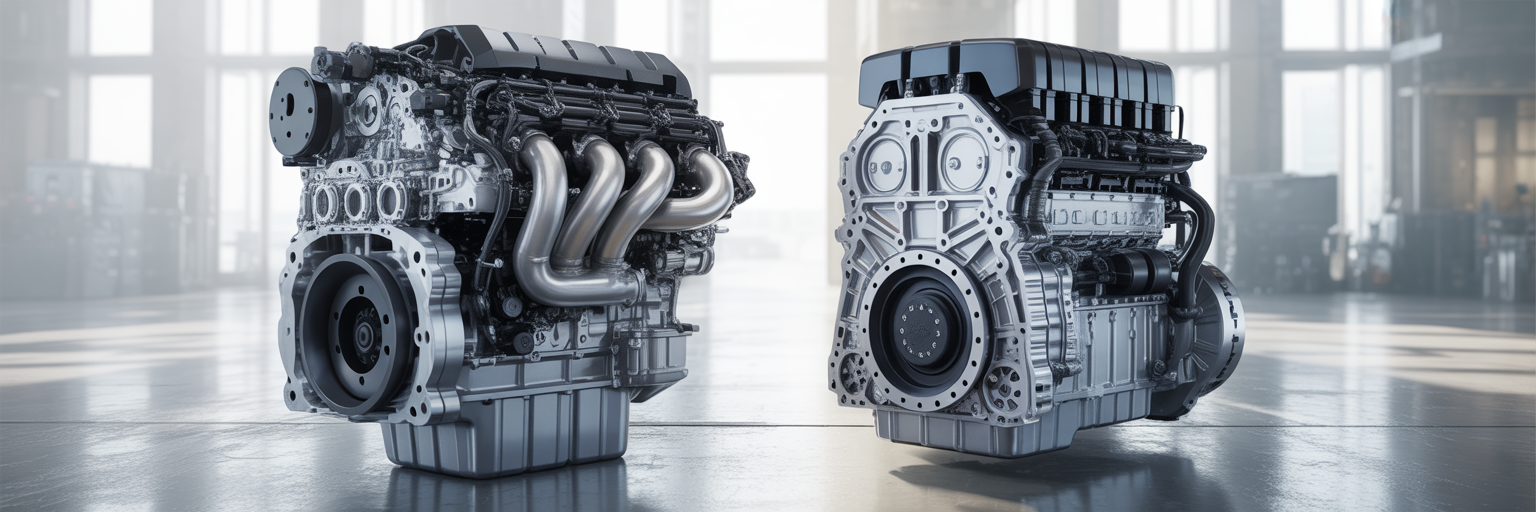
The debate of Ford F-350 vs Chevy 3500HD almost always begins under the hood. The diesel engine is the heart of a one ton truck, and in 2026, Ford and Chevrolet continue to offer two very different approaches to generating massive power. Understanding these differences is the first step in choosing the right truck for your workload.
Ford’s High-Output Power Stroke: The Numbers King
Ford’s strategy with the 6.7L High-Output Power Stroke V8 is clear: win the spec sheet war. Engineered to produce class leading figures, this engine is for the operator who believes there is no substitute for raw power. With horsepower and torque numbers that consistently lead the segment, the F-350 is designed to impress. That immense torque makes its presence felt immediately. When merging onto a highway with a heavy trailer, the acceleration is surprisingly effortless. The engine does not strain; it simply delivers a massive wave of power that gets you up to speed with confidence. This is the engine for those who frequently haul at the upper limits of their truck’s capacity and need the extra muscle to pull steep grades without breaking a sweat.
Chevrolet’s Proven Duramax: The Marathon Runner
In contrast, Chevrolet’s 6.6L Duramax V8 is the seasoned veteran. While its horsepower and torque figures are formidable, they do not aim to be the absolute highest in the class. Instead, the Duramax has built its reputation on a foundation of durability and smooth, predictable power delivery. Drivers who choose the Silverado often talk about the engine’s linear power curve. There are no sudden surges, just a steady and relentless pull. This characteristic is prized by those who spend long hours on the road, as it reduces driver fatigue and makes for a more controlled towing experience. The Duramax is not about shocking you with its power; it is about reassuring you that it will be there, mile after mile, year after year.
Contrasting Engineering Philosophies
Ultimately, the choice between these two powertrains comes down to a fundamental difference in engineering philosophy. Ford has engineered the Power Stroke for peak performance, giving you the highest possible output for the most demanding tasks. It is a statement of capability. Chevrolet has refined the Duramax for consistent, long haul performance, prioritizing a proven track record of reliability over chasing the highest number. The question for you as a buyer is straightforward. Is the absolute maximum power of the Ford a necessity for your operation, or is the trusted, slightly more conservative performance of the Silverado a better fit for your long term business plan?
| Specification | Ford 6.7L High-Output Power Stroke V8 | Chevrolet 6.6L Duramax V8 |
|---|---|---|
| Displacement | 6.7 Liters | 6.6 Liters |
| Horsepower | 475 hp (approx.) | 445 hp (approx.) |
| Torque | 1,050 lb-ft (approx.) | 910 lb-ft (approx.) |
| Key Characteristic | Engineered for maximum output and class-leading performance figures. | Renowned for its smooth power delivery and a long history of durability. |
| Ideal User | Operator needing the highest possible power for the heaviest loads. | User prioritizing proven reliability and consistent, long-haul performance. |
Note: Horsepower and torque figures are based on projected 2026 model year specifications and established performance from previous model years. This table highlights the core philosophical differences in engine design between Ford and Chevrolet.
The Bottom Line: Towing and Payload Capacities
Having all that power under the hood is one thing, but putting it to work is what truly matters. This section moves beyond engine specs to focus on applied capability. For anyone searching for the best truck for towing, the numbers here are critical, but they only tell part of the story. The real capability of these trucks is found in the details of their configuration and how they feel with a heavy load behind them.
Decoding Maximum Towing Ratings
When comparing maximum towing, the F-350 towing capacity often sets the benchmark. With its high output engine and robust frame, Ford consistently pushes the limits for conventional, gooseneck, and fifth wheel towing. The Silverado 3500HD is always a close competitor, offering immense capability that meets the needs of nearly all users. However, Ford’s focus on leading the numbers race means that if your primary goal is to have the highest possible rating, the F-350 is often the answer. To ensure these figures are comparable, all manufacturers adhere to a specific testing protocol. As a report from the Society of Automotive Engineers (SAE) explains, the SAE J2807 standard provides a consistent set of criteria for calculating tow ratings, allowing for a true apples to apples comparison.
The Importance of Configuration: SRW vs. DRW
Those maximum towing numbers you see in advertisements are for a very specific, and often expensive, truck configuration. The most important lesson for any serious buyer is that your truck’s true capacity is determined by how you spec it. The choice between a single rear wheel (SRW) and dual rear wheel (DRW) setup is the most significant. A DRW, or “dually,” provides a wider, more stable platform that dramatically increases gooseneck and fifth wheel towing limits. Beyond that, choices in axle ratio, drivetrain (4×2 vs. 4×4), and even cab size all impact the final certified rating. Do not just look at the brochure’s hero number. Instead, work with a dealer to configure a truck that is precisely matched to the weight and type of trailer you will be pulling.
Payload: The Unsung Hero of Capability
Towing gets all the attention, but for many contractors, landscapers, and agricultural operators, payload is the most critical metric. Payload is the total weight a truck can carry in its bed and cabin, and it is just as vital as towing. This is where you see the strength of the truck’s suspension and frame. When loaded near its maximum payload rating, a truck’s character is revealed. Does the rear end sag excessively? Does the steering feel light and disconnected? Both the F-350 and Silverado 3500HD are designed to handle immense weight, but they can feel different while doing it. The Silverado’s traditionally firm suspension can feel particularly composed with a heavy load, while the F-350 works to balance capability with ride comfort. For those exploring all their options, our guide on which 2025 trucks offer the best towing and fuel economy can provide additional context.
Putting Power to the Pavement: Transmission and Braking
Moving a heavy load is only half the battle. Controlling that mass, especially on steep grades and in unpredictable traffic, is where a truck’s transmission and braking systems prove their worth. This is about more than just raw power; it is about the intelligence and confidence engineered into the vehicle. The seamless integration of the engine, transmission, and brakes is what separates a good work truck from a great one.
Transmission Wars: Ford’s TorqShift vs. Chevy’s Allison
Both the F-350 and Silverado 3500HD utilize sophisticated 10-speed automatic transmissions, but they come from different backgrounds. Ford uses its own heavy duty TorqShift transmission, an in house design that has been refined over several generations to work in perfect harmony with the Power Stroke engine. Chevrolet, on the other hand, leverages the power of a legendary name by using a transmission branded with the Allison name. While built in partnership, the Allison brand carries immense weight in the heavy duty world, synonymous with unquestionable durability and reliability. In practice, both transmissions are exceptionally good, offering smooth shifts and keeping the engine in its optimal power band.
The Intelligence of Grade Shifting and Load Management
The true test of a modern transmission is its brain. You can feel the intelligence of the shift logic when towing a heavy trailer down a long, steep grade. Does the transmission proactively downshift to let the engine’s compression do the braking, or does it force you to constantly ride the service brakes? When climbing, does it hold the right gear to maintain momentum, or does it “hunt” back and forth, causing the engine to surge? Both Ford and Chevrolet have invested heavily in their Tow/Haul mode logic. They use sensors to detect the load and the grade, adjusting shift points to provide maximum control and reduce wear on the brakes. This intelligent load management is a critical feature that reduces driver stress and improves safety.
Braking Confidently: Exhaust Brakes and Integrated Controllers
When it comes to slowing down tens of thousands of pounds, the service brakes are only part of the equation. The diesel exhaust brake is your most important tool. By using the engine’s own backpressure to create braking force, it allows you to control your descent without overheating the primary brakes. Both trucks offer highly effective, driver selectable exhaust brakes, with Ford’s system often noted for its aggressive and confidence inspiring performance. This is complemented by a suite of advanced braking technologies that make towing safer and less stressful.
- Integrated Trailer Brake Controllers ensure the trailer’s brakes work in perfect sync with the truck’s.
- Automated Emergency Braking systems are now smart enough to account for the extra length and weight of a trailer.
- Hill Descent Control acts like a low speed cruise control for off road or steep jobsite declines.
The Daily Drive: Ride Quality and Handling Dynamics
A one ton truck is a tool, but it is also a vehicle that many owners drive every single day. It has to navigate crowded city streets and tight jobsites, not just open highways. While no one expects a heavy duty truck to ride like a luxury sedan, the differences in ride quality and handling between the F-350 and Silverado 3500HD can have a significant impact on driver comfort and fatigue over the long haul. This is where the truck’s personality shines through.
When driving unladen, the differences are most apparent. The 2026 Ford F-350 has often been praised for having a more compliant and refined ride when the bed is empty. It does a better job of soaking up minor road imperfections, making it a more comfortable daily commuter. The Silverado, true to its work first ethos, tends to have a firmer ride. It communicates more of the road surface to the driver, a feeling that some long time truck owners equate with ruggedness and a sense of connection to the vehicle. You feel more of what the tires are doing, for better or worse.
Load them up with a significant payload or attach a heavy trailer, however, and their characters begin to converge. The Silverado’s firm suspension, which can feel stiff when empty, becomes incredibly composed and stable with a ton of material in the bed. It simply settles in and gets to work. The F-350 also handles weight with exceptional composure, but its suspension is always working to balance the demands of capability with a more comfortable ride. In terms of handling, both are large vehicles, but small differences in steering weight and responsiveness can matter. The F-350’s steering is often lighter, making it easier to maneuver in parking lots, while the Silverado’s can feel more direct and weighted on the highway. For readers interested in how these two models stack up against other competitors, our main versus category offers a range of head to head matchups.
The Mobile Office: Interior Quality and Design
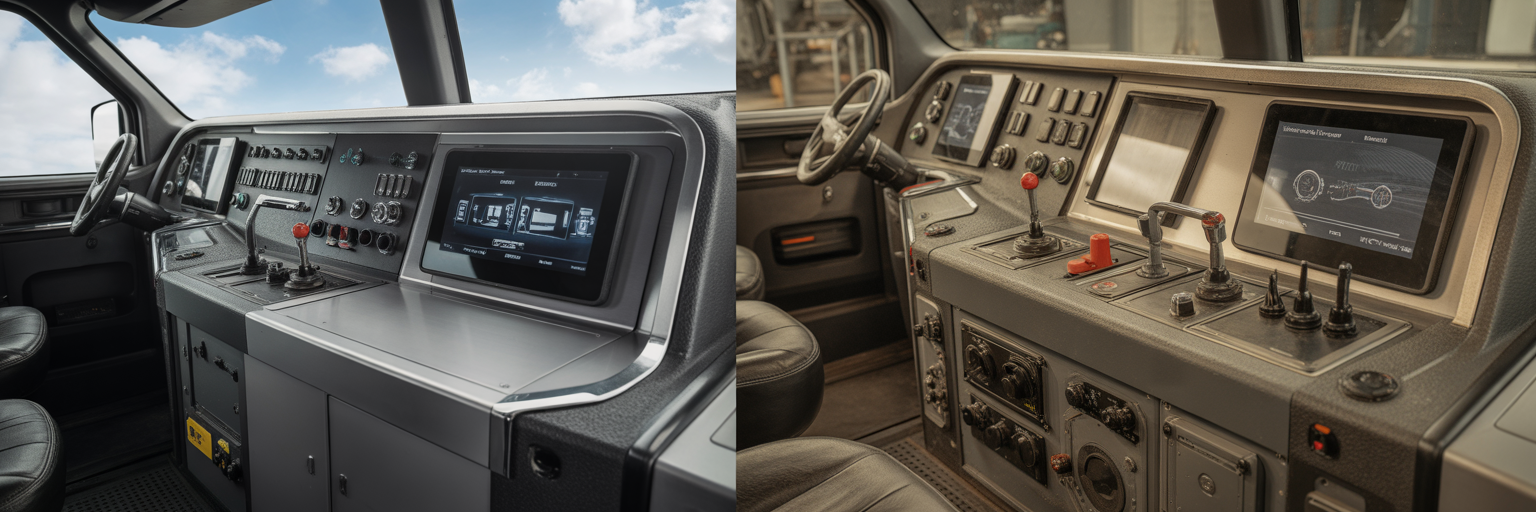
For the modern professional, the cabin of a heavy duty truck is much more than just a place to sit. It is a mobile office, a lunchroom, and a command center. The interior must be durable enough to withstand the rigors of a worksite yet comfortable enough for a long haul trip. Here, the Ford F-350 and Chevrolet Silverado 3500HD showcase two distinct philosophies on what the inside of a work truck should be.
Ford’s Tech-Forward Cabin vs. Chevrolet’s Utilitarian Cockpit
Step inside the F-350, especially in its upper trims, and you are greeted by an environment that feels modern and tech centric. Large digital screens for both the instrument cluster and infotainment system dominate the dashboard. The design is clean, and the materials feel a step above what you might expect in a work vehicle. In contrast, the Silverado’s interior is unapologetically functional. It is built around the “work glove test.” Can you easily operate the climate controls, radio volume, and drive mode selector without taking off your gloves? In the Silverado, the answer is a resounding yes, thanks to its use of large, physical knobs and buttons for core functions. It is a design that prioritizes ease of use and durability over cutting edge aesthetics.
Ergonomics for the Long Haul
Long hours behind the wheel demand an ergonomic design that minimizes fatigue. Both trucks offer excellent driving positions with good visibility and highly adjustable seats. However, they approach practical storage differently. Ford has been clever with features like the available interior work surface, which allows the center console to fold flat, creating a perfect spot for a laptop or paperwork. Chevrolet focuses on providing massive and easily accessible storage bins. The center console is cavernous, and there are cubbies and pockets everywhere, designed to hold the tools, drinks, and devices that accompany a day on the job.
The Widening Gap in Upper Trims
While the base and mid level trims of both trucks are functionally competitive, the gap between them widens significantly at the top of the range. A top tier Silverado High Country is a very nice truck, with quality leather and plenty of features. However, a Ford F-350 in King Ranch, Platinum, or Limited trim offers a level of luxury and refinement that the Silverado does not try to match. With features like premium woods, intricate leather stitching, and massaging front seats, the high end F-350 feels like a luxury vehicle that just happens to be able to tow 20,000 pounds. For the owner operator who wants one vehicle to do it all, from hauling equipment to a fancy dinner out, the F-350’s upper trims hold a distinct advantage.
Command and Control: Onboard Technology and Infotainment
Beyond the physical layout and materials, the digital systems within these trucks are now a core part of the user experience. This is not just about entertainment; it is about providing tools that make the difficult job of towing and managing a large vehicle easier and safer. The technology suite is the truck’s digital co pilot, and its effectiveness can have a real impact on a driver’s confidence and efficiency.
At the center of the experience are the main infotainment systems: Ford’s SYNC and Chevrolet’s Infotainment 3. Both offer large, responsive touchscreens with standard Apple CarPlay and Android Auto integration. Ford’s SYNC system, particularly the latest version, is known for its intuitive user interface and powerful voice commands. Chevrolet’s system is praised for its simplicity and speed. It is straightforward and does not bury essential functions deep within menus. The real battleground, however, is not in the radio presets but in the advanced trailering technology that is critical to this audience.
These trucks offer a stunning array of features designed to take the stress out of towing.
- Multi-View Camera Systems: Both brands offer comprehensive camera systems that provide a 360 degree bird’s eye view. The standout feature is the “transparent trailer” view, which stitches together camera feeds to let you “see through” your trailer, making lane changes and navigating tight spots much safer.
- Integrated Trailering Apps: The in vehicle apps are becoming increasingly sophisticated. They allow you to create profiles for different trailers, run through pre departure checklists, check trailer lights, and monitor trailer tire pressure and temperature, all from the driver’s seat.
- Pro Trailer Backup Assist vs. Hitch Guidance: Backing up a trailer is a skill that confounds many. Ford’s Pro Trailer Backup Assist allows you to steer the trailer using a simple knob on the dash, while the truck controls the steering wheel. Chevrolet’s system focuses on providing dynamic guidelines and multiple camera angles to make traditional backup methods easier.
Finally, the experience inside the cabin is shaped by sound. Both trucks offer premium audio systems, with Ford partnering with B&O and Chevrolet with Bose. These systems are designed to overcome the inherent noise of a diesel engine and large tires, providing a clear and powerful listening experience. The effectiveness of the cabin insulation against road, wind, and engine noise is also a key factor, with both brands making significant strides in creating a quieter, more comfortable mobile office.
Long-Term Value: Reliability, Maintenance, and Ownership Costs
The initial purchase price is just the first chapter in the financial story of owning a heavy duty truck. The true cost of ownership unfolds over years of fuel, maintenance, insurance, and ultimately, depreciation. For a business, understanding these long term costs is just as important as securing a good price upfront. This is where reputation, engineering, and market forces all come into play.
Reputation for Durability
Both the Ford Super Duty and Chevrolet Silverado HD are built for severe duty. They are designed to withstand abuse that would destroy a lesser vehicle. However, over decades of use in the real world, they have developed distinct reputations. The Silverado 3500HD reliability is anchored by the long and proven history of its Duramax engine and Allison branded transmission. It is seen as a known quantity, a workhorse that has earned its trust. The Ford F-350, particularly with its fully boxed frame and robust chassis components, has cultivated a reputation for extreme toughness and long term durability, especially under the heaviest loads. While both are exceptionally durable, market perception often gives Ford a slight edge in this area. As the J.D. Power U.S. Vehicle Dependability Study consistently shows, overall vehicle dependability is a key factor for buyers, and these historical reputations play a huge role in purchasing decisions.
The Real Cost of Maintenance
Owning a heavy duty diesel truck comes with a unique set of maintenance requirements. These are not your average vehicles, and their service costs reflect that. An oil change can involve gallons of specialized oil, not quarts. Fuel filters need to be changed at regular intervals to protect the sophisticated high pressure fuel systems. And all modern diesels require Diesel Exhaust Fluid (DEF) to be refilled periodically. While the basic maintenance intervals are similar for both the F-350 and Silverado, the accessibility of service points and the cost of parts can vary. Prospective buyers should investigate the cost of these common services in their area, as they represent a significant and recurring operational expense.
Total Cost of Ownership: Purchase Price vs. Resale Value
This is where the financial calculation gets interesting. The Chevrolet Silverado 3500HD often has a slightly lower initial purchase price when comparing similarly equipped models. This can make it a more attractive option for budget conscious businesses or fleet managers. However, the most significant variable in the total cost of ownership equation is resale value. The Ford F-350 has historically commanded a stronger resale value in the used market. This is driven by its reputation for higher capability and its popularity with both commercial and private buyers. A truck that holds its value better can result in a lower total cost over a three to five year ownership cycle, potentially offsetting its higher upfront cost. When evaluating these trucks, you must look beyond the sticker price and consider what it will be worth when it is time to sell or trade it in. For readers interested in the companies behind these trucks, our general page on automotive brands provides a gateway for deeper research.
The Final Verdict: Maximum Capability and Durability
After a detailed analysis of powertrains, capability, technology, and long term value, a clear picture emerges. The choice in this one-ton truck review is not about which truck is good and which is bad; it is about which truck is the right tool for a specific job. The 2026 Chevrolet Silverado 3500HD makes a compelling case with its proven Duramax powertrain, a reputation for marathon like reliability, and a highly functional, no nonsense interior. It represents an outstandingly capable and durable workhorse, making it a smart choice for those who prioritize proven engineering and straightforward usability.
However, for the buyer whose top priority is absolute maximum capability and long term durability, the 2026 Ford F-350 stands as the winner. Its high output engine delivers superior on paper performance with class leading horsepower and torque. This translates to a higher maximum towing capacity that sets the industry benchmark. Combined with a more refined daily driving experience and a reputation for holding its value, the F-350 earns its place as the top choice for those who need to move the heaviest loads and demand the most from their equipment. It is the truck for the operator who refuses to compromise on capability.