
The standardized 17 character Vehicle Identification Number became mandatory for road vehicles in the United States in 1981, transforming how buyers track a car’s past across state lines. Evaluating free and paid vehicle reports is now the most effective way for budget buyers to separate solid daily drivers from expensive mechanical traps.
Why Free and Paid Vehicle Reports Matter for Used Car Shoppers
Shopping for a dependable vehicle under $15,000 in the United States requires navigating a minefield of complex mechanical pasts. Cars and trucks in this price bracket typically carry well over 100,000 miles and have passed through three or four different sets of hands. Along the way, those vehicles may have endured harsh regional climates, from the corrosive road salt of the Rust Belt to the humid flood zones along the Gulf Coast. When previous owners realize they will soon trade or sell an aging car, deferred maintenance often follows, leaving the next buyer to inherit overdue timing belts, neglected transmission fluid, or hidden corrosion. As we explored in our breakdown of why some high-mileage cars age better than others, highway cruising miles and diligent fluid changes matter far more than the raw odometer number alone.
Every road vehicle built since the 1981 federal standardization carries a unique 17 character alphanumeric sequence stamped into the chassis and visible through the lower driver side windshield. This sequence acts as an permanent fingerprint. Whenever a vehicle crosses a state border for a registration renewal, visits a franchised dealership for warranty work, passes through a wholesale auction lane, or gets involved in an insurance claim, national databases log the event against that specific character string. When you check used car VIN records before meeting a seller, you tap directly into this accumulated paper trail.
For shoppers operating on a strict budget, accessing this data presents an immediate financial dilemma. Commercial database providers typically charge between $25 and $45 for a single retail report. If you pay full price to investigate ten promising trucks or sedans posted on local classifieds over a month of hunting, you can easily burn through $300 to $400 before you even turn a wrench or test drive a single contender. That money belongs in your post purchase maintenance fund for fresh tires, fluids, and filters.
Building a disciplined screening funnel solves this problem. Rather than buying comprehensive data on every shiny listing that catches your eye, smart enthusiasts use public government and insurance portals first. Running a complete vehicle history report from a commercial aggregator should only happen after a car survives initial zero cost checks and a thorough phone conversation with the owner. Using no cost lookup tools to filter out obvious duds before paying for comprehensive database records saves both hard earned money and wasted weekend trips.
What Free VIN Lookups Reveal During Initial Screening

Before spending a dime on commercial databases, buyers can extract surprising amounts of official data using public portals maintained by federal agencies and the insurance industry. These zero cost resources pull directly from manufacturer build sheets, federal safety databases, and national crime registries to give you an immediate baseline on any classified listing.
Decoding Factory Specifications and Trim Levels
The characters within a vehicle identification number are not random. Specific positions encode the country of origin, the manufacturer, the exact engine displacement, the factory transmission type, the restraint system, and the assembly plant. Using free VIN lookup tools hosted by the National Highway Traffic Safety Administration or enthusiast forums allows you to verify the exact configuration that rolled off the assembly line.
This step protects you from one of the most common pitfalls on private marketplaces like Craigslist and Facebook Marketplace: trim misrepresentation. Sellers frequently slap aftermarket badges onto base model trucks or sedans to command a higher asking price. A quick decode instantly tells you whether that pickup actually left the factory with a four wheel drive transfer case and an off road suspension package, or if that sporty coupe really houses the high output V6 rather than the base four cylinder economy engine.
Checking Open Safety Recalls Through the NHTSA
Beyond basic build specifications, the federal government tracks safety defects across every automaker selling vehicles in the United States. Entering the 17 character code into the official NHTSA recall portal reveals any unaddressed safety campaigns tied to that specific chassis. Unlike general warranty coverage that expires after a few years, federal safety recalls remain active for the life of the vehicle.
In the budget market, older cars frequently harbor uncompleted recalls because third or fourth owners rarely visit franchised dealerships for routine oil changes. You might discover an open campaign for faulty airbag inflators, failing high pressure fuel pumps, or corroding brake lines. Knowing this upfront is a massive advantage. Franchised dealers must perform these recall repairs at zero cost to you regardless of the vehicle’s age or mileage, meaning you can get brand new factory components installed for free right after purchase.
Verifying Theft and Total Loss Records via NICB VINCheck
Once factory specs and recall statuses are clear, your next stop should be the National Insurance Crime Bureau. To help consumers avoid stolen property and unroadworthy wrecks, the National Insurance Crime Bureau VINCheck service allows the public to run up to five free searches within a 24 hour window from a single IP address. This tool cross references your prospective purchase against participating insurance company records.
A search through this portal answers two critical questions immediately: is the vehicle currently reported as actively stolen to law enforcement, and has a participating insurer ever declared the car a total loss or unrecoverable salvage vehicle? Catching a salvage declaration at this stage immediately halts the buying process before you waste time calling the seller.
While these public tools are indispensable, budget buyers must understand their blind spots. Government and crime portals do not aggregate routine oil change logs, active bank liens, state to state ownership transfers, or minor to moderate collision repairs that did not result in a total loss declaration. Free lookups act strictly as a zero cost first filter to confirm factory equipment and rule out active theft or unaddressed federal recalls.
What Paid Vehicle History Reports Add to the Picture
When a vehicle passes initial public screening and the seller sounds legitimate over the phone, commercial databases enter the equation. Major providers like Carfax and Experian AutoCheck cast a much wider net than federal safety portals. These companies purchase and aggregate millions of records from state Department of Motor Vehicles registries, wholesale auto auctions, police precincts, fire departments, collision repair facilities, and thousands of participating service chains across North America.
State Title Brands and Salvage History Across Borders
While a free insurance check catches total loss events reported by participating carriers, it does not track official state title designations across all fifty states. Paid reports pull directly from state DMV databases through the federal title network to expose permanent brands stamped onto a vehicle’s legal ownership document. These designations include salvage, rebuilt, flood damage, hail damage, junk, and manufacturer lemon law buybacks.
Because each state manages its own titling rules, Dishonest sellers sometimes move damaged cars across state lines to obscure their history. A paid report connects the dots across borders, showing if a truck carried a flood brand in Louisiana three years ago before receiving a clean looking paper certificate in another state. Reviewing our comprehensive breakdown of title brands explained for used car shoppers will help you understand how each specific designation impacts insurance eligibility and resale value.
Chronological Odometer Logs and Rollback Detection
In the sub $15,000 market, mileage manipulation remains a genuine threat. Digital instrument clusters can be reprogrammed with inexpensive aftermarket tools, or swapped entirely with a lower mileage gauge cluster pulled from a salvage yard donor. Free lookup tools give you zero visibility into a car’s accumulated mileage over time.
Paid reports solve this by compiling a chronological timeline of every recorded odometer reading. Whenever a car undergoes a state emissions inspection, renews its registration, visits a quick lube shop, or passes through a dealer trade in lane, the technician logs the current mileage. If a report shows a sedan steadily climbing to 185,000 miles over ten years and then suddenly appearing at a registration office with 92,000 miles on the clock, you have caught tampering red handed. You can learn the exact patterns to watch for in our guide on how to spot odometer rollback in history reports.
Ownership Chains, Fleet Usage, and Reported Collisions
How a vehicle accumulated its miles matters just as much as the total distance traveled. Commercial reports categorize how each previous owner registered and utilized the vehicle. Seeing a history of one or two long term personal owners in a mild climate is ideal. Conversely, discovering that a three year old sedan spent its life in a commercial rental fleet, operated as an urban taxi or rideshare vehicle, or served as a municipal pool car changes its valuation entirely. Fleet and rideshare vehicles endure constant stop and go idling, harsh curb impacts, and hundreds of indifferent drivers.
Paid reports also aggregate police accident reports and body shop estimates, often providing diagrams that indicate whether an impact hit the front left corner, the rear bumper, or the passenger doors, along with whether the airbags deployed.
| Verification Category | Free VIN Decoders (NHTSA and NICB) | Approved NMVTIS Low-Cost Reports | Full Commercial Reports (Carfax and AutoCheck) |
|---|---|---|---|
| Factory Trim and Engine Specs | Included via standard decoding | Basic vehicle identification only | Included with factory equipment details |
| Open Federal Safety Recalls | Real-time NHTSA recall status | Not primary focus of database | Included via integrated federal feeds |
| Active Theft and Insurer Total Loss | Included (participating NICB insurers) | Junk and salvage yard reporting | Included with auction and insurer dates |
| State DMV Title Brands | Not included | Current and historical state title brands | Comprehensive multi-state title brand timeline |
| Odometer Reading Progression | Not included | Odometer reading at title transfer only | Chronological logs from shops and inspections |
| Police Accidents and Service Logs | Not included | Not included | Included from participating shops and agencies |
This comparison reflects official data boundaries established by the National Highway Traffic Safety Administration, the National Insurance Crime Bureau, the federal National Motor Vehicle Title Information System, and commercial aggregators in the United States. While public tools confirm what a car is, paid reports connect the dots across state lines and time to reveal what that car has been through.
How to Get Paid Report Data Without Paying Full Retail Price
Understanding the value of commercial databases does not mean you should happily hand over full retail price every time you find a promising car. With single reports from major household brands carrying a standard vehicle history report cost between $25 and $45, smart shoppers use industry workarounds and federal alternatives to access identical or comparable data for pennies on the dollar.
If you are shopping at an established used car dealership rather than buying from a private individual, you should never pay for a report out of pocket. Most reputable dealers subscribe to unlimited monthly commercial accounts with Carfax or AutoCheck and embed complimentary report links directly on their online inventory pages. If a dealer listing does not display a link, call the sales desk and ask them to email a PDF copy before you visit the lot. Verify the generation date at the top of the printout to ensure you are not looking at an outdated document printed six months before a recent lot accident.
When buying from a private seller, look to the Department of Justice’s National Motor Vehicle Title Information System, commonly known as NMVTIS. This federal system requires state DMVs, insurance carriers, salvage yards, and auto recyclers to report title brands, total loss determinations, and odometer readings at the time of title transfer. Approved third party NMVTIS data providers sell these official federal reports to consumers for roughly $4 to $15. While they omit oil change logs and minor police accident reports, they deliver the most critical legal title and salvage truths at a fraction of commercial prices. You can compare the best portals in our resource on where to buy a vehicle history report before making an offer.
Enthusiasts also rely on a clever digital workaround for uncovering service histories without buying a report. Major commercial providers offer free consumer maintenance tracking apps, such as the Carfax Car Care mobile application. By creating a free account and adding a prospective car’s 17 character VIN into your virtual garage as if you already own it, the app frequently populates the vehicle’s past maintenance timeline from participating repair shops at zero cost. It will not show title brands or accident records, but seeing ten years of regular dealer oil changes and a documented water pump replacement at 90,000 miles is invaluable information.
Budget buyers can use five specific strategies to reduce or eliminate report expenses during their search:
- Ask private sellers if they already purchased a report when they bought the car or prepared it for sale, and request screenshot pages of the title and odometer sections.
- Request complimentary, newly generated printouts from any franchised or independent dealership before stepping foot on their property.
- Use free consumer maintenance tracking apps by temporarily adding the prospective vehicle’s identification number to your personal digital garage to view logged shop visits.
- Purchase an official federal NMVTIS report for under $15 when your primary concern is verifying clean multi state title status, salvage yard records, and title transfer mileage.
- Buy a multi report bundle pack of three or five reports directly from a commercial provider if you have narrowed your hunt to a few serious private party finalists, lowering the per report cost significantly.
Budget shoppers rarely need to pay full single report retail prices if they ask sellers upfront, use federal NMVTIS providers, or utilize free maintenance apps alongside multi packs carefully.
When Paying for a Report Before Traveling Makes Financial Sense
Knowing how to source affordable data only solves half the puzzle. Knowing the exact moment in the buying sequence to pull your wallet out protects your bank account from death by a thousand small fees. Never purchase a paid report the minute an attractive listing pops up on your screen. Wait until the vehicle clears all free government checks, the seller answers your mechanical questions transparently over a phone call, and the owner sends you a clear photo of an unmodified paper title bearing their own legal name.
Calculating the True Cost of a Wasted Road Trip
In the budget enthusiast market, finding a rust free manual transmission sports car or a clean four wheel drive truck often requires expanding your search radius to 100 or 150 miles. Driving two hours each way to inspect a vehicle carries real financial and personal costs that buyers routinely underestimate.
Factor in four hours of highway driving, $40 to $60 in round trip fuel, turnpike tolls, and the necessity of recruiting a friend or spouse to drive you there so you can potentially drive the purchased vehicle home. If you arrive in a seller’s driveway two hours from home only to discover the odometer cluster does not match the wear on the brake pedal or the seller conveniently forgot to mention a rebuilt salvage brand, your entire Saturday and sixty dollars in gas vanish instantly. Spending $10 on a federal title check or $30 on a commercial report from your living room couch before starting your engine is far cheaper than funding a blind road trip.
High-Risk Seller Scenarios and Title Washing Red Flags
Certain market scenarios carry elevated fraud risks that make pre travel database verification mandatory, even if the car is parked twenty minutes across town. Be extra vigilant with vehicles recently moved from coastal regions following major hurricane seasons in Florida, Texas, or the Carolinas. Flood damaged vehicles frequently dry out at salvage auctions before getting shipped inland to unsuspecting markets where buyers rarely check under the dashboard carpet for silt and corrosion.
Watch out for private sellers who claim they are selling the car for an uncle, a military friend deployed overseas, or a cousin who just moved. While occasionally true, this story is the classic hallmark of curbstoning, where an unlicensed dealer poses as a private party to flip problematic auction cars without offering legal dealer disclosures or warranties. Checking the ownership timeline on a paid report before leaving home reveals whether that seller actually owned the car for three years as claimed, or if the vehicle passed through a wholesale salvage auction three weeks ago.
Pre travel reports also expose title washing. If a report shows a vehicle suffering severe damage in one state, followed immediately by three rapid registration transfers across multiple states within four months without corresponding mileage increases, someone has likely exploited lenient state inspection loopholes to scrub a salvage brand off the physical paper title. Spending a small fee before a long drive acts as cheap insurance against wasted travel, curbstoners, and washed titles.
Why Clean Reports Never Replace a Pre-Purchase Inspection
The biggest mistake a used car buyer can make is treating a spotless, green checkmark database printout as a certificate of mechanical health. Commercial report companies are data aggregators, not mechanical inspectors. They only know what government agencies, insurance adjusters, and participating repair facilities voluntarily transmit to their servers. Relying on a clean printout to skip a physical pre purchase car inspection is the fastest way to buy a money pit.
Reporting Lags, Cash Repairs, and Unlogged Backyard Fixes
Vast numbers of automotive mishaps occur entirely off the grid. If a previous owner slides a rear wheel drive coupe into a concrete curb during a rainstorm, bends the rear subframe, and pays a local cash body shop $1,500 out of pocket to pull the metal straight and respray the bumper without calling the police or filing an insurance claim, no database on earth will ever record the incident. To Carfax and AutoCheck, that vehicle remains entirely accident free.
Even when an accident involves police and insurance adjusters, bureaucratic reporting lags can take anywhere from several weeks to several months before the event filters through state agencies onto commercial consumer reports. An owner who totals a car and buys it back from the insurer can list it for sale online the very next week while the commercial history report still reads clean.
Furthermore, database logs cannot detect deliberate seller deception or shoddy backyard mechanics. In the budget market, sellers frequently use a $20 OBD2 handheld scanner to clear illuminated check engine lights ten minutes before a buyer arrives, temporarily hiding failing catalytic converters or misfiring cylinders until the computer completes its drive cycle miles down the road. Paperwork also cannot tell you if someone poured thick stop leak additives into a radiator to mask a weeping head gasket or spliced aftermarket stereo wiring together with electrical tape.
Mechanical and Structural Realities Paperwork Cannot See
Even when a seller is completely honest, normal mechanical wear and environmental deterioration happen silently over time. A car that spent fifteen years parked outside in New England or the upper Midwest may boast a single owner, zero accident history report with thirty dealer oil changes, yet suffer from catastrophic structural rust eating through the frame rails and brake lines. As highlighted in Car and Driver’s consumer guide on reading vehicle history reports, database printouts simply cannot evaluate current mechanical condition or unreported collision work.
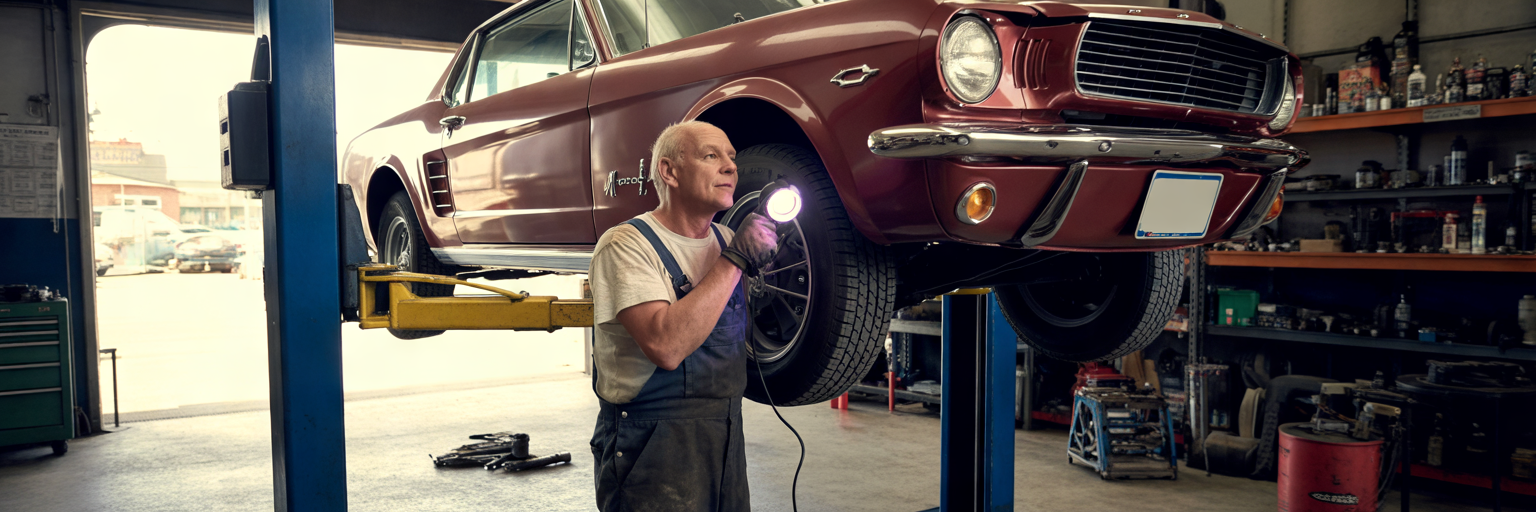
Putting the vehicle on a hydraulic lift allows a trained technician to inspect the physical reality of the machine. A mechanic checks for uneven tire tread wear that points to bent control arms, measures brake rotor thickness, tests battery alternator output, and inspects underbody seals for weeping transmission or differential fluid. For enthusiasts shopping in performance segments where hard driving is common, following our step by step checklist on how to inspect a used sports car before buying ensures you catch abused clutches and overheated engines before money changes hands.
Seasoned buyers also recognize an important counterintuitive truth: a car showing a minor collision on its history report that was professionally repaired with factory parts and passes a rigorous lift inspection is a far safer purchase than a clean report car hiding undocumented cash frame repairs.
| Vehicle System or Condition | Commercial History Database | Independent Mechanic Lift Inspection |
|---|---|---|
| Unreported Cash Body Work | Invisible if no police or insurance claim filed | Detected via paint depth gauges, overspray, and panel gaps |
| Undercarriage and Frame Rust | Only hints via registration in northern salt states | Directly inspected on a hydraulic lift with a work light |
| Engine Health and Fluid Leaks | Shows oil change dates at participating shops only | Verified via compression tests, block tests, and gasket checks |
| Cleared Check Engine Codes | Not tracked in historical databases | Exposed by checking OBD2 readiness monitors and live sensor data |
| Suspension and Brake Wear | Logs past pad or shock replacements if reported | Measured physically for rotor thickness, play, and bushing cracks |
This breakdown contrasts standard database reporting mechanisms with standard diagnostic procedures performed during an independent inspection at an automotive repair facility. Always remember that a history report only audits a car’s paperwork trail, whereas a physical inspection audits the actual metal, rubber, and fluids you are buying.
Combining VIN Reports and Physical Inspections into a Smart Buying Workflow
Bringing free government portals, commercial databases, and hands on mechanical evaluations together creates a repeatable system that protects your budget. Rather than treating these tools as separate optional steps, arrange them into a strict chronological filter. Each stage costs slightly more time or money than the last, ensuring you only invest resources into vehicles that prove their worth at the previous gate.
Follow this five step workflow on your next used vehicle purchase to eliminate bad cars early and buy with confidence:
- Screen the online listing and interview the seller by phone to confirm they hold a clean paper title in their own legal name, ask why they are selling, and request a clear photo of the 17 character VIN plate and the title document.
- Run zero cost screening checks through the NHTSA decoder and recall portal along with the NICB VINCheck database to confirm factory trim specs, identify open safety recalls, and rule out active theft or insurer salvage records.
- Obtain historical title and mileage verification before traveling by requesting the dealer’s complimentary report, checking free maintenance tracking apps, or purchasing an affordable NMVTIS or commercial report once the car passes phone and free screening.
- Conduct an in person cold start evaluation and road test to verify that the physical VIN plates on the dash and door jamb match the paper title, check for exhaust smoke on startup, test all electronics, and verify smooth shifting under highway load.
- Hire an independent mechanic for a lift inspection to check OBD2 computer readiness monitors, inspect the undercarriage for structural rust or fluid leaks, and measure paint thickness and suspension wear.
To get the maximum value from your mechanic’s time, hand your history report findings directly to the technician before the car goes up on the lift. If the paid report shows a minor rear end collision logged four years ago, ask the mechanic to specifically inspect the trunk floor pan, rear bumper reinforcement bar, and quarter panel weld seams for proper corrosion protection and straight alignment. If the service timeline shows diligent oil changes up to 115,000 miles but zero mention of a timing belt or water pump replacement on an interference engine, instruct the shop to pull the inspection cover and examine the belt teeth for cracking.
Combining both reports also equips you with objective, non confrontational leverage at the negotiation table. Telling a private seller their car is worth $1,000 less than asking price simply because you want a deal rarely works. However, showing the seller that the history report has no record of a transmission fluid service in 80,000 miles while the mechanic’s inspection sheet notes four year old brake fluid and worn front sway bar links gives you concrete math. You can calmly ask to split the cost of catching up on that documented maintenance, arriving at a fair price backed by verifiable facts. Approaching the budget market with patience, systematic verification, and mechanical curiosity guarantees you drive home in a car that serves you reliably for years to come.