Two American Icons, One Tough Decision
The American SUV market began a fascinating shift in the 1990s. Vehicles once built solely for utility started to borrow comforts from sedans, creating a new breed of do-it-all family haulers. From this movement, two distinct philosophies emerged, perfectly embodied by the Jeep Grand Cherokee and the Toyota 4Runner. They stand today as direct descendants of that era, yet they have followed remarkably different evolutionary paths.
The Grand Cherokee represents the modern, refined side of the family tree. It’s an SUV that has consistently pushed the boundaries of comfort, technology, and on-road composure, aiming to deliver a premium, car-like experience without completely abandoning its off-road heritage. Think of it as the sibling who went to college, got a sophisticated job in the city, but still knows how to handle a weekend in the mountains. It pioneered the premium SUV segment, proving that capability didn’t have to come at the expense of luxury.
In stark contrast, the Toyota 4Runner remains a stalwart of tradition. It is the embodiment of truck-based ruggedness, a vehicle that unapologetically prioritizes mechanical durability and off-road dominance. Its lineage traces directly back to Toyota’s famously indestructible trucks, and it wears that heritage like a badge of honor. The 4Runner is the sibling who joined the military, values function over form, and is built to withstand the harshest conditions imaginable.
This Jeep Grand Cherokee vs Toyota 4Runner comparison isn’t about crowning a single winner. It’s about understanding two fundamentally different approaches to what an SUV can be. The choice between them comes down to a personal audit of your priorities. Are you navigating polished city streets and demanding the latest tech, or are you seeking a trusted companion for remote trails and unpredictable adventures? This guide will help you find which vehicle’s strengths and compromises align with your life.
Engine Options And On-Road Performance
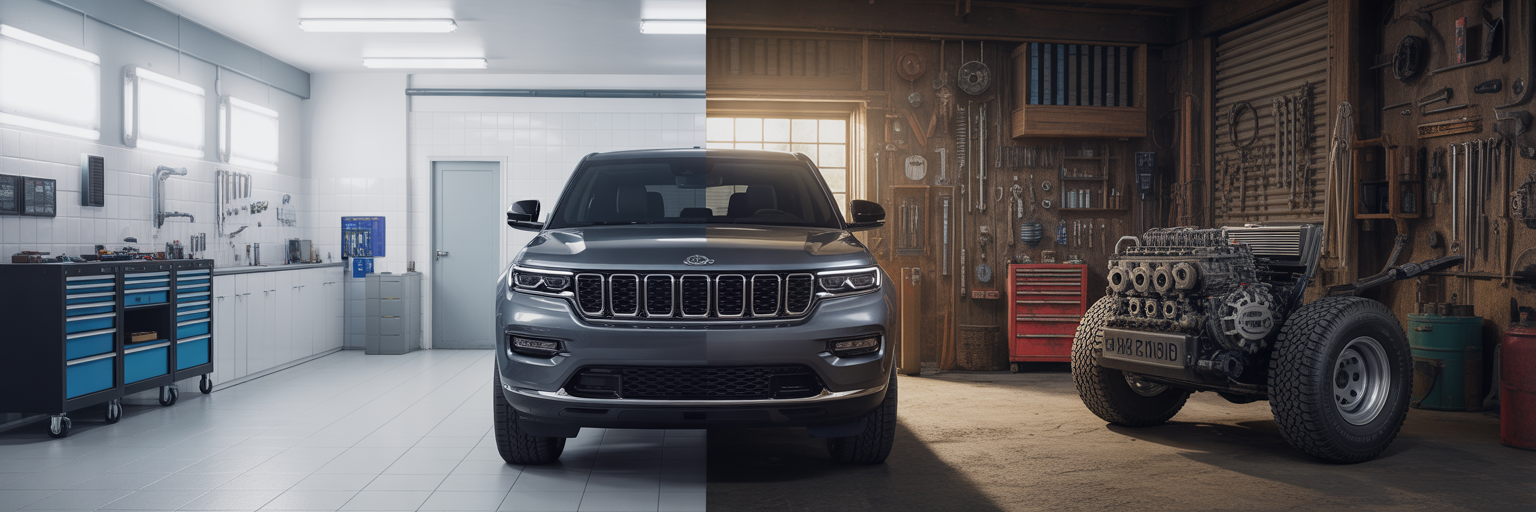
The character of an SUV is often defined by what’s under the hood. The engine dictates not just how fast you can go, but how the vehicle feels during a highway merge, a city commute, or when pulling a heavy load. Here, the Grand Cherokee and 4Runner present a clear contrast between modern versatility and proven simplicity.
The Grand Cherokee’s Modern Powertrain Portfolio
The Grand Cherokee offers a suite of engines designed for smooth, responsive power. The standard 3.6L Pentastar V6 is a refined workhorse, delivering its 293 horsepower with a quiet confidence that makes daily driving effortless. It provides ample muscle for merging onto a busy freeway without the drama or noise often associated with larger vehicles.
For those seeking a more advanced experience, a detailed Grand Cherokee 4xe review reveals a compelling plug-in hybrid option. This system combines a turbocharged engine with electric motors to produce a robust 375 horsepower. The real story is the instant electric torque. From a standstill, the 4xe accelerates with a silent, immediate surge that feels distinctly modern. Its all-electric range also allows for fuel-free trips around town, turning daily errands into quiet, efficient journeys.
The 4Runner’s Proven Workhorse
The Toyota 4Runner takes a different approach, sticking with a single, time-tested engine: a 4.0L V6 producing 270 horsepower. On paper, it might seem dated, but its purpose is different. This engine is tuned for low-end torque and absolute reliability, priorities that serve it well in demanding off-road situations. On pavement, this translates to a more deliberate and audible acceleration. You hear and feel the engine working, a reassuring mechanical soundtrack for those who value simplicity over silence.
On-Road Manners and Towing Muscle
The difference is most apparent at highway speeds. The Grand Cherokee cruises at 75 mph with a serene composure, its cabin isolated from engine and wind noise. The 4Runner, by comparison, feels more connected to the mechanics of driving; the engine note is more present, and the experience is more utilitarian. It’s not unpleasant, just a constant reminder of its rugged, truck-based DNA.
This powertrain divergence directly impacts towing. The Grand Cherokee’s modern engines and chassis give it a significant advantage, with higher tow ratings that accommodate larger boats or campers. The 4Runner’s capacity is adequate for smaller trailers but more limited. It reflects its focus on off-road payload over on-road hauling. For those exploring options for hauling, it’s worth seeing which 2025 trucks offer the best towing and fuel economy to understand the broader market.
Decoding Off-Road Capability And Drivetrains
While engine performance defines how these SUVs feel on the road, their core construction and 4×4 systems dictate what they can do when the pavement ends. This is where their philosophical differences become physical realities, separating a highly capable all-weather vehicle from a purpose-built off-road machine.
The Foundational Difference: Unibody vs. Body-on-Frame
The most significant distinction lies in their architecture. The Grand Cherokee is built on a unibody platform, where the frame and body are a single, integrated structure. This is similar to how most modern cars and crossovers are built. The primary benefit is superior torsional rigidity, which translates to better on-road handling, a quieter ride, and improved crash safety. It’s a sophisticated design for a world that is mostly paved.
The 4Runner, however, clings to a traditional body-on-frame design. Its body is a separate component bolted onto a rugged steel ladder frame, just like a pickup truck. This construction offers two key advantages for serious off-roading: immense durability and greater suspension articulation. The frame can flex and absorb brutal impacts from rocks and ruts, protecting the cabin and allowing the wheels to maintain contact with uneven ground.
A Tale of Two 4×4 Philosophies
This architectural split informs their drivetrain philosophies. Jeep offers a range of advanced, electronically managed 4×4 systems like Quadra-Trac I, Quadra-Trac II, and Quadra-Drive II. These are “smart” systems that use sensors to automatically detect slip and distribute power to the wheels with the most grip. With features like a two-speed transfer case and electronic limited-slip differentials, the Grand Cherokee thinks for you, making it incredibly effective in snow, mud, and on moderate trails.
Toyota’s approach is more mechanical and driver-centric. The 4Runner primarily uses a part-time 4WD system that requires the driver to engage it. Higher trims offer tools that demand deliberate action: a locking rear differential to force both rear wheels to turn at the same speed, A-TRAC to manage traction electronically, and Crawl Control, which acts as a low-speed off-road cruise control. It’s a system that rewards a knowledgeable driver with unflinching capability.
Specialized Trims and Off-Road Geometry
When you look at their most capable trims, the Trailhawk and the TRD Pro, their specialized hardware tells the full story. The 4Runner TRD Pro capability is legendary, making it a contender for the best off road SUV 2026. To ground these comparisons, it’s useful to reference established automotive sources. For instance, a 2025 comparison from Car and Driver notes that while both models are highly rated, they appeal to different buyer priorities.
- Ground Clearance: The Grand Cherokee with its available Quadra-Lift air suspension can raise itself for impressive clearance, but the 4Runner TRD Pro boasts a fixed, high stance designed for constant abuse.
- Approach Angle: The TRD Pro’s aggressively cut front bumper gives it a superior approach angle, allowing it to tackle steeper obstacles without scraping.
- Departure Angle: Both are designed to clear obstacles when descending, but the 4Runner’s rugged, frame-mounted bumpers inspire more confidence against scrapes and impacts.
- Key Hardware: The Grand Cherokee Trailhawk features a class-exclusive sway-bar disconnect for extreme wheel articulation. The 4Runner TRD Pro counters with heavy-duty FOX internal bypass shocks engineered to absorb high-speed impacts in the desert.
For readers interested in a wider view of capable vehicles, the general trucks category offers more context on body-on-frame platforms.
Daily Driving Dynamics: Ride Comfort And Handling
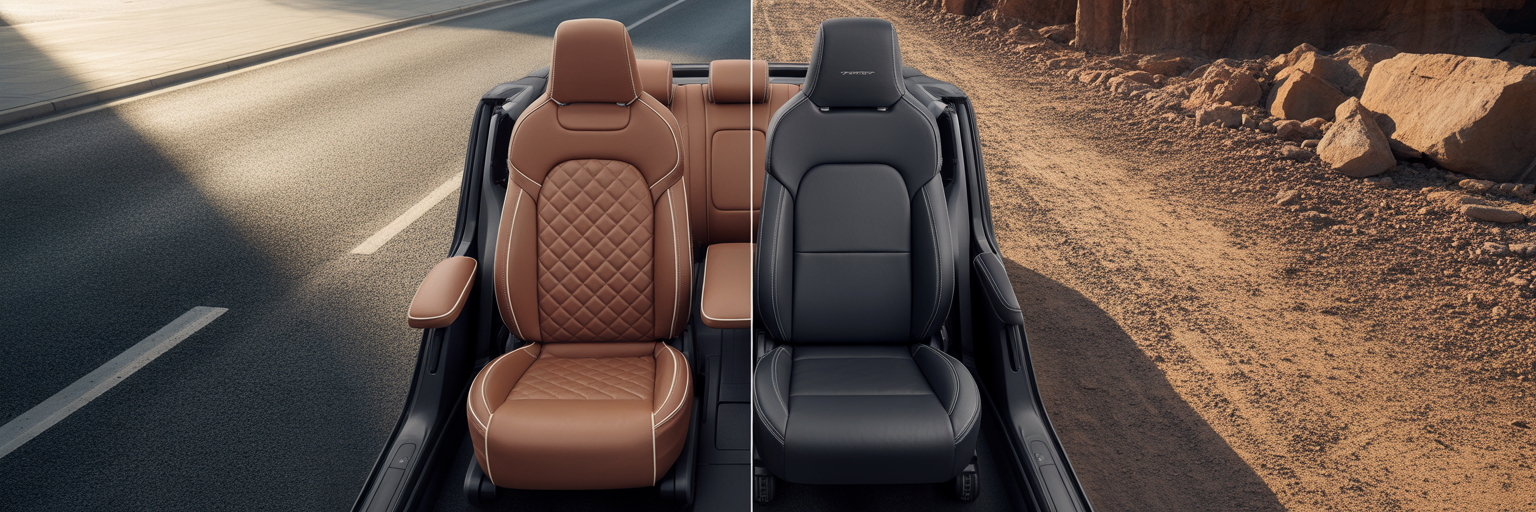
Beyond the raw numbers of horsepower and ground clearance lies the subjective experience of driving. How an SUV feels on the daily commute, during a long family road trip, or while navigating a tight parking garage is just as important. This is the essence of the daily driver SUV comparison, where the chassis and suspension tuning reveal each vehicle’s true priorities.
The Grand Cherokee’s Composed Ride
The Grand Cherokee is engineered for comfort. Its four-wheel independent suspension and rigid unibody structure work in harmony to soak up road imperfections. Potholes, expansion joints, and rough pavement are smoothed over, resulting in a plush, quiet, and distinctly car-like ride. This composure minimizes fatigue on long journeys, making it an exceptional vehicle for road trips or for anyone who spends significant time behind the wheel. It glides over the road, isolating occupants from the harshness of the world outside.
The 4Runner’s Rugged Road Feel
The 4Runner offers a completely different experience. Its solid rear axle and truck-based platform, engineered for off-road durability, transmit more of the road surface to the cabin. You feel the texture of the pavement in a way you simply don’t in the Jeep. This isn’t a flaw; it’s a trade-off. The ride is firmer and busier. In corners, you’ll notice more body roll, and during hard braking, the nose tends to dive. These are the classic characteristics of a body-on-frame vehicle, a constant reminder of the immense strength lurking beneath.
Maneuverability and Cabin Serenity
These differences extend to steering and cabin noise. The Grand Cherokee’s steering is precise, responsive, and relatively light. It feels agile in city traffic and is easy to maneuver in the crowded parking lots of places like Chicago or Los Angeles. It drives smaller than it is. The 4Runner’s steering is heavier and slower, a setup that provides excellent stability on a rocky trail but can feel cumbersome when executing a three-point turn. It requires more effort from the driver in tight spaces.
Finally, there’s the matter of sound. Jeep has invested heavily in sound-deadening materials, acoustic glass, and active noise cancellation. The result is a remarkably serene cabin where conversations can be held at a whisper. The 4Runner, true to its utilitarian roots, allows more road, wind, and engine noise to enter the cabin. It’s the sound of a machine at work, a quality some find reassuring and others find tiring on a long drive.
Inside The Cabin: Interior Design And Technology
Stepping inside these two SUVs is like entering two different worlds. One is a tech-forward luxury lounge designed to impress and pamper, while the other is a functional cockpit built for durability and purpose. This is where preferences for material quality, digital integration, and overall ambiance come into sharp focus.
Luxury Lounge vs. Functional Cockpit
The Grand Cherokee’s interior is defined by its upscale, horizontal design that emphasizes width and space. Higher trims are adorned with premium materials like open-pore wood, genuine metal trim, and available quilted Nappa leather seats. The dashboard is a showcase of technology, with sleek screens and ambient lighting that create a sophisticated atmosphere. It’s a cabin designed to feel special, whether you’re on a daily commute or a night out.
The 4Runner’s cabin is the antithesis of this. It is unapologetically purposeful and durable. The dashboard is dominated by hard-wearing plastics and chunky, oversized knobs and buttons. This isn’t a cost-cutting measure; it’s a deliberate design choice. These controls are designed to be easily operated with gloves on, a nod to its cold-weather and off-road-oriented audience. The aesthetic is about function and longevity, not fashion.
The Infotainment Divide
The technology gap is perhaps the most significant difference inside. The Grand Cherokee features Jeep’s excellent Uconnect 5 system, a benchmark for in-car tech. It boasts a large, high-resolution touchscreen with crisp graphics, rapid response times, and wireless Apple CarPlay and Android Auto. Unique features, like the available front passenger screen, further cement its position as a tech leader. This is a key part of any vehicle versus vehicle analysis.
Toyota’s infotainment system, in contrast, is best described as functional and reliable. It has all the essential features, including smartphone integration, but the screen is smaller and the graphics are simpler. The system is straightforward and easy to navigate, prioritizing usability over visual flair. It gets the job done without distraction, which is a core part of its appeal to its target buyer.
Audio Systems, Comfort, and Cargo
This premium-versus-practical theme continues with the audio systems. The Grand Cherokee offers an available audiophile-grade McIntosh sound system, with 19 speakers and a powerful amplifier that delivers stunningly clear and immersive audio. The 4Runner counters with an available JBL system that is powerful and robust, perfect for overcoming road noise with your favorite playlist, but it lacks the nuanced fidelity of the McIntosh unit.
In terms of comfort, the Grand Cherokee generally offers more supportive seats and superior rear legroom, making it a better choice for families with taller passengers. When it comes to cargo, both are highly practical, but the 4Runner offers a unique optional sliding rear cargo deck. This clever feature can be pulled out to make loading heavy items easier or to provide a convenient tailgate seat.
Ownership Realities: Reliability, Maintenance, And Resale Value

A vehicle is more than just a one-time purchase; it’s a long-term commitment. The practical aspects of ownership, including reliability, maintenance costs, and depreciation, can have a massive impact on your overall satisfaction and financial outlay. In this regard, the Grand Cherokee and 4Runner offer two of the most distinct value propositions on the market.
The Reliability Reputation
This is where the conversation gets direct. The Toyota 4Runner has an industry-leading, almost legendary reputation for durability. Its simple, proven mechanicals, particularly its engine and transmission, are engineered to last for hundreds of thousands of miles with basic maintenance. This mechanical simplicity means there are simply fewer things that can go wrong.
The Grand Cherokee’s story is more complex. While Jeep has made significant improvements in quality, its vehicles are inherently more sophisticated. The advanced electronics, available air suspension, and the hybrid system in the 4xe introduce more potential points of failure over the long term. It’s not that it’s unreliable, but its complexity creates a higher statistical probability of needing repairs compared to the 4Runner’s straightforward design. This is a critical factor in the SUV reliability and resale value discussion.
Long-Term Costs of Maintenance
These reliability reputations directly influence long-term costs. The 4Runner’s proven components and the widespread availability of parts generally lead to lower repair and maintenance bills over a 10-year period. Many repairs can be handled by independent mechanics, keeping costs down.
The Grand Cherokee, especially in its higher trims, can be more expensive to maintain. Specialized repairs for its advanced driver-assist systems, air suspension, or the Grand Cherokee 4xe’s hybrid components may require a dealership visit and more costly parts. For those considering a hybrid, understanding the value proposition is key, much like when evaluating the best hybrid SUVs under $35k.
The Resale Value Equation
Resale value is the final piece of the ownership puzzle, and here, the 4Runner is in a class of its own. It consistently boasts chart-topping resale value, driven by its bulletproof reputation and high demand in the used market. Data from platforms like TrueCar consistently shows the 4Runner retaining a significantly higher percentage of its original value after five years compared to most competitors. This means you get more of your money back when it’s time to sell.
The Grand Cherokee’s resale value is generally average to good for its class but simply cannot match the 4Runner’s tenacity. Depreciation is steeper, particularly on the luxurious higher-end trims packed with technology that may become dated over time. It’s the classic trade-off: you pay for luxury and features upfront, but that investment depreciates faster than pure, rugged utility.
Making The Final Choice: Your Ideal SUV Profile
After comparing everything from engine notes to resale values, the choice between the Jeep Grand Cherokee and Toyota 4Runner becomes less about which SUV is “better” and more about which one is better for you. The decision hinges on an honest assessment of your daily needs, your weekend aspirations, and your long-term priorities.
The ideal Jeep Grand Cherokee owner is someone who prioritizes a premium experience in their daily life. They value a comfortable, quiet ride for the daily commute and long family trips. They want advanced technology that integrates seamlessly with their digital world and a luxurious interior that feels like a retreat from the outside. Their off-roading is occasional and generally light, such as navigating snowy roads to a ski resort or exploring gravel paths to a scenic overlook. For these adventures, the Jeep’s highly capable and automatic 4×4 systems are more than sufficient, providing confidence without requiring expertise.
Conversely, the ideal Toyota 4Runner owner is an outdoor enthusiast or someone who places the highest possible premium on absolute reliability and long-term value. This person is willing to accept a firmer, truck-like ride and a more basic interior in exchange for uncompromising off-road capability. They see the vehicle as a tool, a trusted partner for adventures that may take them far from civilization. They value the peace of mind that comes from a vehicle engineered for decades of hard use and the financial security of knowing it will hold its value better than almost anything else on the road.
Ultimately, one SUV is a refined, comfortable sanctuary that can handle adventure, while the other is a rugged, unstoppable tool that can handle the daily drive. Which one belongs in your driveway?
| Attribute | Jeep Grand Cherokee | Toyota 4Runner |
|---|---|---|
| On-Road Comfort | Superior | Adequate |
| Off-Road Prowess | Highly Capable | Exceptional |
| Technology & Luxury | Benchmark | Functional |
| Engine Performance | Modern & Powerful | Reliable & Torquey |
| Reliability | Good | Legendary |
| Resale Value | Average | Industry-Leading |
We hope this detailed comparison helps you make an informed decision. For more great content and vehicle analyses, explore everything we have to offer at CarPhanatics.com.