The Tale of Two Drives: Steering and Handling
At their core, the Honda Accord and Mazda6 represent two distinct philosophies on what a daily drive should feel like. The Accord is engineered for the realities of long highway commutes and the stop-and-go rhythm of city life. Its handling is predictable, secure, and designed to create a relaxed experience. The steering is light and effortless, isolating you from jarring road imperfections and allowing for a calm, composed journey. It’s the car that gets you from point A to point B with minimal fuss and maximum comfort.
In contrast, the Mazda6 driving experience is built around a more direct connection between the driver and the road. Its chassis and steering are tuned for responsiveness, communicating what the tires are doing with satisfying clarity. You feel more of the road surface, which enthusiasts value as feedback. On a winding backroad, this is where the Mazda6 comes alive. Its agility and precise control make every corner an invitation to engage with the drive, not just endure it.
The sensation behind the wheel is the first major point of difference in the Honda Accord vs Mazda6 debate. The Accord feels like it glides over the pavement, prioritizing a serene ride that reduces fatigue. The Mazda6 feels more planted and athletic, offering a spirited character that rewards an attentive driver. Ultimately, this is a subjective choice. Do you prefer an effortless, quiet companion for your daily travels, or a responsive partner for a more engaging drive?
Cabin Experience: Comfort, Quiet, and Craftsmanship

Stepping inside these two sedans reveals the same philosophical divide. The Honda Accord’s primary strength is its quiet, sanctuary-like cabin. Its engineering focuses heavily on noise, vibration, and harshness (NVH) insulation, effectively muting wind and road noise. On a long trip, this quietness makes a noticeable difference, reducing driver fatigue and making conversations easier. The interior layout is a masterclass in ergonomics, with intuitive controls, durable materials designed for daily use, and generous passenger space, especially in the rear.
Following that practical approach, the Mazda6 counters with a premium, almost artistic ambiance. Its cabin often features materials you’d expect in a more expensive luxury brand, like soft-touch surfaces, available Nappa leather, and accents of real wood. The design is elegant and minimalist, creating a sophisticated environment that feels special every time you get in. It’s less about sheer space and more about the quality of the space you’re in. The craftsmanship is evident in the tight panel gaps and the tactile feel of the switchgear.
This presents a clear trade-off for buyers. The Accord delivers unmatched functional comfort and superior soundproofing, making it an incredibly practical and relaxing family sedan. The Mazda6, on the other hand, offers a stylish design and a high-end material feel that punches well above its price point. For more insights into how different vehicle brands express their philosophies, you can explore a wide range of manufacturers on our brands page.
Technology and Safety: A Comparison of Onboard Systems
When it comes to onboard technology, both sedans are well-equipped, but they prioritize different aspects of the user experience. Honda’s approach is rooted in accessibility and safety for all. The Honda Sensing suite of driver-assist features is typically standard across the entire Accord lineup. This means advanced systems like adaptive cruise control and lane-keeping assist are not locked away in expensive packages, reflecting a brand value that safety is a core feature, not an upgrade. The infotainment system is similarly straightforward, with a responsive touchscreen and standard Apple CarPlay and Android Auto for seamless connectivity.
Mazda takes a slightly different path with its Mazda Connect system. The interface often has a more premium feel, and on many models, it is controlled by a tactile rotary knob on the center console. This design is intentional, based on the idea that operating a physical controller is less distracting than poking at a touchscreen while driving. It’s an ergonomic choice that aligns with the car’s driver-focused nature. While Mazda offers a full suite of safety features, the most advanced driver-assist technologies may be reserved for higher trim levels.
The contrast is clear: Honda provides a comprehensive, standard package of safety and connectivity that is incredibly user-friendly. Mazda offers a more refined, ergonomically-focused interface that aims to minimize distraction. To stay updated on the latest trends in automotive technology and safety, you can visit our news section for current reports and analyses.
Powertrain Performance and Fuel Efficiency
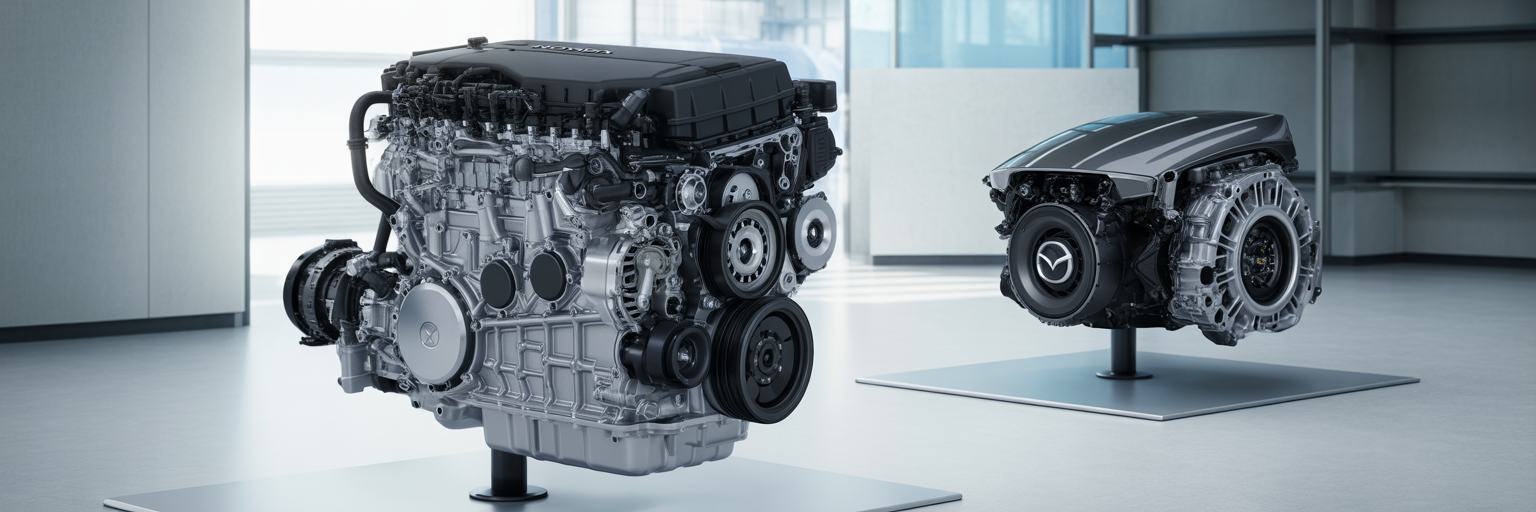
Under the hood, both cars offer compelling engine choices, but with one critical difference. The Honda Accord lineup typically starts with a small turbocharged engine that provides an excellent balance of everyday power and strong fuel economy. For those wanting more urgency, a larger, more powerful turbo option is usually available. However, the Accord’s ace in the hole is its hybrid powertrain. This system delivers exceptional mileage without a significant performance penalty, making the Honda Accord fuel economy a top consideration for buyers focused on minimizing long-term running costs.
The Mazda6’s engines are tuned to complement its sporty handling. Its standard naturally aspirated engine is smooth and responsive, while the available turbocharged variant provides potent acceleration that makes the car feel genuinely quick. The power delivery is linear and satisfying, encouraging the driver to use the engine’s full range. It’s a powertrain that feels perfectly matched to the car’s dynamic chassis.
When comparing efficiency directly, the Accord often holds an edge, particularly with its base engine and hybrid model. The absence of a Mazda6 hybrid is a key distinction. If your priority is squeezing the most miles out of every gallon, the Accord Hybrid is difficult to beat in this class. For those interested in other efficient family vehicles, our guide on the best hybrid SUVs under $35k offers more insights.
Long-Term Ownership: Reliability and Maintenance Costs
A car is a long-term commitment, so the discussion of Accord reliability vs Mazda6 is essential. The Honda Accord has built a formidable reputation for durability and low ownership costs over decades. This isn’t just anecdotal. According to data from RepairPal, the Honda Accord boasts a reliability rating of 4.5 out of 5, with a low average annual repair cost of around $400, ranking it first among 24 midsize cars. This statistical strength, combined with strong resale values, makes it a financially sound choice.
That said, the Mazda6 is also a highly reliable vehicle. The Mazda6 also earns a solid 4.0 out of 5 rating from RepairPal, with a slightly higher average annual repair cost of approximately $481. It consistently ranks well for dependability, proving that its stylish design and engaging drive do not come at the expense of long-term peace of mind. While both are excellent, the data suggests the Accord maintains a slight edge for buyers whose absolute top priority is minimizing maintenance expenses over the life of the car.
| Metric | Honda Accord | Mazda6 |
|---|---|---|
| Reliability Rating | 4.5 / 5.0 | 4.0 / 5.0 |
| Average Annual Repair Cost | ~$400 | ~$481 |
| Ranking in Midsize Class | 1st out of 24 | 6th out of 24 |
Note: Data is based on figures reported by RepairPal, which aggregates real-world repair data from certified mechanics across the United States. These figures represent averages and can vary based on model year, location, and driving habits.
For owners who enjoy handling minor upkeep themselves, a simple resource like our guide on how to clean headlights with toothpaste can be a useful way to keep their car in top shape.
Making the Choice: Which Sedan Is Your Perfect Match?

After comparing these two excellent sedans, the choice comes down to what you value most in a vehicle. The Honda Accord stands as the benchmark for practical excellence. It is quiet, comfortable, remarkably efficient, and backed by a top-tier reputation for reliability. It’s the smart, sensible choice that excels at nearly every aspect of daily driving. The Mazda6 is the stylish enthusiast’s pick, offering a more engaging drive, a near-luxury interior, and a design that stands out from the crowd. It appeals to the heart as much as the head.
So, which is the best midsize sedan 2026 for you? Consider your daily routine and what brings you satisfaction on the road.
- Choose the Honda Accord if: your priorities are a stress-free, quiet commute, maximum fuel savings (especially with the hybrid), and the peace of mind from top-tier reliability and standard safety features.
- Choose the Mazda6 if: you are a driver who values style, a spirited connection to the road, and fine craftsmanship in an interior, and you’re willing to trade a bit of quietness for a more exciting experience.
Both cars are fantastic options, but they serve different masters. The right one is the one that best fits your life. For a broader look at the automotive world and more comparisons, you can always visit us at CarPhanatics.com.