
Comparing the 2026 Honda Odyssey vs Kia Carnival Hybrid
For growing American families, the minivan decision remains a significant rite of passage. While three-row SUVs have become popular alternatives, those who prioritize pure practicality know that the minivan’s sliding doors and cavernous interior are unmatched. This brings us to a classic family minivan comparison 2026, pitting a long-standing champion against a modern, efficient challenger.
The 2026 Honda Odyssey vs Kia Carnival Hybrid matchup represents two distinct philosophies in family transportation. The Odyssey is the established benchmark, celebrated for its ingenious interior engineering and family-focused design that has been refined over generations. In the other corner, the 2026 Kia Carnival Hybrid arrives as a stylish contender, blending SUV-like aesthetics with the efficiency of a hybrid powertrain and a compelling value proposition. This isn’t just a spec sheet comparison; it’s a real-world stress test designed to find the superior vehicle for a demanding family scenario.
Our test involves two adults and three children in specific car seats: one rear-facing infant seat, one forward-facing convertible, and one high-back booster. The cargo hold must swallow a double stroller, five carry-on suitcases, a cooler, and a diaper bag. Every passenger and every piece of luggage must fit inside comfortably and safely. To ensure a fair evaluation, we are comparing equivalent, family-oriented trims, the Odyssey EX-L and a mid-tier Carnival Hybrid EX, rather than a base model against a top-tier one. The fundamental difference between the Odyssey’s 3.5L V6 and the Carnival’s 1.6L turbo-hybrid will be a key factor throughout our analysis.
The Three-Car-Seat Installation Challenge
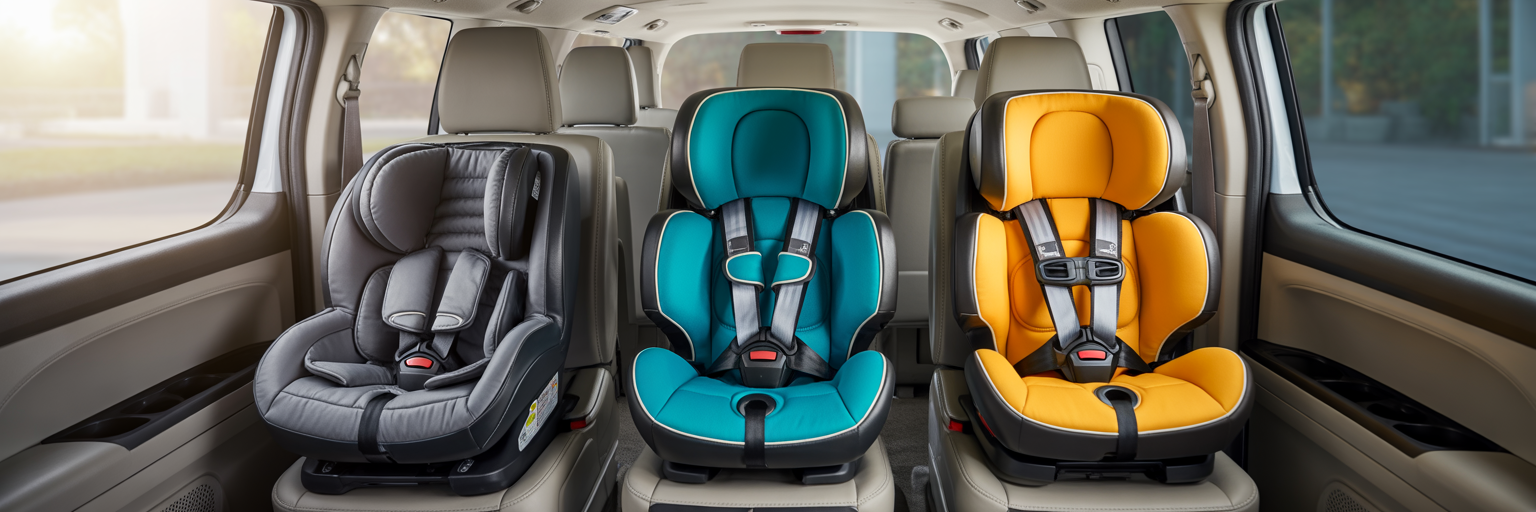
The first and most critical test for any family hauler is how it accommodates child safety seats. This is often the point where minivans prove their superiority, but not all are created equal. The process of installing three different types of seats reveals crucial design differences that impact daily life. For many parents, this is the single most important factor in determining the best minivan for 3 car seats.
Second-Row Seat Design and Flexibility
The Honda Odyssey’s standout feature is its Magic Slide second-row seats. These outboard captain’s chairs can slide not only forward and back but also laterally. This allows parents to create multiple configurations, such as moving one seat toward the center to open a wide path to the third row or pushing the two seats together to place children within easier reach of the front passenger. In contrast, the Kia Carnival offers a more traditional setup with its available second-row bench seat, a common choice for families attempting a three-across installation. While less flexible, the single bench provides a continuous seating surface that can be advantageous for fitting bulky seats side-by-side.
LATCH Anchor and Top Tether Accessibility
Both vehicles offer Lower Anchors and Tethers for Children (LATCH) systems, but their usability differs. The Odyssey is known for its clearly marked and easily accessible lower anchors, which are set in plastic guides that prevent you from having to dig into the seat cushions. Its top tether anchors are also straightforward to locate on the seatbacks. The Carnival’s hardware is functional but can be more challenging. As noted in a Cars.com analysis, while the second-row bench is effective for three-across setups, the third-row anchors can be more difficult to access, sometimes requiring you to contort your hands to connect the straps.
Fitting Three-Across: A Real-World Test
Here is where the designs truly diverge. In the Kia Carnival’s second-row bench, installing the rear-facing, forward-facing, and booster seats side-by-side is possible, though it creates a tight fit. The seats will likely touch, requiring careful positioning to ensure each one is installed securely without interfering with its neighbor. In the Honda Odyssey, a standard three-across installation in the second row is more challenging with the captain’s chairs. The more practical solution is to place two seats in the second row and one in the third row, using the Magic Slide function to maintain easy access. However, for families determined to keep all three children in one row, the Carnival’s bench offers a more direct, if snug, solution.
Booster Seat Usability and Buckle Access
A common frustration for parents is a booster seat positioned so close to an adjacent car seat that the child cannot access the seatbelt buckle. This small detail can turn a quick departure into a lengthy ordeal. The Carnival’s bench seat can present this problem, as the buckles may be crowded by the bulky bases of the other car seats. The Odyssey’s Magic Slide system offers a clever workaround. By sliding the outboard captain’s chair over a few inches, you can create a gap between it and the center seat, giving a child in a booster plenty of room to see and use the buckle independently.
Accessing the Third Row and Overall Interior Practicality
Once the car seats are installed, the focus shifts to how easily people can move around the cabin. A minivan’s true utility is measured not just by its capacity but by its flow. The daily routine of getting kids in and out, especially when one needs to get to the third row, is where thoughtful design makes a difference.
Third-Row Access with Car Seats Installed
This is the Honda Odyssey’s signature strength. With a car seat installed in an outboard Magic Slide seat, you can simply slide the entire seat toward the center of the vehicle. This creates a wide, walk-in path to the third row without disturbing the car seat installation. It is a simple, effective solution to a major logistical headache. The Kia Carnival’s system is more conventional. Its captain’s chairs have a slide-and-fold mechanism, but it typically cannot be operated with a car seat installed. If you have the bench seat, access is limited to folding down a section of it or having a child squeeze past, which is difficult with bulky car seats in place. For families who frequently use the third row, the Odyssey’s access is a clear winner.
Entry, Exit, and Cabin Space
Practicality starts at the door. Both minivans feature large sliding door openings, but the Carnival’s feels slightly wider. However, the Odyssey counters with a lower step-in height, making it easier for small children and less mobile adults to climb in and out without assistance. Inside, both cabins feel spacious, but the Odyssey’s design, with its separate captain’s chairs, creates a more defined central aisle, contributing to an open, airy feeling.
Third-Row Comfort and Amenities
The third row should be a comfortable space, not a penalty box. The Odyssey offers more third-row legroom, making it a more viable option for taller teenagers or even adults on shorter trips. Both vehicles provide dedicated air vents for second and third-row passengers, a critical feature for maintaining comfort throughout the entire cabin on hot or cold days. The placement and airflow feel slightly more effective in the Odyssey, ensuring those in the very back are not forgotten.
Family-Friendly Cabin Technology
Managing a full vehicle requires good communication and connectivity. Honda’s CabinWatch and CabinTalk system uses a ceiling-mounted camera to display the rear seats on the main infotainment screen and an intercom to speak to passengers through the rear speakers or headphones. Kia offers a similar system. When it comes to keeping devices charged, both vans are well-equipped. However, the Odyssey tends to offer a more thoughtful placement of USB ports, with easy access for third-row passengers, ensuring everyone stays powered up on long journeys. Both vehicles also feature an abundance of cupholders, a non-negotiable for any family vehicle.
The Ultimate Luggage Test: Packing for a Family of Five
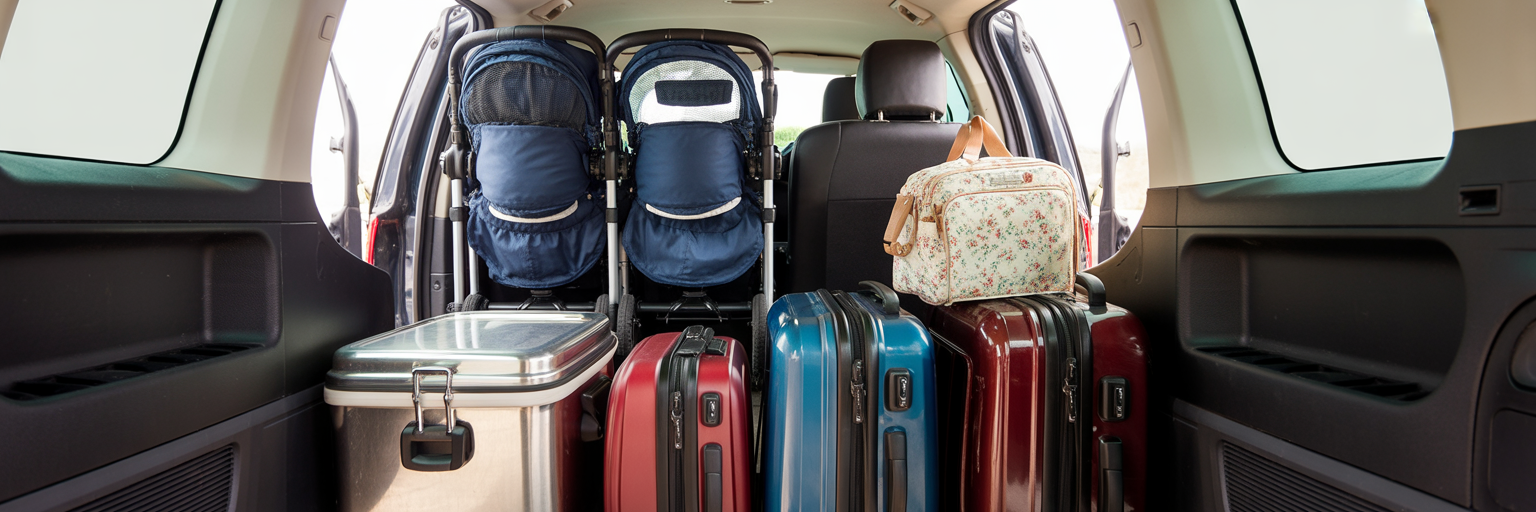
The Odyssey vs Carnival cargo space debate is about more than just numbers on a spec sheet. It’s about how that space accommodates the awkward, bulky, and numerous items that come with family travel. Our test scenario, with its double stroller and five suitcases, pushes each minivan’s cargo area to its absolute limit.
On paper, the Kia Carnival has an advantage, offering approximately 40.2 cubic feet of space behind its third row, compared to the Honda Odyssey’s 32.8 cubic feet. The key to both vehicles’ utility, however, is the deep storage well in the cargo floor. This feature, largely absent in SUVs, allows for stacking luggage without immediately blocking the rear window. Here’s how our packing test unfolded in each vehicle:
- The Double Stroller: In the Carnival, the wider and deeper well allowed the double stroller to lie flat on the floor, creating a stable base for other items. In the Odyssey, the stroller had to be placed on its side, which is still manageable but makes packing around it slightly more complex.
- The Five Carry-On Suitcases: The Carnival’s larger well swallowed all five suitcases below the main cargo floor level. In the Odyssey, four suitcases fit into the well, with the fifth needing to be placed on the main floor, resting partially on the folded third-row headrests.
- The Cooler and Diaper Bag: In both vans, these high-access items fit easily on top of the stowed luggage. The Carnival’s deeper well provided a slight advantage, keeping everything more contained.
With both vehicles fully loaded, the consequences became clear. In the Kia Carnival, the entire luggage load sat below the bottom of the rear window, preserving excellent rear visibility through the rearview mirror. In the Honda Odyssey, the fifth suitcase and the top of the cooler rose just enough to encroach on the lower portion of the driver’s view. This is a critical safety and convenience consideration on a long trip.
Finally, we assessed third-row passenger comfort with the cargo area packed. Because the Carnival’s luggage fit entirely within its well, the third-row seatbacks had clearance to recline slightly. In the Odyssey, the luggage was pressed directly against the seatbacks, forcing passengers to sit bolt upright. For a long road trip, that small amount of recline can make a significant difference in comfort. The Carnival’s superior cargo management gives it the edge in this demanding test.
Driving Dynamics on a Family Road Trip
A great family vehicle must be more than just a box on wheels; it needs to be comfortable, confident, and quiet on the highway. Loading a minivan with people and gear fundamentally changes how it drives. We evaluated how each vehicle performed under the stress of a fully loaded road trip, a scenario where some of the best family road trip vehicles truly shine.
Acceleration and Power Under Load
Merging onto a busy interstate with a full cabin requires confident power. The Honda Odyssey’s 3.5-liter V6 engine is a proven workhorse, delivering smooth and predictable acceleration. It never feels strained, pulling the vehicle’s weight with authority. The Kia Carnival Hybrid’s 1.6-liter turbo-hybrid powertrain offers a different experience. The initial launch is helped by the electric motor’s instant torque, but when asking for sustained power for a highway pass, the smaller gasoline engine works noticeably harder. While perfectly adequate, the Odyssey’s V6 feels more effortless and relaxed under heavy load.
Highway Ride Comfort and Handling
Over hundreds of miles, ride quality becomes paramount. The Odyssey has long been praised for its composed, almost sedan-like ride, and the 2026 model continues this tradition. It glides over bumps and expansion joints with minimal disturbance to the cabin, feeling stable and planted at all times. The Carnival’s suspension is also comfortable, but it can feel slightly less sophisticated over rough patches, occasionally transmitting more of the road’s imperfections to the passengers. For pure long-distance comfort, the Odyssey’s refined chassis gives it an edge.
Cabin Quietness at Speed
A quiet cabin reduces fatigue for everyone on board. Honda has invested heavily in sound deadening, and it shows. The Odyssey is exceptionally quiet at highway speeds, with very little wind or road noise intruding into the cabin. The engine is a distant hum, even during acceleration. The Carnival is also quiet for its class, but it allows slightly more tire noise and engine sound to enter the cabin, particularly when the hybrid system is working hard. The serene environment inside the Odyssey makes it a more peaceful place to spend a long day of driving.
Braking Performance and Confidence
Safely stopping nearly three tons of metal, people, and luggage is a critical task. Both minivans have strong, capable brakes. The Odyssey’s brake pedal offers a firm, confident feel, making it easy to modulate for smooth stops. The Carnival’s braking is also effective, but like many hybrids, the transition between regenerative braking (to recharge the battery) and the mechanical brakes can sometimes feel slightly less linear. Both systems provide ample stopping power, but the Odyssey’s more traditional feel inspires a bit more confidence during spirited driving.
Analyzing Long-Term Costs and Ownership Value

A family vehicle is a major financial commitment, so understanding the total cost of ownership is essential. The initial purchase price is only the beginning. Factoring in fuel, warranty, and resale value provides a much clearer picture of which minivan is the smarter long-term investment. This is where the practical differences between the two vehicles become most apparent.
We begin with the purchase price for our comparable trims, the Honda Odyssey EX-L and the Kia Carnival Hybrid EX. Both are closely matched, with the Carnival often having a slight edge in price while offering a generous list of standard features. The real financial story, however, unfolds over years of ownership.
Fuel cost is the most significant differentiator. The Carnival Hybrid’s powertrain is designed for efficiency, and its MPG advantage is substantial. This translates directly into lower annual fuel costs and the added convenience of a longer driving range, meaning fewer stops on road trips. Next is the warranty. Kia’s 10-year/100,000-mile powertrain warranty is the best in the business, offering unmatched peace of mind compared to Honda’s standard 5-year/60,000-mile coverage. This is a powerful incentive for families planning to keep their vehicle for a long time.
However, the financial equation is balanced by resale value. Honda has a formidable reputation for long-term reliability, which helps its vehicles retain their value exceptionally well. The Odyssey consistently ranks near the top of its class for resale, meaning you will likely get more of your initial investment back when it’s time to sell. This is a key reason some high-mileage cars age better than others. Finally, it is worth noting that tire replacement costs can be a significant expense, and prices can vary based on the specific size and type required for each model.
| Metric | 2026 Honda Odyssey (EX-L Trim) | 2026 Kia Carnival Hybrid (EX Trim) |
|---|---|---|
| Est. Purchase Price (MSRP) | ~$42,000 | ~$41,000 |
| EPA-Estimated Combined MPG | ~22 MPG | ~33 MPG |
| Estimated Annual Fuel Cost* | ~$2,500 | ~$1,650 |
| Powertrain Warranty | 5 years / 60,000 miles | 10 years / 100,000 miles |
| Projected 3-Year Resale Value | High (~55%) | Average (~48%) |
*Annual fuel cost estimated based on 15,000 miles driven per year at an average gas price of $3.65/gallon. Prices and resale values are estimates based on current market trends and may vary.
The Verdict: Category Winners and Finalists
After putting both minivans through a rigorous series of real-world family tests, clear winners emerged in each key category. While both are excellent vehicles, their strengths align with different family priorities. Here is our breakdown of the results, and if you’re still exploring, you can find more vehicle comparisons on our site.
- Winner for Car-Seat Installation and Flexibility: The Honda Odyssey. Its Magic Slide second-row seats are a truly innovative solution, providing unparalleled access to the third row without the need to uninstall a car seat. For families with multiple young children, this feature alone makes daily life significantly easier.
- Winner for Luggage Room and Cargo Utility: The Kia Carnival. Its larger raw cargo volume and deeper storage well give it a narrow but decisive victory. The ability to pack a full load of luggage below the window line while preserving third-row recline is a major advantage for family vacations.
- Winner for Fuel Costs and Driving Range: The Kia Carnival Hybrid. This is an unequivocal win. Its significant MPG advantage delivers substantial annual fuel savings and the convenience of fewer stops on long road trips, making it the clear economic choice.
- Winner for Road Trip Comfort: The Honda Odyssey. This award is based on its superior combination of a quiet, well-insulated cabin, a more composed ride over various surfaces, and more generous third-row legroom. For long-distance travel, the Odyssey provides a more serene and comfortable experience.
- Winner for Overall Value: The Kia Carnival Hybrid. When combining its lower fuel costs, generous standard features at a competitive price, and the long-term peace of mind from its industry-leading warranty, the Carnival presents a compelling overall value proposition.
Which Minivan Is Best for Your Family?
The Honda Odyssey vs Kia Carnival Hybrid debate doesn’t have a single right answer, but it does have a clear framework for making the right choice for your family. The decision ultimately hinges on which daily challenges you need to solve most urgently.
The 2026 Honda Odyssey is the definitive choice for the family that prioritizes ultimate interior flexibility and seamless logistics. If your life involves constantly reconfiguring your vehicle for kids, carpools, and cargo, the Magic Slide system is a transformative feature. It is the superior minivan for those who need best-in-class third-row access with car seats installed and who value a supremely quiet and comfortable ride for long-haul journeys. The Odyssey is an engineering solution to the complex spatial puzzles of a three-child family.
The 2026 Kia Carnival Hybrid is the ideal choice for the family focused on modern style, technology, and long-term running costs. This Kia Carnival Hybrid review finds it to be the smarter financial decision, thanks to its excellent fuel economy and unbeatable warranty. It appeals to budget-conscious buyers who don’t want to sacrifice features or aesthetics. For those who value a large, practical cargo area and want a vehicle that looks as good as it performs, the Carnival is an outstanding package.
In the end, both are top-tier minivans that excel in different areas. The Odyssey is the master of interior space management, while the Carnival is the champion of efficiency and value.