
Model 3 vs Ioniq 6: The Apartment Dweller’s Dilemma
The transition to electric vehicles has introduced a significant hurdle for a growing number of drivers: the inability to charge at home. For those living in apartments, condos, or homes without a dedicated driveway, the entire ownership experience depends on the public charging network. This makes choosing the right EV for apartment living less about brand loyalty and more about practical, day-to-day usability. The decision hinges on which car minimizes time spent at a charger and reduces the anxiety of finding a reliable plug.
To answer this question, we are putting two of the most compelling electric sedans on the market through a rigorous comparison, the kind of detailed analysis we specialize in at Car Phanatics. In one corner is the 2026 Tesla Model 3 Long Range All-Wheel Drive, the benchmark for EV efficiency and network access. In the other is the 2026 Hyundai Ioniq 6 SE Long Range Rear-Wheel Drive, a challenger boasting futuristic styling and groundbreaking charging technology. Both trims offer an excellent balance of range and features, making them ideal candidates for a public charging only EV lifestyle.
Our comparison is grounded in a realistic scenario. Imagine a driver with a 35-mile weekday commute, totaling 175 miles per week and about 12,000 miles annually. The vehicle will live through hot summers and mild winters, conditions that affect battery performance. It will also undertake a 500-mile road trip every three months, testing its long-distance capabilities. This analysis will go beyond simple spec sheets to explore the real-world nuances of charging speed, network dependability, daily comfort, and long-term costs to determine which car is truly easier to own without a home charger.
The Public Charging Experience: Speed, Reliability, and Convenience
For an owner relying solely on public infrastructure, the charging experience is paramount. It’s not just about how far the car can go, but how quickly and reliably it can be refueled. Here, the Model 3 and Ioniq 6 present two very different philosophies, pitting a superior network against superior charging architecture.
Charging Architecture: 800-Volt vs. 400-Volt
The most significant technical difference between the two cars is their battery architecture. The Hyundai Ioniq 6 is built on an 800-volt system, while the Tesla Model 3 uses a more conventional 400-volt system. Think of it like water pressure: the higher voltage of the Ioniq 6 allows electricity to flow into the battery at a much faster rate, assuming the charging station can supply it. This gives the Hyundai a theoretical peak charging rate of nearly 350 kW, a figure that few cars can match. The Model 3, while no slouch, maxes out at a respectable 250 kW.
Charging Curves and Session Times
Peak rates only tell part of the story. What matters more is how long the car can sustain high speeds, a characteristic known as the charging curve. The Ioniq 6’s 800-volt system allows it to maintain a high rate of charge for longer, resulting in remarkably short sessions. A standard 10% to 80% charge can be completed in approximately 18 minutes under ideal conditions. The Model 3’s excellent thermal management gives it a strong, consistent curve, but the 400-volt limitation means the same 10% to 80% charge takes closer to 25 minutes. For someone waiting at a public station, those seven minutes can feel significant. The Ioniq 6 charging speed is a clear advantage in a direct, station-to-station comparison.
| Metric | 2026 Tesla Model 3 LR AWD | 2026 Hyundai Ioniq 6 SE LR RWD |
|---|---|---|
| Battery Architecture | 400-Volt | 800-Volt |
| Peak DC Fast Charge Rate | 250 kW | ~350 kW |
| Estimated Time (10% to 80%) | ~25 minutes | ~18 minutes |
| Miles of Range Added in 10 Mins | ~130 miles | ~150 miles |
| Miles of Range Added in 20 Mins | ~200 miles | ~240 miles |
Note: These figures are estimates based on optimal conditions, including a preconditioned battery and a charger capable of delivering the vehicle’s maximum rate. Real-world results may vary based on station output and ambient temperature.
The Importance of Battery Preconditioning
Achieving these impressive charging speeds isn’t as simple as just plugging in. Both vehicles rely on battery preconditioning, a feature that automatically heats or cools the battery to its optimal temperature as you navigate to a fast charger. Using the car’s built-in navigation to select a DC fast charging station is essential. Skipping this step, especially in very hot or cold weather, can result in significantly slower charging speeds and much longer wait times.
Network Reliability: Tesla Supercharger vs. Third-Party Networks
This is where the scales tip dramatically in Tesla’s favor. The Tesla Supercharger reliability is the gold standard. The network is vast, well-maintained, and seamlessly integrated into the car’s software. You pull up, plug in, and charging starts automatically. Payment is handled through your Tesla account. For the Ioniq 6 owner, the experience is more fragmented. They rely on third-party networks like Electrify America and EVgo, which are known for having a higher rate of broken or malfunctioning chargers. While these networks are expanding and improving, the experience can involve juggling multiple apps, payment methods, and the occasional frustrating discovery of an out-of-service station. While many new EVs, including the Ioniq 6, now come with a NACS adapter to access a portion of the Tesla network, the experience may not be as seamless or fast as it is for a native Tesla vehicle.
Practical Considerations: Adapters and Port Location
A few small details can make a big difference in daily use. The Model 3’s charging port is on the rear driver’s side, which is convenient for backing into spots. The Ioniq 6’s port is on the rear passenger’s side, which can sometimes be awkward depending on the station layout and cable length. For slower, “opportunity” charging at a public Level 2 station (like at a grocery store or gym), both cars charge at similar speeds, adding around 25-30 miles of range per hour. This method is best for topping off, not for a primary weekly charge.
Real-World Range and Efficiency
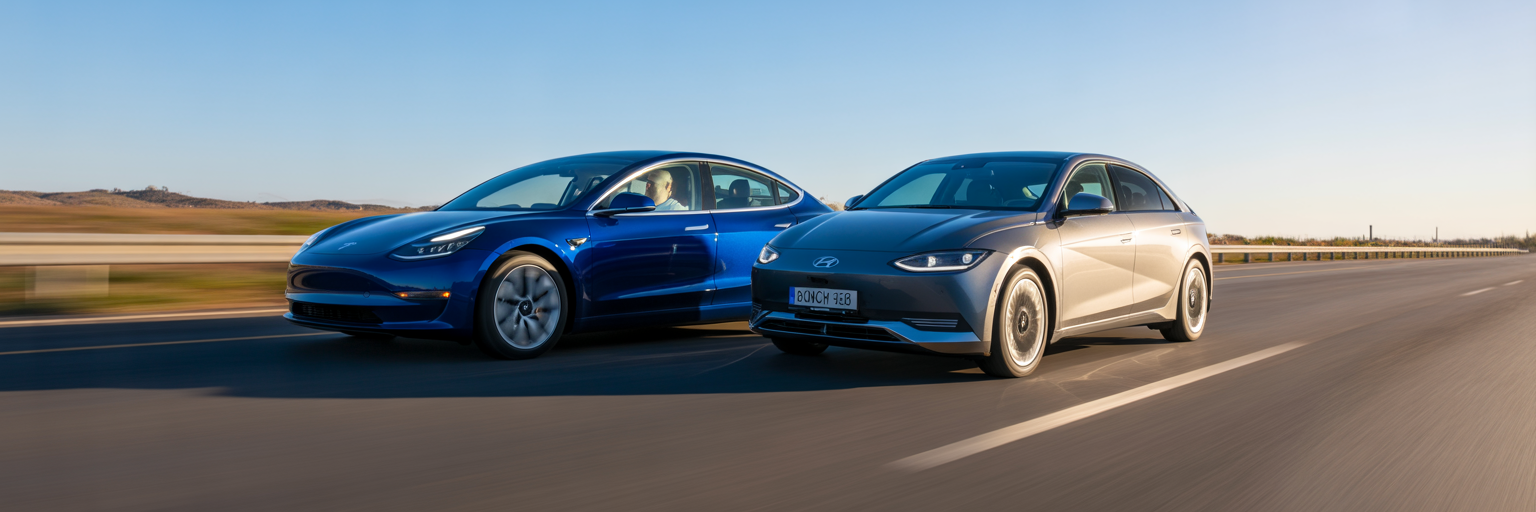
While charging speed is crucial, how often you need to charge is determined by range and efficiency. Official EPA ratings provide a useful baseline, but they rarely reflect the reality of highway driving, where aerodynamics and speed play a much larger role.
EPA Range vs. Highway Reality
The 2026 Tesla Model 3 Long Range AWD boasts an impressive EPA-estimated range of around 340 miles. The 2026 Hyundai Ioniq 6 SE Long Range RWD, with its ultra-low drag coefficient, pushes that figure even higher to an estimated 360 miles. However, these numbers are achieved in mixed driving conditions. On the highway, where there is no benefit from regenerative braking, the story changes. At a sustained 70 mph, the Ioniq 6’s slippery shape helps it maintain an efficiency advantage, likely delivering around 310-320 miles of real-world range. The highly efficient Model 3 is not far behind, achieving a solid 290-300 miles under the same conditions. At 75 mph, these numbers will drop for both, but the Ioniq 6 is expected to retain a slight edge.
The Impact of Speed and Climate
Our scenario specifies hot summers and mild winters. Mild winters are a plus, as they avoid the 30-40% range loss seen in freezing climates. However, even in 40-50°F weather, batteries are less efficient, and using the cabin heater will consume energy. Hot summers present their own challenge. The need to run the air conditioner and the battery’s own thermal management system to keep it cool will also reduce range, though typically less severely than extreme cold. Both cars have excellent thermal management, but the energy used to maintain optimal battery temperature is a non-negotiable cost to efficiency.
Battery Size and Overall Efficiency
The Ioniq 6 SE Long Range uses a battery with approximately 77.4 kWh of usable capacity. The Model 3 Long Range battery is slightly larger, at around 82 kWh. When you divide the real-world range by the battery size, you get a measure of overall efficiency. The Ioniq 6 often achieves an impressive 4.0 miles per kWh or more on the highway. As highlighted in a comparison test by research from MotorTrend, its aerodynamic design is a key factor in its efficiency. The Model 3 is also a leader in this area, typically landing around 3.6 to 3.8 miles per kWh in similar conditions. This efficiency is critical for the quarterly 500-mile road trip, as a more efficient car requires fewer and shorter charging stops, making it one of the great vehicles for long journeys.
A Week in the Life: Charging Schedules and Costs
Let’s translate the technical data into a practical weekly routine. For an apartment dweller, charging isn’t a passive overnight activity; it’s an errand that must be scheduled and managed.
Crafting a Weekly Charging Routine
With a 175-mile weekly commute, neither car would need to be charged daily. A single, substantial DC fast charging session per week would likely suffice, with a small buffer for unplanned trips.
- Tesla Model 3 Driver: The driver might finish their work week with about 40% battery remaining. On Saturday morning, they navigate to a nearby Supercharger, likely located in a shopping center. They plug in, go grab a coffee, and return about 25 minutes later to a car charged to 80%. The process is predictable and low-stress.
- Hyundai Ioniq 6 Driver: This driver also ends the week with plenty of range. They use an app like PlugShare to find a 350 kW Electrify America station. If the station is fully functional, they can plug in and get from 40% to 80% in just 10-12 minutes, a noticeably shorter wait. However, they must first confirm the station is online and that a 350 kW charger is available.
The core difference is one of certainty versus speed. The Tesla owner trades a few extra minutes for near-guaranteed reliability, while the Hyundai owner gambles on the third-party network for a faster session.
Total Time Spent at the Charger
Over a month, the time savings for the Ioniq 6 owner can add up, at least on paper. Assuming one charge per week and optimal conditions:
- Model 3: ~25 minutes per session x 4 weeks = 100 minutes per month.
- Ioniq 6: ~18 minutes per session x 4 weeks = 72 minutes per month.
The Ioniq 6 owner saves nearly half an hour each month. However, a single trip to a faulty or crowded third-party station could easily erase that time advantage, forcing them to find an alternative and start the process over.
The Financial Reality of Public Charging
Public charging is significantly more expensive than charging at home. Costs vary by network, location, and time of day. Tesla’s Supercharger network generally has transparent, competitive pricing, often around $0.40 to $0.55 per kWh. Third-party networks can be similar, but prices can fluctuate more. For an Ioniq 6 owner who charges frequently, a subscription like Electrify America’s Pass+ can lower the per-kWh rate, making costs more comparable to Tesla’s. A crucial factor for apartment dwellers is avoiding extra fees. Both Tesla and other networks charge idle or congestion fees—per-minute penalties for leaving a car plugged in after it has finished charging. This requires the owner to be attentive and move their vehicle promptly, turning a simple errand into a time-sensitive task.
Daily Driving: Comfort, Space, and Practicality
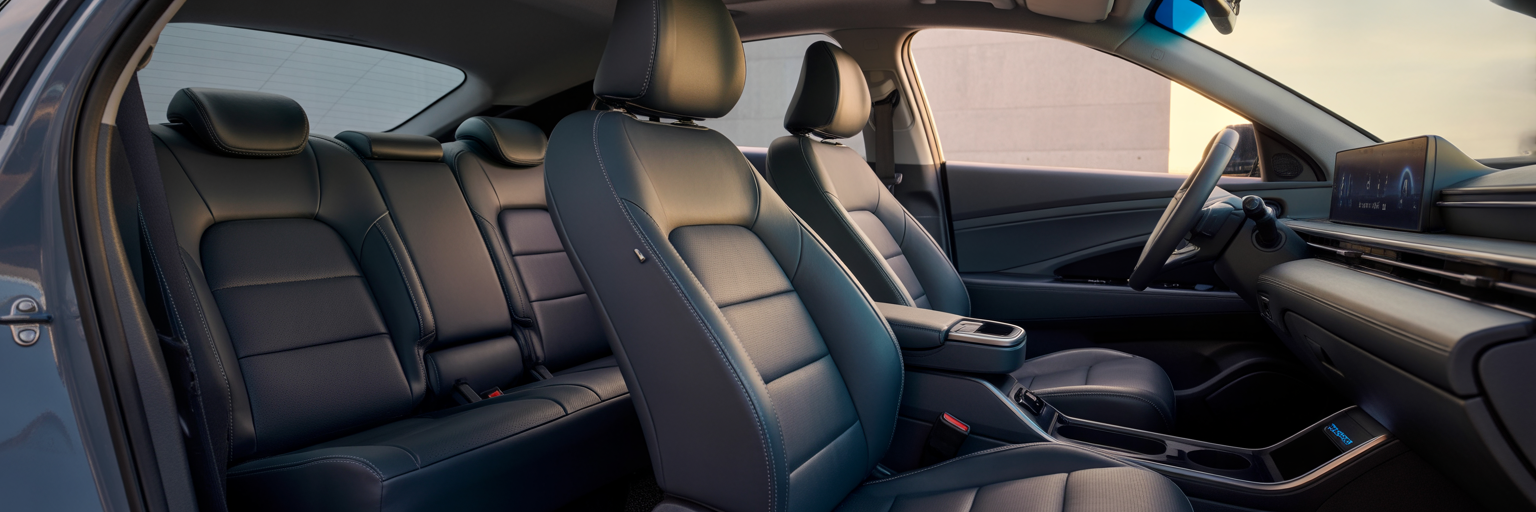
Beyond charging, a car must be a pleasant and practical companion for daily life. Here, the two vehicles offer distinctly different experiences in ride quality, interior space, and overall usability.
Ride Quality and Highway Noise
This is a clear win for the Hyundai Ioniq 6. Its suspension is tuned for comfort, absorbing bumps and road imperfections with a composure that the Model 3 struggles to match. On the highway, the Ioniq 6 is exceptionally quiet, thanks to extensive sound insulation and its aerodynamic shape that minimizes wind noise. The refreshed Tesla Model 3 is quieter than its predecessors, but it still exhibits a firmer ride and allows more road and wind noise into the cabin. For a daily 35-mile commute, the serene environment of the Ioniq 6 is a significant advantage.
Rear-Seat Room and Passenger Comfort
The Ioniq 6 continues its lead in passenger accommodation. Its longer wheelbase translates directly into superior rear-seat legroom. The floor is completely flat, and the seats are comfortable for adults on longer journeys. The Model 3’s rear seat is more cramped, with less legroom and a lower seat cushion that can be uncomfortable for taller passengers. If you frequently carry more than one passenger, the Ioniq 6 is the more hospitable choice, making it a better option for those who might consider using their car for occasional ridesharing, a scenario where passenger comfort is key, similar to the best cars for Uber drivers.
Cargo Space: Trunk vs. Frunk
The roles reverse when it comes to cargo. The Tesla Model 3 offers more overall storage space. It has a large, deep trunk and a genuinely useful front trunk, or “frunk,” that is perfect for storing charging cables or a few grocery bags. The Ioniq 6 has a more traditional sedan trunk that is wide but relatively shallow. Its frunk is tiny, barely large enough to hold the car’s portable charging adapter. While the Ioniq 6’s trunk opening is conventional, the Model 3’s larger total volume gives it the edge in practicality for hauling gear or luggage for that quarterly road trip.
Outward Visibility and Driving Position
The two cars offer contrasting views from the driver’s seat. The Model 3 features a low dashboard and an expansive glass roof, creating an open, airy feeling with excellent forward visibility. The minimalist design puts all information on the central screen, which can take some getting used to. The Ioniq 6 has a more traditional cockpit feel. The dashboard is higher, and the view out is more enclosed. While forward visibility is good, the thick rear pillars and sloping roofline create significant blind spots, making you more reliant on the car’s cameras and sensors.
In-Car Tech: Controls, Assistance, and Connectivity
The user interface and technology suite define much of the modern driving experience. Tesla and Hyundai have taken fundamentally different paths, one favoring radical minimalism and the other a more traditional, user-friendly approach.
Interface Philosophy: Screen vs. Buttons
The Model 3’s cabin is a study in minimalism. Nearly every function, from adjusting the side mirrors to turning on the windshield wipers, is controlled through the large central touchscreen. This creates a clean, uncluttered look but comes with a steep learning curve and can be distracting for simple tasks. The Ioniq 6, in contrast, offers a balanced approach. It features two large screens for instruments and infotainment but retains physical buttons and knobs for frequently used controls like climate and audio volume. It also has traditional stalks for turn signals and wipers. This blend of digital and physical controls is generally more intuitive for new users. A seamless interface is crucial for user satisfaction, just as building a website that wins business depends on user-centric design.
Driver-Assistance Systems: Autopilot vs. HDA
Both cars come standard with excellent driver-assistance systems. Tesla’s Autopilot provides smooth and reliable lane-centering and adaptive cruise control, making highway driving significantly less fatiguing. Hyundai’s Highway Driving Assist (HDA) system is equally capable, and some drivers find its engagement and lane-keeping behavior to be slightly more natural than Tesla’s. For the daily commute and long road trips, both systems are top-tier and dramatically reduce driver workload.
Mobile App Functionality
Tesla’s mobile app is the industry leader. It is fast, reliable, and packed with features. You can remotely control the climate, monitor charging, open the trunk and frunk, and use your phone as a key. A standout feature is Sentry Mode, which uses the car’s external cameras to record suspicious activity. Hyundai’s BlueLink app offers similar core functions, including remote start and charge monitoring, and adds features like Digital Key, which allows you to share access with others via their smartphone. While very good, the app is generally considered slightly less responsive and polished than Tesla’s.
Infotainment and Smartphone Integration
This is a major dividing line for many buyers. The Hyundai Ioniq 6 comes standard with Apple CarPlay and Android Auto, allowing you to mirror your phone’s interface for navigation, music, and messaging. It’s a familiar and user-friendly system. The Tesla Model 3 does not offer either. Instead, it relies on its own proprietary infotainment system. While the system is fast, with excellent navigation and integrated apps like Spotify, it forces you to adapt to its ecosystem. If you are deeply integrated with Apple CarPlay or Android Auto, the Ioniq 6 has an undeniable advantage.
Long-Term Ownership: Warranty, Depreciation, and Costs

A car is a long-term commitment, and factors like warranty, resale value, and maintenance can have a major impact on the total cost of ownership, especially for a first-time EV buyer.
Warranty Coverage: A Clear Winner
Hyundai holds a commanding lead in warranty coverage. It offers a 10-year/100,000-mile powertrain warranty, which includes the expensive battery and electric motors, plus a 5-year/60,000-mile basic warranty. This provides exceptional peace of mind. Tesla’s warranty is shorter, covering the battery and drive unit for 8 years or 120,000 miles and the rest of the car for 4 years or 50,000 miles. For an owner concerned about the long-term reliability of complex EV components, Hyundai’s industry-leading warranty is a powerful incentive.
Projected Depreciation and Resale Value
Historically, Teslas have held their value remarkably well due to strong brand demand and over-the-air software updates that keep the cars feeling fresh. However, as the EV market matures and competition increases, this advantage has begun to narrow. The Ioniq 6, with its desirable features and strong warranty, is also projected to have solid resale value. While the Model 3 may still hold a slight edge, the difference is likely to be less pronounced than it was a few years ago. The long-term durability of both vehicles is a testament to the factors that determine why some cars age better than others.
Insurance, Tires, and Maintenance
Insurance costs can be a hidden expense. Premiums for EVs, particularly performance-oriented ones like the Model 3, can be higher than for comparable gasoline cars. It is wise to get quotes for both vehicles before making a decision. Another cost to consider is tires. The instant torque of electric motors can lead to faster tire wear, and both cars will require periodic replacement. In terms of maintenance, both vehicles benefit from the reduced needs of an EV. However, Hyundai includes complimentary maintenance for the first 3 years or 36,000 miles, covering services like tire rotations. Tesla follows a more hands-off, as-needed service model with no included maintenance, which could mean slightly higher out-of-pocket costs in the first few years.
The Verdict: The Best EV for Life Without a Home Charger
After comparing every facet of ownership, from the stress of public charging to the comfort of the daily commute, a clear picture emerges. The choice between the Tesla Model 3 and Hyundai Ioniq 6 for an apartment dweller is a classic trade-off between a flawless ecosystem and a superior individual product.
Here is how they stack up in key categories:
- Charging Convenience: Tesla Model 3. The sheer size, reliability, and seamless user experience of the Supercharger network are unbeatable. For an owner entirely dependent on public charging, this is the single most important factor, and it removes a massive point of potential frustration.
- Road Trips: Tesla Model 3. Its integrated trip planner, which automatically routes you through Superchargers and calculates charging times, combined with the network’s coverage, makes long-distance travel simpler and more predictable.
- Range & Efficiency: Hyundai Ioniq 6. By a slim margin. Its superior aerodynamics give it a slight edge in real-world highway efficiency, meaning it can travel a little farther on each kilowatt-hour of energy. Both cars are, however, at the top of their class.
- Comfort & Practicality: Hyundai Ioniq 6. It is the clear winner with its quieter, more comfortable ride and more spacious rear seat. It’s simply a more pleasant car to spend time in, both for the driver and passengers.
- Technology & Connectivity: Split Decision. The Ioniq 6 wins for its user-friendly inclusion of Apple CarPlay and Android Auto, plus its intuitive blend of screens and physical buttons. The Model 3 wins for its lightning-fast, fully integrated software ecosystem and best-in-class mobile app.
Ultimately, the best EV without home charging comes down to prioritizing certainty over speed. For this reason, the Tesla Model 3 Long Range is the best overall choice for most apartment dwellers. The peace of mind offered by the Supercharger network cannot be overstated. It transforms the potential anxiety of public charging into a predictable, manageable part of the ownership experience. While you may spend a few extra minutes charging each week, you will spend far less time worrying about whether the charger will work when you get there.
The Hyundai Ioniq 6 SE Long Range is arguably the better car in a vacuum. It’s more comfortable, quieter, and charges astonishingly fast. It is the superior choice for a driver who values comfort and has verified, consistent access to reliable 350 kW third-party chargers in their daily routine. If you live or work near a dependable, high-speed charging hub, the Ioniq 6 will reward you with a more premium experience and less time tethered to a plug.