For decades, the formula for an American sports car was simple: a big engine, a loud exhaust, and a design that turned heads. But that formula is being rewritten. The core principles of what makes a car thrilling to drive, like weight, power delivery, and responsiveness, are now being mastered by electric powertrains. This shift is not just about changing how we refuel; it’s about fundamentally altering the driving experience itself.
The Technology Powering Tomorrow’s Speed
The leap in electric performance isn’t magic. It’s the result of targeted engineering that directly addresses the historic weaknesses of EVs while amplifying their strengths. The conversation has moved beyond just motors and batteries to a more sophisticated discussion about how these components work together. The electric sports cars 2025 will showcase are a testament to this rapid progress, driven by a few key innovations that are reshaping the entire landscape of our available electric vehicles.
Lighter, Denser Batteries for Enhanced Agility
Weight has always been the enemy of performance. Early EVs were often criticized for feeling heavy and less nimble in corners. Today, advancements in battery chemistry are producing cells with much higher energy density. This means manufacturers can pack the same amount of range into a smaller, lighter package. The direct result is a lower overall vehicle mass, which translates to sharper turn-in, better braking, and a more agile feel that enthusiasts expect from a true sports car. It’s no longer a choice between range and handling; modern EVs are delivering both.
The 800-Volt Revolution in Charging
We’ve all felt the impatience of waiting. For EV owners, that feeling often came at a charging station. The move from older 400-volt systems to 800-volt architecture is solving this problem. Think of it like filling a bucket with a water hose. A 400-volt system is a standard garden hose, while an 800-volt system is a fire hose. The wider pipe delivers power much faster, drastically cutting down charging times. This means less time tethered to a plug and more time enjoying the drive, a practical shift that makes high-performance EVs viable for more than just short trips.
Software as the New Supercharger
In the past, performance tuning was all about mechanics: turbochargers, camshafts, and exhaust systems. Now, software is the invisible hand shaping how a car behaves. Advanced algorithms manage everything from instantaneous torque vectoring, which sends power to individual wheels for incredible grip in corners, to adaptive suspension that adjusts damping rates in milliseconds. This software-driven approach creates a car that feels connected to the driver’s intentions, anticipating needs and responding with a precision that purely mechanical systems struggle to match.
Performance Redefined Beyond the Engine Roar

The debate among car enthusiasts often boils down to a single question: can an electric car have a soul? While the sound of a high-revving engine is gone, EVs are creating a new kind of performance identity built on raw, accessible power and incredible dynamic stability. The visceral experience of driving is changing, not disappearing, forcing us to reconsider what we value in a performance machine.
The Unbeatable Advantage of Instant Torque
There is nothing quite like the acceleration of a high-performance EV. Unlike a gasoline engine that needs to build revs to reach its peak power, an electric motor delivers 100% of its torque the moment you touch the pedal. It’s a sensation that pins you to your seat without any hesitation or buildup. This is why many of the fastest electric cars 0-60 times are now dipping well below the three-second mark, a territory once reserved for million-dollar hypercars. It’s a relentless, silent surge of power that redefines what quick feels like.
How a Low Center of Gravity Transforms Handling
The heaviest component in an EV is its battery pack, which is typically a large, flat slab mounted in the floor of the car. This design choice has a profound effect on handling. It gives the vehicle an extremely low center of gravity, acting like the keel on a sailboat to keep it stable and planted. Through tight corners, this minimizes body roll and makes the car feel as if it’s glued to the road. The result is immense driver confidence and the ability to carry more speed through turns with less effort.
Crafting a New Sensory Experience
Let’s be honest: many of us will miss the roar of a V8. The sound of an engine is a huge part of the emotional connection we have with traditional muscle cars. Automakers understand this. Instead of trying to fake an engine note, the best EVs are crafting a new sensory experience. Some use carefully synthesized sounds that rise with speed, while others focus on amplifying the natural feedback from the tires and the whine of the electric motors. The experience becomes about feeling the g-forces and hearing the tires work, a more direct and unfiltered connection to the physics of driving.
| Performance Metric | Electric Sports Car | Traditional Gas Sports Car |
|---|---|---|
| Acceleration (0-60 mph) | Instantaneous, often sub-3 seconds | Builds through rev range, typically 3-5 seconds |
| Handling Dynamics | Low center of gravity, minimal body roll | Higher center of gravity, more pronounced body roll |
| Sensory Feedback | Synthesized sounds, G-force, tire noise | Engine roar, exhaust note, mechanical vibrations |
| Power Delivery | Linear and immediate at any speed | Dependent on gear and RPM (power band) |
| Track Day Stamina | Can suffer from heat-related power loss | Consistent performance with refueling |
Note: This table compares general characteristics. Specific model performance may vary, but the fundamental differences in powertrain architecture dictate these core traits.
The 2025 Electric Performance Lineup
The market is no longer a one-horse race. A diverse range of electric performance cars is now available, each with its own distinct personality. Whether you’re a tech-focused early adopter or a traditionalist looking for a familiar feel, there’s an option that fits. According to projections from EV-Volumes, global EV sales are expected to reach 22.1 million in 2025, and this growing competition is great news for buyers. For the latest on what’s hitting the streets, you can always check for updates in our news section.
- Tesla Model 3 Performance: This is the car that proved a four-door sedan could embarrass supercars at a stoplight. It remains the benchmark for minimalist design and a software-first approach. Its appeal lies in its simplicity and the feeling that you’re driving a piece of technology that constantly improves with over-the-air updates.
- Hyundai Ioniq 5 N: If any EV was built to win over the skeptics, this is it. The Ioniq 5 N is an enthusiast’s playground, packed with features like simulated gearshifts and a “Grin Boost” button. It’s loud, aggressive, and unapologetically focused on fun, making it a compelling choice for those who miss the interactive feel of a gas-powered car.
- Porsche Macan EV: Porsche’s reputation was built on impeccable handling and premium craftsmanship, and the brand is carefully translating that DNA into its electric models. With the upcoming Porsche Macan EV release, the focus is on delivering a true Porsche driving experience, just with a different powertrain. It’s for the driver who wants electrification without compromising on luxury or dynamic excellence.
- BMW i4 M50: For the lifelong BMW fan, the i4 M50 offers the smoothest transition into the electric era. It retains a more conventional cockpit design and prioritizes the balanced, rear-biased driving dynamics that the brand is famous for. It feels less like a futuristic appliance and more like the Ultimate Driving Machine, simply evolved.
Shifting the American Automotive Market
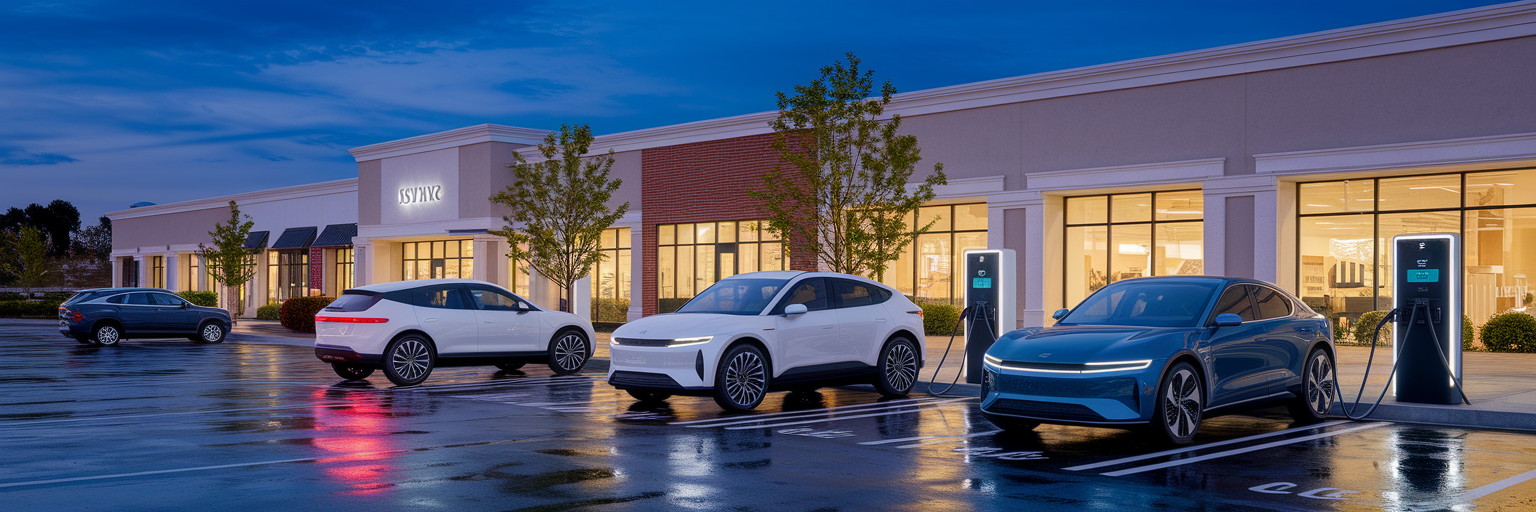
The rise of high-performance EVs is more than just a new product category; it’s a force reshaping the entire American auto industry. What started as a niche interest for early adopters has become a mainstream movement, forcing legacy automakers to adapt or risk being left behind. This transition is visible not just in showrooms but on our roads and in our national infrastructure.
The Surge in EV Market Share
The numbers speak for themselves. Electric vehicles are rapidly capturing a larger piece of the automotive pie. This growth is fueled by a combination of improving technology, greater model variety, and shifting consumer attitudes. As more people experience the instant torque and quiet refinement of an EV, the perception is changing from a compromise to a genuine upgrade. This isn’t a temporary trend; it’s a fundamental shift in what Americans want to drive.
Charging Infrastructure Reaching Critical Mass
One of the biggest mental hurdles for potential EV buyers has always been range anxiety. That fear is quickly fading as charging infrastructure expands across the country. Networks like the Tesla Supercharger network and Electrify America have built thousands of fast-charging stations along major highways, making long-distance road trips a practical reality. Seeing chargers at grocery stores, malls, and workplaces normalizes EV ownership and removes a key barrier to adoption.
How American Icons are Adapting
Perhaps the most telling sign of this shift is how iconic American brands are responding. When Dodge, the company that perfected the V8 muscle car, reveals an all-electric Charger Daytona, you know the game has changed. This pivot signals a new direction for the future of American muscle cars, one where performance is measured in kilowatts instead of cubic inches. Other American giants like Ford, with its Mustang Mach-E, are also proving that brand heritage can evolve and thrive in an electric world.
The Reality of High-Performance EV Ownership
While the future is bright, it’s important to have a clear-eyed view of owning a high-performance EV in 2025. The technology is incredible, but it’s not without its real-world limitations, especially for the dedicated enthusiast. The ongoing EV performance vs gas debate is nuanced because both sides have valid points.
Current challenges that drivers should be aware of include:
- Battery performance degradation in extreme hot or cold climates, which can temporarily reduce range and power output.
- Heat soak and power reduction during extended track sessions. After several hard laps, an EV’s battery management system may limit power to protect itself, whereas a gas car can run consistently with simple refueling.
- The persistent issue of overall weight. While improving, even the most advanced EVs are still heavier than their lightest gasoline-powered counterparts, which can impact ultimate agility.
Looking ahead, the development of solid-state batteries promises to solve many of these issues, offering lighter weight, faster charging, and greater stability. But for now, the definition of a “driver’s car” is in flux. The rise of electric performance is forcing us all to ask what we truly value. Is it the nostalgic roar of an engine, or is it the pure, unfiltered sensation of speed and control? As you continue to explore your options, we invite you to browse more on our homepage.