Defining Two Leaders in the Compact Sedan Market
Even as SUVs fill American driveways, the compact sedan remains a cornerstone of smart, efficient transportation. For decades, this class has delivered practicality and value, and today, two Korean automakers are setting the standard for what a budget-friendly car can be.
The 2026 Hyundai Elantra arrives with a design philosophy it calls “parametric dynamics.” It’s a car that refuses to blend in. You can trace its sharp, angular body creases with your eyes, watching how they intersect and create complex geometric patterns across the doors. Its bold grille isn’t just a functional opening; it’s an intricate piece of design that looks like it was sculpted rather than stamped. This is a car for someone who appreciates a futuristic aesthetic and wants their vehicle to make a statement about technology and forward-thinking design.
In the other corner, the 2026 Kia Forte presents a sporty and athletic personality. Its design language is more about motion. The signature “tiger-nose” grille is leaner and more aggressive, flowing into sleek, swept-back headlights that give the car a focused expression. Its fastback-like profile, with a roofline that slopes gracefully into the trunk, makes the Forte look quick even when it’s parked. It’s for the buyer who wants the spirit of a sports sedan without the associated price tag.
Though built by sister companies sharing foundational engineering, their visual identities could not be more different. The Elantra is the avant-garde artist, while the Forte is the lean athlete. These distinct approaches create two compelling but unique choices for the American shopper, setting the stage for a detailed compact sedan comparison that goes far beyond skin deep.
A Tale of Two Powertrains: Performance and Acceleration
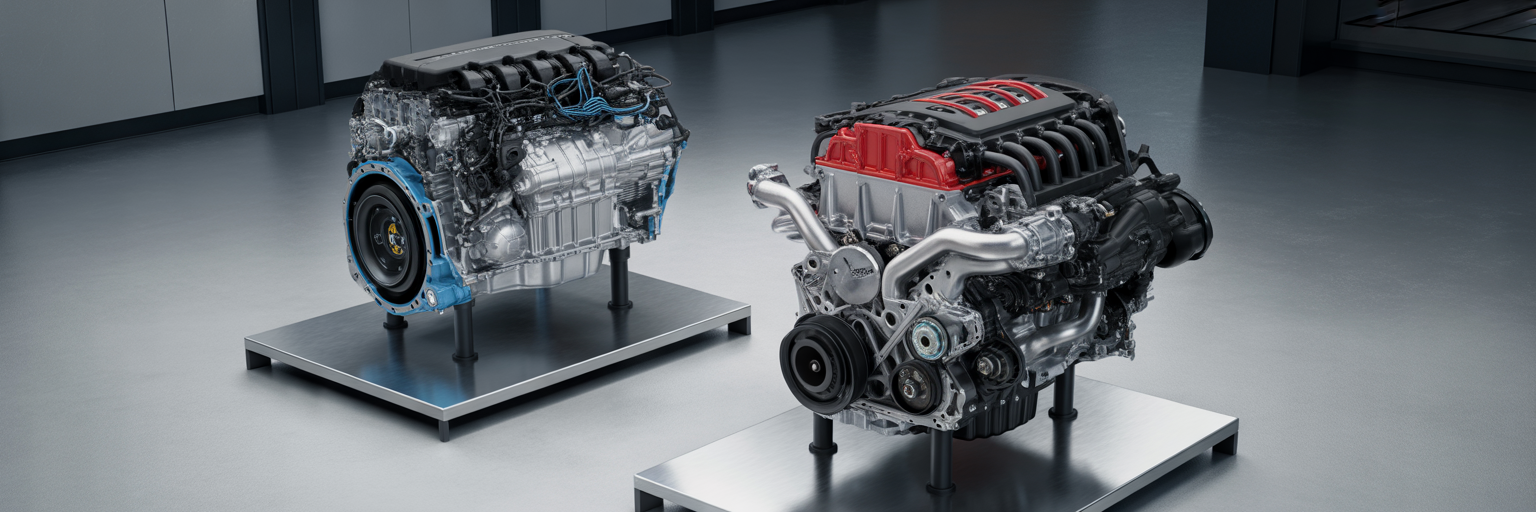
Beyond their contrasting exteriors, the Hyundai Elantra and Kia Forte offer different philosophies on what it means to move. The experience behind the wheel is shaped by a range of powertrains, each tailored to a specific type of driver. Here, we are focused purely on power delivery and the feeling of acceleration, not the numbers at the pump.
The Standard Engine: A Tale of Two 2.0-Liters
Most buyers will find themselves considering the standard 2.0-liter four-cylinder engine, which powers the entry-level and mid-range trims of both sedans. With around 147 horsepower, this engine is the workhorse of the lineup. It’s not designed to win drag races, but it delivers smooth, predictable power that is perfectly suited for the daily commute. You’ll have no trouble merging onto the highway or navigating city traffic.
The subtle difference lies in their transmissions. Hyundai’s Intelligent Variable Transmission (IVT) is engineered for maximum smoothness. It operates almost invisibly, keeping the engine in its most efficient range without the artificial “steps” that plagued older CVTs. In contrast, Kia’s version of the same transmission can feel a bit more responsive, especially in Sport mode, where it mimics the gear shifts of a traditional automatic. It’s a small distinction, but one that gives the Forte a slightly more engaged feel from a standstill.
The Turbocharged Divide: Elantra N Line vs. Forte GT
For those who want more excitement, the turbocharged models are where the two cars truly diverge. The Kia Forte GT is the clear enthusiast’s choice. Its 1.6-liter turbo engine produces over 200 horsepower, delivering a punchy, energetic acceleration that transforms the car’s character. What makes it truly special is the choice of transmission: a quick-shifting seven-speed dual-clutch (DCT) or a six-speed manual. The availability of a manual gearbox is a rare treat in this class, making the Forte GT a genuine driver’s car for those who love the mechanical connection of rowing their own gears.
The Hyundai Elantra N Line uses a similar 1.6-liter turbo engine but is tuned for a more balanced experience. It’s still quick and engaging, but its power delivery feels a bit more refined, designed to be a sporty daily driver rather than an outright performance machine. It bridges the gap between the base model’s efficiency and the Forte GT’s raw enthusiasm, offering a compelling middle ground. For those interested in more vehicle showdowns, Carphanatics offers a dedicated section for every compact sedan comparison.
The Efficiency Alternative: The Elantra’s Hybrid Advantage
Hyundai holds a trump card that Kia doesn’t offer in the Forte lineup: a hybrid powertrain. The Elantra Hybrid isn’t about speed; it’s about intelligent power. It seamlessly blends a gasoline engine with an electric motor to deliver smooth, quiet acceleration while prioritizing fuel conservation above all else. The instant torque from the electric motor makes it feel surprisingly responsive from a stop, but its primary mission is to stretch every gallon of gas as far as possible. This option creates a clear choice for buyers, setting up the critical trade-off between power and efficiency.
Analyzing Fuel Economy and Long-Term Efficiency
While the thrill of acceleration is important, the reality of daily driving often comes down to the cost at the pump. Here, the differences between the Elantra and Forte become a matter of dollars and cents. When we look at the EPA-estimated figures for the standard 2.0-liter engine, the Hyundai Elantra consistently shows a 2-3 MPG advantage in combined driving over the Kia Forte. That might not sound like much, but it adds up.
Let’s make that tangible. For an average American driving 15,000 miles per year with gas at $3.50 per gallon, that 3 MPG difference could translate to over $150 in fuel savings annually. Over a five-year ownership period, that’s more than enough to cover a set of new tires or a few years of oil changes. It’s a clear, measurable benefit that favors the Elantra.
The real story, however, is the Elantra Hybrid. This model is the undisputed champion for any buyer whose primary concern is minimizing running costs. With fuel economy figures that often exceed 50 MPG in combined driving, it fundamentally changes the ownership equation. It delivers a driving range that can stretch for well over 500 miles on a single tank, turning weekly trips to the gas station into a monthly occurrence. This focus on efficiency isn’t limited to sedans; many buyers are now exploring options like the best hybrid suvs under 35k for family-friendly economy.
On the opposite end of the spectrum is the performance-oriented Forte GT. Its exciting turbocharged power comes with a clear trade-off: it has the lowest fuel economy in the entire lineup. This creates a very distinct choice for buyers. If your priority is thrilling performance, the Forte GT delivers. If your goal is to achieve the lowest possible long-term cost of ownership, the Elantra Hybrid is in a class of its own.
Ride Comfort Versus Sporty Handling

How a car feels on the road is just as important as what’s under the hood. The Elantra and Forte take noticeably different approaches to suspension tuning, creating two distinct driving experiences. The Hyundai Elantra prioritizes comfort and refinement. Its suspension is calibrated to soak up road imperfections, from jarring potholes to uneven pavement. On the highway, it feels composed and quiet, filtering out the harshness of the road and making long commutes feel less fatiguing. It’s like wearing noise-canceling headphones for your drive; the outside world feels a little more distant and calm.
In contrast, the Kia Forte is tuned for a firmer, more driver-focused feel. Its suspension is more communicative, providing greater feedback from the road surface. You feel more connected to what the tires are doing, which makes the car feel agile and responsive on winding roads. The trade-off is a ride that can feel a bit busier or harsher over bumps. It’s not uncomfortable, but you are certainly more aware of the texture of the road beneath you.
These philosophies are amplified in the performance trims. The Elantra N Line strikes a balance, offering a comfortable ride for daily driving while still being capable and confident when pushed through corners. The Forte GT, however, goes all-in on sporty handling. It features a more sophisticated multi-link rear suspension, a significant technical upgrade over the standard torsion beam axle. This allows for sharper, more athletic handling and greater stability during aggressive cornering. The downside is a noticeably stiffer ride that might be too firm for some drivers as a daily commuter. The choice is clear: for a relaxed drive on smooth highways, the Elantra’s comfort is a definite advantage. For the driver who enjoys feeling connected to the road and seeks a more spirited experience, the Forte’s chassis is more rewarding.
A Look Inside: Interior Design and Ambiance
Stepping inside these two sedans reveals interior designs that are as different as their exteriors. The debate over the Kia Forte vs Hyundai Elantra interior comes down to a matter of personal taste: do you prefer a futuristic cockpit or a sporty, functional layout?
The Hyundai Elantra greets the driver with a driver-centric cockpit. The dashboard and center console are angled toward the driver, creating a wraparound effect that feels immersive and high-tech. A prominent grab handle on the center console physically separates the driver’s space from the passenger’s, reinforcing this cockpit feel. Modern touches like integrated ambient lighting that flows across the dash and into the doors, along with unique fabric textures on the door panels, give the Elantra an atmosphere that feels almost space-age. It’s a design that makes you feel like you’re piloting something special.
The Kia Forte’s interior, on the other hand, is clean, logical, and unapologetically sporty. It features a more traditional horizontal layout that emphasizes width and simplicity. The standout design elements are the circular air vents at the edges of the dash, a classic cue borrowed from sports cars. In the GT models, this athletic personality is enhanced with red accent stitching on the seats and steering wheel, along with a flat-bottomed steering wheel that feels great in your hands. The focus here is on straightforward functionality with a sporty flair.
When it comes to material quality, both cars use durable plastics appropriate for their price point. However, the Elantra often feels a touch more premium thanks to a more generous application of soft-touch surfaces on the dashboard and upper door panels. Ultimately, the ambiance in each cabin is distinct. The Elantra offers a tech-forward, modern environment, while the Forte delivers a functional and sporty atmosphere. Neither is objectively better, but they will appeal to very different sensibilities.
Evaluating Cabin Space and Everyday Practicality
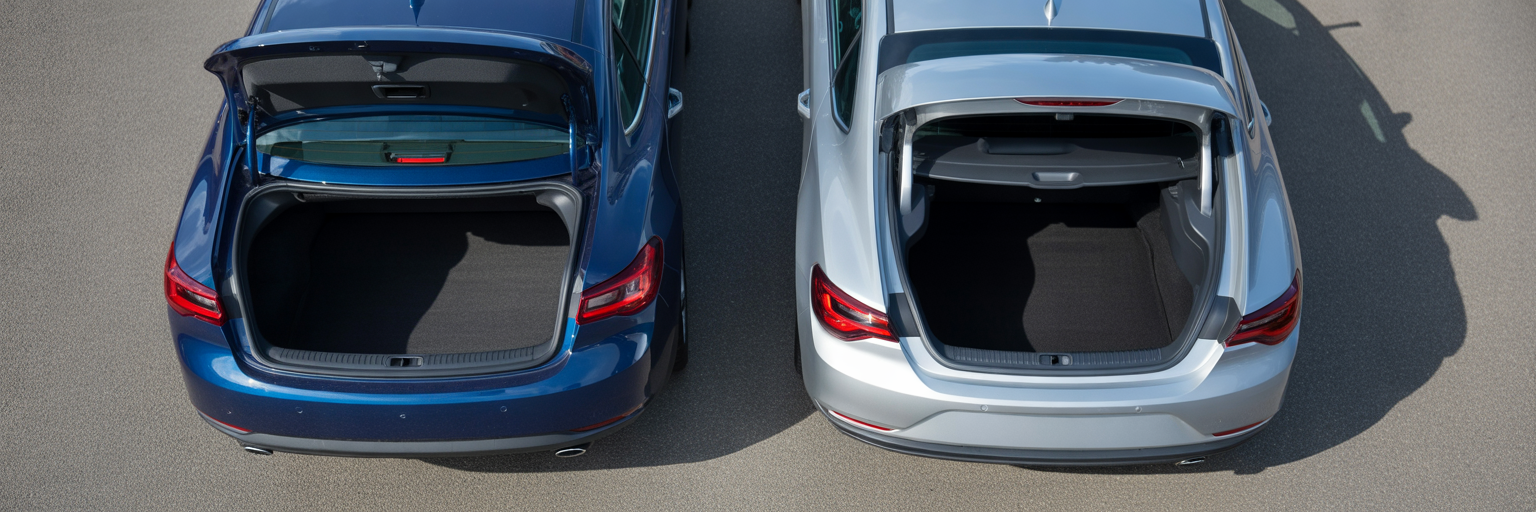
While aesthetics and performance are exciting, the practical realities of space and utility are what you live with every day. When it comes to passenger volume, both the Elantra and Forte are highly competitive in the compact class. They offer comfortable seating for four adults, with generous front and rear legroom. Taller passengers might find rear headroom a bit snug in both due to their sloping rooflines, but for most people, long journeys are perfectly manageable.
When you move to the trunk, the similarities are even more striking. Both sedans offer cargo capacity that is remarkably close, measuring around 14-15 cubic feet. What does that number mean in the real world? It means both trunks can easily swallow a week’s worth of groceries, several suitcases for a weekend getaway, or a couple of golf bags. You won’t be making a sacrifice in cargo space by choosing one over the other.
The real differences are found in the small details that affect daily life. A closer look reveals subtle trade-offs:
- Cupholder size and placement: Both have well-placed cupholders, but you might find one is slightly better at accommodating the oversized water bottles that have become a daily staple.
- Center console storage: The design of the center console can impact storage. One might offer a deeper bin for hiding valuables, while the other provides a more organized tray for smaller items like keys and phones.
- Door pockets: Both include molded door pockets, but their shape and size can determine how securely they hold items during spirited driving.
- Rear seat flexibility: For added versatility, 60/40 split-folding rear seats are standard on most trims of both cars, allowing you to carry longer items while still accommodating a passenger.
In the final analysis, the Elantra and Forte are essentially tied in the categories of space and practicality. This is an important realization for any potential buyer. It means you don’t have to compromise on utility with either car, allowing you to base your decision on the more significant differences in comfort, performance, and technology.
Infotainment Systems and Onboard Technology
The modern car is as much a technology hub as it is a mode of transportation. In this arena, both the Elantra and Forte deliver impressive features, but Hyundai’s approach gives it a distinct edge for tech-savvy buyers.
Standard Tech: A Strong Baseline for Both
Right from their base models, both sedans come impressively equipped. An 8-inch touchscreen is standard, and more importantly, it includes wireless Apple CarPlay and Android Auto. This is a fantastic feature at this price point, allowing for seamless, cord-free integration of your smartphone for navigation, music, and messaging. This strong baseline means that even the most budget-conscious buyers get a modern and connected experience.
Upgraded Displays: The Elantra’s Digital Cockpit
The major technological divide appears in the higher trims. The Kia Forte offers a sharp and responsive 10.25-inch infotainment screen, which is a significant upgrade. However, it typically retains a traditional gauge cluster with physical dials or a smaller central digital screen. The Hyundai Elantra, in contrast, offers an available dual 10.25-inch screen setup. This configuration places a digital instrument cluster and an infotainment touchscreen side-by-side under a single piece of glass, creating a seamless, panoramic display. This “glass cockpit” gives the Elantra’s interior a far more modern and premium look, rivaling what’s found in luxury vehicles.
In terms of user experience, Hyundai’s system is known for its slick graphics and deep feature set, while Kia’s is often praised for its simplicity and intuitive, easy-to-navigate menus. User ratings often reflect these different philosophies; a TrueCar comparison shows drivers rate both systems highly, but for different reasons, with the Elantra praised for its modern feel and the Forte for its ease of use.
Audio Showdown: Bose vs. Harman Kardon
For audiophiles, the choice of premium sound system can be a deciding factor. The Elantra offers an available Bose premium audio system, while the Forte counters with a system from Harman Kardon. Both are reputable brands, but they have different sound profiles. Bose systems are often known for their powerful, deep bass response, creating a rich and immersive soundstage. Harman Kardon systems, on the other hand, are frequently praised for their crisp, clear highs and balanced mid-range, delivering a more precise and detailed audio experience. The best choice here is purely subjective and depends on your listening preferences.
Comparing Safety Suites and Driver-Assistance Features
When it comes to protecting you and your passengers, both Hyundai and Kia have made safety a top priority. Both sedans come equipped with a strong foundation of standard driver-assistance features that were once reserved for luxury cars. This shared commitment to safety is a win for any buyer in this segment.
On nearly every trim of both the Elantra and Forte, you will find a suite of essential safety technologies, including:
- Forward Collision-Avoidance Assist: Can detect a potential collision and automatically apply the brakes.
- Lane Keeping Assist: Provides gentle steering inputs to keep the vehicle centered in its lane.
- Driver Attention Warning: Monitors driving patterns and alerts the driver if it detects signs of drowsiness or inattention.
However, the key difference lies in Hyundai’s strategy of making more advanced features standard across a wider range of trims. The Elantra often includes Blind-Spot Collision-Avoidance Assist and Rear Cross-Traffic Collision-Avoidance Assist as standard equipment on its more affordable models. On the Forte, these crucial features are frequently bundled into optional packages or reserved for the highest trims. This makes the Elantra a compelling value proposition for safety-conscious buyers who may not want to pay for the top-of-the-line model.
Furthermore, the Elantra offers a more sophisticated optional system called Highway Driving Assist. This is a Level 2 semi-autonomous driving system that combines adaptive cruise control with active lane centering to manage steering, acceleration, and braking on the highway. It significantly reduces driver fatigue on long road trips and is a feature not typically offered on the Forte. Both vehicles consistently earn high marks from the Insurance Institute for Highway Safety (IIHS), but the Elantra’s more comprehensive standard safety suite often gives it an edge in securing the coveted Top Safety Pick+ award. While both are undoubtedly safe cars, the Elantra generally offers more active safety technology for the money.
Warranty, Reliability, and Total Cost of Ownership
The final piece of the puzzle is the long-term financial picture. This is where the best compact sedan for value is truly determined, and it goes far beyond the initial sticker price. Both Hyundai and Kia are famous for their industry-leading warranties, offering a 10-year/100,000-mile powertrain warranty and a 5-year/60,000-mile basic warranty. This provides incredible peace of mind for any new car owner.
However, Hyundai includes a significant advantage that Kia does not: 3 years or 36,000 miles of complimentary maintenance. This covers routine services like oil changes and tire rotations, representing a direct, tangible cost saving of several hundred dollars over the first few years of ownership. When considering Elantra vs Forte reliability, both brands have built a strong reputation. Data from sources like J.D. Power and Consumer Reports consistently show both cars performing well, though Hyundai models often have a slight edge in long-term dependability scores.
To understand the full financial impact, we need to look at the total cost of ownership. According to a recent analysis by Driving.ca, while the Forte has a competitive initial price, the Elantra’s advantages in fuel economy and maintenance contribute to a lower overall five-year cost to own. Factors like historically stronger resale value, especially for the Hybrid model, further bolster the Elantra’s case as the more financially sound investment.
| Factor | Hyundai Elantra | Kia Forte |
|---|---|---|
| Powertrain Warranty | 10 years / 100,000 miles | 10 years / 100,000 miles |
| Basic (Bumper-to-Bumper) Warranty | 5 years / 60,000 miles | 5 years / 60,000 miles |
| Complimentary Maintenance | 3 years / 36,000 miles | Not offered |
| Predicted Reliability | Often rated slightly higher | Rated Good to Excellent |
| Resale Value (5-Year) | Typically higher, especially Hybrid | Average for the segment |
Note: Predicted reliability and resale value are based on historical data from leading consumer and automotive analytics firms like J.D. Power and Kelley Blue Book (KBB). These figures can fluctuate based on model year and market conditions.
Understanding these long-term costs is a key part of smart car ownership. For those looking to maximize their vehicle’s lifespan, our collection of informative articles covers everything from routine checks to DIY fixes.
The Final Verdict for the Value-Driven Buyer
After comparing these two excellent sedans across every key category, a clear picture emerges. The choice between the Hyundai Elantra vs Kia Forte ultimately comes down to your personal priorities and your definition of value.
The Kia Forte makes a strong case for the buyer who prioritizes a sporty driving experience and aggressive styling. It is the enthusiast’s choice on a budget. With its punchy turbo engine, available manual transmission, and driver-focused handling, the Forte is undeniably more fun to drive in its GT form. If your idea of value is getting the most engaging performance and the lowest possible upfront purchase price, the Forte is an outstanding pick.
However, the Hyundai Elantra presents a more compelling argument as the smarter choice for the buyer focused on the best overall long-term value. Its advantages are numerous and substantial: superior fuel economy across the board, culminating in the ultra-efficient Hybrid model; a more comfortable and refined ride for daily commuting; a more modern interior with better available technology; and a more comprehensive standard safety suite. When you add in the cost savings from complimentary maintenance and its typically stronger resale value, the Elantra’s financial benefits become undeniable.
So, which sedan offers better value? While the Forte may be cheaper on day one, the Hyundai Elantra delivers superior overall value. Its lower running costs and better standard features make it the more financially sound choice over a typical ownership period. If you want a fun, affordable, and stylish sedan, the Forte will not disappoint. But if you want the smartest, most comfortable, and most feature-rich package that saves you money in the long run, the Hyundai Elantra is the definitive winner. Ultimately, the choice between the Elantra and Forte depends on your priorities, but both demonstrate how far the compact sedan has come. To explore more reviews and news on the latest models, visit Carphanatics.com.