The Genesis of Performance and Style
The fusion of race-bred engineering and road-going elegance is not a modern invention. Long before the term “supercar” existed, a new breed of automobile emerged in the 1920s and 1930s. These vehicles were more than just a means of transport; they were a declaration of engineering superiority and artistic expression. The foundational DNA of the sports car was established in this era, combining power with breathtaking design.
Early pioneers like the Bentley 3 Litre and Duesenberg Model J were engineering marvels, capable of surpassing 100 kph at a time when most roads were unpaved. This performance was a statement, a tangible display of mechanical prowess. Yet, power was only half of the equation. The true spirit of these early machines came from their aesthetic ambition, a key part of the evolution of automotive design.
No car captured this better than the Bugatti Type 57 SC Atlantic. Its dramatic teardrop shape and riveted dorsal fin were not merely styling flourishes. They represented some of the first intentional forays into aerodynamics, shaping the air to enhance stability. These vehicles were exclusive artifacts, built for the wealthiest patrons who appreciated both speed and sculpture. This established the sports car’s enduring legacy as a symbol of status and technological ambition, setting the stage for everything that would follow.
Post-War Engineering and New Aspirations
The bespoke artistry of the pre-war era gave way to a new reality after World War II. The conflict accelerated advancements in materials and manufacturing, making new efficiencies available to the automotive industry. This period marked a crucial transition, as the lessons learned in wartime production began to influence civilian vehicle design. Functional changes appeared, such as wider front grilles needed to cool the larger, more powerful engines that were becoming common.
This era also introduced the idea of making performance more accessible. Comfort-oriented features like automatic transmissions started appearing, signaling a shift in philosophy. The sports car was no longer just for the dedicated enthusiast willing to sacrifice comfort for speed. The 1963 Chevrolet Corvette C2 ‘Sting Ray’ stands as a monument to this change. Its most significant innovation was its independent rear suspension, a stark contrast to the crude solid axles used by its predecessors and many contemporaries.
This engineering leap provided vastly superior handling and ride comfort, transforming the car’s dynamics. It could navigate corners with a composure that was previously the domain of expensive European imports. This era began the democratization of performance, turning the sports car from an object of pure luxury into an aspirational goal for a wider audience, particularly in the United States. These became some of the most influential sports cars by proving high performance could be achieved without an astronomical price tag.
A Tale of Two Continents in the 1960s
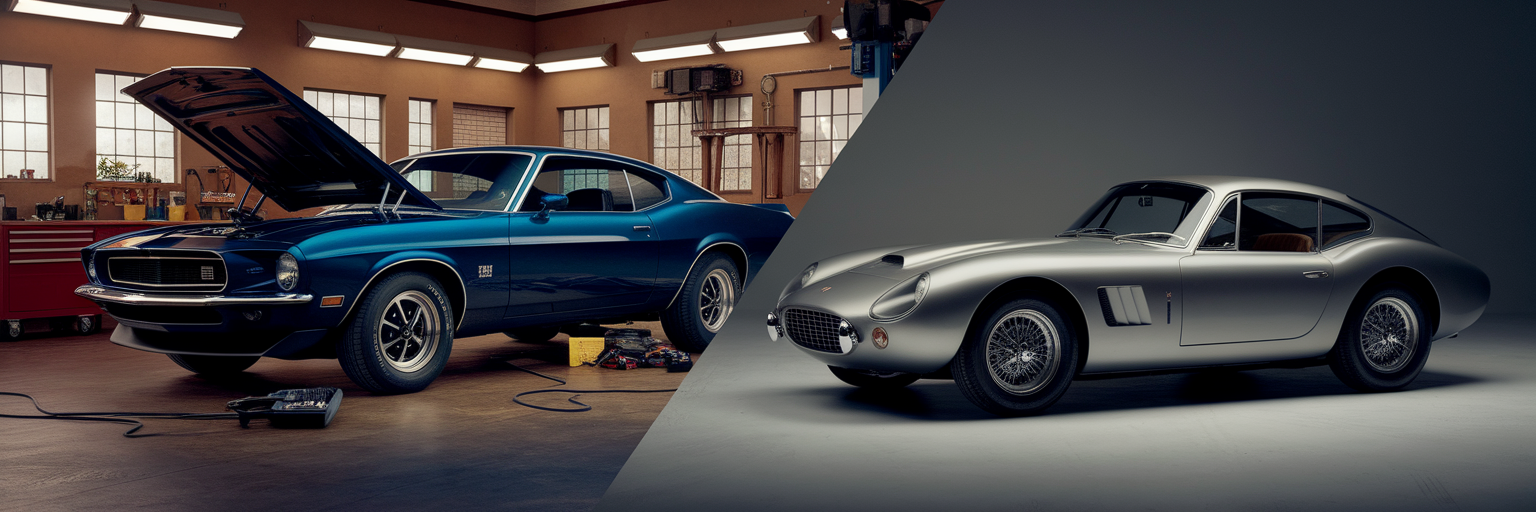
The 1960s crystallized a fascinating conflict in performance philosophy, pitting American muscle against European finesse. This was not just about different engineering choices; it was a clash of cultures reflected in metal. On one side of the Atlantic, the American approach championed raw, unadulterated power. The Shelby Cobra perfectly embodied this ethos, stuffing a massive, large-displacement V8 engine into a lightweight frame. Its purpose was clear: dominate in straight-line acceleration with explosive force. This philosophy defined a generation of powerful and rebellious machines.
In contrast, the European philosophy, exemplified by the Jaguar E-Type, pursued performance through balance and efficiency. These classic European sports cars emphasized lightweight construction, nimble handling, and aerodynamic shapes. The E-Type’s performance came from its sophistication, not just brute force. It featured advanced technologies derived directly from racing, such as a monocoque construction for superior rigidity and disc brakes for reliable stopping power. It was a machine built for carving through winding roads with grace and precision.
This divergence in design created two distinct but equally compelling types of sports cars. Each represented a different vision of freedom and individuality, leaving a permanent mark on iconic sports cars history and shaping the desires of drivers for decades to come.
| Attribute | American Muscle (e.g., Shelby Cobra) | Classic European Sports Cars (e.g., Jaguar E-Type) |
|---|---|---|
| Core Philosophy | Raw power and straight-line dominance | Balance, agility, and aerodynamic efficiency |
| Engine Approach | Large-displacement V8 engines | Smaller, high-revving inline-6 or V12 engines |
| Chassis & Construction | Simple ladder frame with a lightweight body | Advanced monocoque construction for rigidity |
| Key Strength | Explosive acceleration | Nimble handling and high-speed stability |
| Cultural Symbolism | Rebellious power and mechanical simplicity | Sophistication, elegance, and technical prowess |
Note: This table contrasts the dominant design philosophies of the era. While exceptions existed, these characteristics define the archetypes that influenced the most influential sports cars of the decade.
The Wedge Era and Aerodynamic Obsession
Following the flowing curves of the 1960s, the 1970s and 1980s brought a dramatic and angular shift in design. The “wedge” shape became the defining aesthetic of this era, driven by a growing obsession with aerodynamics. This was a period where form explicitly followed function. The design principle was simple yet effective: a low, sharp nose was designed to cut cleanly through the air, while a high, abrupt tail worked to reduce drag and create downforce for better high-speed stability.
This philosophy gave birth to the modern “supercar,” a category of vehicle designed for maximum visual and performance impact above all else. Cars like the Lamborghini Countach and Lancia Stratos looked like they were moving at incredible speeds even when standing still. An iconic and functional feature of this era was the pop-up headlight, which allowed designers to achieve the ultra-low, aerodynamic front ends that defined the wedge look. According to an analysis of car design history from Pedal Commander, this period saw designers embrace dramatic, angular forms that were a stark departure from the past.
The wedge era forged an unbreakable link between extreme, science-driven shapes and the public’s perception of high performance. It taught us that a car’s silhouette could be as important as the engine under its hood, a trend that continues to influence the evolution of automotive design today.
Digital Refinement and the Usable Supercar

The 1990s and 2000s ushered in a technological revolution, as onboard computers began to manage and refine the ferocious power of high-performance engines. This era was less about adding more horsepower and more about taming it. The integration of sophisticated electronic driver aids transformed the experience, making supercars safer, more controllable, and surprisingly more accessible. This digital oversight was a critical step in their development.
Key technologies began to appear as standard, fundamentally changing what was possible behind the wheel:
- Anti-lock Braking Systems (ABS): By preventing wheels from locking up during hard braking, ABS allowed the driver to maintain steering control in emergency situations.
- Traction Control: This system intelligently reduced engine power or applied brakes to individual wheels, preventing the tires from spinning uselessly during acceleration.
- Stability Control: Using a network of sensors, this system could detect a potential loss of control and intervene by braking specific wheels to keep the car on its intended path.
This wave of innovation gave rise to the “everyday supercar.” Models from this period offered unprecedented reliability and comfort alongside their extreme performance, making it possible for owners to use them for more than just occasional weekend drives. This was the critical transition from purely mechanical machines to sophisticated, digitally-enhanced vehicles. This shift set the stage for the software-defined vehicles we see today, where performance and luxury are deeply intertwined.
The Electric Powertrain’s Shock to the System
We are currently living through another fundamental paradigm shift, this time driven by electrification. Electric powertrains are redefining the very metrics of performance. The visceral roar of a V8 and the mechanical satisfaction of a perfect gear shift are being replaced by silent, instantaneous acceleration. This has sparked a central debate among enthusiasts: can a sports car deliver an emotionally engaging experience without the traditional sensory feedback of an internal combustion engine?
Pioneering companies proved that high-performance EVs were not only viable but could outperform their gasoline-powered counterparts in many areas. This demonstration compelled legacy brands to invest heavily in electric technology. As Hanna, Bass & Rowe reports, the industry’s evolution is expanding consumer options and influencing everything from policy to infrastructure. The conversation is no longer about if, but when and how, electrification will dominate the performance landscape.
While the sensory experience is undeniably different, the core mission of a sports car remains unchanged: the relentless pursuit of speed, handling excellence, and driving pleasure. Electricity is simply a new and incredibly potent tool to achieve that goal. The future of electric performance cars is not about replacing the past, but about building upon its legacy with new technology. For those interested in this rapid transformation, you can explore the latest trends in our articles on electric vehicles.
The Next Frontier of High-Performance Driving
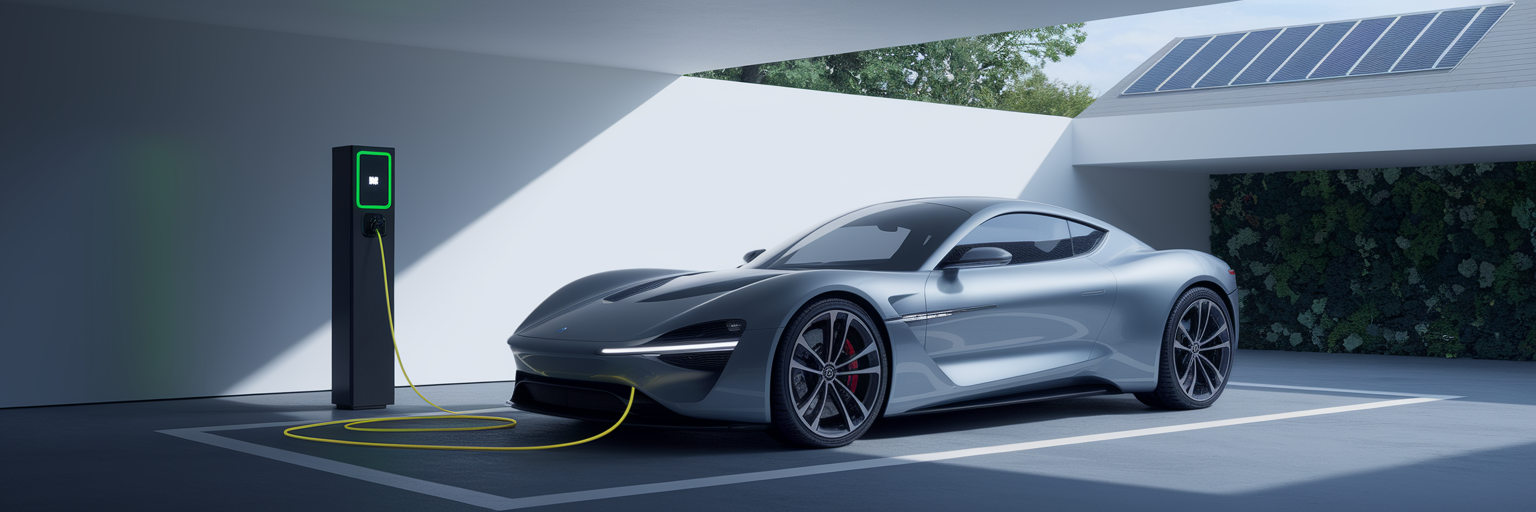
As we look ahead, the evolution of the sports car is set to accelerate once more, driven by advancements in battery technology, manufacturing, and artificial intelligence. The next chapter will be defined by a synthesis of human skill and intelligent systems, continuing the century-long quest for the ultimate driving experience. Several key technologies are poised to shape this future.
- Solid-State Batteries: This technology promises to solve many of the current compromises of EVs. By offering longer ranges, significantly faster charging times, and lighter vehicle weights, solid-state batteries could make electric sports cars even more practical and dynamic.
- Sustainable Manufacturing: The focus on sustainability is moving beyond zero-emissions powertrains. Future designs will increasingly incorporate recycled composites, plant-based interiors, and greener production processes, making the entire lifecycle of the vehicle more environmentally responsible.
- AI-Enhanced Dynamics: Imagine an AI system that acts as a co-pilot. By learning a driver’s style and monitoring conditions in real-time, it could make instantaneous adjustments to the suspension, power delivery, and aerodynamics to maximize both performance and safety.
The definition of a sports car has never been static. From the brutish power of early racers to the digital intelligence of modern machines, its identity has always adapted. The future will not be a choice between technology and the human element, but a fusion of both. To stay informed on these exciting developments that are shaping iconic sports cars history, keeping an eye on the latest automotive news we cover is essential.