The compact SUV segment is the heart of the American auto market, a space where different ideas about what a vehicle should be collide. Nowhere is this clearer than in the matchup between the 2026 Mazda CX-5 and the 2026 Subaru Forester.
These two vehicles represent distinct paths for buyers. The Mazda CX-5 is crafted for those who believe a daily driver can also be a source of pleasure. It appeals to the person who sees their car not just as transport, but as an extension of their personal style. Its sculpted lines and refined cabin suggest a focus on the journey itself, prioritizing a sophisticated and engaging commute. You choose a CX-5 because you appreciate the feel of quality materials and the responsive connection to the road on your way to the office or a night out.
In the other corner stands the Subaru Forester, a vehicle built on a foundation of pure, unpretentious utility. Its identity is rooted in go-anywhere capability, legendary safety, and rugged dependability. The Forester is for the active family loading up ski gear, the adventurer heading to a remote trailhead, or anyone living where weather is a real consideration. Its owners value function over form and peace of mind over polish. They need a tool that can handle muddy boots, big dogs, and a surprise snowstorm without complaint.
This head-to-head analysis of the Mazda CX-5 vs Subaru Forester will examine everything from performance and interior comfort to technology and long-term ownership costs. Our goal is to give you the clarity needed to choose the SUV that truly aligns with your life’s demands, a process we explore across many other vehicle matchups. By the end, you’ll know which of these compelling compacts belongs in your driveway.
Engine Power and On-Road Feel
Moving beyond design philosophies, the differences between the CX-5 and Forester become tangible the moment you press the accelerator. How these two SUVs generate and deliver power defines their character on the road, creating two very different driving experiences.
Powertrain Philosophies: Turbocharged Spirit vs. Boxer Stability
The Mazda CX-5 driving experience is largely defined by its powertrain options. While the standard four-cylinder engine is perfectly adequate, the available 2.5L turbocharged engine transforms the vehicle. With an estimated 227 horsepower and a healthy dose of torque, the turbo CX-5 delivers the kind of effortless acceleration that makes merging onto a busy highway feel satisfying and secure. It’s a responsive, spirited engine that encourages a more dynamic driving style.
Subaru takes a different approach. The Forester comes standard with a 2.5L Boxer engine producing around 182 horsepower. While the numbers are lower, the engine’s design is its secret weapon. Because the cylinders lie flat and move horizontally, the engine has a lower profile, contributing to a lower overall center of gravity for the vehicle. This doesn’t translate to thrilling acceleration, but it provides an inherent sense of stability and balance that you can feel in every corner. It’s a powertrain built for confidence, not for stoplight sprints.
Drivetrain Dynamics: All-Weather Security vs. Go-Anywhere Traction
In any all-wheel drive SUV comparison, the drivetrain system is a critical point of distinction. For Subaru, Symmetrical All-Wheel Drive is not just a feature; it is the core of the brand’s identity. Standard on every Forester, the system is always active, constantly distributing power to all four wheels for maximum traction. It’s engineered for consistent, reliable grip on everything from rain-slicked pavement to muddy trails and snowy backroads. You don’t have to think about it; it’s just working.
Mazda’s i-Activ All-Wheel Drive, also standard, is a more predictive and sophisticated system. It uses dozens of sensors to monitor everything from steering angle to windshield wiper use to anticipate a loss of traction before it happens. It excels at maintaining grip and stability on paved roads during inclement weather, making the CX-5 a confident performer in rain or light snow. However, the Forester’s system, combined with its superior ground clearance, gives it a distinct advantage when the pavement ends.
Handling and Steering: The Driver’s Connection to the Road
Here is where the CX-5 truly separates itself. Mazda engineers its vehicles for the person who enjoys the act of driving. The CX-5 handles less like a tall SUV and more like a well-tuned sport sedan. The steering is precise and perfectly weighted, providing clear feedback from the road. Body roll is minimal, giving the driver a feeling of control and connection that is rare in this class. It operates like a precision tool, responding immediately and predictably to your inputs.
The Forester, by contrast, prioritizes comfort and ease of use. Its steering is lighter and requires less effort, which is great for navigating tight parking lots. It feels secure and predictable, but it lacks the sharp, communicative nature of the CX-5. It’s designed to isolate you from the road, not connect you to it.
Ride Quality: Cushioning Comfort vs. Firm Engagement
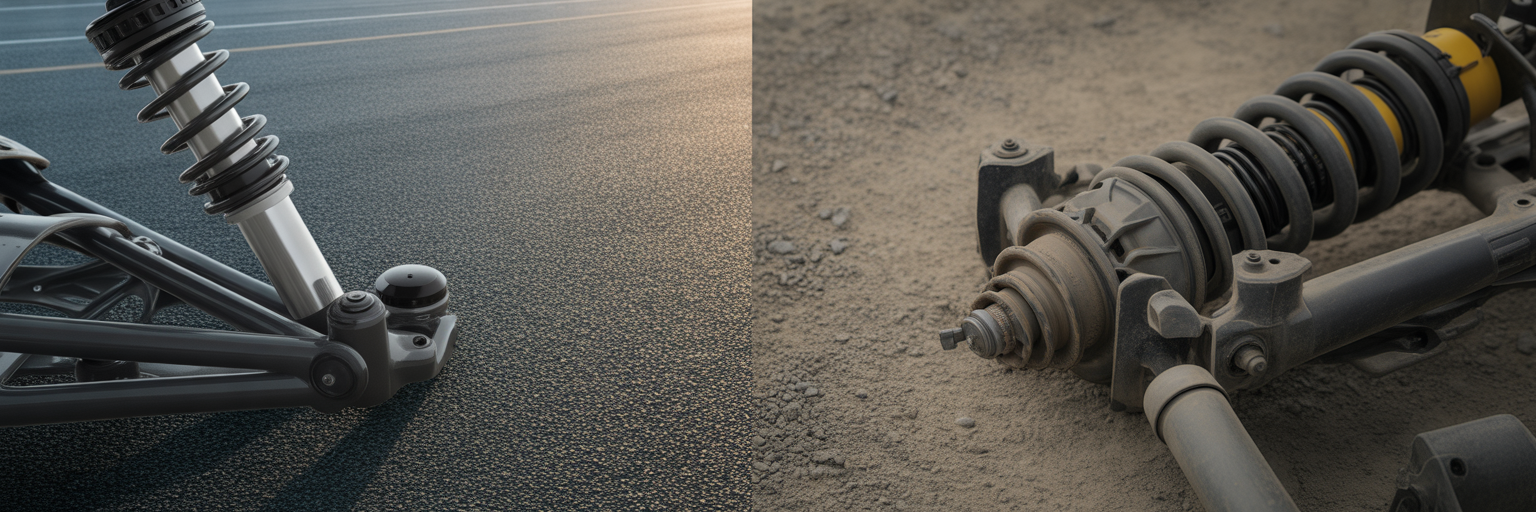
That difference in philosophy extends directly to ride quality. The Subaru Forester, with its softer suspension and impressive ground clearance of up to 9.3 inches, is built to absorb imperfections. It glides over broken pavement and potholes with a cushioned composure that keeps passengers comfortable. This setup makes it an excellent companion for long road trips or for those living in areas with poorly maintained roads.
The Mazda CX-5’s firmer suspension is the trade-off for its sharp handling. While the ride is composed and never harsh, it is noticeably firmer than the Forester’s. You feel more of the road surface, which is part of what makes it engaging to drive. However, on particularly rough stretches of pavement, it can feel less forgiving. It’s a classic case of prioritizing handling response over ultimate cushioning.
| Feature | 2026 Mazda CX-5 (Projected) | 2026 Subaru Forester (Projected) |
|---|---|---|
| Standard Engine | 2.5L 4-Cylinder | 2.5L 4-Cylinder Boxer |
| Available Engine | 2.5L Turbocharged 4-Cylinder | None (Hybrid may be available) |
| Horsepower | ~187 hp (standard), ~227 hp (turbo) | ~182 hp |
| Drivetrain | Standard i-Activ All-Wheel Drive | Standard Symmetrical All-Wheel Drive |
| Ground Clearance | ~7.5 inches | Up to 9.3 inches |
Note: Figures are based on projections for the 2026 model year, drawing from current generation specifications and industry trends. Final specs may vary. As a recent analysis from Driving.ca highlights, these different performance philosophies are also reflected in their pricing, with the Forester often starting lower.
Cabin Experience and Practical Space
Stepping inside these two SUVs reveals just as much about their intended purposes as driving them does. The cabin is where you live with a vehicle day-to-day, and the CX-5 and Forester offer starkly different environments, one focused on refined aesthetics and the other on rugged practicality.
Interior Design and Material Quality
The Mazda CX-5’s interior is its showpiece. In its higher trims, the cabin approaches near-luxury levels with materials you’d expect in a more expensive vehicle. Surfaces are covered in soft-touch plastics, and available trims feature genuine Nappa leather and real wood accents. The design is clean, elegant, and driver-focused, creating a sophisticated atmosphere that feels special every time you get in. It’s a space designed to be admired and enjoyed.
The Subaru Forester’s cabin, in contrast, is designed for life. The focus is on durability and functionality. While the materials are high quality and assembled with care, they prioritize longevity over luxury. You’ll find more hard-wearing plastics and practical surfaces. On certain trims, the available water-resistant StarTex upholstery is a perfect example of Subaru’s philosophy: it’s made to withstand muddy paws, spilled drinks, and wet gear without a second thought. It’s less about impressing your passengers and more about surviving your adventures.
Passenger Room and Cargo Capacity
When it comes to hauling people and things, the Forester’s boxy shape pays huge dividends. Its tall roofline and upright design create an airy, spacious cabin with ample headroom and legroom for both front and rear passengers. More importantly, this translates to a massive cargo area. With the rear seats folded down, the Forester can swallow up to 74.4 cubic feet of gear. That’s enough space for mountain bikes, camping equipment, or a serious haul from the hardware store.
The CX-5’s sleek, flowing design comes with a compromise. While passenger space is comfortable for four adults, it feels more intimate and less expansive than the Forester. The biggest trade-off is in cargo capacity. The sloped rear window and sculpted body panels cut into the available space, making it less suitable for large, bulky items. It’s perfectly fine for luggage and groceries, but those who need to haul big things regularly will feel the pinch.
Outward Visibility and Driver Confidence
This is a standout strength for the Subaru Forester and a point many buyers overlook until the test drive. Its large, tall windows, thin pillars, and relatively low beltline create what designers call a large “greenhouse.” The result is a commanding, near-panoramic view of the road. This exceptional outward visibility makes the Forester incredibly easy to park and maneuver in tight spaces, and it inspires a great deal of confidence in heavy traffic.
The CX-5 offers a more cockpit-like experience. The rising beltline and thicker pillars, which contribute to its sporty and secure feel, also create larger blind spots. While modern safety systems like blind-spot monitoring mitigate this, the natural, unaided visibility from the driver’s seat is simply not on the same level as the Forester’s. It’s the difference between feeling like you’re in a watchtower versus a protective cocoon.
Day-to-Day Practicality and Storage
The small details of daily life can make or break your love for a vehicle, and this is an area where the Forester’s practical nature shines. It’s often considered one of the best compact SUV for families because it gets the little things right. Thoughtful touches make it an easy vehicle to live with.
- Storage Solutions: The Forester typically offers large door pockets, a functional center console, and various cubbies designed for the items families carry. The CX-5’s storage is adequate but can feel less generous.
- Cupholders: It’s a small thing, but the Forester’s cupholders are generally better suited to accommodate the large water bottles common with an active lifestyle.
- LATCH Anchors: Subaru is known for making its LATCH anchors for child seats easy to access, a detail that parents wrestling with a car seat in a cramped parking lot will deeply appreciate.
- Rear Door Opening: The Forester’s rear doors often open wider, making it easier to get in and out or to load a child into a safety seat.
These practical considerations are just a few of the topics we cover in our collection of informative articles designed to help buyers think through the real-world aspects of car ownership.
Technology, Entertainment, and Safety Systems
The modern driving experience is defined as much by screens and sensors as it is by engines and suspensions. Both Mazda and Subaru equip their vehicles with sophisticated technology suites, but once again, their philosophies diverge on how that technology should interact with the driver.
Infotainment: Physical Controls vs. Touchscreen Interface
Mazda has taken a firm stance on infotainment design with its Mazda Connect system. The centerpiece is a rotary commander knob on the center console, used to navigate the high-mounted widescreen display. The brand’s research suggests this physical controller is less distracting than reaching for a touchscreen, allowing the driver to keep their eyes closer to the road. While it has a slight learning curve, many owners come to prefer its tactile, deliberate operation. Apple CarPlay and Android Auto are standard, but their integration is optimized for the controller.
Subaru’s STARLINK system takes a more conventional approach, centered around a large, vertically oriented touchscreen in higher trims. It functions much like a tablet, with clear icons and responsive touch controls. For anyone comfortable with a smartphone, the system is immediately intuitive. It offers a more direct and familiar way to interact with navigation, media, and vehicle settings, which many drivers prefer over a rotary dial.
Premium Audio Showdown: Bose vs. Harman Kardon
For those who see their car as a private listening room, both SUVs offer compelling premium audio upgrades. The Mazda CX-5 is available with a Bose sound system that is custom-engineered for the cabin’s specific acoustics. Bose systems are known for their balanced, clear sound profile, creating a rich and immersive listening experience that excels with nuanced music genres like jazz or classical.
The Forester offers an available Harman Kardon premium audio system. These systems are typically characterized by their power and clarity, delivering crisp highs and deep, punchy bass. It’s a system that can fill the Forester’s spacious interior with powerful sound, making it a great choice for those who enjoy rock or electronic music on their road trips.
A Deep Dive into Competing Safety Suites
Safety is a cornerstone for both brands, but their flagship active safety systems, Mazda’s i-Activsense and Subaru’s EyeSight, are built on different hardware and philosophies.
- Subaru EyeSight Driver Assist Technology: This is one of the most well-regarded systems in the industry.
- Hardware: It uses a pair of stereo cameras mounted at the top of the windshield, which function like a pair of human eyes to judge distance and identify objects.
- Key Features: Its Adaptive Cruise Control with Lane Centering is exceptionally smooth and human-like. The system also includes Pre-Collision Braking and, on some trims, the innovative DriverFocus Distraction Mitigation System, which uses an infrared camera to detect signs of driver fatigue or inattention.
- Mazda i-Activsense: Mazda’s suite combines radar and camera-based technologies to provide a comprehensive safety net.
- Hardware: It uses a mix of a forward-facing camera and radar sensors, which can be advantageous in certain weather conditions where a camera’s vision might be obscured.
- Key Features: The suite includes staples like Blind Spot Monitoring and Rear Cross-Traffic Alert, often standard across more trims. Its Traffic Jam Assist provides steering inputs in low-speed congestion. Many drivers find Mazda’s alerts and interventions to be more subtle and less intrusive than those from other brands.
The biggest difference often lies in the behavior. Subaru’s EyeSight is proactive and feels like a confident co-pilot. Mazda’s i-Activsense feels more like a quiet guardian, intervening only when necessary. Both are highly effective, but their personalities are distinct.
Ownership Costs and Reliability
A car purchase is more than just the initial sticker price; it’s a long-term financial commitment. Examining the total cost of ownership, including pricing, reliability, fuel economy, and resale value, provides the final pieces of the puzzle in the Mazda CX-5 vs Subaru Forester debate.
Pricing, Trims, and Overall Value
The Subaru Forester generally presents a strong value proposition right from the start. Its starting MSRP is often lower than the CX-5’s, and it comes with more utility-focused features as standard, most notably its Symmetrical All-Wheel Drive. Your money is clearly going toward capability and practicality.
The Mazda CX-5’s value is tied to its premium positioning. While its starting price may be higher, it justifies this with a more refined standard interior, a more sophisticated on-road demeanor, and standard all-wheel drive. The value here is in the quality of the driving experience and the near-luxury feel of the cabin. For buyers looking at other value-focused options, it can be helpful to compare these against some of the best hybrid SUVs available.
Long-Term Reliability and Brand Reputation
When it comes to dependability, both brands have earned strong reputations. The conversation around Subaru Forester reliability is particularly notable. The Forester has a loyal following, especially in regions with harsh weather like the Northeast and Pacific Northwest, where its longevity and all-weather capability are proven year after year. Data from sources like Consumer Reports consistently ranks Subaru highly for reliability.
Mazda, for its part, has made remarkable strides in build quality and dependability over the last decade. The brand frequently appears at or near the top of reliability surveys from organizations like J.D. Power. Owners report fewer mechanical issues, and the vehicles are known for their solid construction. You can expect a long service life from either of these SUVs.
Fuel Economy and Resale Value
In terms of fuel economy, the two are closely matched, though the Forester often holds a slight edge with its standard engine. The CX-5’s available turbocharged engine, while powerful, will naturally consume more fuel. For most drivers, the annual fuel cost difference will be minimal.
Resale value is a significant factor in the total cost of ownership, and this is an area where both brands excel. However, Subaru often has a distinct advantage. Due to high demand and a stellar reputation for durability, the Forester consistently boasts one of the highest resale values in its class. This is especially true in snow-belt states, where used Subarus are always in high demand. This strong residual value can significantly lower your effective cost of ownership over three to five years.
| Metric | 2026 Mazda CX-5 (Projected) | 2026 Subaru Forester (Projected) |
|---|---|---|
| Starting MSRP (Approx.) | ~$36,300 | ~$34,195 |
| EPA-Estimated MPG (Combined) | ~26 MPG (Turbo) / ~28 MPG (Std) | ~29 MPG |
| Standard Drivetrain | All-Wheel Drive | All-Wheel Drive |
| Projected 5-Year Resale Value | High | Very High (Especially in certain regions) |
Note: MSRP and MPG are estimates based on current models and market trends. Resale value is based on historical data from sources like Kelley Blue Book and can vary by location and vehicle condition.
The Final Verdict: Driving Pleasure or Practical Utility?
After comparing engines, interiors, technology, and costs, the choice between the 2026 Mazda CX-5 and 2026 Subaru Forester becomes a question of personal priority. These are two of the best vehicles in their class, but they cater to fundamentally different desires.
The case for the Mazda CX-5 is clear. It is for the driver who refuses to believe that a practical vehicle must be a boring one. Its strengths lie in its elegant styling, beautifully crafted interior, and a dynamic, engaging driving experience that sets it apart from every other SUV in its segment. If your daily commute is a part of the day you want to enjoy, and you value the feeling of a responsive, well-built machine in your hands, the CX-5 is your answer. It’s a choice made with the heart.
The argument for the Subaru Forester is equally compelling. It is the definitive choice for the buyer who prioritizes function above all else. Its unbeatable combination of standard Symmetrical All-Wheel Drive, cavernous cargo space, exceptional visibility, and a trusted safety reputation makes it an incredibly smart and capable tool. If your life involves kids, dogs, outdoor gear, or challenging weather, the Forester is built to handle it all with drama-free competence. It’s a choice made with the head.
Ultimately, your decision comes down to a simple question: are you buying a vehicle based on how you want to feel or what you need to do? If the journey itself is the reward, the CX-5 is waiting. If the destination and everything you need to bring with you are what matter most, the Forester is the logical pick. No spec sheet can make the final call. We strongly encourage you to test drive both models, because the ultimate tie-breaker is the one that feels right to you. As you continue your research, feel free to explore more automotive content on our homepage.