
For decades, the formula for an affordable sports car has been a moving target, but two models consistently define the segment for modern enthusiasts. The 2026 Mazda MX-5 Miata and Toyota GR86 both promise rear-wheel-drive fun for a reasonable price, yet they interpret that mission with starkly different philosophies. This comparison of the Mazda MX-5 Miata vs Toyota GR86 explores which car better balances weekend thrills with the demands of daily life.
Driving Dynamics: Mazda MX-5 Miata vs Toyota GR86
The experience behind the wheel is where these two cars establish their distinct personalities. While both offer an engaging drive, they communicate with the driver in fundamentally different languages. One whispers suggestions, encouraging a playful partnership, while the other issues firm, confident commands. Understanding this difference is key to choosing the right car for your driving style.
Steering Feel and Driver Connection
The 2026 Mazda MX-5 Miata’s steering is a masterclass in communication. It feels light, almost weightless, yet transmits every nuance of the road surface directly to your fingertips. The connection is so immediate that the car feels less like a machine you are operating and more like an extension of your thoughts. It responds to the slightest input with an eagerness that makes even mundane trips feel special.
In contrast, the 2026 Toyota GR86’s steering is a precise, weighted tool. It feels heavier and more deliberate, filtering out minor road imperfections to provide a sense of unshakable stability. This heft inspires confidence as speeds climb, assuring the driver that the car is firmly planted. While it may not have the telepathic quality of the Miata, its accuracy is absolute, allowing you to place the car on the road with surgical precision.
Handling Balance and Body Control
Here, the philosophical divide widens. The Miata is engineered with a surprising amount of intentional, controlled body roll. Rather than a flaw, this is a core feature of its character. As you turn into a corner, the car leans, clearly communicating the forces at play and making it feel alive and expressive at legal speeds. It feels like it is dancing with you, its movements telegraphing the limits of grip in a gentle, progressive way. This playful nature is a defining trait, though the principles of a connected driving experience can also be found in other segments, as seen in our guide to fun and practical hatchbacks.
The GR86, with its stiffer chassis and wider stance, corners with an almost complete absence of body roll. It prioritizes mechanical grip and high objective performance limits, feeling much more serious and planted. This flat, composed attitude means it can carry more speed through a corner with less drama. According to a comparison test by Road & Track, the Miata’s playful nature contrasts sharply with the GR86’s high-grip, track-focused stability. On a public road, this can make the GR86 feel less dramatic, but its capability is never in doubt.
The Impact of Curb Weight
A glance at the spec sheet reveals a significant difference: the Miata is approximately 400 to 500 pounds lighter than the GR86. This lightness permeates every aspect of its driving experience. It feels incredibly nimble, changing direction with an immediacy that the heavier GR86 cannot match. This contributes to the sensation of “wearing the car,” where the driver feels perfectly integrated with the machine. The GR86’s additional weight, however, gives it a more substantial and grounded feel. On the highway, it is less susceptible to crosswinds and feels more like a larger, more stable vehicle.
Braking Performance and Feel
Both cars are equipped with excellent brakes that provide strong, repeatable stopping power. Yet again, the difference comes down to feel. Thanks to its lower mass, the Miata’s brakes feel effortless and incredibly responsive. The pedal is easy to modulate, and the car sheds speed with a nimbleness that matches its cornering behavior. The GR86’s brakes are tasked with managing more mass, resulting in a firmer pedal feel. This isn’t a negative, as the firm pedal provides its own brand of confidence, assuring the driver that the powerful brakes are ready to perform under pressure.
Engine Character and Powertrain Showdown
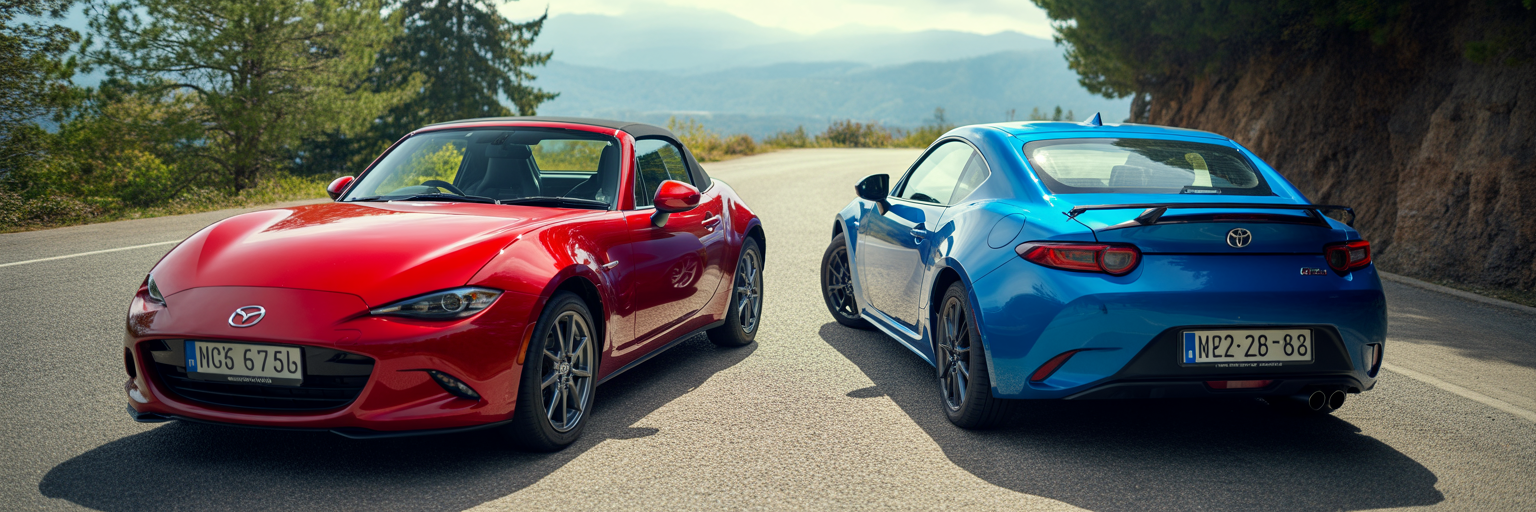
Moving from chassis dynamics to what powers them, the Miata and GR86 continue their divergent paths. One relies on a high-revving, energetic engine that rewards driver involvement, while the other uses accessible torque to deliver effortless performance. How they generate and deliver power is central to their identity as an affordable sports car daily driver.
Divergent Engine Philosophies
The Toyota GR86 is powered by a 2.4-liter boxer four-cylinder engine producing 228 horsepower. Its defining characteristic is a strong, linear torque curve that is available from low in the rev range. This makes the car feel muscular and responsive in everyday driving. You do not need to wring its neck to make swift progress; a moderate press of the accelerator is all it takes to merge onto a highway or execute a pass. It provides satisfying thrust without demanding constant work from the driver.
The Mazda Miata’s 2.0-liter inline-four engine, with 181 horsepower, is a completely different animal. It is an engine that thrives on high RPMs and begs to be pushed to its redline. The power builds in a thrilling rush, and the engine note becomes more exciting as the tachometer needle sweeps past 5,000 RPM. Chasing the redline is a core part of the Miata’s charm. It is a powertrain that demands and rewards engagement, making the driver an active participant in the creation of speed.
The Manual Transmission Experience
For enthusiasts, the manual gearbox is often a deciding factor, and here the Miata holds a distinct advantage. Its six-speed shifter is an industry benchmark. The throws are short, light, and incredibly precise. Each gear change is a satisfying “snick-snick” mechanical event that can be executed with a mere flick of the wrist. It is a joy to use, whether you are shifting aggressively on a back road or simply rowing through the gears in town.
The GR86’s six-speed manual is also very good. The engagement is positive, the clutch is well-weighted, and you are never in doubt about which gear you have selected. However, compared directly to the Miata, it feels slightly notchier and requires a more deliberate hand. It is a solid, effective gearbox, but it lacks the fluid, almost frictionless quality that makes the Miata’s shifter so legendary.
Evaluating the Automatic Options
For those who face daily traffic, an automatic transmission is a necessity. The GR86’s six-speed automatic is surprisingly well-suited to a sports car. It is programmed for performance, delivering quick, crisp downshifts when you call for power and holding gears appropriately during spirited driving. In traffic, it is smooth and unobtrusive, making it a genuinely viable option without a significant compromise in performance feel.
The Miata’s available six-speed automatic is also a competent transmission. It is smooth and shifts intelligently, making it a perfectly acceptable choice for a commuter. However, it does feel like it slightly dilutes the car’s pure, driver-focused mission. In a car that is all about engagement, the automatic can feel like a barrier between the driver and the high-revving engine, making it a less popular choice among purists.
Real-World Acceleration and Usable Power
When it comes to usable, everyday performance, the GR86’s torque gives it the edge. It feels quicker in the situations most drivers encounter daily, like accelerating away from a stoplight or merging into fast-moving traffic. This accessible power makes it the more relaxing car for the daily grind, a key consideration for the best RWD sports car for commuting.
The Miata’s acceleration is a more interactive event. Its ultimate pace is directly proportional to the driver’s willingness to work the gearbox and keep the engine in its sweet spot. While it may feel less potent than the GR86 in a straight line from low revs, the experience of building that speed is arguably more rewarding and dramatic. The choice comes down to a preference for effortless shove versus earned velocity.
Everyday Practicality and Interior Comfort
For a car to be truly livable, it must do more than just drive well. It has to accommodate the mundane realities of life: groceries, luggage, and the need to put a phone somewhere. This is where the Miata vs GR86 practicality debate is decisively settled, revealing two vastly different approaches to interior utility.
The Deciding Factor: 2-Seater vs. 2+2 Layout
The single biggest difference in practicality is the seating arrangement. The Miata is a strict two-seater. There is no space behind the seats for anything larger than a small handbag. The GR86, however, features a 2+2 layout with two small rear seats. While these seats are not suitable for adults on anything but the shortest of trips, their value as an interior cargo shelf cannot be overstated. They are the perfect place to toss a backpack, a gym bag, or a few grocery bags, making the car immensely more versatile for daily errands.
Cargo Space: Groceries, Luggage, and Track Tires
The numbers tell a clear story. The Miata, in both soft top and RF form, offers a compact 4.6 cubic foot trunk. It is deep but has a small opening, limiting it to a pair of soft-sided weekend bags or a modest grocery run. There is no pass-through or ability to expand this space. The GR86 cargo space is a more generous 6.3 cubic feet, but its secret weapon is the fold-down rear seatback. With the seats folded, the GR86 can swallow a full set of spare wheels and tires for a track day, a large haul from a warehouse store, or even bulky sporting equipment. This flexibility transforms it from a weekend toy into a genuinely useful vehicle.
Cabin Ergonomics and Storage Solutions
Inside the cabin, the GR86 continues to build its case for livability. It features usable door pockets that can hold a water bottle, a conventional and spacious glovebox, and a center console with a covered bin and USB ports. There is a logical place for your phone, wallet, and keys. The Miata’s interior, by contrast, takes minimalism to an extreme. There are no door pockets and no traditional glovebox. Storage is relegated to a small, lockable cubby between the seatbacks, which is awkward to access while driving. The cupholders are flimsy, removable, and poorly placed. The frustration highlights how crucial smart design is, a principle that applies to everything from car interiors to a practical guide to furniture cabinet hardware.
Driver Fit for All Sizes
Your physical size will play a significant role in which car feels more comfortable. The GR86 is simply a more accommodating car, offering more headroom, legroom, and shoulder room. Drivers over six feet tall can find a comfortable seating position without issue. The Miata’s cockpit is famously snug. Taller drivers may find their knees making contact with the dashboard and their head brushing against the roof, a problem that is particularly noticeable in the RF model with its fixed roof structure.
The Challenge of Entry and Exit
Both cars are low to the ground, requiring a bit of a drop to get into and a push to get out of. However, the GR86’s larger door opening and more spacious interior make this process considerably easier. Getting in and out of the Miata, especially with the roof up, can feel like threading a needle. It is a small detail, but one that becomes more noticeable with every trip to the store. While these cars prioritize fun over function, those needing to haul families and gear might look at the best family road trip vehicles that are not boring for a different perspective on utility.
| Feature | Mazda MX-5 Miata (Soft Top/RF) | Toyota GR86 |
|---|---|---|
| Seating Capacity | 2 | 2+2 |
| Trunk Volume | 4.6 cu. ft. | 6.3 cu. ft. |
| Rear Seat Utility | None | Fold-down for significant extra cargo space |
| Door Pockets | None | Yes, can hold a water bottle |
| Glovebox | None (small cubby between seats) | Yes, conventional and usable |
| Center Console Storage | Minimal, phone storage is awkward | Yes, with covered bin and USB ports |
| Tall Driver Fit (6ft+) | Challenging, limited headroom/legroom | Accommodating, more space overall |
Living With the Cars Year-Round
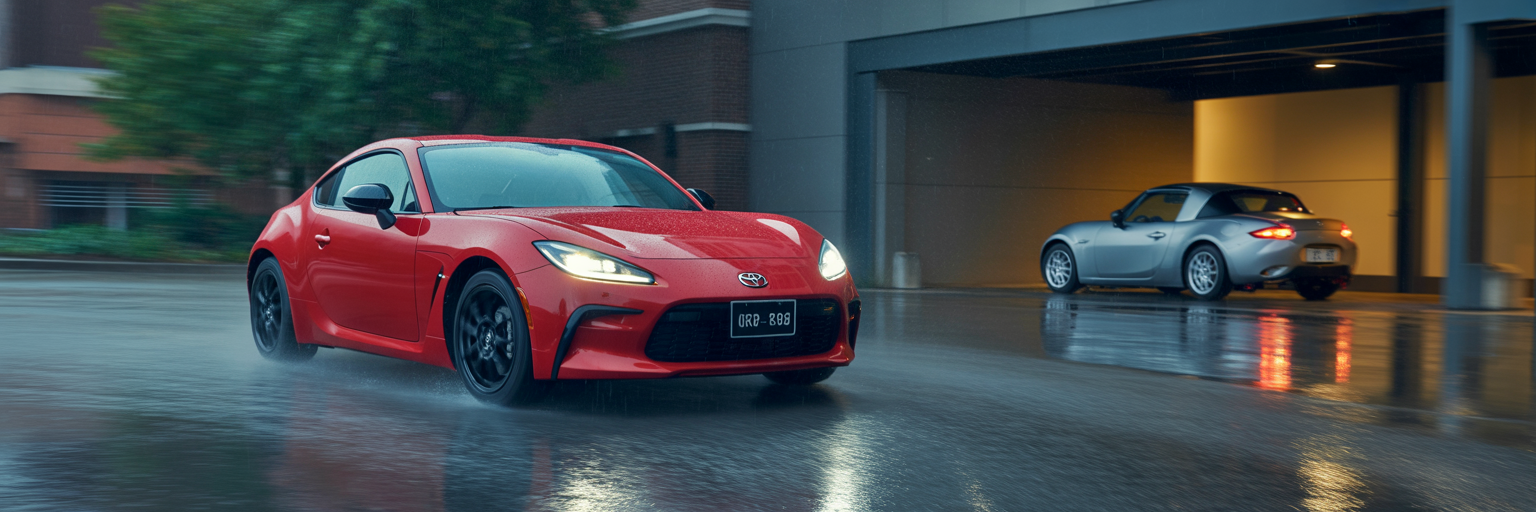
A true daily driver must cope with more than just sunny days and smooth roads. It has to endure long highway slogs, bad weather, and the financial realities of ownership. Here, the choice between an open-top roadster and a fixed-roof coupe becomes a defining factor in year-round Miata livability versus the GR86’s practicality.
Open-Air Freedom vs. Fixed-Roof Security
The Mazda Miata’s core appeal is the sensory experience of top-down driving. With the roof down, even a mundane commute can feel like a small adventure. The soft top model provides the most immersive experience, with an unobstructed view and a direct connection to the elements. The RF (Retractable Fastback) offers a compromise, providing a more secure, coupe-like profile when closed, but its targa-style opening is less expansive than the full convertible.
The Toyota GR86’s fixed roof offers a different kind of appeal: security and simplicity. It provides a quieter, more insulated, and secure environment. There are no concerns about caring for a fabric roof, potential leaks, or the security vulnerabilities of a convertible. For an owner who parks on the street or lives in an area with harsh weather, the peace of mind offered by a hardtop is a significant advantage.
Noise, Vibration, and Highway Comfort
For anyone who anticipates regular highway travel, the GR86 is the clear winner. Its cabin is relatively serene for a sports car at 70 mph, with well-controlled wind and tire noise. It is a car you could comfortably drive for several hours without feeling fatigued. The Miata, particularly the soft top version, is a much louder car. Wind, tire, and engine noise are constant companions on the highway. Some owners find this to be a charming and raw part of the experience, while others may find it tiresome on longer journeys.
All-Weather Usability and Winter Driving
When the weather turns foul, the GR86 again proves to be the more sensible four-season option. Its hardtop provides better insulation from both extreme cold and heat. Driving a Miata in the winter presents unique challenges. A fabric soft top requires care to prevent damage from snow and ice, and the cabin can feel drafty. The RF model’s large rear buttresses create significant blind spots, which are even more problematic in poor weather. While both cars are rear-wheel drive and require a good set of winter tires for safe use in snow, the enclosed, better-insulated coupe is an inherently more protective and comfortable place to be.
Long-Term Operating Costs: Fuel, Tires, and Insurance
As an affordable sports car daily driver, running costs are a major consideration. Here, the Miata claws back a significant advantage.
- Fuel Economy: The Miata’s lighter weight and efficient engine give it a clear win at the pump, typically achieving fuel economy in the high 20s for combined MPG. The GR86’s larger, more powerful engine is thirstier, with combined MPG figures usually in the low 20s.
- Tire Costs: The Miata uses smaller, narrower tires that are generally less expensive to replace than the wider, more performance-focused rubber on the GR86.
- Insurance: Rates vary widely based on location and driver history, but both cars are considered sports cars and may command higher premiums. It is a key part of the budget to investigate before purchasing.
Understanding the engineering behind these cars helps explain why some high-mileage cars age better than others, and both the Miata and GR86 benefit from proven Japanese reliability, which helps keep long-term maintenance costs reasonable.
Weekend Warriors: Track Day and Modification Potential
For many owners, a sports car is more than just transportation; it is a hobby. This is where the focus shifts from daily livability to weekend fun, whether that means attending a track day or personalizing the car with aftermarket parts. Both cars have thriving communities, but they offer different paths for the enthusiast.
Out-of-the-Box Track Readiness
Straight from the showroom, the Toyota GR86 is the more capable car for high-performance driving. Its stiffer chassis, wider track, and grippier stock tires give it higher cornering limits and a more stable, forgiving nature at speed. For a novice driver heading to their first track day, the GR86 is the easier and more confidence-inspiring car to drive quickly. It is the “arrive and drive” option, ready for lapping with no immediate modifications required.
The Miata’s Track Day Experience
Taking a Miata to the track offers a different kind of reward. It is a classic “momentum car,” meaning its relatively low power output forces the driver to focus on carrying speed through corners, braking smoothly, and hitting perfect apexes. It is an excellent tool for learning the fundamentals of performance driving. However, its softer stock suspension results in more body roll, and most track day organizations in the United States require convertibles to be fitted with an aftermarket roll bar for safety. This “Miata tax” is an immediate and necessary expense that the GR86 owner avoids.
Potential for Performance Modifications
Both cars enjoy massive aftermarket support, but they cater to different goals. The GR86’s 2.4-liter boxer engine has a higher ceiling for significant power gains. The aftermarket is already filled with options for superchargers and turbochargers that can substantially increase its output. It is the better starting platform if your primary goal is adding horsepower.
The Mazda Miata, on the other hand, has one of the largest and most mature aftermarket ecosystems on the planet. For over three decades, companies have developed proven, affordable, and well-engineered parts for every aspect of the car, from suspension and brakes to cosmetic enhancements and even engine swaps. While big power gains are more complex, the Miata is an endlessly customizable project with a vast, supportive community. Ultimately, choosing the right platform depends on your goals, a common theme in many of our head-to-head vehicle comparisons.
The Final Verdict for Different Drivers
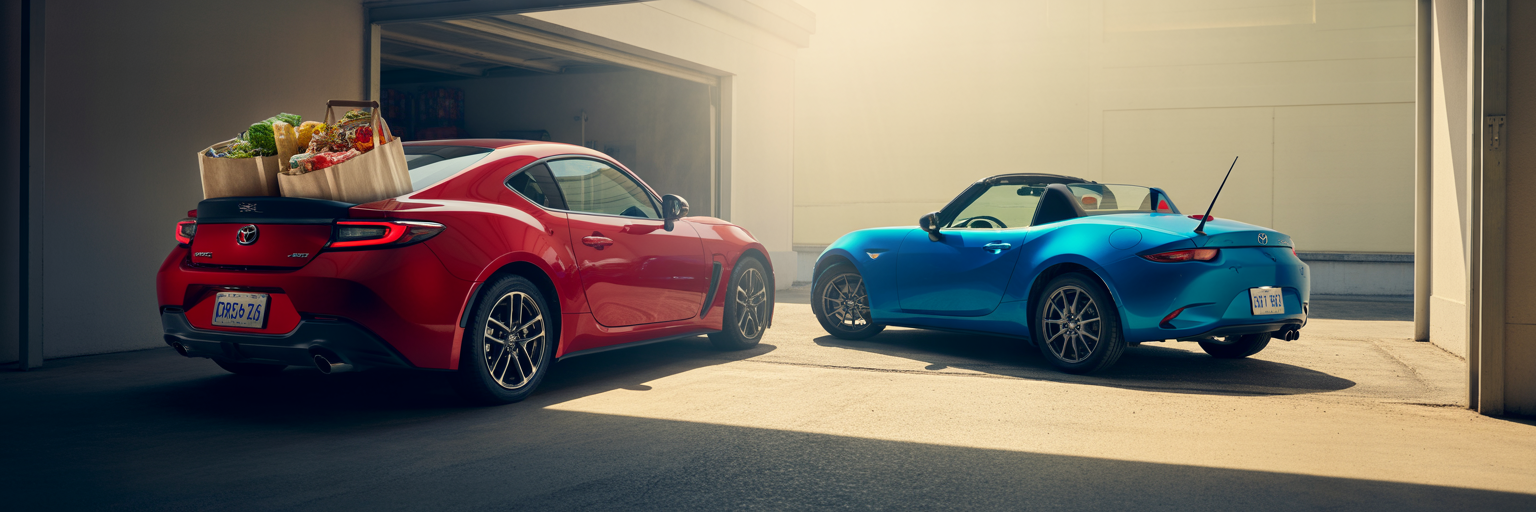
After analyzing every aspect of these two exceptional sports cars, the choice comes down to a clear understanding of your priorities. There is no single “better” car, only the right car for a specific type of owner. The decision hinges on how you weigh pure driving joy against everyday usability.
The core trade-off is simple: the Mazda MX-5 Miata offers an unfiltered, joyous driving experience at the direct expense of practicality. The Toyota GR86 delivers 85 to 90 percent of that dynamic fun but packages it with 200 percent more everyday usability. With that in mind, here are our verdicts for different buyers.
- For the Solo Commuter: The verdict is the Toyota GR86. Its quieter cabin, more comfortable ride, superior storage solutions, and effortless torque make it the superior tool for the daily grind. It is the best RWD sports car for commuting between these two contenders, asking for fewer compromises during the 9-to-5.
- For the Weekend Back-Road Enthusiast: The choice is the Mazda MX-5 Miata. If the car is purchased purely for the pleasure of driving on a sunny day, its open-air experience and hyper-communicative chassis provide a more profound emotional connection. It turns every drive into a special occasion.
- For the Buyer Who Occasionally Needs More Space: The Toyota GR86 is the only realistic option. If the ability to carry luggage for two people, make a run to a warehouse store, or simply have a place for a jacket and a backpack is a non-negotiable need, the Miata’s strict two-seat layout and tiny trunk make it a non-starter.
- For the Track-Day Driver or Modifier: This verdict is nuanced. For out-of-the-box track performance and a platform with a high ceiling for power, the GR86 wins. For the owner who enjoys the process of building, tinkering, and personalizing a car over time with a vast and affordable parts catalog, the Miata is a more rewarding long-term project.
So, can either of these sports cars serve as an owner’s only vehicle? The Toyota GR86 absolutely can. For a single person or a couple without children, it can handle daily duties and weekend fun without major sacrifices. The Mazda MX-5 Miata can also be an only car, but it demands a minimalist lifestyle and a high tolerance for its inherent compromises in space, comfort, and noise. For most owners, it remains the world’s best second car.