
You have arrived at your destination, turned the key, and silenced the engine. Yet, a distinct whirring sound continues from under the hood, breaking the quiet. This experience, where the radiator fan runs after the car is off, can be unsettling, but it is often a completely normal and intentional function of modern vehicles. Understanding why this happens begins with a clear picture of your car’s cooling system, a network designed to protect your engine from its own intense heat.
Think of your car’s cooling system like the human body’s circulatory system. Both work tirelessly to regulate temperature and prevent dangerous overheating. The engine generates an immense amount of heat during operation, and if left unchecked, this heat can cause catastrophic damage to its metal components. The cooling system’s job is to manage and dissipate that thermal energy efficiently.
The core components work in harmony. The water pump acts as the heart, circulating a special fluid called coolant, which is the system’s lifeblood. This coolant flows through passages in the engine block, absorbing heat. From there, it travels through hoses, the system’s arteries, to the radiator at the front of the car. The radiator is a heat exchanger, a series of thin tubes and fins that expose the hot coolant to the air. As you drive, air flows through the radiator, pulling heat away from the coolant before it cycles back to the engine.
But what happens when you are stuck in traffic or have just parked? There is no natural airflow. This is where the radiator fan becomes critical. It is a powerful fan that pulls air through the radiator, mimicking the effect of driving at speed. The entire process is managed by the Engine Control Unit (ECU), the car’s brain. Using data from various sensors, the ECU decides precisely when to switch the fan on and off to maintain the perfect operating temperature. This complete overview of the engine cooling system explained helps clarify that the fan is not just an accessory but a vital part of a sophisticated thermal management strategy.
Why Your Radiator Fan Runs After Car Off
You have parked, turned off the ignition, and a whirring sound continues from under the hood. This experience, where the radiator fan runs after the car is off, is often a normal and intentional function of modern vehicles. The purpose of this section is to provide a foundational understanding of the car’s cooling system, setting the stage for later sections that will differentiate between normal and problematic behavior.
Think of the cooling system as the engine’s personal climate control. Its primary job is to prevent the engine from overheating. This network includes several key players. The radiator acts as a heat exchanger, the water pump circulates coolant, the thermostat regulates temperature, and the coolant itself absorbs and carries heat away. The radiator fan is essential for pulling air through the radiator, especially when the car is stationary or moving slowly, ensuring the coolant releases its heat effectively.
The entire operation is orchestrated by the Engine Control Unit (ECU), the vehicle’s central computer. The ECU receives data from sensors throughout the engine to determine when the fan needs to run. This foundational engine cooling system explained shows that the fan’s activity is a calculated response, not a random occurrence. In the following sections, we will explore why this response sometimes continues even after you have taken the keys out of the ignition.
Normal Operation: Staged Cooling and Heat Soak Explained
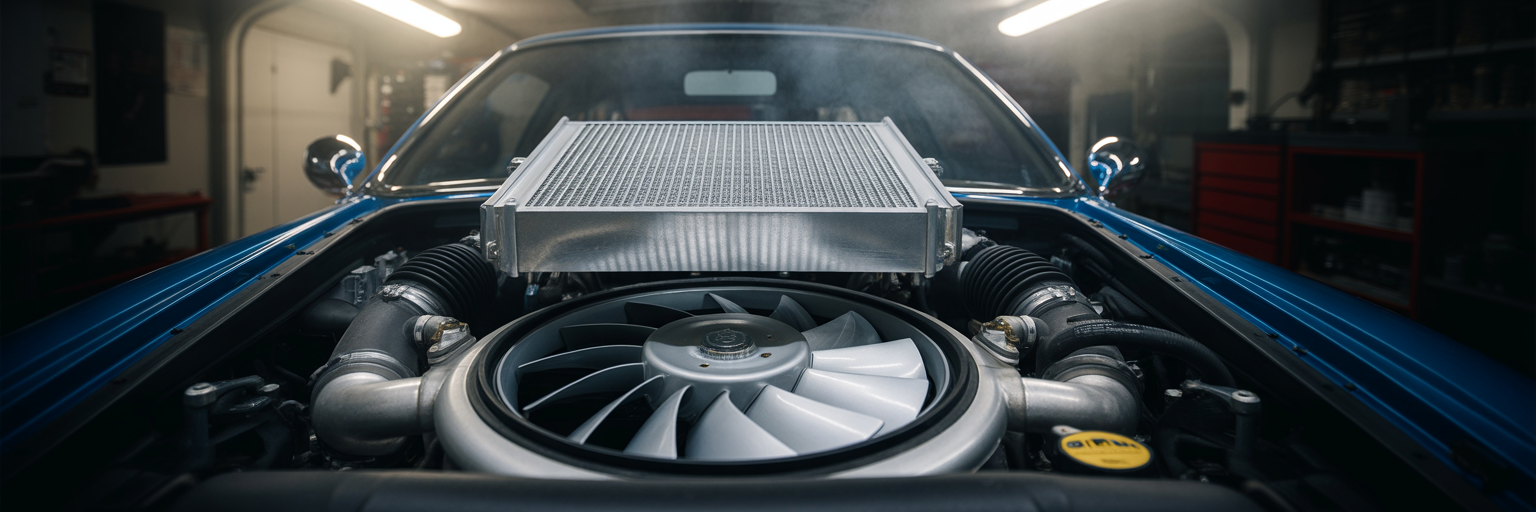
Having established how the cooling system works, we can now address why the fan sometimes stays on. The reason a radiator fan runs after car off is often due to a phenomenon called “heat soak.” Imagine a cast-iron skillet on a hot stove. When you turn the burner off, the skillet does not cool down instantly. It continues to radiate a significant amount of heat for a long time. Your car’s engine block, a large mass of metal, behaves in the same way.
When you shut down the engine, the water pump stops circulating coolant. However, the engine block is still saturated with residual heat from combustion. This stored heat “soaks” into the stationary coolant within the engine’s passages, causing its temperature to spike temporarily, sometimes even higher than when the engine was running. The ECU anticipates this. To protect sensitive engine components like gaskets, seals, and plastic parts from this surge of heat, it initiates a feature known as “staged cooling” or an “after-run” cycle.
During this cycle, the ECU intentionally keeps the radiator fan running to continue pulling air through the radiator. This dissipates the residual heat from the coolant still sitting in the radiator and helps lower the overall temperature under the hood, preventing damage and contributing to the engine’s longevity. As we explain in our guide on how to keep your car’s engine running for years, these protective features are crucial. This is not a sign of a problem but rather a sign of sophisticated engineering at work. Common situations that trigger this after-run feature include:
- Driving in hot weather
- Using the air conditioning system heavily
- Towing a trailer or carrying a heavy load
- Driving up steep hills or mountains
- Recent aggressive or high-RPM driving
- Shutting the engine off during a stop-and-go traffic jam
In these scenarios, the fan is simply finishing its job. This normal operation typically lasts anywhere from a few seconds to about five or six minutes, depending on how much heat needs to be dissipated. As an article from Jalopnik highlights, this is a common and designed feature in many modern cars. So, if you hear your fan running for a few minutes after a hot drive, you can be reassured that your car is just taking care of itself.
Red Flags: When a Running Fan Signals an Issue
While a fan running for a few minutes is normal, it is crucial to recognize when this behavior crosses the line into a symptom of a problem. The primary red flag is duration. If the fan continues to run for more than 10 to 15 minutes after shutdown, or worse, runs until it drains the battery, it is a clear indication of a fault. This is when the situation changes from a normal function to a car fan stays on when off problem.
Ignoring these signs can lead to more than just the inconvenience of a dead battery. It points to an underlying issue in the cooling or electrical system that, if left unaddressed, could lead to severe and expensive engine damage, such as a warped cylinder head or blown head gasket. It is your car’s way of signaling that it needs attention. Here is a quick guide to help distinguish between normal and problematic fan behavior.
| Symptom | Likely Meaning | Recommended Action |
|---|---|---|
| Fan runs for 1-6 minutes after shutdown on a hot day or after a hard drive. | Normal ‘Heat Soak’ Cooling | No action needed. This is the system working correctly. |
| Fan runs for over 15 minutes or until the battery is drained. | Potential Fault (Stuck Relay, Bad Sensor) | Immediate diagnosis required. Start with relay and sensor checks. |
| Fan starts immediately at full speed with a cold engine. | Likely a Faulty Coolant Temperature Sensor | Inspect and test the ECT sensor. |
| Temperature gauge is in the red, but the fan is not running. | Serious Cooling System Failure (Fan Motor, Relay, Fuse) | Stop driving immediately to prevent engine damage. Seek professional help. |
| Check Engine Light is on along with abnormal fan behavior. | Confirmed System Fault | Scan for Diagnostic Trouble Codes (DTCs) to pinpoint the issue. |
Other critical warning signs to watch for include the fan running at full blast the moment you start a cold engine, the temperature gauge on your dashboard showing an overheating condition, or an illuminated Check Engine Light accompanying any unusual fan activity. A fan that behaves erratically, cycling on and off for no apparent reason, can also indicate an electrical issue. Essentially, any fan behavior that seems illogical or excessive is a cry for help that should be investigated promptly.
Diagnosing a Faulty Coolant Temperature Sensor

When your fan runs excessively, one of the most common culprits is a faulty Engine Coolant Temperature (ECT) sensor. This small but vital sensor acts as the ECU’s primary thermometer, providing the data it needs to make critical decisions not just for the cooling fan, but also for the fuel mixture and ignition timing. Its job is to accurately measure the temperature of the engine coolant and report it back to the car’s computer.
When an ECT sensor fails, it often defaults to an extreme reading. It might incorrectly tell the ECU that the engine is critically overheating, even if you just started it on a cold morning. Faced with this alarming (but false) data, the ECU enters a “fail-safe” mode. Its logic dictates that preventing perceived catastrophic engine damage is the top priority, so it commands the radiator fan to run continuously at full speed. This is a protective measure, but it is based on bad information.
Recognizing the coolant temperature sensor failure symptoms is key to diagnosis. A faulty sensor can cause a range of issues beyond just the fan. These symptoms often include:
- A noticeable decrease in fuel economy, as the ECU may enrich the fuel mixture thinking the engine is cold.
- Black smoke from the exhaust, which is a sign of a rich fuel mixture.
- Engine hesitation, stumbling, or a rough idle.
- A Check Engine Light on the dashboard, often with specific Diagnostic Trouble Codes (DTCs) like P0117 (ECT Circuit Low Input) or P0118 (ECT Circuit High Input).
For the average DIYer, diagnosis can begin with a simple visual inspection. Locate the sensor on the engine (its location varies by vehicle) and check its wiring and connector for any signs of damage, corrosion, or a loose connection. For those with more experience, a multimeter can be used to test the sensor’s resistance and compare it to the manufacturer’s specifications at various temperatures. Replacing an ECT sensor is often straightforward and the part itself is relatively inexpensive. However, its accessibility can vary greatly depending on the vehicle’s design, a factor we see when comparing models like the Jeep Gladiator vs. the Toyota Tacoma, where component placement can make a simple job either easy or challenging.
Investigating a Stuck Fan Relay or Control Module
If the temperature sensor checks out, the next logical place to look is the electrical components that deliver power to the fan. The primary suspect here is the fan relay. Think of a relay as a heavy-duty remote switch. The ECU sends a small, low-amperage electrical signal to the relay, which closes an internal switch, allowing a much larger, high-amperage current to flow directly from the battery to the powerful fan motor. This protects the delicate circuitry of the ECU from the high power draw of the fan.
Over thousands of cycles, the internal contacts inside the relay can become worn or pitted from electrical arcing. In a common failure scenario, these contacts can physically weld themselves together, creating a stuck radiator fan relay. When this happens, the switch is permanently closed, or “on.” The relay can no longer be controlled by the ECU. It creates a direct, uninterrupted path for electricity to flow to the fan, causing it to run continuously as long as the battery has power, regardless of engine temperature or whether the car is even on.
Fortunately, there is a simple and effective diagnostic procedure you can perform. Learning how to test a car fan relay often involves a technique called the “swap test.” First, locate your car’s fuse box, which is typically under the hood or in the cabin. The lid of the fuse box usually has a diagram identifying each relay. Find the fan relay and an identical relay for a non-critical system, like the horn or fog lights. Carefully pull both relays out, and swap their positions. If the fan now stops running but the horn no longer works, you have successfully confirmed that the relay was the problem. This is a definitive and cost-effective way to diagnose the issue before buying a new part.
Many newer vehicles have replaced simple relays with a more sophisticated fan control module. This solid-state device allows the ECU to vary the fan’s speed, making the cooling process more efficient and quieter. These modules can also fail, and when they do, they often get stuck in the “full on” position, leading to the same symptom of a runaway fan. Testing a fan control module is more complex than testing a relay and usually requires specialized diagnostic tools, so if a relay swap does not solve the issue on a car equipped with a module, professional help may be needed.
Other Factors That Keep Your Radiator Fan Running
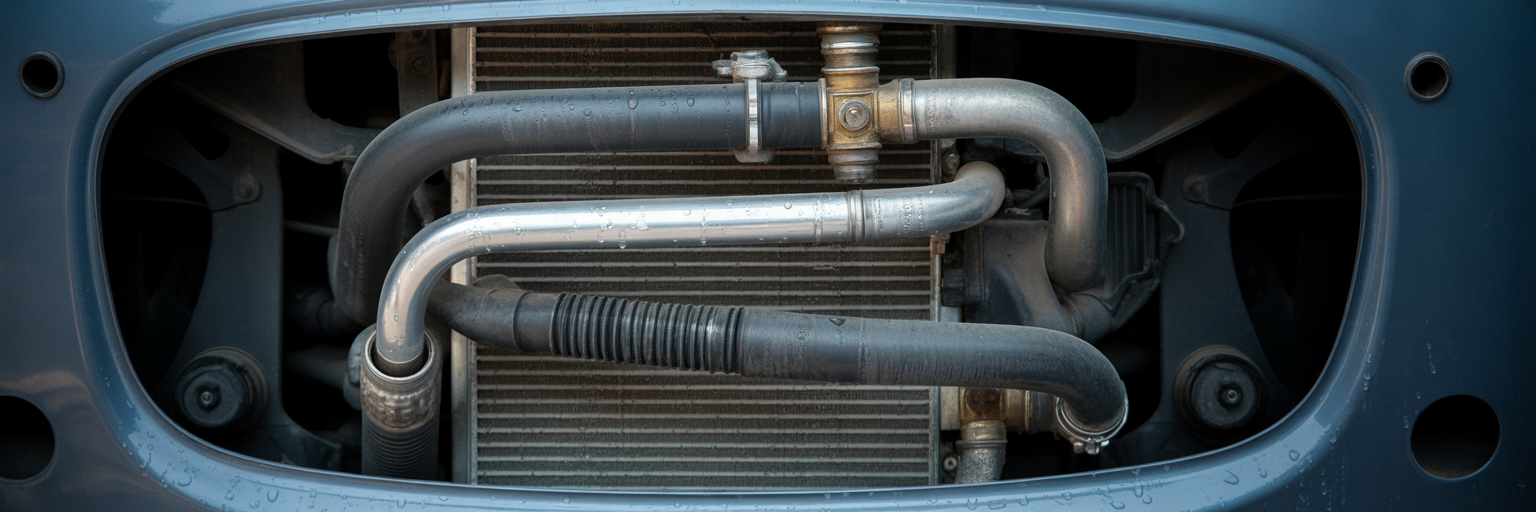
While a faulty sensor or relay accounts for the majority of runaway fan issues, there are a few other potential causes to consider. These factors are less common but are important to rule out for a comprehensive diagnosis. It is important not to overlook these possibilities after checking the more frequent culprits.
First, consider the air conditioning system. Your car’s A/C has its own heat exchanger, called the condenser, which is usually mounted directly in front of the radiator. When you run the A/C, the condenser gets very hot as it releases heat from the cabin. To cool it down, the ECU will run the radiator fan, even if the engine itself is not particularly hot. In some cases, especially on a hot day, the ECU may continue to run the fan after shutdown to cool the high-pressure A/C system, which can extend the fan’s normal run time.
Next are wiring problems. The fan’s electrical circuit is extensive, and over time, wires can become frayed, chafed, or damaged. If a power wire in the fan circuit loses its insulation and touches a metal part of the car’s chassis, it can create a “short-to-ground.” This bypasses the relay and control module entirely, creating a direct and uncontrolled path for electricity to power the fan. The fan will run continuously until the battery is disconnected or drained.
Cooling system integrity is another factor. If your coolant level is low or there is air trapped in the system, it can lead to erratic fan behavior. Air pockets can cause the ECT sensor to receive inaccurate readings, as it may be exposed to a pocket of steam instead of liquid coolant. This can trick the ECU into thinking the engine is overheating, prompting it to run the fan excessively. This is especially critical in vehicles used for demanding tasks, where a robust cooling system is paramount, like the ones we review in our guide to the best used trucks for towing.
Finally, there is the rare possibility of an ECU failure. The Engine Control Unit itself can malfunction, but this should be considered a diagnosis of last resort. Before suspecting the car’s main computer, it is essential to thoroughly check and rule out all the more common and less expensive components like sensors, relays, and wiring.
A Step-by-Step Guide to Fixing a Runaway Fan
Facing a fan that will not quit can be daunting, but a logical troubleshooting process can help you identify the cause. This guide synthesizes the information from the previous sections into a clear, actionable workflow, moving from the simplest checks to more involved diagnostics. Follow these steps to systematically pinpoint the problem.
1. Observe and Time the Fan
Before reaching for any tools, start by being a good observer. The next time the fan runs after you shut the car off, start a timer. Note the conditions: Was it a hot day? Were you towing or driving up a hill? If the fan shuts off within about eight minutes, especially after a demanding drive, it is very likely performing a normal heat soak cool-down. If it consistently runs longer than 10-15 minutes or until the battery is weak, it is time to proceed to the next step.
2. Perform Basic Visual Inspections
Open the hood and perform a few simple checks. First, inspect the coolant level in the plastic overflow reservoir. If it is low, top it off with the correct type of coolant for your vehicle. When the engine is completely cool, you can also remove the radiator cap to check the level there. While you are there, look for any signs of coolant leaks, such as puddles on the ground or green, pink, or orange crusty residue on hoses or around the engine.
3. Test the Fan Relay
As discussed, a stuck relay is a very common culprit. Use the “swap test” as your go-to diagnostic. Locate the fan relay in your fuse box, identify an identical relay for a non-essential component like the horn, and swap them. If the fan stops running and the other component now fails to work, you have found your problem. This is the easiest and most definitive way to test the relay.
4. Evaluate the ECT Sensor and Wiring
If the relay swap did not solve the issue, the Engine Coolant Temperature (ECT) sensor is the next most likely cause. Visually inspect the sensor and its electrical connector for any obvious damage, corrosion, or loose wires. Given that ECT sensors are relatively inexpensive, many DIY mechanics choose to proactively replace the sensor as a troubleshooting step if it is suspected to be faulty.
5. Know When to Consult a Professional
If you have completed these steps and the fan still runs uncontrollably, or if a Check Engine Light is illuminated, it is time to seek professional help. A mechanic will have advanced diagnostic scan tools that can read live data from the ECU, test fan control modules, and quickly trace electrical shorts. Sometimes, persistent issues are a sign that it is time to consider a more reliable vehicle, a topic we cover in our reviews of the best used luxury SUVs that won’t destroy you on repairs. Knowing your limits is a key part of smart car ownership.