What to Expect from a Sports Car on a Budget
The golden era of analog sports cars from the 2000s and 2010s has matured, placing true driver-focused machines within reach of the savvy enthusiast. This 2025 used car buying guide is for those who believe driving should be an experience, not just a commute. But what does a “sports car” really mean in this price range? Forget about raw horsepower figures you see in magazines. We are focusing on driver engagement, responsive handling, and a design that prioritizes the connection between you and the road.
For under $15,000, you are generally looking at vehicles that are between eight and fifteen years old. While the cars on our list are chosen for their proven dependability, they are still used performance vehicles. They have lived a life before you, and they will demand more diligent maintenance than a new economy car. There is a fundamental trade-off at play here between performance, features, and running costs. You can have a powerful engine, a premium badge, or low maintenance bills, but rarely all three at once.
Understanding this helps you choose the right flavour of performance for your lifestyle and budget. Are you a weekend warrior who craves cornering precision, or do you want the rumble of a V8 for your daily drive? Answering that question is the first step. This mindset is crucial because it prepares you to make an informed choice rather than just picking a car based on its looks.
| Archetype | Primary Strength | Typical Running Costs | Best For The Driver Who… |
|---|---|---|---|
| Japanese Roadster (e.g., Miata) | Lightweight handling, reliability | Low | Prioritizes pure driving fun and low maintenance. |
| American Muscle (e.g., Mustang GT) | V8 power, straight-line speed | Moderate | Craves classic sound, torque, and huge aftermarket support. |
| Japanese Coupe (e.g., 350Z/370Z) | Aggressive styling, raw performance | Moderate | Wants a focused, aggressive, and connected driving experience. |
| German Roadster (e.g., Z4/Boxster) | Premium feel, engine refinement | High | Values brand prestige and is prepared for higher maintenance bills. |
10 Dependable Sports Cars You Can Find for Under $15,000
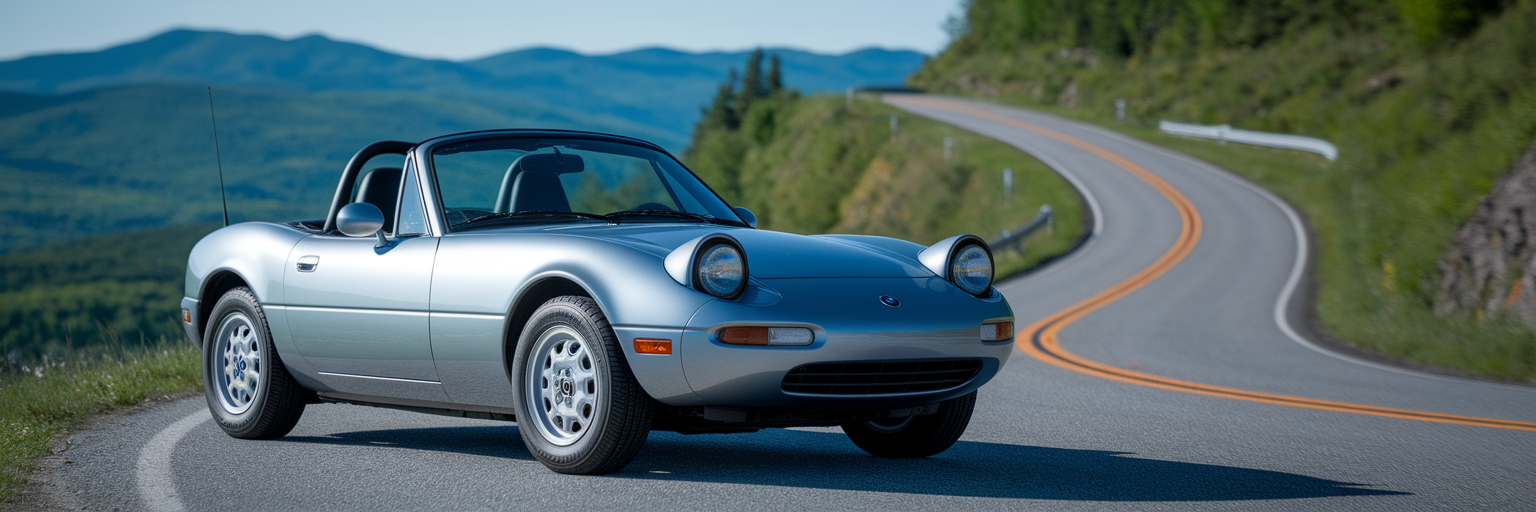
Now that we have set the right expectations, let’s explore the specific models that deliver the most excitement for your money. These are some of the best used sports cars under $15,000, chosen for their blend of performance, community support, and overall reliability.
1. Mazda MX-5 Miata (NC Generation, 2006-2015)
Often called the default choice for fun, the third-generation Miata (NC) is a masterpiece of balance. It is not the fastest car in a straight line, but its lightweight chassis and communicative steering make it one of the most engaging cheap fun cars to drive on a winding road. The 2.0-litre engine is dependable and easy to work on, keeping running costs low. Look for later 2009+ models, which received a revised engine with a higher redline. The optional Power Retractable Hardtop (PRHT) offers coupe-like security and quietness, but it adds weight and complexity. What to check: Look for rust in the rear quarter panels and sills, especially on cars from colder climates.
2. Ford Mustang GT (S197, 2005-2010)
For those who believe there is no replacement for displacement, the S197 Mustang GT is the answer. Its 4.6-litre V8 delivers the classic muscle car soundtrack and effortless torque that defines the American performance experience. The aftermarket support is massive, allowing for endless personalization. This is where the great Mazda Miata vs Ford Mustang debate comes alive. Where the Miata is a scalpel for corners, the Mustang is a hammer for straightaways. Its solid rear axle is less sophisticated on bumpy roads but is incredibly durable. For more on this iconic brand’s performance history, you can explore the legacy of Ford. What to check: Listen for timing chain noise and check for water leaks into the passenger footwell.
3. Nissan 350Z (2006-2008)
The Nissan 350Z offers a raw, unfiltered driving experience. It feels substantial and connected, with a heavy steering feel and a potent V6 engine. We recommend focusing on the 2007-2008 models equipped with the “VQ35HR” engine, identifiable by its dual intakes and higher redline. This version solved the oil consumption issues of earlier models and feels more eager to rev. The 350Z is a true sports car with a front-engine, rear-drive layout that rewards a skilled driver. It is less forgiving than a Miata but offers a higher performance ceiling out of the box. What to check: Premature clutch wear is common, as are worn suspension bushings that can affect handling.
4. Honda Civic Si (8th/9th Gen, 2006-2015)
The Civic Si is the practical enthusiast’s choice. While it is front-wheel drive, its high-revving K-series engine and standard limited-slip differential deliver genuine performance thrills. The engine’s VTEC system creates a dramatic change in character as you approach the 8,000 RPM redline, making it incredibly rewarding to drive hard. As one of the most reliable affordable sports cars, it combines excitement with famously low running costs and everyday usability. It proves you do not need rear-wheel drive to have a great time. Enthusiasts interested in the brand’s engineering can learn more about the philosophy of Honda. What to check: Third-gear synchro issues on the 8th gen and peeling clear coat on the paint.
5. Subaru BRZ / Scion FR-S (2013-2016)
This car was built for one purpose: driving purity. Developed jointly by Subaru and Toyota, the BRZ and FR-S offer a world-class chassis with some of the best steering feedback of any modern car. It is lightweight, balanced, and encourages you to carry momentum through corners. The trade-off is its 2.0-litre boxer engine, which is reliable but feels modest in the power department. Do not let that deter you. This car is a lesson in momentum and chassis dynamics, making you a better driver. What to check: Early 2013 models were subject to a valve spring recall, so ensure that work has been completed.
6. Infiniti G37 Coupe (2008-2013)
Think of the Infiniti G37 as the 370Z’s more mature, well-dressed sibling. It shares its potent 3.7-litre VQ-series V6 engine and rear-wheel-drive platform but wraps it in a more comfortable and luxurious package. This is the grand tourer (GT) of the list, perfect for drivers who want strong performance for long-distance drives without the harshness of a dedicated sports car. You get a powerful engine, a premium interior with more features, and a smoother ride, making it an excellent all-around performance coupe. What to check: The gallery gasket, a paper gasket in the timing cover, can fail and cause serious oil pressure issues.
7. Hyundai Genesis Coupe 3.8 (BK1, 2010-2012)
The Genesis Coupe 3.8 is the undisputed value champion on this list. For under $15,000, you get a rear-wheel-drive coupe with over 300 horsepower from its 3.8-litre V6. The performance is undeniable, offering acceleration that can challenge cars costing much more. Hyundai was serious about making a statement with this car. The compromise comes in the form of interior materials, which do not feel as premium as its rivals from Japan or Germany. If you prioritize power-per-dollar above all else, this is your car. For those curious about the brand’s journey, you can find more on the evolution of Genesis. What to check: Manual transmissions can have grinding issues, and the stock suspension is often criticized for being too soft.
8. BMW Z4 (E85, 2003-2008)
The BMW Z4 brings a premium German roadster experience to an accessible price point. Its main attraction is the silky-smooth inline-six engine, which provides linear power delivery and a fantastic sound. The classic long-hood, short-deck proportions give it a timeless look, and the interior feels a step above its Japanese competitors. However, this premium experience comes with a catch. Maintenance and repair costs are significantly higher. Parts are more expensive, and the systems are more complex. This is a car for the enthusiast who is prepared for the financial commitment of German car ownership. What to check: The VANOS variable valve timing system and the entire cooling system are known weak points.
9. Nissan 370Z (2009-2012)
As the successor to the 350Z, the 370Z is a sharper, more powerful, and more refined machine. Early models have now dipped into our budget, offering a fantastic performance bargain. The 3.7-litre V6 produces a healthy 332 horsepower, and the shorter wheelbase makes it feel more agile than its predecessor. A key feature to look for is the optional SynchroRev Match transmission on manual models, which automatically blips the throttle on downshifts for perfect gear changes every time. It is a more complete and capable car than the 350Z. What to check: The concentric slave cylinder (CSC) for the clutch is a known failure point, and the engine can run hot, so an aftermarket oil cooler is a wise upgrade.
10. Porsche Boxster (986, 1997-2004)
This is the high-risk, high-reward entry. The first-generation Boxster offers something no other car on this list can: a mid-engine layout. This provides sublime balance and handling that is truly in a class of its own. The flat-six engine sound is intoxicating, and the Porsche badge carries undeniable prestige. However, you must approach with caution. The infamous IMS (Intermediate Shaft) bearing is a known engine failure point. A specialist pre-purchase inspection is not optional, it is mandatory. Focus on post-2000 models or cars that have documented proof of the IMS bearing being replaced. If you find a good one, it is the most exotic driving experience for the money.
Your Essential Pre-Purchase Checklist
Finding the right car is only half the battle. Now you need to ensure the specific one you are looking at is a good example. This section covers what to check when buying a used sports car to avoid inheriting someone else’s problems. Following these steps can save you thousands in the long run.
1. Go Beyond the Basic Vehicle History Report
A clean history report is a good start, but it does not tell the whole story. Look deeper for red flags like frequent ownership changes in a short period, which could signal a persistent issue. Gaps in service history are also a concern. As noted in a guide by Rolls Auto Sales, a detailed vehicle history report is essential for revealing crucial information about a car’s past, including registrations in multiple states that might hide rust or flood damage.
2. The Non-Negotiable Pre-Purchase Inspection (PPI)
This is the single most important step. Do not skip it. For around $200-$400, an independent mechanic will put the car on a lift and give you a detailed report on its health. Find a shop that specializes in the brand you are considering, especially for the BMW or Porsche. A comprehensive PPI should include a compression test to check engine health, a thorough inspection for fluid leaks, and a close look at suspension components like bushings and ball joints, which wear out on performance cars.
3. A Purposeful Test Drive
A drive around the block is not enough. You need to test the car in various conditions. On a clear road, accelerate hard in a high gear from low RPMs to feel for clutch slip. Drive over some bumps to listen for clunks or rattles from the suspension. On the highway, feel for any vibrations in the steering wheel. If you hear something unusual, it is worth understanding the common causes of car squeaking when driving to know if it is a simple fix or a major problem.
4. Budgeting for Immediate and Future Costs
Use the “10-15% rule.” Plan to set aside an additional 10-15% of the purchase price for immediate needs. No used car is perfect, and this budget will cover items like new tires, a full fluid change, brake pads, or other minor issues discovered during the PPI. Think of this not as an extra cost, but as a smart investment. It ensures your new sports car is safe, reliable, and ready for you to enjoy from day one.