The Modern Towing Dilemma: Power vs. Economy
For decades, truck buyers accepted a simple truth: towing heavy loads meant accepting painfully low fuel economy. That familiar feeling of watching the fuel gauge plummet on a long haul was just the price of power. However, that compromise is no longer a given. Modern engineering has fundamentally shifted the conversation around towing capacity vs fuel economy, driven by both consumer frustration with high running costs and tightening emissions standards.
The solution lies in smarter, not just bigger, powertrains. Automakers are now delivering impressive capability through advanced twin-turbocharged engines with smaller displacements and sophisticated hybrid systems. These technologies provide the on-demand torque needed to get a trailer moving without the constant fuel penalty of a massive, naturally aspirated engine. As noted by publications like MotorTrend, several 2025 models now achieve combined fuel economy figures that were once unthinkable for a capable truck.
While official EPA estimates provide a useful baseline, they don’t tell the whole story. Real-world towing dramatically alters fuel consumption. Starting with a truck that is inherently efficient in its daily driving duties gives you a much better financial and practical starting point for those weekend trips with the boat or camper.
Truck 1: The 2025 Toyota Tundra Hybrid
The 2025 Toyota Tundra with its i-FORCE MAX hybrid powertrain stands out as a premium solution for those who refuse to choose between power and efficiency. This is not a hybrid system designed solely for sipping fuel in city traffic. Instead, it is engineered for work. The magic happens when the electric motor, sandwiched between the engine and transmission, delivers instantaneous torque from a complete stop. This is a huge advantage for getting a heavy trailer moving smoothly and confidently, without the strain and roar of a conventional engine.
Once you are up to speed, the twin-turbo V6 takes over, providing sustained power for highway cruising. The result is a remarkable combination: a combined fuel economy of around 22 MPG and a muscular towing capacity of up to 12,000 pounds. This makes it an ideal choice for the owner who tows a large travel trailer or boat on weekends but relies on the Tundra as a comfortable and reasonably efficient daily commuter during the week.
Beyond the powertrain, Toyota elevates the towing experience with advanced technology. Features like the multi-terrain monitor, which offers a complete view around the truck and trailer, simplify the often-frustrating process of hitching up and maneuvering in tight spaces. It is a complete package for the modern tower.
Truck 2: The 2025 Ford F-150 with 2.7L EcoBoost V6
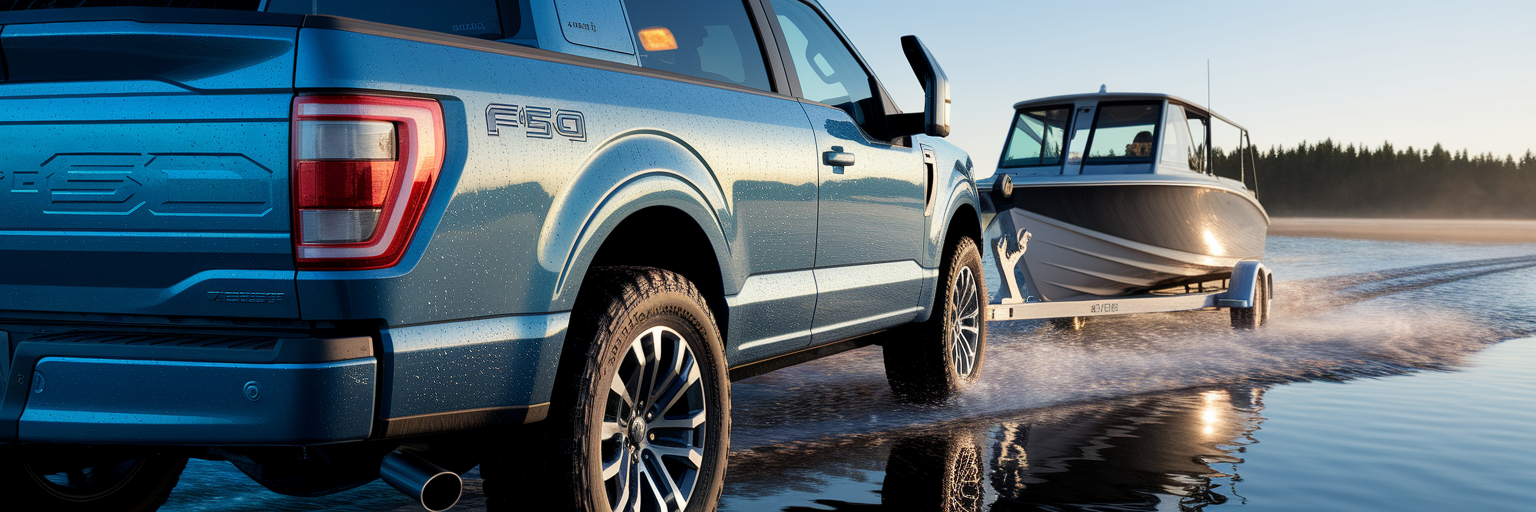
Ford’s philosophy with the 2.7L EcoBoost V6 is a masterclass in strategic downsizing. Many buyers still believe that serious towing requires a V8, but this engine challenges that assumption directly. By using twin-turbocharging, this relatively small V6 delivers the low-end torque characteristic of a much larger engine, giving you the confidence to pull substantial loads without hesitation. At the same time, it maintains the superior fuel economy of a V6 during everyday driving, achieving around 21 MPG combined.
This powertrain is the versatile workhorse of the F-150 lineup. Its towing capacity is perfectly suited for the most common tasks, from hauling a utility trailer for a weekend project to taking a small fishing boat to the lake or towing a pop-up camper for a family getaway. This makes it one of the best 2025 trucks for towing for a huge portion of the market.
The ideal user is the homeowner, hobbyist, or small business owner who needs a flexible truck that can handle a bit of everything. It is for the person who does not need to tow 14,000 pounds but wants a capable and economical vehicle for daily life. To make towing even more accessible, Ford’s Pro Trailer Backup Assist simplifies reversing, turning a potentially stressful task into a simple one. A full breakdown of the 2025 Ford F-150 we reviewed reveals even more details about its impressive capabilities.
Truck 3: The 2025 Chevrolet Silverado 1500 with 2.7L TurboMax
At first glance, a four-cylinder engine in a full-size truck might raise some eyebrows. But the 2.7L TurboMax in the Chevrolet Silverado 1500 is not a repurposed car engine. It was engineered from the ground up specifically for truck duties, with a focus on durability and, most importantly, high torque at low RPMs. This is exactly what you need for strong pulling power from a standstill, making it a surprisingly capable choice for many towing scenarios.
With a combined fuel economy of around 20 MPG and a respectable towing capacity, the Silverado with this engine presents a compelling value proposition. It is a smart, budget-conscious choice for those who need the space and utility of a full-size platform without the higher purchase price and fuel costs of V8 or diesel alternatives. This engine is a frequent topic in 2025 pickup truck reviews for its balance of performance and cost.
This truck finds its home with tradespeople, fleet managers, and practical buyers who prioritize a low total cost of ownership. It is for the user who sees their truck as a tool for getting the job done efficiently. The TurboMax proves that you do not need the biggest engine to have a capable work truck that blends modern technology with everyday utility.
Truck 4: The 2025 Nissan Frontier
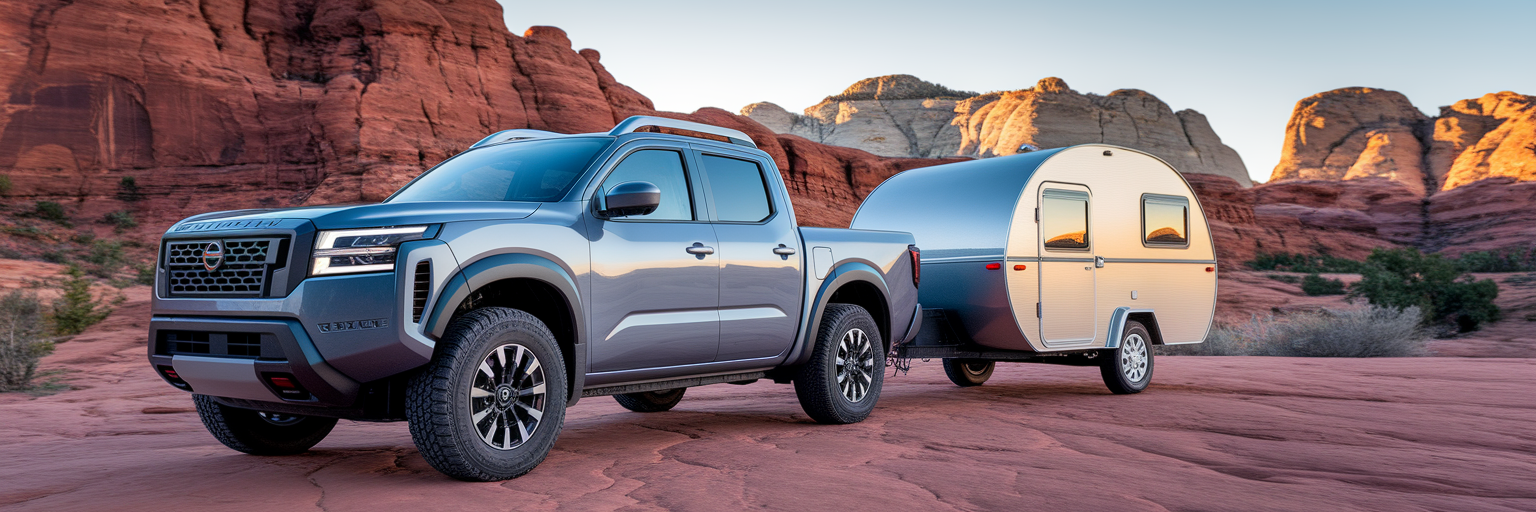
In a market filled with complex engine options and trim levels, the 2025 Nissan Frontier offers a refreshingly straightforward approach. Its greatest strength is its standard 3.8L V6 engine. Unlike competitors that often equip base models with less powerful four-cylinders, Nissan gives every Frontier owner robust and reliable power right out of the box, without forcing them into expensive upgrades. This V6 delivers a competitive combined fuel economy of around 21 MPG, making it a strong contender in the mid-size segment.
With a towing capacity suitable for jet skis, small campers, or ATV trailers, the Frontier is the champion of recreational towing. Its key advantage is its size. For someone living in a suburban or urban environment, a full-size truck can be cumbersome to park and navigate in daily traffic. The Frontier provides the utility of an open bed and confident towing ability in a more maneuverable and garage-friendly package.
Its rugged design is backed by essential safety features like Trailer Sway Control, which provides an extra layer of confidence for those who may only tow occasionally. For readers who find the mid-size category appealing, you can explore other trucks we’ve covered to compare options and find the best fit for your needs.
Truck 5: The 2025 Ford Maverick Hybrid
The Ford Maverick Hybrid is a vehicle that redefines what a “truck” can be in 2025. It is crucial to frame it correctly: this is an efficiency-first innovator. Its primary mission is to deliver outstanding fuel economy, and it succeeds brilliantly. With a fuel economy that can exceed 40 MPG in city driving, it is one of the best trucks with good gas mileage available today, period. This is a vehicle designed to minimize your daily running costs.
With that focus comes a trade-off in power. Its towing capacity is modest and suitable only for very light loads, such as a small utility trailer for a trip to the garden center or a personal watercraft. It is not designed to compete with traditional tow rigs, and that is entirely the point. The target audience is the city dweller, the DIY enthusiast, or anyone whose top priority is saving money on fuel but still wants the occasional utility of an open bed.
The Maverick Hybrid occupies a unique and important space in the market. It is a new type of solution for a modern buyer who values versatility and low ownership costs over raw strength. This innovative approach is part of a larger industry trend toward electrification that we explore in our section on electric and hybrid advancements.
Factors Beyond MPG and Tow Ratings
Choosing the right truck involves more than just comparing numbers on a spec sheet. To make a truly smart decision, consider these critical real-world factors:
- Safety Features Are Non-Negotiable. Look for trucks equipped with an Integrated Trailer Brake Controller and Trailer Sway Control. These systems are essential for maintaining control and stability, especially in crosswinds or during emergency maneuvers. They are not optional luxuries but core safety components.
- Know the Limits. The fuel efficient trucks for towing on this list are incredibly capable, but they have their limits. For towing extremely heavy loads like large fifth-wheel RVs or heavy equipment, a heavy-duty truck is still the right tool for the job, despite its lower fuel economy.
- Real-World Conditions Matter. Your actual MPG while towing will be significantly lower than the EPA estimate. The weight and aerodynamic profile of your trailer, the terrain you cover, and even your driving style can drastically impact fuel consumption. An efficient base vehicle simply gives you a better starting point.
- Buy for the 95%. The most economical advice is to buy the truck that fits 95% of your needs, not the one-off heaviest load you might pull once a year. Renting a heavy-duty truck for that rare occasion is often far cheaper than paying for a bigger engine and worse fuel economy every single day. And always pay attention to your vehicle; something as simple as a squeak can sometimes indicate a larger issue, a topic we cover in our guide on why your car might be squeaking.
2025 Fuel-Efficient Towing Trucks: At a Glance
| Truck Model | Powertrain Focus | Est. Combined MPG | Max Towing Capacity | Ideal User Profile |
|---|---|---|---|---|
| Toyota Tundra Hybrid | Hybrid Power & Torque | 22 MPG | 12,000 lbs | Daily driver, heavy recreational tower |
| Ford F-150 2.7L EcoBoost | Efficient V6 Power | 21 MPG | 10,100 lbs | Homeowner, hobbyist, versatile user |
| Chevy Silverado 2.7L TurboMax | Work-Ready Value | 20 MPG | 9,500 lbs | Tradesperson, fleet manager |
| Nissan Frontier | Standard V6 Mid-Size | 21 MPG | 6,720 lbs | Suburban adventurer, occasional tower |
| Ford Maverick Hybrid | Maximum Fuel Economy | 40+ MPG | 2,000 lbs | City dweller, DIY enthusiast |
Note: MPG and towing figures are estimates based on 2025 model year information and can vary significantly with configuration, payload, and driving conditions.