Setting the Stage for a Classic American Rivalry
For decades, the Toyota Camry and Honda Accord have been more than just cars; they are fixtures in the American automotive story. Their rivalry for sales supremacy has defined the midsize sedan segment, shaping the expectations of millions of drivers who seek reliability, value, and practicality. This long-standing competition has pushed both automakers to consistently refine their offerings, and the 2026 models represent the latest chapter in this enduring battle.
The 2026 model year sharpens the distinct identities of each sedan. The Toyota Camry doubles down on its reputation for proven durability while adding a dose of engaging performance. It stands out by offering a powerful V6 engine and the option of all-wheel drive, features that have become increasingly rare in this class. This makes the Camry the choice for those who want a practical sedan but refuse to give up spirited driving and all-weather confidence.
In the other corner, the 2026 Honda Accord is engineered for supreme comfort and exceptional efficiency. Its design philosophy prioritizes a refined driving experience, a cabin that feels a step above its price point, and technology that integrates seamlessly into your daily life. The Accord is for the driver who values a quiet commute, impressive fuel economy, and a sophisticated interior atmosphere.
This detailed Toyota Camry vs Honda Accord analysis follows our commitment to providing clear, data-driven comparisons we offer to help you make the best choice. We will examine each vehicle across performance, fuel efficiency, ride comfort, interior quality, technology, safety, and long-term ownership costs. Our goal is not to declare a single winner, but to give you the insights needed to determine which of these excellent sedans is the smarter buy for your specific needs and priorities.
Performance and Powertrain Breakdown
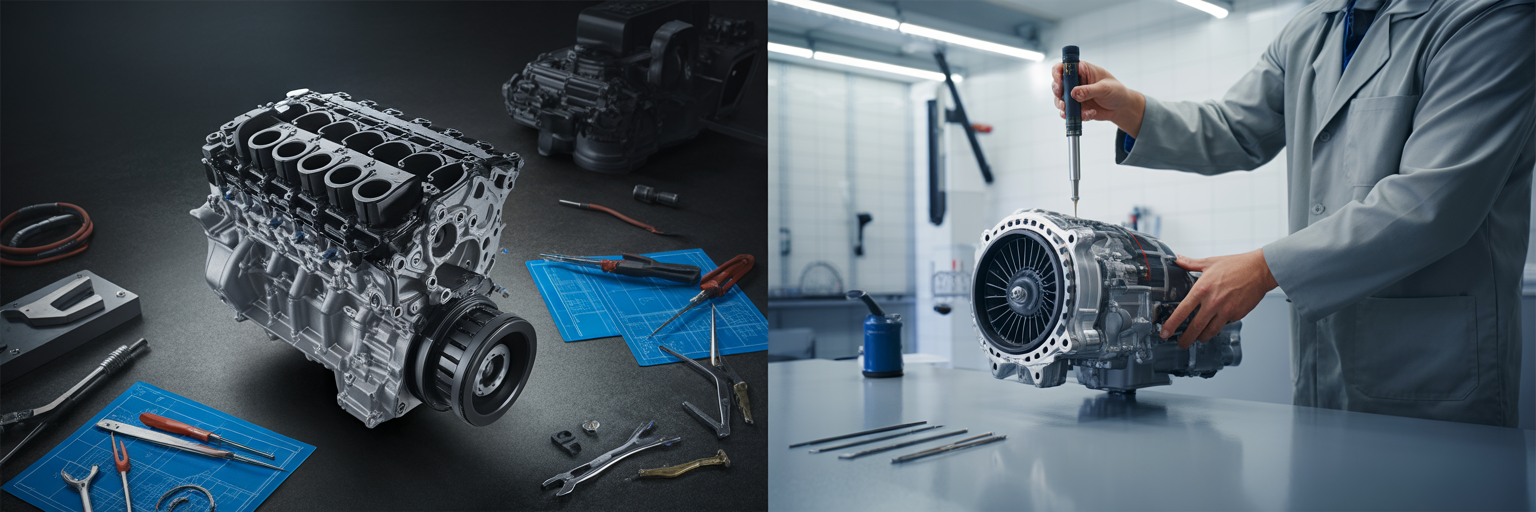
The engine is the heart of any car, and it’s where the Camry and Accord showcase their fundamentally different approaches to performance. One offers traditional, naturally aspirated power, while the other relies on modern, turbocharged efficiency. This 2026 Camry vs Accord comparison reveals two distinct driving characters rooted in their powertrain philosophies.
Camry’s Engine Arsenal: From Four-Cylinder to V6 Power
Toyota continues to offer a robust 2.5-liter four-cylinder engine as the standard powertrain, providing ample power for daily driving. However, the real story is the optional 3.5-liter V6. In a segment now dominated by smaller, turbocharged engines, this V6 is a welcome outlier. With approximately 301 horsepower, it delivers smooth, linear acceleration that feels effortless during highway merges or when passing slower traffic. It’s a powertrain for those who appreciate the immediate response and satisfying sound of a larger engine.
Accord’s Turbocharged Strategy
Honda takes a different path, equipping the Accord with a choice of two turbocharged four-cylinder engines. The base 1.5-liter turbo is designed for efficiency and provides strong low-end torque, making it feel surprisingly quick in stop-and-go city driving. The upgraded 2.0-liter turbo, derived from the Civic Type R, offers a more potent 252 horsepower. Turbocharging allows these smaller engines to produce power comparable to larger ones but with better fuel economy, delivering a refined and responsive feel that is well-suited for everyday composure.
The All-Weather Advantage: Camry’s AWD
Here lies one of the most significant differentiators. The Toyota Camry is available with an All-Wheel Drive (AWD) system, a feature the Honda Accord does not offer. For drivers in the Snow Belt or regions with heavy rainfall, this is a massive advantage. The Camry’s AWD provides enhanced traction and stability in slippery conditions, offering a level of security that the front-wheel-drive-only Accord cannot match. This single feature could make the Camry the default choice for many buyers.
Real-World Acceleration: Numbers and Feel
On paper, the Camry’s V6 is the clear winner in a sprint. Independent tests confirm the Camry V6’s impressive capabilities, with some outlets like Driving.ca clocking its 0-60 mph time at a brisk 5.8 seconds, a figure typically associated with sport sedans. The Accord with the 2.0T engine is no slouch, hitting 60 mph in around 6.5 seconds, but its power delivery is smoother and less dramatic. The Camry V6 feels eager and powerful, while the Accord feels composed and capable. It’s a choice between raw acceleration and refined quickness.
| Feature | 2026 Toyota Camry | 2026 Honda Accord |
|---|---|---|
| Base Engine | 2.5L 4-Cylinder | 1.5L Turbo 4-Cylinder |
| Performance Engine | 3.5L V6 | 2.0L Turbo 4-Cylinder |
| Drivetrain Options | FWD / AWD | FWD Only |
| Horsepower (Performance Engine) | ~301 hp | ~252 hp |
| 0-60 MPH (Performance Engine) | ~5.8 seconds | ~6.5 seconds |
Note: Performance figures are based on the highest-tier gasoline engines available for each model and can vary by trim and testing conditions. This table highlights the Camry’s advantage in raw power and drivetrain versatility.
Fuel Economy and Real-World Efficiency
While performance is exciting, the reality of daily driving often comes down to fuel costs. Both Toyota and Honda have invested heavily in creating efficient powertrains, but their hybrid systems and gasoline engines are tuned for slightly different priorities. Understanding these differences is key to choosing the sedan that best fits your driving habits and budget.
The Hybrid Head-to-Head: City Savings vs. Balanced Performance
The Camry hybrid vs Accord hybrid debate is where the two sedans truly diverge. The 2026 Accord Hybrid is an efficiency champion, particularly in urban environments. According to figures published by sources like The Car Connection, the 2026 Accord Hybrid can achieve up to 51 MPG in the city, giving it a distinct advantage in urban environments. This makes it the undisputed choice for rideshare drivers or anyone with a commute dominated by stop-and-go traffic.
The Camry Hybrid is also exceptionally efficient, but it offers a more balanced performance profile. It feels a bit more responsive off the line and provides a driving experience that more closely mimics its gasoline counterpart. While it may not match the Accord’s peak city MPG, it remains a fantastic all-around choice for those who want significant fuel savings without any compromises in drivability. The savings offered by both the Camry and Accord hybrids are significant, placing them among some of the best hybrid SUVs under $35k we’ve reviewed when considering overall value.
Gasoline Engine Efficiency
When comparing the standard gasoline engines, the race is much closer. The Accord’s 1.5-liter turbo engine is tuned for excellent fuel economy, often edging out the Camry’s base 2.5-liter four-cylinder by a couple of miles per gallon in combined driving. However, the Camry’s engine can be more efficient on long, steady highway cruises. Your primary driving environment will determine which car is more economical. If your life is mostly city streets, the Accord has a slight edge; for highway road-trippers, the Camry holds its own.
The Power vs. Economy Trade-Off
There is no free lunch when it comes to performance, and the Camry’s powerful V6 engine is the perfect example. While its acceleration is thrilling, it comes with a noticeable penalty at the pump compared to the Accord’s 2.0-liter turbo. The V6 Camry typically averages around 26 MPG combined, whereas the 2.0T Accord achieves closer to 30 MPG. Over a year of driving 15,000 miles, this difference could easily translate to several hundred dollars in extra fuel costs for the Camry V6 owner. It’s a tangible trade-off you must be willing to make for that extra power.
On the Road Dynamics and Ride Comfort

Beyond the engine specifications, how a car feels on the road is a deeply personal experience. This is where the engineering philosophies of Toyota and Honda are most apparent. The Accord is tuned for serenity and composure, while the Camry offers a more connected and athletic feel, especially in its sport-oriented trims. Choosing between them depends on whether you prefer to be isolated from the road or engaged with it.
Accord’s Composed and Quiet Ride
Driving the Honda Accord is an exercise in tranquility. Its suspension is masterfully tuned to absorb road imperfections, from jarring potholes to uneven pavement. The car glides over bumps with a composure that feels like it belongs in a more expensive vehicle. This focus on comfort extends to the cabin, which is exceptionally well-insulated from wind and road noise, even at highway speeds. For anyone with a long daily commute or who frequently takes family road trips, the Accord’s serene and quiet ride is a standout feature.
Camry’s Athletic and Engaging Handling
In contrast, the Toyota Camry, particularly in its SE and XSE trims, offers a distinctly more athletic driving experience. The suspension is firmer, translating more of the road surface to the driver. While this means you’ll feel bumps more than in the Accord, it also provides a more direct connection to the road. The Camry feels planted and confident in corners, encouraging a more spirited driving style. It’s a car that doesn’t just get you from point A to B; it invites you to enjoy the drive along the way.
Steering Feel: Effortless vs. Weighty
This difference in philosophy is also evident in the steering. The Accord’s steering is light and effortless, making it incredibly easy to maneuver in tight parking lots or navigate congested city streets. It requires minimal input from the driver, contributing to its relaxed and comfortable demeanor. The Camry’s steering, on the other hand, has more weight and directness. It provides greater feedback from the front wheels, which enhances the sporty sensation and gives the driver a better sense of control during dynamic driving. One feels effortless; the other feels purposeful.
Interior Space, Comfort, and Quality
You spend all your time inside your car, so the cabin’s design, space, and comfort are critically important. Here, the Accord’s focus on refinement and passenger space gives it a noticeable edge, while the Camry prioritizes functional durability. The thoughtful design of these interiors is just one of many informative details we cover that can influence a purchase decision.
1. Interior Dimensions: The Honda Accord is widely recognized for its class-leading rear-seat space. It offers generous legroom that allows even tall adults to sit comfortably behind one another. This makes the Accord the clear winner for families or anyone who frequently transports adult passengers. The Camry’s rear seat is perfectly adequate, but it simply cannot match the expansive, limousine-like feel of the Accord’s back row.
2. Seat Design: The seats in each car reflect their overall mission. The Accord’s seats are generally plush and designed for long-haul comfort, providing excellent support over many hours of driving. The Camry offers comfortable seats in its base trims, but the sportier SE and XSE models feature more aggressive bolstering. These bolsters are designed to hold you securely in place during cornering, which is great for spirited driving but may feel slightly more confining on a long trip.
3. Materials and Finish: Honda has earned a reputation for delivering a near-premium feel, and the 2026 Accord is no exception. The cabin is adorned with high-quality, soft-touch materials on the dashboard and door panels, and the switchgear operates with a satisfying, tactile click. The Camry’s interior is built with impeccable durability in mind. While it may use more hard plastics, every component feels solid and assembled to last for decades. The Accord’s interior aims to impress, while the Camry’s is built to endure.
4. Cabin Quietness: Consistent with its comfortable ride, the Accord generally provides a quieter cabin. Honda has invested in better insulation and acoustic glass to minimize wind, road, and tire noise at highway speeds. The Camry is by no means loud, but the Accord’s superior noise, vibration, and harshness (NVH) control contributes to its more serene and premium-feeling environment.
5. Trunk Capacity: In terms of raw numbers, both sedans offer generous trunks that can easily swallow luggage for a family vacation. However, the Accord often features a slightly larger trunk opening and a more practical, squared-off shape. This can make it easier to load bulky items like strollers or multiple sets of golf clubs compared to the Camry.
Technology and Infotainment Face-Off
In-car technology is no longer a luxury; it’s a core part of the driving experience. Both the Camry and Accord offer modern infotainment systems and digital displays, but they differ in their user interface and overall execution. How you interact with your music, navigation, and vehicle settings daily can be a major factor in your long-term satisfaction.
Central Infotainment: UI and Usability
The central touchscreen is your command center, and both cars offer bright, responsive displays. The Accord’s system is often praised for its clean, smartphone-like user interface (UI) that is intuitive from the moment you get in. Honda also wisely includes a physical volume knob and hard buttons for key climate functions, allowing you to make quick adjustments without taking your eyes off the road. The Camry’s infotainment system is also highly functional, but its menu structure can sometimes require an extra tap or two to find certain settings. Toyota has also embraced physical controls, which is a major win for usability in both vehicles.
Smartphone Integration
Both the 2026 Camry and Accord come standard with Apple CarPlay and Android Auto, allowing you to mirror your phone’s interface on the car’s main screen. The key difference to look for is whether this connection is wired or wireless. Higher trims on both models typically offer wireless connectivity, a significant convenience feature that lets you leave your phone in your pocket or on a charging pad while still accessing all its features. This eliminates cable clutter and makes for a cleaner, more seamless experience.
Audio Systems: Standard vs. Premium Sound
The standard audio systems in both cars are perfectly adequate for listening to news and podcasts. However, for music lovers, the premium audio upgrades are worth considering. The Camry offers a branded JBL audio system, which is known for delivering powerful, punchy bass and a dynamic sound profile that excels with rock and electronic music. The Accord partners with Bose for its premium system, which typically provides a clearer, more balanced soundstage that is excellent for vocals, jazz, and classical music. The best choice depends entirely on your listening preferences.
The Driver’s Digital Display
The traditional analog gauge cluster is rapidly being replaced by digital screens, and both sedans offer modern solutions. The Accord generally features a fully digital instrument cluster on higher trims, offering crisp graphics and a high degree of customization. You can configure it to show navigation, media, or detailed trip information. The Camry also offers a large digital display between its gauges or a full digital cluster on top trims, providing the driver with a wealth of information at a glance. The Accord’s display often feels a bit more modern and configurable, but both are a significant step up from old-school needles.
Safety Systems and Reliability Ratings
For many buyers, peace of mind is the ultimate feature. This section addresses two of the most critical considerations for any car purchase: advanced safety technology and long-term dependability. Both Toyota and Honda have built their reputations on these pillars, making this a very close contest.
Standard Safety Suites: Toyota Safety Sense vs. Honda Sensing
Both automakers include a comprehensive suite of active safety and driver-assistance features as standard equipment on every trim level. The Camry comes with Toyota Safety Sense, while the Accord is equipped with Honda Sensing. These packages bundle essential technologies designed to prevent accidents. In real-world use, both systems are excellent. However, drivers sometimes note subtle differences; for example, one system’s lane-centering assist might feel smoother and less intrusive, while the other’s adaptive cruise control might be more responsive in traffic. The key takeaway is that both cars provide an exceptional level of standard safety technology.
| Standard Feature | Toyota Safety Sense | Honda Sensing |
|---|---|---|
| Pre-Collision System w/ Pedestrian Detection | Standard | Standard |
| Lane Departure Alert w/ Steering Assist | Standard | Standard (Lane Keeping Assist System) |
| Full-Speed Range Dynamic Radar Cruise Control | Standard | Standard (Adaptive Cruise Control) |
| Road Sign Assist | Standard | Standard (Traffic Sign Recognition) |
| Blind Spot Monitor w/ Rear Cross-Traffic Alert | Available/Standard on higher trims | Available/Standard on higher trims |
Note: Both automakers offer comprehensive standard safety suites. The naming and specific functionality may differ slightly. Availability of certain features like Blind Spot Monitor can vary by trim level.
Long-Term Ownership: Reliability and Costs
The Camry or Accord reliability question is one of the most common debates among car shoppers. The truth is, both vehicles are at the top of their class for long-term dependability. Toyota’s reputation for durability is not just anecdotal; it is consistently backed by long-term vehicle dependability studies from organizations like J.D. Power, where the Camry frequently ranks at or near the top of its class. Honda’s reliability record is also exceptionally strong, making the Accord another excellent long-term investment.
Both brands offer similar warranty coverage, typically including a 3-year/36,000-mile bumper-to-bumper warranty and a 5-year/60,000-mile powertrain warranty. Maintenance costs for both are among the lowest in the industry. While major issues are rare for both brands, staying informed on vehicle news, such as the recent GM 6.2L engine recall we covered, is always a wise practice for any car owner. Ultimately, while Toyota often holds a slight edge in public perception and resale value, you cannot go wrong with either car from a reliability standpoint.
The Final Verdict: Which Sedan Fits Your Life?
After comparing these two titans of the midsize sedan segment, it’s clear there is no single “best” choice, only the best choice for you. The decision between the 2026 Toyota Camry and Honda Accord comes down to a clear understanding of your priorities. Both are excellent vehicles, but they are designed to satisfy different types of drivers.
The 2026 Toyota Camry is the smarter buy for the driver who refuses to compromise on performance and capability. Its available 3.5-liter V6 engine offers a level of power that is increasingly rare, while the option of all-wheel drive provides invaluable security in challenging weather. Combined with its engaging handling and ironclad reputation for reliability, the Camry is ideal for those who want a practical sedan that still delivers a thrilling driving experience and ultimate peace of mind.
On the other hand, the 2026 Honda Accord is the smarter choice for the buyer who prioritizes comfort, refinement, and efficiency. Its supremely quiet and comfortable ride transforms the daily commute from a chore into a pleasure. The Accord’s spacious, upscale interior and class-leading rear-seat room make it perfect for families, while its highly efficient hybrid model offers significant savings at the pump. It is the sedan for the driver who values a polished experience and low running costs.
To help you decide, here is an at-a-glance summary:
- Raw Power: Toyota Camry (V6)
- Fuel Efficiency: Honda Accord (Hybrid)
- Ride Comfort & Quietness: Honda Accord
- Engaging Handling: Toyota Camry
- All-Weather Capability: Toyota Camry (AWD)
- Rear-Seat Space: Honda Accord
- Long-Term Reliability: A virtual tie, with a slight edge to Toyota
Ultimately, determining the best midsize sedan 2026 is a subjective decision. We strongly recommend you test drive both models back-to-back to feel the differences for yourself. The best decision comes from being well-informed, and we invite you to explore more of our guides and comparisons at CarPhanatics.