
It’s a frustratingly common scenario. Your car has been running perfectly, but you pull away from the gas station, and suddenly it sputters, idles erratically, or takes several long cranks to start. You’re left wondering what could have possibly gone wrong in the few minutes it took to refuel. This baffling problem, where a car hesitates after filling gas tank, almost always points to a single, often misunderstood system in your vehicle.
The Primary Cause of Post-Refueling Problems
The moment your car starts acting up after a fill-up, your mind might jump to major engine trouble or bad gasoline. But the real culprit is usually much simpler and is tied directly to your car’s emissions system. The issue lies within the Evaporative Emission Control (EVAP) system, a component that has been standard on vehicles for decades. Its job is twofold: to protect the environment by capturing harmful gasoline vapors from the fuel tank and to improve efficiency by feeding those captured vapors back into the engine to be burned.
Think of the EVAP system as your car’s own recycling program for fuel fumes. At its heart are two key components: the charcoal canister and the canister purge valve. The charcoal canister acts like a sponge, absorbing and storing fuel vapors that would otherwise escape into the atmosphere. The canister purge valve, sometimes called a purge solenoid, is the gatekeeper. It’s a small, computer-controlled valve that determines precisely when to release these stored vapors from the canister and allow them to be drawn into the engine’s intake manifold.
Under normal conditions, the purge valve remains closed when the engine is off or idling. The car’s computer opens it at specific times during driving, allowing a measured amount of vapor to mix with the incoming air. This process is so seamless you never notice it. The problem arises when this valve fails, most commonly by getting stuck in the open position.
A stuck-open purge valve creates a constant, unmetered vacuum leak, allowing air and fuel vapors to enter the engine when they shouldn’t. While this can cause minor issues at any time, the problem becomes dramatically worse immediately after you refuel. When you pump gasoline into the tank, the liquid displaces a large volume of highly concentrated fuel vapor. With the purge valve stuck open, this massive rush of vapor is forced directly into the engine’s intake manifold.
The engine is designed to run on a very specific air-to-fuel ratio. This sudden, uncontrolled flood of fuel vapor throws that ratio completely off balance, creating a mixture that is far too rich in fuel. It’s like trying to light a waterlogged campfire; there’s too much fuel and not enough air for proper combustion. As a result, the engine effectively chokes. It struggles to idle, hesitates on acceleration, or may even stall completely. It requires a long crank to start because the engine needs to clear out this excessively rich mixture before it can fire up properly. Properly managing systems like the EVAP is a key part of how to keep your car’s engine running for years, ensuring both reliability and efficiency.
Recognizing the Symptoms of a Bad Purge Valve
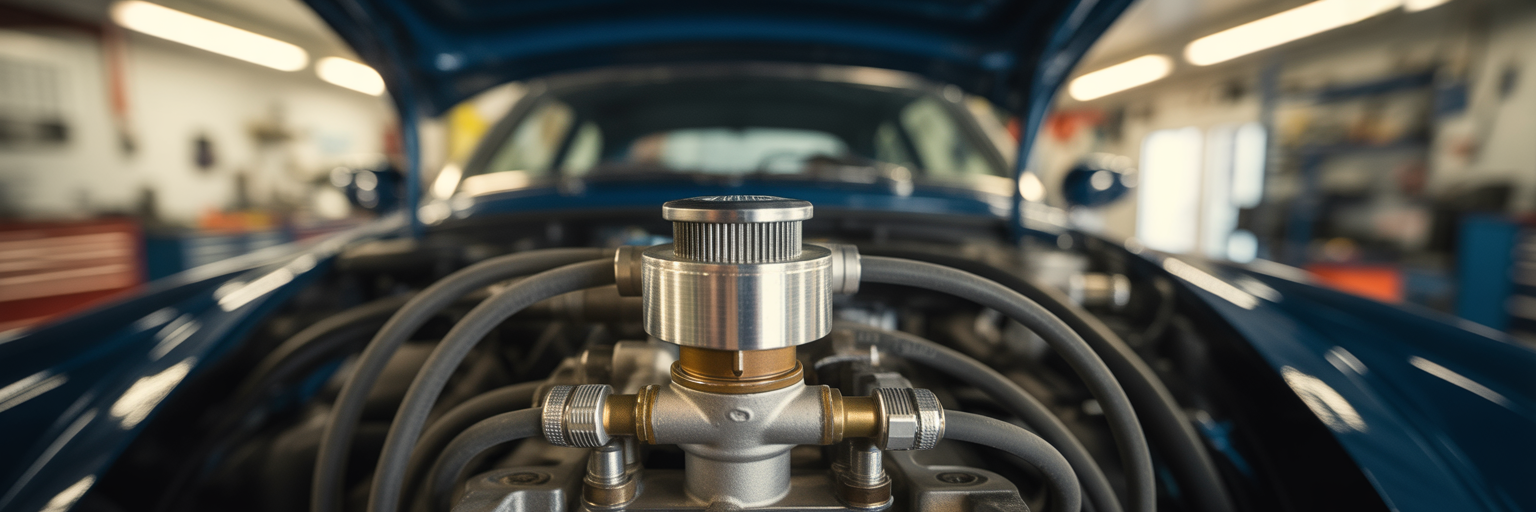
Now that you understand how a faulty purge valve disrupts your engine after refueling, connecting the dots to what you’re experiencing becomes much easier. While other issues can cause hesitation, a failing purge valve produces a very distinct set of clues. Paying attention to these EVAP purge valve symptoms can help you confirm your suspicions before you even pick up a tool.
Here are the most common signs that your purge valve has likely failed:
- Hard Starting Specifically After Refueling: This is the classic, telltale sign. The car runs fine on the way to the gas station but struggles to start immediately after you fill the tank. The engine may crank for an extended period before finally sputtering to life. This happens because the engine is flooded with the rich vapor mixture we discussed earlier.
- Rough Idle After Refueling: If the car does start, it will likely run poorly for the first few minutes. You’ll notice a rough idle after refueling, where the engine shakes or feels like it’s about to stall. As you drive and the excess vapor is burned off, the idle usually smooths out and returns to normal.
- Stalling at Low Speeds: A stuck-open purge valve can cause the engine to stall, particularly when you come to a stop or are driving at low speeds shortly after a fill-up. The unstable air-fuel mixture is most disruptive when the engine isn’t under a heavy load.
- Decreased Fuel Economy: This symptom is more subtle and develops over time. A constant vacuum leak from a bad purge valve forces the engine’s computer to try and compensate. It may adjust the fuel mixture, often leading to less efficient combustion and a noticeable drop in your miles per gallon.
- Check Engine Light Is On: Your car’s onboard computer is constantly monitoring the EVAP system. When it detects that vapor is flowing when it shouldn’t be (a classic sign of a stuck-open valve), it will trigger the Check Engine Light. This is your car’s way of telling you something is wrong with the emissions system.
- Faint Smell of Fuel: While less common than with a loose gas cap, a failing EVAP system can sometimes lead to a faint smell of raw gasoline around the vehicle, as the system is no longer properly containing all the vapors.
If your car exhibits several of these symptoms, especially the hard starting right after getting gas, a faulty purge valve is the most probable cause.
Other Potential Culprits Beyond the Purge Valve
While a stuck-open purge valve is the prime suspect when a car stalls after getting gas, it’s not the only possibility. A good diagnosis involves considering all potential causes before jumping to conclusions. Several other issues can mimic the symptoms of a bad purge valve, though they often come with their own unique characteristics.
Saturated or Damaged Charcoal Canister
The charcoal canister is the EVAP system’s vapor reservoir. It’s designed to handle vapor, not liquid fuel. When drivers habitually “top off” the tank after the pump clicks off, they can force raw gasoline into the canister. This saturates the charcoal pellets, ruining the canister and preventing it from absorbing vapors correctly. A saturated canister can release liquid fuel into the purge line, causing symptoms nearly identical to a stuck-open purge valve.
Loose, Damaged, or Incorrect Gas Cap
We’ve all forgotten to tighten the gas cap at some point. A loose or faulty cap will break the seal of the fuel system, allowing vapors to escape. The car’s computer will detect this as a leak and trigger the Check Engine Light. However, a bad gas cap alone rarely causes significant performance problems like stalling or rough idling. It’s primarily an emissions fault, not a driveability one.
Contaminated Fuel or Water in the Tank
Sometimes the problem is with the fuel itself. A batch of gasoline contaminated with water, sediment, or other impurities can cause hesitation, sputtering, and poor performance. The key difference is that these symptoms will appear immediately after refueling and persist until the bad fuel is used up. The problem won’t clear up after a few minutes of driving like it does with a purge valve issue.
Fuel Delivery Problems
A weak fuel pump or clogged fuel injectors can also cause hesitation and stalling. However, these issues are typically not isolated to post-refueling moments. A failing fuel pump will cause a loss of power during acceleration or when going uphill. Clogged injectors will lead to a consistent rough idle or misfires. These types of fuel system failures are one reason why some high-mileage cars age better than others, depending on the quality of their components.
Failing Sensors or Vacuum Leaks
Other components, like a failing Mass Airflow (MAF) sensor or a cracked vacuum hose elsewhere on the engine, can also disrupt the air-fuel mixture and cause hesitation. A faulty MAF sensor will typically cause poor performance across all driving conditions, not just after a fill-up. Similarly, a vacuum leak from a cracked hose will usually result in a consistently high or rough idle.
This table provides a quick reference to help differentiate between the most common causes of hesitation. Note how the timing and persistence of the symptoms are key clues to an accurate diagnosis.
| Potential Problem | Primary Symptom | When It Typically Occurs |
|---|---|---|
| Stuck-Open Purge Valve | Hard start, rough idle, or stalling | Immediately after filling the gas tank, clears up after a few minutes |
| Saturated Charcoal Canister | Similar to a bad purge valve, plus possible fuel odor | Consistently after refueling, especially if the tank is overfilled |
| Contaminated Fuel | Hesitation, sputtering, poor performance | Immediately after refueling and persists until the bad fuel is consumed |
| Weak Fuel Pump | Hesitation, loss of power, whining noise from tank | During acceleration and under load, not just after refueling |
| Loose Gas Cap | Check Engine Light (EVAP leak code) | Does not typically cause significant performance issues on its own |
Decoding Check Engine Light Trouble Codes

When your Check Engine Light comes on, it’s not just an annoyance; it’s your car communicating with you. For any modern DIYer, an OBD-II scanner is an essential tool that translates this communication into actionable information. When dealing with post-refueling hesitation, the Diagnostic Trouble Codes (DTCs) stored in the computer can provide powerful clues that point you directly toward the EVAP system.
Here are some of the most common EVAP-related trouble codes and what they mean in simple terms:
- P0496 – EVAP Flow During a Non-Purge Condition: This is the code most directly associated with a stuck-open purge valve. It means the computer has detected fuel vapor flowing from the canister into the engine at a time when the purge valve was commanded to be closed. As many drivers in online forums have discovered, a P0496 code is a strong indicator of a stuck-open purge valve, a common issue discussed on platforms like the Subaru Outback Forums where owners share diagnostic experiences.
- P0441 – Incorrect Purge Flow: This code indicates that the computer is seeing either more or less vapor flow than it expected during a purge cycle. A stuck-open valve can cause excessive flow, triggering this code.
- P0455 – EVAP System Leak Detected (Large Leak): While this code can point to a major component failure, its most common cause is surprisingly simple: a loose or missing gas cap. Before panicking, always check your gas cap first if you see this code.
- P0456 – EVAP System Leak Detected (Small Leak): This code is trickier to diagnose as it points to a very small leak somewhere in the system, such as a tiny crack in a hose or a faulty seal.
It is critical to understand that a trouble code identifies the affected circuit, not the specific failed part. A P0496 code strongly suggests a bad purge valve, but it could theoretically be caused by a wiring short that is holding the valve open. The code tells you where to look, but proper diagnosis is still required to confirm the failure. The car’s computer runs periodic self-tests on the EVAP system, often under specific conditions like a certain fuel level and temperature, which is how it detects these faults and triggers the light.
A Practical Step-by-Step Diagnostic Process
Armed with an understanding of the likely causes and potential trouble codes, you can now follow a logical process to pinpoint the problem. This step-by-step approach starts with the simplest checks and moves toward more involved tests, saving you time and preventing you from replacing parts unnecessarily. Following a clear diagnostic path is central to effective car care, a principle we cover across all our informative guides.
- The Gas Cap Check: This is always the first step. Remove your gas cap and inspect it. Is the rubber seal dry, cracked, or missing? When you put it back on, tighten it until you hear it click several times. A loose cap is the number one cause of EVAP-related Check Engine Lights.
- Confirm the Symptom Pattern: Pay close attention to exactly when the problem occurs. Does the car only hesitate and idle roughly for the first few minutes after leaving the gas station? If the problem is constant, it’s less likely to be the purge valve and more likely a fuel delivery or sensor issue. This confirmation is a crucial diagnostic clue.
- Scan for Trouble Codes: Connect an OBD-II scanner to the port under your dashboard and retrieve any stored codes. A code like P0496 is a very strong indicator that you’re on the right track with the purge valve.
- Visual Inspection: Open the hood and locate the purge valve. It’s usually mounted on or near the engine’s intake manifold and will have two hoses and an electrical connector attached. Carefully inspect the rubber hoses connected to it for any visible cracks, splits, or loose connections.
- Test the Purge Valve: This is the definitive step. For a simple test on how to test a purge valve, you can start the engine and place your finger on the valve or listen to it with a mechanic’s stethoscope. You should not feel or hear it clicking at idle. If it’s clicking constantly, it may be stuck. A more conclusive test involves removing the valve. Try to blow through it; if air passes through, it’s stuck open and has failed. The logic of checking for a stuck-open purge valve first is supported by expert advice on forums like Mechanics Stack Exchange, where professionals confirm it’s the most frequent cause of these specific symptoms.
- Consider Fuel Pressure: If all other checks are inconclusive and you’re still experiencing hesitation under other driving conditions, it may be time to test the fuel pressure to rule out a weak fuel pump.
If these steps seem too complex or don’t lead to a clear answer, there is no shame in consulting a trusted professional mechanic.
Is It Safe to Drive with This Problem?

After experiencing a stall in traffic or a car that refuses to start at the pump, your most immediate question is likely: “Is my car safe to drive?” The answer depends entirely on the severity and nature of the symptoms. It’s important to distinguish between an inconvenience and a genuine safety hazard.
We can break down the risk into three levels:
- Low Risk: Mild Hesitation or Rough Idle. If your car stumbles for a moment after refueling but then clears up and drives normally, it is generally safe to continue driving in the short term. This is primarily an emissions and performance issue, not an immediate mechanical danger. However, the problem should be addressed to ensure you can pass an emissions test and to prevent potential long-term damage to your catalytic converter.
- Moderate Risk: Frequent Stalling. If the car is stalling repeatedly, especially at intersections or in traffic, the risk level increases significantly. A car that shuts off unexpectedly can create a dangerous situation for you and other drivers. In this case, you should have the vehicle repaired as soon as possible and avoid driving in heavy traffic until you do.
- High Risk: Strong Fuel Smell or Visible Leak. This is a non-negotiable stop-driving situation. If you notice a strong, persistent smell of raw gasoline or see any liquid fuel dripping from under the vehicle, you have an active fuel leak. This is a major fire hazard. Park the car immediately in a safe, open area away from ignition sources, do not attempt to start it, and have it towed to a repair shop.
The core takeaway is this: a fuel vapor problem is an annoyance, but a liquid fuel leak is an emergency. Understanding when a problem is minor versus when it’s a safety risk is crucial, especially when considering the best used cars for first-time buyers under $12,000, where reliability is paramount.
Frequently Asked Questions About Post-Refueling Issues
Even after diagnosing the problem, you might still have a few practical questions. Here are quick answers to some of the most common queries about post-refueling issues.
Why should I stop pumping gas when the nozzle clicks off?
This is the single most important habit to adopt. The reason why not to top off gas tank is that you risk forcing liquid gasoline into the charcoal canister. That canister is a delicate component designed only to handle vapor. When saturated with liquid fuel, the charcoal is ruined, and the canister can no longer do its job. This damage can cost hundreds of dollars to repair and is the leading cause of self-inflicted EVAP system failures.
How difficult is it to replace a purge valve?
For most vehicles, replacing a purge valve is a relatively simple DIY job that can be done in under 30 minutes. It typically involves disconnecting an electrical connector, removing two hose clamps, and unfastening one or two bolts. However, the accessibility of the valve can vary greatly by model. The accessibility of a purge valve on a sedan can be very different from its location on a truck, just as there are major differences when comparing a Jeep Gladiator vs. Toyota Tacoma for off-road use. Always check a repair guide for your specific vehicle first.
Can a bad gas cap really cause these problems?
A bad gas cap is a very common reason for an EVAP-related Check Engine Light (often a P0455 “large leak” code). However, it is highly unlikely to be the direct cause of severe hesitation, rough idling, or stalling after you get gas. Those performance symptoms almost always point to a problem further down the line, like the purge valve.
If I replace a bad part, will the problem be fixed immediately?
The performance symptoms, such as hesitation and stalling, should resolve immediately after you replace the failed component. However, the Check Engine Light may not turn off right away. The car’s computer needs to run its internal self-tests over several drive cycles to confirm that the repair was successful before it will clear the code on its own.
Can this problem fix itself?
No. If the cause is a mechanical or electrical part that has failed, such as a purge valve that is physically stuck open, it will not fix itself. The problem will persist and likely worsen over time, potentially leading to damage to other components like the catalytic converter. Timely repair is the only solution.