
Assess Your Driving Needs Before You Shop
There’s a well-known guideline in the 4×4 community called the 80/20 rule. It suggests that most off-road capable vehicles spend about 80% of their lives on paved roads. This simple observation is the perfect starting point for anyone trying to figure out how to choose off-road tires. The aggressive, knobby tires that look incredible on a showroom floor can become a source of daily frustration if your reality is more highway commute than mountain trail.
Before you even look at a single tread pattern, you need to conduct an honest self-assessment. We all have an image of the adventures we want to take, but the right tire is chosen based on the driving you actually do. Ask yourself these questions:
- What is my real on-road versus off-road percentage? Be honest. Track it for a week if you have to. Is it 95/5? 70/30? This number is the single most important factor in your decision.
- What is my primary off-road terrain? “Off-road” is not a single category. Are you navigating the slick, muddy forests of the Southeast, crawling over the sharp, unforgiving rocks of Moab, or cruising through sandy desert washes? Each surface demands a different tire design.
- What are my on-road non-negotiables? If you use your vehicle for client meetings, a loud tire hum might be unacceptable. If you have a 50-mile commute, how much does a drop in fuel economy really cost you per month?
- What is this vehicle’s main job? Is it a dedicated weekend trail rig that gets towed to the fun, or is it the primary vehicle for hauling groceries and kids? This distinction applies to all capable trucks and SUVs.
Answering these questions honestly is the first and most critical step. It builds the foundation for a smart purchase and helps you avoid the classic trap of buying a tire for the 10% of your driving while sacrificing comfort and performance for the other 90%.
All-Terrain Tires for Everyday Versatility
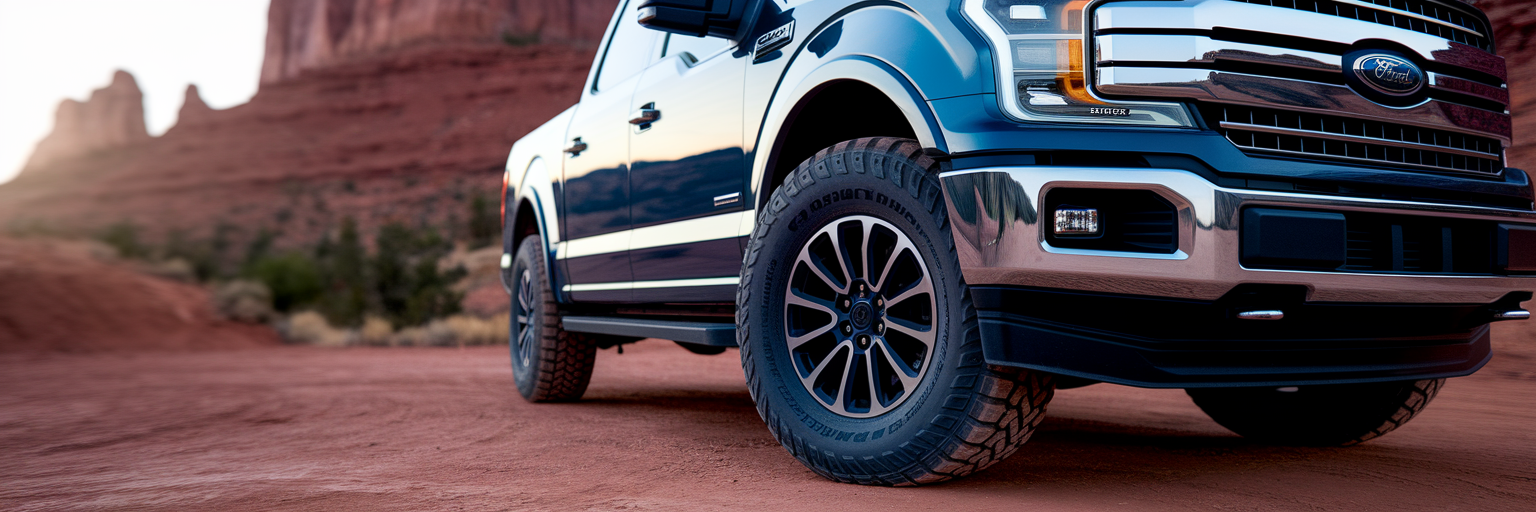
For the driver whose life reflects that 80/20 rule, the all-terrain (AT) tire is often the perfect solution. Think of it as the master of compromise, engineered to provide a capable and comfortable experience both on the highway and on moderate trails. It’s the go-to choice for those who need a single set of tires to handle the daily commute and weekend adventures without complaint.
The design of an AT tire is a deliberate balance of on-road manners and off-road grip. You’ll notice interlocking tread blocks that provide stability during highway driving and cornering. The voids, or gaps between these blocks, are smaller than on more aggressive tires, which is key to reducing road noise. Finally, they feature extensive siping, which are tiny slits in the tread that create extra biting edges for traction on wet or snowy pavement.
The advantages of this balanced design are significant for a daily driver:
- Longer tread life: Many AT tires come with mileage warranties ranging from 40,000 to 65,000 miles, a testament to their durability on pavement.
- Better fuel economy: Compared to more aggressive options, the lower rolling resistance of an AT tire helps preserve your vehicle’s MPG.
- A quiet and comfortable ride: The design minimizes the loud hum associated with off-road tires, making long road trips far more pleasant.
- Strong all-weather performance: Many AT tires carry the Three-Peak Mountain Snowflake (3PMSF) symbol, indicating they meet a required performance standard in severe snow conditions.
Of course, being a jack-of-all-trades means an AT tire is a master of none. Its tighter tread pattern, so beneficial for a quiet ride, can become packed with thick, heavy mud, reducing traction. While capable, they generally lack the reinforced sidewalls and extreme grip needed for severe rock crawling. The ideal user is the owner of a daily-driven SUV or a versatile truck like the 2025 Ford F-150, who enjoys exploring forest service roads or reaching a remote campsite on the weekend.
Mud-Terrain Tires for Maximum Off-Road Capability
If all-terrain tires are the versatile multi-tool, then mud-terrain (MT) tires are the specialized sledgehammer. These are built for one primary purpose: to deliver maximum performance in the most challenging off-road conditions. An MT is the unapologetic choice for the enthusiast who prioritizes trail capability above all else and is willing to accept the resulting on-road compromises.
The design philosophy here is pure aggression. MT tires feature massive, independent tread blocks separated by huge voids. These voids act like paddles, digging deep into soft surfaces like mud and sand to find traction. Just as importantly, this design allows the tire to self-clean, flinging out mud and rocks as the wheel spins to ensure the tread is always ready to take another bite. This is a core point in the all-terrain vs mud-terrain tires debate; where an AT tire clogs, an MT clears itself.
The performance benefits are clear for anyone pushing their vehicle to its limits:
- Unparalleled traction: In deep mud, loose soil, and on jagged rocks, the aggressive tread provides grip that AT tires simply cannot match.
- Superior off-road tire durability: MTs are built with tougher, chip-resistant rubber compounds and feature heavily reinforced sidewalls to resist punctures from sharp rocks and sticks.
However, these off-road strengths create significant on-road weaknesses. The large tread blocks generate a distinct and often loud “hum” at highway speeds. The ride is noticeably harsher, transmitting more bumps and vibrations into the cabin. You can also expect a measurable drop in fuel efficiency and significantly faster tread wear on pavement. The ideal user for an MT is the owner of a dedicated or heavily modified off-road vehicle, perhaps from a brand like Jeep, who frequently tackles difficult trails and views the on-road drawbacks as a necessary price for ultimate capability.
Critical Factors Beyond the Tire Type
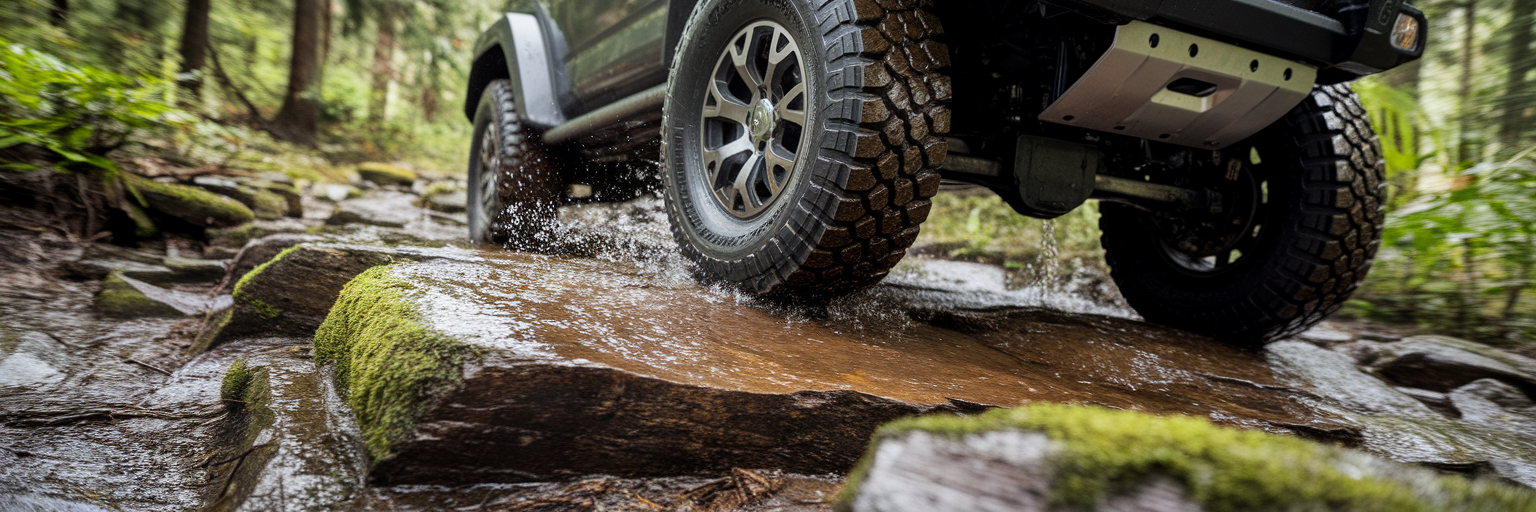
Choosing between an all-terrain and a mud-terrain is a great start, but several other factors add important nuance to your decision. Getting these details right ensures your new tires perfectly match your vehicle and how you use it.
Tread Compound and Sidewall Durability
Not all rubber is created equal. MT tires typically use a softer, more pliable rubber compound that conforms to obstacles and resists chipping from sharp rocks. AT tires, in contrast, use a harder compound formulated for longevity and lower rolling resistance on pavement. Sidewall strength, often indicated by a ply rating, is another critical aspect of off-road tire durability. A higher ply rating generally means a tougher, more puncture-resistant tire.
Tire Size and Vehicle Modifications
The trend of installing larger-than-stock tires is popular for both aesthetic and performance reasons. A larger tire increases ground clearance and can improve traction. However, it’s not a simple upgrade. Significantly larger tires are heavier, which can negatively impact acceleration, braking, and fuel economy. They may also require a suspension lift to prevent rubbing and even re-gearing of the vehicle’s differentials to restore lost performance.
Load Range for Towing and Hauling
If you use your truck to tow a trailer or haul heavy loads, understanding load range is essential. Expressed as a letter (C, D, E, etc.), it indicates the tire’s stiffness and maximum load-carrying capacity. A Load Range E tire, common on heavy-duty trucks, has stiffer sidewalls and can handle much more weight than a Load Range C tire found on a lighter SUV. Using an underrated tire for heavy work is a serious safety risk.
The Rise of the Hybrid-Terrain Tire
A growing category, often called “hybrid” or “rugged-terrain” (RT/XT), has emerged to bridge the gap between AT and MT. As publications like DrivingLine have noted, the modern all-terrain is becoming more dynamic, and this hybrid category is a direct result. These tires offer a more aggressive appearance and better mud performance than an AT, but with far better road manners than a full-blown MT. They represent a compelling middle ground for many drivers.
| Performance Metric | All-Terrain (AT) | Hybrid-Terrain (RT/XT) | Mud-Terrain (MT) |
|---|---|---|---|
| On-Road Noise | Quiet | Moderate | Loud |
| Tread Life | Excellent (40k-65k miles) | Good (40k-50k miles) | Fair (25k-40k miles) |
| Mud & Loose Soil | Fair | Good | Excellent |
| Rock Crawling | Good | Very Good | Excellent |
| Wet Pavement | Excellent | Good | Fair to Poor |
| Snow/Ice (3PMSF) | Often Rated | Sometimes Rated | Rarely Rated |
This table provides a snapshot of the trade-offs between the three main off-road tire categories. Mileage estimates are general averages and can vary significantly based on driving habits, vehicle, and specific tire model.
Matching Your Tires to Terrain and Budget
With a clear understanding of your needs and the different tire types, you can now make a confident choice. Let’s put it all together with some common scenarios to help you find the perfect match.
The ‘Weekend Explorer’: This driver has a daily-driven truck or SUV and loves exploring state forest roads, gravel paths, and mild trails. Their best bet is a high-quality all-terrain tire with a 3PMSF rating. This provides excellent on-road comfort and safety for the 95% of the time they’re on pavement, with more than enough capability for their weekend adventures.
The ‘Rock Crawler’: This enthusiast frequents technical, rocky trails in places like Moab or the Rubicon Trail. For them, the best tires for rock crawling are durable mud-terrains with reinforced 3-ply sidewalls. The extra puncture resistance and aggressive tread are non-negotiable. If they still drive their rig, like a future 2026 Jeep Grand Cherokee, to the trail, a tough hybrid-terrain tire could be a smart compromise, offering better road manners without sacrificing too much rock-grabbing ability.
The ‘Mud Enthusiast’: For anyone who regularly tackles the deep, clay-based mud common in the American South or Pacific Northwest, there is no substitute for a classic mud-terrain. The massive voids are essential for clearing muck and maintaining forward momentum. In this environment, an all-terrain or even a hybrid tire will quickly become a slick, useless donut of packed mud.
The ‘Budget-Conscious Buyer’: High-quality off-road tires can be a significant investment, but you don’t have to break the bank. Finding good budget off-road tires is about shopping smart. Look at reputable second-tier brands that are often produced by major manufacturers and offer excellent performance for the price. Also, timing your purchase around major sales events like Memorial Day or Black Friday can lead to substantial savings. Making an informed choice is the best way to get value for your money, and for more automotive insights, you can always explore what we have at Carphanatics.com.