
For generations, the American family car was an exercise in compromise. You needed space and practicality, which often meant giving up personality and driving enjoyment. Today, buyers expect a vehicle that can handle school runs and weekend adventures without feeling like a penalty box. This sets the stage for a compelling Dodge Durango vs Kia Telluride showdown, a clash between two very different philosophies on what a modern family hauler should be.
The Dodge Durango is the spiritual successor to American muscle, a three-row SUV infused with the DNA of a Charger. It stands for unapologetic power, a commanding presence, and a refusal to blend in with the crowd. It’s built for the driver who wants to feel something from behind the wheel, even with a car full of kids and gear.
In the other corner, the Kia Telluride has become the gold standard for family-focused design. It feels engineered from the inside out, with every decision prioritizing passenger comfort, usable space, and exceptional value. The Telluride’s promise isn’t about raw power; it’s about making daily life easier and more comfortable with a near-luxury experience at a mainstream price.
Their core identities are fundamentally different. The Durango’s rear-wheel-drive platform and available V8 engines give it a unique driving feel and class-leading towing capabilities. It’s a true workhorse with a rebellious streak. The Telluride, by contrast, wins hearts with its thoughtful execution. It boasts a third row that adults can actually use, an array of standard features that feel like upgrades, and an interior that punches well above its weight. While both compete for the same families, they offer opposing solutions.
This article will dissect these two approaches to help you find the best family SUV 2026 for your needs. We will compare their performance, utility, comfort, and long-term costs. By the end, you’ll understand which SUV is the smarter purchase for your budget and which one better satisfies your driving desires.
Engine Power and On-Road Performance
The character of an SUV is often defined by what happens when your foot meets the accelerator. Here, the Durango and Telluride offer experiences that are worlds apart, one appealing to raw emotion and the other to quiet competence.
The Heart of the Beast: Durango’s Powertrain Options
The foundation of the Dodge Durango performance is choice. While the standard Pentastar V6 is a capable and proven engine, the real story lies with the available V8s. Opting for the 5.7L or 6.4L HEMI transforms the Durango from a family hauler into a muscle SUV. The experience is visceral. There’s an immediate throttle response that shoves you back in your seat and a signature exhaust rumble that serves as a constant reminder of the power on tap. It’s a feeling of abundant, effortless strength that few competitors in this class can even attempt to replicate. This is not just transportation; it’s an emotional connection to the machine.
The Smart Operator: Telluride’s Refined V6
Kia takes a completely different approach with the Telluride. There are no optional engines, just one well-executed 3.8L V6 designed for smoothness and refinement. Its mission is not to excite but to operate without fuss. The engine and eight-speed automatic transmission are calibrated for nearly imperceptible shifts and a relaxed cruising demeanor. Power is perfectly adequate for highway merging and daily driving, but it’s delivered with a quiet confidence that prioritizes passenger comfort over driver engagement. You don’t hear or feel the Telluride’s engine working hard, which is precisely the point.
Handling Dynamics: Muscle vs. Composure
These powertrain philosophies directly influence how each vehicle feels on the road. The Durango’s rear-wheel-drive-based architecture gives it a more balanced and athletic feel, especially when navigating corners. It feels planted and eager, rewarding a driver who enjoys a spirited run on a winding road. For those who appreciate the heritage of American muscle, a look at a classic head-to-head Mustang GT and Challenger RT comparison can provide context for the Durango’s V8 soul.
The Telluride, with its front-wheel-drive-based platform, is tuned for a soft, compliant ride. Its suspension is designed to soak up bumps and isolate occupants from road imperfections, creating a serene cabin environment. While it handles predictably, it leans in corners and lacks the sharp responses of the Durango. The trade-off is clear: the Durango offers a more thrilling, driver-focused experience, while the Telluride delivers a supremely comfortable, passenger-focused journey.
Towing Capacity and Heavy-Duty Utility
While on-road performance speaks to the driving experience, true utility is measured by what a vehicle can physically haul. For families with boats, campers, or trailers, this is where the spec sheet becomes critically important. In this regard, the Durango establishes itself as the undisputed SUV with best towing capacity in its class.
With its available V8 engines, the Dodge Durango can tow up to a massive 8,700 pounds. Even the V6 model pulls a respectable 6,200 pounds. The Kia Telluride, by comparison, tops out at 5,500 pounds with its optional tow package. While that’s enough for many light-duty tasks, it puts a firm limit on the size of the camper or boat you can bring along for the weekend. The practical difference is significant.
| Vehicle | Maximum Towing Capacity | Engine Required | Practical Towing Examples |
|---|---|---|---|
| Dodge Durango | Up to 8,700 lbs | 5.7L or 6.4L V8 | Large travel trailer (25+ ft), wakeboard boat, car hauler |
| Kia Telluride | Up to 5,500 lbs | 3.8L V6 | Small camper, pair of jet skis, fishing boat, utility trailer |
| Dodge Durango (V6) | Up to 6,200 lbs | 3.6L V6 | Mid-size camper, larger fishing boat |
Note: Capacities are approximate and depend on specific trim, powertrain, and equipment. Always consult the manufacturer’s guidelines before towing.
These numbers are a direct result of each vehicle’s underlying engineering. The Durango’s robust, truck-like construction is built for heavy loads. Available factory tow packages often include an integrated trailer brake controller, load-leveling suspension, and enhanced cooling systems, making it a purpose-built towing machine right from the factory. It’s designed with the assumption that owners will be pulling serious weight.
The Telluride’s unibody construction, while strong and safe, is optimized first for ride comfort and passenger space. Towing is a secondary capability, not its primary mission. This defines the ideal user for each vehicle. The Durango is for the family whose lifestyle revolves around a large boat or a spacious travel trailer. The Telluride is for the family with occasional, lighter towing needs, like bringing jet skis to the lake or hauling a utility trailer for a weekend project. For readers whose needs exceed even the Durango’s impressive figures, exploring a comparison of heavy-duty trucks can put its strength into perspective.
Cabin Space, Comfort, and Family Friendliness

An SUV’s muscle is only half the story. The other half is how it serves its passengers on long road trips and chaotic school mornings. This is where the Kia Telluride moves from being a contender to a class leader, showcasing an interior designed with an almost telepathic understanding of family needs.
The Telluride’s Living Room on Wheels
Stepping into the Telluride feels like entering a space designed by parents. The large windows and optional dual sunroofs create an airy, open atmosphere. More importantly, the second and third rows offer superior legroom and headroom, making them comfortable for adults, not just children. It’s packed with thoughtful features that address the small frustrations of family travel:
- USB ports are available in all three rows, ending the war over who gets to charge their device.
- A standard large touchscreen features intuitive software that doesn’t require a manual to operate.
- Available second-row captain’s chairs with heating and ventilation make passengers feel like first-class travelers.
- Dedicated rear climate controls give back-seat occupants autonomy over their own comfort.
- Smart storage cubbies are perfectly placed for snacks, phones, and all the other items that accumulate during a family outing.
The Durango’s Driver-Focused Cockpit
The Durango’s interior, by contrast, is clearly designed around the driver. The dashboard is more imposing, the center console is substantial, and the overall ambiance is sporty and functional rather than serene and spacious. In performance trims like the R/T and SRT, the seats have aggressive bolstering designed to hold you in place during spirited driving. While it is a functional three-row SUV, its packaging priorities are different. The longitudinal engine and drivetrain components eat into cabin space, a compromise most evident in the tighter third row, which is best reserved for children or short trips.
Cargo and Practicality: The Tale of the Tape
Nowhere is the design difference more obvious than in a direct three-row SUV comparison of cargo space. With all seats in place, the Telluride offers significantly more cargo volume behind the third row. This is a critical advantage for families who need to carry strollers, groceries, and sports equipment without sacrificing seating. When it comes to loading bulky items, both vehicles have folding seats, but the Telluride’s flatter load floor and wider cargo opening make it the more practical choice for trips to the hardware store. For families who frequently use all three rows or demand maximum cargo flexibility, the Telluride’s interior design is unequivocally superior.
Reliability and Long-Term Ownership Costs
A family SUV is a major investment, and its long-term dependability and running costs are just as important as its features. This is a category where logic and financial peace of mind often outweigh emotion, and it’s an area where the two vehicles present very different value propositions.
The foundation of the Kia Telluride reliability argument is its established track record. Since its debut, it has consistently earned high marks in owner satisfaction surveys and dependability reports from major consumer organizations. However, the most compelling piece of evidence is Kia’s industry-leading 10-year/100,000-mile powertrain warranty. This isn’t just a marketing point; it’s a significant financial safety net that provides a decade of protection against major repair bills. It stands as a powerful testament to the manufacturer’s confidence in its product.
The Dodge Durango’s story is more nuanced. The workhorse 3.6L Pentastar V6 and its associated 8-speed transmission have been in production for years and have a generally solid reputation. The issues arise when you consider the high-performance V8 models. By their very nature, these powerful engines introduce more complexity and place greater stress on drivetrain components. According to U.S. News, the choice between the two often comes down to this trade-off between performance and long-term cost predictability. This isn’t necessarily a flaw but an inherent reality of owning a high-performance vehicle. Even major manufacturers face challenges with powerful engines, as seen in issues like the GM 6.2L engine recall.
Other ownership costs follow a similar pattern. Insurance premiums for a V8-powered Durango are typically higher than for a Telluride. Maintenance on the Telluride’s simpler, single-engine powertrain is straightforward, whereas the specialized nature of the Durango’s V8s can require more specialized service. Finally, the Telluride has demonstrated exceptionally strong resale value, driven by high demand and its stellar reputation. The Durango’s value is more variable, with the potent V8 models appealing to a smaller, more niche group of buyers. For the person who prioritizes predictable expenses and financial security, the Telluride is the clear winner.
Fuel Economy and Your Annual Gas Bill
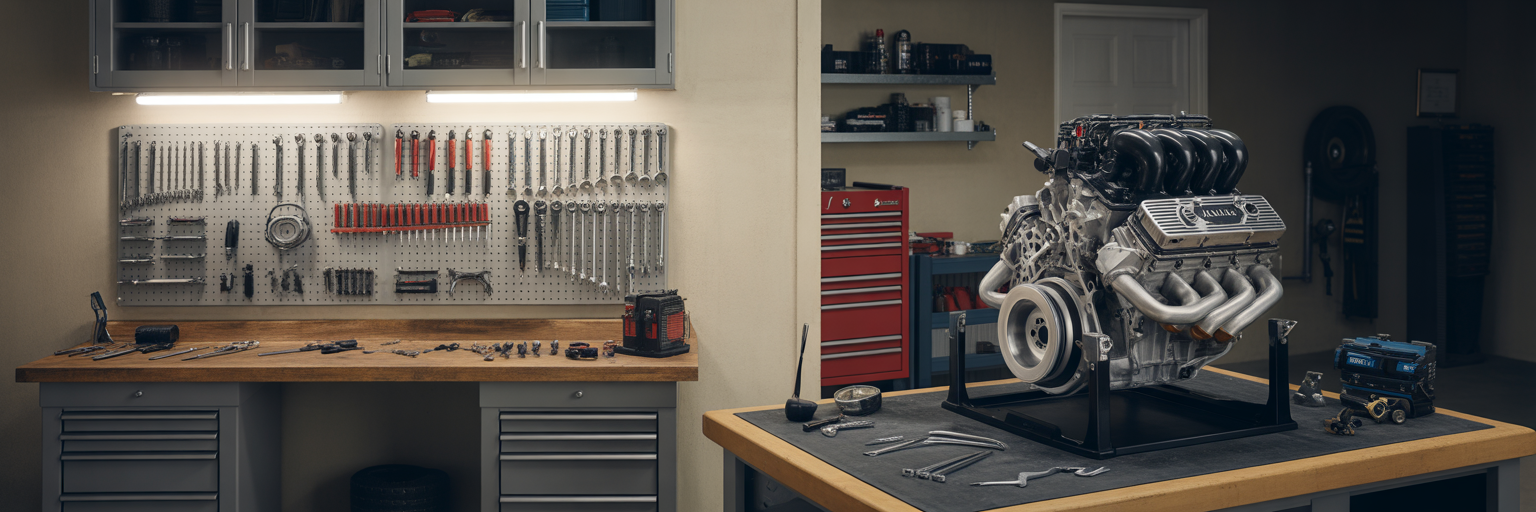
For a vehicle tasked with daily commutes, school drop-offs, and weekend errands, fuel economy is not an abstract number; it’s a recurring line item in the family budget. While no three-row SUV is a champion of efficiency, the difference between the Durango and Telluride can translate into hundreds, or even thousands, of dollars per year.
The Kia Telluride and the V6-powered Dodge Durango are surprisingly competitive, both delivering around 21 MPG in combined city and highway driving with all-wheel drive. The real divergence happens when you step up to the Durango’s V8 options. The 5.7L HEMI V8 drops to approximately 17 MPG combined, while the mighty 6.4L V8 in the SRT 392 model manages only about 15 MPG. That’s the price of performance.
To put that in perspective, here’s how those figures translate into real-world costs:
| Vehicle & Engine | Combined MPG (EPA Est.) | Estimated Annual Fuel Cost |
|---|---|---|
| Kia Telluride (V6 AWD) | ~21 MPG | ~$2,500 |
| Dodge Durango (V6 AWD) | ~21 MPG | ~$2,500 |
| Dodge Durango (5.7L V8 AWD) | ~17 MPG | ~$3,090 |
| Dodge Durango (6.4L V8 AWD) | ~15 MPG | ~$3,500 |
Note: Annual fuel cost is estimated based on 15,000 miles driven per year at an average gas price of $3.50 per gallon. Actual costs will vary.
The table makes the financial impact clear. Choosing a V8 Durango over a Telluride could add over $1,000 per year to your fuel bill. For a family managing a tight budget, that’s a significant consideration. This frames the choice in terms of lifestyle. If the SUV is the primary family vehicle handling the bulk of daily driving, the Telluride’s efficiency is a major practical advantage. If the Durango is a secondary vehicle, used mainly for towing and weekend fun, the higher fuel cost might be an acceptable trade-off for its thrilling capability. While the V6 Durango holds its own, the V8 models firmly occupy a category where performance is the priority and efficiency is an afterthought.
The Final Verdict: A Choice of Head or Heart
After comparing powertrains, utility, interiors, and costs, the conclusion of this Dodge Durango vs Kia Telluride comparison is clear. These are two excellent SUVs that cater to two fundamentally different buyers. The right choice depends entirely on whether you prioritize logic or emotion.
The Kia Telluride is unequivocally the choice of the head. It is the rational, sensible, and overwhelmingly smart purchase for the vast majority of families. It wins on nearly every practical metric: unmatched interior space and passenger comfort, better real-world fuel economy, a stellar reputation for reliability, and an industry-leading warranty that ensures peace of mind. The Telluride is the ultimate tool for making a busy family life run more smoothly, delivering maximum value and functionality for the money.
The Dodge Durango, especially with a V8, is the choice of the heart. It’s for the person who refuses to believe that having a family means giving up a powerful engine, a muscular presence, and the ability to tow almost anything. It makes compromises in third-row space, fuel efficiency, and potential long-term costs. But in return, it offers a thrill and an emotional connection that the Telluride is not designed to deliver. It’s a statement piece that doubles as a family hauler.
To make your final decision, consider these two profiles:
- The Telluride Buyer: You prioritize budget predictability, passenger comfort, and maximum flexibility. Your SUV is a tool, and you want the best one for the job. You need space for kids, their friends, and all their gear, and you appreciate a quiet, serene ride that makes long trips less stressful.
- The Durango Buyer: You value performance and capability above all else. Your vehicle is an extension of your personality. You have a large boat to tow, or you simply crave the sound and feel of a V8 engine. You are willing to pay more at the pump and for potential maintenance to drive something that excites you every day.
Ask yourself this simple question: what will you regret more in a few years? Not having enough space for everyone on a spontaneous road trip, or driving a vehicle that feels anonymous and uninspiring? If the answer is the former, the Telluride is your only choice. If it’s the latter, the Durango is one of the last of its kind, a true muscle SUV in a world of sensible crossovers. For those looking ahead, the SUV market continues to evolve, and seeing how electric options stack up in a Tesla Model X or Rivian R1S comparison can provide a glimpse into the future of family hauling.