
Every car develops its own set of sounds over time. There is the familiar click of the turn signal and the gentle thrum of the engine at idle. But then a new sound appears. It is a low hum that starts quietly and grows into a persistent drone as you pick up speed on the highway. This is one of the most common and unnerving noises a car can make, and it almost never fixes itself.
Pinpointing the Source of the Hum
Before you can fix a noise, you have to understand it. The first step in how to diagnose car noises is to become a careful observer. Many drivers make the mistake of assuming the worst, but a few minutes of focused listening can provide the clues needed to narrow down the possibilities. The goal is not to have an immediate answer but to gather enough information to ask the right questions.
Rotational Speed vs. Engine RPM: The First Clue
The most critical piece of information is determining what the noise is tied to. Does it change with the speed of the car or the speed of the engine? Here is a simple test. While driving at a speed where the hum is obvious, shift the car into neutral and let the engine revs drop. If the hum stays the same even as the engine quietens, you have a rotational issue. This means the source is something that spins at the same rate as your wheels, like tires, wheel bearings, or axles. If the noise changes with the engine’s RPM, the problem likely lies with the engine or transmission.
Learning to Listen: The Character of the Sound
Not all hums are created equal. Pay close attention to the sound’s personality. Is it a deep, resonant growl that you feel as much as you hear? Or is it a higher-pitched whine? A rhythmic sound, like a “womp-womp-womp” that repeats with each rotation of the tires, points to a different problem than a steady, constant drone. The character of the sound is a direct hint about the component that is failing.
Context is Everything: When Does the Hum Appear?
Next, note the specific conditions when the hum is most noticeable. Does it get louder when you turn the steering wheel? A hum that changes during a turn is a classic sign of a specific component failure. Does it appear only when you accelerate or does it persist even when you are coasting? A noise that changes with throttle input often points toward the drivetrain. A constant hum that is only dependent on vehicle speed suggests a different set of culprits.
Feeling the Problem: Vibrations Through the Steering Wheel and Seat
Often, a hum is accompanied by a vibration. Where you feel this vibration is another important clue. Think of it this way: vibrations travel the shortest path. If you feel a vibration in the steering wheel, the problem is likely at the front of the car, involving the front wheels, tires, or suspension. If you feel the vibration in the seat of your pants or through the floor, the issue is more likely located at the rear of the vehicle or in the central driveshaft.
The Prime Suspect: Failing Wheel Bearings
Having gathered the initial clues, we can now look at the most common source of a car humming noise gets louder with speed. In the majority of cases, the culprit is a failing wheel bearing. This component is fundamental to your car’s operation, yet it is often overlooked until it starts making noise.
What is a Wheel Bearing and What Does It Do?
Think of a wheel bearing as a set of tiny, high-strength steel balls or rollers held in a metal ring. They sit inside the wheel hub and their job is to allow the wheel to spin freely with minimal friction. Imagine them as the marbles in a track that let your wheel rotate smoothly for hundreds of thousands of miles. When they are working correctly, they are completely silent. When they start to fail, the smooth rolling action is replaced by grinding and friction, which generates the hum.
The Classic Sound of a Bad Wheel Bearing
A failing wheel bearing typically produces a deep, constant hum or growl. The pitch and volume of this noise are directly tied to your vehicle’s speed. The faster you go, the louder and higher-pitched the hum becomes. It is not affected by engine RPM, and it does not go away when you coast in neutral. It is a pure, speed-dependent drone that signals the bearing is wearing out.
The Turning Test: Your Best At-Home Diagnostic
The most effective way to confirm a bad wheel bearing at home is the turning test. The physics are simple. When you turn, the car’s weight shifts, putting more load on the wheels on the outside of the turn. This extra load will make a failing bearing complain louder. For example, if you are on a highway ramp curving to the left and the hum gets significantly louder, the problem is likely the right-side wheel bearing. If the noise gets louder on a right-hand curve, your attention should turn to the left-side bearing. This simple test is incredibly effective at isolating the problem.
Other Telltale Signs of Bearing Failure
Beyond the signature hum, there are other failing wheel bearing symptoms to watch for. These signs often appear as the bearing wear becomes more severe.
- Steering Wheel Vibration: A worn front wheel bearing can transmit a noticeable vibration through the steering wheel.
- A “Loose” Feeling: The wheel may feel slightly loose or wobbly, which can sometimes manifest as a pull to one side.
- ABS or Traction Control Lights: On many modern cars, the wheel speed sensor is integrated into the wheel hub assembly. A failing bearing can damage this sensor or create enough wobble to trigger an ABS or traction control warning light on your dashboard.
When Your Tires Are the Problem
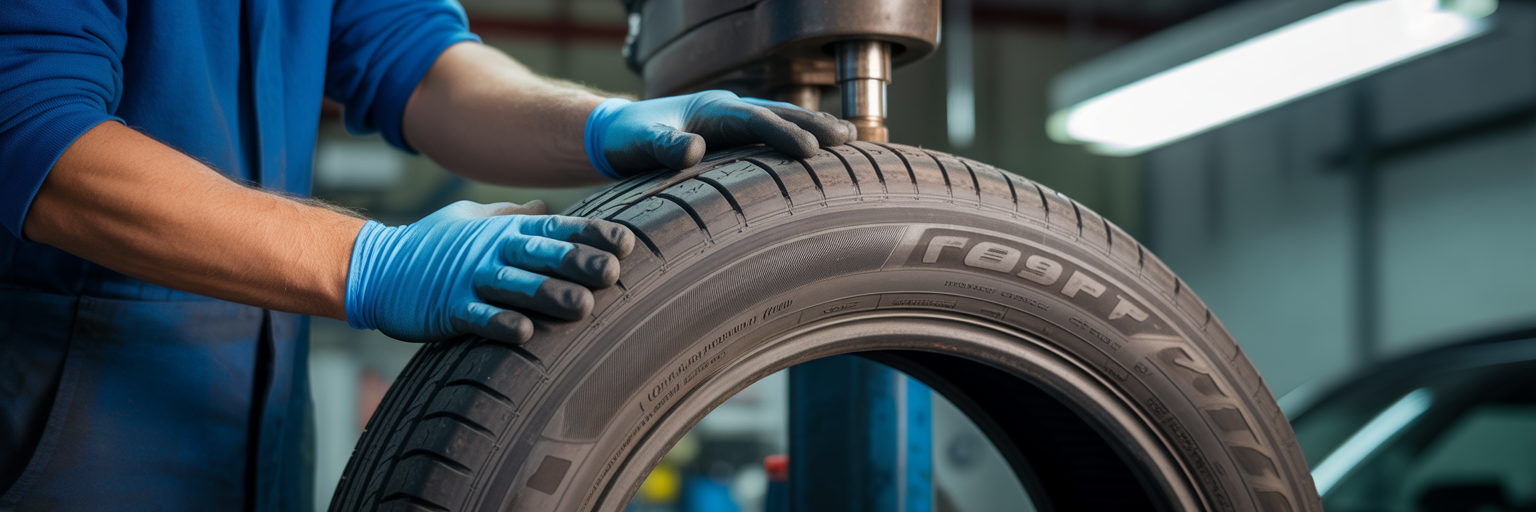
While wheel bearings are a common cause, they are not the only source of a speed-dependent hum. Sometimes, the problem is simpler and right there in plain sight: your tires. Irregular tire wear can create a noise that is easily mistaken for a mechanical issue, but it has its own distinct characteristics.
How Irregular Tire Wear Creates Noise
A healthy tire has a uniform tread that contacts the road smoothly. When a tire wears unevenly, this smooth contact is disrupted. Conditions like “cupping,” where small, scalloped dips form on the tread, or “feathering,” where tread blocks wear into a sawtooth pattern, create a rough surface. As this uneven surface rolls against the pavement, it generates an audible hum or roar. This uneven tire wear noise is the sound of your tire fighting the road instead of rolling smoothly over it.
Differentiating Tire Hum from Bearing Hum
So how do you tell the difference between a noisy tire and a bad bearing? The key is in the sound’s character and its behavior during turns. A bad wheel bearing typically produces a constant, steady drone. A noisy tire, on the other hand, often creates a more rhythmic sound that matches the tire’s rotation, sometimes described as a “womp-womp-womp.” More importantly, a noise caused by a tire will almost never change when you turn the steering wheel. The load-shifting principle of the turning test does not apply to tires in the same way it does to bearings.
Using Tire Rotation as a Diagnostic Tool
If you suspect your tires are the source of the hum, there is a definitive diagnostic test you can perform: rotating the tires. If you have a humming noise that seems to be coming from the front of the car, swap the front tires with the rear ones. If the noise moves to the back of the car after the rotation, you have confirmed that the tires are the problem. This simple procedure is one of the most effective ways to isolate a tire-related noise from a more serious mechanical issue.
Finding the Root Cause of Uneven Wear
Confirming that your tires are noisy is only half the battle. Uneven tire wear is not a root cause; it is a symptom of another problem. The most common culprits are poor wheel alignment, worn shock absorbers or struts, or improper tire inflation. Simply replacing the noisy tire without addressing the underlying issue will just lead to another ruined tire down the road. This is a perfect example of how consistent, preventative maintenance is key, which helps explain why some high-mileage cars age better than others when properly cared for.
Exploring Drivetrain and Axle Noises
If you have ruled out wheel bearings and tires, it is time to consider components deeper within the vehicle’s mechanical systems. Noises from the drivetrain, which includes your CV joints, driveshaft, and differential, have their own unique signatures. The key differentiator here is that these noises are almost always sensitive to load, meaning they change with throttle input.
CV Joints: Clicking on Turns, Humming on Straights
Constant Velocity (CV) joints are essential parts of the axles on front-wheel-drive and many all-wheel-drive cars. A worn outer CV joint produces the classic “clicking” or “popping” sound when you make a sharp turn. However, a failing inner CV joint can be more subtle. It can produce a humming or vibrating noise that is most noticeable under acceleration. If the hum appears when you step on the gas and lessens when you coast, an inner CV joint could be the culprit.
Driveshaft and U-Joints: A Rear-Wheel-Drive Concern
For rear-wheel-drive and four-wheel-drive vehicles, the driveshaft transmits power from the transmission to the rear axle. This shaft has universal joints (U-joints) that allow it to flex with the suspension. When U-joints wear out, they can cause a variety of noises. A common corroborating symptom is a distinct “clunk” when you shift from park into drive or reverse. As you drive, a worn U-joint can also produce a humming or ringing noise that changes with speed and load.
The Signature Whine of a Failing Differential
The differential is a complex set of gears that allows your wheels to turn at different speeds when you go around a corner. When these gears begin to wear or the fluid level gets low, they can produce a very specific noise. A proper differential whine diagnosis focuses on how the sound changes with throttle. It is typically a high-pitched whine or hum that appears during acceleration and disappears completely when you let off the gas and coast. In some cases, the opposite can be true, with the whine only appearing during deceleration. This on-throttle, off-throttle behavior is the telltale sign of a differential problem.
- Bearing Hum: Constant with vehicle speed, changes with turns.
- Drivetrain Hum: Changes with load (throttle on vs. throttle off).
Transmission-Related Humming and Whining
The transmission is the heart of your car’s drivetrain, and any noise from this area can cause significant anxiety. While some transmission noises signal serious trouble, others can have a surprisingly simple cause. Understanding the difference is key to avoiding a catastrophic and expensive failure.
Low Fluid: The Most Common and Fixable Cause
The most frequent cause of a whining noise from a transmission is low fluid. The transmission has a hydraulic pump that circulates fluid to operate the internal components. When the fluid level is low, the pump can suck in air, causing it to whine. This whine often changes pitch with engine RPM, getting higher as you rev the engine. It might be more noticeable when the car is cold and can sometimes diminish as the fluid warms up and expands.
Signs of Serious Internal Transmission Problems
Unfortunately, not all transmission noises are so easily fixed. A constant hum or whine that persists regardless of gear and is present even when the car is in park or neutral could indicate more severe internal issues. Worn gear sets, a failing torque converter, or damaged internal bearings can all produce humming noises. These sounds are a clear signal that the transmission’s mechanical components are wearing out and require professional attention.
How to Check Transmission Fluid (If Applicable)
If your car has a transmission fluid dipstick, you can check the level yourself. It is crucial to follow the procedure in your owner’s manual, as some cars require the engine to be running and the transmission to be in a specific gear. However, be aware that many modern vehicles have “sealed” transmissions with no dipstick. These systems are designed to be serviced by professionals and checking the fluid level is not a simple DIY task. Attempting to do so without the proper tools and knowledge can cause more harm than good.
Why Transmission Noises Demand Immediate Attention
Here is the most important takeaway: you should never ignore a persistent transmission noise. Unlike a noisy tire, a whining transmission is a direct warning of potential failure. Continuing to drive can turn a manageable repair, like fixing a leak and topping off the fluid, into a complete transmission rebuild or replacement. Addressing the issue promptly is a critical part of proactive vehicle care and is fundamental to how to keep your car’s engine running for years and its supporting systems healthy.
A Step-by-Step Diagnostic Guide for Drivers
Now that you understand the potential culprits, you can synthesize that knowledge into a logical diagnostic process. This step-by-step guide will help you safely narrow down the source of the hum before you pick up a wrench or call a mechanic.
- The Controlled Road Test: Formalize the listening process. Find a safe, quiet road. Drive at various speeds, noting exactly when the hum starts and how it changes. Perform gentle left and right turns to see if the noise changes, as discussed for wheel bearings. Safely shift into neutral while moving to separate wheel speed from engine speed. Document what you hear.
- The Stationary Visual Inspection: With the car parked on a level surface, perform a walk-around. Look closely at your tires. Do you see any obvious signs of uneven wear, like cupping or feathering? Look under the car at the CV axles. Are the rubber boots torn? A torn boot flings grease everywhere, which is a clear sign of a future or current failure.
- The Wheel Play and Spin Check: This is a critical step, but safety is paramount. Never work under a car supported only by a jack. Use proper jack stands. With a corner of the car safely lifted, grab the tire at the top and bottom (12 and 6 o’clock positions) and try to wiggle it. Any significant play or clunking suggests a bad wheel bearing. Then, grab the tire at the 3 and 9 o’clock positions and wiggle it; play here often points to worn steering components. Finally, spin the wheel by hand. Does it spin freely and silently, or do you hear a grinding or feel a roughness?
- The Tire Rotation Confirmation: If your road test and visual inspection point toward a tire issue, performing a tire rotation is the definitive test. If the noise moves from the front to the back of the car after the rotation, you have found your problem.
- Knowing When to Call a Professional: This guide empowers you to be a better diagnostician, but it is also important to know your limits. If your tests confirm a bad wheel bearing, or if the noise is clearly related to the transmission or differential, it is time to consult a trusted mechanic. Your detailed observations will be invaluable, helping them pinpoint the issue faster and more accurately. When documenting your findings, it can be useful to record the noise with your phone. Just be sure it is protected in the garage environment with something like a durable silicone phone case. Having this information can also help you anticipate costs, which is a topic we explore in guides like our look at the best used luxury SUVs that won’t destroy you on repairs.
The Dangers of Driving with a Hum
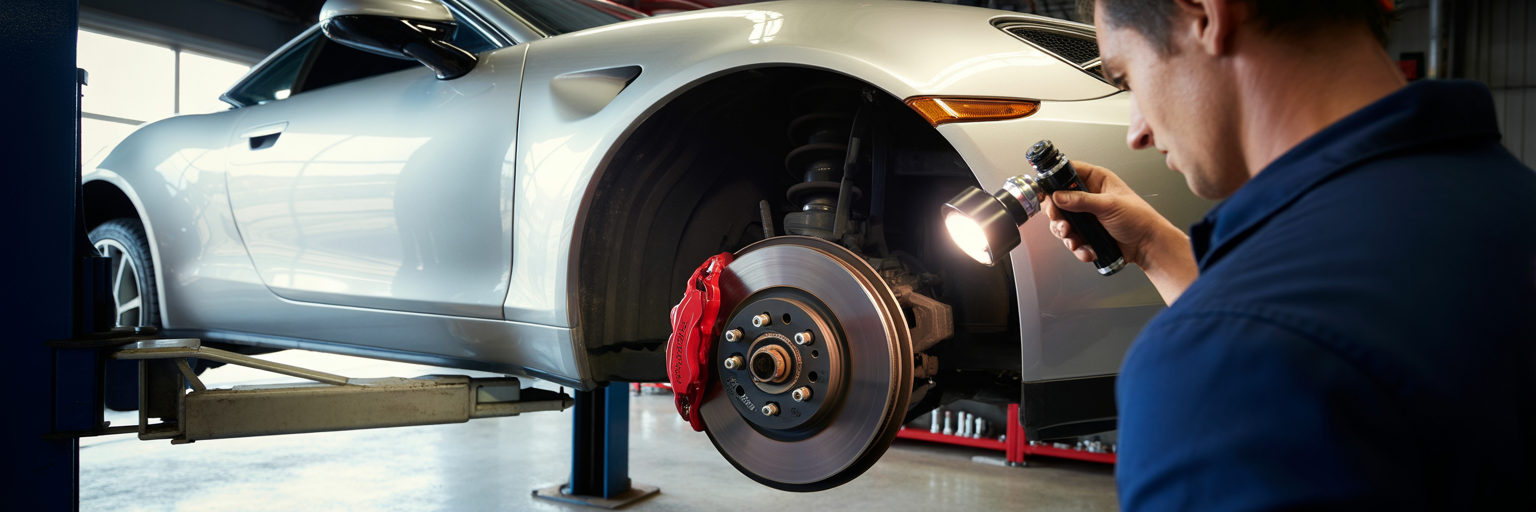
It can be tempting to turn up the radio and ignore a new humming noise, hoping it will go away. This is a mistake. That hum is not just an annoyance; it is a warning sign of a mechanical problem that can have serious consequences for both your safety and your wallet if left unaddressed.
The Risk of Catastrophic Wheel Bearing Failure
The most severe risk, particularly with a failing wheel bearing, is catastrophic failure. As the bearing wears, it generates immense heat. In a worst-case scenario, this can lead to the bearing seizing or collapsing entirely. This can cause the wheel hub to break, potentially resulting in the wheel detaching from the vehicle while you are driving. The outcome is a complete loss of control, a situation that is especially dangerous at highway speeds.
Cascading Damage to Other Components
Ignoring a hum also invites the problem of cascading damage. A vibrating wheel bearing puts extra stress on the hub, suspension components, and even the tire itself. A failing differential can shed metal particles that contaminate the entire axle assembly, turning a gear replacement into a full axle rebuild. What starts as a relatively contained and affordable repair can quickly spiral into a much larger and more expensive job that involves replacing multiple related parts.
How a Hum Can Disable Your Safety Systems (ABS, Traction Control)
A critical point many drivers miss is the connection between mechanical components and modern electronic safety systems. The Anti-lock Braking System (ABS) and traction control rely on wheel speed sensors to function. On most cars, this sensor is integrated directly into the wheel hub assembly. A failing wheel bearing can generate enough wobble or “runout” to disrupt the sensor’s reading, or it can damage the sensor outright. This will disable your ABS and traction control, leaving you without these crucial safety aids in an emergency braking or avoidance maneuver.
From Diagnosis to Solution: Repair Options and Costs
Once you have a confident diagnosis, the final step is deciding on a solution. Understanding the repair options, typical costs, and the complexity of the job will help you make an informed decision about whether to tackle it yourself or hand the keys to a professional.
The following table provides a general overview of common repairs associated with a humming noise.
| Problem | DIY-Friendly? | Typical Cost (USD) | Notes & Complexity |
|---|---|---|---|
| Tire Rotation | Yes | $0 – $25 | Basic tools required. Many tire shops offer free rotation. |
| Tire Replacement (Single) | No | $150 – $400+ | Requires professional mounting and balancing. |
| Wheel Bearing Replacement (Hub Assembly) | For advanced DIYers | $250 – $800 per wheel | Requires specialized tools, torque specs, and knowledge. Safety is critical. |
| CV Axle Replacement | For advanced DIYers | $300 – $900 per axle | Can be messy and requires disassembling suspension components. |
| Differential Fluid Service | Yes (with right tools) | $100 – $300 | Requires a lift or jack stands, fluid pump, and correct fluid type. |
| Differential Rebuild | No | $1,500 – $4,000+ | Highly specialized job requiring precision tools and expertise. |
| Transmission Fluid Service | Varies | $150 – $500 | DIY possible on older cars with dipsticks; most modern cars require a pro. |
Note: Costs are estimates for parts and labor in the United States and can vary significantly based on vehicle make, model, and location. This table serves as a general guide to help you understand the potential financial and technical commitment for each repair.
When it comes to parts, especially for critical components like wheel bearings, investing in a quality OEM or reputable aftermarket brand is wise. Cheaper parts often use inferior materials and manufacturing processes, leading to premature failure. Ultimately, the best way to deal with these noises is to prevent them. Regular tire rotations, wheel alignments, and fluid checks are not expenses; they are investments in your vehicle’s longevity and your own peace of mind. For those who want to learn more about overall car care, our collection of informative articles is a great place to start.