The Frustrating Puzzle of a Persistently Low Tire
Ever since the Tire Pressure Monitoring System (TPMS) became standard on all new passenger vehicles in the United States after 2007, millions of drivers have become familiar with that little amber light on the dashboard. It is a persistent, often annoying, reminder that something needs attention. The real frustration begins when you check the tire, walk around it twice, and find absolutely nothing wrong. There is no nail, no screw, no obvious gash. Yet, every few days, the light comes back on for that same tire. This is the classic mystery of why does one tire keep losing air, and it is more than just an inconvenience.
That TPMS light is not just a nag. It is a critical safety warning. An underinflated tire compromises your vehicle’s handling, making it less responsive in corners and during emergency maneuvers. It significantly increases your braking distance, which can be the difference between a close call and a collision. At highway speeds, low pressure causes the tire’s sidewall to flex excessively, generating immense heat and dramatically raising the risk of a catastrophic blowout.
Beyond the immediate safety concerns, there are economic costs. The various car tire pressure loss causes directly impact your wallet. Underinflation increases rolling resistance, forcing your engine to work harder and burn more fuel. Those extra trips to the gas station add up. At the same time, the tire wears down unevenly and prematurely, especially on the shoulders, drastically shortening its lifespan and forcing you to buy a replacement sooner than expected. Solving this puzzle is not just about getting rid of a dashboard light. It is about ensuring your safety and protecting your investment.
To get to the bottom of it, we need to look beyond the obvious. The culprit is often a hidden issue with the valve stem, a slow leak from the wheel rim itself, or a puncture so small it is nearly invisible. This guide will walk you through the most common hidden causes, show you how to diagnose them, and help you understand when a repair is safe and when replacement is the only option.
Diagnosing Leaks at the Valve Stem and Core

Before you assume the tire itself is faulty, your investigation should start with one of its smallest and most overlooked components: the valve assembly. This little part acts as the gatekeeper for the air inside your tire, and it is a frequent source of a slow leak no nail can explain. The assembly consists of two main parts: the valve stem, which is the rubber or metal tube that pokes through the wheel, and the valve core, the tiny spring-loaded pin mechanism inside it.
Rubber valve stems live a hard life. They are constantly exposed to the elements, from the intense sun in Arizona to the road de-icing chemicals used across the Snow Belt. Over time, ozone and UV radiation cause the rubber to dry out, become brittle, and develop tiny cracks, usually right at the base where the stem flexes against the wheel. These cracks can be almost invisible but are large enough to let air seep out slowly and consistently.
The valve core, on the other hand, usually fails in one of two simple ways. It can work itself slightly loose from road vibrations, breaking its airtight seal. Or, a microscopic piece of dirt or debris can get lodged in the mechanism when you are filling the tire, preventing the pin from seating completely. In either case, the result is a very gradual loss of pressure that leaves you scratching your head.
Fortunately, diagnosing these issues is straightforward. You can perform a simple test at home with just a bit of soap and water.
- Mix a solution of dish soap and water in a spray bottle or a small cup. You want it bubbly.
- With the valve cap removed, apply the soapy water directly onto the valve opening. If you see bubbles continuously forming from the center pin, the valve core is leaking.
- Next, apply the solution around the base of the valve stem where it meets the wheel. If bubbles appear here, you have a cracked and leaking valve stem.
If the core is the problem, you can sometimes fix it by gently tightening it with an inexpensive valve core tool. However, if the stem itself is cracked, it must be replaced. This is a job for a tire shop, as it requires breaking the tire’s bead seal to install a new stem from inside the wheel.
When the Wheel Itself Is the Source of the Leak
If the valve stem checks out, the next place to look is the wheel itself. A tire does not just hold air on its own; it forms an airtight seal against the wheel rim. This connection, known as the bead seal, is where the tire’s edge (the bead) is pressed firmly against a smooth surface on the wheel (the bead seat). When this surface is compromised, you get a persistent tire bead seal leak.
The most common culprit, especially on the aluminum alloy wheels found on most modern cars, is corrosion. It is a slow, insidious process. Road salt from winter driving, corrosive brake dust, and trapped moisture can work their way under the wheel’s protective clear coat. Once there, they cause the aluminum to oxidize, creating a rough, bubbly, or flaky surface right where the tire needs to seal. Air finds microscopic paths through this uneven surface, resulting in a tire losing air but no puncture being present.
This kind of wear and tear is a major factor in how vehicles hold up over time. Just as some engines and chassis are more resilient, certain wheel finishes and alloys are more susceptible to this type of degradation. Understanding these vulnerabilities is part of smart ownership, similar to knowing why some high-mileage cars age better than others and what to look for.
Physical damage is another major cause. We have all hit a pothole that felt like it shook the whole car. A sharp impact like that can easily bend the lip of the wheel rim. Even a slight bend, one that you might not notice visually, can be enough to break the perfect circle needed for an airtight bead seal. In more severe cases, an impact can cause a hairline crack in the alloy. These cracks are often hidden by dirt and brake dust and may only open up under the pressure of an inflated tire, making them incredibly difficult to spot without a professional inspection.
Fixing a wheel-related leak is not a DIY job. It requires a tire shop to dismount the tire from the wheel. If corrosion is the issue, a technician will use a wire wheel or sander to clean the oxidation off the bead seat, restoring a smooth surface. They will then apply a special bead sealer before remounting the tire to ensure a perfect seal. If the wheel is bent, it can sometimes be straightened on a specialized machine. However, if a crack is found anywhere on the wheel, it is no longer structurally sound. A cracked wheel is a major safety hazard and must be replaced immediately.
Hidden Tread Punctures and Sidewall Damage
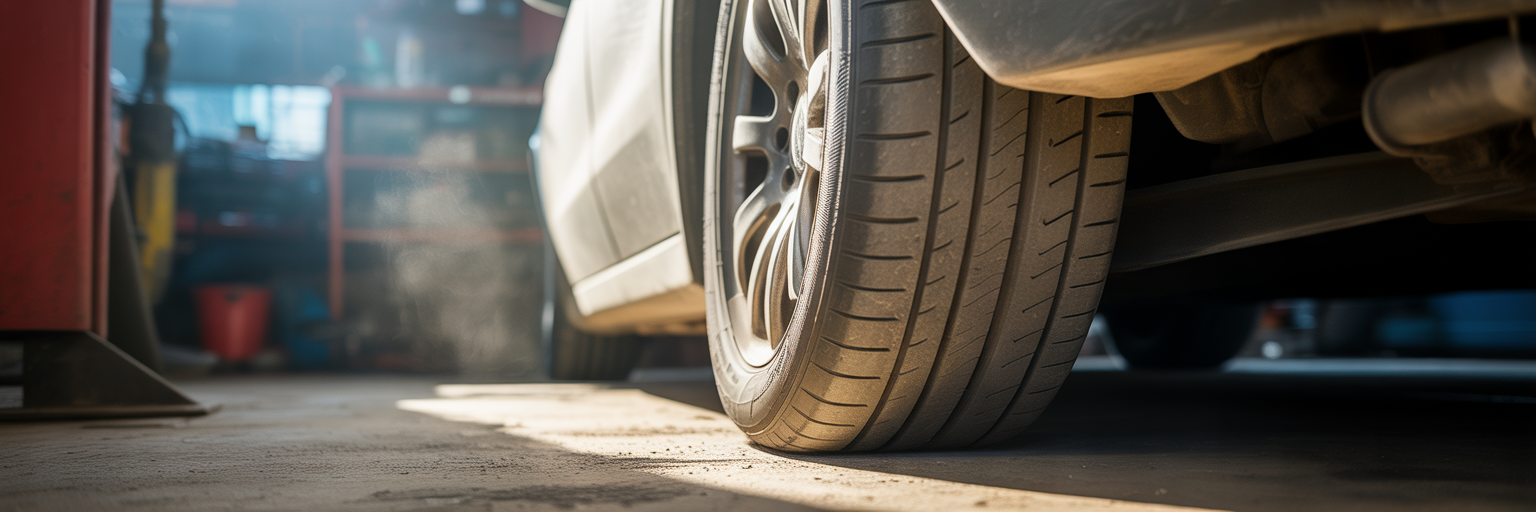
Sometimes, the answer to “why does one tire keep losing air” is exactly what you first suspected: a puncture. The problem is that it is not always a big, obvious nail. A tiny sliver of glass, a thin piece of metal wire from a truck tire blowout, or a sharp shard of stone can embed itself in the tread. These objects can create a leak that loses only one or two PSI a week, making it incredibly frustrating to diagnose. The object might be worn flush with the tread or be so small that it is impossible to see without a thorough, hands-on inspection.
While a tiny tread puncture is an annoyance, damage to the sidewall is a far more serious matter. If you hit a curb or a deep pothole at an angle, the impact can pinch the tire against the wheel rim, severing the internal structural cords without actually piercing the outer rubber. This creates a weak spot that appears as a bulge or bubble on the side of the tire. This condition, sometimes called a “zipper failure,” means the tire’s structure is compromised and it is at high risk of a sudden blowout, especially at speed.
This brings us to one of the most important rules in tire safety: any puncture, cut, or damage on the tire’s sidewall or shoulder (the curved area where the tread meets the sidewall) is absolutely unrepairable. The reason is simple physics. The sidewall is designed to flex constantly as the tire rotates. No patch or plug can withstand that continuous movement and maintain a safe, permanent seal. Attempting to repair a sidewall is gambling with your safety.
To check for these hidden issues, you need to get up close. In good light, carefully run a gloved hand over the entire tread surface. Go slowly. You are more likely to feel a tiny, sharp object than see it. Then, visually inspect both the inner and outer sidewalls for any scrapes, cuts, or tell-tale bulges. Ensuring a vehicle is equipped with safe, reliable tires is a fundamental part of car ownership, a lesson that is especially important for new drivers who are still learning what to look for. It is a core principle behind guides on the best used cars for teen drivers who actually like cars, where safety is the top priority.
The Lingering Effects of a Faulty Past Repair
If you bought your car used or have had a flat fixed before, the source of your slow leak might not be new damage at all. It could be a previous repair that is starting to fail. Not all tire repairs are created equal, and understanding the difference is key to diagnosing a recurring problem. Many drivers are only familiar with the most basic fix: an external plug.
A tire plug is a sticky, fibrous rope that gets pushed into the puncture from the outside of the tire. It is often sold in emergency kits and used by some shops as a quick, cheap fix. While it can get you off the side of the road, a plug should only be considered a temporary solution. Over time, the constant flexing of the tire can cause the plug to shrink, harden, or work its way loose. It may not have created a perfectly airtight seal in the first place, leading to the kind of slow leak that drives you crazy.
The industry-standard method, and the only one recommended by tire manufacturers for a permanent repair, is the patch-plug combination. This is a much more involved process. A technician dismounts the tire from the wheel, inspects the damage from the inside, and prepares the inner liner by cleaning and buffing the area around the puncture. Then, a special unit that combines a rubber stem (the plug) with a flat patch is pulled through the hole from the inside and cemented in place. This creates a robust, permanent seal that is vulcanized to the tire, effectively becoming part of its structure.
If you have a tire that keeps losing air and you know it has been repaired in the past, a faulty plug is a prime suspect. The only way to know for sure is to take it to a reputable tire shop. They can dismount the tire and inspect the old repair. If it was just a plug, they can often remove it and perform a proper internal patch-plug repair, provided the original damage is within repairable limits. This highlights the value of professional service; a quick, cheap fix can end up costing you more time and frustration down the road.
How Temperature Changes Can Mimic a Leak
Sometimes, the reason your TPMS light is on has nothing to do with a leak. It is just basic physics. Air is a gas, and as it gets colder, it contracts and becomes denser. This drop in temperature causes the pressure inside your tires to decrease. This is one of the most common car tire pressure loss causes that is not actually a fault. The general rule of thumb for drivers is simple: for every 10°F drop in the ambient temperature, your tire pressure will decrease by about 1 PSI (pounds per square inch).
This phenomenon explains a nearly universal experience for drivers across the country: waking up to a TPMS light on the first truly cold morning of autumn. After a warm night, a sudden 30-degree temperature drop can easily cause your tire pressure to fall by 3 PSI, which is often enough to trigger the warning system. In this case, there is nothing wrong with your tires. So, how do you tell the difference between a normal temperature-related drop and a real leak?
The key is to look at the pattern. If the TPMS light comes on and you find that all four of your tires are low by a similar amount, it is almost certainly due to the cold weather. However, if you check and find that three tires are at the correct pressure and only one is significantly lower, you have confirmed a leak in that specific tire. A temperature drop affects all tires equally; a leak only affects one.
The actionable advice here is to make tire pressure checks a part of your routine. Check your tires at least once a month and always adjust them during major seasonal temperature swings in the spring and fall. It is a simple step that is fundamental to vehicle upkeep, just as important as knowing how to keep your car’s engine running for years. Always inflate your tires to the pressure recommended by your vehicle’s manufacturer, which is found on the sticker inside the driver’s door jamb, not the maximum pressure molded into the tire’s sidewall.
A Step-by-Step Guide to Finding the Leak at Home
If you have ruled out temperature changes and want to pinpoint the problem yourself, you can become your own detective. The most effective method for how to find a slow tire leak is the soap-and-water test. It is a time-tested technique that can reveal even the most microscopic of leaks. This process empowers you to find the exact source of the problem before you even head to the tire shop.
Here is how to do it right:
- Preparation is Key: First, you need to make the escaping air easier to detect. Take the problematic tire to a gas station and inflate it to the maximum cold pressure listed on the tire’s sidewall. This is for testing purposes only. The higher pressure will force air out of any leak more vigorously. Remember to deflate it back to the recommended pressure on your door jamb sticker when you are done.
- Systematic Application: Mix a generous amount of dish soap with water in a spray bottle to create a bubbly solution. Now, apply it methodically. Do not just spray randomly. Start by completely soaking the entire valve stem and its base. Then, spray the full circumference of the wheel where the tire bead meets the rim. Do this for both the outer and inner sides of the wheel. Next, move to the tread, spraying it in sections and rotating the tire to cover the entire surface. Finally, thoroughly spray both sidewalls.
- Interpreting the Results: Now, watch closely. A slow tire leak no nail is visible for will not always produce a loud hiss or a dramatic stream of bubbles. You are looking for something more subtle. It might be a small cluster of tiny, fizzing bubbles that continuously appear in one spot. It could also be a single, larger bubble that slowly forms, gets wiped away, and then reforms in the same place. This visual confirmation is your “aha!” moment, telling you exactly where the problem lies.
Mark the spot with a piece of chalk or a wax crayon. Now you can go to the tire shop armed with precise information, which can save the technician time and ensure they address the correct issue.
Making the Final Call: Repair or Replace
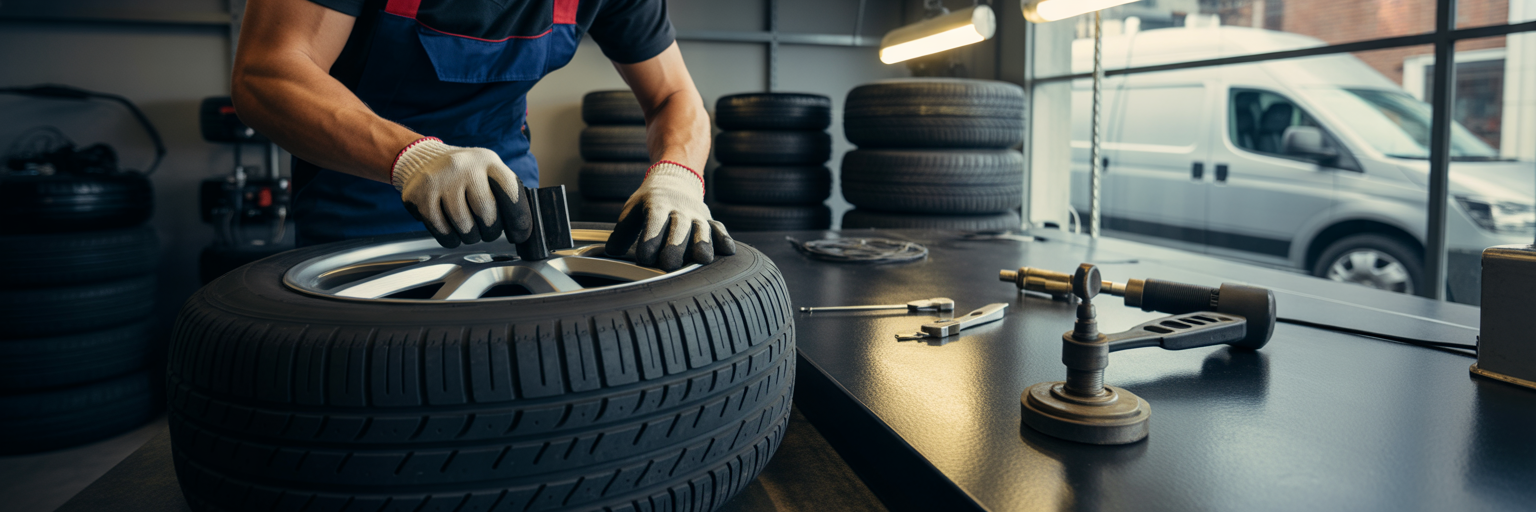
After your investigation, you are faced with the final decision. Is the tire safely repairable, or does it need to be replaced? The answer is not a matter of opinion; it is dictated by strict industry safety standards. According to the U.S. Tire Manufacturers Association, a puncture can only be safely repaired if it meets two critical criteria: it must be located in the central tread area of the tire, and it must be no larger than 1/4 inch in diameter.
To make the decision clearer, here are the absolute red flags that mandate immediate replacement. If your tire or wheel exhibits any of these, a repair should not be attempted.
- Any puncture or cut in the sidewall or shoulder area.
- A puncture in the tread that is larger than 1/4 inch.
- Multiple punctures that are too close together (generally within 16 inches of each other).
- Evidence that the tire was driven on while severely underinflated or flat, indicated by a tell-tale crease line on the sidewall or a fine rubber powder on the inside of the tire.
The wheel itself has its own set of rules. While minor corrosion on the bead seat can be cleaned and sealed, and some minor bends can be straightened by a professional, any crack in a wheel means it is structurally compromised and must be replaced without question.
This table summarizes the guidelines to help you make an informed choice:
| Damage Type | Location | Size | Decision |
|---|---|---|---|
| Simple Puncture | Central Tread Area | Under 1/4 inch | Repairable (with internal patch) |
| Puncture | Sidewall or Shoulder | Any size | Replace Tire |
| Puncture | Central Tread Area | Over 1/4 inch | Replace Tire |
| Cut or Gouge | Sidewall | Any size | Replace Tire |
| Bulge or Bubble | Sidewall | Any size | Replace Tire Immediately |
| Corrosion | Wheel Bead Seat | N/A | Repairable (by professional) |
| Bent Lip | Wheel Rim | Minor | Often Repairable (by professional) |
| Crack | Wheel | Any size | Replace Wheel Immediately |
Note: This table provides general guidelines based on industry standards. The final decision should always be made after a professional inspection.
While diagnosing a leak at home can be empowering, the final fix should be left to a qualified technician. They have the equipment to properly dismount the tire, inspect it inside and out, and perform a safe, permanent repair or replacement. Your safety on the road is paramount. For more expert guides and in-depth vehicle reviews, we invite you to explore the resources available at Car Phanatics.