
Full-size trucks have grown substantially over the last two decades, yet many American garages have not. This growing disconnect is a critical, and often overlooked, hurdle for new truck owners.
Fitting the 2026 Ford F-150 SuperCrew in a 20-Foot Space
The excitement of bringing home a new truck can quickly turn to frustration if it doesn’t fit in the garage. This expensive and surprisingly common mistake is entirely avoidable with a little prep work. When considering a 2026 Ford F-150 SuperCrew, the question of whether it will fit into a standard 20-foot garage doesn’t have a simple yes or no answer. The deciding factor is the bed configuration you choose.
A standard 20-foot garage measures 240 inches deep. The F-150 SuperCrew equipped with the shorter 5.5-foot bed has an overall Ford F-150 length of approximately 231.7 inches. A quick calculation shows this leaves a theoretical clearance of just over 8 inches. While it may sound manageable, this is an extremely tight fit that leaves almost no room for error. You would need to park perfectly every single time, with only four inches of buffer at the front and back.
The situation becomes much clearer with the larger option. If you opt for the SuperCrew with the 6.5-foot bed, the truck’s overall length extends to around 243.7 inches. This makes it physically impossible to fit inside a 240-inch garage. The garage door simply will not close, making the decision for you.
However, the raw numbers only tell part of the story. The concept of “usable space” is far more important than the garage’s total length. Real-world obstacles like a tow hitch, a front license plate bracket, workbenches, or even the garage door mechanism itself will reduce the available space. That slim 8-inch clearance for the shorter model can vanish quickly, making a proper F-150 garage fit more precarious than the specifications suggest.
A Deep Dive into F-150 SuperCrew Dimensions
Beyond simple length, a successful garage fit depends on a complete understanding of the truck’s other critical dimensions. Width is a major factor, not just for clearing the garage door opening but for having enough room to open the truck’s doors once you are parked inside. The 2026 F-150 measures approximately 79.9 inches wide with its mirrors folded. With them extended for driving, that width balloons, creating a much larger footprint that needs to be managed during entry.
Height is another crucial measurement that can vary. A standard 4×4 SuperCrew sits around 77.2 to 77.3 inches tall, but this can change. Optional equipment like the FX4 Off-Road Package or different factory tire choices can alter the final measurement. Even a slight increase in height can create a clearance issue with the garage door header or the opener mechanism, turning a routine parking job into a costly repair.
To visualize these key truck garage dimensions, it helps to see them side by side. According to official specifications published by Ford, the two SuperCrew configurations have distinct profiles.
| Configuration | Overall Length | Wheelbase | Width (Mirrors Folded) | Height (4×4) |
|---|---|---|---|---|
| SuperCrew w/ 5.5-ft Bed | ~231.7 inches | 145.4 inches | ~79.9 inches | ~77.2 inches |
| SuperCrew w/ 6.5-ft Bed | ~243.7 inches | 157.2 inches | ~79.9 inches | ~77.3 inches |
Note: Dimensions are based on preliminary 2026 model year data for standard configurations. Height can vary based on tire size, payload, and specific packages like FX4. Always confirm the exact specs for your chosen trim.
These static numbers also influence the truck’s dynamic maneuverability. The longer wheelbase of the 6.5-foot bed model corresponds to a wider turning radius. This means it not only requires more length to park but also needs more space in the driveway to align properly for a straight entry into the garage. A truck that technically fits on paper may be impossible to park if your driveway approach is too tight.
How to Accurately Measure Your Garage Space

Before you even visit a dealership, the most important tool you can use is a tape measure. Accurately assessing your garage is the foundation of a stress-free ownership experience. Following a clear process for how to measure a garage for a truck will prevent any unwelcome surprises. Here are the essential steps to get a true picture of your available space.
- Measure Usable Depth: This is the most critical measurement and where many people make a mistake. Extend your tape measure from the surface of the back wall directly to the inside face of the closed garage door. Do not measure to the door opening or the exterior wall, as this will give you an inaccurate, overestimated number. You need to know the absolute maximum length your vehicle can occupy when the door is shut.
- Identify Space Intrusions: Walk the perimeter of your garage and note anything that protrudes from the walls or sits on the floor. These obstacles consume valuable inches and must be accounted for. Common intrusions include:
- Water heaters or HVAC units
- Support columns or structural pillars
- Steps leading into the house
- Workbenches and tool chests
- Permanent storage shelves and cabinets
- Explain the ‘Garage Door Tax’: This is an often-overlooked detail that can make or break a tight fit. The garage door itself takes up space. Look at the tracks on the sides, the horizontal reinforcement bars on the door panels, and the central opener mechanism. These components can protrude several inches into the garage, effectively reducing both your usable depth and your vertical clearance when the door is open. Measure how far these elements stick out and subtract that from your total depth.
- Measure Width and Height: For width, measure the narrowest point of the garage door opening, which is typically between the door’s weather stripping. This is your true entry clearance. For height, measure from the garage floor to the lowest hanging point. This might be the bottom of the open garage door, the track itself, or the garage door opener motor. This measurement determines your maximum vertical clearance.
Analyzing Width, Height, and Entry Clearance
With accurate measurements of both your garage and the truck, you can begin to analyze the dynamic challenge of actually getting the vehicle inside. The first hurdle is width. While a modern double garage door is typically 16 feet wide, many older homes or those with a different design have single doors that are only 8 or 9 feet wide. For a truck that is nearly 80 inches (6.6 feet) wide before its mirrors are even considered, an 8-foot opening leaves less than a foot of clearance on either side. This requires precise alignment every time you enter or exit.
This brings us to mirror clearance. The F-150’s width with mirrors extended is significantly greater than its folded measurement. While features like power-folding mirrors are a fantastic convenience, their effectiveness depends entirely on driver discipline. You must remember to fold them every single time before entering the garage. Forgetting just once can lead to costly damage to the mirror assembly, the door frame, or both.
Vertical clearance presents its own set of risks. This is especially true if you are considering a lifted truck or plan to add accessories like a roof rack. You must compare your truck’s total potential height, including any modifications, with the lowest point you measured in your garage. This could be the garage door header, the bottom of the open door, or the opener unit. A miscalculation here can result in scraping the roof or snagging an antenna, causing damage that is both expensive and frustrating.
Finally, you must consider the approach angle. The layout of your driveway is a critical, often-forgotten factor. A long vehicle like the 2026 Ford F-150 SuperCrew has a large turning radius. If your driveway is narrow or requires a sharp turn to line up with the garage door, you may find it impossible to get the truck straight for entry, even if the garage itself is technically large enough. The space outside the garage is just as important as the space inside.
The Difference Between a Technical and Functional Fit
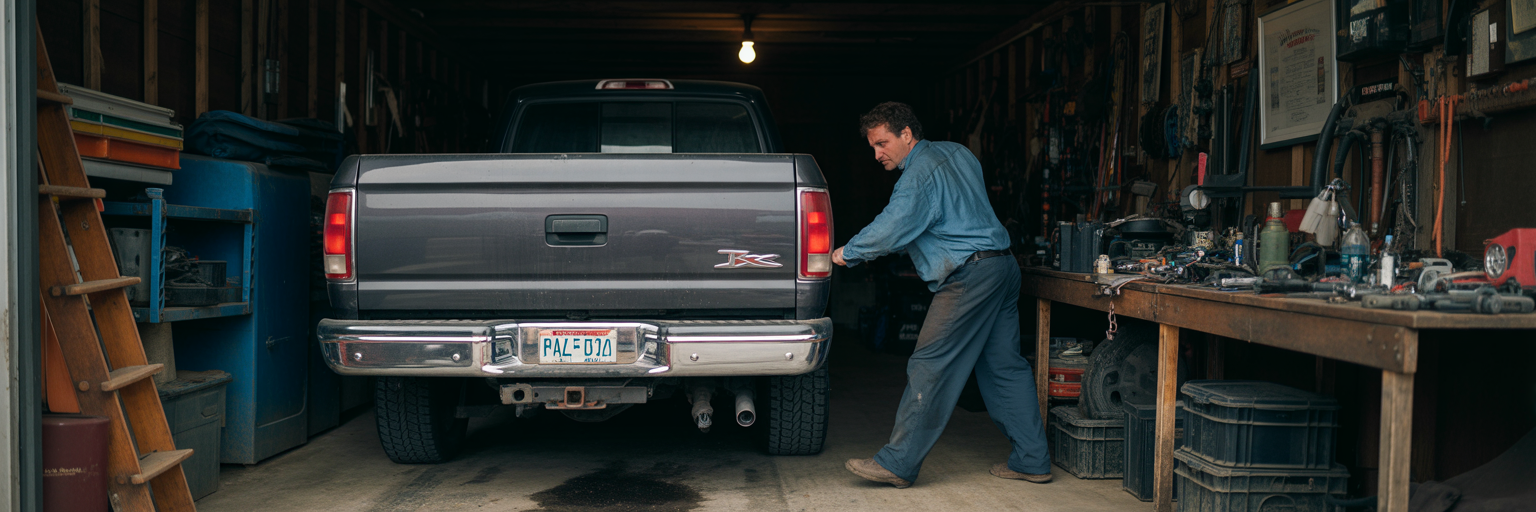
After all the measuring and math, it is crucial to understand the difference between a truck that technically fits and one that functionally fits. The distinction is the key to long-term satisfaction. A “technical fit” is the bare minimum scenario: the truck is inside the garage, and the door can close behind it, but that is the extent of the success. This situation is often a source of constant stress. Every entry and exit is a high-stakes maneuver with a significant risk of dings, scrapes, and dents on your new vehicle or the garage walls.
A “functional fit,” on the other hand, is the ideal. This means the truck fits with enough buffer space to be practical for daily life. You can comfortably walk around the vehicle without squeezing past it. You can open the doors wide enough to get in and out without hitting a wall. You can still access other items stored in your garage. This is the standard you should be aiming for.
As a general rule, a functional fit requires a minimum of 2 to 3 feet of space on at least one side of the vehicle to allow doors to open fully. It also requires at least 18 to 24 inches of clearance at the front or back to create a safe walkway. Without this buffer, the garage ceases to be a useful, multi-purpose space. The tight F-150 garage fit severely compromises its utility, turning it into little more than a custom-fit vehicle sleeve.
To determine if you have a functional fit, ask yourself some practical questions about the human element of using the space:
- Can you unload groceries from the back seat or access items in the truck bed?
- Can you safely get a child out of a car seat without bumping the door against a wall?
- Can you still get to your workbench, tool chest, or lawnmower?
- If you have a two-car garage, can another family member comfortably get into their car parked beside the truck?
This is a key consideration for any family vehicle, not just large trucks, as a functional fit ensures safety and convenience for everyone. You can explore more on this topic in our review of the best family road trip vehicles that are not boring.
Factoring in Aftermarket Parts and Accessories
One of the most critical warnings for any prospective truck buyer is that factory dimensions are only a starting point. The world of aftermarket accessories can completely invalidate your careful measurements, so it is essential to plan for any modifications you might add down the road. These popular upgrades can drastically alter a truck’s footprint.
First, consider how accessories add to the overall length. Popular items like heavy-duty aftermarket steel bumpers, grille guards, or a front-mounted winch can easily add 4 to 8 inches, or even more, to the front of the truck. This addition alone could completely eliminate the already slim clearance of the 5.5-foot bed model in a 20-foot garage, making a once-possible fit now impossible.
The rear of the truck is just as important. Many owners leave a tow hitch or ball mount in the receiver for convenience. While seemingly small, this is not just a hazard for your shins. It also adds another 4 to 6 inches to the truck’s total length, which could be the exact amount of space needed for the garage door to close safely.
Height is another dimension significantly impacted by modifications. A common 3-inch suspension lift kit combined with an upgrade to larger 35-inch all-terrain tires can easily add 5 to 6 inches to the truck’s total height. This creates a brand-new risk of not clearing the garage door opening, even if the stock truck fit with room to spare. These upgrades are popular for improving capability on the trail, but as we have seen, they have major implications for daily life. You can see how different trucks are equipped for such tasks in our Jeep Gladiator vs. Toyota Tacoma off-road comparison.
Finally, do not forget other common modifications. Fender flares can add an inch or two to the overall width, further tightening the squeeze through the garage door. Roof racks, especially those equipped with light bars, add to the height. Even something as simple as a long whip antenna for a CB radio can snag on the way in if you have not accounted for it.
Practical Solutions and Aids for a Tight Garage
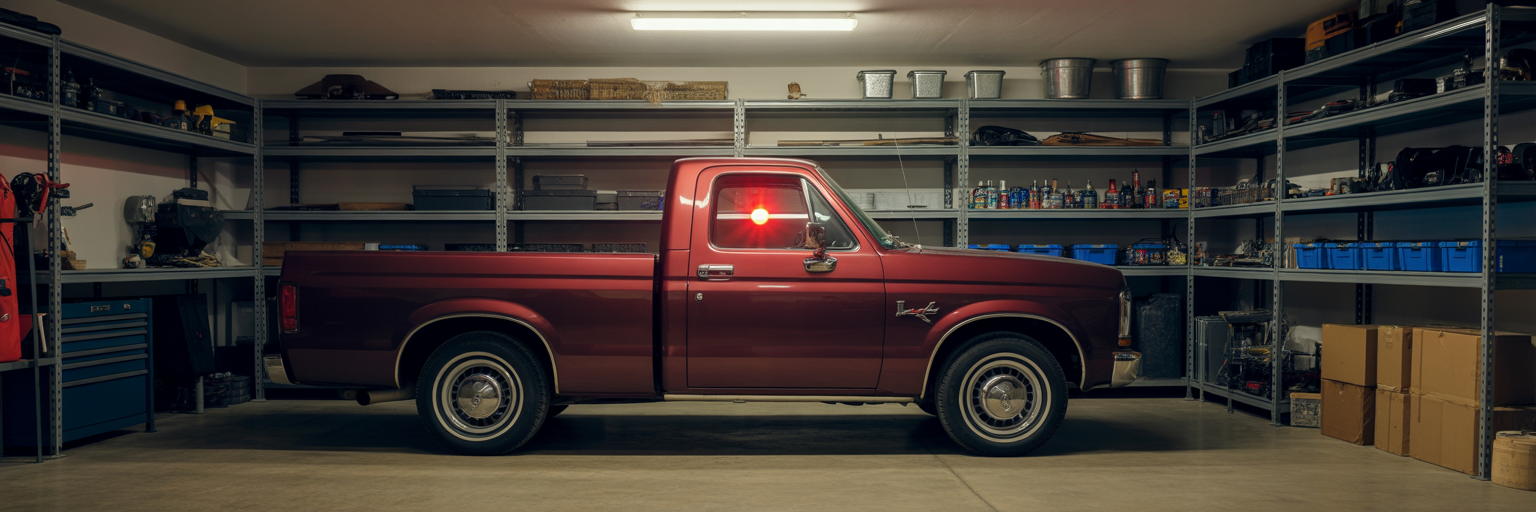
If you find yourself with a fit that is tighter than you would like, do not despair. There are numerous solutions, both low-tech and high-tech, that can make daily parking much less stressful. These aids can help you consistently and safely position your truck in the perfect spot.
The simplest and most classic parking aid is the tennis ball on a string. By hanging a tennis ball from the ceiling so that it just touches your windshield when the truck is in the ideal position, you create a perfect visual stopping cue. Another effective low-tech solution is to use rubber parking blocks or chocks. These can be adhered to the garage floor to physically stop the truck’s tires in the same spot every time, preventing you from pulling in too far.
For those who prefer a more modern approach, laser parking assistants are an excellent option. These devices mount on the garage ceiling and project a bright laser dot onto your vehicle’s dashboard or hood. You simply drive forward until the dot aligns with a predetermined spot, giving you a precise and repeatable guide for stopping. They are generally affordable and easy to install.
Beyond parking aids, strategic garage organization can be a powerful tool for creating more space. Freeing up floor space is key. Consider installing heavy-duty overhead storage racks to hold bulky, seasonal items like winter tires or holiday decorations. Wall-mounted systems, such as French cleats or slatwall panels, are perfect for getting tools, supplies, and equipment off the floor and onto the walls. Hanging bicycles and ladders from the ceiling or walls can also reclaim valuable inches of width and depth.
In some cases, an angled parking strategy can work wonders. If your garage is wider than it is deep, parking the truck at a slight diagonal might allow you to leverage the corner-to-corner length of the space. This can sometimes provide the extra few inches needed for the garage door to close without issue.
Exploring Alternatives When It Just Won’t Fit
Sometimes, after all the measuring and planning, the unavoidable conclusion is that the truck is simply too large for the space. When this happens, it is time to look at pragmatic alternatives rather than trying to force a situation that will lead to daily frustration and potential damage.
One option is to consider structural modifications to your home. For dedicated truck owners, “bumping out” the back wall of the garage by a few feet is a common, albeit significant, construction project that permanently solves the length issue. A more budget-friendly alternative is to install a carport in the driveway. While it does not offer the security of a locked garage, it does protect your vehicle from the worst of the elements like sun, rain, and hail.
Another path is to re-evaluate your vehicle choice. If a guaranteed garage fit is a top priority, you may need to consider a different truck. For many buyers, a midsize or compact truck like the Ford Maverick offers more than enough utility while easily fitting into a standard garage. You can see how these models compare in our Honda Ridgeline vs. Ford Maverick analysis. Alternatively, you could look at a different configuration of the F-150, such as the shorter SuperCab, which can reduce the overall length compared to the 2026 Ford F-150 SuperCrew.
Finally, you can explore alternative parking strategies. If you are set on the truck but the garage is a definite no-go, dedicated driveway parking is the most straightforward solution. It is important to be balanced about this choice, weighing the convenience against the downsides. Your vehicle will be exposed to weather and at a higher risk of theft or vandalism. You should also check for any local HOA rules or city ordinances that may restrict overnight street or driveway parking.
Future-Proofing Your Truck and Home Purchase
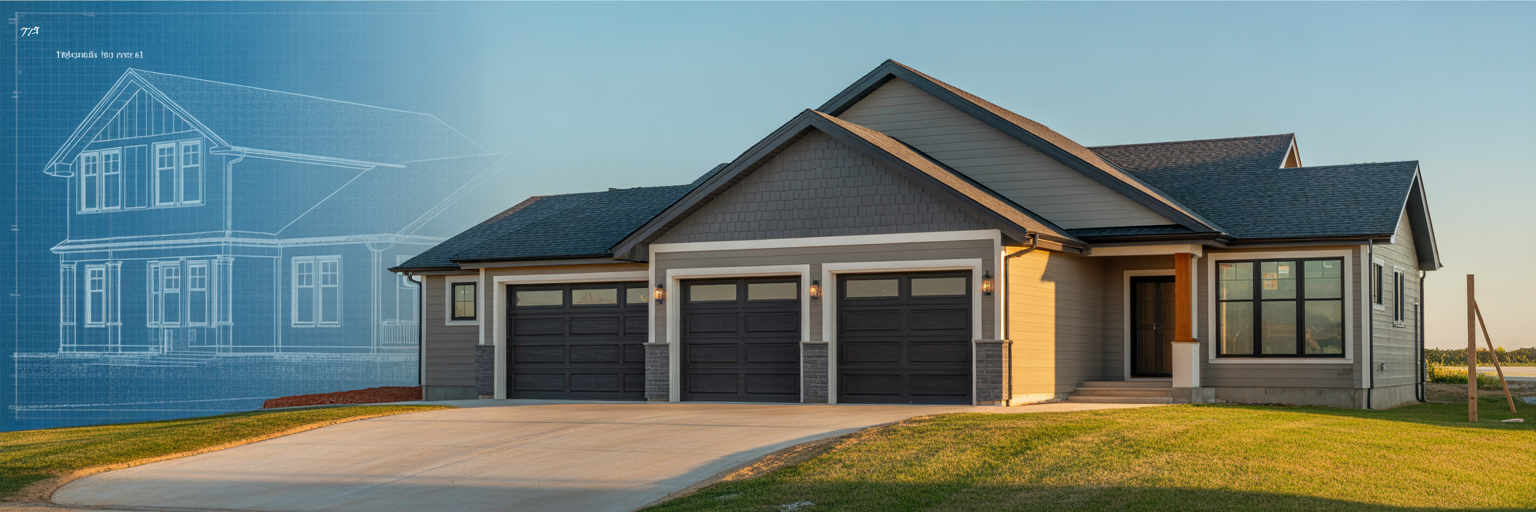
Thinking about whether a truck fits your garage today is smart, but thinking about how your vehicles will fit in the future is even smarter. This requires a long-term, strategic mindset that can save you headaches for years to come. The historical trend in the automotive industry is clear: full-size trucks have consistently grown longer, wider, and taller over the past several decades. Meanwhile, the dimensions of many American home garages have remained stagnant since they were built in the 1970s and 80s, creating a growing mismatch.
For this reason, prospective home buyers who are also truck enthusiasts should treat the garage with the same scrutiny as the kitchen or master bedroom. When you are touring homes, bring a tape measure. Do not just glance at the garage; measure its usable depth, width, and height. Make sure the truck garage dimensions are a critical, non-negotiable feature on your home-buying checklist. A home that cannot accommodate your vehicles is a home that does not fully meet your needs.
On the bright side, savvy home builders, especially in regions where trucks are popular, are responding to this trend. Many new constructions now offer deeper and taller garage options specifically designed to accommodate modern full-size trucks and large SUVs. Seeking out a home with an “oversized” or “truck-friendly” garage is a valuable feature that adds to the property’s utility and resale value.
This forward-thinking approach should also apply to your vehicle purchases. Consider not just the dream truck you want today, but also the potential vehicles you might own in ten years. A garage that barely fits today’s F-150 will almost certainly not fit its equivalent a decade from now. Investing in a larger garage is a wise decision for any car enthusiast. Staying informed about the latest models and trends is key, and for those who love trucks, ensuring you have a place to park them is part of the ownership experience.
Your Final Pre-Purchase Measurement Checklist
To bring everything together, here is a concise, actionable checklist you can use before making a final purchase decision. Pull this up on your phone at home or at the dealership to ensure you have covered all your bases.
- Measure Your Garage (The Right Way): Get the three most important numbers. First, the usable depth from the back wall to the inside face of the closed garage door. Second, the opening width at its narrowest point. Third, the vertical clearance from the floor to the lowest hanging object, like the garage door opener.
- Confirm Exact Vehicle Specs: Do not rely on generic numbers. Get the official length, width (with mirrors folded), and height for the exact F-150 trim, cab, bed, and drivetrain (4×2 vs. 4×4) you intend to buy. Every fraction of an inch matters.
- Account for All Add-ons: Plan for the future. Add a buffer to your calculations for any modifications you might make. As a safe estimate, add at least 6 to 8 inches to the truck’s length for potential bumpers or hitches, and 4 to 6 inches to its height for a possible lift and larger tires.
- Calculate Your Functional Fit: Perform the final, crucial calculation. Take your garage’s usable depth and width measurements and subtract at least two feet from each. If the truck’s dimensions fit within this smaller “functional” box, you will have a usable space, not just a technical one.
Following these steps will empower you to make an informed decision, preventing the costly and frustrating realization that your new truck does not fit. When it comes to a purchase this significant, always remember the simple mantra: Measure twice, buy once.