
The modern pickup truck has quietly become the successor to the family station wagon, evolving far beyond its work-focused roots. For adventurous families, it represents the ultimate do-it-all machine, blending daily utility with weekend freedom. Finding the best 2026 truck for towing, however, presents a unique challenge. You need a single vehicle that can comfortably handle school runs, haul family gear, and confidently pull a camper through varied terrain. This requires a careful balance of space, power, and capability.
For a family with children and a travel trailer, the full-size crew cab truck is the natural starting point. Its combination of a spacious interior and a long wheelbase provides the comfort and stability essential for long-distance journeys. This guide will walk you through the key factors to consider, from passenger room for growing kids to the critical difference between advertised towing capacity and real-world payload. We will explore powertrain options and the modern technology that makes towing safer and less stressful. The goal is to equip you to make an informed choice for your family camping truck, because the “best” vehicle is the one that perfectly fits your family’s size, your camper’s weight, and your intended adventures. After all, this purchase is about more than just transportation; it enables a lifestyle of exploration, from state parks to hobbies like mastering offshore fishing techniques. While trucks are a fantastic choice, it’s also worth exploring other great family road trip vehicles to understand all your options.
Defining the Best 2026 Truck for Your Family’s Needs
The modern pickup truck has quietly become the successor to the family station wagon, evolving far beyond its work-focused roots. For adventurous families, it represents the ultimate do-it-all machine, blending daily utility with weekend freedom. Finding the best 2026 truck for towing, however, presents a unique challenge. You need a single vehicle that can comfortably handle school runs, haul family gear, and confidently pull a camper through varied terrain. This requires a careful balance of space, power, and capability.
For a family with children and a travel trailer, the full-size crew cab truck is the natural starting point. Its combination of a spacious interior and a long wheelbase provides the comfort and stability essential for long-distance journeys. This guide will walk you through the key factors to consider, from passenger room for growing kids to the critical difference between advertised towing capacity and real-world payload. We will explore powertrain options and the modern technology that makes towing safer and less stressful. The goal is to equip you to make an informed choice for your family camping truck, because the “best” vehicle is the one that perfectly fits your family’s size, your camper’s weight, and your intended adventures. After all, this purchase is about more than just transportation; it enables a lifestyle of exploration, from state parks to hobbies like mastering offshore fishing techniques. While trucks are a fantastic choice, it’s also worth exploring other great family road trip vehicles to understand all your options.
Top Full-Size Truck Contenders for 2026
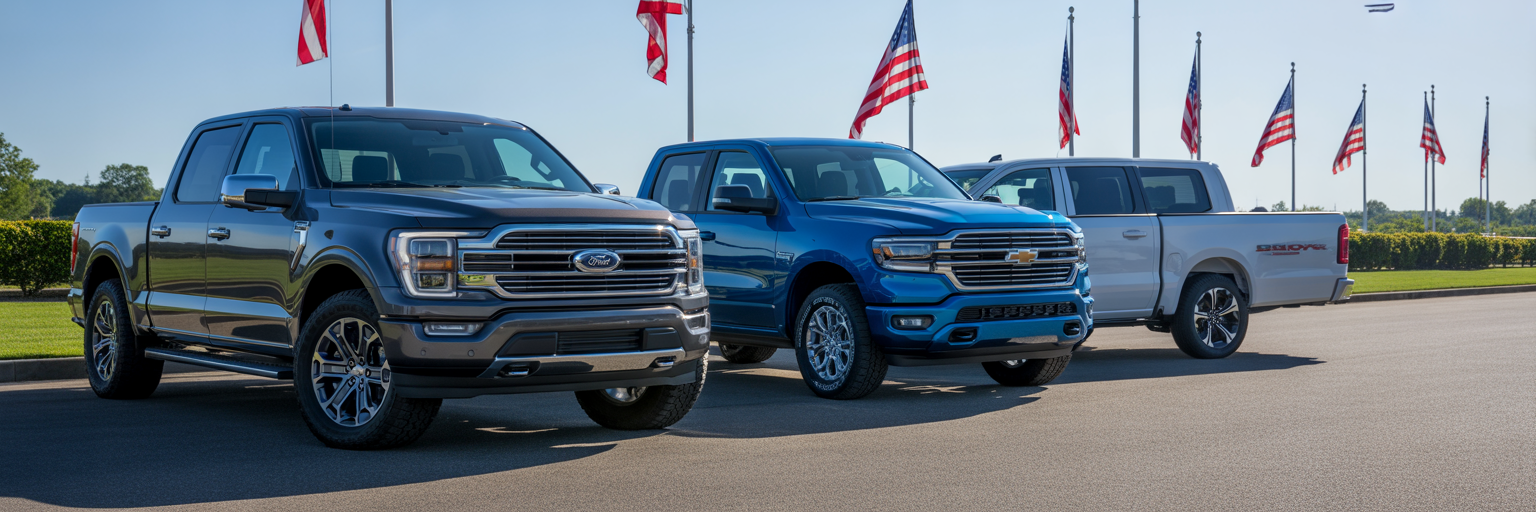
With the groundwork laid, let’s examine the leading full-size trucks that consistently deliver for families with campers. Each manufacturer brings a unique philosophy to the table, resulting in distinct strengths. We will look beyond the spec sheets to explain what these features mean for your real-world experience on the road and at the campsite. For those wanting to explore a wider range of models, our main trucks category page offers extensive reviews and comparisons.
Ford F-150: The Versatile Benchmark
The Ford F-150 has long been the standard-bearer in the full-size segment, and its strength lies in its immense adaptability. For families new to towing, features like Pro Trailer Backup Assist are invaluable. This system allows you to steer the trailer while backing up using a simple knob on the dash, removing much of the anxiety associated with reversing into a tight campsite. Powertrain choices are extensive, but the 3.5L EcoBoost V6 remains a favorite for towing. Its twin turbochargers provide ample torque for pulling a travel trailer without the engine feeling strained. The PowerBoost Hybrid option takes utility a step further. Its Pro Power Onboard system turns the truck into a mobile generator, capable of powering your camper’s appliances or tools at the campsite without needing a separate, noisy generator.
Ram 1500: The Comfort and Refinement Leader
Where the Ram 1500 truly distinguishes itself is in ride quality and interior comfort. It is the only truck in its class to offer a standard coil-spring rear suspension, which provides a smoother, more car-like ride than the traditional leaf springs found on competitors. This makes a significant difference on long family road trips, reducing fatigue for everyone on board. Inside, the Ram’s Crew Cab models offer class-leading rear-seat space and reclining rear seats, a major benefit for families with teenagers or multiple car seats. When considering the Ford F-150 vs Ram 1500, the choice often comes down to this trade-off: the F-150’s broader range of work-focused features versus the Ram’s superior daily-driving comfort and passenger accommodations.
Chevrolet Silverado 1500 & GMC Sierra 1500: The Tech-Forward Trailering Champs
General Motors has invested heavily in trailering technology, making the Silverado and Sierra compelling choices for those who prioritize towing confidence. Their advanced trailering system includes an in-vehicle app with checklists, trailer light diagnostics, and custom profiles for different trailers. The available “transparent trailer” camera view is a standout feature, stitching together camera inputs to create a view that effectively makes the trailer disappear, allowing you to see traffic directly behind you. For families towing through mountainous regions, the available 3.0L Duramax diesel engine is an excellent option. It delivers impressive torque at low RPMs for effortless pulling on steep grades and offers superior fuel economy while towing, which can add up on cross-country trips.
Toyota Tundra: The Reliable Workhorse
The Toyota Tundra’s reputation is built on a foundation of durability and straightforward reliability. For 2026, the Tundra comes standard with a twin-turbo V6 engine, providing a modern and efficient powertrain across the entire lineup. Its composite bed is another practical advantage, as it resists dents and corrosion far better than a traditional steel bed. While it may not offer as many high-tech gadgets as some rivals, its appeal lies in its simplicity and proven longevity. The available i-FORCE MAX hybrid powertrain is a powerful option, combining the twin-turbo V6 with an electric motor for impressive torque and acceleration, making it a very capable crew cab truck for camper duties. Families who value long-term dependability and a no-fuss ownership experience will find the Tundra to be a very strong contender.
The Critical Role of Payload and Towing Specs
While manufacturers prominently advertise impressive towing capacities, the most important number for a family camping truck is often the most overlooked: payload. This section serves as a practical truck towing capacity guide to ensure your setup is safe. Think of it this way: it’s not just about what your truck can pull, but what it can carry. Payload is the total weight that your truck can support, which includes all passengers, any cargo in the cab and bed, and, most importantly, the downward pressure exerted by the trailer on the hitch, known as tongue weight.
The only payload number that matters is found on the yellow-and-white “Tire and Loading Information” sticker inside the driver’s door jamb. This figure is specific to that exact vehicle as it left the factory. Brochure numbers are maximums for a basic, stripped-down model. Every option you add, from a panoramic sunroof and four-wheel drive to upgraded audio systems, reduces your truck’s payload capacity. A fully loaded luxury trim can have a payload hundreds of pounds lower than a base model of the same truck.
To understand the full picture, you need to know a few key terms. Gross Vehicle Weight Rating (GVWR) is the maximum allowable weight of the fully loaded truck. Gross Combination Weight Rating (GCWR) is the maximum weight of the truck and trailer combined. Tongue weight is the portion of the trailer’s weight that rests on the truck’s hitch, and it should be between 10-15% of the total trailer weight for stable towing. This tongue weight subtracts directly from your truck’s payload. For example, a 6,000-pound trailer will have a tongue weight of 600 to 900 pounds, which is a significant portion of a typical half-ton truck’s payload. For those considering a more budget-conscious approach, many of these same principles apply when looking for the best used trucks for towing a camper. For a more exhaustive breakdown of these calculations, the RV LIFE Towing Guide is an excellent resource.
Here is a simple checklist to calculate your needs:
- Find your travel trailer’s Gross Vehicle Weight Rating (GVWR). This is the maximum weight of the trailer when fully loaded.
- Calculate the total weight of your family and all in-truck gear. Include people, pets, coolers, firewood, and anything else you’ll carry in the truck.
- Estimate your trailer’s tongue weight. A good rule of thumb is to use 13% of the trailer’s GVWR (Trailer GVWR x 0.13).
- Add the family/gear weight to the estimated tongue weight. This total must be less than the payload capacity listed on the door jamb sticker of the actual truck you are considering.
Choosing the Right Powertrain: Gas, Diesel, or Hybrid
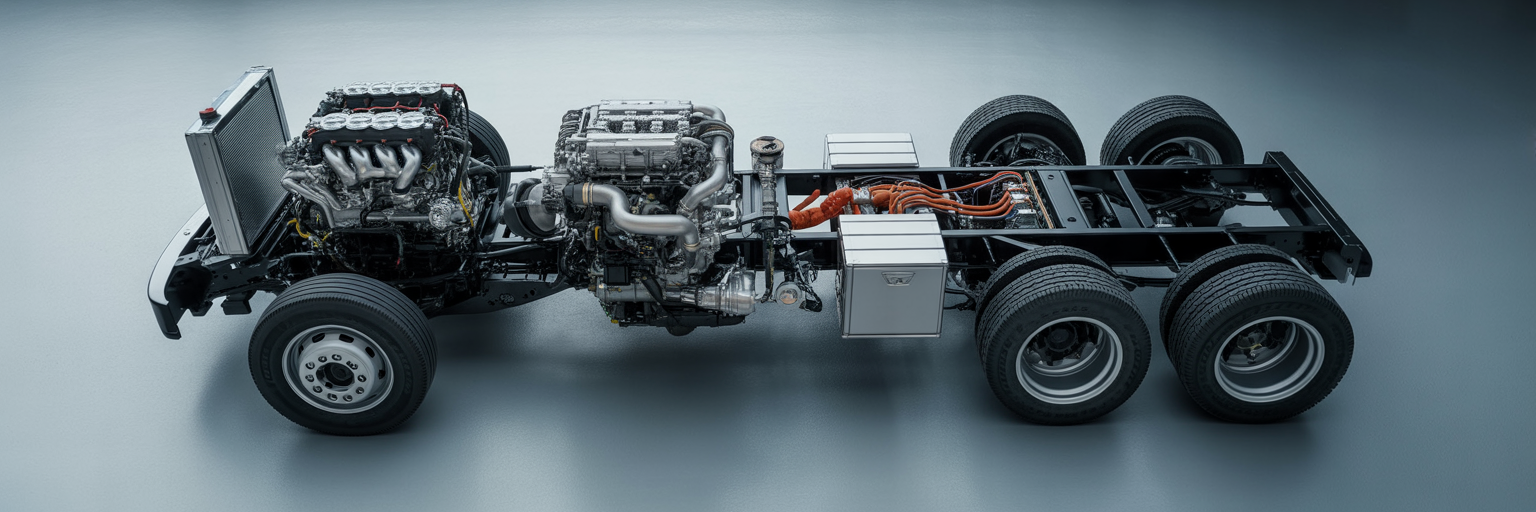
Once you have a handle on weight ratings, the next major decision is the engine. The choice between gasoline, diesel, and hybrid powertrains depends entirely on your specific use case, budget, and towing frequency. Each offers distinct advantages for a family towing a camper.
Gasoline engines, whether turbocharged V6s or traditional V8s, remain the mainstream, cost-effective choice. They offer a great balance of power and affordability, making them ideal for families who camp seasonally or take several trips a year with a moderately sized trailer. Their maintenance is straightforward, and service is widely available.
Light-duty diesel engines, like the 3.0L Duramax offered by GM, represent an investment for the serious tower. While their initial cost is higher, they provide two key benefits: immense low-end torque and superior fuel economy when loaded. The torque makes towing feel effortless, especially in challenging conditions like high winds or steep mountain passes. The improved efficiency on long hauls can help offset the higher purchase price for families who travel frequently.
Hybrid powertrains, such as Ford’s PowerBoost and Toyota’s i-FORCE MAX, introduce a new dimension of utility. The electric motor provides instant torque from a standstill, resulting in smooth, confident acceleration with a trailer attached. The most significant benefit for campers, however, is the onboard generator capability. Being able to power your camper’s air conditioning, microwave, and outlets without a separate generator is a massive convenience at the campsite. Proper engine care is vital for all these options to ensure they last, and you can learn more about how to keep your car’s engine running for years with our detailed guide.
| Factor | Gasoline Engines (V6/V8) | Light-Duty Diesel | Hybrid Powertrains |
|---|---|---|---|
| Best Use Case | Seasonal or moderate towing (under 8,000 lbs) | Frequent, long-distance, or heavy towing | Campsite utility and enhanced daily driving |
| Initial Cost | Lowest | Highest | Medium to High |
| Towing Feel | Good power, but requires higher RPMs | Effortless low-end torque, very stable | Instant torque from a stop, smooth |
| Maintenance | Standard, widely available service | More expensive, requires DEF | Standard, plus battery system longevity |
| Unique Benefit | Cost-effective and simple | Superior fuel economy while towing | Onboard generator for campsite power |
Are Midsize Trucks a Viable Option?
It is a common question for families starting their search: can we get by with a smaller, more affordable midsize truck? Models like the Toyota Tacoma, Ford Ranger, and Chevrolet Colorado are capable vehicles, but it is crucial to understand their limitations for the specific scenario of towing a family-sized travel trailer.
The primary constraints of midsize trucks are their shorter wheelbases, lower curb weights, and significantly limited payload capacities. A shorter wheelbase makes a vehicle more susceptible to being pushed around by a large trailer, especially in crosswinds or during emergency maneuvers. This creates a less stable and more stressful towing experience. More importantly, their payload ratings are often consumed quickly. Once you account for the weight of two adults, two children, and the 600-plus-pound tongue weight of a typical family travel trailer, there is often little to no payload capacity left for any gear in the truck bed.
This does not mean midsize trucks are without a purpose in the camping world. They are an excellent choice for families with smaller, lightweight campers like pop-ups or teardrop trailers. Their smaller footprint and superior agility also make them a better choice for those who prioritize serious off-road capability over towing a large living space. You can see how they stack up against each other in our Nissan Frontier vs Chevrolet Colorado comparison.
However, it is essential to be realistic. A family with a 25-foot, 6,000-pound travel trailer will almost certainly be over their midsize truck’s payload and potentially its GVWR once the family and their gear are loaded. This creates an unsafe towing situation that puts everyone at risk. For this application, a full-size truck is not just a recommendation; it is the responsible and safer choice.
Essential Technology and Safety Features for Towing
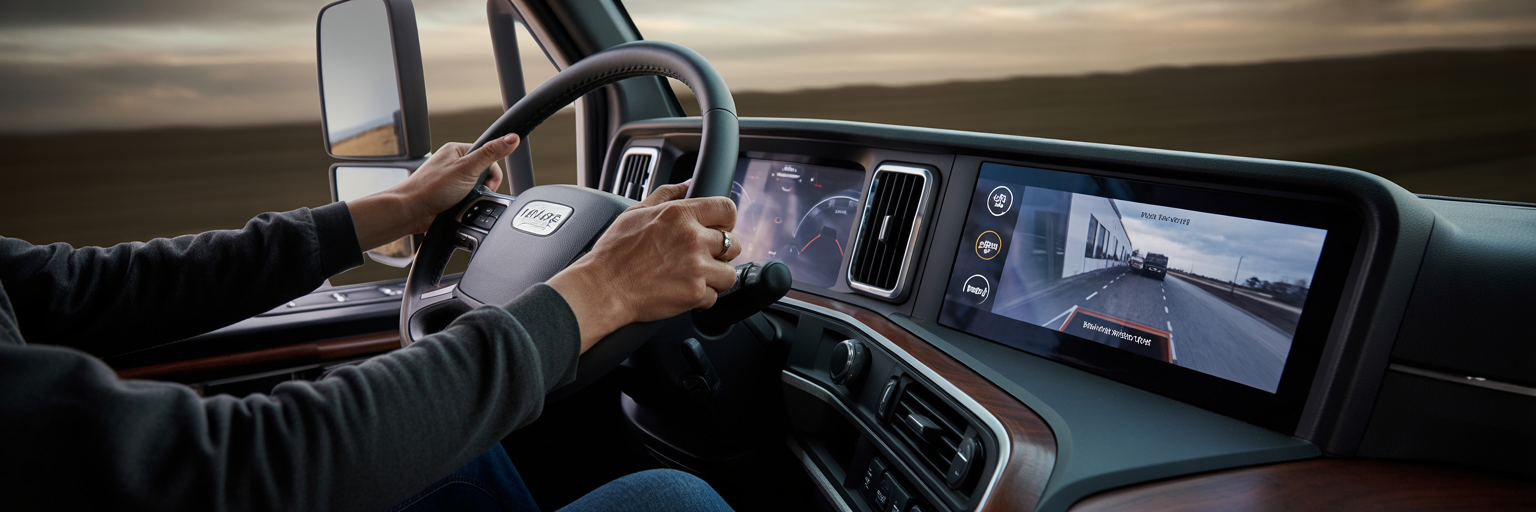
Modern trucks offer an array of technology designed to make towing safer and less intimidating. When selecting your vehicle, focus on the features that provide a tangible benefit to the task of pulling a large trailer. These systems can transform the towing experience from a white-knuckle affair into a confident and controlled drive.
The single most important piece of towing equipment is a factory-integrated trailer brake controller. This is a non-negotiable safety item. It synchronizes the trailer’s brakes with the truck’s brakes, allowing for smooth, stable stops and providing the ability to manually apply the trailer brakes if sway begins to occur. Aftermarket controllers are available, but factory-integrated systems offer the most seamless and reliable performance.
Advanced camera systems have also become incredibly valuable. A simple backup camera is standard, but look for multi-view systems that offer more. A hitch view camera simplifies the process of connecting the trailer, while side-view cameras, activated by the turn signal, make lane changes much safer by showing the truck’s blind spot along the length of the trailer. Technologies like GM’s “transparent trailer” view provide an unparalleled level of situational awareness.
Trailering assistance software, such as Ford’s Pro Trailer Backup Assist or the trailering checklists in GM trucks, can be invaluable for those who do not tow every day. These systems simplify complex tasks and help ensure you have not missed a critical step before hitting the road. Finally, active safety systems are crucial. Trailer Sway Control is a function of the truck’s stability control system that can detect and mitigate trailer sway by selectively applying the brakes. Blind Spot Monitoring that can be configured to cover the length of your trailer is another feature that dramatically reduces the stress of highway driving. The best 2026 truck for towing is one that uses technology to make the entire process safer for your family.
- Factory-Integrated Trailer Brake Controller
- Multi-View Camera System (Hitch, Surround, and Side Views)
- Trailer Sway Control System
- Blind Spot Monitoring with Trailer Coverage
Finalizing Your Purchase for Safe Family Adventures
Bringing it all together, the process of choosing the right truck comes down to a clear-eyed assessment of your specific needs. The single most important principle to remember when you are at the dealership is that the payload sticker on the driver’s door jamb is the final word on that truck’s true capability. It overrides any brochure, advertisement, or salesperson’s claim.
You should also consider your primary environment. A truck destined for towing in the Rocky Mountains will benefit more from the low-end torque of a diesel or high-output hybrid than a truck that will spend its life in the flatlands of Florida. Do not neglect the importance of a thorough test drive. Take the truck on a highway to assess its ride comfort, cabin noise, and overall stability at speed. This is the vehicle your family will spend many hours in, so it needs to be a comfortable and pleasant place to be.
By following a methodical process, you can confidently select the right travel trailer tow vehicle that will serve as the foundation for countless family memories. This final checklist summarizes the key steps to ensure you make a safe and informed decision.
- Confirm your camper’s final Gross Vehicle Weight Rating (GVWR).
- Calculate your total payload need, including your family, all your gear, and the trailer’s estimated tongue weight.
- Physically check the payload sticker on the door jamb of any truck you are seriously considering buying.
- Choose a powertrain that matches your towing frequency, budget, and the terrain you will be traveling.
- Ensure the truck is equipped with the essential towing safety technology, especially a factory trailer brake controller.