
The modern full-size truck has evolved far beyond the job site, becoming a common sight in school pickup lines across America. This transition to a primary family vehicle brings a new set of priorities, where cabin space is just as important as towing capacity.
Finding the Best Truck for Your Family’s Rear-Facing Car Seat Room
As full-size trucks have grown in popularity as daily drivers, they must now cater to passengers of all ages, including infants in bulky car seats. This presents a significant challenge for parents. Finding adequate rear-facing car seat room is critical, as these seats consume a surprising amount of space and can force front-seat passengers to sacrifice their own legroom and comfort. For any crew cab truck family, this single factor can be a dealbreaker.
To address this, it is essential to understand the different cab configurations. This comparison focuses exclusively on “Crew Cab” models, which feature four full-size, front-hinged doors. Automakers use various names for this layout, such as Ford’s “SuperCrew” or Toyota’s “CrewMax,” but the principle is the same: maximum interior volume. Smaller configurations like a “Quad Cab” or “Double Cab” offer less space and are generally not suitable for families needing to install rear-facing seats regularly.
The goal of this article is to provide a detailed, data-driven comparison of the leading 2026 full-size crew cab trucks. We will analyze not just the measurements but also the practical features that matter most. This will help you find the best truck for car seats in 2026 for your specific needs. The versatility of these trucks makes them compelling choices, though there are many great options for families, including some that are not boring, which can be explored further in our guide to the best family road trip vehicles.
Beyond Legroom: Critical Factors for Car Seat Fitment
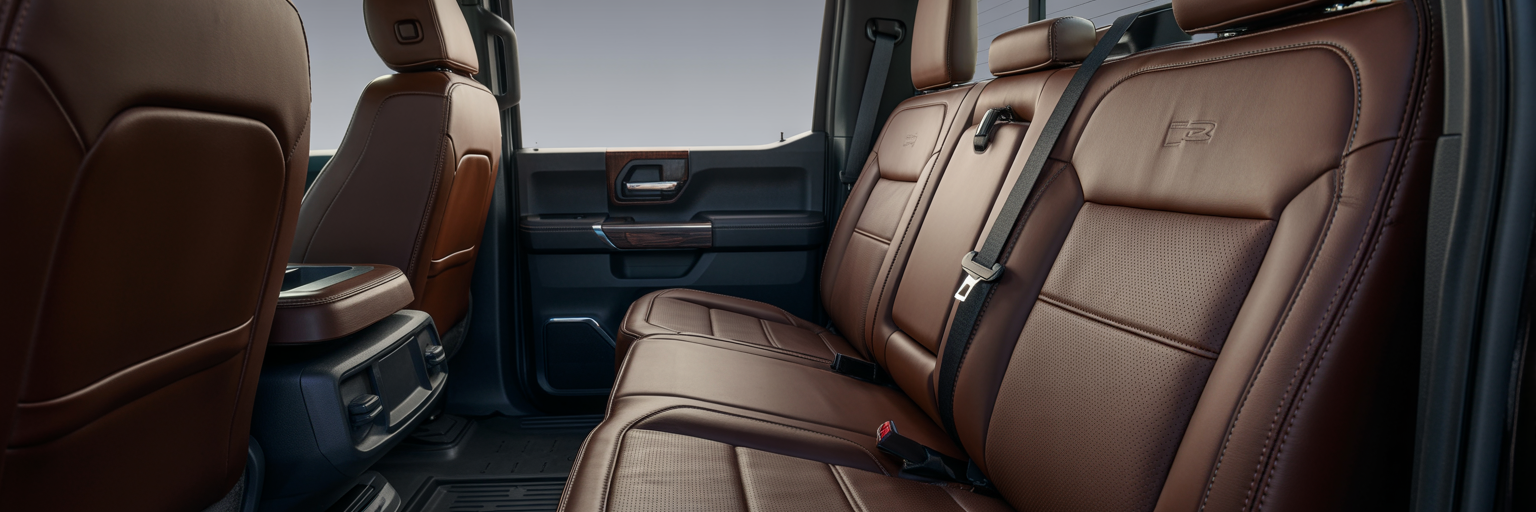
While rear legroom is a vital statistic, it only tells part of the story. The spec sheet does not reveal the nuances of installing a car seat, which can make a huge difference in daily life. Several other factors determine how well a truck accommodates your family’s youngest members.
LATCH System Accessibility
The LATCH (Lower Anchors and Tethers for Children) system was designed to simplify car seat installation. According to NHTSA, it provides a secure way to attach a car seat without using the vehicle’s seat belts. However, not all LATCH systems are created equal. In some trucks, the lower anchors are buried deep between the seat cushions, turning a simple task into a frustrating struggle. Easy-to-find, clearly marked anchors are a sign of a family-friendly design.
Rear Seat Geometry
The shape of the rear seat cushions has a direct impact on car seat stability. A flat, wide bench provides a solid base, making it easier to achieve a secure fit and the correct recline angle for a rear-facing seat. In contrast, heavily bolstered or steeply angled seats, often found in sportier trims, can cause the car seat to rock or tilt, potentially requiring the use of rolled towels or pool noodles to achieve a level installation.
Cabin Dimensions and Door Access
Overall cabin width is another important consideration, especially if you need to fit multiple car seats or have a passenger sit comfortably next to one. Just as crucial is the rear door design. A wide-opening rear door provides the necessary clearance to maneuver a bulky car seat into the cabin without straining your back or bumping against the door frame. This seemingly small detail becomes a major convenience in daily use.
| Factor | Why It Matters for Families | What to Look For During a Test Drive |
|---|---|---|
| LATCH Anchor Accessibility | Easy-to-reach anchors reduce installation time and frustration, ensuring a secure fit every time. | Check if anchors are clearly marked and not buried deep between cushions. Try attaching a car seat. |
| Rear Seat Cushion Shape | A flat, wide cushion provides a stable base for the car seat, preventing rocking or tilting. | Avoid heavily bolstered or steeply angled seats that may require towels or noodles for leveling. |
| Rear Floor Design | A flat floor (especially when seats are folded) creates a huge, secure indoor cargo area for strollers or luggage. | Fold up the rear seats to see if the floor is completely flat or has a transmission hump. |
| Rear Door Opening Angle | Wide-opening doors give you more room to maneuver a bulky car seat without hitting the door frame. | Open the rear doors fully in a parking space to gauge practical clearance. |
The Space Champion: 2026 Ram 1500 Crew Cab
When it comes to pure, unadulterated interior space, the 2026 Ram 1500 Crew Cab stands in a class of its own. With a class-leading 45.2 inches of rear legroom, it offers a cavernous back seat that sets the benchmark for the segment. This number is more than just a figure on a page. It translates into a tangible real-world benefit: even a tall driver can maintain a comfortable seating position with a bulky rear-facing car seat installed directly behind them, without their knees touching the dashboard.
This makes the 2026 Ram 1500 car seat setup exceptionally accommodating. But the Ram’s family-friendly design goes beyond sheer measurements. It is the only truck in its class to offer available reclining rear seats, a feature that significantly enhances comfort for older children or adult passengers on long road trips. This touch of luxury transforms the back seat from a passenger area into a relaxing lounge.
The Ram also excels with clever storage solutions. The unique in-floor “RamBins” are covered storage compartments perfect for stashing toys, snacks, or emergency gear, helping to keep the main cabin tidy and organized. Higher trim levels envelop the cabin in high-quality materials, creating a premium environment that feels more like a luxury SUV than a work truck. The Ram 1500’s appeal is this powerful combination of immense space, thoughtful comfort features, and smart storage that makes it a premier family hauler.
The GM Duo: 2026 Chevy Silverado and GMC Sierra 1500
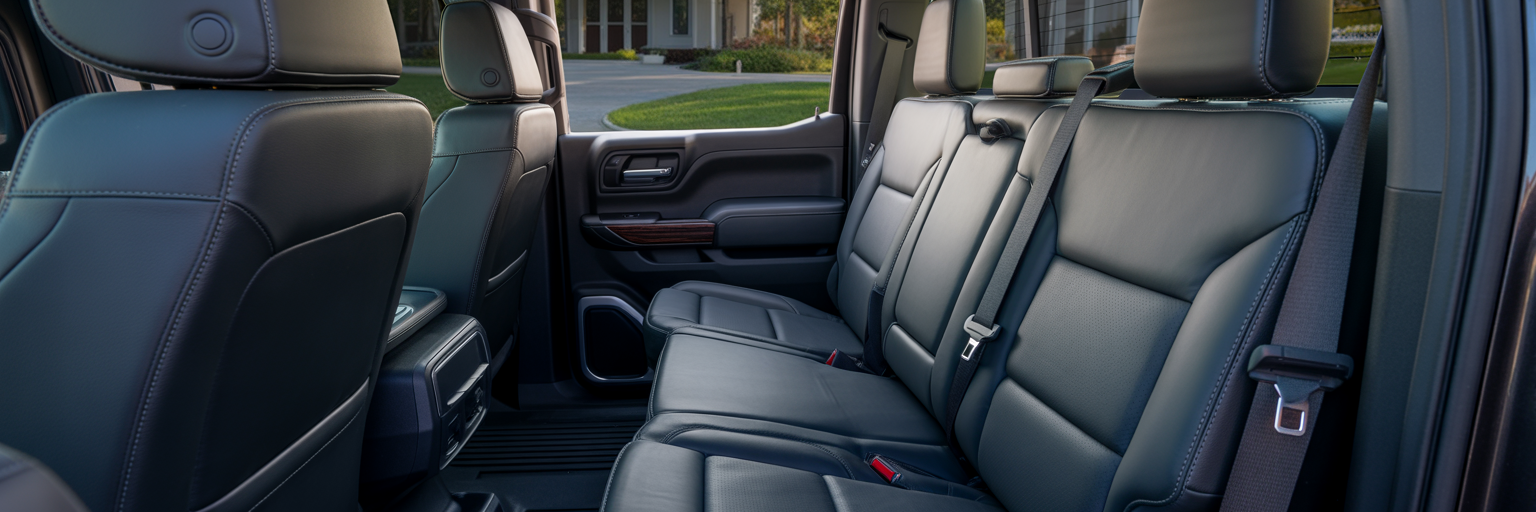
General Motors offers a compelling one-two punch with the 2026 Chevrolet Silverado 1500 and GMC Sierra 1500. These mechanically related trucks both provide expansive cabins that are more than ready for family duty. The Silverado Crew Cab boasts an impressive 44.5 inches of rear legroom, while the Sierra Crew Cab is close behind at 43.4 inches. Both figures represent a massive amount of space that easily accommodates rear-facing car seats without issue.
Expansive and Practical Space
The GM twins feature a wide, flat rear bench seat that creates an excellent, stable platform for car seat installation. This straightforward geometry simplifies the process of getting a secure fit. Paired with large rear door openings, loading children and their seats becomes a much less strenuous task, a practical benefit parents will appreciate every day.
Smart Storage for Family Gear
Beyond the open space, these trucks incorporate clever storage solutions designed for family life. One notable feature is the available storage compartments integrated directly into the rear seatbacks, perfect for holding tablets, books, or other small items. Additional storage is also found under the rear seat cushion, providing a discreet place to keep valuables or emergency supplies organized and out of sight.
Silverado vs. Sierra: Pragmatism vs. Premium
While they share a foundation, the Silverado and Sierra cater to different buyers. The Silverado is positioned as the pragmatic, value-focused choice, offering tremendous capability and space for the money. The GMC Sierra, particularly in its upper trims like the Denali, elevates the experience with more luxurious materials, advanced technology, and a refined design. For families, the choice comes down to priorities. The Silverado delivers on all the essential needs, while the Sierra adds a layer of premium comfort and style. In the F-150 SuperCrew vs Silverado Crew Cab matchup, the Silverado’s slight legroom advantage is a key point, though as we’ll see, Ford brings other strengths to the table. For those wanting to explore a wider range of models, our general trucks page offers more comparisons.
America’s Bestseller: 2026 Ford F-150 SuperCrew
The Ford F-150 has long been the standard-bearer in the truck world, and the 2026 SuperCrew model continues that legacy with a strong focus on family utility. It offers a highly competitive 43.9 inches of rear legroom, placing it firmly in the top tier of family-friendly trucks. This generous space ensures that installing a rear-facing car seat does not require a major compromise from the front-seat passenger.
However, the F-150’s most significant advantage for a crew cab truck family isn’t just its legroom, but its unmatched utility. Its standout feature is the fully flat rear load floor. When you fold up the rear seat cushions, you are left with a massive, uninterrupted indoor space. This is a crucial differentiator in the F-150 SuperCrew vs Silverado Crew Cab debate. This cavernous area is perfect for securely hauling bulky items like a large stroller, a portable crib, or a week’s worth of luggage, all protected from the weather and out of sight.
Ford’s innovation continues with the available Pro Power Onboard system. In simple terms, this feature turns the truck into a mobile generator, providing household-style electrical outlets in the bed. The applications for a family are nearly endless. You can power a slow cooker at a tailgate party, inflate air mattresses on a camping trip, or keep multiple devices charged during a long road trip. The F-150 masterfully combines excellent rear-seat space with these incredibly practical utility features, making it an outstanding choice for active families on the go.
The Reliability King: 2026 Toyota Tundra CrewMax
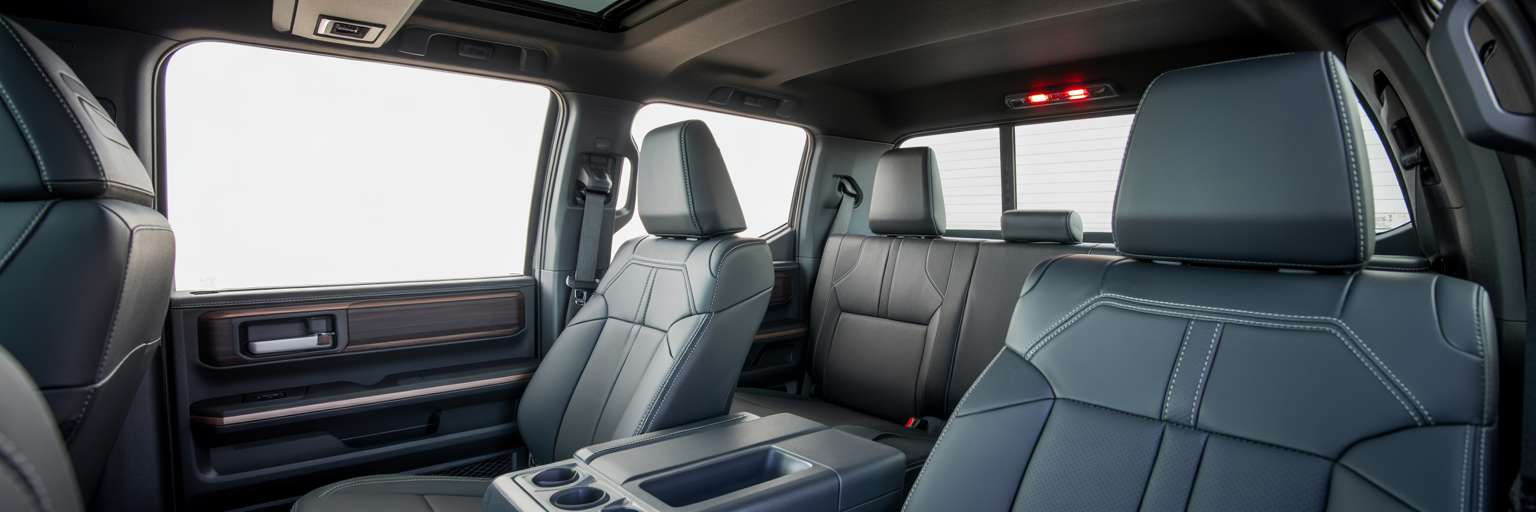
The 2026 Toyota Tundra CrewMax enters this comparison with 41.6 inches of rear legroom. While that figure is the most modest in this specific truck rear legroom comparison, it is crucial to put it in perspective. This is still a very generous amount of space, more than sufficient for installing most rear-facing car seats without issue. Where the Tundra truly makes its case for families is by shifting the focus from pure measurements to long-term value and peace of mind.
Toyota’s reputation for exceptional long-term reliability and durability is legendary. For a family making a significant vehicle investment, this promise of dependability is a powerful draw. It represents fewer unexpected repairs and a vehicle that can be counted on for years to come. This focus on dependability is a major reason many buyers seek out Toyota, similar to those looking for the top reliable used trucks under $25,000.
Furthering its family-friendly credentials, every Tundra comes standard with the Toyota Safety Sense suite of active safety features. This includes systems like a Pre-Collision System with Pedestrian Detection and Lane Departure Alert, providing an extra layer of protection without needing to add expensive option packages. The Tundra also boasts a unique feature that is a genuine delight for passengers: a standard full-power vertical sliding rear window. This opens up the entire cabin to fresh air, enhancing the driving experience in a way no other truck can match. While it may not win on a spec sheet for legroom, the Tundra’s combination of reliability, standard safety, and unique features makes it a compelling choice.
Why Smaller Cabs Don’t Make the Cut for Families
It can be tempting for buyers to consider smaller, less expensive cab configurations like the Ram Quad Cab, Ford SuperCab, or Toyota Double Cab. However, for any family that will regularly use a rear-facing car seat, this is a significant mistake. This section serves as a clear warning to avoid a common pitfall.
The data tells a stark story. These smaller cabs offer rear legroom that ranges from just 33.3 to 35.6 inches. This deficit of nearly a foot compared to their crew cab counterparts has severe practical consequences. Installing a rear-facing car seat in one of these trucks will almost certainly require the front passenger seat to be moved so far forward that it becomes unusable or even unsafe for an adult passenger. The lack of rear-facing car seat room effectively turns a four or five-passenger truck into a two or three-passenger vehicle.
Beyond the cramped space, there is another major functional drawback: the door design. Many of these smaller cabs use rear-hinged doors, sometimes called “suicide doors,” that cannot be opened unless the front door is already open. This creates a logistical nightmare in everyday situations, such as trying to get a sleeping infant into their car seat in a tight parking spot. The takeaway is unambiguous: while these cab styles are perfectly fine for work crews or carrying occasional adult passengers on short trips, they are a major compromise and are not recommended for families.
Pro Tips for Installing Car Seats in a Full-Size Truck
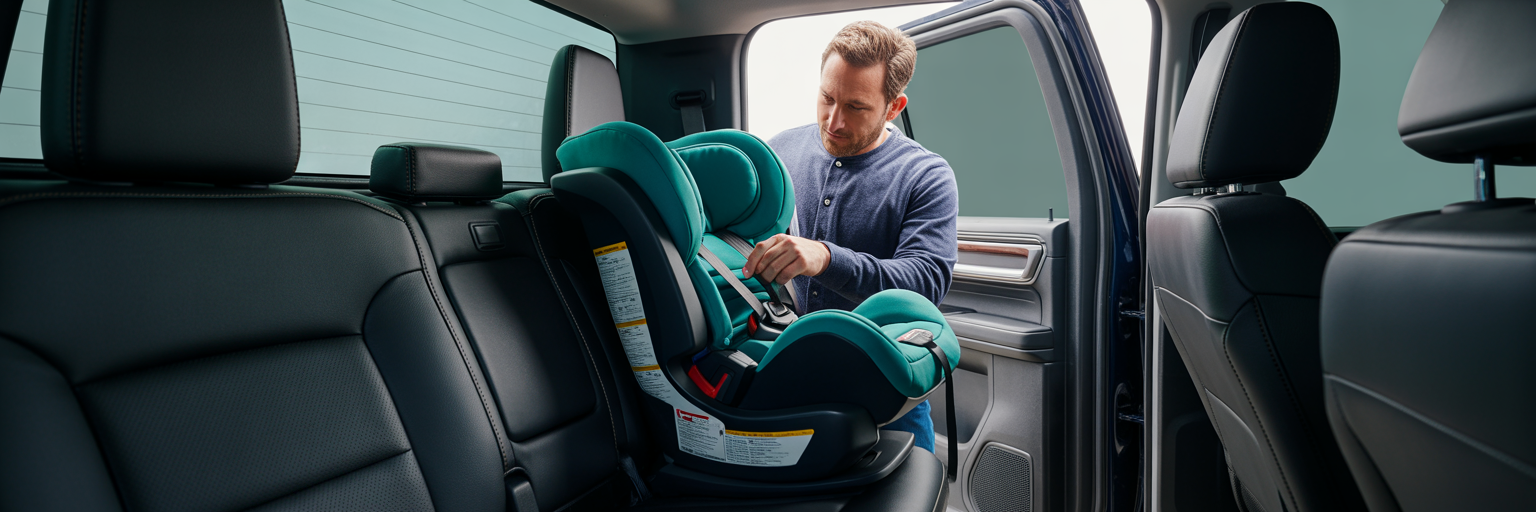
Once you have chosen your truck, ensuring the car seat is installed correctly is the most important step. A secure installation is paramount for your child’s safety. Here are some actionable tips to get it right.
- Start with the Manuals: This is the non-negotiable first step. Read both the car seat’s instruction manual and the truck’s owner manual. The sections on child restraints will provide specific guidance for your vehicle and seat combination.
- Center vs. Outboard Position: The center rear seat is often cited as the safest position, as it is furthest from any potential side impact. However, this is only true if you can achieve a secure installation there. Most trucks only have LATCH anchors on the two outboard seats, meaning a center installation will require using the vehicle’s seat belt. A secure installation in an outboard position is always safer than a loose installation in the center.
- The “Inch Test”: This is a critical safety check. After installing the seat, grab it at the belt path where the LATCH strap or seat belt runs through it. Try to move it side-to-side and front-to-back. It should not move more than one inch in any direction. If it does, you need to tighten it further.
- Maximizing Space: If you need to optimize room for the driver, it is often best to install the rear-facing car seat behind the front passenger seat. This seat typically has more fore-and-aft adjustment, allowing you to create space without compromising the driver’s position.
- Seek Professional Help: For ultimate peace of mind, find a certified Child Passenger Safety Technician (CPST). These experts are trained to install a wide variety of seats in different vehicles and can teach you how to do it correctly. Organizations like Safe Kids Worldwide offer clinics and resources to find a certified technician in your area, often for free.
Making the Final Choice for Your Family’s Truck
After reviewing the data and features, it is clear that families have several excellent options for a full-size truck in 2026. The 2026 Ram 1500 leads the pack in raw legroom, making it the champion of pure space. However, the Ford F-150, Chevrolet Silverado, and GMC Sierra are all fantastic, closely matched competitors with massive interiors and their own unique strengths.
| Truck Model | Rear Legroom (Inches) | Key Family-Friendly Feature |
|---|---|---|
| Ram 1500 Crew Cab | 45.2″ | Available Reclining Rear Seats & In-Floor Storage |
| Chevrolet Silverado 1500 Crew Cab | 44.5″ | Wide, Flat Bench & Rear Seatback Storage |
| Ford F-150 SuperCrew | 43.9″ | Fully Flat Rear Load Floor |
| GMC Sierra 1500 Crew Cab | 43.4″ | Premium Interior Options & Under-Seat Storage |
| Toyota Tundra CrewMax | 41.6″ | Standard Full Power Vertical Rear Window & Toyota Safety Sense |
Ultimately, the best truck for car seats in 2026 depends entirely on your family’s individual priorities. You should ask yourself some direct questions to guide your decision. Do you need the absolute maximum space above all else? The Ram 1500 is likely your answer. Is a versatile, flat interior cargo floor for hauling gear your top priority? The F-150 stands out. Or is long-term reliability and standard safety your primary concern? The Tundra makes a compelling case.
The single most important piece of advice is this: the final decision should only be made after you test-drive your top contenders. Crucially, you must bring your own car seat to the dealership to test the installation in person. This hands-on experience is the ultimate tie-breaker and will reveal which truck truly fits your family best. For those also weighing a large truck against a large SUV, our Chevrolet Tahoe vs. Ford Expedition comparison can help you consider all your options.