
The smooth hum of an engine at a stoplight is a sign of a healthy car. When that hum abruptly disappears, it transforms a routine stop into a moment of anxiety and confusion.
Understanding Why Your Car Stalls When I Stop
If your vehicle runs perfectly on the highway but sputters to a halt when you slow down or stop, you are not alone. This specific symptom is a powerful clue that helps narrow down the potential culprits. The problem centers around the engine’s ability to idle, which is its capacity to run at a low, stable speed without any input from the gas pedal. A stall is simply the engine’s failure to maintain this minimum speed. When your car stall when I stop, it means one of the systems responsible for this delicate balance is failing.
Three core systems work in harmony to maintain a steady idle: the air intake system, the fuel delivery system, and the ignition system. The air intake provides the necessary oxygen, the fuel system delivers the precise amount of gasoline, and the ignition system provides the spark to ignite the mixture. All of this is orchestrated by the vehicle’s main computer, often called the Engine Control Unit (ECU). When the engine is under load while driving, minor imperfections in these systems can be masked. At idle, however, there is no margin for error.
Understanding the reasons for car stalling begins with observing the exact nature of the failure. Does the engine gradually and quietly fade out? Does it shut off instantly as if you turned the key? Or does it shake, sputter, and stumble before it dies? Each of these behaviors points toward a different category of problems. Paying close attention to how your engine dies at a red light is the first and most important step in a successful idle stall diagnosis.
Gradual Fade, Sudden Cut-Off, or Shaky Stall?
The way your engine stalls is its way of telling you what went wrong. By categorizing the stall, you can significantly narrow down the list of potential causes before ever opening the hood. Instead of guessing, you can start to form a logical diagnostic path based on these distinct symptoms.
A “gradual fade” is when the engine’s RPMs slowly and smoothly drop until the engine quietly shuts off. There is no drama, no shaking, just a gentle descent into silence. This type of stall strongly suggests a starvation issue. The engine is being slowly deprived of one of its essential needs, either air or fuel, until it can no longer sustain combustion.
In contrast, a “sudden cut-off” feels exactly like the key being turned off. One moment the engine is running, and the next it is completely dead. This abrupt failure almost always points to an electrical or sensor-related problem. A critical signal that the ECU needs to run the engine has been instantaneously lost, forcing an immediate shutdown of fuel delivery and spark.
The third category is the “shaky or stumbling” stall. This is characterized by rough running, vibration, and misfiring that occurs just before the engine gives up. This indicates an inconsistent or unbalanced problem. It could be a single cylinder failing to fire, a fluctuating air-fuel mixture, or an emissions system component that is malfunctioning and disrupting the smooth operation of the engine at low speeds. By identifying which of these descriptions best fits your situation, you can better understand which of the following systems is the most likely source of your trouble.
| Stall Type | What It Feels Like | Likely Problem Category |
|---|---|---|
| Gradual Fade | Engine RPMs slowly drop to zero; a quiet shutdown. | Air or Fuel Starvation |
| Sudden Cut-Off | Engine stops instantly, like turning off the key. | Electrical or Sensor Failure |
| Shaky / Stumbling Stall | Car vibrates, misfires, or runs rough before dying. | Ignition Misfire or Inconsistent Fuel Mixture |
Airflow and Idle Control System Faults

Many idle-related stalls trace back to the system responsible for managing the air entering the engine. At idle, the main throttle plate is closed, so the engine must get its air through smaller, precisely controlled passages. Any disruption here can easily cause a stall.
The Role of the Throttle Body
Over time, the inside of the throttle body can become coated with carbon and grime. While this may not affect performance at higher speeds, it can clog the tiny air gap around the edge of the throttle plate that is crucial for allowing a small amount of air to pass through at idle. This effectively chokes the engine when you take your foot off the gas.
Idle Air Control (IAC) Valve Failures
On many vehicles, an Idle Air Control (IAC) valve is used to manage idle speed. This small electric motor controls a bypass passage that allows air to go around the closed throttle plate. When you turn on the air conditioner or turn the steering wheel, the ECU commands the IAC valve to open further to compensate for the extra load. A dirty or failing IAC valve can get stuck, either starving the engine of air or failing to adjust when needed, causing the engine to stall.
The Hunt for Vacuum Leaks
The engine’s computer meticulously calculates the fuel mixture based on the amount of air it measures entering through the intake. A vacuum leak, which can be caused by a cracked hose, a bad gasket, or a faulty seal, allows unmetered air to be sucked into the engine. This extra air throws off the computer’s calculations, creating a “lean” condition where there is too much air and not enough fuel. The engine may run rough and eventually stall as it struggles to cope with the incorrect mixture.
Mass Airflow (MAF) Sensor Contamination
The Mass Airflow (MAF) sensor is a critical component that measures the precise mass of air entering the engine. If this sensor becomes contaminated with dirt or oil, it will send inaccurate data to the ECU. The computer, believing the MAF sensor’s faulty reading, will then command the wrong amount of fuel, leading to an unstable idle and potential stalling. Proper maintenance is key, and you can learn more about how to keep your car’s engine running for years to prevent such issues.
Investigating Fuel Pressure and Emissions Components
If the engine is getting the right amount of air but still stalls, the next place to look is the fuel delivery and emissions systems. A lack of consistent fuel or the introduction of exhaust gases at the wrong time can easily cause an engine to die at idle.
Your engine requires constant and consistent fuel pressure to run smoothly. A weak or failing fuel pump may be able to supply enough fuel when you are accelerating, but at idle, the pressure might drop below the minimum threshold required to keep the engine alive. Similarly, a clogged fuel filter can restrict flow, leading to the same fuel starvation symptom. This often manifests as a gradual fade-out stall, and you might also notice hesitation or sputtering during acceleration.
The Exhaust Gas Recirculation (EGR) valve is an emissions component designed to reduce NOx emissions by introducing a small amount of inert exhaust gas into the combustion chamber at cruising speeds. However, this valve is supposed to be fully closed at idle. If carbon buildup causes the EGR valve to stick open, it will continuously feed exhaust gas into the engine at a stoplight. This suffocates the combustion process, leading to a very rough idle and an inevitable stall.
Another emissions-related culprit is the EVAP system’s purge valve. This valve is responsible for periodically purging stored fuel vapors from a charcoal canister into the engine to be burned. Like the EGR valve, it should be closed at idle. If the purge valve sticks open, it effectively creates a vacuum leak that the ECU is not prepared for. This unexpected air-fuel mixture disruption can cause the engine to stumble and stall when you come to a stop.
Ignition System and Critical Engine Sensors
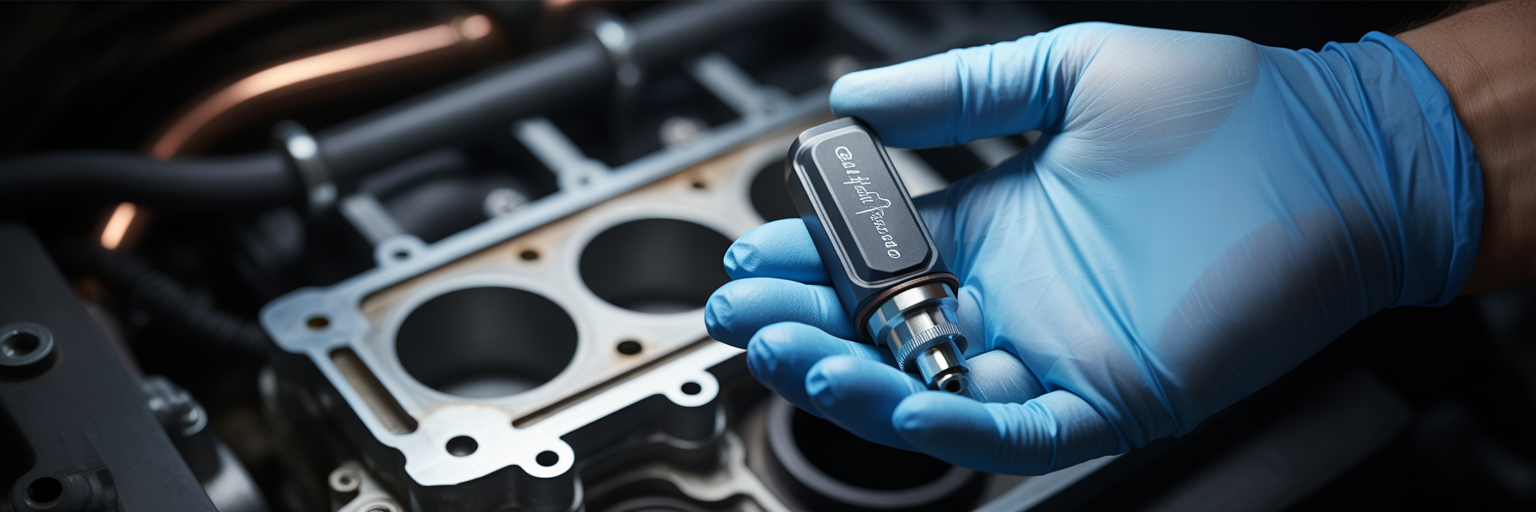
When an engine stalls abruptly or with a violent shudder, the cause often lies within the ignition system or the critical sensors that provide the ECU with real-time data. These components are responsible for creating the spark and telling the computer when to create it.
Worn ignition components are a common source of misfires that lead to a shaky stall. Spark plugs, ignition coils, or spark plug wires that are past their prime may produce a spark that is too weak to reliably ignite the air-fuel mixture at low RPMs. While the spark might be sufficient at 3,000 RPM, it can fail intermittently at an 800 RPM idle, causing a cylinder to misfire and the engine to stumble and die.
Perhaps the most critical sensor in any modern engine is the Crankshaft Position Sensor (CKP). This sensor tells the ECU the exact rotational speed and position of the crankshaft. Without this signal, the computer has no idea when to fire the spark plugs or inject fuel. If the CKP sensor fails, the ECU will immediately cut all fuel and spark, resulting in an instant, sudden-cut-off stall. These sensors often fail as they get hot, which is why a car might run fine when cold but stall after warming up in traffic.
The Camshaft Position Sensor (CMP) works in conjunction with the CKP to fine-tune ignition and fuel injector timing. While a CMP failure is less likely to cause an instant stall, it can lead to rough running and stumbling that may result in the engine dying at a stop.
Finally, consider the charging system. A failing alternator may not produce enough electrical voltage at low idle speeds to adequately power the ignition system, fuel pump, and all the vehicle’s electronics. This can cause the engine to die, often preceded by telltale signs like dimming headlights or a battery warning light flickering on the dash just before the stall occurs. Understanding how these parts wear is part of long-term care, which helps explain why some high-mileage cars age better than others.
Transmission Links and Accessory Load Problems
Sometimes, the reason a car shuts off when braking has nothing to do with air, fuel, or spark. The problem can be mechanical, originating from the transmission, or related to the load placed on the engine by accessories.
In a vehicle with an automatic transmission, a component called the torque converter lock-up clutch can be a surprising culprit. This clutch is designed to engage at highway speeds, creating a direct mechanical link between the engine and transmission to improve fuel efficiency. It is supposed to disengage automatically when you slow down. If it fails to release, it is mechanically equivalent to stopping a manual transmission car without pressing the clutch pedal. The engine is physically bound to the wheels, and as the car stops, the engine is forced to stall. This type of stall will typically only happen when the transmission is in Drive or Reverse, but not in Neutral or Park.
Another common scenario involves accessory load. The air conditioning compressor puts a significant drag on the engine. When the A/C cycles on, the ECU is programmed to command the idle control system to increase the engine’s RPMs slightly to compensate for this extra load. If the idle control system is weak or faulty, it may not be able to provide that extra boost. The added drag from the A/C compressor can then be enough to pull the engine’s RPMs down and cause a stall. This explains why a car might only stall at a red light when the air conditioner is running. A similar effect can be caused by a problematic power steering pump, which places a heavy load on the engine during low-speed parking maneuvers.
The torque converter is a robust component, often found in larger vehicles, and understanding its function is part of understanding the whole system, including some of the best used trucks for towing.
The Diagnostic Path: Initial Checks and Professional Tools

With a better understanding of the potential causes, you can begin the diagnostic process. It is important to separate simple, safe checks that any owner can perform from the more complex diagnostics that require professional tools and expertise. Here are a few initial steps you can take:
- Visual Inspection: Open the hood and look for anything that is obviously wrong. Check for disconnected vacuum hoses, large cracks in the main air intake boot between the air filter and the engine, or loose and corroded battery terminals. Sometimes the fix is simple and visible.
- Fluid Check: Ensure your engine oil and coolant are at their proper levels. While low fluids are not a direct cause of a typical idle stall, a severely unhealthy and poorly maintained engine can exhibit all sorts of problems, including stalling.
- Listen for the Fuel Pump: Before you try to start the car, turn the key to the “On” or “Run” position without cranking the engine. You should hear a faint, 2-3 second humming or buzzing sound from the rear of the vehicle. This is the fuel pump priming the system. If you hear nothing, it could indicate a problem with the pump or its electrical circuit.
If these initial checks do not reveal the problem, it is time to move on to professional diagnostics. A technician’s primary tool is the OBD2 scan tool. This device does far more than just read the codes that trigger a Check Engine Light. It provides a window into the engine’s brain, allowing a skilled user to see what the ECU is seeing in real time. This is the first step in a comprehensive diagnostic process, and our collection of informative articles can help you understand more about your vehicle’s systems.
Beyond the Code: Interpreting Scan Tool Data
Many drivers believe that a Check Engine Light and its corresponding Diagnostic Trouble Code (DTC) will pinpoint the exact part that has failed. This is one of the biggest misconceptions in auto repair. A code does not identify a failed part; it identifies a circuit or a system that is operating outside of its expected parameters. This is a critical distinction in any idle stall diagnosis.
For example, a code like P0130 indicates a problem with the “Oxygen Sensor Circuit (Bank 1, Sensor 1).” This could mean the oxygen sensor itself has failed. However, it could also be caused by a vacuum leak that is making the engine run lean, an exhaust leak before the sensor, low fuel pressure, or a wiring issue. Simply replacing the sensor without confirming the root cause will not fix the problem and will lead to wasted money and continued frustration.
The real power of a professional scan tool lies in its ability to display live data. A skilled technician can watch data streams to interpret the engine’s behavior. For instance, they can monitor “fuel trims,” which show how much the ECU is adding or subtracting fuel from its base calculation. High positive fuel trims are a classic indicator of a vacuum leak, as the computer is desperately adding fuel to compensate for the unmetered air. A technician can also watch the MAF sensor’s reading in grams per second at idle and compare it to a known-good value for that specific engine. Interpreting this data is a skill that separates professional diagnostics from simple code reading.
Repair Solutions and the High Cost of Ignoring a Stall

The solution to your stalling problem can range from a simple, inexpensive fix to a more complex and costly repair. It could be as easy as cleaning a dirty throttle body or replacing a cracked vacuum hose. On the other end of the spectrum, it might involve replacing a fuel pump inside the gas tank or diagnosing an internal transmission fault. Regardless of the cause, the one thing you should never do is ignore the problem.
A car that stalls in traffic is more than an inconvenience; it is a serious safety issue. The consequences of inaction can be severe and costly:
- Critical Safety Hazard: A car stalling in a busy intersection, on a highway off-ramp, or during a left turn is extremely dangerous. It leaves you immobile and vulnerable, often without power steering or power brakes, which rely on a running engine.
- Cumulative Damage: Each time you are forced to restart a stalled engine, you put extra wear and tear on the starter motor and the battery, leading to their premature failure.
- Expensive Component Failure: Persistently driving with an incorrect air-fuel mixture, a common cause of stalling, can overheat and destroy your catalytic converter. This is one of the most expensive emissions components to replace.
A car that stalls when you stop is sending a clear signal that something is wrong. Whether you use the information in this guide to track down a simple fix yourself or to have a more informed conversation with your mechanic, taking action is essential. Addressing the issue promptly will protect your safety, your vehicle’s reliability, and your wallet. For more automotive insights and guides, we invite you to explore all that Car Phanatics has to offer.