The rivalry between Ford and Chevrolet in the full-size truck market is more than just a competition; it’s a defining element of American automotive culture. For decades, these two titans have battled for supremacy, and as we look at the 2026 models, the core philosophies behind their engineering have never been more distinct. This isn’t just about choosing a truck; it’s about choosing a side in a long-standing debate over the best way to build a workhorse for the modern era.
A Deep Dive into Powertrain Philosophies
At the heart of the Ford F-150 vs Chevy Silverado debate lies a fundamental difference in how each brand approaches power. Ford has leaned into advanced technology, championing turbocharged engines and hybrid systems to deliver efficiency and on-demand torque. Chevrolet, on the other hand, remains a bastion of traditional American muscle, refining its large-displacement V8s and potent Duramax diesel for proven, straightforward power. This choice isn’t arbitrary; it reflects two distinct visions for the future of the pickup truck.
Ford’s EcoBoost and PowerBoost Hybrid Strategy
Ford’s engine lineup is a testament to its belief that smaller, smarter engines can outperform larger, traditional ones. The strategy is to use technology like turbocharging and hybridization to create power when you need it and efficiency when you don’t. It’s a diverse menu designed to cater to nearly every type of truck owner.
- 3.3L Ti-VCT V6: The reliable entry point, this naturally aspirated engine is a cost-effective choice for fleet operators and budget-conscious buyers who need basic capability without complexity.
- 2.7L EcoBoost V6: Many consider this the sweet spot for daily driving. Its twin turbos provide surprising acceleration for its size, making it feel nimble in city traffic while offering excellent fuel economy for a full-size truck.
- 5.0L Ti-VCT V8: For the traditionalists who still want a Ford, the “Coyote” V8 delivers that classic engine roar and linear power delivery. It’s a proven workhorse for those who prefer the feel of eight cylinders.
- 3.5L EcoBoost V6: This is Ford’s flagship towing engine. It generates immense low-end torque, allowing it to pull heavy loads with an ease that rivals larger V8s. It’s the engine that proved a V6 could do a V8’s job.
- 3.5L PowerBoost Full Hybrid V6: The most powerful option in the lineup, this hybrid system pairs the 3.5L EcoBoost with an electric motor. The result is staggering torque, impressive fuel efficiency in stop-and-go driving, and the game-changing Pro Power Onboard generator system.
Chevrolet’s V8 and Duramax Diesel Mainstays
Chevrolet’s powertrain philosophy is rooted in proven strength and simplicity. The lineup is built around the iconic small-block V8 and the remarkably efficient Duramax diesel, engines known for their durability and predictable performance. It’s a more focused approach that appeals to buyers who value reliability and a specific type of power delivery.
- 2.7L TurboMax I-4: A high-output four-cylinder might seem out of place in a full-size truck, but this engine delivers impressive torque right off the line, making it a capable and efficient base engine.
- 5.3L EcoTec3 V8: The volume seller for Chevrolet, this V8 is the quintessential truck engine. It’s known for its smooth operation and dependable power, making it a go-to choice for everyday hauling and light towing.
- 6.2L EcoTec3 V8: The king of Chevy’s gas engines. This powerhouse offers the most horsepower in the lineup, delivering a satisfying V8 rumble and a strong, linear pull all the way through the rev range. It’s the choice for those who want maximum muscle.
- 3.0L Duramax I-6 Turbo-Diesel: This engine is a masterpiece of efficiency. It provides nearly as much torque as the big V8 but with fuel economy that can rival some mid-size SUVs, especially on the highway. Its quiet, smooth operation and incredible range make it a favorite for long-distance towing.
Flagship Engine Performance Head-to-Head
The real character of these trucks emerges when you compare their top-tier gas engines: the F-150’s 3.5L EcoBoost V6 and the Silverado’s 6.2L V8. The EcoBoost’s twin turbos spool up quickly, delivering a massive wave of torque low in the RPM range. This translates to an immediate, forceful push when you press the accelerator, making the truck feel incredibly responsive whether passing on the highway or starting from a stoplight. In contrast, the 6.2L V8 builds its power more progressively. It has that classic, satisfying V8 feel, pulling harder as the revs climb, accompanied by a sound that many truck owners refuse to live without. While unloaded 0–60 mph times are often neck-and-neck, the driving experience is completely different. The Ford feels like a surge of instant power, while the Chevy feels like a steady, confident climb to speed.
| Engine | Horsepower (est.) | Torque (est.) | Primary Advantage | Ideal Use Case |
|---|---|---|---|---|
| Ford 3.5L EcoBoost V6 | 400 hp | 500 lb-ft | Massive low-end torque from turbos | Effortless towing and highway passing |
| Chevrolet 6.2L V8 | 420 hp | 460 lb-ft | Linear power delivery and classic V8 sound | Confident hauling with proven reliability |
| Ford 3.5L PowerBoost Hybrid | 430 hp | 570 lb-ft | Highest torque, onboard power generation | Contractors needing mobile power and max torque |
| Chevrolet 3.0L Duramax Diesel | 305 hp | 495 lb-ft | Exceptional fuel efficiency under load | Long-distance towing and high-mileage drivers |
Note: Horsepower and torque figures are based on projected 2026 model year specifications and may vary. This table highlights the distinct performance characteristics of each brand’s premier engine offerings.
Workhorse Capabilities: Towing and Hauling
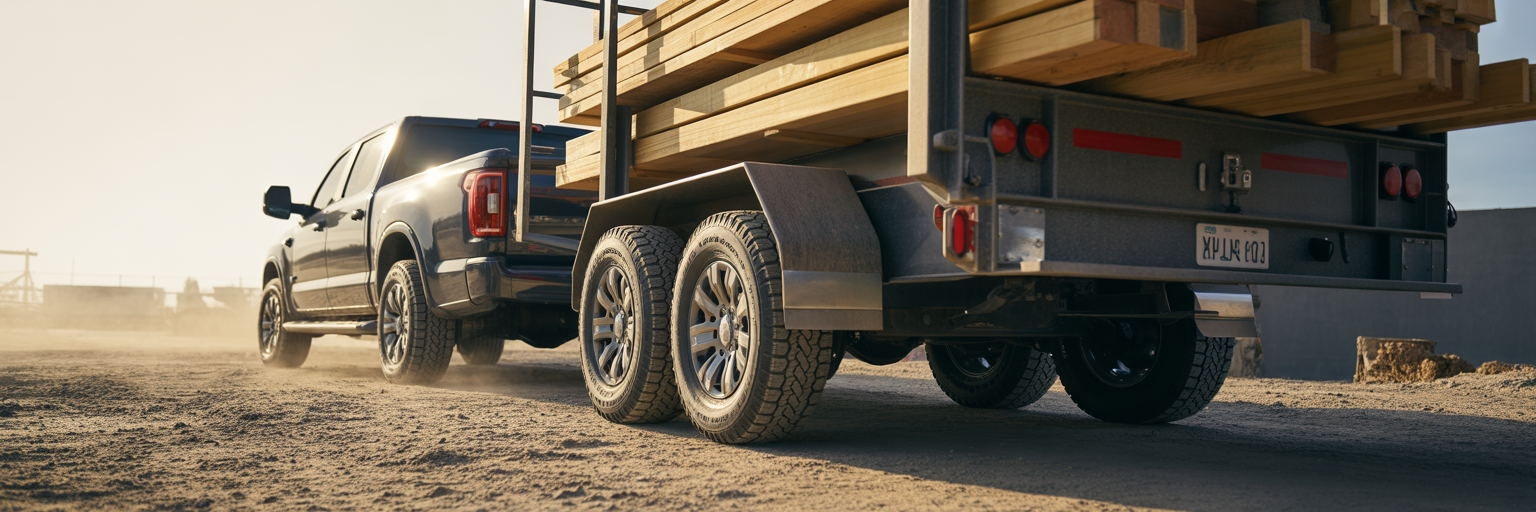
Beyond the engine specs, a truck’s worth is measured by its ability to get work done. This is where payload ratings, towing technology, and bed utility separate the contenders from the pretenders. Both Ford and Chevrolet have engineered their trucks to be immensely capable, but they solve job-site problems in very different ways.
Maximum Towing and Payload Capacities
When it comes to the spec sheet, Ford often takes the lead. The F-150 towing capacity frequently tops the class, but achieving those maximum numbers requires a very specific configuration, usually involving the 3.5L EcoBoost engine and the Max Trailer Tow Package. A key factor in the F-150’s capability is its aluminum-alloy body. By reducing the truck’s own weight, Ford allows for a higher payload capacity, meaning you can legally and safely carry more in the bed. The Silverado, with its traditional high-strength steel construction, offers robust and dependable numbers, but often trails the F-150 in maximum payload. For buyers who prioritize pulling power and efficiency above all else, it’s worth exploring a broader view of how different models perform, as detailed in our guide on which 2025 trucks offer the best towing and fuel economy, with principles that apply directly to the 2026 model year.
Smart Trailering Technology Showdown
Hooking up and maneuvering a trailer can be the most stressful part of owning a truck. Both brands offer brilliant solutions, but with different philosophies. Ford’s Pro Trailer Backup Assist is about automation. You take your hands off the steering wheel and use a simple knob on the dash to direct the trailer where you want it to go while backing up. The truck handles the complex counter-steering for you. It’s an incredible feature for anyone who isn’t a seasoned pro at reversing trailers. Chevrolet’s approach is about providing maximum information. Its advanced trailering system offers up to 14 different camera views, including a “transparent trailer” view that digitally stitches together images to let you “see through” your trailer. This is a massive confidence booster for experienced towers who need to navigate tight job sites or crowded campgrounds.
The Battle of the Beds: Pro Power Onboard vs. Multi-Flex Tailgate
The truck bed is no longer just a box for hauling stuff. Ford’s Pro Power Onboard system transforms the F-150 into a mobile generator. Available with 2.0kW, 2.4kW, or a massive 7.2kW of output on the PowerBoost Hybrid, it can run everything from power tools on a job site to a refrigerator and TV at a tailgate. It’s a feature that fundamentally changes what a truck can do. Chevrolet’s answer to bed innovation is the Multi-Flex Tailgate. This “six-function Swiss Army knife” of tailgates offers unparalleled access and utility. Its functions include:
- A traditional primary gate.
- A load stop to secure long items.
- An inner gate that folds down for easier access deeper into the bed.
- A full-width step that can hold up to 375 pounds.
- An inner gate load stop for stacked items.
- A work surface at a comfortable height.
The choice here is clear: Ford offers power, while Chevy offers access. For a contractor who needs to run a miter saw or an air compressor far from an outlet, Pro Power Onboard is indispensable. For someone who is constantly loading and unloading gear, the Multi-Flex Tailgate is a back-saver.
On the Road: Driving Dynamics and Fuel Efficiency
With so many owners using their trucks as daily drivers, on-road comfort and running costs are more important than ever. The experience behind the wheel, from the morning commute on bumpy city streets to a long highway road trip, reveals significant differences in how these trucks are tuned for everyday life.
Ride Quality and Handling Comparison
The F-150 generally delivers a more compliant and composed ride. It does a better job of soaking up road imperfections, feeling less like a traditional truck and more like a large SUV. This makes it an exceptionally comfortable vehicle for long-distance travel or for families who use it as their primary vehicle. The Silverado, particularly in recent years, has improved its ride quality, but it maintains a slightly firmer, more traditional truck-like feel. This isn’t necessarily a bad thing; some drivers prefer the greater sense of connection to the road it provides. Both trucks utilize sophisticated 10-speed automatic transmissions that are generally smooth and intelligent, though some drivers report they can occasionally hunt for the right gear in low-speed traffic.
Real-World Fuel Economy: Daily Driving
While EPA estimates provide a baseline, real-world mileage is what hits your wallet. In mixed daily driving, the F-150’s 2.7L EcoBoost V6 is a standout, often delivering impressive MPG for a vehicle of its size. However, the F-150 PowerBoost Hybrid is the undisputed champion of city driving. Its ability to run on electric power at low speeds and in stop-and-go traffic can result in fuel economy that is simply unreachable for any non-hybrid competitor. For the Silverado, the 5.3L V8 offers respectable mileage for its displacement, but the real star for efficiency is the 3.0L Duramax diesel, which excels on the highway, easily cruising past gas-powered rivals.
Towing Fuel Economy: Where Diesel and Hybrids Shine
Anyone who has towed a heavy trailer knows the gut-wrenching feeling of watching the fuel gauge plummet. This is where engine choice becomes critical. Naturally aspirated V8s have to work hard and rev high to maintain speed while towing, causing their fuel economy to drop dramatically. Turbocharged engines like Ford’s EcoBoost fare better because their abundant low-RPM torque allows them to pull without constantly straining. The Silverado’s 3.0L Duramax diesel, however, is in a class of its own. Diesel engines are inherently more efficient under load, and the Duramax can often deliver double the towing MPG of a large gas V8. Real-world testing often reveals significant differences in fuel consumption under load. For instance, as noted in a comprehensive comparison by MotorTrend, diesel engines like the Silverado’s Duramax and turbocharged V6s like Ford’s EcoBoost tend to offer more stable and efficient performance when towing heavy trailers compared to naturally aspirated V8s.
Cabin Comfort and Interior Design
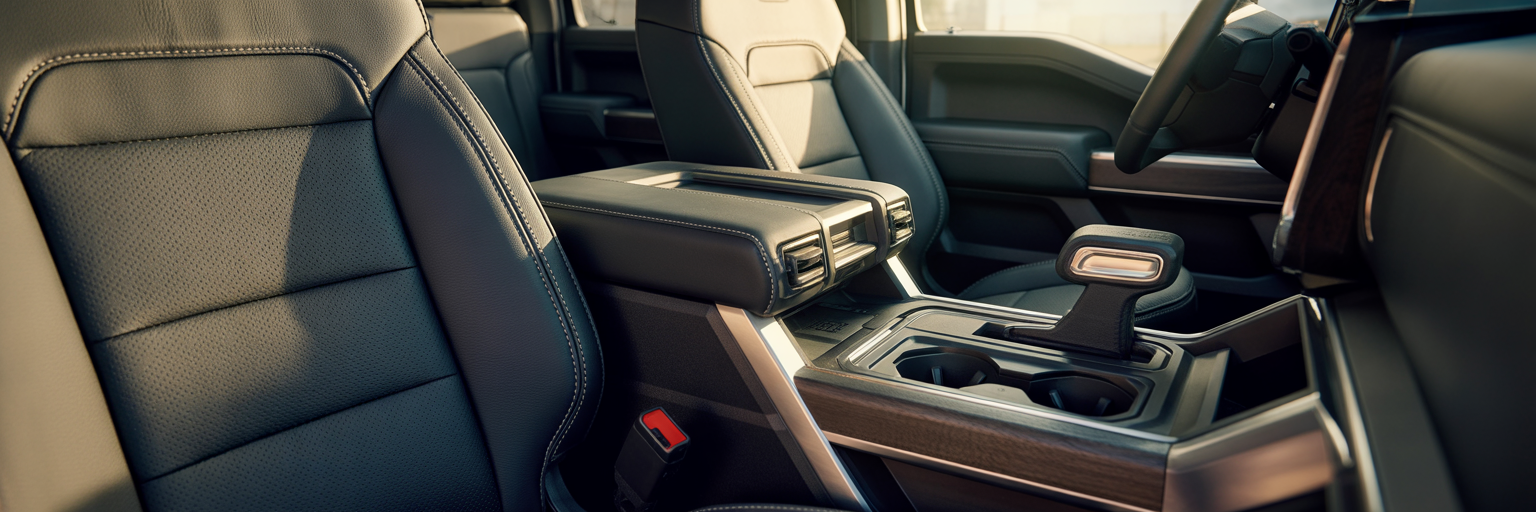
The modern pickup truck cabin has transformed from a spartan workspace into a comfortable, tech-filled command center. How Ford and Chevrolet approach this interior space says a lot about who they think their customers are. One is designed as a functional mobile office, while the other focuses on a wide, commanding presence with durable controls.
Design Philosophy and Material Quality
The F-150’s interior is packed with clever, functional features. The available Interior Work Surface, created by folding the stow-away shifter flat, provides a perfect spot for a laptop. It’s a design that screams productivity. The Silverado’s redesigned interior, by contrast, feels broad and driver-focused, with a large central screen and a satisfying mix of physical buttons and knobs for climate and audio controls. It feels less like an office and more like the cockpit of a capable machine. Material quality in both trucks scales with price. Base models are a sea of durable plastics and vinyl, but top trims like the F-150 Platinum and Silverado High Country are adorned with premium leather, real wood trim, and soft-touch surfaces that rival luxury sedans. The evolution of truck interiors reflects a broader trend across all vehicle types, where comfort and design are becoming just as important as performance. You can explore more head-to-head vehicle analyses in our dedicated versus section.
Passenger Space and Ergonomics
For families or work crews, passenger space is non-negotiable. Both trucks in their Crew Cab configurations offer enormous rear-seat legroom, easily accommodating three adults. The F-150 gains a slight edge with its completely flat rear floor, which makes the middle seat more comfortable and provides a huge, uninterrupted space for cargo when the seats are folded up. Both trucks offer ample storage, with massive center consoles, large door pockets, and clever under-seat storage bins. When it comes to long-haul comfort, the front seats in both are supportive and highly adjustable, but some drivers may find the F-150’s seats slightly more plush for extended drives.
Cabin Quietness and Refinement
A quiet cabin reduces fatigue on long trips and makes conversations easier. Both Ford and Chevrolet have invested heavily in sound-deadening materials, acoustic glass, and aerodynamic designs to minimize wind and road noise. At highway speeds, both are impressively serene. The deciding factor often comes down to the engine. The low hum of an EcoBoost V6 or the near-silent operation of the PowerBoost in electric mode creates a very calm environment. The Silverado’s V8s, while well-muted, always provide a subtle, reassuring rumble that reminds you of the power under the hood. The Duramax diesel is remarkably quiet for a diesel, but the V8s offer a more traditional and pleasing soundtrack for many buyers.
Technology and Infotainment Usability
The technology inside a 2026 pickup truck is just as important as the hardware under the hood. From massive touchscreens to hands-free driving systems, the digital experience is a major battleground in this competition. This is a pure tech showdown, comparing software, screens, and driver-assistance features.
Infotainment Face-Off: SYNC 4 vs. Chevrolet Infotainment 3
Ford’s SYNC 4 system, displayed on a large standard touchscreen, is powerful and feature-rich. It offers wireless Apple CarPlay and Android Auto, a logical menu structure, and over-the-air updates that can improve the system over time. It’s a highly capable and responsive system. Chevrolet’s latest infotainment system is built with Google Automotive Services integrated. This means Google Maps, Google Assistant, and the Google Play Store are built right in, offering a familiar and incredibly intuitive user experience. The voice commands are particularly excellent. The choice comes down to preference: Ford’s system is a powerful, self-contained unit, while Chevy’s leverages the familiarity and power of Google for a seamless, connected experience.
Digital Instrument Clusters and Customization
Both trucks offer large, fully digital instrument clusters on higher trims. These screens are highly configurable, allowing the driver to prioritize the information that matters most to them. The F-150’s cluster offers crisp graphics and can display everything from navigation directions to detailed off-road data and power distribution on the hybrid model. The Silverado’s cluster is equally impressive, with clean, easy-to-read layouts and specific towing screens that show vital information at a glance. Both systems do an excellent job of presenting critical data without being distracting, making the old analog gauges feel decidedly last-century.
Hands-Free Driving: BlueCruise vs. Super Cruise
The headline feature in this 2026 pickup truck comparison is the availability of true hands-free driving. Ford’s BlueCruise and GM’s Super Cruise both allow for hands-free operation on hundreds of thousands of miles of pre-mapped highways. However, there are key differences. Super Cruise is widely regarded as the more advanced system, with an exceptionally smooth operation and the ability to perform automated lane changes. Crucially, it can also function while towing a trailer, a massive benefit for long-haul towers. It uses an infrared camera to ensure the driver is still paying attention. BlueCruise is also very effective, but it currently lacks the trailering and automatic lane change capabilities of its rival. For the tech-savvy buyer who does a lot of highway driving, Super Cruise gives the Silverado a significant edge.
Off-Road Prowess and Specialized Trims
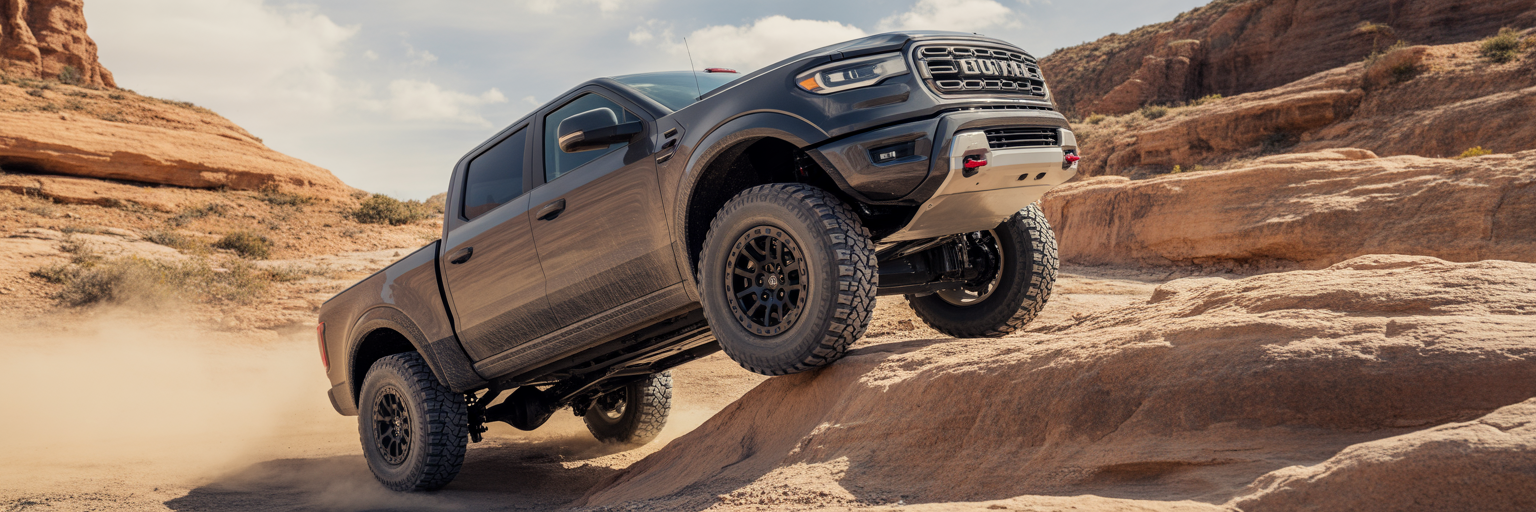
For those whose adventures begin where the pavement ends, both Ford and Chevrolet offer a range of highly specialized off-road models. These trucks are far more than just a lift kit and bigger tires; they are purpose-built machines with distinct philosophies for tackling the wild.
High-Speed vs. Technical: Raptor and Tremor
Ford’s off-road lineup is headlined by the legendary F-150 Raptor. The Raptor is a desert-running trophy truck for the street, designed to fly over rough terrain at high speeds. Its defining feature is its long-travel suspension with sophisticated Fox Live Valve shocks that can absorb massive impacts with incredible composure. For those who don’t need the Raptor’s extreme capability (or price tag), the F-150 Tremor offers a fantastic middle ground. It combines a factory lift, all-terrain tires, and upgraded suspension to create a highly capable and well-rounded off-roader that’s still comfortable as a daily driver.
Rock-Crawling Focus: ZR2 and Trail Boss
Chevrolet’s off-road strategy is more focused on technical, slow-speed capability. The Silverado ZR2 is the pinnacle of this approach. Its secret weapon is a set of Multimatic DSSV spool-valve dampers, a type of suspension technology derived from high-end motorsports. These shocks provide exceptional control and durability when navigating challenging rock gardens or uneven trails. The ZR2 also comes with front and rear locking differentials for maximum traction. Like Ford’s Tremor, the Silverado Trail Boss serves as a more accessible off-road package, providing a 2-inch factory lift, skid plates, and aggressive tires for a significant boost in capability over a standard 4×4.
Suspension, Tires, and Off-Road Hardware
When you compare the flagship off-roaders, the Raptor and the ZR2, their different missions become clear through their hardware. For those interested in the raw power and capability that define these vehicles, our broader coverage of trucks provides more context on the entire segment.
- Suspension: The Raptor uses long-travel Fox electronic shocks designed for high-speed compression. The ZR2 uses Multimatic DSSV dampers designed for precise, slow-speed control.
- Tires: The Raptor comes standard with massive 35-inch all-terrain tires and offers even larger 37-inch tires from the factory. The ZR2 uses smaller, but still aggressive, 33-inch mud-terrain tires.
- Locking Differentials: Both the Raptor and ZR2 offer front and rear electronic locking differentials, giving them the ultimate traction in tough situations.
- Bodywork: The Raptor features unique, wider body panels to accommodate its massive suspension travel and track width. The ZR2 has a high-clearance front bumper to improve its approach angle for climbing obstacles.
The verdict is straightforward: if your off-roading fantasy involves high-speed desert runs, the Raptor is in a league of its own. If you prefer tackling technical trails and rock-crawling, the ZR2’s specialized suspension and hardware give it the edge.
Long-Term Ownership: Costs and Reliability
The purchase price is just the beginning of a truck’s total cost. Over five or more years, factors like depreciation, fuel, insurance, and maintenance can add up to thousands of dollars. Understanding these long-term costs and a vehicle’s reputation for durability is essential for making a smart financial decision.
Resale Value and Depreciation
Historically, the Ford F-150 has been a champion of resale value, holding its worth exceptionally well over time. This strong performance is a significant financial advantage, as it means you get more of your money back when it’s time to sell or trade in. However, the Chevrolet Silverado has been making significant gains. With its updated interiors, advanced technology, and strong powertrain options, the gap in resale value has been narrowing. For 2026, both trucks are expected to be strong performers, but the F-150’s long-standing reputation may still give it a slight edge in the used market.
Reliability Reputation and Durability
When it comes to Silverado 1500 reliability, the truck benefits from its use of proven, long-running V8 engines and a philosophy of durable, straightforward engineering. Many owners swear by the longevity of the small-block V8. The F-150, with its more complex EcoBoost and hybrid powertrains, has faced more scrutiny over long-term durability, though millions of these engines are on the road without issue. When considering long-term ownership, a vehicle’s reliability history is paramount. For example, prospective buyers of GM products might research past issues, such as the GM 6.2L engine recall, to understand the brand’s track record with its V8 powerplants. According to J.D. Power’s 2024 comparison, both trucks have made strides in dependability, but historical trends and owner-reported data often give insights into long-term satisfaction and potential issues.
Five-Year Cost of Ownership
Looking at the total picture over five years reveals a more nuanced financial comparison. Here’s how the costs break down:
- Fuel: This is a major variable. The F-150 PowerBoost will likely have the lowest fuel cost for city-heavy drivers, while the Silverado Duramax will be the most economical for those who drive long highway miles or tow frequently. The big V8s will be the thirstiest.
- Insurance: Costs can vary, but trucks with more advanced safety features and lower repair costs can sometimes command lower premiums.
- Maintenance: Both trucks have similar scheduled maintenance intervals. The long-term cost of maintaining a turbocharged or hybrid system versus a traditional V8 is a point of debate, but modern engineering has made all of these systems highly durable.
- Warranty: Both Ford and Chevrolet offer similar bumper-to-bumper (3 years/36,000 miles) and powertrain (5 years/60,000 miles) warranties. Special components, like Ford’s hybrid battery or Chevy’s diesel engine, often have extended coverage.
Ultimately, the smartest long-term financial choice depends heavily on your driving habits. The higher initial cost of a diesel or hybrid can be offset by significant fuel savings if your usage matches their strengths.
The Final Verdict: Which Truck Is Right for You?
After comparing powertrains, capabilities, comfort, and costs, the choice between the 2026 Ford F-150 and Chevrolet Silverado becomes a matter of personal mission. Both are exceptional trucks, but they excel in different areas. Here’s our breakdown for every type of buyer.
- For the Contractor and Tradesperson: The Ford F-150 is the clear winner here. Its available Pro Power Onboard system is a revolutionary feature that no competitor can match, turning the truck into a mobile generator. Combined with its often class-leading payload capacity and clever interior work surface, the F-150 is the ultimate truck for contractors.
- For the Family Hauler: This is a much closer call. The F-150’s smoother, more car-like ride and completely flat rear floor give it an edge in pure comfort and passenger-friendly design. However, the Silverado’s extremely quiet cabin and intuitive, Google-based infotainment system make it a fantastic and easy-to-live-with family vehicle. The choice comes down to prioritizing a plush ride (F-150) versus user-friendly tech (Silverado).
- For the Off-Road Enthusiast: The answer depends entirely on your playground. If you dream of high-speed runs through open desert, the F-150 Raptor is the undisputed king. If your adventures involve slow, methodical climbs over technical rocks and tight trails, the Silverado ZR2 and its advanced DSSV suspension are tailor-made for the job.
- For the Everyday Driver: For the person using their truck as their one and only vehicle, the decision hinges on balancing efficiency and comfort. The F-150 PowerBoost Hybrid is an outstanding choice, offering potent acceleration and excellent fuel economy in city driving. For those who cover long distances on the highway, the Silverado with the 3.0L Duramax diesel is unbeatable for its range and efficiency.
In the end, the Ford F-150 vs Chevy Silverado debate confirms that both are arguably the best full size pickup truck options available, but for different people. The F-150 stands as the innovator, pushing the boundaries with technology, hybrid power, and work-focused features. The Silverado represents proven strength, offering refined V8 and diesel power, superior hands-free driving tech, and a rugged, straightforward appeal. The right choice is the one that best aligns with your daily needs and weekend ambitions. Ultimately, choosing between these two titans of the road comes down to personal priorities, a common theme in many of our vehicle comparisons at CarPhanatics.