The Enduring Rivalry in Compact SUVs
For decades, the Toyota RAV4 and Honda CR-V have been more than just cars; they are fixtures in American driveways. Their consistent presence at the top of sales charts is no accident. It’s the result of a long-standing competition where each brand relentlessly refines its formula, pushing the other to be better. This is just one of the many head-to-head rivalries we analyze in our vehicle showdowns.
The 2026 model year marks the latest chapter in this story. Toyota has leaned further into a rugged, adventure-ready identity for the RAV4, with styling and features that suggest it’s ready for a weekend camping trip. In the other corner, the 2026 Honda CR-V doubles down on what it does best: delivering sophisticated comfort, impressive efficiency, and a cabin that feels a class above. It’s a classic matchup of versatile capability against polished practicality.
Choosing between them feels like a significant decision because it is. These vehicles are designed to fit into every part of your life, from the daily school run to cross-country road trips. To help you decide, we will compare them across the metrics that truly matter: performance, fuel economy, interior space, technology, safety, and long-term value.
Our goal is to provide a clear verdict for your specific needs. Are you a growing family that needs maximum space? A daily commuter focused on efficiency? Or a pragmatic owner who prioritizes reliability and cost above all else? By the end of this article, you will know which of these titans is the right fit for your garage.
Powertrain and Performance Dynamics
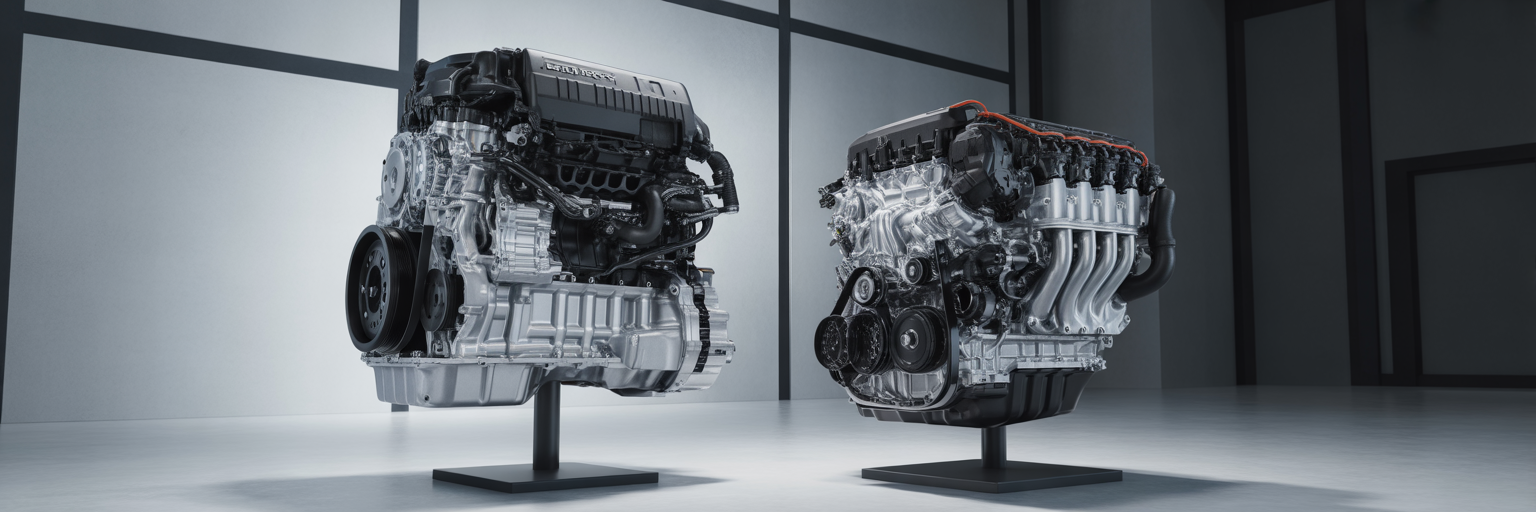
What happens when you press the accelerator is a core part of any vehicle’s personality. In the Toyota RAV4 vs Honda CR-V debate, this is where their different philosophies become immediately apparent. Both offer capable gasoline and hybrid options, but they deliver power in distinctly different ways.
Standard Engine Showdown: Power vs. Responsiveness
The 2026 Toyota RAV4 comes equipped with a robust 2.5-liter four-cylinder engine. Its 203 horsepower is more than just a number on a spec sheet. It translates to confident acceleration when you need to merge onto a busy highway or pass slower traffic. In contrast, the Honda CR-V uses a smaller 1.5-liter turbocharged engine producing 190 horsepower. While the figure is lower, the turbo provides excellent low-end torque. This makes the CR-V feel surprisingly quick and responsive in stop-and-go city traffic, where you rarely use all 203 horsepower anyway. According to tests by MotorTrend, the RAV4’s horsepower gives it a noticeable edge in straight-line acceleration, confirming that feeling of power on open roads.
The Hybrid Advantage: Efficiency Meets Smoothness
Both manufacturers have perfected their hybrid systems, offering more than just impressive fuel economy. The hybrid versions of the RAV4 and CR-V provide a quieter and smoother driving experience. The electric motors deliver instant torque, making acceleration from a standstill feel effortless and refined. For drivers who spend a lot of time in traffic, the serene, silent operation at low speeds can significantly reduce daily stress. These models represent some of the most compelling packages on the market, though many other great hybrid models are available if you’re exploring all your options.
Transmissions and Drivetrains: Defining the Drive
The RAV4’s gasoline engine is paired with a direct-shift 8-speed automatic transmission. It provides crisp, defined shifts that feel familiar and engaging. The CR-V, on the other hand, uses a Continuously Variable Transmission (CVT). Modern CVTs are incredibly smooth and efficient, keeping the engine in its optimal power band without the sensation of gear changes. Some drivers prefer the RAV4’s traditional feel, while others value the CR-V’s seamless acceleration. Both offer capable All-Wheel Drive (AWD) systems, but the RAV4 goes a step further on certain trims with Dynamic Torque Vectoring AWD, which can actively distribute power between the rear wheels for enhanced traction and handling on slippery or uneven surfaces.
Fuel Efficiency and Real-World Economy
Beyond the initial sticker price, fuel consumption is one of the biggest factors in the long-term cost of owning a vehicle. Both the RAV4 and CR-V are leaders in their class for efficiency, but small differences can add up over thousands of miles. This section focuses purely on the numbers and what they mean for your wallet.
For the standard gasoline models, the battle is incredibly close. The estimated 2026 RAV4 fuel economy comes in at approximately 35 mpg on the highway, while the CR-V is right behind at 34 mpg highway. This difference is almost negligible in day-to-day driving. Their combined ratings both hover around 30 mpg, making either a smart choice for budget-conscious drivers. You really can’t go wrong with either if you’re sticking to the gas-only versions.
The real story, however, is with the hybrid models. Here, both vehicles take a significant leap forward in efficiency, often achieving combined ratings well over 40 mpg. For anyone with a long daily commute or who simply wants to minimize their trips to the gas station, the hybrid is the undeniable choice. The initial cost premium for the hybrid powertrain is often recouped in fuel savings within just a few years.
Of course, EPA estimates are just a baseline. Your actual mileage will depend on several factors. It’s important to remember how your habits and environment can influence fuel consumption:
- Driving Style: Smooth, gradual acceleration will always yield better results than aggressive, lead-footed driving.
- Environment: Stop-and-go city traffic is the enemy of fuel economy, whereas steady highway cruising allows the engine to operate at its most efficient speed.
- Vehicle Load: A car full of passengers and cargo requires more energy to move, which directly impacts your MPG.
- Weather: In colder temperatures, engines take longer to reach their optimal operating temperature, and battery performance in hybrids can be temporarily reduced, leading to lower efficiency.
On-Road Dynamics and Ride Comfort

How an SUV feels on the road during a mundane Tuesday commute is just as important as its performance specs. This is where the RAV4 and CR-V showcase their most distinct personalities. One prioritizes serene comfort, while the other offers a more connected and engaging driving experience.
The Honda CR-V is engineered for maximum comfort. Its suspension feels like it was tuned specifically for American suburban roads, expertly soaking up imperfections like potholes and cracked pavement. Think of it as noise-canceling headphones for the road. This calibration makes it an outstanding vehicle for relaxed daily driving and long family road trips, where a smooth, quiet ride keeps everyone happy. It glides over bumps rather than crashing over them, creating a sense of calm in the cabin.
In contrast, the Toyota RAV4 offers a slightly firmer ride. Its suspension and steering are tuned to provide more feedback from the road, giving the driver a better sense of connection to the vehicle. It feels more planted and confident on winding country roads, with less body roll in the corners. While it’s still comfortable, it trades a bit of the CR-V’s plushness for a more responsive and dynamic feel. If the CR-V is a serene cruiser, the RAV4 is the more athletic of the two.
This difference extends to cabin noise. Both vehicles do an excellent job of insulating passengers from the outside world, but the CR-V generally has a slight edge in suppressing wind and road noise at highway speeds. This contributes to its premium, relaxed atmosphere. The choice here is clear: if your priority is a peaceful, isolated cabin for a stress-free commute, the CR-V is likely your champion. If you prefer a more engaging drive and don’t mind feeling a bit more of the road, the RAV4 will be more satisfying.
Interior Design and Passenger Space
You spend all your time inside your vehicle, so the cabin’s design, comfort, and space are critical. Here, Toyota and Honda have taken different approaches to ergonomics and aesthetics, with one clear winner when it comes to accommodating passengers.
Front Cabin: Driver-Focused vs. Open and Airy
The Toyota RAV4 features a driver-centric cockpit with a rugged, functional design. The controls are chunky and tactile, and the dashboard is oriented toward the driver. Many find the generous front shoulder room makes the cabin feel spacious and unconfining, especially for larger occupants. The Honda CR-V, however, pursues a different philosophy. Its dashboard is clean and minimalist, with a signature honeycomb mesh trim that spans its width, cleverly hiding the air vents. This design creates a more open and airy ambiance, making the front cabin feel wider and more premium.
Rear-Seat Experience: The Deciding Factor for Families
While the front seats are a matter of taste, the rear-seat experience is a clear victory for the Honda CR-V. It boasts superior rear-seat legroom, a difference you can feel instantly. This isn’t just a number on a spec sheet; it’s the space that makes installing a bulky rear-facing child seat less of a struggle. It’s the room that allows teenagers and adults to sit comfortably on long journeys without their knees pressed against the front seatbacks. This exceptional rear-seat space is precisely why the CR-V is often considered the best compact SUV for families. While the RAV4’s rear seat is perfectly adequate, the CR-V’s is genuinely accommodating.
When it comes to seat comfort, both offer well-cushioned and supportive seating for long drives. However, the CR-V’s overall focus on comfort gives its seats a slight edge for all-day journeys. Ultimately, the RAV4’s interior is built for functionality and durability, while the CR-V’s is designed for passenger comfort and a touch of modern elegance.
Cargo Capacity and Everyday Practicality

A compact SUV’s primary mission is to blend the efficiency of a car with the utility of a larger vehicle. The ability to haul groceries, sports equipment, and luggage is non-negotiable. In this practical test of space and usability, one of these rivals has a clear advantage.
The numbers tell a straightforward story. The 2026 CR-V cargo space is larger than the RAV4’s, both behind the rear seats and with them folded flat. With the seats up, that extra cubic footage means you can fit another duffel bag or a few more grocery bags without having to play a game of trunk Tetris. It’s the kind of practical difference you’ll appreciate every week.
When you fold the rear seats down, the CR-V’s advantage becomes even more pronounced. Its larger maximum cargo capacity means it’s better suited for those occasional trips to the home improvement store or for moving a piece of flat-pack furniture. It simply offers more raw, usable volume for life’s bigger tasks.
But practicality goes beyond just cubic feet. The usability of that space is just as important. Here’s how they compare on the little things that make a big difference:
- Load Floor Height: The CR-V often features a slightly lower load floor, making it easier to lift heavy or awkward items like a stroller or a cooler into the back.
- Cargo Bay Shape: Both have well-shaped cargo areas, but the CR-V’s design is typically more squared-off with less intrusion from the wheel wells, making it easier to pack large, boxy items.
- Seat-Folding Mechanism: Honda is known for its simple, user-friendly seat-folding mechanisms, often allowing you to drop the rear seats with levers accessible from the cargo area.
- Available Features: Both models offer convenient hands-free power liftgates, a feature that feels like a lifesaver when your arms are full.
Even in small-item storage, the CR-V tends to offer a more thoughtfully designed center console and larger door pockets. For pure, everyday utility, the Honda CR-V consistently comes out ahead.
Technology and Infotainment Systems
In 2026, the screens and software in a car are as important as the engine. A frustrating infotainment system can sour the entire ownership experience. Both Toyota and Honda have made significant strides in their tech offerings, but they prioritize different aspects of the user experience.
Screen Wars: Size vs. Usability
The Toyota RAV4 often impresses with its available screen size. Higher trims can be equipped with a large 10.5-inch touchscreen that gives the dashboard a modern, tech-forward appearance. The graphics are sharp, and the system is responsive. However, the Honda CR-V, even with a potentially smaller standard screen, earns praise for its software. The menu structure is incredibly intuitive, and most importantly, it retains a physical volume knob. We’ve all been there, fumbling with a touchscreen to turn down the music quickly. That simple knob is a small but significant win for real-world usability.
Connectivity and Audio Experience
Both SUVs come standard with Apple CarPlay and Android Auto, which is now an essential feature for most buyers. The key difference often lies in the details: some trims may offer wireless connectivity, freeing you from cables, while others require a wired connection. It’s also worth checking the number and placement of USB ports, as a well-placed port for rear passengers can be a trip-saver. Both also offer available wireless charging pads to keep your devices topped up.
When it comes to audio, the standard systems in both vehicles are perfectly adequate for news and podcasts. However, music lovers should consider the premium options. Toyota partners with JBL, while Honda works with Bose to offer upgraded sound systems on higher trims. The listening experience in both is a clear step up, providing richer bass and clearer highs. While the RAV4’s technology looks impressive and is certainly competitive with rivals like those in our Toyota RAV4 vs. Tesla Model Y comparison, the CR-V’s focus on intuitive design makes its tech feel slightly more user-friendly day-to-day.
Advanced Safety and Driver-Assistance Features

Peace of mind is priceless, and both Toyota and Honda have made advanced safety a cornerstone of their vehicle design. They include comprehensive suites of driver-assistance technologies as standard equipment across all trim levels, a move that provides immense value and demonstrates a commitment to safety.
Toyota’s package is called Toyota Safety Sense, and Honda’s is known as Honda Sensing. While the names are different, their core functions are largely the same, acting as a second set of eyes on the road. Both have earned high marks for their effectiveness from organizations like Consumer Reports, which evaluates these systems in real-world conditions. Here are the key technologies you can expect in both:
- Pre-Collision System with Pedestrian Detection: This system can detect a potential frontal collision with another vehicle or a pedestrian. It provides an alert and can automatically apply the brakes to help avoid or mitigate the impact.
- Lane Departure Alert with Steering Assist: If you start to drift from your lane without signaling, the system will warn you. On some models, it can also provide gentle steering input to help guide you back into your lane.
- Adaptive Cruise Control: A huge benefit for highway driving, this system maintains a set speed and a selectable following distance from the vehicle ahead, automatically slowing down and speeding up with the flow of traffic.
- Automatic High Beams: This feature automatically switches between high and low beams at night, providing maximum visibility without dazzling oncoming drivers.
While the features are similar, expert reviews often note subtle differences in their operation. For instance, one system’s adaptive cruise control might feel smoother in its braking and acceleration, while the other’s lane-keeping system might feel more natural. However, both the RAV4 and CR-V have historically earned top crash test ratings from the IIHS and NHTSA, confirming that their fundamental structural safety is second to none.
Reliability and Long-Term Ownership Costs
A car is a major investment, and the costs don’t stop after you drive it off the lot. The long-term expenses associated with maintenance, repairs, and depreciation play a huge role in the total cost of ownership. This is a critical part of the RAV4 vs CR-V reliability discussion, as both brands have built their reputations on dependability.
Both Toyota and Honda are legendary for their reliability. You simply cannot make a bad choice here. However, historical data from sources like J.D. Power and Consumer Reports often gives the Honda CR-V a slight edge, with owners reporting marginally fewer problems and unscheduled repairs over the life of the vehicle. This can translate to slightly lower average maintenance and repair costs over a five or ten-year period.
But that’s only half of the financial equation. The Toyota RAV4 has a powerful secret weapon: its outstanding resale value. The RAV4 consistently holds its value better than almost any other vehicle in its class. This means that when it comes time to sell or trade in your vehicle, you will get a significantly larger portion of your initial investment back. For buyers who change cars every few years, this can make the RAV4 the more financially savvy choice, even if its running costs are slightly higher.
This creates a fascinating financial trade-off for long-term owners, as illustrated below.
| Financial Factor | Toyota RAV4 | Honda CR-V |
|---|---|---|
| Predicted Reliability | Excellent | Excellent (Historically slightly higher) |
| 5-Year Maintenance Cost (Est.) | ~$2,500 – $3,000 | ~$2,200 – $2,700 |
| 5-Year Resale Value (Est.) | ~60% of original MSRP | ~55% of original MSRP |
| Key Financial Advantage | Higher return on investment at sale | Lower running and repair costs |
Note: Cost and resale value figures are estimates based on historical data from industry sources like Kelley Blue Book (KBB) and Consumer Reports. Actual values may vary based on condition, mileage, and market demand.
The Final Verdict for Your Lifestyle

After comparing every nut and bolt, it’s clear that the enduring Toyota RAV4 vs Honda CR-V rivalry has no single winner. The best choice is deeply personal and depends entirely on what you value most in a vehicle. We’ve broken down the final verdict for three common types of buyers.
For Families: Space and Comfort Reign Supreme
For families, the decision is straightforward. The Honda CR-V is the superior choice. Its unmatched rear-seat legroom is a game-changer for anyone installing child seats or transporting growing teenagers. This, combined with its larger, more practical cargo hold and supremely comfortable ride, makes it the ideal vehicle for managing the chaos of family life. It’s designed from the inside out to make daily tasks and long road trips easier and more pleasant for everyone.
For Daily Commuters: Driving Fun vs. Serene Cruising
Here, the choice is more nuanced and comes down to your personality behind the wheel. If you enjoy a more connected and engaging driving experience and want that marginal highway MPG advantage, the Toyota RAV4 is an excellent pick. Its responsive handling can make a mundane commute feel a bit more interesting. However, if you view your commute as a time to de-stress, the Honda CR-V’s quiet, smooth, and serene ride is incredibly compelling. It excels at isolating you from the harshness of the road, creating a calm oasis in traffic.
For Long-Term Owners: The Value Equation
From a financial perspective, this is a choice between two different philosophies. Which question is more important to you? “How can I minimize my out-of-pocket costs over the next five years?” or “How can I maximize the money I get back when I sell?” If your focus is on lower running costs and potentially fewer repair bills, historical data suggests the Honda CR-V is the winner. But if you view your vehicle as an asset and prioritize high resale value to maximize your return on investment, the Toyota RAV4 is unbeatable.
Ultimately, both of these SUVs are at the top of their game for a reason. They are reliable, safe, and efficient vehicles that are easy to live with. The best way to decide is to identify your primary need—be it family space, driving style, or financial strategy—and choose the champion that excels in that arena. As you continue your research, we invite you to explore more of our automotive insights and news to stay informed.