
Full-size trucks have never been more capable, but they have also never been taller, creating a genuine accessibility hurdle for many people. This trend toward more aggressive and elevated designs affects the entire 2026 full-size crew cab market, presenting a significant challenge for older adults, individuals with mobility limitations, or even just shorter passengers.
The Challenge of Entering a 2026 Full-Size Crew Cab
Evaluating easy entry trucks for seniors requires looking beyond a single measurement like ground clearance. A truly accessible vehicle considers the entire process of getting in and out. This involves a sequence of movements that can be either simple or strenuous depending on the truck’s design. To understand this, we need to examine several key dimensions that define the user experience.
The first obstacle is the floor height, which is the distance from the ground to the truck’s cabin floor. This represents the initial large step a person must take. Next is the door sill, a raised lip that you must clear with your foot to avoid tripping. Once inside the door frame, the seat cushion height determines how much you need to lift your body to sit down or how easily you can slide across into the seat.
Running boards are intended to help, but their effectiveness varies. A useful running board is wide, has a grippy texture, and is positioned at a height that creates a manageable intermediate step. A poorly designed one can be too high or too narrow, offering little real assistance. Equally important are grab handles. A well-placed handle on the A-pillar (for front passengers) or B-pillar (for rear passengers) allows a person to maintain a firm grip before and during the climb, providing crucial stability.
Finally, door dimensions play a vital role. A wide door with a large maximum opening angle provides the necessary space to maneuver, swing your legs in, and get situated without feeling constrained. This is especially important for passengers who may need a bit more room to get comfortable.
In this comparison, we will analyze the 2026 Ford F-150, Chevrolet Silverado 1500, GMC Sierra 1500, Ram 1500, and Toyota Tundra. Our analysis will cover base models, factory running boards, and advanced systems like power steps and air suspension. This is a usability comparison focused on physical access, not a medical recommendation, designed to provide a complete picture for potential buyers.
2026 Ford F-150 Accessibility Analysis
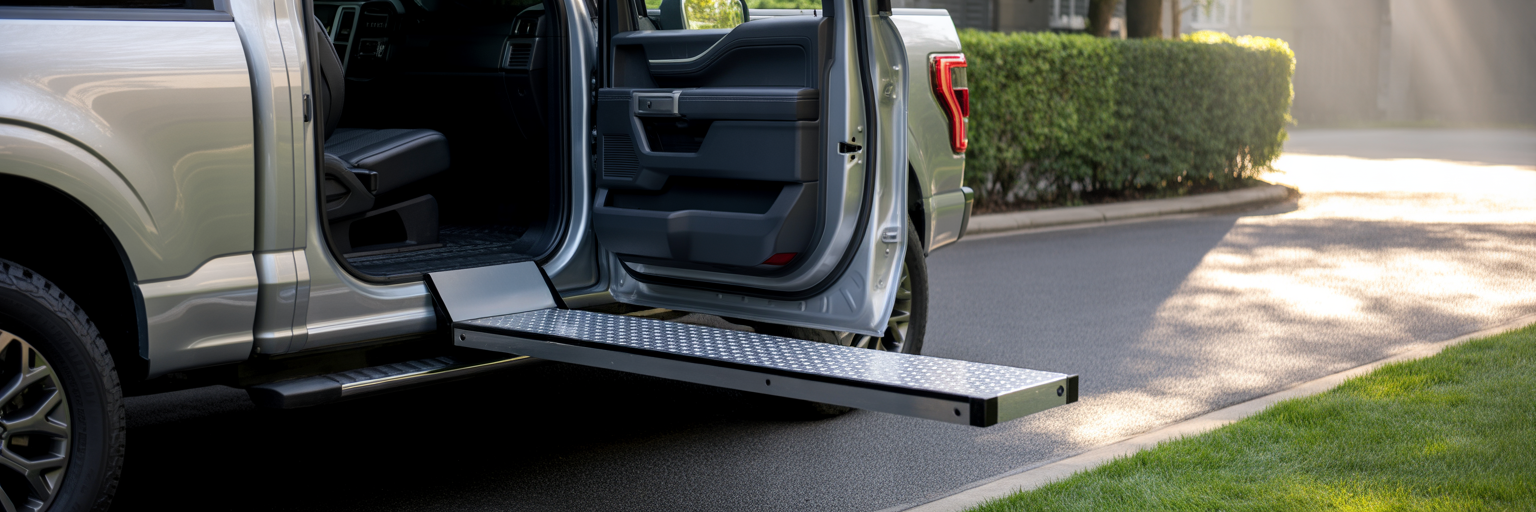
The Ford F-150 has long been a benchmark in the truck market, and its approach to accessibility offers a mix of standard features and highly effective optional upgrades. In its most basic configuration without running boards, the F-150 presents a considerable step-in height, typical of modern full-size trucks. This initial measurement sets the baseline that optional equipment aims to improve.
Adding the factory-installed fixed running boards provides an intermediate step. However, their utility depends on the user. These boards are reasonably wide and feature a textured surface for grip, but their height from the ground is still substantial. For some, they offer a helpful boost, but for others, the distance from the board to the cabin floor remains a difficult second step.
The most significant improvement comes from the optional Ford F-150 power running boards. These automatically deploy downward and outward when a door is opened, creating a much more accessible platform. When extended, they can lower the initial step-in height to approximately 20.3 inches from the ground. This is a dramatic reduction that transforms the entry process from a climb into a more manageable step-up. The boards are also wide and stable, inspiring confidence during use. They retract neatly against the truck’s body when the doors close, preserving ground clearance while driving.
It is important to note that these PowerDeploy running boards are not a standard feature on all models. They are typically included on higher-end trims like the Platinum and Limited and are available as a costly option on others, such as the Lariat. Buyers prioritizing accessibility must factor this additional expense into their budget.
The F-150’s grab handles are another strong point. The front A-pillar handle is thick, sturdy, and positioned so that a passenger can grasp it before beginning their ascent. This allows them to use their upper body to assist in pulling themselves up. Rear passengers are provided with handles on the B-pillars, which are similarly well-placed to aid entry into the back seat. This thoughtful design in handle placement is a critical component of the truck’s overall accessibility. While we focus on the F-150 here, Car Phanatics covers a wide range of models on our general trucks page for broader comparisons.
2026 Ram 1500 Entry and Exit Features
The 2026 Ram 1500 brings a unique and highly effective solution to the accessibility challenge. While its standard coil-spring suspension provides a ride height comparable to its competitors, its optional air suspension system sets it apart. This technology offers a distinct advantage for anyone who finds climbing into a tall vehicle difficult.
The key feature is the Active-Level Four-Corner Air Suspension, which includes a driver-selectable “Entry/Exit” mode. When the truck is parked and this mode is activated, the system automatically lowers the entire vehicle by approximately 1.5 inches. This brings the step-in height down to around 20.7 inches, making a noticeable difference. The Ram 1500 air suspension entry mode doesn’t just create a lower intermediate step; it reduces the height of every part of the entry process. The distance from the ground to the running board is shorter, and the subsequent step from the running board into the cabin is also smaller.
This approach contrasts with the power running boards found on the F-150. While power boards provide an excellent low first step, the user still has to make a relatively large second step up into the cabin. The Ram’s air suspension makes the entire climb less strenuous by lowering the final destination. This can be particularly beneficial for individuals who have difficulty with high leg lifts.
This advanced suspension is standard on premium trims like the Limited and is available as an option on most other models, including the popular Laramie and Rebel. As with Ford’s power steps, securing this feature requires either choosing a higher trim level or adding a significant cost to a mid-tier truck.
The Ram 1500 also offers both fixed and power-deployable running boards, which work in concert with the air suspension. A lowered truck combined with a well-placed power running board creates one of the most accessible entry experiences available. The truck’s grab handles are also well-executed. The front A-pillar handles are large and integrated smoothly into the interior trim, providing a secure grip point. Rear passengers have access to handles mounted on the B-pillars, ensuring support is available for everyone.
Chevrolet Silverado and GMC Sierra 1500 Access
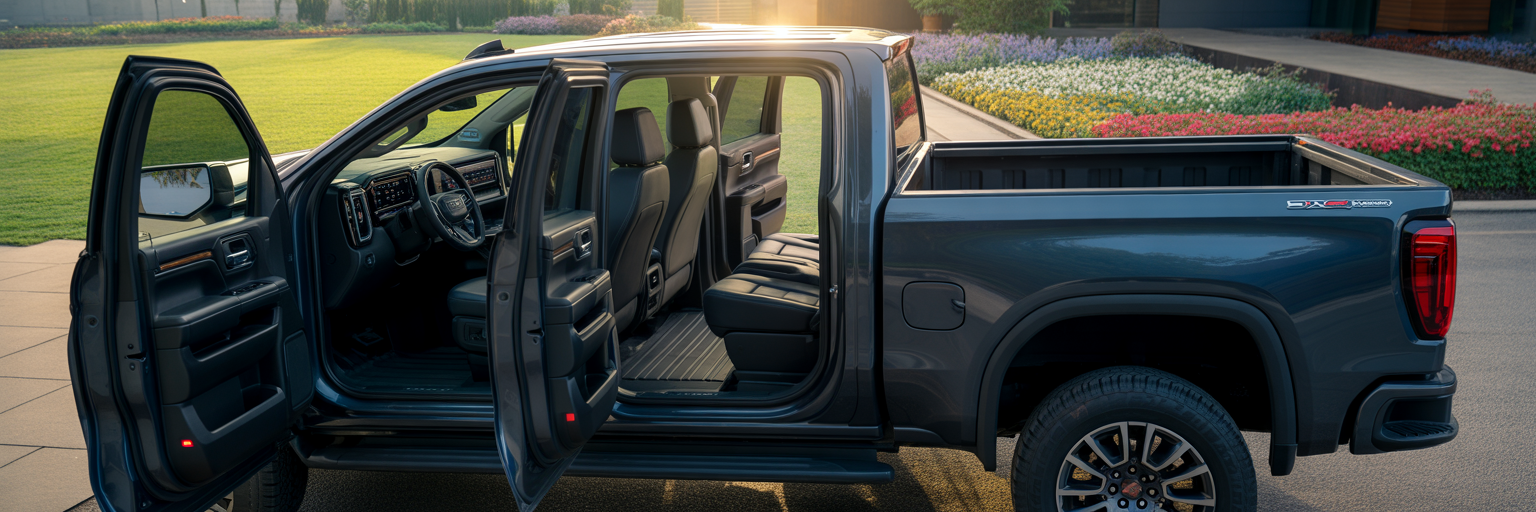
The 2026 Chevrolet Silverado 1500 and its corporate sibling, the GMC Sierra 1500, are built on the same platform and share many accessibility characteristics. While their standard step-in heights can be among the tallest in the class, their primary advantage lies not in low-tech solutions but in their generous interior packaging. Acknowledging they are platform-mates is important, but GMC’s more premium positioning often means features like power-retractable steps are available on a wider range of trims.
The standout feature for these GM trucks is their exceptional rear-seat space. They offer best-in-class rear legroom and feature large rear doors that open wide. For an older passenger getting into the back, this spaciousness can be more valuable than a slightly lower floor. The extra room allows for easier maneuvering, making it simpler to swing one’s legs into the vehicle and get settled without feeling cramped or contorted. This focus on passenger volume makes them excellent vehicles for family trips and carrying multiple passengers comfortably.
Both the Silverado and Sierra offer a variety of running boards. The standard fixed boards are functional, but the optional power-retractable steps, available on higher trims, are far more effective. These steps deploy to a helpful height and provide a wide platform, significantly easing entry. However, without an air suspension system to lower the body, the second step from the board into the cabin remains a considerable one.
Grab handle design is a strong point for both trucks. The A-pillar handles for the driver and front passenger are robust and perfectly placed to be used as leverage. Rear passengers are also provided with sturdy handles, ensuring that support is available at all four doors. This consistent and thoughtful placement demonstrates an understanding of the needs of passengers who require extra stability.
While the GMC Sierra’s MultiPro and Chevrolet’s Multi-Flex tailgates offer innovative steps for bed access, their functionality is separate from cabin entry. The core accessibility story for these trucks remains their unmatched interior volume, particularly for those who will be frequently using the rear seats.
2026 Toyota Tundra Entry Challenges
In a direct comparison focused purely on ease of entry and exit, the 2026 Toyota Tundra presents more challenges than its domestic competitors. The truck’s design philosophy prioritizes a commanding ride height and robust off-road image, which often results in a higher standard floor-to-ground measurement. For a potential buyer prioritizing accessibility, this inherently taller stance is the first and most significant hurdle to overcome.
To mitigate this, Toyota offers factory running boards and optional power-retractable steps on certain trims. While these accessories help, their effectiveness is limited by the vehicle’s starting height. The power steps deploy to offer an intermediate platform, but they may not extend as low or as far outward as the systems on competitors like the Ford F-150. Consequently, the initial step up can still feel quite high, and the subsequent step into the cabin remains a significant lift.
A critical point of differentiation is the Tundra’s lack of a factory-installed air suspension system with an entry-height or “kneeling” mode. This feature, pioneered by Ram, provides a fundamental advantage by lowering the entire vehicle. Without this technology, the Tundra cannot reduce its overall height when parked, placing it at a distinct disadvantage in this accessibility-focused evaluation. This is a key factor to consider when looking at different models, a process we simplify on our general vehicle comparison page.
Examining the Tundra’s other access-related features reveals a competent but not class-leading design. The grab handles on the A-pillars and B-pillars are present and functional, offering a necessary point of stability. Door opening angles and overall roofline clearance are adequate, but they do not offer the same sense of expansive space found in the GM twins. For an older adult or someone with mobility limitations, the combination of a high floor, a significant step from the running board to the cabin, and the absence of an air suspension option makes the Tundra the most demanding truck to enter and exit in this group.
Comparing Key Accessibility Systems and Pitfalls
When selecting a truck for ease of access, understanding the technology and design choices is crucial. The two most effective systems, power-deployable running boards and active air suspension, solve the same problem in different ways. Choosing between them depends on an individual’s specific mobility needs. This is a key consideration for buyers looking for trucks with low step-in height.
| Feature | Power Deployable Steps (e.g., Ford F-150) | Active Air Suspension (e.g., Ram 1500) |
|---|---|---|
| Primary Function | Creates a low, wide intermediate step platform. | Lowers the entire vehicle’s body. |
| Key Benefit | Provides the lowest possible first step from the ground. | Reduces the height of all steps: ground-to-board and board-to-cabin. |
| User Experience | Step appears automatically when door opens. Feels like a staircase. | Vehicle ‘kneels’ when parked. Reduces overall climbing motion. |
| Impact on Cabin Entry | Still requires a second, higher step from the board into the cabin. | Makes the final step from the running board into the cabin smaller. |
| Potential Downsides | Mechanical complexity; can be affected by ice/mud. | Higher initial cost; potential for more complex suspension repairs long-term. |
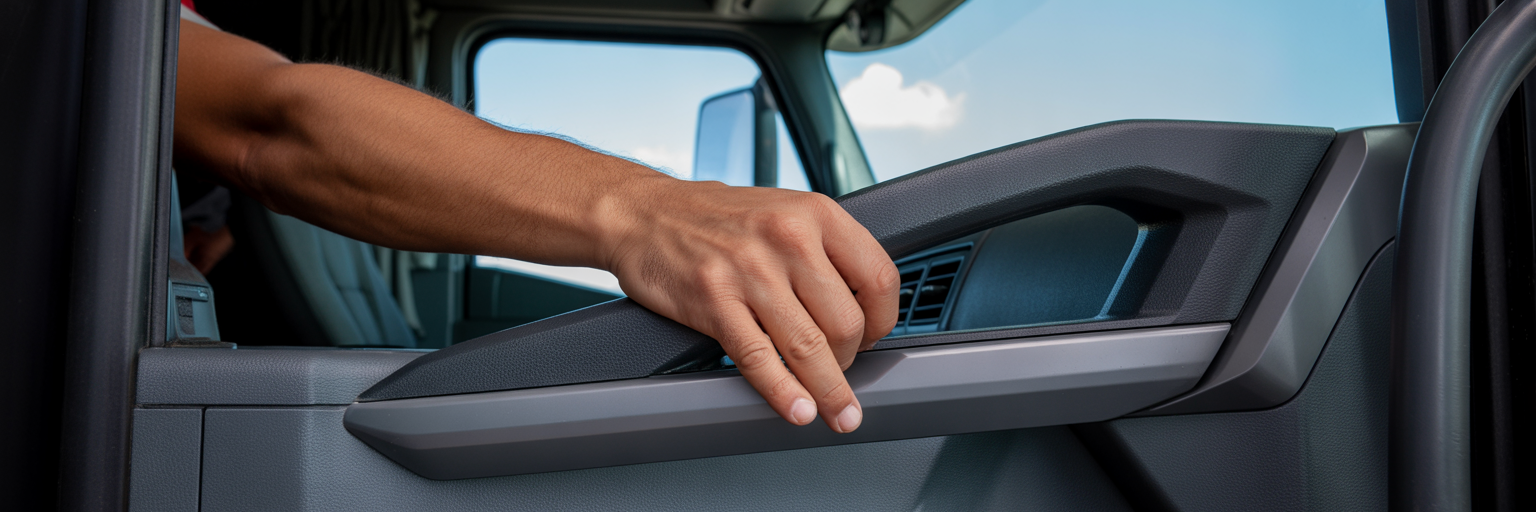
Beyond these advanced systems, the importance of grab handles cannot be overstated. A well-designed handle is thick enough for a confident grip and placed so you can hold it before you even begin to step up. This provides a continuous point of stability throughout the entire motion. Ford and Ram generally excel in this area, with handles that feel like integrated tools for assistance.
Buyers must also be aware of a major pitfall: off-road packages. Trims like Ford’s Tremor, Chevy’s Trail Boss, GMC’s AT4, and Toyota’s TRD Pro are engineered for rugged terrain. They feature lifted suspensions and larger all-terrain tires that can add several inches to the vehicle’s height. While appealing for their aggressive looks, these packages are the direct enemy of easy access and should be avoided by anyone prioritizing entry and exit.
Finally, not all running boards are created equal. A narrow, plastic-topped board can become slippery when wet and offers a precarious foothold. A wide, flat board with a textured, rubberized surface provides a much safer and more stable platform. When inspecting a truck, it is worth paying close attention to this seemingly minor detail. For readers who find the cost of new trucks with these options prohibitive, exploring reliable used trucks can be a practical alternative.
Final Recommendations for the Easiest Access
After analyzing the key accessibility features of each 2026 full-size crew cab, specific recommendations emerge based on different user needs. The right choice depends on who will be using the truck most often and what their specific mobility challenges are.
Best for an Older Driver
The Ram 1500 equipped with the Active-Level Four-Corner Air Suspension is the top choice for an older driver. The ability to lower the entire truck with the push of a button provides consistent, effortless access every time they enter or exit the vehicle. This makes it the best truck for older drivers who use their vehicle daily.
Best for an Older Front Passenger
The Ford F-150 with its optional PowerDeploy running boards is ideal for a front passenger. These boards create an exceptionally low, wide, and stable intermediate step. This “staircase” effect is incredibly confidence-inspiring for someone who may be less steady on their feet and needs a secure platform before making the next move into the cabin.
Best for an Older Rear Passenger
The Chevrolet Silverado or GMC Sierra 1500 takes the win for rear-passenger access. Despite a higher step-in height, their class-leading rear legroom and wide-opening doors provide ample space to maneuver. This roominess makes the process of swinging one’s legs in and getting settled far less awkward and more comfortable.
Best for Someone Using a Cane
The Ram 1500 with air suspension is the recommended choice for someone using a cane. By lowering the entire vehicle, the system creates a more stable and less angled entry. This reduces the risk of the cane slipping and provides a more level surface for the user to balance as they step up.
Best for Easy Access Without Expensive Options
For buyers on a budget who want to avoid the high cost of air suspension or power steps, the Ford F-150 with its standard fixed running boards is the most favorable option. Its baseline ergonomics and step-in height are slightly more manageable than its competitors, offering the best accessibility without requiring expensive upgrades.
Best Overall Truck for Entry and Exit
The 2026 Ram 1500 is the best overall truck for entry and exit. Its available Active-Level Air Suspension is the most comprehensive solution, benefiting every passenger at every door by physically lowering the entire vehicle. It addresses the core problem of height in a fundamental way, making it the most versatile and accessible truck in this comparison. To explore more reviews and guides, visit the Car Phanatics homepage.