Since the 1932 debut of the Ford Flathead, the V8 engine has been at the heart of American automotive culture, powering everything from family sedans to hot rods. This legacy of power and accessibility created a blueprint that Ford would follow for decades.
The Foundation of Ford Power: The Legendary V8s
Before turbochargers and complex electronics became the norm, Ford built its reputation on the simple, potent character of its V8 engines. These powerplants were more than just mechanical components. They were the soundtrack to an American generation, defining the muscle car era and giving birth to a nationwide hobbyist culture. Their appeal was not just in their power but in their straightforward design, which invited owners to open the hood and get their hands dirty. Understanding this heritage is essential to appreciating the full scope of the Ford V8 engine history.
The Revolutionary Ford Flathead V8
The Ford Flathead V8 was a groundbreaking achievement when it arrived. Its monolithic block design, which integrated the cylinders and crankcase into a single casting, made V8 power accessible to the masses for the first time. Before the Flathead, V8s were complex, expensive engines reserved for luxury automobiles. Ford changed that, and in doing so, accidentally fueled the hot rod movement. Soldiers returning from World War II found these engines cheap and plentiful, and their simple construction made them perfect for modification.
However, its design had quirks. The exhaust ports routed through the engine block between the cylinders, a layout that contributed to its notorious tendency to overheat under stress. Cooling was the Flathead’s Achilles’ heel, a challenge that early hot rodders spent countless hours trying to solve. Despite this, its throaty burble and modification potential cemented its place as a cultural icon.
The Workhorse: The Windsor V8 Family
Following the Flathead, the Windsor V8 family, particularly the 289 and 302 cubic inch variants, became Ford’s definitive workhorse. These engines were the embodiment of durability and versatility. You could find a Windsor V8 powering an iconic Mustang, a family station wagon, or a rugged F-150 pickup. Their overhead valve, pushrod design was brilliantly simple. This made them incredibly reliable and easy for the average enthusiast to repair, modify, and understand in their own garage.
The Windsor’s compact size and robust construction made it a favorite for engine swaps and performance builds that continues to this day. It was an engine built for the people, delivering dependable power without demanding specialized tools or knowledge. This accessibility is a core reason why the Windsor V8 remains so beloved in classic car circles.
Common Failures and Maintenance Profile of Classic V8s
Owning a classic Ford V8 in 2026 is a rewarding experience, but it requires an honest understanding of what to expect from decades old machinery. These are not flaws so much as character traits that restorers learn to manage. Common issues include:
- Timing chain wear and slack: Over many miles, the timing chain can stretch, leading to less precise ignition and valve timing, which can affect performance and smooth idling.
- Persistent oil leaks: The cork and rope seals used in these engines, especially for the rear main seal and valve covers, degrade over time. A few drips of oil on the garage floor are a common sight for classic owners.
- Carburetor tuning difficulties: Unlike modern fuel injection, carburetors are sensitive to temperature, altitude, and fuel quality. Keeping one in perfect tune requires patience and specialized knowledge.
- Overheating issues: The cooling systems of that era were simply less efficient than modern designs. A clean radiator, a healthy water pump, and a functional fan clutch are non negotiable for reliable operation.
Even with these considerations, these classic V8s remain highly sought after. Their central role in American car culture, combined with a massive aftermarket that supplies everything from stock replacement parts to high performance upgrades, ensures their legacy endures. They are not practical daily drivers, but for a restoration project, they represent the very soul of Ford.
Modern Muscle: The 5.0L Coyote V8
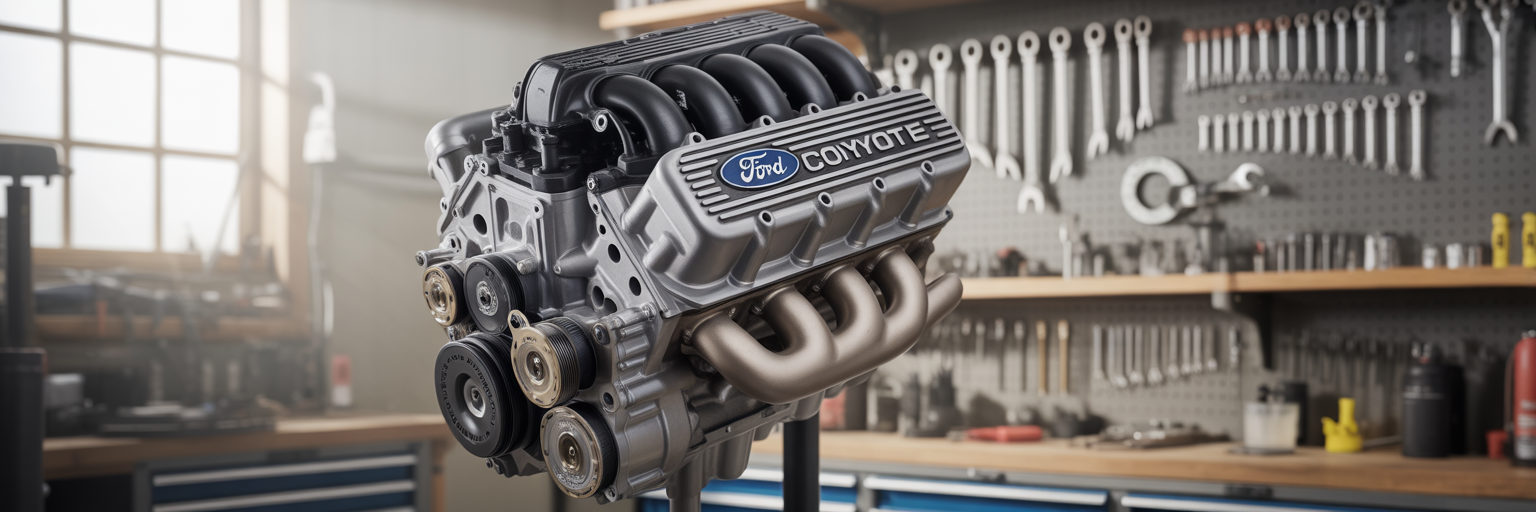
As Ford moved into the 21st century, it needed a V8 that could honor its past while competing in a new era of performance and technology. The result was the 5.0L Coyote, a modern masterpiece that serves as the spiritual successor to the legendary V8s of yesterday. This engine is not just a nostalgic throwback. It is a highly engineered powerplant that delivers on the promise of American muscle with a level of sophistication its predecessors could only dream of. For enthusiasts, a proper Ford 5.0 Coyote engine review reveals an engine that blends raw power with impressive engineering.
From Pushrod to DOHC: A Technical Leap
The biggest departure from classic Ford V8s is the Coyote’s architecture. It abandoned the traditional pushrod design for a more complex Dual Overhead Camshaft (DOHC) setup with four valves per cylinder. This was a monumental shift. Think of a classic pushrod V8 as a powerful sprinter, excellent at generating force in short bursts. The DOHC Coyote, in contrast, is more like a marathon runner who can also sprint. The design allows the engine to breathe much more efficiently at high RPMs, delivering a thrilling rush of power all the way to its redline.
This is further enhanced by Twin Independent Variable Camshaft Timing (Ti-VCT). This system can advance or retard the timing of the intake and exhaust camshafts independently. At low speeds, it adjusts for strong torque and smooth idling. At high speeds, it optimizes for maximum airflow and horsepower. This technological leap allows the Coyote to offer the best of both worlds: the low end grunt expected of a V8 and the high revving excitement of a modern performance engine.
Performance Profile in the Mustang GT and F-150
The Coyote’s brilliance lies in its adaptability. In the Mustang GT, it is tuned to be a high revving, responsive powerhouse. The linear power delivery and signature, snarling exhaust note create an intoxicating driving experience that defines the modern muscle car. It begs to be pushed, rewarding the driver with a wave of acceleration that builds predictably and thrillingly.
When placed in the F-150, the engine’s character shifts. Ford retunes it for low end torque, prioritizing pulling power and hauling capability. It becomes a robust, naturally aspirated workhorse, offering a dependable alternative to the turbocharged EcoBoost engines. Its presence in the F-150 lineup solidifies Ford’s position among the most capable trucks available, proving that a naturally aspirated V8 still has a vital role to play in a world of forced induction.
An Honest Look at Common Issues and Reliability
No engine is perfect, and the Coyote has a few well documented quirks. Potential buyers often hear about the “typewriter tick,” a light ticking noise that is most noticeable at idle. In most cases, this is related to the high pressure fuel pump and is considered a normal characteristic of the engine’s operation, not a sign of impending failure. It can be unnerving, but it is usually benign.
A more significant concern on certain earlier model years is the potential for cam phaser failure. The symptom is a distinct rattling or knocking sound from the top of the engine for a few seconds on a cold start. This issue stems from the components that adjust the camshaft timing. If left unaddressed, it can lead to timing problems and requires a labor intensive, and therefore expensive, repair. However, it is important to put this in perspective. The Coyote is widely regarded as a very durable engine, with many examples reaching 200,000 to 300,000 miles with proper maintenance. Its overall Ford engine reliability is strong, despite this specific weak point.
In 2026, the Coyote stands as one of the last great, mass produced, naturally aspirated V8s. As the industry pivots further toward smaller, turbocharged engines and electrification, the Coyote’s appeal only grows. Its combination of sound, feel, and performance, backed by a massive aftermarket in the United States, makes it a top choice for any performance enthusiast.
Efficiency Meets Power: Small EcoBoost Engines
Ford’s EcoBoost technology was introduced as a solution to a modern problem: how to deliver the power customers want while meeting stricter fuel economy standards. The small displacement EcoBoost engines, like the 1.0L three cylinder and 1.5L four cylinder, are engineering marvels on paper. However, their real world ownership experience can be a mixed bag, making a critical look at them an essential part of any used Ford buying guide. These engines represent a significant trade off, and buyers need to understand both sides of the equation.
The Engineering of Downsized Power
The core principle behind these small EcoBoost engines is combining two key technologies: turbocharging and gasoline direct injection (GDI). A turbocharger uses exhaust gases to spin a turbine, forcing more air into the engine. This allows a tiny 1.5L engine to produce the horsepower and torque of a much larger, older 2.5L naturally aspirated engine. GDI then injects fuel directly into the combustion chamber at very high pressure, which allows for a more precise and efficient burn.
This combination is why these engines feel so responsive and peppy in vehicles like the Ford Escape or Bronco Sport. They provide excellent acceleration for city driving and achieve impressive fuel economy figures on the highway. For many drivers in the US market, they deliver an ideal blend of performance and efficiency for daily commuting.
Prevalent Failure Points: Coolant Intrusion and Carbon Buildup
The complexity that enables this performance also introduces significant risks. The most severe of the Ford EcoBoost problems affects certain 1.5L and 2.0L engines: coolant intrusion. A design flaw in the engine block, specifically in the open deck design between cylinders, can allow coolant to leak into the cylinders. This can lead to misfires, white smoke from the exhaust, and eventually, catastrophic engine failure from hydro locking, where the piston tries to compress incompressible liquid. This is not a minor leak. it is a terminal condition that requires a full engine replacement.
Another inherent issue with GDI technology is carbon buildup on the intake valves. In older port injected engines, gasoline was sprayed over the valves, which had the secondary benefit of keeping them clean. With GDI, fuel is injected directly into the cylinder, so the valves are never washed. Over time, oil vapor from the crankcase ventilation system can bake onto the hot intake valves, forming hard carbon deposits. This restricts airflow, reducing performance and fuel efficiency.
Owning a small EcoBoost engine out of warranty requires a non negotiable approach to maintenance. Neglecting it is not an option.
- Strict Adherence to Oil Specifications: The turbocharger gets extremely hot and spins at incredibly high speeds. It requires the specific full synthetic oil Ford recommends to prevent oil from coking and destroying the turbo’s bearings.
- Shortened Service Intervals: While the owner’s manual might suggest a 10,000 mile oil change interval, that is an absolute maximum under ideal conditions. For city driving or harsh climates, changing the oil every 5,000 miles is cheap insurance against premature wear.
- Proactive Coolant System Checks: Owners should make a habit of regularly checking their coolant level. A slowly dropping level is the earliest warning sign of the dreaded coolant intrusion issue.
Ultimately, these small EcoBoost engines are a calculated risk. They offer a fantastic driving experience when new and running correctly. But they carry the potential for complex and extremely expensive repairs, making a thorough pre purchase inspection and a commitment to rigorous maintenance absolutely essential.
The V8 Replacement: The 3.5L EcoBoost V6

When Ford put the 3.5L EcoBoost V6 into the F-150, it was a bold, almost heretical move. For decades, the American full size truck market was ruled by the V8. The idea that a twin turbocharged V6 could not only compete but dominate seemed unthinkable. Yet, it did exactly that. This engine redefined what a truck powerplant could be, but its impressive capability comes with a level of complexity that demands respect and a strict maintenance regimen. It is a testament to modern engineering, but it is not an engine for the neglectful owner.
Its market entry was disruptive because it beat the V8s at their own game: torque. The twin turbochargers provided a massive wave of low end torque that made towing heavy loads feel effortless. Suddenly, buyers had an option that could out tow many V8s while delivering better fuel economy when not under load. This shift in buyer preference is a key factor to consider when looking at which 2025 trucks offer the best towing and fuel economy.
Generation 1 vs. Generation 2: A Tale of Two Engines
It is crucial to distinguish between the first and second generations of the 3.5L EcoBoost. The second generation, introduced for the 2017 model year, was a significant revision, not just a minor update. The most important change was the addition of a dual fuel system that featured both direct injection and port injection. This was a direct solution to the carbon buildup problem that plagued the first generation. The port injectors spray fuel onto the intake valves, effectively cleaning them and preventing the performance loss associated with carbon deposits.
Beyond that, the second generation engine received upgraded turbochargers with more efficient electronic wastegates, a stronger and lighter crankshaft, and a completely new timing chain system. It was a thorough re engineering effort designed to improve both performance and long term Ford engine reliability.
The Most Common and Costly Problems
Despite the improvements, the 3.5L EcoBoost is a complex engine with several well known potential issues that buyers must be aware of. These are not guaranteed failures, but they are the most common high cost repairs.
- Timing Chain Stretch: This issue primarily affects first generation models. The most common symptom is a brief but distinct rattling sound from the front of the engine on a cold start, which lasts for about two to three seconds. The repair is extremely labor intensive, often requiring over ten hours of work, making it a very expensive job.
- Turbocharger Coolant Leaks: The fittings for the coolant lines that run to the turbochargers can develop leaks over time. Owners should look for drips of coolant on the ground beneath the engine or be aware of a sweet, burning coolant smell after a drive.
- Intercooler Condensation: In humid climates, moisture can build up inside the large air to air intercooler. During a moment of hard acceleration, the engine can ingest this slug of water, causing a sudden stumble or loss of power. While aftermarket solutions exist, it is a phenomenon owners should be aware of.
Long-Term Durability and Maintenance Demands
There is no denying the 3.5L EcoBoost’s impressive power and capability. It can tow immense loads and deliver surprising acceleration in a heavy truck. However, that performance is the product of a highly stressed, complex system. It is not an engine you can afford to ignore. Its maintenance needs are far more demanding than a traditional, naturally aspirated V8.
Oil changes must be done on time, every time, with the correct full synthetic oil. Coolant levels must be monitored. Any strange noises, especially the cold start rattle, must be investigated immediately. For an owner who is diligent with maintenance and proactive with repairs, the 3.5L EcoBoost can be a reliable and incredibly capable partner. For someone who tends to defer maintenance, it can quickly become a financial nightmare. It is a powerful tool, but it demands the care of a true professional.
The Reliable Workhorses: Older Naturally Aspirated Engines
In the conversation about Ford’s most powerful or technologically advanced engines, the unsung heroes are often forgotten. These are the older, simpler, naturally aspirated four cylinder engines like the Duratec and Zetec families. Found in millions of cars like the Ford Focus, Fusion, and Escape, these engines were not built to win races or grab headlines. They were built for one primary purpose: to be dependable, low cost transportation. For a buyer whose top priority is reliability over all else, these engines represent some of the smartest choices on the used market.
Design Philosophy: Simplicity and Proven Technology
The design philosophy behind an engine like the 2.0L Duratec was rooted in proven, cost effective technology. They use conventional port fuel injection, which completely avoids the carbon buildup issues associated with more modern GDI engines. They do not have complex and expensive turbocharger systems to worry about. Everything about them, from their cast aluminum construction to their straightforward valvetrains, was engineered for a long service life with minimal surprises.
Of course, this simplicity comes with trade offs. A Duratec powered Ford Focus is not going to feel fast, and its fuel economy will not match that of a modern 1.0L EcoBoost. But what you lose in performance and efficiency, you gain in predictability. These engines have a well understood, generally trouble free ownership experience. There are fewer expensive electronic sensors to fail and no high pressure fuel pumps or turbos to replace, which translates directly to lower running costs over the life of the vehicle.
Common Issues on High-Mileage Examples
When looking at a high mileage example, the problems you are likely to encounter are not signs of a fundamental design flaw, but rather the predictable results of age and wear. These are maintenance items, not catastrophic failures.
- Timing Belt/Chain Replacement: Depending on the specific engine, it will have either a timing belt or a timing chain. Both are critical service items with a defined replacement interval. Verifying that this service has been done is the single most important check on a used purchase.
- Oil and Coolant Leaks: After 150,000 miles and thousands of heat cycles, rubber gaskets and seals simply wear out. Leaks from the valve cover gasket or oil pan gasket are common, but they are also relatively inexpensive and straightforward to fix.
- Failing Ignition Components: Ignition coils and spark plugs are regular wear items on any gasoline engine. On these simple four cylinders, they are typically easy to access and affordable to replace, making for a great weekend DIY project for those inclined.
In 2026, the value proposition of these engines is stronger than ever. For a student, a first time car buyer, or anyone on a tight budget who needs a car that will simply start every morning and get them where they need to go, a well maintained Ford with a Duratec engine is an excellent choice. It prioritizes low repair costs and peace of mind over cutting edge technology, and for many people, that is exactly the right formula.
The Final Verdict: Which Ford Engine Is Right for You?

Choosing a Ford engine is about more than just horsepower and torque figures. It is a decision that reflects your priorities, your budget, and your tolerance for mechanical complexity. After examining the legends, the modern powerhouses, and the efficient workhorses, the choice comes down to a clear set of trade offs. This final verdict will help you decide which of the best Ford engines truly fits your needs.
For the Performance Enthusiast
If you crave the sound, feel, and linear power of a traditional American performance car, the choice is clear: the 5.0L Coyote V8. It offers a perfect blend of modern technology and old school muscle character. Its reliability is generally strong, and the aftermarket support is immense. The crucial piece of advice is to get a thorough pre purchase inspection from a qualified mechanic, specifically listening for any cam phaser rattle on a cold start. If it checks out, you are getting one of the best V8s of the modern era.
For the Modern Truck Owner and Tower
For those who need maximum towing and hauling capability, the second generation 3.5L EcoBoost V6 is the undisputed champion. Its low end torque is simply phenomenal, making heavy loads feel lighter and highway merging effortless. However, this recommendation comes with a serious warning. Do not buy one of these trucks without a perfect, documented maintenance history. The complexity of the twin turbo system means that neglect can lead to six figure repair bills for timing chains or turbos. It is a professional grade tool that demands professional grade care.
For the Daily Commuter and Budget-Conscious Buyer
If your primary goal is reliable, low cost transportation, the smartest and lowest risk option is a well maintained vehicle with an older naturally aspirated four cylinder, like the 2.0L Duratec. These engines are simple, predictable, and cheap to repair. For those who want better fuel economy and are willing to accept more risk, a newer small EcoBoost model can be a good option, but only with this critical advice: you must have a mechanic thoroughly inspect it for any signs of coolant loss or the beginnings of the coolant intrusion issue before you buy.
To help visualize these choices, here is a summary of the key trade offs:
| Engine Type | Best For | Key Pro | Biggest Con | Maintenance Level |
|---|---|---|---|---|
| 5.0L Coyote V8 | Performance Enthusiasts | Power, Sound, Reliability | Cam Phaser Issues | Moderate |
| 3.5L EcoBoost V6 (Gen 2) | Towing & Hauling | Massive Torque | High Complexity & Repair Cost | High / Strict |
| 1.5L EcoBoost I-4 | Fuel-Conscious Commuters | Excellent MPG & Power | Coolant Intrusion Risk | High / Strict |
| 2.0L Duratec I-4 | Budget-Conscious Buyers | Simplicity & Low Repair Cost | Mediocre Power & MPG | Low |
| Classic Windsor V8 | Restorers & Hobbyists | Cultural Icon, Easy to Work On | Age & Inefficiency | Moderate (Hobbyist) |
Note: This table summarizes the general characteristics of each engine family. Individual vehicle condition and maintenance history are the most critical factors in any used purchase.
Ultimately, the Ford engine lineup presents a fundamental choice between the impressive performance and efficiency of complex, modern engines and the proven, straightforward simplicity of naturally aspirated powerplants. The right engine for you depends entirely on what you value most. For more in-depth automotive analysis, explore all our content at Carphanatics.com.