
The Legacy of GM’s V8 Powerplants
For decades, the sound of a General Motors V8 engine has been the unofficial soundtrack of American work. That deep, rumbling idle and the effortless torque that pulls trailers without complaint are woven into the fabric of job sites and weekend adventures. These engines, particularly the Vortec family, built a reputation for being simple, powerful, and nearly indestructible. They were the dependable heart of countless work trucks, valued more for their brute strength than their fuel efficiency.
This legacy of power continues in modern GM trucks, primarily through the 5.3L and 6.2L EcoTec3 gasoline V8s and the formidable Duramax diesel lineup. These engines are the standard-bearers in flagship models like the Chevrolet Silverado and GMC Sierra, powering millions of vehicles across the country. For anyone looking into the world of pickups, understanding these powerplants is essential, and for those interested, our general guide to trucks offers a great starting point.
However, the story of the modern GM V8 is one of compromise. In the mid-2000s, a perfect storm of rising fuel prices and stricter government emissions mandates forced a dramatic shift in engine design. The classic, straightforward V8 was no longer enough. In response, GM introduced a suite of technologies aimed at squeezing more miles from every gallon of gas. The most significant of these was Active Fuel Management (AFM), a system designed to shut down half of the engine’s cylinders under light load conditions.
This innovation created a fundamental conflict that mechanics see every day. On one hand, you have a fundamentally strong and capable V8 engine block. On the other, you have a complex, delicate system bolted onto it that introduces a host of potential failure points. The push for efficiency came at a steep cost to the very reliability that made these engines legendary in the first place. While the core of these V8s remains as potent as ever, their modern versions carry critical complexities. Understanding these issues is not just for enthusiasts; it is crucial for any owner hoping to avoid thousands of dollars in unexpected repair bills.
The Active Fuel Management Dilemma

At its core, the idea behind Active Fuel Management, and its more advanced successor Dynamic Fuel Management (DFM), sounds perfectly reasonable. Why run all eight cylinders when you are just cruising on the highway? The system is designed to deactivate cylinders to save fuel during light-load driving. But as any seasoned mechanic will tell you, the execution of this idea is where the problems begin. The active fuel management issues that plague these engines are not random; they are a direct result of the system’s mechanical design.
To understand the failure, you have to picture how it works. The Engine Control Module (ECM) constantly monitors driving conditions. When it detects a light load, it sends a signal to a component called the Valve Lifter Oil Manifold (VLOM). The VLOM then directs pressurized oil to a set of special, mechanically complex lifters.
- The ECM identifies a light-load condition suitable for cylinder deactivation.
- A signal is sent to the VLOM, which sits in the engine’s valley.
- The VLOM opens solenoids, directing high-pressure oil to the AFM lifters on specific cylinders.
- This oil pressure causes a pin inside the lifter to unlock, allowing the lifter’s outer body to move without lifting the pushrod. The valve stays closed, and the cylinder is deactivated.
The fundamental flaw lies within those special AFM lifters. Unlike a simple, solid conventional lifter, an AFM lifter is a complex hydraulic device with internal moving parts. This intricate design is inherently more fragile. The constant cycling between active and inactive states, thousands of times over a vehicle’s life, introduces significant wear and tear that a standard lifter never experiences.
This mechanical weakness is made worse by a critical vulnerability: oil starvation. The VLOM, which controls the whole process, has a tiny filter screen to protect its solenoids. Over time, this screen can become clogged with normal engine sludge and debris. When that happens, oil flow to the lifters is restricted. A lifter without proper lubrication and hydraulic pressure is destined to fail. It will either collapse, failing to open the valve, or become stuck, leading to catastrophic damage.
The most problematic model years for these failures are widely recognized as the 2007 to 2013 generation, where lifter collapse became an epidemic. According to a report from Cartipsdaily.com, while GM introduced the system in 2005 and claimed it could improve fuel economy by up to 12%, the real-world trade-off became painfully clear. For many owners, that marginal gain at the pump was completely erased by a single, multi-thousand-dollar repair bill to fix a grenaded camshaft.
Common Failures in GM Gasoline Engines
The theory behind AFM failure is one thing, but the real-world consequences are what fill up service bays. For owners, the first sign of trouble is almost always auditory. It starts as a faint, intermittent ticking noise, often more noticeable on a cold start. Mechanics know this sound all too well; it is the infamous “Chevy tick,” the unmistakable warning shot of a failing lifter.
If that sound is ignored, a predictable and destructive cascade of failure begins:
- The Tick Worsens: The initial tick becomes a loud, persistent tapping that follows the engine’s RPM. This is the sound of a fully collapsed lifter, where the internal plunger is no longer supporting the pushrod.
- The Misfire Begins: With the lifter collapsed, the valve for that cylinder no longer opens and closes correctly. This causes a misfire, which the driver feels as a rough idle, hesitation during acceleration, and a flashing check engine light. The diagnostic computer will almost always show a P0300 (Random Misfire) code.
- Camshaft Destruction: The roller on the bottom of the failed lifter stops spinning. Now, instead of rolling smoothly across the camshaft lobe, it grinds against it. This quickly eats away at the hardened surface of the camshaft, sending metal shavings throughout the entire engine.
- Catastrophic Damage: Those metal particles circulate in the oil, acting like sandpaper and damaging bearings, oil pump gears, and other critical components. At this point, the engine is on borrowed time.
While lifter failure is the main event, it is not the only problem. The common GM 6.2 engine problems often mirror those of the 5.3L, sometimes even accelerated by the engine’s higher output. We also see excessive oil consumption, as oil can be forced past the piston rings on the deactivated cylinders. A faulty VLOM solenoid can also cause erratic oil pressure readings and contribute to the failure cascade. The issues became so widespread that they eventually led to a GM 6.2L engine recall, though problems persist.
In fact, as highlighted in a report by Autoguide.com, some of these V8s are still experiencing catastrophic failures even after being “fixed” by the dealer. This suggests the root cause is a design flaw that a simple parts replacement cannot fully resolve. The repair is a major, labor-intensive job. A mechanic has to tear down the top half of the engine to replace not just the failed lifter, but all 16 lifters, the damaged camshaft, and thoroughly clean the engine of metal debris. It is a costly lesson in the consequences of over-engineering.
| Symptom | Potential Cause | Common Diagnostic Codes | Mechanic’s Recommendation |
|---|---|---|---|
| Faint, intermittent ticking noise, especially on cold start | Early stage lifter wear or oil pressure fluctuation | None, or pending P0300 | Monitor closely; switch to high-quality synthetic oil and shorten change interval. |
| Persistent ticking or tapping sound that increases with RPM | Collapsed AFM lifter; early camshaft lobe wear | P0300 (Random Misfire), P030X (Cylinder-specific misfire) | Immediate inspection required. Stop driving to prevent further damage. |
| Check Engine Light with rough idle or hesitation | Failed lifter causing a constant misfire; VLOM solenoid failure | P0300, P0521 (Oil Pressure Sensor Performance) | Professional diagnosis is urgent. Camshaft damage is highly likely. |
| Noticeable increase in oil consumption between changes | Oil forced past piston rings on deactivated cylinders; PCV system issues | None directly, but contributes to other failures | Install an oil catch can; check for blue smoke from exhaust. |
| Loud knocking or grinding noise from engine | Catastrophic failure: destroyed camshaft, damaged bearings, metal debris in oil | Multiple severe codes | Engine likely requires complete teardown and potential replacement. |
Exploring GM’s Duramax Diesel Options
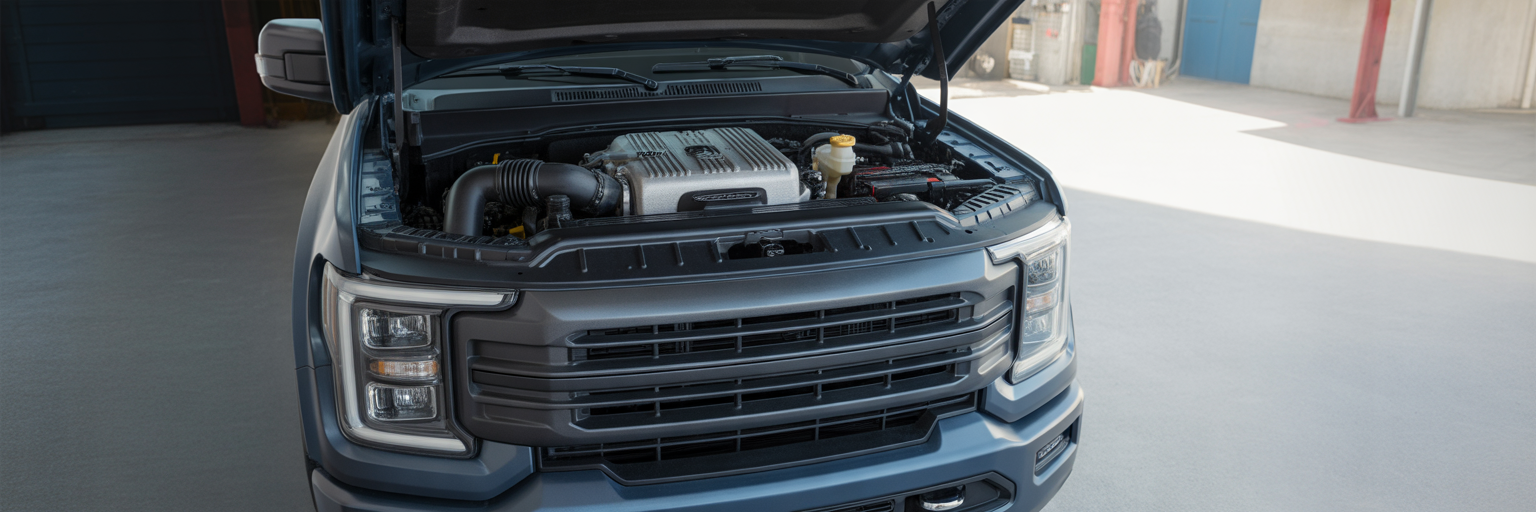
For truck owners wary of the gasoline V8’s complexities, the Duramax diesel engine often seems like the obvious alternative. For years, the Duramax family has been GM’s answer for serious work, celebrated for its immense torque and seemingly endless towing capacity. When you talk to contractors or anyone who pulls a heavy fifth-wheel trailer, the conversation often turns to the superior pulling power of a diesel. In this world, Duramax diesel engine reliability is generally held in much higher regard than that of its gasoline counterparts.
This reputation was cemented by legendary engines like the 6.6L LBZ Duramax, produced for the 2006 and 2007 model years. Enthusiasts and mechanics alike praise the LBZ for its near-perfect balance of power, simplicity, and durability, built before the most complex emissions systems were mandated. It represents a high point in diesel engineering, and clean examples are still highly sought after on the used market.
However, just like the gasoline engines, modern Duramax diesels have been forced to adapt to strict emissions regulations. This has introduced a new layer of complexity that potential owners must understand. Modern diesels are equipped with a Diesel Particulate Filter (DPF) to trap soot and a Selective Catalytic Reduction (SCR) system that requires Diesel Exhaust Fluid (DEF) to neutralize nitrogen oxides. While effective at cleaning up exhaust, these systems are a common source of expensive problems, from clogged filters to failed sensors.
Beyond emissions equipment, certain Duramax generations have their own well-documented weaknesses. The 6.6L LML engine (2011-2016), for example, was equipped with a Bosch CP4 high-pressure fuel injection pump that is notoriously prone to failure. When the CP4 pump fails, it can send metal debris throughout the entire fuel system, requiring a repair that can easily exceed ten thousand dollars. Injector failures are another common, and costly, issue across several model years.
The total cost of ownership is a critical consideration. While a Duramax offers incredible capability, its maintenance and repair costs are substantially higher than a gasoline V8. A single injector replacement can cost over a thousand dollars. For those evaluating their needs, it is important to look at the whole picture, and understanding which 2025 trucks offer the best towing and fuel economy can provide valuable market context. Ultimately, the Duramax is a specialized tool. It is an outstanding choice for those with genuine heavy-hauling needs, but it is not a powertrain to choose lightly. It demands a budget for higher upkeep and a willingness to manage the complexities of modern diesel technology.
Preventative Measures and Long-Term Solutions
If you own a GM truck with an AFM-equipped V8, you are likely wondering what can be done to avoid becoming another cautionary tale. The good news is that there are clear, actionable steps you can take, ranging from simple maintenance adjustments to a permanent mechanical fix. The path you choose depends on your budget and how much peace of mind you are looking for.
The most definitive and permanent solution is an AFM delete. This process removes the problematic system entirely, restoring the engine to a simpler, more robust state. There are two main ways to approach this. The simplest is an electronic disabler, a small device that plugs into the OBD-II port and tells the ECM never to activate cylinder deactivation. While this prevents the lifters from cycling, it does not remove the mechanically fragile components from the engine. It is a patch, not a cure.
For true long-term reliability, a full mechanical delete is the only answer. This is an involved process, but it is the one mechanics universally recommend. If you are wondering how to disable AFM on GM truck permanently, this is it. The procedure involves physically removing the cylinder heads and replacing all 16 lifters with high-quality, conventional non-AFM lifters. The AFM-specific camshaft must also be replaced with a standard V8 camshaft, and the VLOM is replaced with a valley cover plate. This is a significant job, but for those comfortable with more advanced projects, our DIY section offers a wealth of information for tackling automotive work. Once completed, the engine is essentially converted back to a classic, reliable V8 architecture.
What if a full mechanical delete is not in the budget? Your next best defense is meticulous maintenance. The AFM system is extremely sensitive to oil quality and cleanliness. We stand firm in our belief that extending oil changes to the factory-recommended 7,500 or 10,000 miles is a mistake with these engines. Instead, switch to a high-quality full synthetic oil and shorten your oil change interval to 5,000 miles or less. Clean oil is essential for keeping the VLOM’s filter screen clear and ensuring proper hydraulic function of the lifters.
Another valuable modification is installing an oil catch can. This device is plumbed into the PCV system and captures oil vapor and contaminants before they can be recirculated into the intake, reducing carbon buildup on the valves. Finally, some owners try to minimize AFM activation through driving habits, such as using tow/haul mode more frequently. While this can help, it is not a foolproof method. The system can still activate under certain conditions. In summary, an AFM delete is the only way to truly eliminate the risk, but diligent, proactive maintenance can significantly improve your odds.
Identifying Reliable vs Problematic Model Years

When shopping for a used GM truck, knowing which engines and model years to target, and which to avoid, is the single most important piece of information you can have. The history of GM’s V8 and diesel engines is a clear roadmap of reliability, with distinct high points and well-documented pitfalls. Answering the question, “what are the worst years for GM trucks?” is straightforward: the 2007 to 2013 model years are the epicenter of the AFM crisis.
Trucks from this era equipped with the 5.3L and 6.2L V8s have the highest reported incidence of lifter failure. While not every single one will fail, the risk is substantial enough that any purchase from this generation should be approached with extreme caution. In contrast, pre-2007 trucks with the 4.8L, 5.3L, and 6.0L Vortec V8s are generally considered much more reliable because they were built without the AFM system. There are also a few specific gems, like the 2007-2009 GMC Sierra Denali or Cadillac Escalade with the 6.2L L92 V8, which came from the factory without AFM and are highly regarded for their power and durability.
What about newer trucks? GM continued to refine the system, transitioning to Dynamic Fuel Management (DFM) in 2019, but the fundamental risk of complex lifters remains. Reports of lifter and valve spring failures persist even in late-model trucks, indicating the core design challenge has not been fully solved. When inspecting any used GM truck with an AFM or DFM system, your ears are your best tool. Insist on a cold start and listen intently for any ticking or tapping noises. A pre-purchase inspection from an independent mechanic who is intimately familiar with GM 5.3 lifter problems is not optional; it is essential.
The same logic applies to the Duramax lineup. The 2006-2007 LBZ generation is a sought-after workhorse for its lack of complex emissions systems. Conversely, buyers should be wary of the 2011-2016 LML generation due to the CP4 fuel pump failure risk, unless the pump has already been replaced with a more robust aftermarket solution. For those staying current on the latest developments, our site covers everything from breaking automotive news to in-depth analyses.
Ultimately, the safest purchasing decision comes down to a simple strategy. The best bet is to find a model that was never equipped with AFM. The next best option is to buy a truck that has already had a proper mechanical AFM delete performed, with receipts to prove it. If you must buy a truck with an active AFM system, you should factor the cost of a delete kit directly into your purchase price. It is not just a modification; it is a necessary investment in long-term reliability.
| Model Year Range | Engine(s) | Key Issue(s) | Reliability Verdict |
|---|---|---|---|
| Pre-2007 | 4.8L, 5.3L, 6.0L V8s | General wear and tear; simpler design | Generally Reliable (No AFM) |
| 2007–2013 | 5.3L & 6.2L V8s | High rate of AFM lifter failure, oil consumption | Approach with Extreme Caution |
| 2014–2019 | 5.3L & 6.2L V8s | Revised AFM/DFM, but lifter failures still occur | Moderate Risk |
| 2019–Present | 5.3L & 6.2L V8s | DFM complexity; reports of valve spring/lifter issues persist | Monitor Closely |
| 2006–2007 | 6.6L LBZ Duramax | Robust design before complex emissions systems | Highly Sought After |
| 2011–2016 | 6.6L LML Duramax | CP4 injection pump failure risk | Caution Advised (Budget for pump upgrade) |