
The Engineering Philosophy Behind Toyota’s Legendary Reliability
Toyota’s reputation for reliability isn’t just clever marketing. It’s a hard-earned truth forged in the service bays of independent auto shops across America. While consumer reports tell part of the story, a mechanic’s definition of reliability is different. For us, it means predictable maintenance schedules, repairs that don’t require contorting your body into a pretzel, and a near-total absence of those catastrophic, wallet-draining failures that turn a car owner’s life upside down. We see firsthand which engines keep coming back for oil changes and which ones arrive on a tow truck.
At the heart of this consistency is the Japanese concept of Kaizen, or continuous improvement. For Toyota’s engineers, this doesn’t mean chasing the latest, most complex technology. Instead, it translates to a philosophy of perfecting proven designs. They favor simplicity and over-engineering components to ensure they last far beyond any warranty period. Think of it like this: while other brands might use a plastic component that meets the minimum standard, Toyota will often use a forged steel part designed to outlive the car itself. This is the foundation of Toyota engine longevity.
This approach involves using robust materials like heavy iron blocks and beefy timing chains long after competitors switched to lighter, cheaper alternatives. This focus on durability creates a clear distinction between raw performance and long-term resilience. That’s why this ranking prioritizes low cost of ownership and real-world toughness. Some of the most celebrated engines on this list are not the most powerful, but they are the ones that simply refuse to die. You can learn more about how different automotive manufacturers build their vehicles on our page dedicated to various car brands.
So, what makes an engine “legendary” in our book? It’s an engine we routinely see hitting 300,000 miles or more with nothing but basic maintenance. These are the powerplants that build a brand’s reputation. On the other hand, a “problematic” engine is one with a known, recurring design flaw that leads to predictable, expensive repairs. Even if the rest of the engine is solid, a single persistent issue can tarnish its legacy. This framework, built from years of hands-on experience, is how we separate the good from the truly indestructible.
The Unkillable Four-Cylinders: Icons of Simplicity
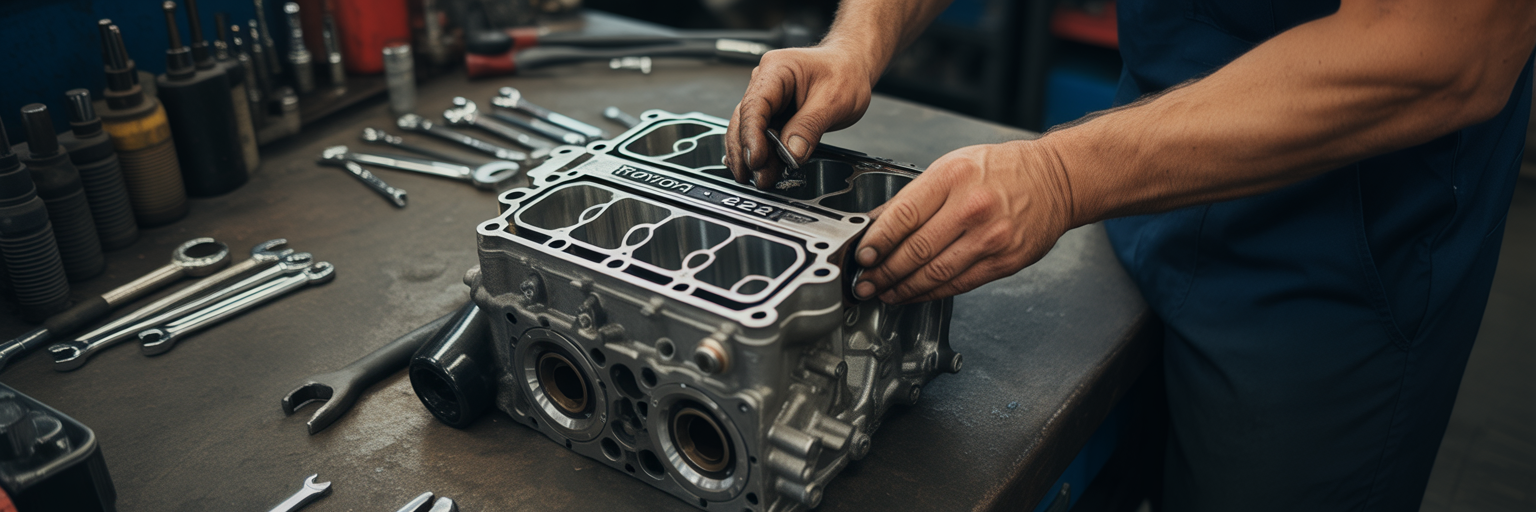
Building on the philosophy of Kaizen, Toyota’s four-cylinder engines often represent the purest form of its commitment to reliability. They aren’t designed to win races; they’re designed to run forever with minimal fuss. Two engines from different eras stand out as perfect examples of this principle: the legendary 22R/22RE and the modern workhorse, the 1ZZ-FE. Both are celebrated by mechanics for their simplicity and sheer refusal to quit, making them icons of durability.
Engine Profile: The 22R / 22RE 2.4L I4
If you ask any seasoned mechanic about the most reliable Toyota engines, the 22RE will almost certainly be one of the first to come up. Found in the iconic Toyota Pickup (the predecessor to the Tacoma) and early 4Runners, this engine is a legend in the off-road and work-truck communities. Its design is almost agricultural. With a heavy iron block and, in early 22R models, a gear-driven timing setup, it was built with toughness as its primary goal. Later 22REs used a single-row timing chain that was still incredibly robust.
This simplicity is precisely why mechanics love it. There are fewer complex systems to fail, and when something does need attention, the repairs are straightforward. The engine bay has ample room to work, and parts are cheap and plentiful. This is the core of Toyota 22RE engine reliability. Sure, its power output is modest by today’s standards, but its low-end torque is perfect for crawling over rocks or hauling loads. It’s an engine that seems to thrive on abuse. For those interested in the legacy of these workhorses, you can explore more about them in our dedicated section on trucks.
Of course, no engine is perfect. But the 22RE’s issues are predictable and manageable, not fatal. They are the kind of things you plan for, not the kind that leave you stranded.
- Worn timing chain guides: The plastic guides on later 22REs can wear out over 100,000+ miles, creating a rattling noise on startup. It’s a well-documented job and, once replaced with metal-backed guides, is a permanent fix.
- Low power output: This isn’t a flaw, but a characteristic. It was never designed to be fast.
- Occasional head gasket wear: On very high-mileage examples that have been worked hard, the head gasket can eventually wear out, but this is common for any engine of its era after 30+ years of service.
Engine Profile: The 1ZZ-FE 1.8L I4
Transitioning from the rugged 22RE, the 1ZZ-FE represents the modern evolution of Toyota’s four-cylinder workhorse. This lightweight aluminum engine powered millions of Corollas, Celicas, and Matrixes through the 2000s. It was known for its excellent fuel economy, smooth operation, and incredibly low maintenance needs, thanks to a timing chain that was designed to last the life of the engine.
However, its reputation comes with a significant asterisk: the pre-2005 oil consumption issue. Early models used a piston ring design with insufficient tension and undersized oil return holes. Over time, these would get clogged with carbon, causing the engine to burn oil. We saw countless customers coming in with low oil lights between changes. But this is where Kaizen shines. Toyota identified the flaw and, in 2005, redesigned the pistons and rings. The post-2005 1ZZ-FE engines are virtually bulletproof. It’s not uncommon for us to see these later Corollas roll into the shop with 300,000 or even 400,000 miles on the original engine, having needed nothing more than routine maintenance. This fix demonstrated Toyota’s commitment to getting it right, and it’s why mechanics implicitly trust the updated versions.
The Workhorse V8s That Define Durability
While Toyota’s four-cylinders built a reputation on efficiency and simplicity, its V8s cemented the brand’s legacy in the demanding truck and SUV market. Here, the engineering philosophy of over-building is on full display, and no engine exemplifies this better than the 2UZ-FE 4.7L V8. This is the powerplant that gave Toyota a foothold in a segment dominated by American brands, not by being the most powerful, but by being the most dependable.
Engine Profile: The 2UZ-FE 4.7L V8
The 2UZ-FE was the heart of Toyota’s most capable vehicles for over a decade, including the Tundra, Sequoia, Land Cruiser, and Lexus GX 470. Mechanics praise its construction: a durable iron block paired with aluminum heads. This combination provides the strength to handle heavy loads and the heat dissipation needed for longevity. It’s a smooth, quiet engine that delivers power effortlessly, but its real beauty lies in its resilience.
A key design feature that mechanics love, especially in the early versions, is that it’s a non-interference engine. This is a critical detail. It means that if the timing belt were to snap, the pistons would not collide with the valves. In many other engines, a broken timing belt means catastrophic, multi-thousand-dollar damage. On the 2UZ-FE, it typically means a tow and a standard timing belt replacement job. This built-in safety net makes it a much safer bet for buyers of high-mileage vehicles.
From a service perspective, the 2UZ-FE is predictable. The most critical maintenance item is the timing belt and water pump service, which is due every 90,000 miles. It’s not a cheap job, but it is non-negotiable. Any savvy buyer looking at a 2UZ-powered truck should demand proof this service was done. Beyond that, the common issues are minor annoyances rather than major failures. We often address Toyota 2UZ-FE common problems like small leaks from the valve cover gaskets or cracked exhaust manifolds, which create a ticking sound when cold. These are straightforward and relatively inexpensive fixes on an otherwise bulletproof platform. For those considering a new purchase and wondering about modern capabilities, it’s useful to see which 2025 trucks offer the best towing and fuel economy.
The legacy of the 2UZ-FE is one of quiet competence. It’s an engine that will happily tow a boat, haul construction materials, or commute daily for 300,000 miles and beyond, asking for little more than its scheduled maintenance in return.
When Perfection Slipped: The Problematic Powerplants
Even a company as dedicated to reliability as Toyota can have a misstep. The engines in this category aren’t necessarily bad by industry standards; in fact, a “problematic” Toyota engine is often still more reliable than an average engine from another brand. However, they are notable for having a specific, widespread design flaw that stands in stark contrast to the company’s otherwise stellar record. The 2AZ-FE is the most prominent example.
Engine Profile: The 2AZ-FE 2.4L I4
Found in some of Toyota’s most popular vehicles from the mid-2000s, including the Camry, RAV4, and Scion tC, the 2AZ-FE should have been another indestructible four-cylinder. For the most part, it was. Its core design was sound, but a critical flaw in execution plagued models from roughly 2007 to 2011: excessive oil consumption.
The technical cause was a combination of low-tension piston rings and undersized oil return holes in the pistons themselves. These small holes would become clogged with carbon deposits over time, preventing oil from properly draining back into the crankcase. Instead, it would be burned off during combustion. The real-world consequence was that owners would find their engines a quart or two low on oil well before their next scheduled oil change. If left unchecked, this could lead to engine failure from oil starvation.
The problem became so widespread that it resulted in a class-action lawsuit. In response, Toyota initiated a warranty enhancement program, offering a Toyota 2AZ-FE oil consumption fix that involved replacing the pistons and rings with an updated design. This corporate response acknowledged the severity of the issue. As noted in a technical review by Toyota-Club.net, the fundamental architecture of the engine was robust, but this single flaw was a significant one.
It’s important to offer a balanced perspective here. When the oil level was diligently maintained, the 2AZ-FE was actually a durable engine. The problem wasn’t a lack of toughness but a design that required more vigilance from the owner than a typical Toyota should. The company eventually corrected the piston design in later model years, and those updated engines are generally very reliable. This episode serves as a powerful reminder of how even a small design choice can have massive real-world consequences, and it showcases Toyota’s ultimate willingness to identify and correct its mistakes.
The Modern Era: Hybrid and High-Performance Legends
As automotive technology has advanced, Toyota has continued to apply its core engineering principles to new challenges. This is evident at both ends of the performance spectrum, from the hyper-efficient hybrid systems that power millions of commuters to the exotic, high-performance powerplants built to showcase the brand’s ultimate capabilities. The 2ZR-FXE hybrid engine and the 1LR-GUE V10 are two modern masterpieces that, despite their vast differences, share a common DNA of meticulous engineering and reliability.
Engine Profile: The 2ZR-FXE 1.8L Hybrid I4
At the heart of the modern Toyota Prius is the 2ZR-FXE, an engine that perfectly illustrates how Toyota’s hybrid system enhances longevity. This engine operates on the Atkinson cycle, a design that prioritizes fuel efficiency over raw power. Some might see that as a compromise, but from a mechanic’s perspective, it’s a brilliant move for durability. The real magic, however, is how the Hybrid Synergy Drive system shares the workload.
The electric motor handles the most stressful parts of driving: initial acceleration from a stop and low-speed maneuvering. This allows the gasoline engine to avoid its least efficient and highest-wear operating ranges. It often doesn’t even start until the car is already moving. This division of labor significantly reduces stress on the internal combustion engine’s components. While many consumers express concern about the long-term cost of battery replacement, we in the service industry often see the opposite. These hybrid engines are exceptionally durable, frequently rolling past 300,000 miles with minimal internal wear. They debunk the myth that complex technology can’t be reliable. For those looking to see how this technology translates into practical, affordable vehicles, you can explore some of the best hybrid SUVs under $35k.
Engine Profile: The 1LR-GUE 4.8L V10
At the absolute opposite end of the spectrum is the 1LR-GUE, the bespoke V10 engine built for the Lexus LFA supercar. This is Toyota’s “halo” engine, a demonstration of what its engineers can achieve when cost is no object. While it’s a high-revving, high-performance beast, it was still engineered with Toyota’s core reliability principles in mind. As detailed by publications like SlashGear, the 1LR-GUE was a hand-built marvel co-developed with Yamaha, celebrated for its incredible sound and precision engineering.
Its reliability doesn’t come from simplicity, but from a no-compromise approach to materials and assembly. Each engine was hand-built by a single technician and used exotic materials like titanium and magnesium to ensure strength without weight. This meticulous process resulted in an engine that could scream to its 9,000 RPM redline all day without breaking a sweat. The 1LR-GUE is not an engine for the masses, and its maintenance costs are astronomical. However, it stands as a powerful testament to the brand’s ultimate engineering capability, proving that performance and reliability can coexist when the commitment to quality is absolute.
The Mechanic’s Final Verdict on Choosing a Toyota
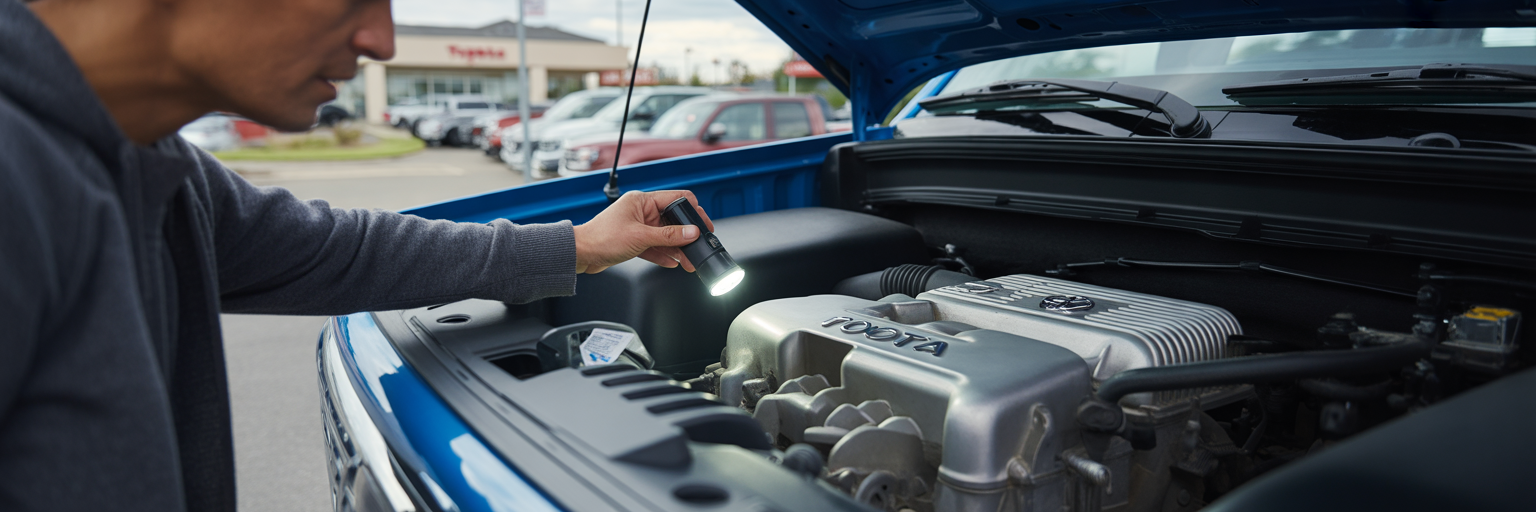
After looking under the hoods of thousands of Toyotas, a clear pattern emerges. The common thread among the most reliable engines is a commitment to proven designs, robust materials, and a philosophy that prioritizes long-term durability over chasing trends. The takeaway for a potential buyer is simple: the “boring” engines are often the best. They are the ones engineered for a life of service, not for a flashy spec sheet. When you’re shopping for a used Toyota, knowing which engine is under the hood and what to look for can make all the difference.
Here is some direct, actionable advice for finding the best used Toyota engine for your needs. This is the kind of checklist we run through in our heads when evaluating a trade-in.
- For a 22RE-powered truck or 4Runner: On a cold start, listen carefully for a rattling sound from the front of the engine that lasts for a few seconds. This is the classic sign of worn timing chain guides. It’s a fixable issue, but it should be factored into the price.
- For a 1ZZ-FE-powered Corolla or Celica: Make it a rule to prioritize 2005 and newer models. This simple step allows you to completely avoid the oil consumption issues that plagued the earlier versions.
- For a 2UZ-FE-powered Tundra or Sequoia: This is non-negotiable. Demand service records showing the timing belt and water pump were replaced at or near the 90,000-mile interval. If there’s no proof, assume it needs to be done immediately and budget accordingly.
- For a 2007-2011 2AZ-FE-powered Camry or RAV4: Before you even start the car, pull the dipstick. Check the oil level and its color. Ask the owner directly if they know whether the piston recall work was performed by a dealer. An owner who is diligent about checking the oil is a good sign.
Ultimately, maintenance history is king. A well-maintained 2AZ-FE with service records is a much smarter purchase than a neglected 2UZ-FE with a mysterious past. Empowering yourself with this knowledge allows you to look beyond the model name and assess the individual vehicle. For those who enjoy getting their hands dirty, our DIY section offers guides for many common maintenance tasks. An informed choice, based on understanding the specific strengths and weaknesses of each engine, is the key to long-term satisfaction and experiencing that legendary Toyota reliability for yourself.
Mechanic’s Quick Reference for Top Toyota Engines
| Engine | Primary Strength | Common Watch Item | Ideal Use Case |
|---|---|---|---|
| 22R / 22RE 2.4L I4 | Extreme Simplicity & Toughness | Timing Chain Guides (on 22RE) | Off-road projects, work trucks |
| 1ZZ-FE 1.8L I4 (Post-2005) | Fuel Efficiency & Low Maintenance | Ensure it’s a post-2005 model | High-mileage daily commuting |
| 2UZ-FE 4.7L V8 | Smooth Power & Over-Engineered Durability | 90k-mile Timing Belt Service | Towing, hauling, family SUVs |
| 2AZ-FE 2.4L I4 (Post-2011) | Good Balance of Power & Efficiency | Verify oil level is maintained | Reliable daily driver (if post-fix) |
| 2ZR-FXE 1.8L Hybrid | Exceptional Longevity & Efficiency | Inverter Coolant Pump | City driving, hypermiling |
This table summarizes key considerations for a used vehicle purchase. Data is based on common knowledge and repair trends observed by automotive mechanics in the United States.