
The American overlanding and off-roading market has seen a massive surge in interest as more people seek the freedom of the great outdoors. This desire for exploration is woven into the country’s fabric.
The Allure of the Trail and the Reality of Risk
There is a unique thrill in pointing your vehicle toward the horizon, whether it’s navigating the iconic red rocks of Moab or winding through the dense forests of the Appalachian trails. Off-roading is a genuine test of a vehicle’s capability and, more importantly, a driver’s skill. We have all seen impressive rigs loaded with expensive gear, but a successful trip depends far more on a knowledgeable operator than a big budget. The difference between a memorable adventure and a costly disaster often comes down to preparation.
Many newcomers make the same common off-roading mistakes, turning a day of fun into a lesson in frustration. These errors typically fall into five categories: improper tire pressure, vehicle overloading, misjudging the terrain, lacking recovery gear, and using excessive speed. Understanding how to prepare for off-roading is not about eliminating risk entirely. It is about building the competence to manage it. This guide provides the foundational knowledge to help ensure every trip you take is a safe and successful one.
Mistake 1: Ignoring Your Tire Pressure
One of the most frequent and easily corrected errors is heading onto the trail with tires inflated to highway pressures. The manufacturer’s recommended PSI is designed for smooth pavement, creating a hard, small contact patch for fuel efficiency. On a trail, this becomes a liability. A hard tire struggles to find traction on loose dirt or gravel and is far more susceptible to punctures from sharp rocks because it cannot flex.
The solution is a technique called airing down. By lowering your tire pressure, you dramatically enlarge the tire’s footprint. This allows the rubber to mold over and around obstacles like rocks and roots, providing superior grip and a much smoother ride. For most situations, a range of 15 to 20 PSI is a great starting point. This simple adjustment transforms your vehicle’s performance, a principle that applies to everything from lightweight SUVs to capable off-road trucks.
To do this correctly, you need two key tools: a quality tire deflator for quick and accurate pressure reduction and a portable air compressor to reinflate. This second step is non-negotiable. Driving on pavement with low tire pressure is dangerous, as it compromises handling and can cause catastrophic tire failure. This simple off-road tire pressure guide is your first step toward better control.
| Terrain Type | Typical Pressure Range (PSI) | Primary Benefit |
|---|---|---|
| Highway/Pavement | 32-40 PSI | Optimal fuel economy and handling |
| Gravel/Maintained Dirt Roads | 25-30 PSI | Improved ride comfort, reduced jarring |
| Rocky Trails/Obstacles | 15-20 PSI | Maximum grip and conformity to terrain |
| Soft Sand/Deep Snow | 10-15 PSI | Increased flotation to prevent sinking |
Note: These are general starting points. Always consult your vehicle’s specifications and consider factors like tire construction and vehicle weight. Test pressures in a safe environment to find what works best for your setup.
Mistake 2: Overloading Your Vehicle
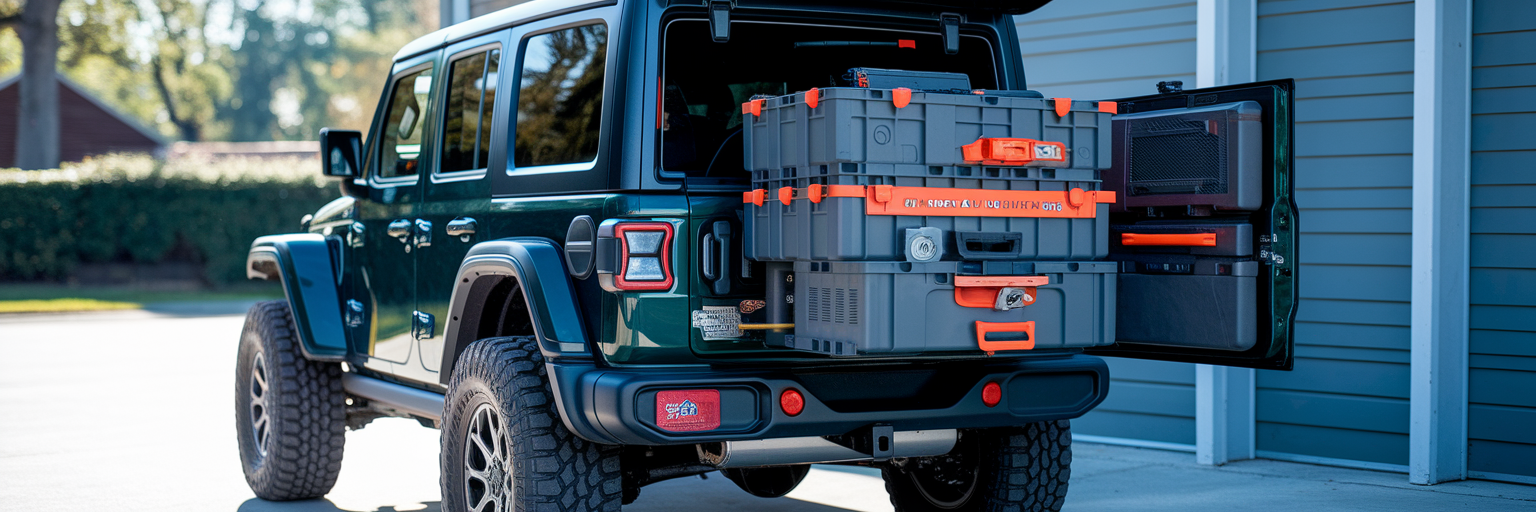
When you think of overloading, you might picture a car packed with too much luggage. In off-roading, the definition expands. It includes the cumulative weight of heavy steel bumpers, winches, roof-top tents, and extra fuel and water. Every vehicle has a Gross Vehicle Weight Rating (GVWR), a limit set by the manufacturer that you can find on a sticker inside the driver’s side door jamb. Exceeding it puts immense strain on your suspension, brakes, and drivetrain.
The consequences show up quickly on the trail. An overloaded vehicle is prone to bottoming out on obstacles and suffers from brake fade on long descents. More critically, all that extra weight, especially when mounted high up, raises your vehicle’s center of gravity. This dramatically increases the risk of a rollover on off-camber or side-sloped sections of a trail. Even highly capable vehicles, like those you can explore in our section on Jeep models, are subject to the laws of physics.
The fix requires discipline. Prioritize essential gear over comforts and learn to pack smart. Place the heaviest items, like water and recovery tools, as low and as close to the vehicle’s center as possible. A lighter vehicle is a more nimble, capable, and ultimately safer machine on any terrain.
Mistake 3: Underestimating the Terrain
A trail is not a static environment. The path you drove last summer could be completely different today after a season of rain or erosion. One of the most common off-roading mistakes is assuming a trail’s condition without doing any research. Preparation is about gathering intelligence before your tires ever touch the dirt.
Modern tools like Gaia GPS and onX Offroad are invaluable, providing satellite imagery and, most importantly, recent user reports that can warn you about washouts, closures, or new obstacles. As the experts at Dixie 4 Wheel Drive highlight in a post about common errors, skipping this research is a frequent cause of trouble. Once you are on the trail, the most important tool is your own two feet.
When you encounter a difficult section, a water crossing, or a rocky climb, get out and walk it first. Scouting an obstacle on foot allows you to spot hidden hazards, like a submerged rock or a deep rut, that are invisible from the driver’s seat. It lets you choose the best line for your vehicle, planning each tire placement instead of reacting in the moment. This practice also reinforces a critical mindset: retreat is a smart tactic, not a failure. If a section looks too risky after you have inspected it, remember the off-roader’s mantra: when in doubt, turn around.
Mistake 4: Forgetting Essential Recovery Gear
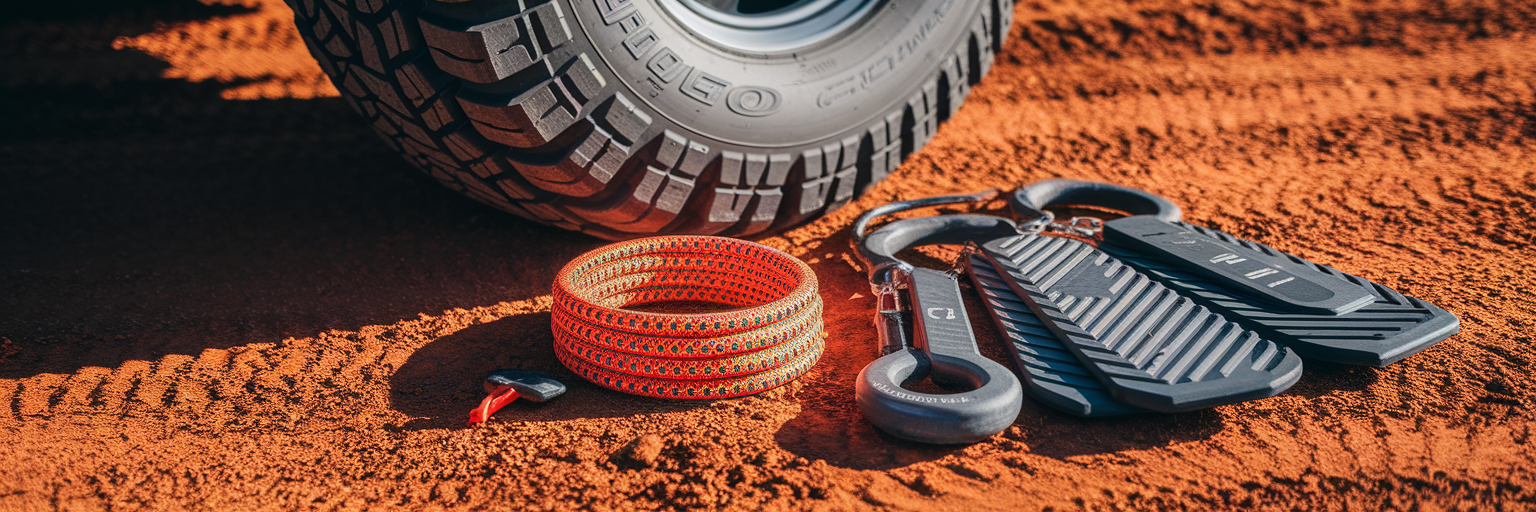
Getting stuck is not a matter of if, but when. It is an inevitable part of pushing your vehicle’s limits and exploring challenging terrain. What separates a minor delay from a serious emergency is being prepared for self-recovery. Relying on another person to come and rescue you is not a plan. True self-reliance begins with carrying the right equipment.
Your kit of essential off-road recovery gear does not need to be extensive, but it must be high quality and suited for your vehicle. The non-negotiable items include:
- A kinetic recovery rope: Unlike a static tow strap, this rope stretches and stores energy, allowing for a smoother, safer extraction from mud or sand.
- A sturdy shovel: Often the most effective tool for clearing dirt, mud, or snow from around your tires.
- A pair of traction boards: These provide a firm surface for your tires to grip when stuck in soft conditions.
– Soft shackles: These are a modern, safer alternative to heavy metal D-rings, which can become dangerous projectiles if a recovery point fails.
Owning the gear is only half the battle. You must know how to use it safely. Practice with your equipment in a controlled environment before you need it on the trail. Watch reputable instructional videos or, better yet, take a hands-on recovery class. Building a complete kit is part of the journey, and you can find more insights on vehicle systems across our site.
Mistake 5: Driving Too Fast for Conditions
Technical off-roading is a discipline of control and finesse, not speed. Many beginners make the mistake of trying to use momentum to power through obstacles, when the correct approach is almost always the opposite. The guiding philosophy for safe off-roading techniques is simple: “As slow as possible, as fast as necessary.”
Excessive speed multiplies the forces acting on your vehicle’s components. A small rock hit at 15 mph can feel like a sledgehammer to your suspension or steering parts, leading to breakage on any vehicle, including a robust truck like the 2025 Ford F-150. Speed also drastically reduces your reaction time, making it impossible to avoid a hidden obstacle. As the insurance specialists at Club 4X4 note, driving too fast is a frequent cause of accidents on the trail.
To manage your speed effectively, use your vehicle’s 4-Low gear range. This multiplies engine torque, allowing you to crawl over obstacles with maximum control and minimal throttle input. It is important to distinguish this from controlled momentum. Some situations, like steep, loose hill climbs, do require a steady, committed pace. However, this is a deliberate application of power, not a reckless charge at the terrain.
Your Pre-Trail Safety Checklist
Building good habits is the key to a lifetime of successful off-road adventures. Instead of focusing on mistakes, reframe these lessons into a positive pre-trail checklist. Before you leave the pavement, run through these five simple steps.
- Adjust tire pressure for the terrain.
- Pack smart and respect your vehicle’s GVWR.
- Research your trail and scout obstacles on foot.
- Carry and know how to use your recovery gear.
- Control your speed with finesse.
Finally, add one more critical rule to your list: never go off-roading alone. Traveling with at least one other vehicle provides an essential safety net if something goes wrong. With the right preparation and mindset, you transform a potentially risky outing into a memorable journey, giving you the confidence to explore safely.