
Setting the Stage for the 2026 SUV Showdown
Few automotive groups have mastered the art of creating distinct brand identities from shared platforms quite like Hyundai Motor Group. This strategy of “sibling rivalry” is on full display with two of its most popular models, the 2026 Hyundai Santa Fe and the 2026 Kia Sorento. Both are formidable contenders in the American midsize SUV market, yet they approach the needs of families from two completely different directions.
The core conflict for buyers is immediately apparent. The 2026 Hyundai Santa Fe, with its bold, boxy redesign, unapologetically prioritizes maximum utility and a rugged persona. It’s built for gear, groceries, and grand adventures. In the other corner, the 2026 Kia Sorento maintains its sleek, refined profile, holding a crucial advantage for many: a standard third-row seat. This isn’t just a simple vehicle comparison; it’s a choice between two distinct lifestyle philosophies packaged in metal, glass, and rubber.
This article serves as a definitive guide for American families weighing these two excellent options. We will move beyond surface-level specifications to explore the factors that truly matter in daily life. We’ll examine interior comfort, real-world seating flexibility, technology usability, and long-term financial value. This 2026 midsize SUV comparison is designed to help you understand which vehicle’s core mission aligns with your own. By the end, you will know whether the Santa Fe’s expansive utility or the Sorento’s passenger-focused versatility is the right fit for your garage.
A Tale of Two Cabins: Interior Design and Comfort
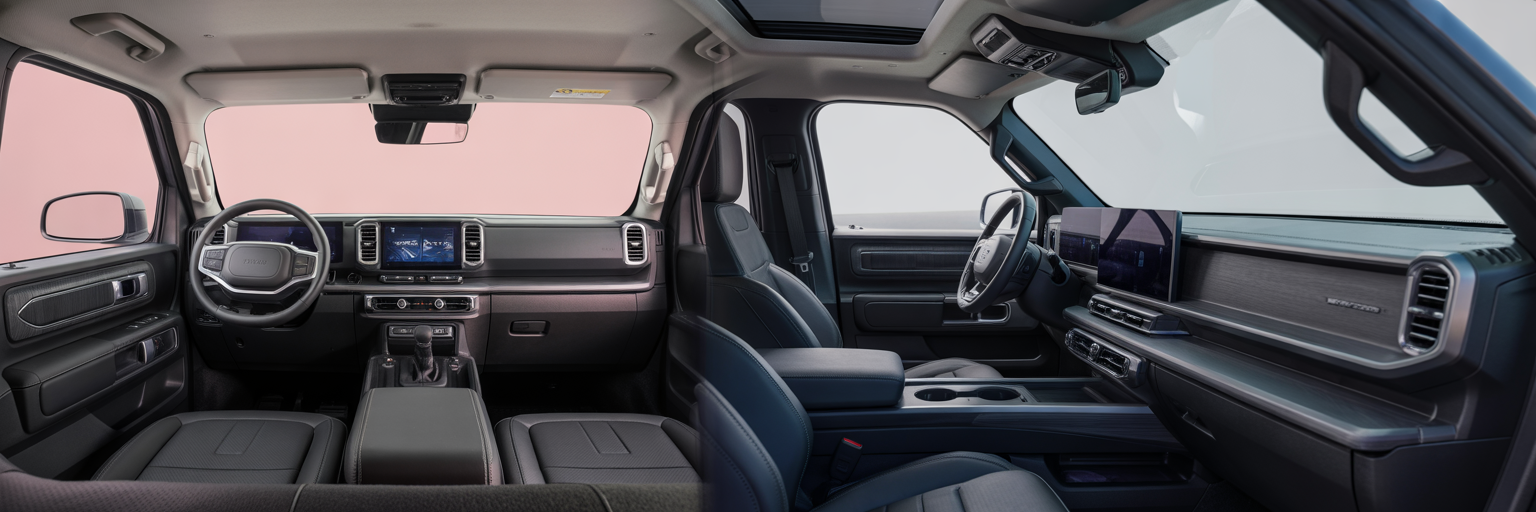
Stepping inside the Santa Fe and Sorento reveals two different interpretations of a modern family vehicle. While they share corporate DNA, their interior philosophies diverge, catering to different tastes and priorities. This comparison focuses strictly on the design, feel, and comfort of the first two rows, setting aside the third-row and cargo metrics for later.
The Santa Fe: A Command Center for Adventure
The Santa Fe’s cabin feels like a well-designed base camp. Its interior is defined by a strong, horizontal dashboard that emphasizes width and spaciousness. The controls are large, tactile, and logically placed, designed for easy use without taking your eyes off the road. You get the sense this interior was built for durability and an active, no-fuss lifestyle. Clever, oversized storage solutions are everywhere, from the massive center console to the generous door pockets, ready to swallow water bottles, tablets, and all the other essentials of family life.
The Sorento: A Refined and Driver-Focused Cockpit
In contrast, the Sorento’s interior aims for a more elegant and car-like atmosphere. The cockpit wraps around the driver, with integrated digital displays that flow together to create a high-tech feel. Upper trims feature higher-grade materials and sophisticated ambient lighting that give the cabin a near-premium ambiance. The Sorento’s upscale aspirations offer a taste of what you might find in some of the best used luxury SUVs that won’t destroy you on repairs, delivering a polished experience without the premium price tag. It’s less about rugged utility and more about creating a comfortable, sophisticated environment.
Front and Second-Row Passenger Experience
So, how do they feel for passengers? Both SUVs offer excellent comfort in the first two rows, with available amenities like heated and ventilated seats. The Sorento’s seats often feel more plush and enveloping, consistent with its refined character. The materials, from quality cloth on base models to available Nappa leather, contribute to its upscale feel. The Santa Fe, however, provides a more open and airy environment. Its boxier shape and larger windows create a greater sense of space, particularly for second-row passengers who benefit from generous legroom and headroom. The choice comes down to personal preference: the Sorento’s cozy refinement or the Santa Fe’s expansive openness.
The Deciding Factor: Seating Flexibility and the Third Row
Here we arrive at the most significant difference between these two SUVs. The question of seating capacity is not just a line on a spec sheet; it’s a fundamental choice that dictates how you will use your vehicle every day. This is the central trade-off in the Hyundai Santa Fe vs Kia Sorento debate.
The Kia Sorento: A True Six or Seven-Passenger SUV
The Kia Sorento’s defining feature is its standard three-row configuration. This immediately makes it one of the most accessible options for families needing more than five seats. Whether you opt for the seven-seat layout with a second-row bench or the six-seat version with comfortable captain’s chairs, the Sorento is built for people. Access to the third row is straightforward, and while the space back there is best suited for children or adults on short trips, its existence is a massive advantage for carpools, playdates, and family outings. For many shoppers, this feature alone makes the Sorento a top contender for the best 3 row SUV for families.
The Hyundai Santa Fe: Prioritizing Space Over Seats
The Hyundai Santa Fe takes a different path. Its two-row layout is an intentional design choice, not a shortcoming. By forgoing a cramped third row, Hyundai has created a vehicle with a different mission. The decision allows for a truly spacious and comfortable second row, where passengers have ample room to stretch out. More importantly, it liberates a massive amount of dedicated cargo space behind the rear seats. The Santa Fe is designed for a family of up to five that values exceptional comfort for every passenger and a cavernous area for their belongings.
Making the Headcount Trade-Off
The choice is refreshingly clear. Do you regularly transport more than five people? If the answer is yes, the Kia Sorento is the practical and logical choice. Its ability to handle extra passengers is a non-negotiable benefit that the Santa Fe simply cannot offer. However, if your priority is a vast, easily accessible cargo hold and a more palatial second-row experience for a smaller family, the Hyundai Santa Fe is the superior option. It trades passenger count for unparalleled utility.
| Feature | 2026 Hyundai Santa Fe | 2026 Kia Sorento |
|---|---|---|
| Standard Seating Capacity | 5 Passengers | 6 or 7 Passengers |
| Passenger Configuration | 2 Rows | 3 Rows |
| Second-Row Legroom (Est.) | ~42.5 inches | ~41.7 inches |
| Third-Row Legroom (Est.) | N/A | ~29.6 inches |
| Third-Row Headroom (Est.) | N/A | ~36.8 inches |
Cargo Space and Everyday Practicality
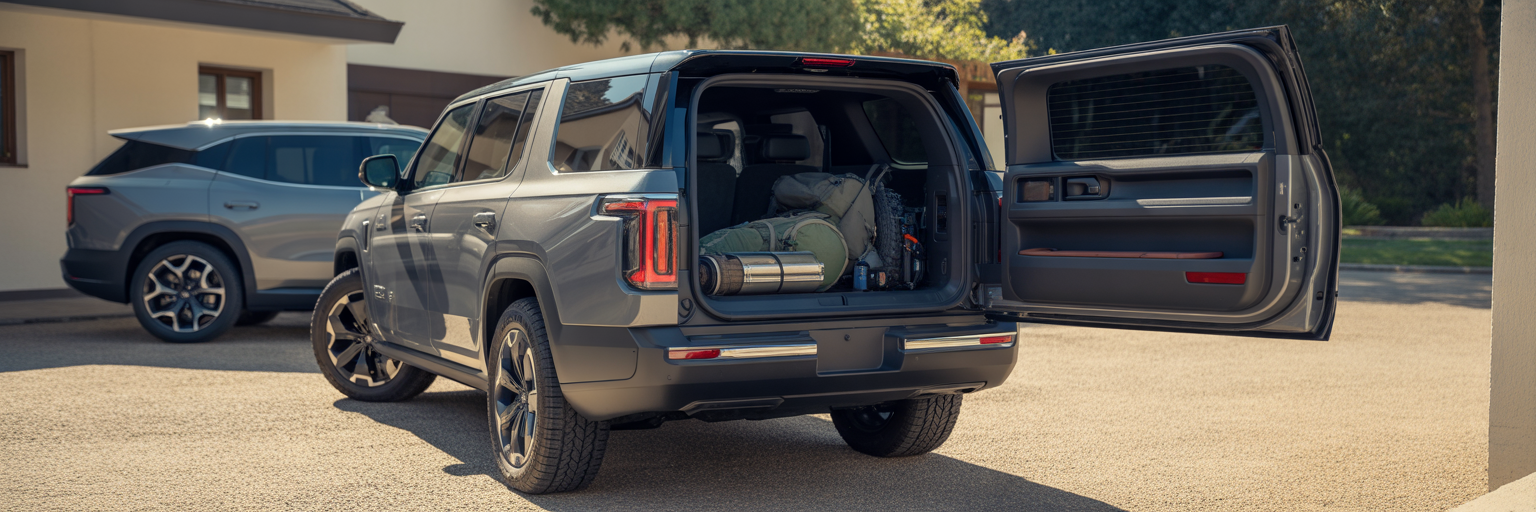
If the last section was the Sorento’s home field, this one is the Santa Fe’s. The decision to stick with two rows gives the Santa Fe a commanding lead in hauling capability, a factor that can be just as important as passenger count for many active families.
The Santa Fe’s Cargo Dominance
The numbers tell a compelling story. With its second-row seats in place, the Hyundai Santa Fe offers a cavernous cargo area that significantly surpasses the Sorento’s. This isn’t just a small difference; it’s a fundamental advantage in family SUV cargo space. The Santa Fe’s boxy shape and wide, upright tailgate create a highly usable, rectangular area perfect for bulky items. Think hockey bags, camping coolers, or a major hardware store run. The Sorento’s cargo area is perfectly adequate for daily errands and grocery trips, but its capacity is inherently compromised by the space needed to stow its third-row seats and by its sleeker, more tapered roofline.
Loading and Living: Usability Features
Beyond pure volume, the Santa Fe’s design makes it easier to live with. Its low, flat load floor simplifies the process of sliding heavy objects in and out. The available hands-free smart liftgate opens automatically when you stand behind it with the key, a feature you’ll appreciate when your arms are full. While the Sorento also offers a smart liftgate, the Santa Fe’s larger aperture and more practical cargo shape make it the clear winner for those who frequently haul gear.
Small-Item Storage and Daily Convenience
This focus on practicality extends throughout the cabin. Both vehicles offer thoughtful cubbies and storage spots, but the Santa Fe’s solutions often feel more generous. Its large, open-concept center console area provides a versatile space for bags, snacks, and electronics. The Sorento’s storage is well-organized but generally more conventional in size. For families on the move, the Santa Fe is an undisputed champion, making it one of the best family road trip vehicles that are not boring for those whose adventures require bringing plenty of equipment. The Sorento offers solid practicality, but it clearly prioritizes people over packages.
Evaluating the Onboard Technology and Features
Both Hyundai and Kia are known for packing their vehicles with an impressive amount of technology for the price, and the 2026 Santa Fe and Sorento are no exceptions. Here’s how their infotainment, safety systems, and convenience features stack up.
Infotainment and Connectivity
Both SUVs feature large, responsive touchscreen systems that serve as the hub for navigation, audio, and vehicle settings. Wireless Apple CarPlay and Android Auto are standard or widely available, ensuring seamless smartphone integration. You’ll find plenty of USB-C ports in both models to keep everyone’s devices charged, along with available wireless charging pads. The primary difference often lies in the user interface. Hyundai’s latest system in the Santa Fe leans into a clean, modern aesthetic, while Kia’s interface in the Sorento is equally intuitive but with its own distinct graphical style. Both are quick and easy to learn.
Advanced Driver-Assistance Systems (ADAS)
Safety is a top priority for family buyers, and both vehicles deliver. A comprehensive suite of standard driver-assistance features, including Forward Collision-Avoidance Assist, Lane Keeping Assist, and Blind-Spot Collision-Avoidance Assist, comes on nearly every trim. The differences emerge on higher-end models. Both offer advanced systems like Highway Driving Assist 2, which helps with lane changes and maintains distance in traffic. Features like the Blind-Spot View Monitor, which projects a live camera feed of your blind spot into the digital instrument cluster, and the 360-degree Surround View Monitor are available on both, but the packaging and trim level availability may differ slightly.
Creature Comforts and Convenience Packages
When it comes to desirable options, both brands offer compelling packages. Comparing trim levels will reveal which vehicle gives you more of what you want for your money.
- Panoramic Sunroof: Both offer large sunroofs, but the specific design (single-pane vs. dual-pane) can vary.
- Premium Audio: Expect a choice between excellent branded systems, such as Bose in the Santa Fe and Harman Kardon in the Sorento on upper trims.
- Digital Key Technology: Both offer the ability to use your smartphone as a key, adding a layer of convenience.
- Heated & Ventilated Seats: These are available for both front and, on some trims, second-row passengers.
- Head-Up Display (HUD): A color HUD that projects key information onto the windshield is an available option on both models.
Ultimately, both SUVs are packed with modern tech. The best choice will depend on which brand’s trim structure more closely aligns with your budget and desired feature set.
Performance, Powertrains, and Fuel Economy
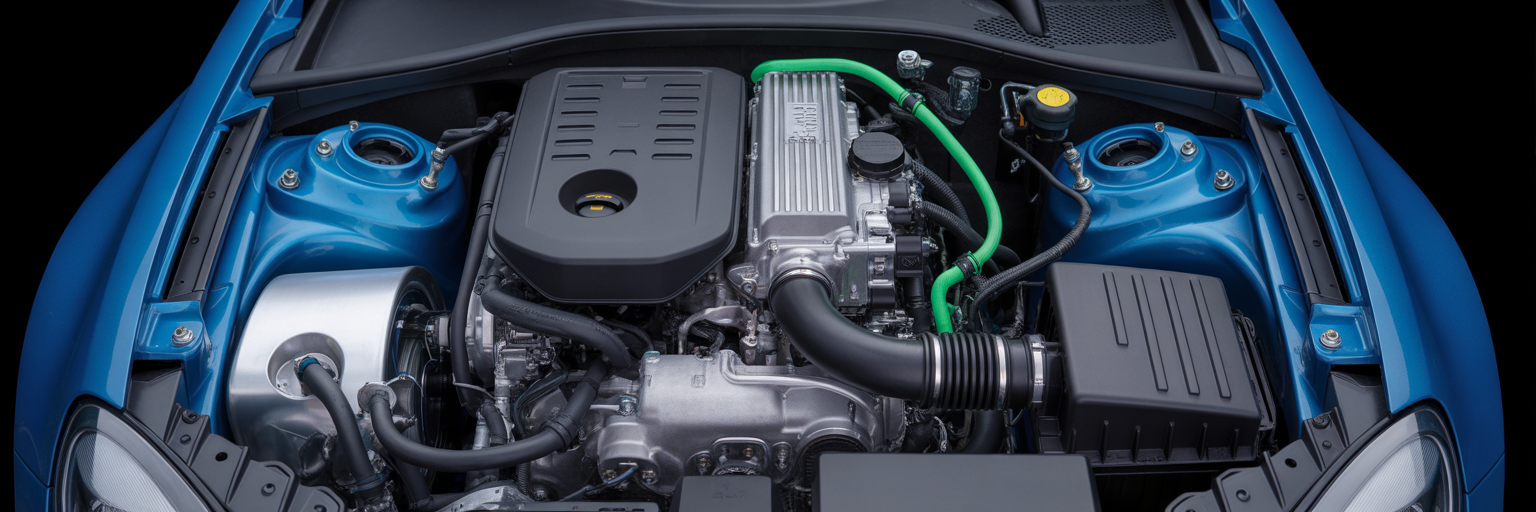
Under the hood, the Santa Fe and Sorento share much of their mechanical DNA, offering a similar range of powertrains. However, the tuning and on-road feel of each vehicle are tailored to match their distinct missions.
Engine Options: Shared DNA, Different Missions
For 2026, both SUVs are expected to offer a versatile lineup of engines. This typically includes a capable standard 2.5L four-cylinder for budget-conscious buyers and a powerful turbocharged 2.5L engine that provides confident acceleration for highway merging and passing. For those prioritizing efficiency, both a traditional hybrid (HEV) and a plug-in hybrid (PHEV) are available. The HEV is perfect for maximizing MPG in city and suburban driving, while the PHEV offers a significant all-electric range for gas-free commuting before the gasoline engine kicks in for longer trips.
On the Road: Ride and Handling Compared
This is where you can feel the difference in philosophy. The Hyundai Santa Fe’s ride is tuned for stability and comfort. It feels composed and confidence-inspiring, absorbing bumps with ease and providing a secure feeling for family hauling. It’s a comfortable cruiser. The Kia Sorento, in line with its more refined positioning, feels slightly more agile and responsive. Its handling is more akin to a large sedan, with a touch more eagerness in corners. Neither is objectively “better,” it simply comes down to driver preference. Do you prefer a solid, planted feel or a more nimble and car-like experience?
Efficiency Across the Board
Thanks to their shared modern powertrains, both the Santa Fe and Sorento deliver highly competitive fuel economy across the board. The hybrid models are particularly impressive, often returning MPG figures that rival those of much smaller vehicles. The turbocharged engines provide a great balance of power and reasonable efficiency, while the standard engine offers dependable, economical performance. Regardless of your choice, you can be confident that both SUVs are designed for efficiency. Of course, getting the most out of any engine requires proper care, and knowing how to keep your car’s engine running for years is key to long-term reliability and performance.
Long-Term Value and Warranty Protection
A new vehicle is a significant financial commitment, and the long-term cost of ownership is a critical factor for any family. This is an area where both Hyundai and Kia have built a stellar reputation, offering a powerful advantage over nearly all competitors.
Both brands provide an industry-leading warranty package. This includes a 10-year/100,000-mile powertrain limited warranty and a 5-year/60,000-mile new vehicle limited warranty. This makes either choice an excellent candidate for the best SUV with best warranty. This extensive coverage provides a decade of peace of mind against the most expensive potential repair bills, a benefit that directly reduces the total cost of ownership and provides a significant financial safety net.
Making a smart vehicle choice is a key part of sound personal finance. As highlighted by financial experts, understanding how tailored financial advice can reshape your spending provides a valuable framework for managing major purchases like a new car. The robust warranty from Hyundai and Kia fits perfectly into this mindset by minimizing unpredictable future expenses.
While the warranty is identical, the value proposition of each vehicle is distinct. The Santa Fe’s value is rooted in its unmatched practicality and space-for-the-dollar. You are getting a massive amount of utility and passenger comfort for your money. The Sorento’s value lies in offering three-row versatility and a near-luxury experience at a mainstream price point. Historically, both models have demonstrated strong resale value, though they may appeal to different used-car buyers based on their core strengths: families needing seats will seek out the Sorento, while those needing space will gravitate toward the Santa Fe.
Making the Final Choice: Your Perfect SUV Profile
We’ve examined the designs, measured the interiors, and compared the powertrains. Now it’s time to answer the ultimate question: when it comes to the Santa Fe or Sorento which to buy? The decision comes down to which vehicle’s core identity aligns with your family’s primary needs.
The 2026 Hyundai Santa Fe is the Utility Champion. It is built for those who prioritize gear, space, and adventure above all else. The 2026 Kia Sorento is the Refined People-Mover. It is designed for those who need flexible seating for a growing family or social circle, wrapped in a package of sophisticated style and a premium feel.
To make it even clearer, here are the buyer profiles for each:
- Choose the 2026 Hyundai Santa Fe if:
- Your family has five or fewer members.
- You frequently haul bulky items like sports gear, camping equipment, or DIY supplies.
- You value maximum cargo capacity and a durable, easy-to-clean interior over a third row.
- Your ideal SUV feels rugged, open, and supremely practical.
- Choose the 2026 Kia Sorento if:
- You need to transport six or seven people, even occasionally.
- You have a larger family or are the designated carpool driver for the neighborhood.
- You appreciate a more refined, upscale cabin and a smoother, more car-like driving experience.
- You want the versatility of a third row without committing to a larger, more expensive SUV.
In the end, there is no single “better” vehicle. The right choice is the one that fits your life. Both the Santa Fe and Sorento are excellent SUVs that offer incredible value, technology, and peace of mind. If you are still exploring your options and want to see how other vehicles stack up, you can find more head-to-head articles in our vs section.