
For the last fifty years, the Honda Civic has been a quiet, constant presence in American life. It’s the car your neighbor drove to work for fifteen years without a single complaint. It was the slightly beat-up but utterly dependable first car for countless college students. You’ve probably had a pizza delivered by one. This constant visibility isn’t an accident; it’s a testament to a car that has always been more than the sum of its parts.
This isn’t going to be another sterile review filled with charts and figures. Instead, think of this as a story told from the driver’s seat, a look into the soul of a machine that started as a pragmatic solution and became an unexpected performance icon. We’re going to explore the complete Honda Civic history, from its humble beginnings during the oil crisis to its surprising dominance in enthusiast circles. We’ll touch on the brilliant engineering behind its engines, the legendary Honda Civic reliability that set a new standard, and the explosion of the Civic tuning culture that gave it a second life. This is a look at what makes these cars special, covering the highs and lows of Honda Civic ownership from someone who understands the quiet pride of owning a car that always delivers more than it promises.
The Humble Origins: A Giant Killer in a Small Package (1972-1987)
To understand the Civic, you have to picture the United States in the early 1970s. Roads were filled with massive, heavy cars powered by thirsty V8 engines. Then, the oil crisis hit, and suddenly, the price of gasoline skyrocketed. The carefree attitude of American car culture was replaced by long lines at the pump and a sense of national anxiety. It was into this climate that the first-generation Honda Civic arrived, not just as another small car, but as a perfectly timed answer to a pressing problem.
An Answer to the Oil Crisis
The first Civic was tiny, efficient, and refreshingly simple. As detailed in Car and Driver’s visual history of the model, the little two-door was a world away from the typical American land yacht. It sipped fuel, was easy to park, and offered a surprising amount of interior space for its small footprint. For a nation suddenly forced to reconsider its relationship with the automobile, the Civic was a breath of fresh air. It wasn’t just a car; it was a practical, intelligent solution.
The Magic of the CVCC Engine
What truly set Honda apart from the very beginning was its engineering. At a time when American manufacturers were struggling to meet new, strict emissions regulations with power-robbing catalytic converters, Honda introduced the CVCC (Compound Vortex Controlled Combustion) engine. In simple terms, it was an incredibly clever design that allowed the engine to burn fuel so cleanly that it met the new standards without needing a catalytic converter. This meant the little Civic engine didn’t suffer the performance penalty that plagued its competitors. It was a move that immediately established Honda’s reputation for innovative thinking.
Building a Reputation
Building on that initial success, the second and third Honda Civic generations expanded the lineup and solidified the car’s identity. We saw the introduction of new body styles, like the wonderfully practical and tall “Wagovan,” which was a precursor to the modern crossover, and the sporty “S” models that hinted at the performance potential to come. These early cars weren’t fast, but they established the core traits that would define the Civic for decades. They delivered incredible fuel economy, were surprisingly roomy, and possessed a simple, mechanical honesty. They just worked, all the time. This unbreakable nature became the foundation of the Civic’s legacy, earning the trust of millions of drivers and setting the stage for the icon it would become.
The Golden Era: Double Wishbones, VTEC, and the Birth of a Legend (1988-2000)
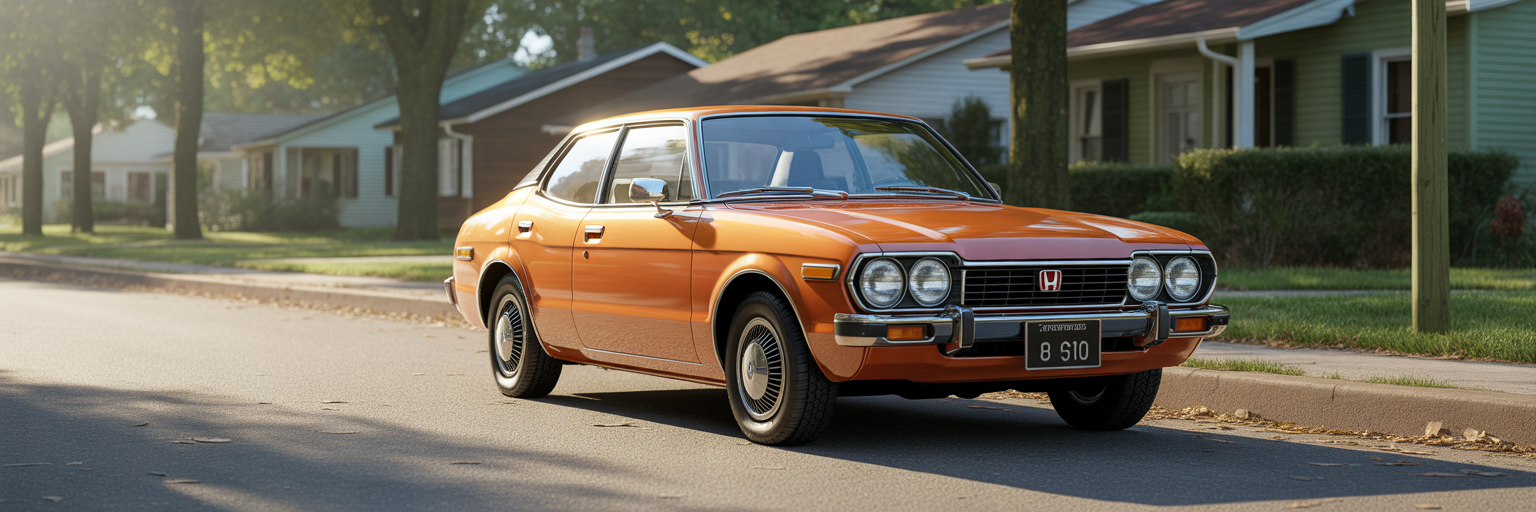
If the first few generations built the Civic’s reputation for reliability, the period from the late 80s to 2000 is when it found its soul. This was the era when Honda’s engineers, seemingly overflowing with confidence from their Formula 1 success, decided to inject their affordable compact car with the DNA of a thoroughbred sports car. For those of us who came of age during this time, these weren’t just cars; they were attainable dreams that punched far above their weight class.
The Suspension That Changed Everything
It all started with the fourth-generation Civic (1988-1991). Honda did something unheard of in the economy car segment: they fitted it with a four-wheel double-wishbone suspension. This wasn’t the simple beam axle or strut setup found on its rivals. This was the kind of sophisticated geometry you’d find on a Porsche or a Ferrari. The result was transformative. The car felt connected to the road, eager to change direction, and incredibly composed through corners. It provided a level of handling precision that embarrassed cars costing twice as much. You could feel the road through the steering wheel, a direct communication between driver and machine that was simply addictive. This engineering choice laid the groundwork for the Civic’s future as a performance benchmark.
VTEC Kicks In: The Soul of a New Machine
Then came the engine that would define a generation of enthusiasts: the B-series with VTEC. Trying to explain VTEC with technical diagrams misses the point entirely. From the driver’s seat, it was pure magic. Below about 5,500 RPM, the engine was docile, efficient, and perfectly behaved for daily commuting. But push it past that point, and everything changed. The engine note hardened from a hum to a scream, a second, more aggressive camshaft profile engaged, and the car surged forward with an intensity that was completely unexpected. It was like having two engines in one: a sensible commuter and a high-strung race motor. Chasing that 8,000 RPM redline, with the VTEC crossover wailing, became the defining experience of the Civic tuning culture.
The Canvases: EG, EK, and the Tuning Explosion
The fifth (EG) and sixth (EK) generations, from 1992 to 2000, were the perfect canvases for this newfound performance potential. They were lightweight, low-slung, and possessed that brilliant double-wishbone suspension. An entire aftermarket industry exploded, offering everything from turbo kits to suspension upgrades. These cars were like automotive LEGO sets for adults. Iconic models from this era are still revered today. The nimble CRX, the quirky targa-topped Del Sol, and the pinnacle of the era for many American enthusiasts: the 1999-2000 Civic Si (known as the EM1). With its B16A2 VTEC engine, sport-tuned suspension, and understated good looks, it was the car we all wanted. It was fast, reliable, and affordable, making it one of the best Honda Civic models ever produced and cementing the Civic’s status as a true performance legend.
A Change in Philosophy: The K-Series and a New Direction (2001-2011)
After the universally loved golden era, the early 2000s marked a period of adjustment for the Civic and its fans. Honda shifted its focus, and the seventh generation felt like a departure from the formula we had come to adore. It was a controversial time, but it also introduced the engine that would carry the performance torch for the next decade and eventually led to a spectacular return to form.
The Divisive EP3 ‘Breadvan’
The 2002-2005 Civic Si (EP3) arrived in the US, and the enthusiast community was immediately divided. The biggest point of contention was the suspension. Honda had ditched the celebrated double-wishbone front suspension in favor of a more conventional and cost-effective MacPherson strut setup. For many, this felt like a betrayal. The car’s tall, egg-like styling, which earned it the nickname “breadvan,” was also a stark contrast to the sleek lines of its predecessor. From an owner’s perspective, there was a sense of disappointment. However, the car had its own unique charm, like the rally-style shifter mounted right on the dashboard, which was quirky but incredibly satisfying to use.
The Rise of the K-Series
The silver lining of the EP3, and it was a massive one, was what lay under the hood. This generation introduced the world to the K-series engine. The K20A3 in the Si was the first taste, and tuners quickly realized its potential. Compared to the B-series, the K-series offered a significant bump in displacement and, more importantly, torque. It had a stronger block, a more advanced i-VTEC system, and it responded incredibly well to modifications. While the chassis of the EP3 was controversial, its engine was undeniably the future. The K-series quickly became the new king of engine swaps, proving to be a worthy successor to the legendary B-series throne.
A Return to Form: The Eighth-Generation Si
It felt like Honda was listening. The 2006-2011 Civic Si (available as the FG2 coupe and FA5 sedan) was a direct response to the community’s desires and a true return to form. The star of the show was the K20Z3 engine, a high-strung masterpiece that screamed to an 8,200 RPM redline. It brought back the thrilling, high-revving character that was missing from the EP3. Crucially, Honda also included a helical limited-slip differential as standard, which dramatically improved traction and cornering ability. The driving experience was sharp, precise, and engaging. Even the futuristic two-tier dashboard, while odd at first, felt special. This model is now considered a modern classic and one of the best Honda Civic models, proving that Honda hadn’t forgotten how to build a car for the driver. As these cars age, simple maintenance becomes key. Many owners have found that you can learn how to clean headlights with toothpaste and a bit of effort, restoring clarity for better nighttime visibility.
The Modern Turbocharged Era: Global Platforms and the Return of the King (2012-2026)
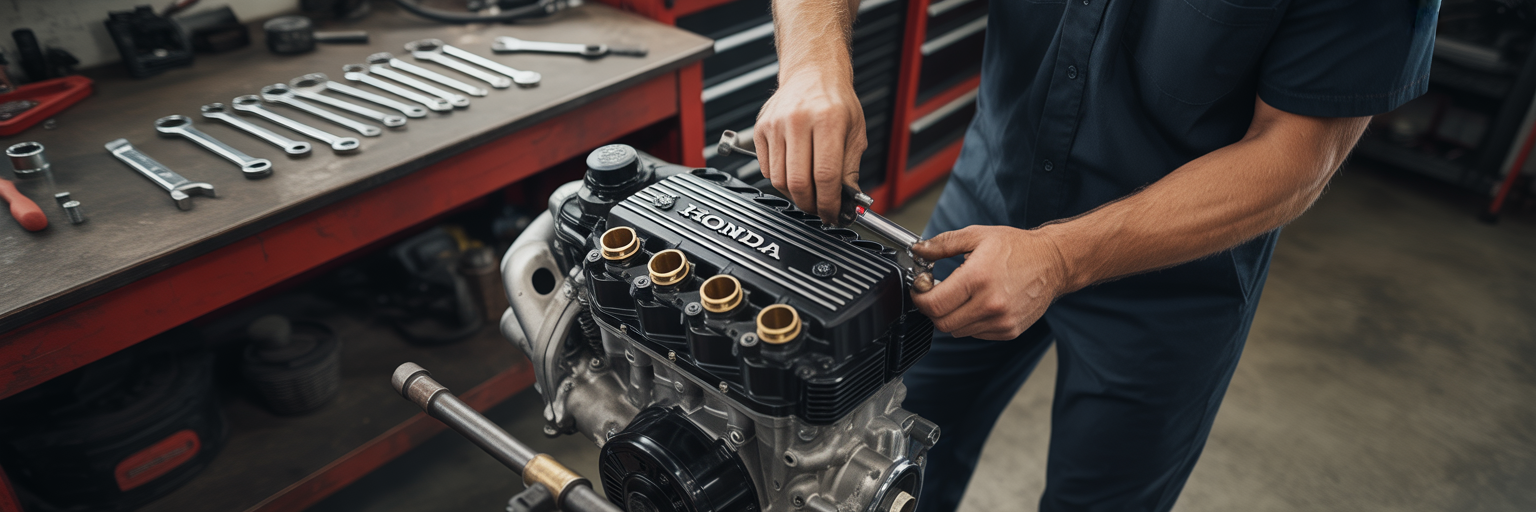
The most recent chapter in the Honda Civic history has been one of adaptation and dominance. After a rare stumble, Honda came back with a global platform that not only corrected its course but also embraced modern technology, culminating in the long-awaited arrival of a performance icon on American shores.
A Brief Stumble and a Strong Recovery
The ninth-generation Civic (2012-2015) is often seen as a rare misstep. From an owner’s perspective, the interior felt cheaper, and the driving dynamics lacked the spark of the eighth generation. The criticism was so widespread that Honda took the unprecedented step of issuing an emergency refresh after just one model year, improving materials and retuning the suspension. This quick correction paved the way for the tenth-generation Civic (2016-2021), which was a monumental success. With bold styling, a high-quality interior, and a sophisticated new chassis, it felt like the Civic was back on top.
The Turbo Revolution
The biggest change for the tenth generation was under the hood. For the first time in its history, the mainstream Civic moved away from naturally aspirated engines and embraced turbocharging with a new 1.5-liter engine. There was initial skepticism from purists like myself who loved the high-revving character of the old VTEC engines. But the benefits were impossible to ignore. The turbo provided a strong wave of low-end torque that made the car feel effortless in daily driving. It delivered excellent fuel economy, and for the tuning community, it opened up a new world of easy power gains through simple electronic tunes. The eleventh-generation Civic continues to be a top seller, holding its own in a market full of new developments, which are often covered in automotive news.
The Type R Finally Comes Home
The ultimate fulfillment of decades of enthusiast desire arrived in 2017: the Civic Type R (FK8) was officially sold in the United States for the first time. It was a watershed moment. With its wild, aggressive aerodynamics and a potent 306-horsepower turbocharged engine, it shattered front-wheel-drive track records around the world. It was everything American Honda fans had been dreaming of for years. The current eleventh generation has matured the design, offering a more refined look while still delivering incredible performance in the Si and the latest Type R (FL5) variants. This ensures the Civic remains not just relevant, but a leader in its class for years to come.
The Heart of the Matter: A Legacy of Legendary Engines
While the chassis and suspension have always been crucial, the story of the Civic is inseparable from the story of its four-cylinder engines. Each major engine family has its own distinct personality and has played a vital role in the car’s legacy, from the unkillable workhorses to the high-revving screamers that powered the Civic tuning culture.
- The D-Series: This was the humble, reliable workhorse. For decades, the D-series powered millions of Civics around the globe. It wasn’t powerful, but it was incredibly fuel-efficient and famously durable. For an entire generation of young tuners, the single-cam D-series was the affordable and forgiving entry point into learning how to wrench on cars.
- The B-Series (B16/B18): This is the soul of the golden era. The dual-cam B-series is all about the sensory experience. It’s defined by the iconic sound of the VTEC crossover and the pure joy of chasing the needle past 8,000 RPM. It doesn’t have much low-end torque, but its high-revving character is what makes it a legend. It remains the heart of countless classic builds today.
- The K-Series (K20/K24): This is the modern powerhouse. The K-series took the VTEC concept and made it better, offering a significant jump in torque and a much stronger block from the factory. Its i-VTEC system provided a broader powerband, making it incredibly versatile for everything from daily driving to all-out racing. The K-series has become a favorite in the DIY community, with countless guides available for everything from basic maintenance to full engine swaps into older chassis.
- The L-Series (L15 Turbo): This is the new kid on the block. The shift to the L-series turbo was a big change, trading natural aspiration for forced induction. What it lacks in high-RPM drama, it makes up for with a fantastic wave of low-end torque that makes the modern Civic feel quick and responsive in everyday traffic. Plus, its potential for significant power gains with a simple electronic tune has made it a new favorite among modern tuners.
| Engine Family | Key Personality Trait | Best Known For | Common Tuning Approach |
|---|---|---|---|
| D-Series | The Reliable Workhorse | Longevity and fuel economy | Basic bolt-ons, ‘mini-me’ head swaps, entry-level turbo kits |
| B-Series | The High-Revving Screamer | The audible VTEC crossover and 8000+ RPM redline | All-motor builds, high-compression pistons, individual throttle bodies |
| K-Series | The Modern Powerhouse | Torque, strong internals, and versatility | Engine swaps into older chassis, high-horsepower turbo builds, road racing |
| L-Series | The Punchy Turbo | Low-end torque and easy power gains | ECU tunes (Hondata/KTuner), downpipes, and ethanol fuel |
Living with a Civic: The Unbeatable Formula of Reliability and Practicality
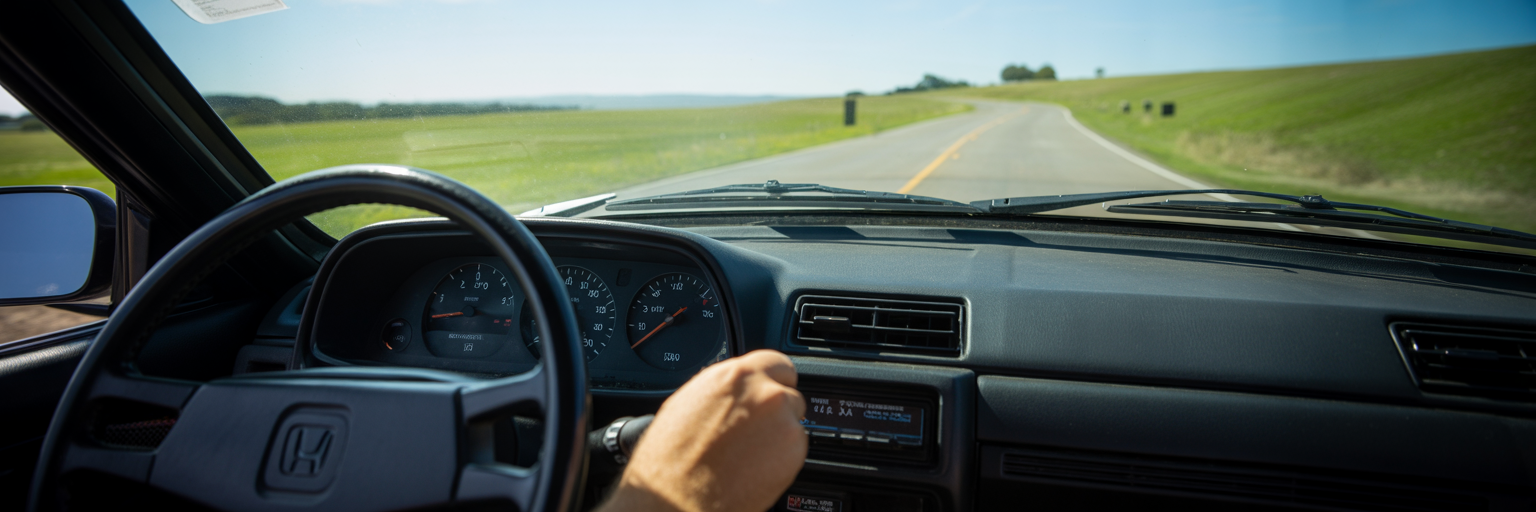
Beyond the performance specs and tuning potential lies the true secret to the Civic’s half-century of success: it is an incredibly easy and rewarding car to live with. The core of the Honda Civic ownership experience is a promise of quality and dependability that has become the benchmark for the entire automotive industry.
The Secret to Bulletproof Reliability
The legendary Honda Civic reliability isn’t an accident; it’s a result of a core engineering philosophy. It feels as though Honda’s engineers designed critical components like the engine and transmission to last for 300,000 miles, knowing full well that most owners would only ask for half of that. This overbuilding creates a huge margin of safety, resulting in a car that simply refuses to quit. It’s this fundamental toughness that allows a 20-year-old Civic to still serve as a reliable daily driver.
Affordable and Easy to Own
The practical benefits of owning a Civic are just as important as its reliability. Across all Honda Civic generations, they have consistently delivered excellent fuel economy, saving owners money at the pump year after year. Maintenance is straightforward and inexpensive, and because Honda has sold millions of them, parts are affordable and widely available at virtually any auto parts store in the country. This accessibility removes the financial anxiety that can come with owning other cars, especially performance-oriented ones.
Common Issues to Watch For
No car is perfect, and being a smart owner means knowing what to look for. This practical knowledge is key to a positive ownership experience.
- 1st-3rd Gen (1972-1987): Rust is the number one enemy. These early cars had minimal rust protection, so carefully inspect the floor pans, fenders, and the areas around the windows and quarter panels.
- 4th-6th Gen (1988-2000): The infamous Honda rust in the rear quarter panels is the main thing to check. Also, due to their popularity, be wary of stolen vehicles and check for signs of poorly executed modifications or accident repairs.
- 7th Gen (2001-2005): The automatic transmissions in this generation can be a known weak point. The 1.7L engine can also be prone to head gasket failure, so check for signs of coolant loss or milky oil.
- 8th Gen (2006-2011): These cars are notorious for clear coat and paint failure, which causes the paint to peel, especially on darker colors like black and blue. Some early 2006-2008 models were also subject to a warranty extension for cracked engine blocks.
More Than a Car: The Enduring Legacy of Civic Tuning Culture
You can’t tell the story of the Honda Civic without talking about the people who made it their own. The lightweight chassis, advanced suspension, and high-potential engines of the 90s were the perfect ingredients, but it was the passion of owners that created the vibrant Civic tuning culture. This community transformed a humble economy car into a platform for personal expression and performance.
In the early days, the scene was heavily influenced by the street-racing culture, famously depicted in films like *The Fast and the Furious*. But it quickly evolved. As noted by publications like Driving.ca, the humble Honda Civic became one of the most important tuner cars for enthusiasts over the last three decades, creating a culture all its own. The focus shifted from illegal street activities to organized and sophisticated events like track days, autocross competitions, and meticulously crafted car shows. We saw the rise of different styles, from clean, OEM-plus builds to aggressive, wide-bodied “stance” cars.
The community itself was just as important as the cars. Early internet forums like Honda-Tech became massive hubs of shared knowledge, where a kid in his garage could learn from seasoned mechanics across the country. Car meets weren’t just about showing off your vehicle; they were social gatherings where friendships were forged over a shared passion. Modifying a Civic was, and still is, about more than just going fast. It’s about the process of learning, the satisfaction of turning your own wrenches, and the sense of belonging to a tribe. That spirit persists today, adapting to new models and technologies but retaining its core appeal: an accessible, reliable, and endlessly fun platform for personalization.
Why the Civic Endures
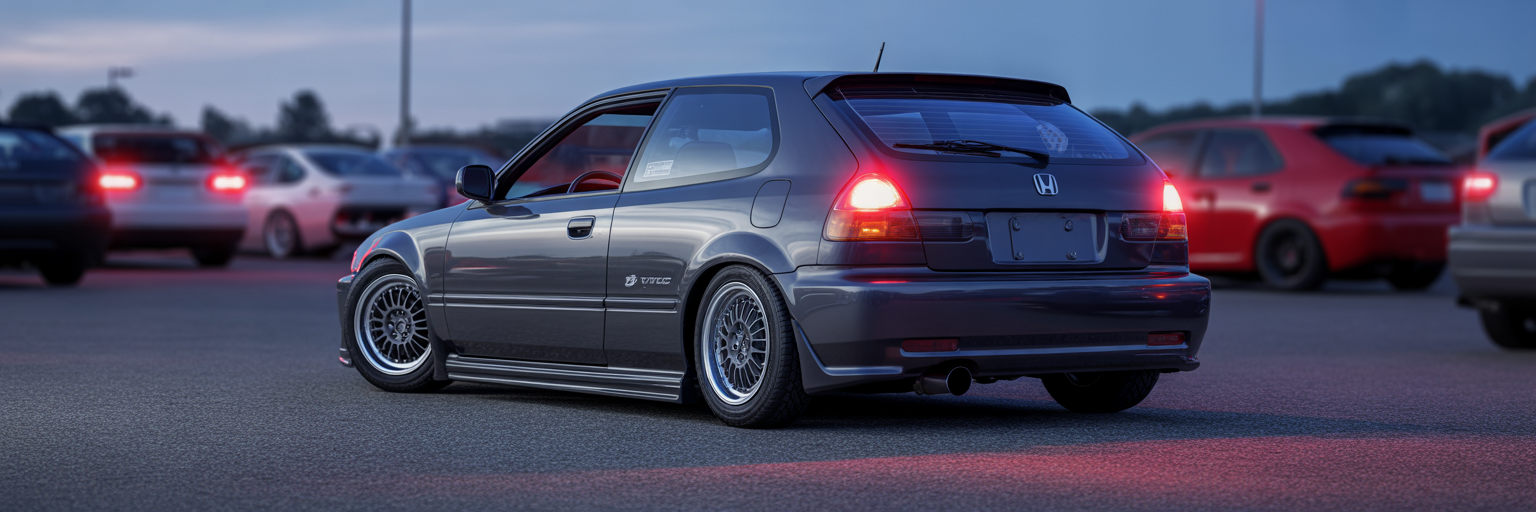
The Honda Civic’s journey is remarkable. It transformed from a simple, fuel-efficient solution into a multifaceted icon. It can be a student’s first car, a reliable family sedan, or a fierce, track-ready competitor, sometimes all in the same model lineup. This incredible versatility is a testament to the brilliance of its design and engineering.
From an owner’s perspective, the Civic’s legacy is built on a simple promise it has consistently kept for over 50 years: delivering an unmatched blend of quality, efficiency, and genuine driving fun. It’s a car that has earned the trust and affection of millions by simply doing its job exceptionally well. No matter what the future of the automobile holds, you can be confident that the innovative and driver-focused spirit that defines the Honda Civic will continue. The story of the Civic is a testament to Honda’s engineering, and exploring the history of various car brands reveals similar tales of innovation and passion.