
Understanding the True Cost of Car Ownership
The initial purchase price of a car is often less than half of what an owner will spend over its lifetime. That sticker price is just the beginning of the story. The real financial picture emerges over years of ownership, shaped by expenses that are far less exciting than picking out a new color. This is the true cost of ownership, a combination of maintenance, repairs, fuel, and insurance that quietly adds up.
We can all picture that sinking feeling. You are driving to work, and a new, unfamiliar light flashes on the dashboard. Suddenly, your family’s vacation fund is at risk because the transmission decided it was done. The financial and emotional toll of unexpected car repairs in 2025 can derail budgets and create immense stress. This is precisely why searching for a low-maintenance vehicle is not just about saving a few dollars, it is about buying financial predictability.
So, what does “low maintenance” actually mean for a modern car? It goes far beyond just infrequent oil changes. It is about the fundamental durability of its most expensive components, like the engine and transmission. It is about the affordability and widespread availability of replacement parts, so a new alternator does not cost a fortune. It also involves the reliability of its technology, ensuring you are not facing constant electronic glitches.
Choosing a car that minimizes these downstream expenses is one of the smartest financial decisions you can make. This guide is designed to help you find the best cars for low ownership cost, vehicles that deliver long-term value and, most importantly, peace of mind. Because the best car is one you can count on, not one you constantly worry about.
The Blueprint for a Low-Maintenance Vehicle

Now that we understand the importance of looking beyond the sticker price, what exactly makes a car inexpensive to own? It is not an accident. The lowest maintenance cost cars are born from specific engineering philosophies and manufacturing priorities. They are designed from the ground up for durability, simplicity, and serviceability. Let’s break down the core elements that create a truly reliable vehicle.
Proven Engineering Over Complex Technology
There is a reason mechanics often praise older, simpler designs. While modern features like turbochargers and dual-clutch transmissions can offer impressive performance, they introduce complexity and more potential points of failure. In contrast, a naturally aspirated engine with a traditional automatic transmission has fewer moving parts under high stress. This proven approach, refined over decades, often results in a powertrain that lasts longer with fewer surprises. The philosophy is simple: prioritize longevity over chasing the last bit of horsepower.
The Importance of Parts and Service Accessibility
A car’s reliability is also a matter of economics. Brands like Toyota and Honda have a massive presence in the United States, which creates a huge advantage for owners. Their immense scale means that replacement parts are produced in vast quantities, making them both affordable and easy to find. Furthermore, their straightforward engineering means that nearly any independent mechanic can perform repairs, so you are not tied to expensive dealership service departments. This accessibility is a critical factor in keeping repair bills manageable.
Build Quality and Material Durability
Have you ever been in a five-year-old car that already has rattling trim, worn-out seat fabric, and flickering interior lights? These are not just annoyances, they are signs of subpar build quality. A low-maintenance vehicle uses higher-grade materials in everything from suspension components and wiring harnesses to interior plastics and switchgear. This attention to detail prevents the constant, minor repairs that can add up to significant costs and frustration over the life of the car. As we explore in our other articles, you can learn more about why some high-mileage cars age better than others based on these principles.
The ICE vs. EV Maintenance Trade-Off
The rise of electric vehicles introduces a new dimension to this conversation. EVs eliminate dozens of traditional maintenance items, including oil changes, spark plugs, and exhaust systems. However, they bring new considerations. Battery health is the primary long-term factor, and while warranties are long, eventual degradation is a reality. Specialized technicians are also required for high-voltage system repairs. According to a recent Autoblog report analyzing the most reliable new cars for your money in 2025, both well-built ICE cars and EVs can offer great value, but their maintenance profiles are fundamentally different.
1. The Benchmark for Dependability: Toyota Corolla
For decades, if you asked someone to name a car that simply refuses to quit, the Toyota Corolla would likely be the first answer. It is not just a car, it is an institution built on a foundation of unwavering dependability. The Corolla has earned its reputation by serving as the go-to choice for millions of buyers who prioritize financial predictability and function above all else.
The secret to its low maintenance costs is not magic, it is a commitment to simple, efficient engineering. Most Corolla models are equipped with non-turbocharged engines that are designed for longevity, not blistering acceleration. These powerplants are workhorses, built to withstand hundreds of thousands of miles with just basic care. This philosophy extends throughout the vehicle, from its durable suspension to its straightforward electronics.
A major contributor to low Toyota Corolla maintenance costs is the sheer volume of these cars on American roads. This ubiquity means that replacement parts are incredibly cheap and available everywhere, from national auto parts chains to local independent garages. You will never have to wait weeks for a part to be shipped from overseas or pay a premium for an obscure component. This accessibility keeps repair bills low and minimizes downtime.
The Corolla’s value proposition is a powerful trifecta: excellent fuel economy keeps running costs down, infrequent unscheduled repairs protect your budget, and a famously strong resale value safeguards your initial investment. When it comes time to sell, you will get more of your money back than with almost any other car in its class. For pragmatic drivers and families seeking to remove financial uncertainty from car ownership, the Corolla remains one of the best cheap reliable cars to maintain, year after year.
2. The Smart Investment: Honda Civic

While the Corolla sets the standard for pure, unadulterated reliability, the Honda Civic has always offered a compelling counterargument: why can’t a sensible car also be fun to drive? For decades, the Civic has delivered comparable dependability while adding a dose of driver engagement, making it a smart investment that also satisfies the soul. It proves that reliability does not have to be boring.
The foundation of Honda Civic reliability lies in its superb engineering, particularly its engines. Honda’s VTEC powerplants are legendary for their ability to provide both efficiency and a surprising amount of character, all while running for well over 200,000 miles with proper care. This is paired with a well-tuned chassis that offers a more connected and responsive feel on the road compared to many of its rivals, without sacrificing the comfort needed for daily commuting on American highways.
Like its main competitor, the Civic benefits from a massive and affordable parts network. This ensures that when maintenance is needed, it is both inexpensive and convenient. The total cost of ownership is kept remarkably low through a combination of minimal unscheduled repairs, excellent fuel efficiency, and a consistently high resale value that rivals the best in the business. External data even suggests a potential lifespan of around 13.7 years, a testament to its durable construction.
One of the Civic’s key advantages is its versatility. Available in both sedan and hatchback body styles, it caters to a wide range of needs. Whether you need the practicality of a four-door sedan for the family or the sporty utility of a hatchback for weekend adventures, you do not have to compromise on the core benefits of low running costs and dependability. For those interested in exploring similar vehicles, our driver’s guide to fun and practical used hatchbacks offers more great options.
3. The Quality Alternative: Mazda3
For years, the choice for an affordable, reliable compact seemed to be limited to two main contenders. But what if you want that proven dependability wrapped in a more stylish and premium package? Enter the Mazda3. It has steadily carved out a niche as the quality alternative for buyers who desire a more refined experience without the associated high-end maintenance bills.
Mazda has consistently earned top marks in reliability surveys, placing it right alongside Toyota and Honda. This is a direct result of its thoughtful engineering philosophy. The Mazda3 primarily uses naturally aspirated Skyactiv-G engines, a deliberate choice to prioritize long-term durability and simplicity over the complexity of turbochargers. This approach delivers responsive power and excellent fuel economy while minimizing potential future repair costs.
Where the Mazda3 truly stands apart is in its execution. The interior feels a class above, with high-quality materials, a sophisticated design, and an attention to detail that resists the squeaks and rattles common in many affordable cars. This solid build quality is more than just a luxury, it translates directly to fewer unscheduled repairs for things like interior electronics or trim pieces. It delivers an emotional connection that many competitors lack.
While its parts network may not be as vast as Toyota’s or Honda’s, the Mazda3’s superior initial build quality often means you will need those parts less frequently. It is the ideal choice for the discerning buyer who appreciates great design and an engaging driving experience but is not willing to gamble on reliability. For those considering a crossover with a similar philosophy, you can explore our comparison of the Subaru Crosstrek or Mazda CX-30.
4. The Electric Workhorse: Chevrolet Bolt EV
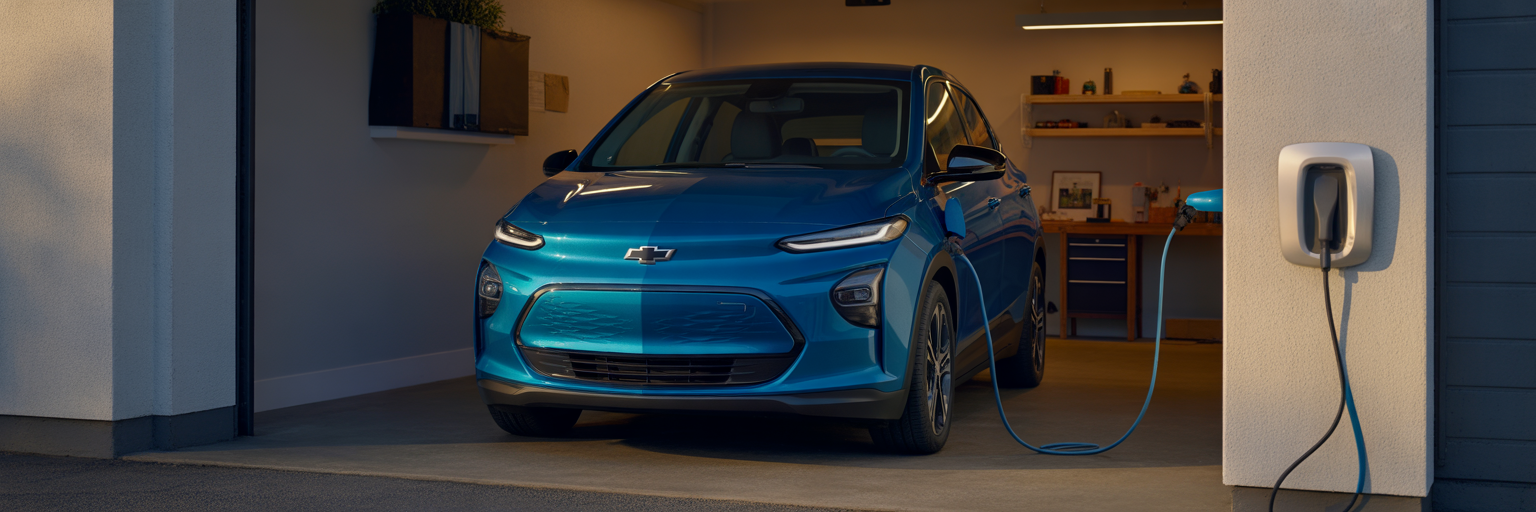
The conversation around low-maintenance vehicles is changing, and the Chevrolet Bolt EV is a prime example of why. By eliminating the internal combustion engine, it redefines what it means to have a car with minimal upkeep. For many drivers, the Bolt EV represents a practical and affordable entry point into a new era of vehicle ownership, one free from many of the hassles of traditional cars.
The most significant advantage of the Bolt EV is the long list of maintenance items it simply does not have. This makes it one of the most reliable affordable cars from a pure service perspective. Consider what you will never have to worry about again:
- No engine oil changes
- No spark plugs or ignition coils
- No timing belts or serpentine belts
- No exhaust system to rust or repair
- No fuel filters or fuel injectors to clean
Of course, a balanced perspective is important. The main long-term consideration for any EV is battery health. While batteries degrade slowly over time, they are covered by a long manufacturer warranty for peace of mind. Other wear items are different too. Tires can wear slightly faster due to the instant torque, but brakes often last much longer thanks to regenerative braking, which uses the electric motor to slow the car.
The cost savings extend to “fueling” as well. Charging at home with residential electricity offers a stable and significantly lower cost per mile compared to the volatile price of gasoline in the US. For city and suburban drivers with predictable daily commutes, the Chevrolet Bolt EV is an incredibly compelling package. It offers a glimpse into a future where car maintenance is simpler and far less expensive.
5. The Hybrid Champion: Toyota Camry Hybrid
What if you love the idea of low running costs but need more space and comfort than a compact car can offer? The Toyota Camry Hybrid is the answer. It takes the legendary dependability of the Camry and combines it with Toyota’s world-class hybrid system, creating the ultimate choice for those who need a family-sized package without compromising on efficiency or reliability.
At the heart of the Camry Hybrid is Toyota’s Hybrid Synergy Drive, a powertrain that has been refined for over two decades into one of the most durable and efficient systems on the market. The electric motor works in tandem with the gasoline engine, providing assistance during acceleration. This reduces the strain on the engine, contributing to its remarkable longevity and minimizing wear and tear over time.
The hybrid system offers other maintenance advantages. The most significant is its effect on the brakes. Through regenerative braking, the electric motor does much of the work of slowing the car down, dramatically extending the life of the brake pads and rotors. This alone can save hundreds of dollars over the life of the vehicle, as brake replacements are a common and significant expense on conventional cars.
While the Camry Hybrid’s initial purchase price is higher than its non-hybrid counterpart, its long-term value proposition is undeniable. The substantial savings on fuel, combined with reduced maintenance needs, create a compelling financial case for high-mileage commuters and families. It is the intelligent choice for anyone who demands maximum dependability and the lowest possible running costs in a comfortable, spacious sedan. For those looking for similar vehicles for long journeys, we have a list of the best family road trip vehicles that are not boring.
Comparing Total Ownership Costs

As we have seen, a low sticker price can be misleading. The smartest approach to buying a car is to consider the total cost over the years you plan to own it. The five vehicles we have highlighted are all excellent choices, but they achieve their low ownership costs in slightly different ways. This comparison helps clarify where each one shines.
| Vehicle | Primary Strength | Maintenance Profile | Fuel/Energy Cost | Resale Value |
|---|---|---|---|---|
| Toyota Corolla | Benchmark Reliability | Very Low | Very Low | Excellent |
| Honda Civic | Reliability & Driving Fun | Very Low | Very Low | Excellent |
| Mazda3 | Premium Feel & Quality | Low | Low | Very Good |
| Chevrolet Bolt EV | Minimal Maintenance | Extremely Low | Extremely Low | Good |
| Toyota Camry Hybrid | Space & Hybrid Efficiency | Very Low | Extremely Low | Very Good |
Note: This table provides a qualitative comparison based on long-term industry data and typical usage patterns. Fuel/energy costs and resale value can vary based on market conditions and location.
This table reveals the trade-offs. The Corolla and Civic are masters of retaining value, while the Bolt EV offers the absolute lowest running costs for maintenance and energy. The Camry Hybrid finds a sweet spot for those needing more space, with its higher entry price being steadily offset by incredible fuel savings. When considering used versions of these models, a documented service history is non-negotiable, as it proves the previous owner was a good steward of the vehicle.
To get a more precise picture, it is worth exploring online resources. As publications like How-To Geek explain, you can find calculators to estimate your own expenses. Their guide on Cars With the Lowest Long-Term Maintenance Costs in 2025 provides frameworks that allow you to input your local gas prices, insurance rates, and annual mileage for a personalized estimate.
Proactive Habits to Maximize Vehicle Lifespan
Choosing a reliable car is the first step, but vehicle ownership is a partnership. Even the most dependable car needs consistent care to reach its full potential of 200,000 miles or more. The good news is that a few simple, proactive habits can dramatically reduce your costs and extend the life of your vehicle.
- Follow the Manufacturer’s Service Schedule: This is not an upsell from the dealership. It is a carefully designed plan based on extensive engineering and testing. Adhering to the recommended intervals for fluid changes, tire rotations, and filter replacements is the single best way to prevent major component failures.
- Adopt Smooth Driving Habits: How you drive has a direct impact on your car’s health. Gentle acceleration, smooth braking, and avoiding potholes and harsh bumps reduce wear on the engine, transmission, brakes, and suspension. This simple change in behavior can save you thousands in the long run.
- Perform Regular Self-Inspections: You do not need to be a mechanic to catch problems early. A quick, five-minute check of your tire pressure, fluid levels, and lights once a month can help you spot small issues before they become catastrophic failures. A low tire can hurt fuel economy, while low coolant can lead to engine damage.
Ultimately, the owner is the most important factor in a car’s longevity. By combining one of the most reliable affordable cars with diligent care, you create a guaranteed formula for minimizing costs and maximizing your vehicle’s lifespan. With just a few simple habits, you can learn how to keep your car’s engine running for years to come.