
In an automotive industry obsessed with annual redesigns and flashy tech updates, the Toyota 4Runner stands as a monument to a different philosophy. For decades, it has resisted the pressure to soften its edges or chase fleeting trends. This isn’t laziness or a lack of ideas. It is a deliberate, calculated commitment to a principle that off-road enthusiasts understand in their bones: proven performance is more valuable than unproven potential. When you are miles from the nearest paved road, with nothing but dirt and sky around you, the last thing you want is a surprise from a complex, untested system.
This unwavering focus is the answer to the question, why is the 4Runner so reliable? Its dependability is not an accident. It is the direct result of an engineering culture that prioritizes mechanical simplicity and overbuilt components. While other SUVs have morphed into comfortable, car-based crossovers designed for school runs and grocery trips, the 4Runner has doubled down on its identity as a true adventure vehicle. It is a machine built with a singular purpose, and that purpose is to get you out there and, more importantly, get you back home.
This philosophy manifests in every aspect of its design. The rugged body-on-frame construction provides a durable backbone that isolates the cabin from the brutal realities of the trail. The powertrains are chosen for their longevity and predictable behavior, not for headline-grabbing horsepower figures. Its dedicated off-road systems are straightforward, mechanical, and effective. Toyota’s strategy is not a flaw to be criticized in a typical car review. For its intended audience, it is the 4Runner’s single greatest feature. It is a promise of reliability, capability, and adventure, etched in steel.
The Bedrock of a Legend: Body-on-Frame Construction
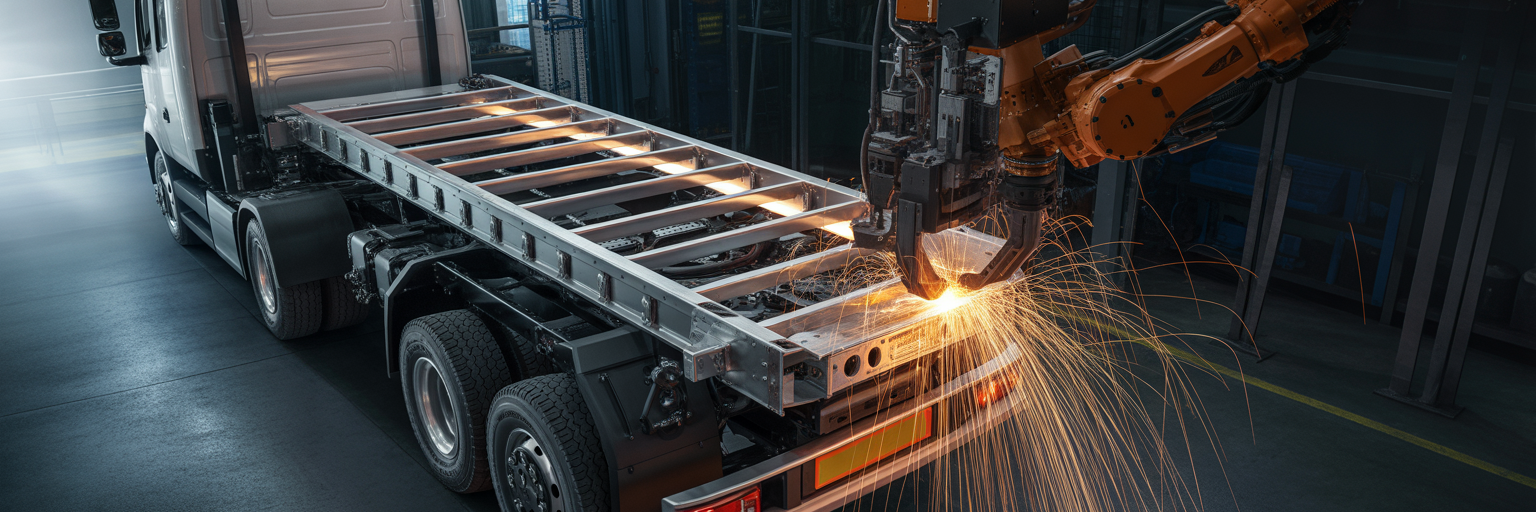
To truly understand the 4Runner, you have to start with its foundation. The 4Runner body-on-frame design is the core of its identity and the source of its legendary toughness. Think of it this way: a modern unibody crossover is like an insect with an exoskeleton. Its body and frame are one integrated piece. While this is lightweight and great for on-road handling, a significant impact can compromise the entire structure. The 4Runner, in contrast, is built like a vertebrate. It has a separate, dedicated skeleton, a full ladder frame, with the body simply bolted on top. This “skeleton” is designed to take all the punishment the trail can dish out.
The Unyielding Advantage of a Ladder Frame
On an uneven trail, you want your suspension to do the work, not your chassis. The ladder frame’s design allows for a degree of torsional flex. This controlled twisting helps keep all four wheels in contact with the ground, maximizing traction when crawling over rocks or navigating deep ruts. A rigid unibody, by contrast, is more likely to lift a wheel in the air, losing grip precisely when you need it most. This design also isolates the cabin from the harsh vibrations and impacts of the trail. You feel the terrain, but the chassis absorbs the worst of it, preventing the jarring shocks that can fatigue both the driver and the vehicle itself. Furthermore, the repairability is a massive advantage. If you dent a body panel or damage a part of the frame on the trail, they can be repaired or replaced independently. On a unibody, chassis damage can be a far more complex and costly affair, sometimes totaling the vehicle.
Engineering Strength Without the Weight
Some might dismiss this traditional method as old-fashioned, but that overlooks the sophisticated engineering involved. According to a report from SAE Media Group, the latest generation of Toyota’s truck frames utilizes advanced techniques like laser-tailored blanks. This means different sections of the frame are built with different gauges and alloys of high-strength steel, putting strength exactly where it is needed while cutting weight where it is not. It is a perfect example of refining a proven concept with modern technology. The result is a frame that is stronger, safer, and more capable than ever without adding unnecessary bulk. It is a testament to the idea that true innovation is about making things better, not just making them different.
A Lineage of Toughness
The 4Runner’s credibility is further cemented by its family tree. It is built on Toyota’s global TNGA-F truck platform, sharing its fundamental architecture with titans like the Tundra, Sequoia, and the iconic Land Cruiser. This is not an SUV trying to act like a truck. It is a truck, through and through. This shared DNA means it benefits from decades of development and real-world testing in the most demanding environments on earth. Sticking with this platform is not a nostalgic choice. It is a forward-thinking decision to equip the 4Runner with a foundation that is ready for anything, from heavy-duty modifications to the most challenging trails. This places it in an elite class of capable vehicles, which you can explore further in our section on trucks.
| Attribute | Body-on-Frame (Toyota 4Runner) | Unibody (Typical Crossover SUV) |
|---|---|---|
| Torsional Rigidity | Designed to flex, improving wheel articulation on uneven terrain. | Very rigid, which is good for on-road handling but can lift wheels off-road. |
| Durability & Impact | Frame absorbs major impacts, protecting the body. More resilient to twisting forces. | Impact forces are distributed throughout the entire structure, making damage more complex. |
| Repairability | Damaged frame sections or body panels can be repaired/replaced independently. | Damage to the chassis can compromise the entire structure, often leading to higher repair costs. |
| Modification Potential | Easy to install lift kits, heavy-duty bumpers, and armor as they mount to the strong frame. | Limited; modifications can stress the integrated chassis and void warranties. |
| On-Road Manners | Can feel less refined with more body roll; cabin is isolated from road vibrations. | Generally provides a smoother, more car-like ride with better handling. |
Heart of the Beast: Powertrains Built for Longevity
If the frame is the 4Runner’s skeleton, its engine is the heart. For years, Toyota’s approach to the 4Runner’s powertrain has mirrored its overall philosophy: prioritize absolute dependability over chasing peak performance numbers. This focus on longevity and field serviceability is what has made the 4Runner a legend in the overlanding and off-road communities, where a breakdown is not an inconvenience but a serious risk.
The Legend of the 4.0-Liter V6
For over a decade, the 4Runner was powered by the venerable 4.0-liter 1GR-FE V6. On paper, its specs were never going to impress your neighbor with the German luxury SUV. Critics often pointed to its modest horsepower and what could be politely called “traditional” fuel economy. But to do so is to miss the point entirely. The incredible 4Runner V6 engine reliability was its defining feature. This naturally aspirated, port-injected engine is a masterpiece of simplicity. It lacks the complex turbos and high-pressure direct injection systems that can become failure points in harsh conditions. Its power delivery is linear and predictable, allowing for precise throttle control when navigating a tricky rock garden. Ask anyone who has put hundreds of thousands of hard miles on their 4Runner, and they will tell you they would not trade that predictability for a few extra horsepower. It is an engine you can trust, and when you are a hundred miles from anywhere, trust is everything.
Evolution, Not Revolution: The i-FORCE MAX Hybrid
With the latest generation, Toyota has introduced new powertrain options, including a 2.4-liter turbocharged four-cylinder and the i-FORCE MAX hybrid system. Some purists might see this as a departure from tradition, but it is actually the logical next step. This is not Toyota chasing trends. It is Toyota applying its decades of world-leading hybrid expertise to enhance the 4Runner’s core mission. The hybrid system is not about silent city driving. It is about adding capability. The electric motor, integrated between the engine and transmission, provides instant torque, which is a massive advantage off-road. This translates to several key benefits:
- Precise low-speed control. The immediate response from the electric motor allows for incredibly fine adjustments when crawling over obstacles, eliminating the need to build up revs and risk lurching forward.
- Immediate power on demand. When you need to crest a steep, loose incline, the hybrid system delivers a surge of torque right from zero RPM, helping you power over the top without relying on momentum.
- Improved fuel range. For overlanders, range is freedom. The hybrid’s efficiency gains mean you can explore further on a single tank of gas, pushing deeper into the backcountry.
This new powertrain proves that modern technology can serve the goal of rugged capability. It is a sophisticated tool designed to make a great off-roader even better. Whether it is the old V6 or the new hybrid, the DNA is the same: they are built to get you there and back, every single time. For those considering how this technology fits into the broader market, exploring some of the best hybrid SUVs under $35k can provide valuable context on efficiency and value.
Forging Its Own Path in a Crossover World
Take a look at the modern SUV market. It is a sea of sameness. Most vehicles that wear the “Sport Utility” badge have traded genuine utility for car-like comfort. They are built on unibody platforms, feature road-biased tires, and are packed with tech designed to navigate parking lots, not mountain passes. In this environment, the Toyota 4Runner is an outlier. It is not trying to be a jack-of-all-trades, and that is precisely why it has cultivated such a fiercely loyal following.
A complete Toyota 4Runner review must acknowledge its on-road “flaws” because they are direct evidence of its unwavering purpose. Does it have more body roll in corners than a crossover? Yes, because its long-travel suspension is designed for articulation. Is the ride a bit more truck-like? Of course, because it is a truck. Is the interior more functional than luxurious? Absolutely, because its controls are designed to be used with gloves on, covered in mud. These are not compromises. They are features. They are the physical proof that the 4Runner has not forgotten what it is.
The best analogy is to think of the 4Runner as a classic leather hiking boot in a world of lightweight, mesh running shoes. You would not criticize the hiking boot for being too heavy or stiff for a 5k run on pavement. It was not built for that. It was built for rocky trails, creek crossings, and multi-day treks. The 4Runner is the hiking boot of the automotive world. It is the specialized tool for a specific job, and for those who need that tool, it is arguably the best off-road SUV available because it makes so few concessions to the mainstream.
This singular focus has insulated it from the market pressures that have diluted its competitors. By serving a dedicated niche of adventurers, overlanders, and enthusiasts, Toyota created a vehicle that does not need to compete with everything else. It competes on its own terms. Other manufacturers, in their quest to appeal to everyone, have ended up creating vehicles that excite no one. The 4Runner, by contrast, stands as a benchmark for authentic capability. It is not a relic from a bygone era. It is the standard against which the watered-down capabilities of other so-called SUVs are measured. For those who want to see how other brands approach this balance, you can see which 2025 trucks offer the best towing and fuel economy, highlighting different priorities in vehicle design.
The Mechanical Advantage: Suspension and 4WD Systems

The 4Runner’s legendary capability is not just about its frame and engine. It is delivered to the ground through a suite of robust, purpose-built hardware. The suspension and four-wheel-drive systems are a masterclass in functional design, prioritizing durability and performance where it matters most: on the trail. The setup is a classic combination for a reason. Up front, a double-wishbone independent suspension provides a good balance of on-road stability and the ability for each wheel to react to terrain independently. In the back, a multi-link solid rear axle provides the brute strength and massive articulation needed for serious off-road work. This is not the smoothest setup for a trip to the mall, but it is one of the most durable and effective configurations for keeping the tires planted on challenging surfaces.
Beyond the core suspension, the Toyota 4Runner off-road prowess is enhanced by a toolkit of electronic and mechanical aids. These are not gimmicks. They are functional tools that provide a tangible advantage.
- Locking Rear Differential: With the push of a button, this system mechanically locks the two rear wheels together, forcing them to turn at the same speed. When one wheel is in the air or on a slippery surface like ice or mud, the locker ensures power still goes to the wheel with traction, pulling you through the obstacle.
- Multi-Terrain Select (MTS): This is the brains of the operation. It allows the driver to tune the vehicle’s traction control and throttle response for specific conditions. In Mud & Sand mode, it allows for more wheelspin to dig for grip. In Rock mode, it provides more aggressive traction control to prevent wheel slip and maintain momentum.
- Crawl Control (CRAWL): Think of this as low-speed, off-road cruise control. You select one of five speeds, and the vehicle manages the throttle and brakes automatically. This allows you to focus 100% of your attention on steering the perfect line through a technical section without having to feather two pedals at once.
Toyota also offers different 4WD systems to suit different needs. The part-time 4WD system is a traditional, robust setup for the purist who wants direct mechanical engagement for trail use. The available full-time 4WD system adds a center differential, providing all-weather security on pavement while still offering full off-road capability. As confirmed by the Toyota Pressroom, the latest generation builds on this legacy with a game-changing new feature: a Stabilizer Bar Disconnect Mechanism. This allows the driver to disconnect the front stabilizer bar with a button press, dramatically increasing front wheel articulation. It is a feature once reserved for heavily modified rigs, now available straight from the factory, proving that the 4Runner continues to be engineered for exploration.
A Legacy of Adventure and a Community of Believers
The story of the 4Runner is not just about steel, gears, and electronics. To truly understand why it has endured, you have to look at the culture it has created. Owning a 4Runner is like holding a passport to a global community of adventurers. It is a subculture built on shared trail stories, modification advice, and a collective passion for getting away from it all. This powerful sense of community is a huge part of the vehicle’s value. It is a network of support and camaraderie that you simply do not find with a typical family crossover.
This loyalty translates into tangible value. The 4Runner is famous for its incredibly high resale value, making it one of the smartest long-term vehicle purchases you can make. People know what they are buying: a vehicle that has been proven to last. This reputation for durability is not just marketing. It is earned over millions of miles on the toughest terrain on the planet. Its unchanging platform has also created a vast and vibrant aftermarket ecosystem. Because the fundamental design has been so consistent, an entire industry has grown around it, offering everything from suspension lifts and armor to custom storage solutions and camping gear. This allows for endless personalization, turning each 4Runner into a unique reflection of its owner’s adventurous spirit. For those who enjoy turning their own wrenches, our DIY section is a great resource for tips and guides.
In the end, the Toyota 4Runner never needed a reinvention because its formula was correct from the very beginning. It was built on a foundation of durability, capability, and simplicity. It is more than just an SUV. For countless owners, it is a trusted partner, a key to unlocking the wilderness, and a reliable friend that will always get them home. It has not just survived in the modern market. It has thrived by remaining true to itself, earning an iconic status that no amount of fleeting trends can ever diminish.