
For decades, the Ford F-150 has been more than just a vehicle; it’s a fixture in the American landscape. Its electrification wasn’t just another product launch; it was the moment the electric truck moved from a niche concept to a mainstream reality. By 2026, the market has matured beyond early adopters. We’re now in an era of serious competition, defined by two distinct leaders with very different ideas about what an electric truck should be.
On one side is the Rivian R1T, an adventure vehicle born from a clean sheet of paper. It was designed from the ground up for exploration, blending premium, tech-forward features with immense capability. On the other is the Ford F-150 Lightning, the electric evolution of a trusted workhorse. It prioritizes practicality, familiarity, and job-site readiness, wrapping new technology in a package millions already know and trust. This isn’t about finding the single best electric pickup truck; it’s about matching a machine to a mission. For those exploring the wider market, our comprehensive guide to modern trucks offers additional context.
The choice between them comes down to fundamental questions. Do you need raw power for work and play? Is your weekend spent on challenging trails or at a busy campsite? How does the truck fit into your daily routine of charging and commuting? This comparison is designed to help you decide which philosophy aligns with your life, moving beyond the spec sheet to find the right truck for you.
Hauling Power and Payload: A Head-to-Head Comparison
When it comes to trucks, capability is measured in pounds and feet. The numbers tell part of the story, but how these electric pickups handle the work in the real world is what truly matters. Both the Rivian R1T and Ford F-150 Lightning are immensely capable, yet they approach the tasks of towing and hauling with different strengths.
Towing Capacity and Real-World Range Impact
On paper, the R1T boasts a maximum towing capacity of around 11,000 pounds, edging out the F-150 Lightning’s respectable 10,000-pound limit. However, the most important conversation around electric truck towing capacity isn’t about the maximum weight; it’s about range. We’ve all felt that slight anxiety watching a fuel gauge drop faster than expected. With an EV, that feeling is amplified when a heavy trailer is attached. A comprehensive test by Edmunds revealed that a range reduction of 50% or more is common for both trucks under a significant load. This transforms a 300-mile truck into a 150-mile truck, requiring more careful planning for long hauls. The R1T’s larger battery options provide a slight edge in starting range, but both vehicles demand a new mindset for towing.
Towing Technology and Driver Assists
Ford leverages its decades of truck-building experience to make towing less stressful. Features like Pro Trailer Hitch Assist simplify the often frustrating process of lining up the hitch, while onboard scales help you load correctly. It’s a suite of tools designed for someone who tows regularly and values straightforward, reliable assistance. The R1T’s advantage is more inherent to its design. The quad-motor system provides instantaneous torque to each wheel independently, offering exceptional stability. Its standard air suspension automatically levels the truck, preventing the rear sag you often see in trucks with heavy trailers. It feels less like a collection of features and more like a fundamentally stable platform.
Payload and Innovative Storage Solutions
When it comes to what you can carry, the F-150 Lightning has a clear advantage in payload, at around 2,235 pounds versus the R1T’s 1,760 pounds. It also features a larger frunk, perfect for groceries or tool bags. The Rivian, however, introduces a truly unique solution: the Gear Tunnel. This 11.7-cubic-foot pass-through compartment is perfect for long, awkward items like skis, fishing rods, or camping gear, keeping them secure and out of the bed. The choice here reflects their core philosophies. The Lightning is built for the conventional demands of a work truck, while the R1T is designed around the specific needs of outdoor adventurers. For a broader look at how these capabilities compare, see our analysis on which 2025 trucks offer the best towing and fuel economy.
| Feature | Rivian R1T | Ford F-150 Lightning |
|---|---|---|
| Maximum Towing Capacity | ~11,000 lbs | ~10,000 lbs |
| Maximum Payload | ~1,760 lbs | ~2,235 lbs |
| Frunk (Front Trunk) Volume | 11.1 cubic feet | 14.1 cubic feet |
| Unique Storage Feature | Gear Tunnel (11.7 cu ft) | Interior Work Surface |
| Key Towing Technology | Quad-Motor Torque Vectoring, Air Suspension Auto-Leveling | Pro Trailer Backup Assist, Onboard Scales |
Note: Figures are based on optimal configurations for each model as of early 2026. Capacities can vary significantly based on trim, battery pack, and optional equipment. This table highlights the core differences in utility philosophy between the two trucks.
Conquering the Trail: Off-Road Capabilities Examined
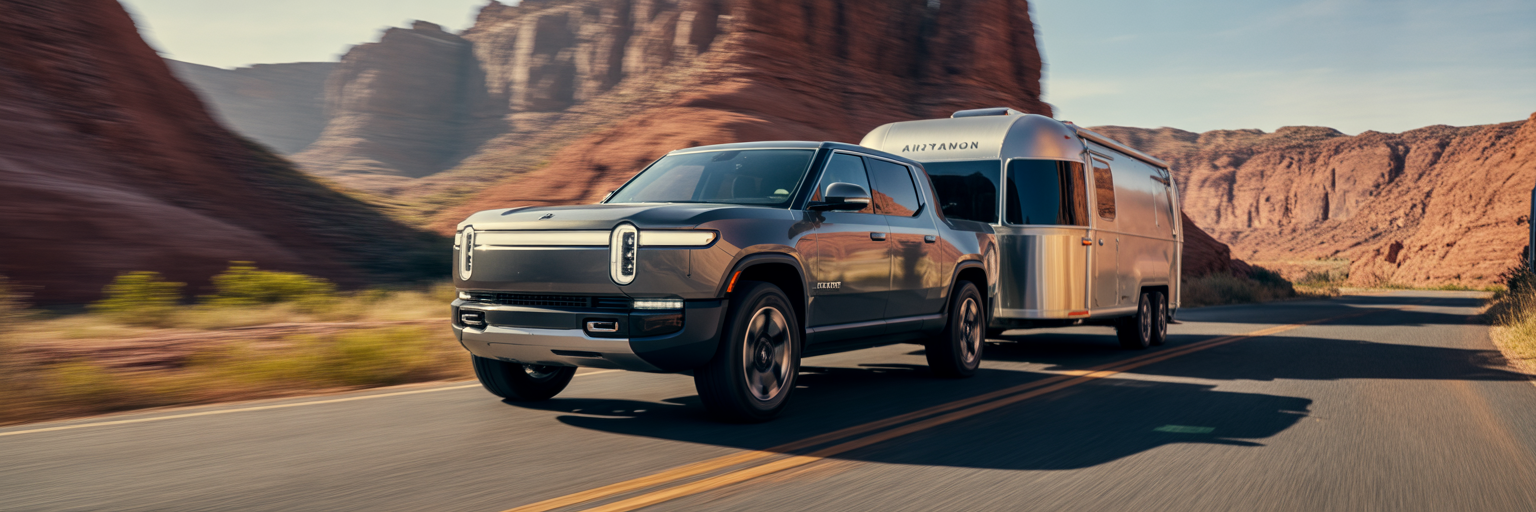
Leaving the pavement behind is where the fundamental differences between these two trucks become most apparent. One was born for the wild, while the other was adapted to master it. Both are incredibly capable, but they deliver their off-road performance in distinctly different ways.
Core Off-Road Design Philosophy
The Rivian R1T was engineered from its very foundation to be an off-road machine. It’s not a truck with an off-road package; it’s an off-roader that happens to be a truck. Its standard quad-motor all-wheel-drive system is the star of the show, allowing for precise power delivery to each individual wheel. This isn’t just traction control; it’s the ability to push a wheel with grip while holding back one that’s slipping, giving the driver incredible control. The F-150 Lightning, by contrast, inherits its prowess from the legendary F-150 platform. Its dual-motor AWD and standard rear locking differential are extremely effective, but it feels more like a highly capable traditional 4×4 system adapted for an electric powertrain.
Key Metrics and Specialized Features
The numbers speak for themselves and are a key part of any Rivian R1T off road review. The R1T’s adjustable air suspension provides up to a staggering 14.9 inches of ground clearance, allowing it to glide over obstacles that would halt most other vehicles. The Lightning’s fixed 8.9 inches is respectable but simply in a different league. This advantage carries over to every other critical off-road metric.
- Ground Clearance: Rivian R1T (up to 14.9 inches) vs. Ford F-150 Lightning (8.9 inches).
- Water Fording Depth: Rivian R1T (over 3 feet) vs. Ford F-150 Lightning (approximately 2.4 feet).
- Approach Angle: Rivian R1T (~35.5 degrees) vs. Ford F-150 Lightning (~25.1 degrees).
- Departure Angle: Rivian R1T (~30 degrees) vs. Ford F-150 Lightning (~26.2 degrees).
- Drivetrain: Rivian R1T (Quad-Motor AWD standard) vs. Ford F-150 Lightning (Dual-Motor AWD standard).
- Underbody Protection: Both trucks offer substantial underbody skid plates to protect battery and drivetrain components.
Wheels, Tires, and Factory Readiness
A truck’s connection to the trail comes down to its tires. The R1T is available from the factory with aggressive all-terrain tires designed for dirt, mud, and rocks. This signals its intended purpose from the moment it leaves the showroom. The F-150 Lightning, even in its most capable trims, typically comes with more road-biased all-season tires. While they are perfectly fine for light trails, serious off-roading would require an immediate upgrade. This small detail reinforces the core difference: the R1T is ready for adventure out of the box, while the Lightning is a versatile all-rounder that can be equipped for it.
Range Realities and Charging Speeds
For any electric vehicle owner, the daily experience is shaped by two questions: how far can I go, and how long does it take to recharge? While both trucks offer impressive range figures, their approaches to battery options and charging networks cater to different priorities.
Battery Options and EPA-Estimated Range
Both Rivian and Ford offer multiple battery sizes to fit different needs and budgets. Rivian provides Standard, Large, and Max pack options, while Ford offers a Standard Range and an Extended Range battery. At the top end, both trucks are competitive, with EPA estimates pushing well over 300 miles. The official Ford F-150 Lightning range with the Extended Range battery is a strong selling point. However, these official numbers are just a baseline. We all know that highway driving and cold weather can significantly impact efficiency. A frigid winter morning can easily reduce your available range by 20-30% before you even leave the driveway. Both trucks are subject to these laws of physics, making the largest battery pack a wise investment for those in colder climates or who frequently travel long distances.
Charging Networks and On-the-Go Speed
When it’s time to plug in on the road, the two brands present different strategies. Rivian has built out its own exclusive Rivian Adventure Network, placing fast chargers in locations that cater to travelers and outdoor enthusiasts, often near national parks and popular trails. It’s a curated, reliable experience. Ford, on the other hand, created the BlueOval Charge Network, which provides access to a massive web of third-party charging stations from providers like Electrify America and ChargePoint. This gives Lightning owners more options in more places, but the quality and reliability of the chargers can vary. In terms of speed, both trucks have impressive peak DC fast-charging rates, capable of adding over 100 miles of range in about 20-30 minutes under ideal conditions. For more general knowledge on EV ownership, you can explore our informative section for more articles on the topic.
Unique Power-Out Features
Beyond just powering themselves, these trucks can power your world. The F-150 Lightning’s standout feature is Intelligent Backup Power. When connected to Ford’s home integration system, the truck can automatically function as a home generator during a power outage, keeping the lights on and refrigerators running for days. It’s a game-changing feature for homeowners who value security and preparedness. The R1T offers a different kind of utility with its vehicle-to-vehicle charging capability. This allows a Rivian to share some of its charge with another EV, a feature that could be a lifesaver for a fellow adventurer stranded on a remote trail. It’s a perfect example of their differing philosophies: Ford solves for home emergencies, while Rivian solves for remote adventure support.
Inside the Cabin: Comfort, Tech, and Usability
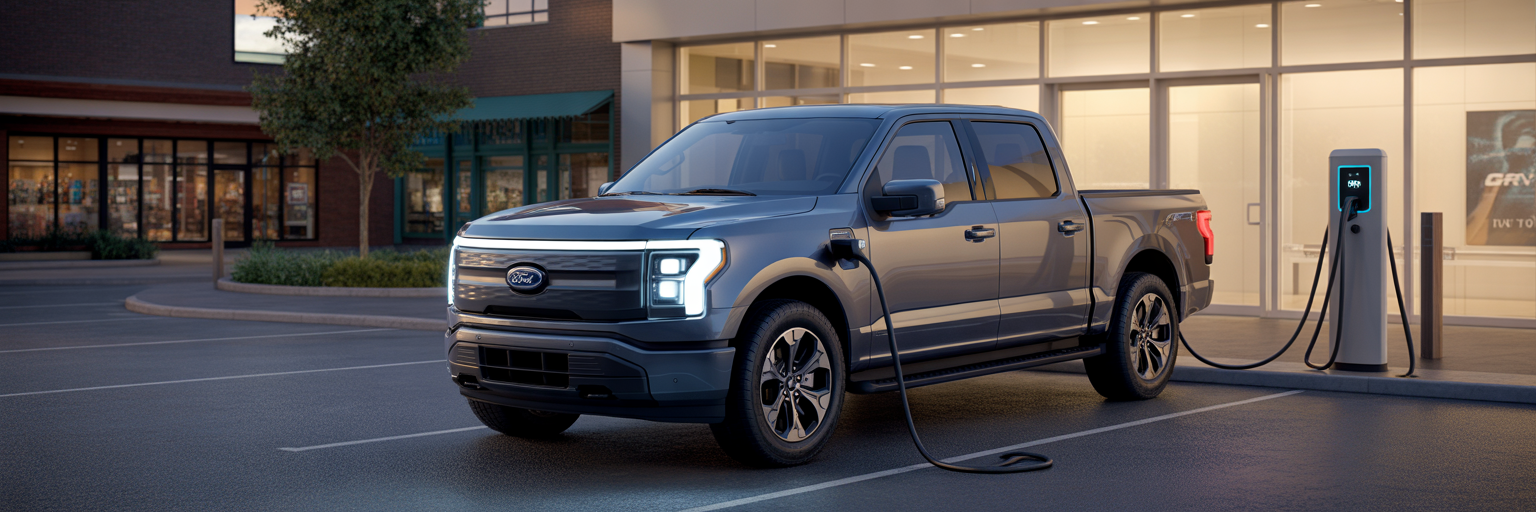
You spend more time inside your truck than you do testing its limits. The cabin is where technology, comfort, and practicality intersect, and the R1T and F-150 Lightning offer two completely different interior experiences, each with its own set of advantages and trade-offs.
Interior Design and Material Philosophy
Stepping into the Rivian R1T feels like entering a high-end tech product. The design is minimalist and modern, dominated by a large central touchscreen that controls nearly every function. The materials, like sustainable wood trim and premium vegan leather, create an atmosphere that feels more like a luxury SUV than a traditional pickup. The F-150 Lightning’s interior is immediately familiar to anyone who has been in a modern F-150. It’s functional, durable, and user-friendly, with a focus on physical buttons and knobs for critical controls like climate and volume. You can operate its core functions with work gloves on, a detail that speaks volumes about its intended user.
Infotainment and Connectivity
This is perhaps the most significant point of division between the two. The F-150 Lightning features Ford’s excellent SYNC 4A system, which comes standard with wireless Apple CarPlay and Android Auto. It’s intuitive, responsive, and seamlessly integrates with the smartphone you already use every day. Rivian, in contrast, has made the controversial decision to forgo both Apple CarPlay and Android Auto. Instead, it relies entirely on its own bespoke infotainment system. While the system is beautifully designed and has excellent built-in navigation, it forces you to adapt to its ecosystem. As noted by sources like Digital Trends, this can be a major drawback for users who are deeply integrated with their phone’s apps for music, podcasts, and communication.
Driver-Assistance Systems and Daily Practicality
Both trucks offer sophisticated hands-free driving aids for highway travel. Rivian’s Driver+ and Ford’s BlueCruise systems use advanced sensors and cameras to manage steering, acceleration, and braking on pre-mapped highways, reducing driver fatigue on long trips. In terms of everyday usability, the Lightning’s larger cabin provides more generous rear-seat legroom, making it a more comfortable choice for families. The R1T, while spacious, prioritizes its unique storage solutions like the Gear Tunnel, which slightly compromises interior volume. The overall build quality in both is excellent, but they project different feelings: the R1T feels like a precisely assembled piece of technology, while the Lightning feels like a robust, high-trim work truck built to last.
Living with an Electric Truck: Day-to-Day Practicality
Beyond the headline specs for towing and off-roading lies the reality of daily ownership. How a truck rides on the commute, how it functions as a tool, and how it evolves over time are crucial factors that shape the long-term experience.
On-Road Manners and Urban Maneuverability
On paved roads, the R1T’s standard air suspension delivers a remarkably smooth and composed ride. It glides over bumps and imperfections with a sophistication that feels more like a luxury sedan than a pickup. The F-150 Lightning also rides exceptionally well, thanks to its independent rear suspension, but it can’t fully escape its more traditional truck-like feel. The flip side is maneuverability. Both are large vehicles, and navigating tight city streets or crowded parking lots can be a challenge. We’ve all had that moment of holding our breath while squeezing into a tight spot, and that feeling is amplified in a full-size truck. The Lightning’s more conventional shape and better outward visibility give it a slight edge in these urban environments.
Mobile Power Station: Job Site vs. Campsite
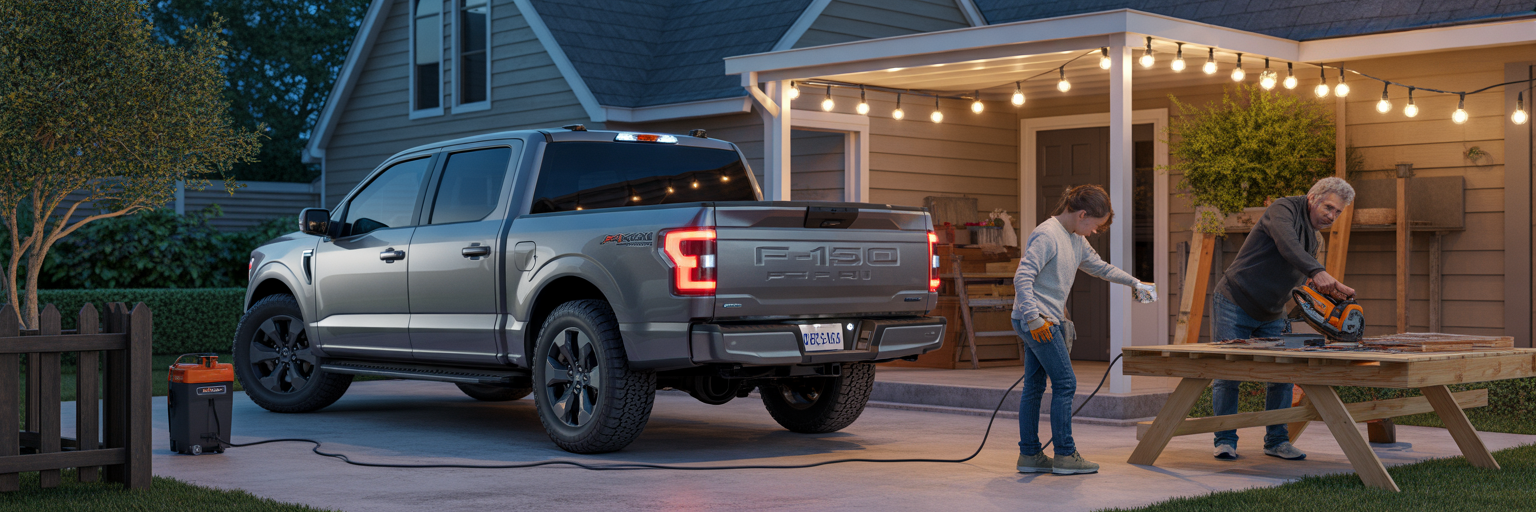
Both trucks can export significant amounts of power, but they are optimized for different scenarios. The F-150 Lightning’s Pro Power Onboard system is a contractor’s dream. With up to 9.6 kW of output through numerous outlets in the bed, frunk, and cabin, it can run multiple power tools simultaneously, effectively turning the truck into a mobile generator for a job site. The R1T’s power outlets are geared more toward lifestyle and recreation. They are perfect for powering a campsite, running an electric grill, or charging up e-bikes for a day on the trails. It’s the same core technology applied to solve two very different problems.
Software Ecosystem and Long-Term Ownership
One of the most significant shifts with modern EVs is the importance of software. Both the R1T and Lightning receive regular over-the-air (OTA) updates that can improve performance, add new features, and refine the user experience. This means the truck you buy today can get better over time, all while it’s parked in your driveway. This evolving nature is a key aspect of ownership, turning the vehicle from a static product into a dynamic platform. This detailed comparison is just one of many we offer; for more, check out our dedicated versus section for more articles comparing popular vehicles.
Cost of Ownership and Future Value in 2026
The initial purchase price is only the beginning of the financial story. Understanding the long-term costs, from charging and maintenance to insurance and resale value, is essential for making a smart investment in an electric truck.
The Rivian R1T is positioned as a premium product, with a higher starting price and a focus on well-equipped, adventure-oriented trims. The Ford F-150 Lightning, in contrast, offers a much broader range of models, from accessible, work-focused base trims to luxurious, fully-loaded versions. This makes the Lightning the more attainable option for a wider array of buyers. Once you own the truck, the savings begin. Both vehicles offer significant reductions in “fuel” costs compared to their gasoline counterparts, though the price of electricity varies by region. The most dramatic savings, however, come from maintenance. With no oil changes, spark plugs, or exhaust systems to worry about, the routine service costs are drastically lower.
However, there are other factors to consider. Insurance premiums can sometimes be higher for EVs due to the specialized knowledge and higher cost of repairing their advanced components and aluminum bodies. Resale value is another critical piece of the puzzle. The F-150 Lightning benefits from the immense brand recognition and legacy of the F-150 name, which should contribute to stable and predictable resale values. The R1T, as a highly desirable product for a passionate enthusiast market, is also expected to hold its value well, though perhaps within a smaller pool of potential buyers. Finally, both trucks come with a standard 8-year/100,000-mile warranty on the battery and drivetrain components, providing long-term peace of mind about the health of the most expensive part of the vehicle.
- Purchase Price: R1T positioned as a premium vehicle with a higher starting cost; F-150 Lightning offers a broader price range including work-focused base models.
- Fuel Costs: Significant savings for both compared to gasoline trucks, with electricity costs varying by region.
- Maintenance: Drastically reduced costs with no oil changes, spark plugs, or exhaust systems to maintain.
- Insurance: Potentially higher premiums due to the complexity and cost of repairing EV components and aluminum bodies.
- Resale Value: F-150 Lightning benefits from the established F-150 brand legacy; R1T holds value as a premium, in-demand adventure vehicle.
Making Your Choice: The Right Truck for Your Lifestyle
After comparing the specs, features, and philosophies, the decision comes down to a single, personal question: what do you need your truck to do? The Rivian R1T vs F-150 Lightning debate is not about which truck is objectively better, but which one is perfectly suited to your life.
The Rivian R1T is the ultimate adventure machine. It is a high-performance, technologically advanced vehicle designed for the enthusiast who wants to push the limits of where an electric vehicle can go. If your weekends are spent seeking out remote trails, and you value cutting-edge design and maximum off-road capability above all else, the R1T is your truck.
The Ford F-150 Lightning is the practical, dependable choice that brings electrification to the mainstream. It excels in everyday usability, offers familiar technology with seamless smartphone integration, and provides a unique ability to power your home and worksite. If you need a reliable partner for work and family life, and value proven functionality and peace of mind, the Lightning is the clear winner. So, are you looking to blaze new trails or power your daily life? The answer will point you directly to one of these two exceptional trucks. After making your choice, or if you’re still exploring, Carphanatics is your home for all things automotive.