The heavy-duty truck segment has long been a battleground defined by raw numbers and brand loyalty. For decades, capability was measured almost exclusively by horsepower, torque, and towing charts. Yet, as these trucks increasingly serve as mobile offices and family haulers, the conversation has shifted. The choice is no longer just about which truck can pull the most, but which one integrates immense power with modern comfort and technology most effectively. This is the core of the 2026 Sierra 2500HD vs F-250 debate.
The Heart of the Beast: Engine Performance
The engine is more than just a power source in a heavy-duty truck; it’s the vehicle’s defining character. It dictates how the truck feels accelerating from a stoplight, how it sounds climbing a steep grade, and the confidence it inspires with a heavy load behind it. Moving beyond the spec sheet reveals two distinct philosophies in power delivery and refinement between GMC and Ford.
Gasoline V8 Options: The Everyday Powerhouses
For the buyer who tows a boat on the weekend but navigates city traffic during the week, the gasoline V8s present a compelling argument. The Sierra’s 6.6L V8 is a proven workhorse, offering smooth, predictable power that makes the truck feel surprisingly manageable as a daily driver. Ford counters with two options: a standard 6.8L V8 and the formidable 7.3L “Godzilla” V8. The Godzilla engine, with its larger displacement, provides a noticeable grunt for those who need more frequent hauling capability without committing to a diesel. The trade-off is clear: a lower initial purchase price for a gasoline engine comes at the cost of fuel economy, a factor that becomes more pronounced the more you tow.
The Diesel Duel: Duramax vs. Power Stroke
This is the main event. The Duramax vs Power Stroke comparison is where brand loyalties are forged. Ford’s 6.7L Power Stroke Turbodiesel holds an on-paper advantage with 475 horsepower and a massive 1,050 lb-ft of torque. That extra torque isn’t just a number; it’s the feeling of effortless momentum when you merge onto an interstate with a 15,000-pound trailer. The truck simply digs in and pulls without drama. GMC’s 6.6L Duramax Turbodiesel, with its projected 470 hp and 975 lb-ft of torque, is engineered for refined power delivery. It feels exceptionally smooth, building power in a linear way that inspires confidence without the explosive surge some diesels exhibit.
Transmission Performance and Integration
Both trucks utilize sophisticated 10-speed automatic transmissions, but their personalities differ. The Sierra’s Allison-branded 10-speed is renowned for its intelligent shift logic, especially in tow/haul mode. It holds gears appropriately on inclines and executes smooth, predictable downshifts for engine braking on descents. Ford’s TorqShift 10-speed is equally competent, known for its quick, decisive shifts that keep the Power Stroke engine right in the heart of its powerband. Both transmissions are excellent, but the Allison often feels a touch more polished and seamless in its operation.
Engine Character and Driving Experience
Subjective feel is critical. At idle, the Power Stroke has a more pronounced, traditional diesel clatter that communicates its readiness to work. The Duramax, by contrast, is noticeably quieter, with less vibration filtering into the cabin. Under hard acceleration, the Ford emits a deeper, more aggressive roar, while the GMC’s powertrain feels more insulated and refined. This difference in character extends to throttle response, with the Sierra feeling slightly more progressive and the F-250 delivering its power with more immediacy.
| Specification | GMC Sierra 2500HD | Ford F-250 |
|---|---|---|
| Standard Gas Engine | 6.6L V8 | 6.8L V8 |
| Optional Gas Engine | N/A | 7.3L ‘Godzilla’ V8 |
| Diesel Engine | 6.6L Duramax Turbodiesel V8 | 6.7L Power Stroke Turbodiesel V8 |
| Diesel Horsepower | ~470 hp (projected) | 475 hp |
| Diesel Torque | ~975 lb-ft (projected) | 1,050 lb-ft |
| Transmission | Allison 10-Speed Automatic | TorqShift 10-Speed Automatic |
Mastering the Job Site: Towing and Payload
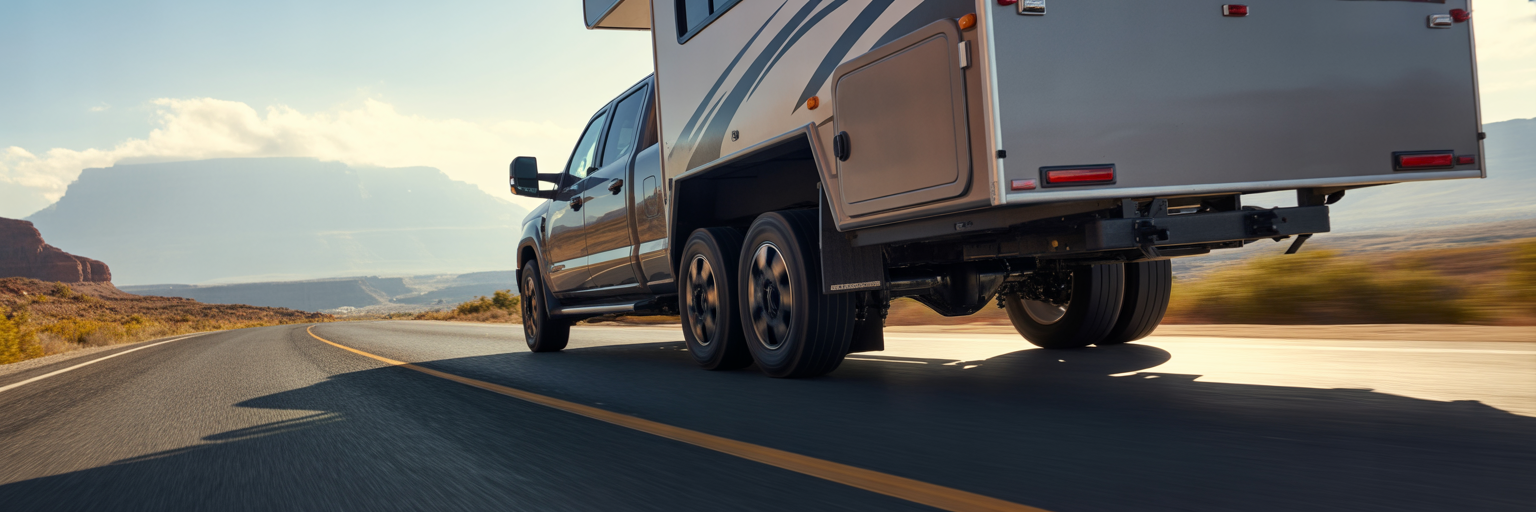
With the engines providing the muscle, the chassis and technology are tasked with applying that power effectively. This is where a truck proves its worth, transforming raw torque into controlled, confident capability. The focus here shifts from how power is made to how it is used to get work done safely and efficiently.
Head-to-Head Towing Capacities
The numbers tell a clear story. The Ford F-250 leads with a conventional towing capacity that can reach up to 24,400 pounds, while the GMC Sierra 2500HD tops out at 22,500 pounds. What does that 1,900-pound difference mean in the real world? For many, it’s academic. But for the contractor hauling a heavy backhoe or the equestrian team pulling a large living-quarters horse trailer, that gap can be the deciding factor. It positions the F-250 as the statistical choice for those who need to maximize every pound of their truck’s rating, making it a contender for the best heavy duty truck for towing.
The Critical Role of Payload
Payload is often misunderstood as just the weight you can put in the bed. Its most critical function in heavy hauling is managing the pin weight of a fifth-wheel or gooseneck trailer. The F-250 generally offers a higher payload rating across its configurations. This provides more flexibility, allowing owners to hitch up heavier and more complex trailers without exceeding the truck’s gross vehicle weight rating. It’s a crucial detail for serious haulers who need to remain compliant and safe.
Towing Technology That Makes a Difference
Modern technology has made towing less intimidating. Ford’s Pro Trailer Backup Assist allows you to steer the trailer with a simple knob on the dashboard, taking the counter-intuitive guesswork out of reversing. It’s a brilliant system for novices. GMC counters with its ProGrade Trailering System, featuring an industry-leading camera system that offers up to 14 different views, including a “transparent trailer” view that digitally stitches together images to make the trailer seem invisible. For the experienced tower, GMC’s comprehensive camera views provide unparalleled situational awareness when navigating tight spots.
Stability and Confidence Under Load
Beyond the numbers, how a truck feels with a trailer is paramount. The F-250’s robust frame and stiff suspension contribute to a very planted feel on the highway. It communicates a sense of unshakeable stability, especially when dealing with crosswinds or passing semi-trucks. The Sierra 2500HD is also exceptionally stable, but its suspension is tuned with a greater emphasis on ride comfort, which we will explore next. For those looking at the broader market, it’s worth noting that many modern trucks are now equipped with sophisticated trailering packages that enhance both safety and convenience.
From Workhorse to Daily Driver: Ride Comfort
The modern heavy-duty truck is expected to perform a dual role: a rugged tool on Tuesday and a comfortable cruiser on Saturday. This is where the differences in suspension tuning and chassis philosophy become most apparent, creating a clear distinction in daily livability between the Sierra and the F-250.
Unloaded Ride Quality: A Key Differentiator
When driven empty, the GMC Sierra 2500HD, especially in its Denali trim with available adaptive suspension, sets a high bar. It manages to filter out road imperfections like expansion joints and rough pavement with a composure that feels closer to a premium SUV than a one-ton-capable truck. The ride is smooth and controlled. The F-250, in contrast, has a firmer, more traditional truck ride. You feel more of the road surface, and the stiff suspension can feel busy over broken pavement when the bed is empty. It’s not uncomfortable, but it constantly reminds you of its heavy-duty nature.
Suspension Behavior Under Load
Hitch up a trailer or load the bed, and the tables turn. The F-250’s firm suspension settles down beautifully with a few thousand pounds of weight. The ride becomes more composed and controlled, feeling completely in its element. The Sierra’s softer setup also manages weight with confidence, but it can exhibit slightly more body motion. It never feels unstable, but the Ford’s unyielding composure under load is a hallmark of its work-first design.
Steering Feel and Urban Maneuverability
Piloting these large vehicles in a crowded grocery store parking lot can be a challenge. The Sierra’s steering is typically lighter at low speeds, making it feel a bit more nimble and less intimidating to park. The F-250’s steering provides more feedback from the road, which is great on the highway but requires more effort during tight maneuvers. Both have large turning circles, but the Sierra often feels a size smaller than it is when navigating urban environments.
Noise, Vibration, and Harshness (NVH) Levels
Cabin isolation is a key measure of a vehicle’s refinement. At 70 mph, the Sierra 2500HD excels at keeping the outside world out. Wind and tire noise are exceptionally well-muted, creating a serene environment for long-distance travel. The F-250 is also quiet for its class, but it allows more of the diesel engine’s character and road texture into the cabin. For buyers prioritizing a peaceful commute after a long day on the job site, the Sierra holds a distinct advantage.
A Tale of Two Cabins: Interior Luxury and Design
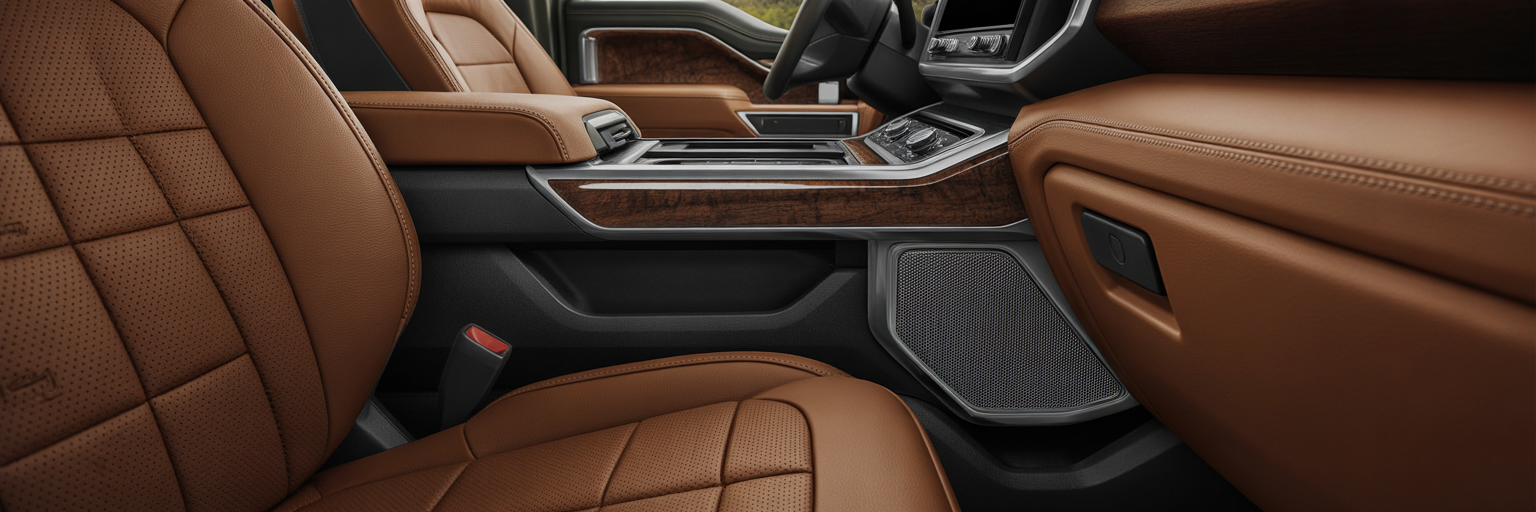
The interior is where a driver spends all their time, and in the premium heavy-duty segment, expectations are high. Both GMC and Ford offer cabins that are comfortable and feature-rich, but they approach luxury from different perspectives. One feels like a corner office, the other like a high-end command center.
First Impressions: Material Quality and Craftsmanship
The moment you step inside, the design philosophies become clear. The Sierra, particularly in its upper trims, uses materials designed to appeal to the senses. You’ll find open-pore wood trim, brushed aluminum accents, and large swaths of soft-touch, stitched leather on the dashboard and door panels. The F-250’s interior is built with high-quality, durable materials that feel solid and well-assembled, but the aesthetic prioritizes function and ruggedness over overt luxury. It’s premium, but in a more utilitarian way, making these two prime examples of modern luxury heavy duty trucks.
The Pinnacle of Luxury: Denali Ultimate vs. Platinum
At the top of the range, the differences are magnified. The GMC Sierra Denali interior, especially in the Ultimate trim, is a showcase of craftsmanship. It features full-grain leather seats with intricate stitching, a microsuede headliner, and massaging front seats that are genuinely relaxing. It’s an environment that rivals many luxury sedans. The Ford F-250 in Platinum or Limited trim is also impressively appointed, with unique leather patterns and premium materials, but its design language remains rooted in the truck world. It feels like the ultimate version of a truck, whereas the Denali Ultimate feels like a luxury vehicle that happens to be a truck. For those exploring how different brands approach design, a look at our Toyota RAV4 vs. Tesla Model Y comparison offers insight into contrasting philosophies.
Ergonomics, Storage, and Practicality
Both cabins are designed with the user in mind. Ford’s interior features a smart layout with plenty of large, easy-to-use buttons and dials, which are appreciated when wearing work gloves. Storage solutions are abundant and practical. GMC’s layout is more driver-focused and tech-forward, with a large central screen integrated cleanly into the dash. It also offers clever storage, including a large center console and available rear under-seat compartments. Passenger space in the crew cab models of both trucks is immense, with limousine-like legroom in the rear.
Seating Comfort for the Long Haul
Long hours on the road demand comfortable seats. Both trucks deliver with wide, supportive front seats that offer extensive adjustability. The Sierra’s seats, particularly the 16-way power-adjustable massaging seats in the Denali Ultimate, are exceptionally comfortable for all-day drives. The F-250’s seats are also excellent, with effective heating and ventilation, but they tend to be a bit firmer, which some drivers may prefer for long-haul support.
Command Center Tech: Infotainment and Audio
The modern truck cabin is a hub of connectivity and entertainment. The digital experience, from the central touchscreen to the driver’s display, plays a huge role in daily usability. Here, the choice is between the deep integration of a familiar tech giant and a highly refined proprietary system.
Central Touchscreen and User Interface
GMC has a significant advantage with its standard 13.4-inch touchscreen featuring Google Built-in. This system integrates Google Maps, Google Assistant, and the Google Play Store directly into the truck. The voice commands are natural and accurate, and Google Maps is the gold standard for navigation. It’s intuitive for anyone who uses a smartphone. Ford’s SYNC 4 system, displayed on an available 12-inch screen, is also excellent. It’s fast, responsive, and has a clean menu structure. While it lacks the deep Google integration, its wireless Apple CarPlay and Android Auto work seamlessly.
The Premium Audio Showdown
For audiophiles, this is a close contest. The Sierra offers a Bose Performance Series premium sound system. It delivers clear highs and balanced mids, creating a rich and detailed soundstage that works well across many music genres. The F-250 counters with a powerful Bang & Olufsen system. The B&O system is known for its deep, impactful bass and crisp sound reproduction, providing a more powerful and immersive listening experience, especially for rock and electronic music.
Digital Instrument Cluster Customization
Both trucks feature large, customizable digital instrument clusters that can display a vast amount of information. The Sierra’s 12.3-inch display is highly configurable, allowing the driver to prioritize navigation, vehicle data, or trailering information with clean, modern graphics. Ford’s digital cluster is equally capable, offering specific screens and gauges tailored for towing and off-roading. The choice comes down to personal preference in graphic design, as both do an excellent job of presenting critical data without being distracting.
Connectivity and Smart Features
Staying connected on the go is essential. Both trucks are well-equipped to serve as mobile hotspots and remote command centers through their respective smartphone apps.
- Wireless Apple CarPlay/Android Auto: Both trucks offer stable and reliable wireless connectivity, making it easy to access your phone’s apps without plugging in.
- Onboard Wi-Fi Hotspot: Each provides a robust 4G LTE or 5G Wi-Fi hotspot, allowing multiple devices to connect for work or entertainment on the road.
- Manufacturer App (myGMC vs. FordPass): Both apps allow for remote start, locking/unlocking, and checking vehicle status like fuel level and tire pressure. FordPass often includes more integrated features for trip planning and locating services.
Confidence on the Road: Safety Systems Compared
Advanced safety features are no longer a luxury; they are an expectation, even in heavy-duty trucks. These systems not only protect occupants but also reduce the stress of driving a large vehicle, especially when towing. Both GMC and Ford offer comprehensive suites of driver-assistance technologies.
Standard vs. Optional Safety Equipment
Understanding what’s included is key to comparing value. Both manufacturers bundle their features into packages, but their base offerings differ.
- GMC Pro Safety: Standard on all Sierra HDs, this includes Forward Collision Alert, Automatic Emergency Braking, and Lane Departure Warning. More advanced features are part of the Pro Safety Plus package or standard on higher trims.
- Ford Co-Pilot360: Ford offers features like Pre-Collision Assist with Automatic Emergency Braking on many trims, but a more complete suite, including blind-spot monitoring, is often part of an optional package or reserved for higher-end models.
Buyers must look closely at the specific trim they are considering to understand the true cost of getting a fully equipped truck.
Advanced Driver-Assistance for Towing
This is where safety tech becomes a game-changer. Both trucks offer Blind Spot Monitoring that can be configured to cover the length of a trailer, which is invaluable for highway lane changes. Their Adaptive Cruise Control systems are also engineered to work while towing, automatically adjusting speed to maintain a set following distance and managing the extra weight and momentum of a trailer. The Sierra’s system often feels a bit smoother in its braking and acceleration inputs when a trailer is attached.
Parking and Low-Speed Maneuvering Aids
Navigating a job site or a tight campground is made much easier with modern camera systems. GMC’s system, with its up to 14 available camera views, is the clear leader in this area. It provides views of the hitch, the bed, and even down the sides of the truck, offering unparalleled visibility. Ford’s 360-degree camera system is also very effective, providing a helpful top-down view for parking, but it can’t match the sheer number and utility of the Sierra’s camera angles.
The Effectiveness of Lane-Keeping and Collision Avoidance
The tuning of these systems matters. A system that is too aggressive can be more annoying than helpful. The Sierra’s Lane Keep Assist provides gentle steering nudges to guide you back to the center of the lane. Ford’s system can feel a bit more assertive in its corrections. Both trucks’ forward collision avoidance systems are effective, providing timely alerts without being overly sensitive in normal traffic.
Beyond the Purchase: Reliability and Maintenance
A heavy-duty truck is a significant long-term investment. Understanding the total cost of ownership, from expected reliability to routine maintenance and resale value, is just as important as the initial purchase price. Brand reputation and dealer support play a crucial role in the ownership experience.
Long-Term Reliability and Brand Reputation
Both the Duramax and Power Stroke powertrains have established reputations for durability over millions of miles. Historically, discussions around Ford F-250 reliability have been strong, backed by decades of market leadership. GMC has also built a solid reputation for dependable trucks. While specific 2026 data is not yet available, a recent analysis by J.D. Power in their 2024 U.S. Vehicle Dependability Study provides insight into brand performance, showing how different manufacturers rank in long-term reliability. Both brands typically perform well in the heavy-duty segment, but individual experiences can vary.
Projected Maintenance Schedules and Costs
Diesel ownership comes with specific maintenance requirements. Both trucks will require regular oil changes and fuel filter replacements. A significant running cost is Diesel Exhaust Fluid (DEF), which needs to be refilled every few thousand miles. The consumption rate is similar between the two, but the cost of routine service at a dealership can differ. It’s wise to check with local dealers on the price of a standard diesel service to understand long-term costs.
Warranty Coverage and Dealer Support
Both GMC and Ford offer competitive warranties, typically a 3-year/36,000-mile bumper-to-bumper warranty and a 5-year/100,000-mile powertrain warranty for their diesel engines. A practical consideration is the size of the dealer network. Ford has a larger number of dealerships nationwide, which can be a significant advantage for those who travel extensively for work or pleasure and may need service in a remote area.
Resale Value Projections
Heavy-duty trucks, particularly diesel models, are known for holding their value exceptionally well. Both the Sierra 2500HD and Ford F-250 have strong resale values. Premium trims like the Denali and Platinum tend to depreciate a bit faster than work-oriented trims but still command high prices on the used market. Historically, the F-250 has had a slight edge in resale value, but the Sierra’s increasing popularity in the luxury space is closing that gap. For those interested in more informative automotive content, our website offers a variety of guides on ownership and value.
The Final Verdict: Balancing Luxury and Capability
After comparing powertrains, towing prowess, comfort, and technology, the choice between the 2026 GMC Sierra 2500HD and the Ford F-250 comes down to a fundamental question: What is the primary mission of your truck? Both are immensely capable tools, but they are engineered to satisfy different priorities. The final decision rests on whether you need an uncompromising workhorse or a premium professional tool that doubles as a luxury vehicle.
The Case for the Ford F-250: The Uncompromising Workhorse
The Ford F-250 is built for the person who prioritizes raw capability above all else. Its class-leading towing and payload ratings are not just numbers on a page; they represent a tangible advantage for those who consistently push their equipment to the limit. The Power Stroke engine delivers its massive torque with authority, and the truck’s firm, confident chassis feels most at home with a heavy load behind it. Its interior is durable and functional, and its technology is focused on getting the job done. The F-250 is the unapologetic heavy-duty champion, appealing to the traditional truck buyer who needs the highest possible stats.
The Case for the GMC Sierra 2500HD: The Premium Professional
The GMC Sierra 2500HD is designed for the modern professional who demands capability but refuses to compromise on comfort and technology. It is a powerful work truck that is also a refined daily driver. Its superior unloaded ride quality, quieter cabin, and luxurious Denali interior make it a far more pleasant vehicle to live with day in and day out. The Google Built-in infotainment system is a standout feature, and its multi-camera trailering system offers unmatched visibility. The Sierra proves that you can have immense strength without sacrificing sophistication.
A Look at Pricing and Overall Value
On paper, a base F-250 may have a lower entry price. However, value is more than just the sticker price. When you start equipping both trucks to similar levels, the pricing becomes very competitive. The Sierra often includes more premium features as standard on its higher trims, potentially offering a stronger value proposition for the buyer seeking luxury. If your definition of value is pure capability per dollar, the F-250 has a strong case. If value is measured by the overall ownership experience, including daily comfort and technological refinement, the Sierra presents a compelling argument.
The Definitive Recommendation: Which Truck Wins?
In the head-to-head 2026 Sierra 2500HD vs F-250 matchup, there is no single winner, but there is a clear choice based on priorities. For the buyer who needs to move the absolute heaviest loads and values statistical superiority, the Ford F-250 remains the undisputed king of the numbers. It is an incredible tool built for maximum work.
However, for the growing number of buyers who use their truck for business and pleasure, and who seek the best balance of executive-level luxury, daily driving comfort, and immense capability, the GMC Sierra 2500HD emerges as the more complete and modern package. It delivers nearly all the capability most users will ever need in a vehicle that is simply a better place to spend time. It represents the evolution of the heavy-duty truck from a pure workhorse to a multi-talented powerhouse. For readers who enjoy these detailed breakdowns, you can find more in our main vehicle comparison category.