
Setting the Stage for the Compact Hybrid Showdown
For decades, the American compact sedan has been the quiet workhorse of daily life. It’s the car that gets you to work, picks up the kids, and handles weekend errands without complaint. As fuel costs continue to shape household budgets, the hybrid version of this staple has become the next logical step for sensible transportation. In this space, two names consistently rise to the top: the Toyota Corolla Hybrid and the Honda Insight.
This isn’t just a new rivalry. It’s the latest chapter in a long-running battle for the hearts and minds of the eco-conscious and budget-aware driver. The Corolla Hybrid represents the modern evolution of a legendary nameplate, a car synonymous with reliability, now infused with Toyota’s perfected hybrid system. It’s the familiar, trusted choice, updated for a new era. On the other side, the Honda Insight was conceived from the start as a hybrid pioneer. It has since matured from an quirky outlier into a sleek, sophisticated sedan that feels a class above its price point.
The question for today’s buyer goes far beyond a simple MPG figure. Which of these two delivers a more satisfying daily driving experience? Which cabin offers more comfort and practicality during a traffic-clogged commute? And ultimately, which represents the wiser long-term financial decision? This head-to-head analysis follows a long tradition of pitting automotive titans against each other, a format we explore in many of our other vehicle comparisons.
As we look at the landscape in 2026, both the Corolla Hybrid and the Insight stand out as top contenders. They are not just cars; they are solutions to the modern challenge of efficient, affordable, and dependable transportation. Deciding between them is a critical choice for the average American household, and we’re here to determine which is the best compact hybrid sedan 2026.
Performance and On-Road Dynamics
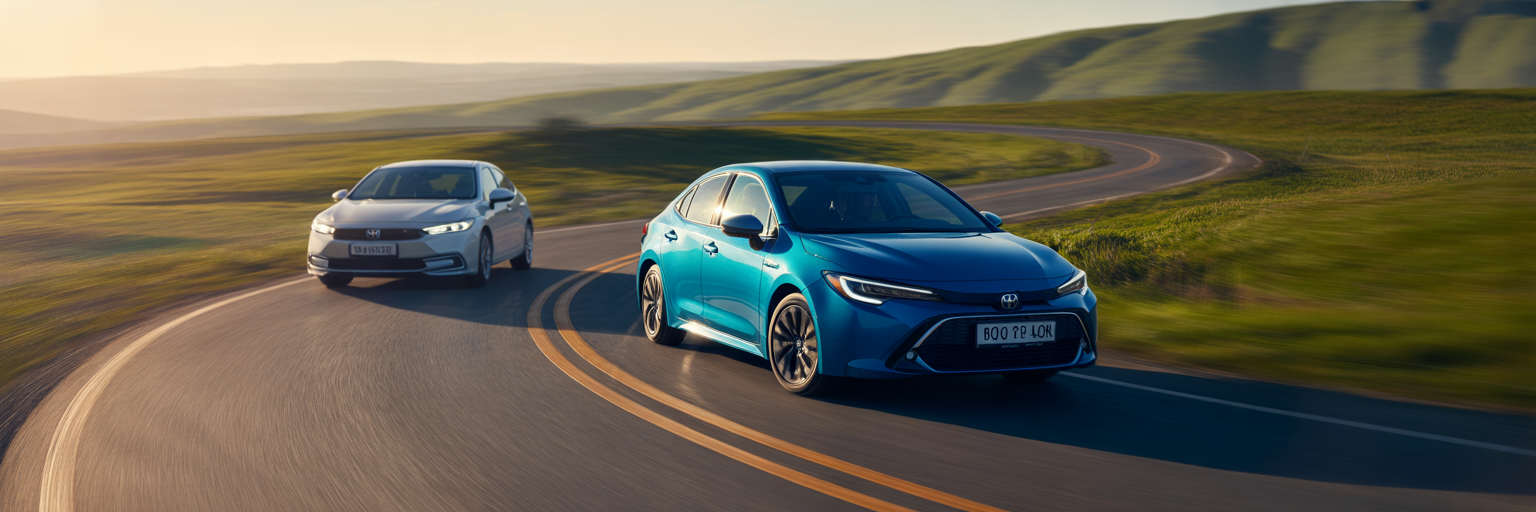
The daily commute is defined by a series of small, repetitive moments: merging onto the freeway, navigating tight corners in a parking garage, and enduring stretches of imperfect pavement. How a car handles these moments shapes your entire perception of it. The Toyota Corolla Hybrid vs Honda Insight debate truly begins with how each car feels from behind the wheel.
Acceleration for the Real World
On paper, the numbers tell a clear story. The Honda Insight’s powertrain produces a combined 151 horsepower and a healthy 197 lb-ft of torque, getting it from 0 to 60 mph in about 8 seconds. The Corolla Hybrid, with its 121 horsepower and 105 lb-ft of torque, takes a more relaxed 9.5 seconds. What does this mean in practice? That extra torque in the Insight makes a tangible difference. When you need to merge into fast-moving highway traffic, the Honda responds with confidence. There’s no sense of strain, just a smooth surge of power that gets you up to speed effortlessly. The Corolla is perfectly adequate for city driving, but highway maneuvers require a bit more forethought. You press the pedal, the car considers the request, and then it gradually builds speed.
Handling and Cornering Feel
Here again, the two cars reveal their distinct personalities. The Honda Insight sits lower and wider, giving it a more planted and stable feel on the road. On a winding back road or a sweeping freeway on-ramp, it inspires confidence. The steering is direct and responsive, making the car feel agile and willing to change direction. The Corolla Hybrid, by contrast, is engineered for predictability and ease. Its handling is safe, secure, and utterly foolproof. It doesn’t invite you to seek out corners, but it will navigate them without any drama. It prioritizes a feeling of security over sporty feedback, which for many drivers is exactly what they want.
Ride Comfort on Daily Commutes
This is where the Corolla Hybrid truly shines. Toyota’s engineers have masterfully tuned its suspension to absorb the harsh realities of American roads. Potholes, expansion joints, and rough city pavement are smoothed over, creating a serene and isolated cabin environment. It’s a car that reduces the stress of a commute by filtering out the noise and vibrations of the outside world. The Insight also provides a comfortable ride, but its more dynamic chassis means you feel a bit more of the road surface. It’s not harsh, but it is a reminder that you’re in a car with slightly sportier intentions. The choice comes down to what you prefer: the calm, collected journey of the Corolla or the more connected, engaging experience of the Insight.
The Core of Hybrid Efficiency
While driving dynamics influence how a car feels, its efficiency is what impacts your wallet week after week. Both the Corolla and Insight are masters of sipping fuel, but they achieve their remarkable economy through slightly different engineering philosophies. Understanding these differences helps clarify which system might be better suited to your specific driving habits.
Decoding the MPG Numbers
Both sedans post exceptional fuel economy figures that make them standouts among affordable hybrid cars US drivers can buy. Generally, they both hover around 50 MPG combined. However, the Honda Insight fuel economy often shows a slight advantage in city driving, where it can achieve around 51-52 MPG. According to a detailed comparison by Honda-Tech, the Insight’s two-motor system gives it a noticeable edge in stop-and-go conditions where the electric motor does most of the work. For a typical American driving 12,000 miles a year, even a small MPG difference can add up to noticeable savings over the life of the car.
Two Different Hybrid Philosophies
Toyota’s Hybrid Synergy Drive is the veteran system, refined over decades. Think of it as a power-split device that seamlessly blends propulsion from the gasoline engine and the electric motor. It’s incredibly smooth, and the transitions between gas, electric, or combined power are virtually imperceptible. It’s a system renowned for its durability and flawless operation across every possible driving scenario. The Insight uses a two-motor system that operates a bit differently. For the most part, the gasoline engine acts as a generator, creating electricity to power the electric motor that actually turns the wheels. Only at sustained highway speeds does the engine connect directly to the wheels. This setup is highly effective, particularly in urban environments.
Maximizing Your Miles
Both cars employ regenerative braking to recapture energy that would otherwise be lost as heat during deceleration. This captured energy is stored in the battery to be used later, boosting overall efficiency. A smooth driving style, with gentle braking and acceleration, maximizes this effect. Both vehicles also offer selectable driving modes like Eco, Normal, and Sport. These modes adjust throttle response and climate control settings, allowing the driver to trade a bit of performance for extra miles per gallon. While these sedans are champions of MPG, drivers needing more capability might be interested in how modern trucks are also making strides in balancing towing and fuel economy.
Inside the Cabin Experience

You spend hours every week inside your car, so the cabin’s design, comfort, and technology are just as important as what’s under the hood. This is an area where the Corolla vs Insight comparison reveals clear differences in priorities. One focuses on modern aesthetics and passenger space, while the other champions straightforward functionality and durability.
Design, Materials, and Ergonomics
The Honda Insight’s interior immediately feels more upscale and driver-centric. Its digital gauge cluster, push-button shifter, and liberal use of soft-touch materials give it a premium ambiance that punches above its price class. The dashboard is angled toward the driver, creating a cockpit-like feel. The Corolla Hybrid takes a more traditional approach. Its layout is highly functional and immediately intuitive, with physical knobs for key controls and a straightforward analog speedometer. The materials are durable and built to withstand years of daily use, even if they don’t feel as luxurious to the touch. It’s a space designed for longevity, not for impressing passengers.
Infotainment and Connectivity
Both cars typically come equipped with an 8-inch touchscreen that serves as the hub for entertainment and navigation. Apple CarPlay and Android Auto are standard, allowing for seamless smartphone integration. The user experience on both systems is generally good, with responsive screens and logical menu structures. Some users may find the Corolla’s system slightly simpler to navigate, while others might prefer the more modern graphics of the Insight’s interface. Ultimately, both get the job done effectively for music, podcasts, and maps.
Passenger Space and Cargo Practicality
This is a clear win for the Honda Insight. It boasts superior interior volume, which translates directly into more rear-seat legroom and shoulder room. Adults will find the back seat of the Insight noticeably more comfortable on longer trips. The advantage extends to the trunk, where the Insight offers a generous 15.1 cubic feet of cargo space compared to the Corolla’s 13.1 cubic feet. That extra two cubic feet can be the difference between fitting that last suitcase or having to leave it behind.
Commuter Audio Quality
For a daily driver, a clear sound system is essential for enjoying podcasts, news radio, or your favorite music during a commute. The standard audio systems in both cars are adequate, delivering clear sound without much distortion at reasonable volumes. For those who want a better listening experience, both offer premium upgrades. The Corolla is available with a powerful JBL audio system that provides richer bass and crisper highs, making it a worthwhile option for audiophiles.
| Feature | Toyota Corolla Hybrid | Honda Insight |
|---|---|---|
| Dashboard Philosophy | Functional, straightforward, traditional gauges | Modern, driver-focused, digital display |
| Standard Touchscreen | Typically 8-inch | Typically 8-inch |
| Cabin Materials | Durable, built to last | More soft-touch materials, premium feel |
| Rear Legroom | Adequate for adults | Slightly more generous, better for long trips |
| Trunk Capacity | ~13.1 cubic feet | ~15.1 cubic feet |
| Premium Audio Option | Available JBL Premium Audio | Available 10-speaker premium system |
Safety, Reliability, and Long-Term Ownership
A great daily driver isn’t just about comfort and efficiency; it’s about peace of mind. It’s knowing your car is built to protect you and your family, and that it won’t leave you stranded with unexpected repair bills. In this regard, both Toyota and Honda have built formidable reputations, but there are subtle differences worth exploring.
Official Safety Credentials
Both the Corolla Hybrid and the Insight consistently earn top safety ratings from the National Highway Traffic Safety Administration (NHTSA) and the Insurance Institute for Highway Safety (IIHS). This is the baseline expectation for any modern family sedan. A key advantage for the Corolla, however, is that Toyota often includes its most advanced safety features as standard equipment across all trim levels. This means you don’t have to pay extra for the best protection available, which is a significant value.
Comparing Driver-Assistance Suites
Toyota Safety Sense and Honda Sensing are the brand names for the comprehensive suites of driver-assistance technologies included in these cars. Both packages offer core features like adaptive cruise control, lane-keeping assist, and automatic emergency braking. The real difference comes down to execution. Some drivers find Toyota’s lane-centering technology feels more natural and less intrusive, while others might prefer the smoothness of Honda’s adaptive cruise control in heavy traffic. These are small nuances, but they can make a big difference in reducing driver fatigue on a long commute.
The Reliability Reputation
This is a cornerstone of the decision. The Corolla Hybrid reliability is, frankly, legendary. Toyota has built its entire brand on producing vehicles that are practically bulletproof, and the Corolla is the poster child for this philosophy. The hybrid system has been proven over millions of miles and multiple vehicle generations. While the Honda Insight also boasts a very strong reliability record, Toyota’s reputation in this specific area is a powerful motivator for buyers seeking the lowest possible risk of future problems. When you think about what a car will be like after 150,000 miles, the Corolla inspires a unique level of confidence.
Maintenance and Service Costs
Projected maintenance costs for both vehicles are low and very comparable. Routine services like oil changes and tire rotations are affordable. The practical advantage again leans toward Toyota due to its vast and ubiquitous service network. No matter where you are in the United States, you’re likely not far from a Toyota dealership or a certified mechanic familiar with their vehicles. This convenience can make scheduling service easier and may lead to more competitive pricing for any potential repairs down the line. While major services should be left to professionals, owners can save money on simple upkeep. Tasks like learning how to clean headlights with toothpaste can keep your car looking new for years.
Analyzing the Financial Commitment

For most buyers, the final decision comes down to the numbers. A car is a major financial commitment, and understanding the total cost of ownership is essential. This involves looking beyond the sticker price to consider fuel savings, maintenance, and one of the most important factors: resale value.
Sticker Price and Trim Levels
The Toyota Corolla Hybrid often has a slight edge with a more attractive starting price, typically beginning around $23,500. This makes it one of the most affordable hybrid cars US consumers can purchase new. The Honda Insight usually starts a little higher. As you move up the trim levels in both models, you unlock features like a sunroof, leather-trimmed seats, and more advanced infotainment systems. A key value proposition for the Corolla is the inclusion of the full Toyota Safety Sense 2.0 suite even on the base model, a feature that might require an upgrade on some competitors.
Resale Value: The Great Equalizer
Here, the competition is incredibly tight. Both the Corolla Hybrid and the Honda Insight hold their value exceptionally well. After five years of ownership, depreciation is almost identical. The Corolla is projected to retain around 66.8% of its value (a 33.2% depreciation), while the Insight is right there with it at 66.9% (a 33.1% depreciation). This outstanding value retention is a testament to their reputations for quality and efficiency. It significantly lowers the total cost of ownership, making either vehicle a financially sound investment.
The Overall Value Proposition
When you weave all the financial threads together—initial price, incredible fuel savings, low projected maintenance, and strong resale value—a complete picture emerges. The Corolla Hybrid presents a compelling case for the most value, especially at the entry level. Getting a full suite of advanced safety features without paying extra is a massive win for budget-conscious buyers. The Insight justifies its slightly higher price with a more premium interior and a more engaging driving experience. For buyers who need more space but are still budget-conscious, exploring the best hybrid SUVs under $35k could be the next logical step.
The Final Verdict for Your Daily Drive
After examining performance, efficiency, interior comfort, and long-term costs, it’s clear that both the Toyota Corolla Hybrid and Honda Insight are exceptional choices. They represent the pinnacle of practical, efficient transportation. However, they cater to slightly different priorities, and choosing the right one depends on what you value most in a daily driver.
Summary of Strengths
- Toyota Corolla Hybrid: Unbeatable reliability reputation, lower starting price, standard advanced safety features on all trims, and a supremely comfortable ride.
- Honda Insight: More engaging and responsive driving dynamics, a more premium and spacious interior, and superior cargo capacity.
The Ideal Toyota Corolla Hybrid Driver
The person who chooses the Corolla Hybrid is the ultimate pragmatist. They view a car as a tool to get through life with the least amount of friction and expense possible. They want ironclad reliability that has been proven over decades, and they want top-tier safety features included without having to tick an option box. The serene ride quality is a bonus, turning a stressful commute into a moment of calm. For this driver, the car’s purpose is to be a smart, dependable, and financially sound appliance that will never let them down.
The Ideal Honda Insight Driver
The Insight driver also values efficiency and reliability, but they are willing to invest a little more for a superior daily experience. They want their commute to be efficient, but not entirely devoid of enjoyment. The quicker acceleration, more responsive handling, and stylish, modern interior are worth the slight premium. They appreciate the extra rear-seat legroom for passengers and the larger trunk for weekend trips. This driver wants a car that feels a little more special and provides a more direct connection to the road.
The Winner for Overall Daily Usability
While the Honda Insight is arguably the more enjoyable car to drive and sit in, for the broadest definition of “best daily usability” for the majority of American drivers, the Toyota Corolla Hybrid takes a narrow victory. This verdict rests on an unbeatable combination of factors that define what makes a car easy to live with every single day. Its lower entry price, a full suite of standard safety technology on every model, and a legendary, almost mythical, reputation for long-term, trouble-free ownership are the pillars of practicality. The Corolla vs Insight comparison is close, but for the person seeking the most sensible, stress-free, and financially sound transportation solution, the Corolla Hybrid remains the undisputed champion and the best compact hybrid sedan 2026.