
It’s a fascinating detail of the automotive world that two of America’s most popular hybrid SUVs, the Lexus RX Hybrid and Toyota Highlander Hybrid, are born from the same engineering DNA. This shared heritage guarantees a foundation of quality and reliability, yet it sets up the central question for many buyers: should you choose refined luxury or family-first utility? While both vehicles use Toyota’s proven hybrid technology, they are built for entirely different lives. This detailed breakdown follows our commitment to providing clear, comprehensive vehicle comparisons to help you make the best choice.
Think of it as a choice between two expertly tailored suits. One is cut from the finest materials with an emphasis on personal comfort and style, while the other is designed for durability and flexibility, ready for whatever the week throws at it. The Lexus RX Hybrid vs Toyota Highlander Hybrid debate isn’t about which is better, but which is better for you. To find the answer, we will examine every critical aspect.
- Powertrain performance and real-world driving dynamics
- Fuel efficiency and annual running costs
- Ride comfort, handling, and cabin quietness
- Interior design, material quality, and passenger space
- Technology, safety features, and long-term ownership value
By the end of this guide, you will have a clear answer to the core question. Should your investment go toward the sophisticated comfort of the Lexus RX Hybrid, or does the superior space and practicality of the Toyota Highlander Hybrid better suit your daily needs?
Powertrain and Performance Under the Hood
At the heart of both SUVs lies a shared commitment to efficient power, but the execution reveals their distinct personalities. The powertrain is where engineering philosophy translates directly into the driving experience, defining how each vehicle responds to your commands on the road.
Hybrid Engine Breakdown
For 2026, both models feature advanced hybrid systems, but with different goals. The Lexus RX 450h+ plug-in hybrid pairs a sophisticated engine with powerful electric motors to deliver a combined output that prioritizes smooth, effortless acceleration. The Toyota Highlander Hybrid, on the other hand, utilizes a highly efficient 2.5-liter four-cylinder engine and electric motor combination. Its focus is on maximizing miles per gallon without sacrificing the capability families expect. While Lexus offers a more potent and refined powertrain, Toyota’s is a masterclass in practical efficiency.
Acceleration and Responsiveness
On paper, specs are just numbers. On the road, they become feeling. When you need to merge onto a busy US highway, the Lexus RX Hybrid delivers power with a seamless, linear surge. Its continuously variable transmission (eCVT) is tuned for refinement, eliminating any hint of engine strain. The Highlander Hybrid is also confident and capable, but its powertrain is audibly more focused on efficiency. You feel a system working smartly to balance your request for power with its primary mission of saving fuel. It gets the job done without fuss, but the Lexus does it with an extra layer of polish.
All-Wheel-Drive Systems Compared
How these SUVs put power to the ground is another key differentiator. The Lexus features the advanced DIRECT4 AWD system, an intelligent setup engineered for a dynamic driving feel. It constantly adjusts power between the front and rear wheels to enhance cornering stability and grip, making the vehicle feel more agile. Toyota’s Electronic On-Demand AWD is a different beast. It’s a pragmatic system that primarily powers the front wheels to save fuel, only engaging the rear wheels when it detects slip. For drivers in snowy or rainy climates, it provides confident traction when needed, prioritizing safety and efficiency over performance feel.
Practical Towing Capabilities
Here, the roles are clearly defined. The Highlander Hybrid boasts a towing capacity of up to 3,500 pounds, enough to handle a small boat or a pop-up camper for a family weekend getaway. The Lexus RX Hybrid, with a lower towing capacity, is better suited for lighter duties like pulling a small trailer with a jet ski. The Highlander’s advantage here is a direct reflection of its utilitarian mission. For buyers whose primary need is hauling heavy loads, it may be worth exploring which 2026 trucks offer the best towing and fuel economy to see how these SUVs stack up against more specialized vehicles.
Efficiency and Real-World Fuel Economy
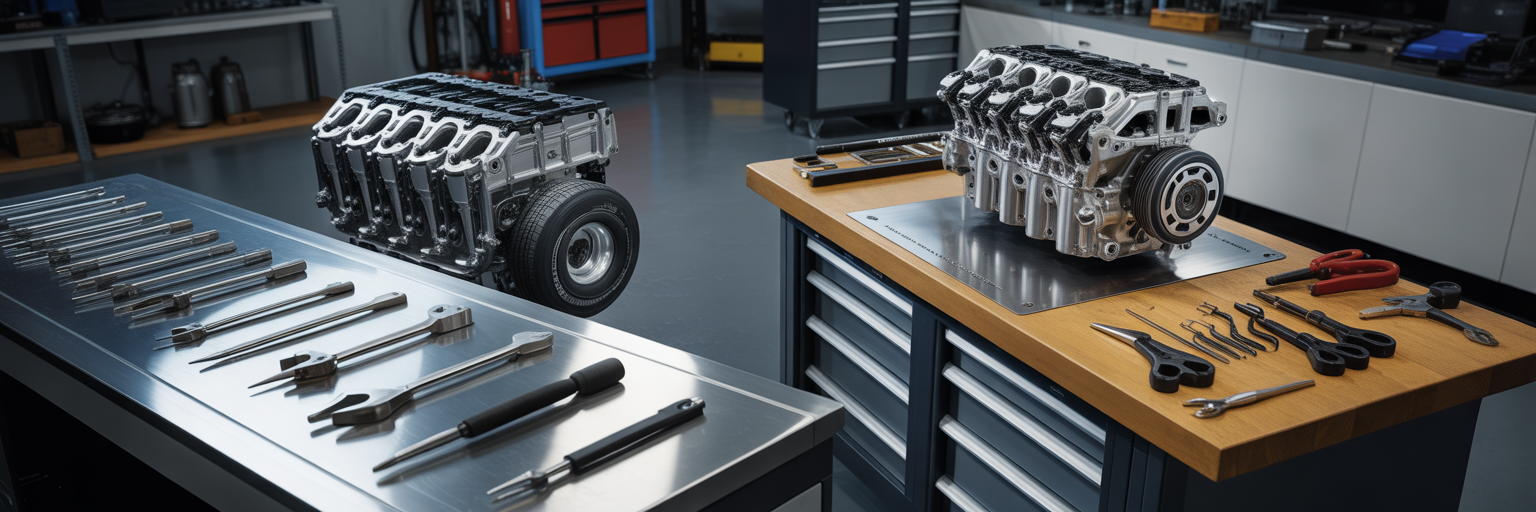
For any hybrid buyer, the numbers on the window sticker are just the beginning of the story. Fuel efficiency is not just about saving money at the pump; it’s about understanding how each vehicle’s technology works in your daily life. Both the RX and Highlander are exceptionally efficient, but their behavior and long-term costs differ in subtle but important ways.
Official EPA Ratings
The 2026 Toyota Highlander Hybrid is expected to continue its reign as one of the most fuel-efficient three-row SUVs available, with combined EPA estimates often landing in the mid-30s. The Lexus RX Hybrid, particularly in its plug-in hybrid (PHEV) form, offers a different proposition. It provides a significant all-electric range for daily commuting, potentially allowing some owners to use very little gasoline during the week. When operating as a standard hybrid, its MPG is competitive but typically a few points behind the lighter, efficiency-focused Highlander.
Real-World MPG Factors
Have you ever wondered why your car never quite matches its official MPG rating? Your driving habits are the biggest factor. A heavy foot on the accelerator can turn any hybrid into a gas-guzzler. Likewise, the Highlander Hybrid excels in stop-and-go city traffic where its regenerative braking can recapture energy. The RX Hybrid’s PHEV system shines for drivers with predictable commutes who can charge nightly. Loading up the Highlander with family and gear for a road trip will naturally impact its efficiency more than a solo commute in the RX.
Hybrid System Behavior
The experience of driving in electric-only mode is a defining characteristic. Imagine silently gliding through a quiet suburban neighborhood or a crowded Target parking lot. Both vehicles do this beautifully. The difference is in the transition. In the Lexus, the switch from electric to gasoline power is almost imperceptible, a testament to its luxury engineering. You hear and feel virtually nothing. In the Highlander, the transition is still incredibly smooth, but it’s a bit more noticeable. It’s a quiet, efficient handover, not a jolt, but it reminds you of the practical mechanics at work under the hood.
Over a year of driving 15,000 miles, the Highlander Hybrid’s slight MPG advantage could save a few hundred dollars in fuel costs. However, an RX Hybrid owner who maximizes its electric range could end up spending even less. The choice depends entirely on your driving patterns and access to charging.
The On-Road Experience: Ride Comfort and Handling
Beyond the powertrain, the suspension and cabin engineering are what truly separate a luxury vehicle from a mainstream one. This is where you feel the difference in philosophy every time you drive, whether it’s over a freshly paved highway or a pothole-ridden city street.
Suspension Tuning and Ride Quality
The Lexus RX Hybrid is engineered to create a bubble of serenity. Its suspension is masterfully tuned to glide over road imperfections, absorbing bumps and cracks with a soft, controlled composure. It’s the kind of ride that makes a long commute feel shorter and less stressful. The Toyota Highlander Hybrid is also very comfortable, but its suspension has a slightly firmer character. It’s designed to confidently manage the weight of seven passengers and their cargo, so while it handles bumps well, it communicates more of the road surface to the cabin. It feels stable and secure, but less isolating than the Lexus.
Cabin Quietness (NVH)
We’ve all been in a car where you have to raise your voice to have a conversation at highway speeds. That won’t happen in either of these SUVs, but the Lexus takes quietness to another level. Engineers went to great lengths, using acoustic glass, extensive sound-deadening materials, and even active noise cancellation technology to create a library-quiet interior. The Highlander’s cabin is impressively quiet for its class, effectively muting most wind and tire noise. However, at 70 mph, you’ll notice a bit more of the outside world than you would in the RX, a deliberate trade-off to keep the vehicle accessible and affordable.
Steering Feel and Maneuverability
The character of each SUV is also reflected in its steering. The RX Hybrid’s steering is light, precise, and designed for effortless maneuvering. It makes navigating a tight parking garage or a crowded city street feel easy and relaxed. The Highlander’s steering feels a bit heavier and more deliberate. This provides a reassuring sense of stability on the highway, especially when loaded with family and gear. It’s less about effortless grace and more about confident control. The RX is a refined cruiser, while the Highlander is a dependable family hauler, and their steering feel perfectly matches those roles.
A Tale of Two Cabins: Interior Quality and Design

Stepping inside each of these SUVs reveals their core identity. The Lexus is a personal sanctuary crafted with artistic precision, while the Toyota is a command center for family life, designed for practicality and durability. This is a classic luxury hybrid SUV comparison where feel and function are paramount.
Material Selection and Craftsmanship
In the Lexus RX Hybrid, your fingertips are greeted by supple semi-aniline leather, authentic wood trim, and cool, machined aluminum. Every surface feels considered and expensive. The stitching is perfect, and the materials are chosen for their sensory appeal. The Toyota Highlander Hybrid, in contrast, uses high-quality but more practical materials. You’ll find durable SofTex synthetic leather and robust, textured plastics designed to withstand spilled juice boxes, muddy cleats, and years of family adventures. It’s well-built and pleasant, but its mission is longevity, not indulgence.
Ergonomics and Design Philosophy
The layout of each cabin tells a different story. Lexus employs its “Tazuna” cockpit concept, a driver-focused design where the screen, gauges, and controls are positioned to minimize eye and hand movement. It feels like a personal, high-tech command pod. The Highlander’s design is open, airy, and democratic. Its most famous feature is the ingenious dashboard shelf, a perfect catch-all for phones, keys, and snacks. Combined with oversized cupholders and massive storage bins, the entire cabin is built around passenger convenience and organization.
Fit, Finish, and Ambient Experience
Luxury is often found in the details you can’t see on a spec sheet. In the RX, it’s the solid, satisfying click of a button, the perfectly aligned panels, and the multi-color ambient lighting that can change the mood of the cabin from calming to energizing. The fit and finish are meticulous. The Highlander’s build quality is also excellent, but it’s defined by durability. The panels are assembled to last, and the controls are built for a decade of use. Its interior lighting is bright and functional, prioritizing visibility over atmosphere. One cabin is designed to pamper the driver; the other is designed to serve the entire family.
Space and Practicality for Passengers and Cargo
This is where the debate shifts decisively. For many buyers, the decision between these two SUVs comes down to one simple, non-negotiable factor: the third row. The Highlander Hybrid is built around the need to carry more people and more stuff, making it a top contender for the best family hybrid SUV.
The most significant difference is seating. The Toyota Highlander Hybrid comes standard with three rows, offering seating for seven or eight passengers. The Lexus RX Hybrid is strictly a two-row, five-passenger vehicle. If your daily life involves carpools, team sports, or visiting grandparents, the Highlander’s extra capacity is not a luxury, it’s a necessity. While the Highlander’s third row is best suited for children or shorter trips for adults, its mere existence is a game-changer for families.
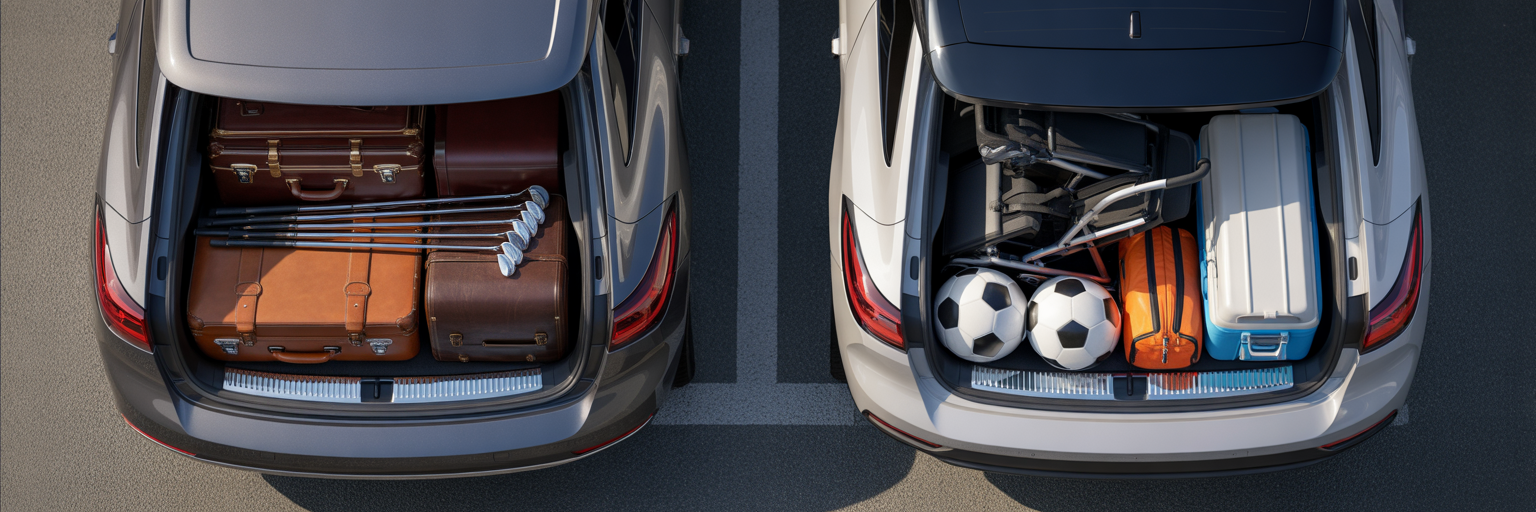
The Highlander’s advantage extends to cargo as well. With the third row folded down, it offers substantially more cargo volume than the RX. This means you can haul a stroller, a week’s worth of groceries, and sports equipment all at once without playing a game of trunk Tetris. The numbers speak for themselves.
| Feature | Lexus RX Hybrid | Toyota Highlander Hybrid |
|---|---|---|
| Seating Capacity | 5 | 7 or 8 |
| Cargo Volume (Behind 2nd Row) | ~29.6 cu. ft. | ~48.4 cu. ft. |
| Cargo Volume (Behind 3rd Row) | N/A | ~16.0 cu. ft. |
| Second-Row Legroom | ~37.4 inches | ~41.0 inches |
Note: Figures are based on 2024/2025 model year data and are representative estimates for the 2026 models. Exact specifications may vary upon release.
These figures translate into real-world convenience. The Highlander’s generous second-row legroom and family-friendly features like its dashboard storage shelf and numerous cupholders are designed to make family travel easier. The RX offers a comfortable and spacious environment for four or five adults, but the Highlander offers a more versatile solution for the unpredictable logistics of family life.
Tech and Entertainment: Infotainment and Audio
The digital experience in a modern car is just as important as its mechanical performance. Both Lexus and Toyota have made huge strides with their latest infotainment systems, but they tailor the experience to their respective audiences. One focuses on immersive, high-end features, while the other prioritizes intuitive, reliable functionality.
Central Infotainment Systems
The Lexus RX Hybrid features the stunning Lexus Interface, available with a massive 14-inch touchscreen that acts as the cabin’s centerpiece. The graphics are crisp, and the system is generally responsive, though some find the menu structure takes getting used to. The Toyota Highlander Hybrid is equipped with the Toyota Audio Multimedia system, with an available 12.3-inch screen. While slightly smaller, its interface is praised for being straightforward and easy to use. It’s designed so that anyone in the family can hop in and intuitively find what they need without a steep learning curve.
Premium vs. Mainstream Audio
For audiophiles, this is a clear win for Lexus. The optional Mark Levinson Premium Surround Sound system is simply phenomenal. It delivers a rich, detailed, and immersive soundstage that can make your car feel like a private concert hall. The Highlander’s available JBL premium audio system is also excellent. It’s powerful and clear, representing the top tier of mainstream audio systems. However, it can’t match the nuance and sheer fidelity of the Mark Levinson setup. The JBL system is perfect for blasting family road trip playlists; the Mark Levinson is for discerning every note in a complex jazz recording.
Connectivity and Connected Services
Both 2026 models come standard with the features modern buyers demand, including wireless Apple CarPlay and Android Auto. Their native voice assistants, “Hey Lexus” and “Hey Toyota,” allow for natural language commands to change the temperature or find a destination. The Lexus, however, offers a more extensive suite of high-tech luxury features, such as a vibrant head-up display and a digital rearview mirror. Toyota’s tech philosophy is about providing a robust and reliable suite of tools that simply work, every time. Lexus uses technology to add layers of convenience and luxury.
Advanced Safety and Driver Assistance Features
When it comes to safety, both Lexus and Toyota have a stellar reputation, built on a foundation of shared technology. Both the Lexus Safety System+ 3.0 and Toyota Safety Sense 3.0 are among the best standard safety suites in the industry. They offer peace of mind, but Lexus often includes more advanced functions as standard.
Both systems share a core set of features designed to prevent accidents and reduce driver fatigue. These include:
- Pre-Collision System with Pedestrian Detection: This system can detect vehicles or pedestrians and provide audio and visual alerts, and in some cases, apply the brakes automatically.
- Lane Departure Alert with Steering Assist: If you start to drift from your lane unintentionally, the system will alert you and can provide a gentle steering nudge to guide you back.
- Dynamic Radar Cruise Control: This allows you to drive at a preset speed while maintaining a preset distance from the vehicle ahead, even in stop-and-go traffic.
- Lane Tracing Assist: When cruise control is active, this feature uses lane markings to help keep the vehicle centered in its lane, reducing the effort of long-distance driving.
The key difference is in the refinement and additional features. Lexus often includes more sophisticated systems like Proactive Driving Assist, which can subtly apply brakes into curves or provide gentle steering assistance to help manage distance between your vehicle and a preceding one. These advanced features contribute to the overall sense of effortless driving and luxury. While both systems are exceptionally well-tuned and helpful, the strong performance of these features is a cornerstone of the impressive Lexus RX Hybrid reliability and its Toyota counterpart.
The Long Game: Reliability and Ownership Costs

A vehicle purchase is a long-term commitment, and the initial price tag is only part of the financial picture. Both Lexus and Toyota are legendary for their dependability and strong resale value, but the costs of ownership diverge over time, reflecting their positions in the market.
Brand Reputation and Reliability
This is an area where you can’t go wrong. Both brands consistently top reliability and owner satisfaction surveys from respected organizations like J.D. Power and Consumer Reports. This reputation for dependability is consistently validated by industry experts, with analysis from sources like Car and Driver often highlighting the lower long-term running costs and strong reliability records of both Toyota and Lexus models. Choosing either the RX Hybrid or the Highlander Hybrid is a sound decision for anyone who values a vehicle that will start every morning and rarely see the inside of a repair shop.
Initial Purchase Price vs. Long-Term Costs
There is no getting around the fact that the Lexus RX Hybrid carries a significant price premium over a comparably equipped Toyota Highlander Hybrid. That extra cost buys you finer materials, a quieter ride, more advanced technology, and the prestige of the Lexus badge. However, ownership costs also tend to be higher. Insurance premiums for luxury vehicles are typically more expensive, and scheduled maintenance at a Lexus dealership will cost more than a service visit to Toyota. The Highlander is designed from the ground up for a lower total cost of ownership.
Resale Value and Depreciation
Both SUVs are champions of holding their value. The Highlander Hybrid is often one of the most sought-after used family vehicles, thanks to its unbeatable combination of space, efficiency, and reliability. This high demand keeps its resale value exceptionally strong. The Lexus RX Hybrid also performs very well in the luxury segment, retaining its value better than many European rivals. For those prioritizing value above all, exploring the best hybrid SUVs under $35k can offer even more affordable alternatives, but it’s clear that both the RX and Highlander are wise investments.
The Final Verdict: Which Hybrid SUV Is Your Perfect Match?
After comparing every aspect from powertrain to practicality, the choice between the Lexus RX Hybrid and Toyota Highlander Hybrid becomes remarkably clear. It’s not about which SUV is superior overall, but which one aligns perfectly with your life and priorities. There is no wrong answer, only the right fit.
The Lexus RX Hybrid is the ideal choice if you prioritize:
- A supremely quiet and comfortable ride that isolates you from the road.
- A meticulously crafted interior with high-end, luxurious materials.
- Sophisticated technology and the prestige of a luxury brand.
- Personal comfort and style over maximum passenger capacity.
The Toyota Highlander Hybrid is the definitive choice if you need:
- Three-row seating for a large family, carpooling, or frequent guests.
- Maximum cargo space and versatile interior storage for an active lifestyle.
- Utilitarian practicality and a lower total cost of ownership.
- A dependable, efficient, and no-fuss vehicle for daily family duties.
Think of it this way. The successful professional or empty-nester who values a serene commute and enjoys stylish weekend trips will find their perfect match in the RX Hybrid. It’s a personal reward. Conversely, the active suburban family juggling school runs, sports practices, and road trips needs the unparalleled utility of the Highlander Hybrid. It’s the ultimate family tool. A final Toyota Highlander Hybrid review summary is that it remains the undisputed king of practicality in this matchup.
Ultimately, the best vehicle is the one that fits your life. For more reviews, news, and DIY guides, explore everything Car Phanatics has to offer.